Home Blog Page 636

NAPTIP, UK Host Survivor-Centred Forum on Rising Trafficking Into Southeast Asian Scam Centres

0


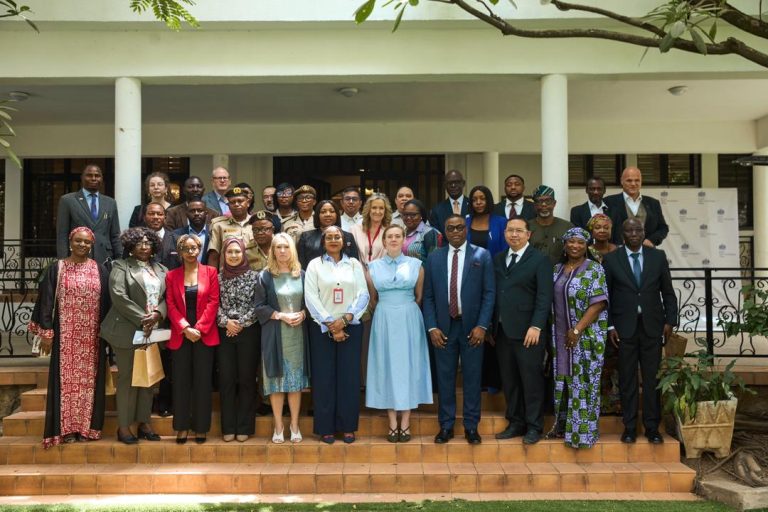
The National Agency for the Prohibition of Trafficking in Persons (NAPTIP), in partnership with the British High Commission in Abuja, has convened a survivor-centred forum to spotlight the growing global crisis of human trafficking into cyber-enabled scam operations across Southeast Asia.

The event, “Confronting the Global Scam Centre Crisis: Perspectives of Nigerian Survivors,” featured recently repatriated Nigerians who were lured abroad with fake job offers and trafficked to Myanmar, Laos, Cambodia and Thailand, where many were forced to carry out sophisticated online fraud schemes under abusive and exploitative conditions.

The programme followed coordinated rescue efforts by NAPTIP, the Ministry of Foreign Affairs, the Nigerian Embassy in Bangkok and British NGO EDEN. Their joint intervention — including field operations around the Thai–Myanmar border and welfare visits to affected nationals at Bangkok’s Immigration Detention Centre — secured the safe return of 23 Nigerian survivors earlier in the month.

According to the UN Office of the High Commissioner for Human Rights (OHCHR) 2026 report, A Wicked Problem, credible estimates indicate that at least 120,000 people are currently trapped in forced scam operations inside Myanmar, with more than 300,000 victims across Southeast Asia.

The report notes that victims originate from at least 66 countries, while 74 per cent of identified victims between 2020 and 2025 were trafficked to the region after being promised lucrative employment.

The forum provided a protected platform for survivors to voluntarily recount how they were recruited, the conditions inside the scam compounds and their path to rescue and recovery.
UK Deputy High Commissioner to Abuja, Gill Lever OBE, said the engagement was designed to amplify survivors’ voices and strengthen international cooperation.
“We are here today to listen to survivors who have shown remarkable bravery in sharing their experiences.

The UK is working closely with NAPTIP, the Ministry of Foreign Affairs, EDEN and IOM to ensure survivors receive trauma-informed care and safe repatriation. Their courage will help prevent others from being harmed, and we stand firmly with Nigeria and African Commonwealth partners in confronting this rapidly evolving threat,” she said.

Representing the Director-General of NAPTIP, Director of Public Enlightenment, Mrs. Kehinde Akomolafe, described the testimonies as a stark reminder of the dangers posed by trafficking networks exploiting job seekers.

“The courage these survivors have shown in sharing their stories is remarkable. Their experiences expose the brutal reality of trafficking into scam centres — a crime that strips people of dignity and freedom.

NAPTIP remains committed to protecting Nigerians from this growing threat and appreciates the support of partners ensuring survivors receive comprehensive care to rebuild their lives,” she said.
One of the survivors recounted being deceived with promises of legitimate employment abroad.

“I was promised opportunity, a good job and a chance for a better life. Instead, I was trapped and forced to do things that went against everything I believe in while living in constant fear.

I am sharing my story so other Nigerians can recognise the warning signs and protect themselves. No one should have to endure what we experienced,” the victim said.

Electoral Act: Presidential campaign limit raised to ₦10bn

0


Nigeria’s campaign finance landscape has shifted significantly after the National Assembly doubled the spending ceiling for presidential candidates to ₦10 billion under the new Electoral Act 2026, ahead of the 2027 general election.

The revised law, signed by President Bola Tinubu on February 18, increases the governorship spending limit from ₦1 billion to ₦3 billion.

It also raises the cap for Senate candidates from ₦100 million to ₦500 million, while House of Representatives hopefuls can now spend up to ₦250 million, up from ₦70 million.

Under the previous Electoral Act 2022, presidential candidates were restricted to ₦5 billion.

The new legislation, however, reflects what lawmakers described as prevailing economic realities and rising campaign costs.

According to Senate Leader Opeyemi Bamidele, the upward review retains statutory limits to regulate election financing while acknowledging inflationary pressures.

The law also adjusts spending thresholds for state assembly candidates from ₦30 million to ₦100 million.

Area council chairmanship candidates can now spend ₦60 million, up from ₦30 million, while councillorship candidates are capped at ₦10 million, double the previous ₦5 million limit.

Beyond campaign financing, the Act introduces stiffer penalties for electoral offences. Bamidele said offenders involved in vote buying, impersonation or result manipulation face two years’ imprisonment or fines ranging between ₦500,000 and ₦2 million, or both.

Presiding officers who wilfully frustrate the electronic transmission of results risk six months’ imprisonment or a ₦500,000 fine.

The law also mandates the compulsory use of the Bimodal Voter Accreditation System and electronic transmission of results to INEC’s Result Viewing Portal.

Lawmakers say the reforms are designed to strengthen transparency, reduce disputes and enhance the credibility of Nigeria’s electoral process as preparations gather pace for 2027.

Sun

Bayelsa: Cult clash claims three lives in Yenagoa

0


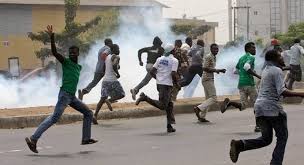
A renewed cult clash in Igbogene community, a suburb of Yenagoa, Bayelsa State, has claimed three lives.

According to investigations, three people were gunned down at about 11.30 p.m. by suspected cultists.

The victims were said to have been shot in the head to ensure that the chances of survival were zero.

While sources stated that the immediate cause was the youth election held in the community, findings indicated that the remote cause was the killing of one Ebi Doudou.

Doudou, from Amassoma community, was known as one of the leaders of the Greenlanders cult group in the Igbogene area.

The deceased was abducted on February 15, 2026, by a rival cult group, and the police later found his headless body.

Sources said in retaliation for Doudou’s killing by the suspected Bobos cult group, the Greenlanders seized the fallout of the youth election to carry out reprisal killings.

‘’There was a youth election in the community, and the losers warned those who won not to beat the drum and dance in their area. But the victorious side defied their warning and went to celebrate in their area. Later in the night, we heard gunshots, and in the morning, we saw three corpses,’’ a resident of Igbogene said.

Sources said both sides engaged in a gun duel that lasted over an hour, which left three dead and some sustaining bullet wounds.

At Igbogene, several police vans were seen on Monday morning at strategic areas, while heavily armed policemen were patrolling.

The Police Public Relations Officer (PPRO), Musa Muhammed, in an interview, confirmed the cult clash and the death of three people.

He also confirmed that CP Daniel Iyamah has deployed a police team to the area to prevent the breakdown of law and order.

‘’Investigation has commenced, and efforts are on to track down and arrest the fleeing suspects,’’ he said.

The renewed cult war has heightened security concerns in Yenagoa and its metropolis, with the growing casualties.

Sun

2027 polls: APC, 4 parties ready, 16 others in candidates’ crisis

0


ABUJA — The release of the timetable for the February 20, 2027 general elections by the Independent National Electoral Commission, INEC, may have caught most of the registered political parties in the country unprepared for the contest, and they have a tough nut to crack to make up for lost ground.

The situation may be dire for the parties, if the electoral commission brings the polls forward to January 2027 following complaints Muslim leaders and groups that the February 20 date would clash with the Ramadan fast and hugely affect voters’ turnout.


The inability of most of the political parties to put their houses in order and solidify the structures for electing officials and establishing their presence across the country, have put them in a difficult position to compete with the few that are ready for the polls next year.

Findings by Vanguard have revealed that only the All Progressives Congress, APC, and four other parties are on the ground and can proceed with the necessary processes that can lead to the fielding of candidates nationwide, while 16 others are struggling with weak organisation, leadership disputes, funding shortages, and unresolved legal battles.

The commission has fixed February 20, 2027 for presidential and National Assembly elections and March 6, 2027, for governorship and state assembly polls. Under the timeline released recently by INEC, party primaries are scheduled to hold between May 22 and June 20, 2026, while campaign activities are expected to commence in September 2026, effectively placing political organisations on a compressed operational timeline that demands immediate nationwide mobilisation.

Reactions from party leaderships show a mixture of confidence, urgency, and quiet concern, particularly among smaller parties that have yet to complete basic structural requirements such as ward offices, elected executives, or functional national secretariats.

5 parties positioned for nationwide contest

Among the 21 registered parties, only five: the APC; Peoples Democratic Party, PDP;, Labour Party, LP; New Nigeria Peoples Party, NNPP; and Social Democratic Party, SDP, currently possess national structures, administrative depth, and electoral experience necessary to realistically participate in presidential, National Assembly, governorship, and state assembly contests across most states.

APC’s preparation
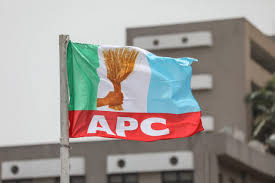
While many of the 21 registered political parties are just beginning to wake up from their post-2023 slumber, the ruling APC has effectively been in “election mode” for months.

From aggressive membership drive to the strategic poaching of opposition governors, the APC is demonstrating a level of preparedness that suggests the 2027 race might be won or lost long before the first ballot is cast.

An official of the party, who did not want his name mentioned, said APC’s most visible sign of dominance is its expanding control over the states.

“Through a series of high-profile defections, we have swelled our ranks to 29 governors, leaving the fractured opposition with a mere seven,” he said.

According to him, this “gale of defections” provides the party with a formidable grassroots infrastructure and control over state resources across more than two-thirds of the federation.

Beyond the optics of power, the party has turned its attention to modernizing its internal machinery. The APC has embarked on a nationwide electronic membership registration and revalidation exercise, successfully raking in over 10 million members into a digital database

This move not only provides a verified voter bank but also minimizes the traditional chaos associated with manual party registers. To further professionalize its operations, the party established The Progressive Institute, TPI, a dedicated think-tank designed to formulate policy and train party cadres, ensuring the organization is driven by intellect rather than just impulse.

While the APC consolidates, the leading opposition parties remain mired in existential crises, with the electoral umpire wondering whether they ought to continue to exist as parties.

The APC, as the ruling party, maintains established ward-to-national operational networks and has already begun internal strategic consultations ahead of primaries. Party leadership figures have indicated satisfaction with the election timetable, describing the timeline as sufficient for mobilisation and candidate emergence.

PDP, LP, NNPP’s disputes, factional rifts
The PDP, once the behemoth of Nigerian politics, continues to struggle with leadership disputes and factional rifts that have alienated key stakeholders. Similarly, the Labour Party and the New Nigeria Peoples Party have spent more time in courtrooms and internal disciplinary committees than on the campaign trail.

This internal bleeding has prevented the opposition from forming a cohesive front. While the APC has already rolled out its comprehensive timetable for Ward, Local Government, and State Congresses—leading up to its National Convention—the opposition is still debating who has the legal right to lead their respective National Working Committees NWCs.

But the PDP remains confident of its readiness for the next electoral cycle despite ongoing internal disputes with leaders of rival factions expressing optimism that the party will resolve its differences before the primaries.

The faction led by Kabiru Turaki, through its spokesman Ini Ememobong, reaffirmed that the party would be ready once INEC guarantees credible elections.

“Whenever INEC is ready for the elections the PDP will be ready, provided that they can guarantee free, fair, credible elections,” he said.

Similarly, Jungudo Haruna Mohammed the spokesman of the faction led by Abdulrahman Mohammed, assured members that internal disputes and litigations were being actively pursued and were expected to be resolved before the party’s primary election window.

“We reassure our members particularly those aspiring to contest elective offices that all internal party disputes and pending litigations involving the Party are being diligently pursued and are expected to be conclusively resolved well ahead of the window provided for political parties to conduct their primaries.
“The PDP is fully prepared to meet all Constitutional and Regulatory requirements within the stipulated timelines,” Jungudo said.

Inside PDP’s confidence
A senior party insider, speaking to Vanguard, insisted that despite factional divisions, the PDP remained electorally indispensable.

“For those of us who believe in the party, we strongly believe that, one way or another, the PDP will have candidates in the election… there cannot be an election in Nigeria without the PDP on the ballot,” he stated.

The source said ongoing negotiations and political accommodation would help stabilise the party before the primaries.

“The combination of political acumen and strategy on our side will be difficult to beat,” he added.
However, the insider acknowledged that leadership disputes still pose operational challenges, particularly regarding candidate nomination procedures.

Responding to direct questions about preparedness, the insider maintained that the party would remain competitive nationwide.

“Yes, we are ready. For those of us who believe in the party, we strongly believe that, one way or another, the PDP will have candidates in the election. Whether it is the Wike camp or the camp we support, we firmly believe there cannot be an election in Nigeria without the PDP on the ballot,” the source insisted.

He added that the party was preparing state-by-state strategies and was ready to accommodate defectors or politicians denied tickets in rival parties, noting that consensus arrangements and negotiated withdrawals would help manage internal competition.

The source also stressed that political dynamics differ across states and that performance and local alignments would shape electoral outcomes.

“For the PDP, performance will be a state-by-state matter. All politics is local. The issues will be domesticated, depending on the peculiar circumstances of each state,” the source maintained.

On the leadership tussle, he said a political settlement would be preferable to a prolonged legal battle, warning that persistent divisions could weaken party coordination even if court rulings eventually settle the dispute.

“At the end of the day, nobody truly wins in court. The party cannot move forward if the divisions persist,” he added.

Another senior party insider said the party expected pending judicial decisions to clarify leadership issues before the nomination deadlines.

“We are waiting for judgement… Everyone knows that party primaries must conclude by August or September. These issues need to be resolved before then,” the insider said.

He declared that the PDP’s nationwide structure and political weight would ensure its participation in the elections.

“As I have said, the PDP is too big to ignore. You cannot hold a national election in Nigeria without the PDP on the ballot. It would create serious constitutional and political complications,” he boasted.

LP races to rebuild structures

The Labour Party is intensifying internal reorganisation after months of leadership disputes that slowed party activities nationwide.

The electoral commission’s recognition of Nenadi Usman as national chairman has triggered accelerated membership drives, organisational audits, and nationwide restructuring aimed at expanding the party’s operational reach.

A senior party official said reconciliation and rebuilding remain top priorities, warning dissenting factions against disruptive activities while stressing that court rulings
have already clarified the leadership structure.

Ken Asogwa, Special Adviser (Media) to Nenadi Usman, said: “Our party wish to warn certain members, particularly elements of the former leadership who allegedly attempted to desecrate the Secretariat under the cover of darkness, that the Party will no longer tolerate acts of brigandage from within its ranks.

“The judgment of the Nigerian court is clear and unambiguous regarding the current leadership of the Party.
“The INEC has implemented this judgment by formally recognising Senator Nenadi Usman and Senator Darlington Nwokocha as the National Chairman and National Secretary of the Labour Party, respectively.”

However, rival claims from the faction loyal to Julius Abure indicate that internal stability has not yet been fully achieved.

The faction’s National Publicity Secretary, Obiora Ifoh, said: “The fact remains that Barr. Julius Abure is the National Chairman of the Labour Party because when a party to a dispute obtains a stay of execution on a matter the parties maintain status quo.

“And the status quo in this matter is that the Abure-led National Working Committee (NWC) is the legitimate leadership of the party until the final determination of the substantive suit.”

Meanwhile, the party’s 2023 vice-presidential candidate, Yusuf Datti Baba-Ahmed, has signalled interest in contesting the 2027 presidential election.

“Yes, I am a practising Muslim. But I’m a Nigerian, and the constitution allows me to contest… I’m doing this because Nigeria needs help,” he declared.

ADC signals readiness but raises transparency concerns
The African Democratic Congress welcomed the timetable but raised concerns over electoral transparency and the need for clarity regarding real-time electronic transmission of results.

The party’s spokesman Bolaji Abdullahi, urged the electoral commission to provide early assurances on technology deployment and results-management safeguards.

“We welcome the early release of the timetable, which provides political parties, stakeholders, and the Nigerian electorate with needed clarity for long-term planning and democratic preparation.

“However, the credibility of the 2027 general elections will ultimately not be judged by the timeliness of the timetable alone, but by the Commission’s demonstrable commitment to transparency, technological integrity, and strict adherence to due process throughout the electoral cycle,” Abdullahi said.

NNPP’s force

The NNPP has expressed preparedness for the 2027 general elections, following the release of the timetable.

Having contested across all states in the 2023 elections, the party describes itself as a growing national force. Under leaders such as Rabiu Kwankwaso, it is also open to forming strategic alliances with other opposition leaders and parties, signalling that the 2027 race is likely to be highly competitive.

SDP to present experience
The SDP has also declared its readiness for the 2027 elections. Party leaders, including Mulikat Akande-Adeola, say the party intends to present experienced and trusted candidates, particularly in the South-West.

Despite internal challenges, including the expulsion and defection of prominent members such as Nasir El-Rufai to the ADC, the SDP says it remains focused on rebuilding and strengthening its structures.

16 parties struggle with structural weaknesses

Beyond the five relatively prepared parties, sixteen others face significant structural and operational deficiencies that could limit their ability to field candidates nationwide.

These include the All Progressives Grand Alliance (APGA), African Action Congress (AAC), Action Democratic Party (ADP), Accord, Action Alliance (AA), Boot Party (BP) National Rescue Movement (NRM) Peoples Redemption Party (PRP), Young Progressive Party (YPP), Zenith Labour Party (ZLP), Youth Party (YP), Democratic Leadership Alliance (DLA) – newly registered, Nigeria Democratic Congress (NDC) – newly registered, Action Peoples Party (APP) and Allied Peoples Movement (APM)

Many of these parties operate without fully functional ward, local government, or state structures, and several are also battling leadership crises, funding shortages, or unresolved court disputes that could complicate participation in the primary election window. Others remain active largely in limited regional strongholds without the nationwide organisational networks necessary for presidential contests.

Timetable forces rapid political realignments
The election schedule has intensified negotiations, alliance discussions, and internal restructuring across the political landscape as parties attempt to meet registration deadlines, conduct primaries, and secure funding for nationwide campaigns. The compressed timeline is particularly challenging for smaller organisations that must simultaneously build structures, recruit candidates, and resolve legal disputes within months.

Even among the larger parties, unresolved factional tensions, leadership battles, and litigation remain potential flashpoints capable of reshaping candidate emergence processes and political alignments ahead of the primaries.

A test of organisational capacity
The timetable has effectively transformed party readiness into a measurable test of institutional capacity, distinguishing parties with nationwide grassroots networks from those that exist largely on paper. While the five major parties appear positioned to compete across the country, the majority of registered organisations must undertake urgent structural rebuilding if they hope to participate meaningfully in all categories of the elections.

With primaries approaching in mid-2026 and campaigns scheduled to begin months later, the months ahead are expected to determine whether currently under-prepared parties can reorganise quickly enough to remain competitive, or whether the next electoral cycle will again be dominated by a small number of structurally established political platforms.

Vanguard
MAGGI Launches ‘Tales of Ramadan’ Season 2, Rolls Out Nationwide Consumer Engagement Campaign

0


BY TAIWO OGUNMOLA -OMILANI


As Ramadan begins, MAGGI has unveiled a multi-layered national campaign anchored on culturally grounded storytelling, consumer value and community engagement.

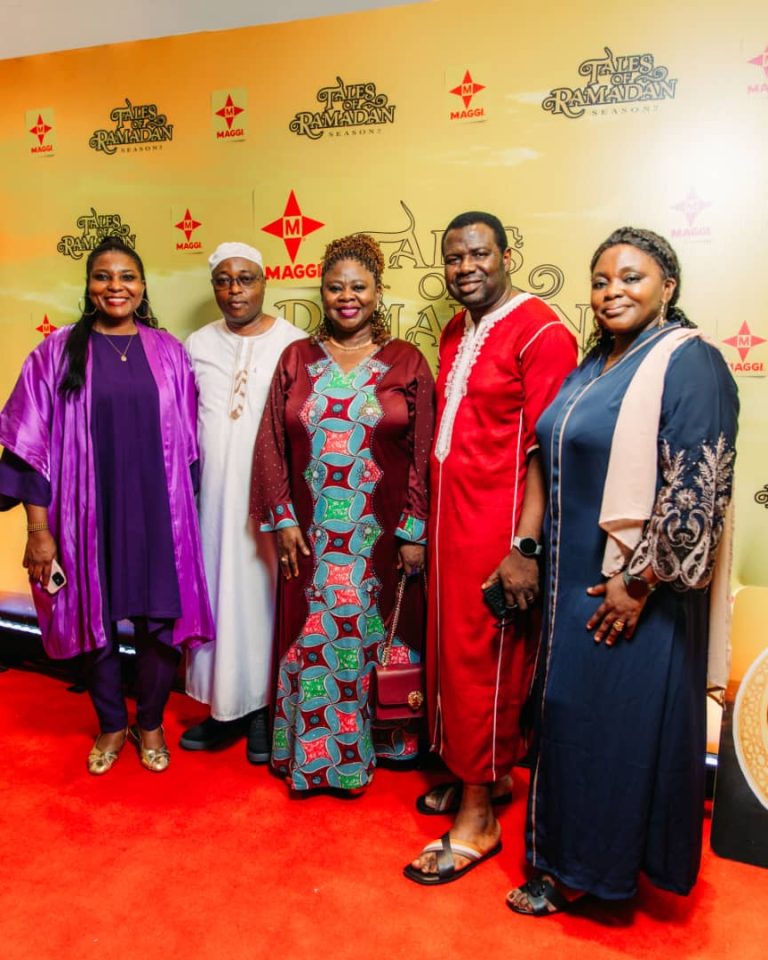
At the heart of the campaign is Tales of Ramadan Season 2, a six-episode drama series that premiered at a star-studded event at EbonyLife Place.

The evening featured elegant abaya-themed dressing and décor inspired by the warmth and serenity of the season, underscoring the cultural significance the brand attaches to Ramadan.

The series has since launched nationwide across terrestrial television, cable and major digital platforms.
Building on the strong reception of Season 1, the new season expands its creative ambition with richer narratives and enhanced cinematic quality. Directed by Orire Nwani and produced by Goodness Emmanuel, the series explores themes of faith, food, family, friendship, forgiveness and freedom, reflecting the lived realities of Ramadan in Nigerian homes.

While each episode tells a distinct and relatable story, they are united by a powerful message: Ramadan is a time for reflection, generosity and reconnecting with what truly matters.

The new season features a compelling ensemble cast whose performances bring authenticity and emotional depth to stories that mirror everyday Ramadan experiences across Nigerian households.
Speaking at the premiere, Funmilayo Osineye, Category Manager, Culinary, said Ramadan represents more than meals.

“Ramadan is a season where food carries deeper meaning, symbolising generosity, reflection and togetherness. At MAGGI, our role goes beyond flavour.

We are intentional about showing up in ways that respect the season and support families meaningfully. This campaign reflects that commitment,” she said.

The series premiered on February 12, 2026, and is currently airing weekly across terrestrial television, cable platforms and major digital channels nationwide.

Beyond the screen, the brand is marking Ramadan with several consumer-focused engagements across the country.

Shoppers will enjoy added value through special extra-cube offers in MAGGI STAR sachets during the season. In modern trade outlets, experiential activations will reward shoppers with premium gifts, while certified nutritionists provide complimentary guidance on maintaining balanced meals during fasting.
In the spirit of generosity that defines Ramadan, MAGGI is also partnering with mosques and tertiary institutions nationwide to host Iftar pop-up experiences, reaching over 100,000 consumers through shared meals and product sampling.

The brand is further collaborating with selected influencers to support community give-back initiatives, extending the values of compassion and service beyond the table.

Through the campaign, the company says it is reinforcing its connection with Nigerian households, positioning Ramadan not only as a season of faith but also of shared meals, compassion and community.

Oil Theft: How criminal networks are moving from creeks to communities

0


For decades, Nigeria’s oil theft crisis was largely associated with remote creeks, mangrove swamps and offshore vandalism in the Niger Delta.

Increasingly, however, security agencies say the trade is migrating inland-embedding itself within civilian communities, markets and transport corridors where it can operate under the cover of everyday commerce.

The recent exposure of Owaza Mami Market in Ukwa West Local Government Area of Abia State as a hub for illegal crude oil bunkering and artisanal refining underscores a broader national trend: oil theft networks are becoming more organised, decentralised and harder to detect.

On January 24, 2026, a joint, intelligence-led operation by Pipeline Infrastructure Nigeria Limited (PINL) and Government Security Agencies uncovered the market’s hidden role as a storage, processing and distribution centre for stolen crude oil and illegally refined petroleum products.

What appeared to commuters along the Port Harcourt-Aba Expressway as a routine roadside market was, in reality, part of a sophisticated illicit supply chain linked to the Trans-Niger Pipeline.

From Creeks to commercial hubs

Security officials say criminal groups are deliberately relocating operations closer to highways and population centres, blending illegal activities into legitimate economic spaces.

Markets, warehouses, hotels and residential compounds now increasingly serve as covers for storage, refining and distribution of stolen petroleum products.

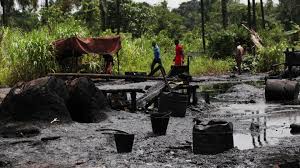
In the Owaza case, investigators found warehouses stocked with crude oil and refined products, generators modified to run directly on crude oil, and active artisanal refining equipment operating within the market.

The discovery mirrors similar patterns reported across parts of Rivers, Imo, Abia and Delta states, where illegal refining has moved away from isolated camps into built-up areas.

According to energy security analysts, this shift reduces logistic costs for criminal networks, provides faster access to buyers, and complicates enforcement efforts by increasing the risk of civilian casualties during raids.

The Owaza raid also exposed recurring weaknesses in Nigeria’s oil theft response architecture.

Investigators reported repeated disruptions to earlier enforcement efforts, including access restrictions, checkpoint delays and the presence of undocumented exit routes that allowed suspects to evade arrest.

Such escape corridors, security sources say, are not unique to Owaza but are increasingly common features of illegal oil hubs nationwide, reflecting advance planning and local intelligence support.

“These are no longer opportunistic crimes,” said a security source familiar with pipeline protection operations.

“They are organised, layered networks with logistics, intelligence and protection mechanisms.”

Economic and environmental toll

Nigeria loses billions of dollars annually to oil theft, with consequences ranging from reduced government revenue and foreign exchange inflows to environmental devastation and public health risks.

Artisanal refining sites often discharge waste directly into soil and waterways, contaminating farmlands and threatening livelihoods.

Enforcement shifts, role of surveillance contractors

The January 24 operation reflects a growing reliance on intelligence-driven enforcement and private pipeline surveillance contractors working alongside government security agencies.

PINL, which secures the Eastern Corridor of the Trans-Niger Pipeline, says sustained monitoring and local intelligence are critical to dismantling networks that thrive on anonymity and mobility.

However, analysts warn that raids alone are insufficient. Without follow-through prosecutions, permanent closure of illegal access routes and economic alternatives for host communities, dismantled networks often re-emerge elsewhere.

Problem hiding in plain sight

The exposure of Owaza Mami Market highlights a sobering reality: Nigeria’s oil theft problem is no longer confined to distant creeks or offshore pipelines.

It is increasingly woven into everyday spaces-markets, transport corridors and communities-where criminal operations coexist with legitimate economic life.

For now, the dismantled market stands as both a warning and a case study-illustrating how oil theft in Nigeria has evolved, and how much harder it has become to spot.

Vanguard

Pound to Naira exchange rate today

0

The British Pound has opened the new trading week with moderate gains against the Nigerian Naira on Monday, February 23, 2026. Data from the Nigerian Foreign Exchange Market (NFEM) and informal trading desks reflect a subtle shift in momentum as market participants digest the latest supply figures from the central bank.

Official Market Performance (NFEM)

In the official window, the Naira opened at 1,817.40 per Pound. Trading activity throughout the early morning sessions saw the currency strengthen slightly, reaching a mid-morning rate of 1,810.65 per Pound by 6:00 AM WAT. This represents a recovery from the opening dip, as the market found a support level near the 1,810 mark.


The current rate marks a notable improvement from earlier in the month when the Pound traded as high as 1,906.29. Analysts attribute this strengthening of the Naira over the last three weeks to the Central Bank of Nigeria’s sustained interventions and the successful clearing of several tranches of foreign exchange backlogs owed to international airlines and service providers.

Parallel Market Trends

In the parallel market, the Pound Sterling is being exchanged at a premium, currently trading between 1,830 and 1,842 per Pound. While the informal sector continues to serve retail demand for personal travel allowances and small-scale imports, the spread between the official and parallel rates remains relatively contained at approximately 1.5%.

Traders in Lagos and Abuja report that while demand for the Sterling remains consistent, there is a lack of panic buying. This suggests that the transparency measures implemented in the NFEM are successfully anchoring expectations and reducing the speculative volatility that historically plagued the Monday morning opening.

Key Factors Driving the Rate

The following factors are currently influencing the Pound-to-Naira exchange rate:

Global Sterling Strength: The British Pound has remained firm against a basket of currencies due to positive employment data from the UK, which has indirectly kept the NGN/GBP pair elevated.

Domestic FX Liquidity: Increased liquidity at the official window has provided Nigerian banks with more capacity to fill “Form M” and “Form A” requests, taking the heat off the informal market.
Monetary Tightening: The CBN’s continued high-interest-rate environment (MPR at 27.00%) has encouraged some level of foreign portfolio investment, helping to stabilize the Naira against major global currencies.

Looking ahead for the rest of the day, financial experts expect the rate to oscillate within a narrow band of 1,805 to 1,818 in the official market, barring any significant shifts in global oil prices or local policy announcements.

Vanguard

Relief for pensioners as PenCom unveils online recapture portal

0


In a major boost for pension contributors and retirees, the National Pension Commission, PenCom, has announced the launch of a self-service online data recapture platform designed to simplify and fast-track pension record updates.

The new platform, known as the Data Recapture Self-Service Platform, PENCAP, officially went live on February 1.


Developed in collaboration with Pension Fund Administrators, PFAs, the initiative allows Retirement Savings Account, RSA, holders to update their personal records remotely without visiting PFA offices.

PenCom said the platform targets RSA holders who joined the Contributory Pension Scheme, CPS, on or before July 1, 2019, and have yet to complete the mandatory data recapture exercise.

According to the commission, the move marks another significant step toward improving data integrity, enhancing service delivery, and modernising pension administration through digital innovation.

PenCom explained that accurate and up-to-date data remain critical to the smooth administration of retirement savings under the CPS.

Over the years, inconsistencies arising from legacy records and incomplete documentation have created bottlenecks during verification and benefit processing.

The commission noted that although the direct recapture exercise began in August 2019 for both active contributors and retirees, progress has been slow, with many eligible RSA holders yet to complete the process.

“With PENCAP, contributors now have a secure and convenient channel to recapture their data. This will improve the quality and reliability of records across PFAs and support faster benefit processing,” the commission stated.

The online process requires a smartphone, computer, or any internet-enabled device with a camera to enable live image capture. RSA holders can create a secure profile using a personal email address, complete the recapture form, upload supporting documents where necessary, undergo biometric verification through live facial capture, and provide a digital signature to confirm authenticity.
After submission, the contributor’s PFA will review the application within a stipulated processing timeline, while automated email notifications will keep applicants informed about the status of their requests.

PenCom said the initiative aligns with the Federal Government’s directive for all data-generating agencies to harmonise their databases with the National Identity Management Commission, NIMC, with the National Identification Number, NIN, serving as the unique identifier.

The commission had earlier deployed an Enhanced Contributor Registration System, ECRS, integrated with the NIMC database, to authenticate the identity of contributors under the CPS.

Completion of the data recapture exercise is mandatory for participation in the Retiree Enrolment and Verification Exercise and for accessing key pension services. These include processing retirement benefits, utilising part of RSA balances as equity contributions for residential mortgages, withdrawals due to temporary job loss, and transferring RSAs between PFAs.

PenCom warned that eligible RSA holders who fail to complete the exercise may be unable to access these services.

Vanguard

Mexico’s most wanted drug lord, ‘El Mencho’, killed in military operation

0


Soldiers, on Sunday, killed a powerful Mexican drug cartel leader, who was one of the most wanted men here and in the United States, several media outlets reported.

There was no immediate confirmation from the government of the death of Nemesio Oseguera, leader of the Jalisco New Generation Cartel. He had a $15 million bounty on his head.

Oseguera is one of the biggest drug suspects to be taken down since the capture of the founders of the Sinaloa cartel, Joaquin Guzman ‘El Chapo’ and Ismael Zambada. Both are serving time in the United States.
Oseguera, whose nickname was “El Mencho,” was reported killed by the Mexican newspapers El Universal and Reforma, and by the Televisa network.

Earlier, people with guns set cars and trucks on fire in the western state of Jalisco, blocking several roads in response to a security operation taking place in the region.

This technique is used to thwart police trying to move in on a high-value target.

The violence spread to the neighboring state of Michoacan, where Oseguera’s cartel also has a presence.
His cartel was formed in 2009 and became one of Mexico’s most violent drug trafficking organizations, according to the US Justice Department.

US officials formally classified it as a terrorist organization and accuse the cartel of sending cocaine, heroin, methamphetamine and fentanyl from Mexico across the border into the United States.

Vanguard

Oil Theft: How criminal networks are moving from creeks to communities

0

For decades, Nigeria’s oil theft crisis was largely associated with remote creeks, mangrove swamps and offshore vandalism in the Niger Delta.

Increasingly, however, security agencies say the trade is migrating inland-embedding itself within civilian communities, markets and transport corridors where it can operate under the cover of everyday commerce.

The recent exposure of Owaza Mami Market in Ukwa West Local Government Area of Abia State as a hub for illegal crude oil bunkering and artisanal refining underscores a broader national trend: oil theft networks are becoming more organised, decentralised and harder to detect.

On January 24, 2026, a joint, intelligence-led operation by Pipeline Infrastructure Nigeria Limited (PINL) and Government Security Agencies uncovered the market’s hidden role as a storage, processing and distribution centre for stolen crude oil and illegally refined petroleum products.

What appeared to commuters along the Port Harcourt-Aba Expressway as a routine roadside market was, in reality, part of a sophisticated illicit supply chain linked to the Trans-Niger Pipeline.

From Creeks to commercial hubs

Security officials say criminal groups are deliberately relocating operations closer to highways and population centres, blending illegal activities into legitimate economic spaces.

Markets, warehouses, hotels and residential compounds now increasingly serve as covers for storage, refining and distribution of stolen petroleum products.

In the Owaza case, investigators found warehouses stocked with crude oil and refined products, generators modified to run directly on crude oil, and active artisanal refining equipment operating within the market.

The discovery mirrors similar patterns reported across parts of Rivers, Imo, Abia and Delta states, where illegal refining has moved away from isolated camps into built-up areas.

According to energy security analysts, this shift reduces logistic costs for criminal networks, provides faster access to buyers, and complicates enforcement efforts by increasing the risk of civilian casualties during raids.

The Owaza raid also exposed recurring weaknesses in Nigeria’s oil theft response architecture.

Investigators reported repeated disruptions to earlier enforcement efforts, including access restrictions, checkpoint delays and the presence of undocumented exit routes that allowed suspects to evade arrest.

Such escape corridors, security sources say, are not unique to Owaza but are increasingly common features of illegal oil hubs nationwide, reflecting advance planning and local intelligence support.

“These are no longer opportunistic crimes,” said a security source familiar with pipeline protection operations.

“They are organised, layered networks with logistics, intelligence and protection mechanisms.”

Economic and environmental toll

Nigeria loses billions of dollars annually to oil theft, with consequences ranging from reduced government revenue and foreign exchange inflows to environmental devastation and public health risks.

Artisanal refining sites often discharge waste directly into soil and waterways, contaminating farmlands and threatening livelihoods.

Enforcement shifts, role of surveillance contractors

The January 24 operation reflects a growing reliance on intelligence-driven enforcement and private pipeline surveillance contractors working alongside government security agencies.

PINL, which secures the Eastern Corridor of the Trans-Niger Pipeline, says sustained monitoring and local intelligence are critical to dismantling networks that thrive on anonymity and mobility.

However, analysts warn that raids alone are insufficient. Without follow-through prosecutions, permanent closure of illegal access routes and economic alternatives for host communities, dismantled networks often re-emerge elsewhere.

Problem hiding in plain sight

The exposure of Owaza Mami Market highlights a sobering reality: Nigeria’s oil theft problem is no longer confined to distant creeks or offshore pipelines.

It is increasingly woven into everyday spaces-markets, transport corridors and communities-where criminal operations coexist with legitimate economic life.

For now, the dismantled market stands as both a warning and a case study-illustrating how oil theft in Nigeria has evolved, and how much harder it has become to spot.

Vanguard