Home Blog Page 624

Waringa Seeks AU Action on Structural Barriers to Women’s Presidential Leadership at Continental Summit

0


BY TAIWO OGUNMOLA -OMILANI

A Kenyan presidential candidate, Ambassador Esther Waringa, has called on the African Union (AU) and its member States to dismantle structural barriers preventing women from ascending to presidential office across Africa.

Waringa made the call on Friday at the Continental Summit on Structural Barriers to Women’s Presidential Leadership and What Must Change, convened by the LOANI Women in Geopolitics Desk under the African Summit on Inclusive Leadership and Governance.

Addressing delegates from Nairobi, the President of Public Service Governance International (PSGI) and presidential candidate in Kenya said Africa’s global rise would depend not only on its population and natural resources but on inclusive leadership at the highest levels.

“Africa stands not as a continent of potential alone, but as a continent of imminent global influence,” she said, adding that entrusting women with executive power would unlock a “leadership dividend” capable of strengthening stability, accelerating development and enhancing global credibility.

Only Six Female Heads of State
Waringa noted that since independence movements began across the continent, Africa has had only six female heads of state or government. They include:
Ellen Johnson Sirleaf of Liberia (2006–2018).

Joyce Banda of Malawi (2012–2014)
Catherine Samba-Panza of Central African Republic (2014–2016)
Ameenah Gurib-Fakim of Mauritius (2015–2018), Samia Suluhu Hassan of Tanzania** (2021–present), Netumbo Nandi-Ndaitwah of Namibia (2025–present).

She argued that the low number was not due to a lack of qualified women but rather systemic obstacles embedded in political structures.

“The question is not whether Africa has capable women. We are here as capable women. The question is whether our systems allow them to rise,” she said.
Structural and Institutional Barriers
Waringa identified patriarchal political systems, male-dominated party structures and financing mechanisms, electoral violence, and media bias as key structural barriers.

According to her, many African political systems evolved from traditional patriarchal structures, male-led liberation movements and military-influenced governance frameworks, where leadership has historically been framed as masculine.

She also highlighted limited access to party nomination processes, lack of financial backing, exclusion from inner political circles and male-dominated patronage networks as significant hurdles for women seeking presidential tickets. Campaign financing, she said, remains a major impediment.

Electoral violence and gender-based intimidation, including cyber harassment and cultural resistance to female leadership, further discourage capable women from contesting, she added.

Economic and Cultural Constraints
The Kenyan candidate linked political underrepresentation to broader economic inequality, noting that women in many African countries own fewer large businesses, have less control over land and capital, and earn lower incomes on average.

She also cited early marriage, unequal access to education, entrenched domestic role expectations and restrictive religious interpretations as long-term pipeline barriers limiting women’s rise through ministerial, military and party leadership tracks.

Waringa urged the African Union to move beyond policy declarations and enforce its gender equality commitments, including the Maputo Protocol and Agenda 2063.

She called on the AU to develop continental standards for party gender parity, promote public campaign financing frameworks that support women candidates, strengthen monitoring of gender-based electoral violence and establish protection mechanisms for female aspirants.

Among her recommendations was the creation of a Pan-African Women Presidential Leadership Forum to mentor future female heads of state and strengthen women’s capacity in governance, financing and diplomacy.

Despite the challenges, Waringa acknowledged progress in several countries, citing increased numbers of women speakers of parliament, greater cabinet representation and constitutional reforms. She pointed to countries such as Rwanda, Ethiopia and Tanzania as examples where structural reforms have improved women’s political representation, though she noted that presidential offices remain largely outside gender equity frameworks.

She concluded by urging African leaders to intentionally redesign political systems to make women’s presidential leadership the norm rather than the exception.
“Let this summit mark a turning point,” she said. “Within the next generation, it should no longer be remarkable to see a woman president in Africa. It should simply be normal.”

Oyo High Court Affirms PDP Ibadan Convention, Orders INEC to Recognise Outcomes

0


The Peoples Democratic Party (PDP) has welcomed a judgment of the High Court of Oyo State which affirmed the validity of its National Convention held in Ibadan and directed the Independent National Electoral Commission (INEC) to recognise and give full effect to all decisions reached at the gathering.

The judgment was delivered by Justice Ladiran Akintola, who granted all the reliefs sought by the claimant, Folahan Malomo Adelabi.

The court declared that the convention was properly conducted and lawful.
The suit was instituted by Musibau Adetunbi, SAN, on behalf of Adelabi, described as a card-carrying member of the party.

The claimant sought to protect his constitutional rights to freedom of peaceful assembly and association.

Among the reliefs sought were an order compelling the PDP to conduct its elections as publicly advertised and a directive compelling INEC to honour the outcomes of the convention.

The court had earlier granted an order on November 3, 2025, which was renewed on November 14, 2025, forming the legal basis for the convention held on November 15 and 16, 2025. The latest judgment affirms and gives final effect to those earlier orders.

In a statement signed by its National Publicity Secretary, Comrade Ini Ememobong, the party described the ruling as a vindication of both fact and law.

It stated that the decision reaffirmed that the Ibadan convention was conducted properly, transparently, and in full compliance with the party’s constitution and the laws of the Federal Republic of Nigeria.

The PDP commended the court for what it described as courage and fidelity to justice, while reaffirming its faith in the Nigerian judiciary as an independent arbiter and the last hope of the ordinary citizen.

The party also expressed confidence that appellate courts would uphold the law without fear or favour, affection or ill will, as it continues to pursue all legitimate legal avenues to ensure that justice is fully served.

Pakistan bombs Kabul in ‘open war’ on Afghanistan’s Taliban government

0


Taliban security personnel keep watch near the Durand Line in Gurbuz district of Khost province on February 27, 2026 following overnight cross-border fighting between Pakistan and Afghanistan. Clashes near the key Torkham border crossing between Afghanistan and Pakistan resumed on February 27, AFP journalists said, as the neighbours engaged in deadly fighting. Violence overnight hit a camp for Afghans who had just crossed from Pakistan, with several people wounded. (Photo by AFP)

Pakistan bombed major cities in Afghanistan including the capital Kabul on Friday, with Islamabad’s defence minister declaring the neighbours at “open war” following months of tit-for-tat clashes.

AFP reporters in Kabul and Kandahar heard blasts and jets overhead until dawn.

The operation was Pakistan’s most widespread bombardment of the Afghan capital and its first airstrikes on the southern power base of the Taliban authorities since they returned to power in 2021.

Near the key Torkham border crossing between the two countries, an AFP journalist heard shelling on Friday morning, and a camp accommodating Afghans returning from Pakistan was hit by the fighting overnight.

“Children, women, and old people were running,” Gander Khan, a 65-year-old returnee, told AFP in front of rows of tents at the Omari camp.

Pakistan’s latest operation came after Afghan forces attacked Pakistani border troops on Thursday night in retaliation for earlier air strikes by Islamabad.

Relations between the neighbours have plunged in recent months, with land border crossings largely shut since deadly fighting in October that killed more than 70 people on both sides.

Islamabad accuses Afghanistan of failing to act against militant groups that carry out attacks in Pakistan, which the Taliban government denies.

Most of the attacks have been claimed by the Tehreek-e-Taliban Pakistan (TTP), a militant group that has stepped up assaults in Pakistan since the Afghan Taliban returned to power in Kabul in 2021.

Pakistan’s defence minister Khawaja Asif declared an “all-out confrontation” with the Taliban government, posting on X: “Now it is open war between us and you.”

– Delicate ceasefire broken –
The overnight strikes mark a “significant and dangerous escalation from earlier clashes”, South Asia expert Michael Kugelman said on X.

“Pakistan appears to have expanded its targeting beyond TTP to the Taliban regime itself,” he said.

Several rounds of negotiations between Islamabad and Kabul followed an initial ceasefire brokered by Qatar and Turkey, but the efforts have failed to produce a lasting agreement.

After repeated breaches of the initial truce, Saudi Arabia intervened this month, mediating the release of three Pakistani soldiers captured by Afghanistan in October.

Iran, which shares an eastern border with Afghanistan and Pakistan, on Friday offered to help “facilitate dialogue”, while Saudi’s foreign minister spoke with his Pakistani counterpart and China said it was “working with” both countries while calling for calm.

Both the Afghan and Pakistani militaries said they killed dozens of soldiers in recent border violence, which followed multiple strikes by Islamabad on Afghanistan and clashes along the frontier in recent months.

– Jets overhead –
In the Afghan capital, AFP journalists heard jets and multiple loud blasts, followed by gunfire over a period of several hours.

An AFP reporter in Kandahar, where Supreme Leader Hibatullah Akhundzada is based, said he also heard jets overhead.

Streets in Kabul were quiet after daybreak, in keeping with a Friday during Ramadan in the Muslim-majority nation.

The Taliban government confirmed the Pakistan air strikes, with spokesman Zabihullah Mujahid saying there were no casualties.

Hours earlier, Mujahid announced “large-scale offensive operations” at the border “in response to repeated violations by the Pakistani military”.

The Afghan defence ministry reported eight of its soldiers had been killed in the land offensive.

At the camp for returnees near Torkham, multiple civilians were wounded in a Pakistan strike, an Afghan official reported.

“A mortar shell has hit the camp and unfortunately seven of our refugees have been wounded,” said Qureshi Badlun, the information chief in Nangarhar province.

– Months of border violence –
Mujahid, the Taliban government spokesman, told AFP that several Pakistani soldiers had been “caught alive”, a claim denied by the prime minister’s office in Islamabad.

The military operation follows recent Pakistan strikes on Nangarhar and Paktika provinces, which the UN mission in Afghanistan said killed at least 13 civilians.

Both sides also reported cross-border fire on Tuesday, but without casualties.

Besides military operations, there has been a series of deadly suicide blasts in Pakistan and Afghanistan in recent months.

They included an attack on a Shiite mosque in Islamabad that killed at least 40 people and was claimed by the Islamic State group.

The militant group’s regional chapter, Islamic State-Khorasan, also claimed a deadly suicide bombing at a restaurant in Kabul last month.

Friday’s air strikes almost immediately sparked misinformation online, with a video of a large explosion racking up more than one million views within hours.

AFP fact-checkers found the footage — shared in English, Indonesian, Greek, Turkish and Arabic-language social media posts — was taken during the start of the Iraq War in 2003.

Vanguard

You can’t stop Sharia practice in Nigeria, Islamic Council tells US lawmakers

0


ABUJA — The Supreme Council for Shariah in Nigeria (SCSN) has rejected calls from US lawmakers to end the practice of Sharia law in the country, describing the proposal as misinformed and an attempt to undermine Nigeria’s sovereignty.

Sharia operates alongside statutory and customary law in Nigeria, primarily in 12 northern states, where it was formally adopted as a main body of civil and criminal law in 1999. It provides a religious, moral, and legal framework for Muslim communities in the country.

In a statement issued Wednesday, SCSN Secretary General Nafiu Ahmad said Sharia is a comprehensive way of life for Muslims and cannot be relinquished due to “external pressure, misinformation, or political intimidation.”

“No power or authority can arrogantly make Muslims relinquish its practice in response to external pressure, misinformation, or political intimidation,” the council said.

The statement emphasized that Sharia in Nigeria is protected by the constitution, which guarantees freedom of religion and allows adherents to manage personal and family matters according to their faith.

The council also dismissed claims of a “Christian genocide” in the country, saying the assertion misrepresents Nigeria’s security challenges, which include terrorism, banditry, organized crime, and governance gaps.

“The government appears either indifferent or incapable of resolving the security problem which has claimed the lives of Muslims and Christians alike,” the statement added, noting that framing the violence as religious persecution is “inaccurate and unhelpful.”

Vanguard

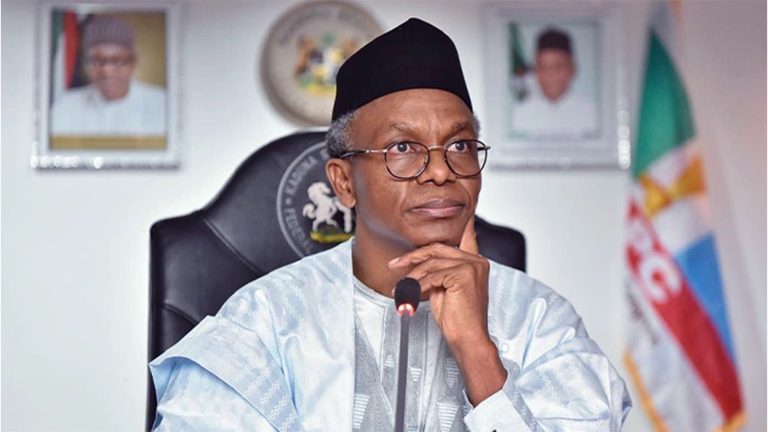
Justice Belgore Withdraws from El-Rufai’s Fundamental Rights Suit Over Impending Leave

0


The judge presiding over the fundamental human rights enforcement suit filed by the former Kaduna State Governor, Nasir El-Rufai, has withdrawn from the case, citing an impending leave.

The matter, which was before Justice Hussaini Belgore of the Federal Capital Territory (FCT) High Court, has now been returned to the Chief Judge of the court for reassignment to another judge.

El-Rufai’s suit, filed at the FCT High Court, challenges alleged violations of his fundamental human rights. Among the allegations are claims of unlawful actions by the Independent Corrupt Practices and Other Related Offences Commission (ICPC), including an alleged invasion of his Abuja residence.

The suit also references the involvement of the Economic and Financial Crimes Commission (EFCC) and the Department of State Services (DSS) in ongoing legal matters concerning the former governor.
With Justice Belgore’s withdrawal, proceedings in the case have been put on hold pending its reassignment by the Chief Judge of the FCT High Court.

FCCPC probes fare fixing by local airlines

0


The Federal Competition and Consumer Protection Commission has uncovered patterns of price manipulation by some domestic airlines during the December 2025 festive season, raising fresh concerns about consumer exploitation and competition in Nigeria’s aviation sector, according to an interim review released by the agency on Thursday.

It said the development raised fresh concerns over consumer exploitation and market competition in Nigeria’s aviation sector. The interim report, released by the commission’s Department of Surveillance and Investigations, followed an industry-wide probe announced in January.

According to the report, preliminary analysis of data obtained from local airlines showed that ticket fares during the festive peak were significantly higher than post-peak levels in January 2026, despite relative stability in key operating variables such as aviation fuel, government taxes, and foreign exchange.

The commission, in a statement signed by its Director of Corporate Affairs, Ondaje Ijagwu, said the forensic exercise compared domestic pricing trends during the December festive rush with subsequent fare levels. It noted that the differences observed in ticket prices appeared to reflect airlines’ discretionary pricing decisions rather than external cost pressures.

The statement read in part, “A review undertaken by the Federal Competition and Consumer Protection Commission has uncovered patterns of price manipulation perpetrated by some local airlines during the last festive season.

“The forensic exercise benefited from data collated by the commission from airlines operating local routes in the country. The report compares domestic airline pricing from the December 2025 festive period with post-peak January 2026 fare levels.

“Preliminary analysis indicates that fares recorded during the December peak were materially higher than those observed in the post-peak period across several routes, despite relative stability in critical operating variables like fuel price, government taxes, and foreign exchange.

“The differences observed in fares therefore appear to reflect airlines’ arbitrary pricing decisions, including yield management and capacity allocation, rather than any variation in regulatory fees.”

The commission said route-level analysis showed that fare increases coincided with periods of reduced seat availability during predictable seasonal demand peaks, suggesting deliberate supply constraints. It added that on high-density routes, peak fares were often clustered within narrow ranges across several operators, a pattern that may indicate coordinated behaviour.

“For instance, on certain corridors such as Abuja–Port Harcourt, peak fares were several times higher than corresponding post-peak levels. On selected routes, the difference in the price of a single ticket reached approximately N405,000,” the report stated.

It further noted that median fares across sampled routes rose sharply during the festive window compared with January benchmarks. However, the commission acknowledged that seasonal demand, fleet utilisation, and scheduling constraints could also affect pricing during peak travel periods, noting that “these factors remain under consideration as part of the commission’s ongoing review.”

Speaking on the findings, the Executive Vice Chairman and Chief Executive Officer of the Commission, Tunji Bello, said the exercise was part of the agency’s mandate to promote competition and protect consumers.

“This assessment is intended to provide clarity on pricing behaviour during predictable peak travel periods. The commission’s role is not to disrupt legitimate commercial activity, but to ensure that market outcomes remain consistent with competition and consumer protection principles under the law,” Bello said.

He stressed that the report was interim and that the Commission would conduct deeper structural and route-level analysis before taking any regulatory steps.

“It is important to emphasise that this is an interim report. Our next action will be dictated by the full facts established at the end of the review exercise. Then, the Commission will decide whether any regulatory guidance, engagement, or enforcement steps are necessary, strictly in accordance with the law,” he added.

The report identified possible violations of provisions of the Federal Competition and Consumer Protection Act 2018, including those relating to anti-competitive agreements, abuse of dominance, price-fixing, and unfair contract terms.

According to the commission, the relevant sections include prohibitions against restraint of competition, abuse of a dominant position, conspiracy, and unfair or unjust dealings with consumers.

It noted, “The report identifies the possible relevance of Sections 59, 72, 107, 108, 124 and 127 of the Federal Competition and Consumer Protection Act 2018, which respectively address the prohibition of agreements in restraint of competition, the prohibition of abuse of a dominant position, the offence of price-fixing, conspiracy to commit offences under the Act, the right to fair dealings, and the prohibition of unfair, unreasonable or unjust contract terms.”

Meanwhile, Bello disclosed that the commission would extend its probe to international airlines amid widespread complaints that Nigerians are charged higher fares compared to travellers in neighbouring countries on similar routes.

“Following the ongoing review of domestic airlines, the Commission will also examine the pricing behaviour of foreign carriers operating in Nigeria. There have been persistent concerns that Nigerians pay higher fares on certain routes compared to countries of similar distance,” he said.

Airfare pricing in Nigeria has remained a major concern for travellers, particularly during festive periods when demand surges. Industry operators often attribute high fares to limited fleet capacity, rising aviation fuel costs, and operational challenges.

However, consumer groups have accused airlines of exploiting predictable seasonal demand by restricting seat supply and inflating prices. Nigeria’s aviation sector has also struggled with aircraft shortages, high maintenance costs, forex constraints, and infrastructure gaps, which have reduced capacity and increased pressure on fares.

The FCCPC’s probe could reshape pricing transparency and competition in the sector if enforcement actions follow. The development comes amid broader regulatory efforts to strengthen consumer protection and ensure fair market practices across critical sectors of the economy.

Responding to the allegations, spokesperson of the Airlines Operators of Nigeria, Prof Obiora Okonkwo, tongue-lashed the FCCPC, saying it lacks the required expertise to dabble in how airfares are fixed. He further said the FCCPC’s actions are detrimental to the survival of domestic airlines.

Okonkwo said, “I have not read the details of the report, but what the FCCPC is doing is very detrimental to the survival of domestic operators. They don’t know the economics of airlines and do not possess the professional expertise to dabble in how prices are fixed.

“They don’t understand airline operations, and, as far as the AON is concerned, they are playing to the gallery and should not be taken seriously. We have immense respect for all government agencies, but we would not accept any statement not based on realities or facts.”‎

Punch

BREAKING: Adamawa State Commissioner of Works Still Remains In PDP

0

BREAKING: Adamawa State Commissioner of Works, Adamu Atiku Abubakar, who’s also the son of former Vice President Atiku, has decided not to join the APC Adamu’s name was missing from the list of 22 commissioners who joined Governor Fintiri to announce their defection from the PDP to APC.

Over 200 men wielding AK-47s stormed Yelwata – Police witness

0


A prosecution witness on Thursday told the Federal High Court in Abuja that some disgruntled Fulani chiefs sponsored over 200 armed men wielding AK-47 rifles to carry out the June 13, 2025, attack on Yelwata in Guma Local Government Area of Benue State.

The attack allegedly left more than 200 people dead and properties worth millions of naira destroyed.

The witness, Moses Paul, a team leader with the Intelligence Response Team of the Nigeria Police Force, testified in the trial of nine suspects charged in connection with the attack in Benue State.

The nine suspects accused of involvement in the deadly Yelwata attack pleaded not guilty on Monday, February 3, 2026, to 57 amended charges bordering on terrorism before the Federal High Court in Abuja.

In count one of the charge, the defendants were accused of knowingly participating in meetings between May and June 2025 in Nasarawa State to plan an attack on Yelwata.

The prosecution alleged that the attack led to the burning of houses, grievous bodily harm, and the death of about 150 persons, contrary to Section 12(a) of the Terrorism Prevention and Prohibition Act, 2022.

The 1st to 5th and 7th to 10th defendants were subsequently ordered remanded at the Kuje Correctional Facility pending trial.

Led in evidence by the Director of Public Prosecutions of the Federation, Rotimi Oyedepo, the witness alleged that the attackers were commissioned and funded by disgruntled Fulani chiefs who held meetings and pooled resources to execute the assault.

Paul told the court that he was in Apa, Benue State, when he received a distress call on the day of the incident and was immediately assigned to investigate the case.

“Upon arriving in Yelwata, our team commenced investigations which led to the arrest of the defendants in Kadarko, Ageregu, and parts of Nasarawa State,” he said.

According to him, the first defendant arrested was Haruna Abdullahi, apprehended in Ageregu, Nasarawa State.

During interrogation, Abdullahi allegedly confessed to attending meetings involving Fulani chiefs in Nasarawa.

The witness said the meetings were convened to address what was described as alleged unfair treatment of Fulani in Benue and Nasarawa, including the killing of their cattle and some of their kinsmen.

Paul further testified that the chiefs allegedly mobilised funds and engaged armed men to carry out the attack.

He added that the initial target was the Daudu community, but upon encountering resistance, the assailants diverted to Yelwata.

Earlier, the court declined an application by the first defendant’s counsel, Ibrahim Angulu, seeking to challenge jurisdiction and request bail.

The defence noted that Angulu suffered a stroke while in the custody of the Nigerian Correctional Service, but Justice Joyce Abdulmalik declined the request.

The court adjourned the matter to February 27 for the continuation of the examination of the first prosecution witness.

Punch

Big Blow for Atiku in Adamawa: Fintiri joins APC, making Tinubu’s party a juggernaut in the state

0


Adamawa Governor Umaru Fintiri joins the All Progressives Congress, APC, taking away Abubakar Atiku’s entire home base to President Tinubu’s party.

Governor Fintiri announced his decision in a broadcast on Friday.

He also announced that he has not left his former party, the PDP, alone. All members of his cabinet, lawmakers and other PDP officials in the state moved with him to the APC, thus fortifying the APC’s advantage and presence in the state.

Governor Fintiri said he defected in the “developmental interest” of the people of Adamawa State.

What this means for Atiku:
With the presidential election less than a year away, Fintiri’s defection is surely a big blow to veteran presidential runner Atiku Abubakar. His ADC is largely unknown in the state. He certainly needs to reassess his ambition, as his governor has turned the APC into an Adamawa juggernaut.

If a politician is not so popular at home, he has no business selling his candidacy to outsiders. The time is nigh for Atiku to consider retiring from politics and going to his second home in Dubai.

2027: Atiku, Obi, Amaechi, Mark, Galadima, Aregbesola reject electoral law

0


ABUJA — Nigeria’s leading opposition figures yesterday launched a coordinated political offensive against President Bola Tinubu and his All Progressives Congress, APC-led government, rejecting the newly-amended Electoral Act 2026, and warned it could spark a democratic crisis ahead of the 2027 general election.

The coalition, which brings together some of the country’s most prominent opposition voices, described the dispute over the electoral law as a critical test of Nigeria’s electoral credibility. It called for urgent amendments to the law and urged citizens, civil society groups and the international community to pay close attention to what it termed a growing threat to democratic rule.

The position was contained in a statement read by Ajuji Ahmed, the national chairman of the New Nigeria Peoples Party, NNPP, and endorsed at the world press conference by Former Vice President Atiku Abubakar; Senator David Mark, national chairman of the African Democratic Congress, ADC; Ogbeni Rauf Aregbesola, national secretary of the ADC; former Anambra Governor, Mr. Peter Obi; former Rivers governor, Rotimi Amaechi; former Cross River State Governor, Senator Liyel Imoke; Senator Ireti Kingibe; Senator Dino Melaye; and Secretary of the NNPP Board of Trustees, Buba Galadima; among other opposition figures who were physically present.

Alarm over Electoral Law
Reading the coalition’s position, Ahmed said the opposition leaders came together with what he described as a shared resolve to rescue Nigeria’s democracy and prevent the nation from sliding into what they warned could be ‘failure and collapse.’

“We have met and decided to collectively articulate our position against the offensive and anti-democratic Electoral Act, 2026, as well as other related matters that equally portend danger to our democracy.

“We all saw as Nigerians across various divides expressed their discontent… how the peaceful citizens were met with violent repression and disdain by a government that has effectively become deaf, desperate and dictatorial,” Ahmed read.

The opposition maintained that several provisions in the amended law, especially the changes affecting electronic transmission of results, could weaken the transparency and credibility of future elections.
“We therefore state unequivocally that the new Electoral Act is anti-democratic, and its implementation will undermine electoral transparency and sanctity of the ballot which are fundamental to free, fair and credible elections,” the opposition leaders declared.

Flashpoint: Section 60(3)
At the centre of the dispute is the controversial proviso in Section 60(3), which the opposition says gives too much discretion to presiding officers and weakens the framework for electronic transmission of results.

“This negation is unambiguously intended to provide a blank check to those who seek to manipulate election results by delaying the electronic transmission of results from the polling units to the IReV on the pretext of network failure,” the coalition said.

The group dismissed the network failure argument, pointing to earlier public assurances by officials of the Independent National Electoral Commission, INEC.

“The immediate past INEC Chairman stated on record that the BVAS equipment, which operates offline, had worked with over 90% success rate across the nation.

“Denying mandatory real-time transmission of election results from the polling units on the basis of lack of communication network is not supported by evidence,” the leaders said and cited telecommunications data to back its claim.

“Millions of our people who transact business daily with various financial platforms even from the remotest parts of the country know that the no-network argument is fraudulent,” the coalition said.

Primaries clause sparks constitutional row
Beyond the issue of result transmission, the coalition also strongly objected to amendments to Section 84 that restrict political parties to produce candidates via direct primaries or consensus, and described the change as an unconstitutional intrusion into party autonomy and internal democracy.

“There is nothing undemocratic about indirect primaries, which create an electoral college for the selection of candidates in an objective, transparent and orderly manner,” the coalition said.

They warned that the amendment could destabilise opposition parties ahead of the next electoral cycle.
“There can only be one reason for this particular amendment: to create chaos and disorder in the ranks of opposition political parties in the hope that they would not be able to present a candidate,” the coalition declared.

The leaders also vowed to challenge the provision through constitutional means. “In the coming days, we shall explore every constitutional means to cure this indirect hijack of the independence of political parties.”

FCT poll as ‘test-run’
The opposition also cited the recent Federal Capital Territory Area Council elections as what it described as practical evidence of its concerns about the amended law.

“Perhaps, the most important lesson that the opposition learnt from the FCT election is that President Tinubu and his APC do not care about free and fair election,” they said.

The coalition alleged irregularities in the vote figures, saying: “We saw it clearly in the FCT election where votes claimed by the APC outstrips the total number of accredited voters by several folds. We in the opposition therefore condemn that election as disgustingly fraudulent.”

The group said the experience had only strengthened its resolve to mobilise voters and party agents ahead of future polls.

Voter apathy raises legitimacy questions
Opposition leaders also raised alarm over what they described as historically low voter turnout in the FCT polls, warning that declining participation could weaken democratic legitimacy.

“Perhaps, the most important highlight of the FCT election is the historic low voter turnout… This disturbing trend signifies gradual erosion of the people’s confidence in the integrity of the electoral system. Nigerians are telling themselves that their votes no longer count,” they added.

The coalition maintained that rebuilding public trust would require clear, demonstrable commitment to credible elections and improved governance outcomes.

Gun attack on ADC leaders in Benin condemned
A major highlight of the briefing was the coalition’s condemnation of the attack on Obi, Odigie-Oyegun and some ADC leaders and members in Benin, on Tuesday.

“The recent assault on leaders of the African Democratic Congress in Edo State highlights the growing acts of political violence and intolerance in our country in recent times,” they said and described the incident as part of what it sees as a wider pattern of political intimidation.

“This culture of intolerance, thuggery, and violence against opposition party leaders therefore poses a potent danger to democracy and national stability. Democracy thrives on healthy competition of ideas, not on thuggery,” the coalition warned.

Citizens must act — Galadima
Speaking separately, Buba Galadima widened the appeal to ordinary Nigerians, stressing that defending democracy should not be left to politicians alone.

“I don’t think this should be left only to politicians. It is the duty of everybody in Nigeria to protect this democracy,” he said.

Reflecting on his personal involvement, he added: “I’m 78, as I stand before you here. I’m not supposed to be in the trenches again; I should be resting. And yet some of us found it very expedient to still lead the way,” he said.

Galadima also cautioned citizens against political complacency, saying “if we say no, they will not be able to do this. They cannot drive us.”

Opposition must fix itself — Amaechi
Rotimi Amaechi struck a reflective tone, arguing that opposition parties must also confront their own internal weaknesses.

“Bola Tinubu is not our problem, the opposition is the problem of the opposition. His (Tinubu’s) strategy is simple; his pattern is simple. He tries something today, you are weak. He puts something bigger, you are weaker,” the former Rivers governor said.

Amaechi urged stronger coordination and discipline among opposition actors ahead of future contests.

There is no governance in Nigeria today — Obi
Peter Obi painted a grim picture of the country’s socio-economic and security conditions.

“The government we have today is the worst ever in our country. There is no governance in Nigeria. Insecurity, killings and abductions are worse than even in countries at war,” the former Anambra governor argued.

While urging broader national mobilisation, Obi said: “Poverty has increased dramatically in the past two and a half years… the highest in any country on earth. Our appeal is that we have to rise up now because this situation cannot be allowed to continue.”

Atiku warns of continental impact
Atiku Abubakar called for the opposition’s concerns to be formally communicated to the international community.

“The speech delivered by the NNPP chairman on behalf of the country’s opposition should be sent to all the embassies, particularly the Western democratic embassies in this country,” he said, warning the situation could have wider continental implications.

“The collapse of democracy in Nigeria is going to lead to the collapse of democracy in Africa because we are the largest democracy in Africa. We must make sure we restore true democracy to our country,” Atiku added.

Nigerians face a stark choice — Melaye
Dino Melaye delivered a pointed philosophical warning to political actors: “Every one of us here must decide either to walk in the light of creative humanism or perish in the darkness of destructive selfishness.”

He urged the opposition to act decisively in the period ahead.

‘We will defend our votes’— David Mark
David Mark reassured supporters of the coalition’s resolve to safeguard the integrity of future elections.
“We will defend our votes and make sure that our votes count. We have learnt lessons from the FCT election,” he said.

He also cautioned authorities against targeting opposition figures because “incarcerating opponents or people in opposition will not help their case.”

He added that the opposition would continue to stand for electoral justice.

Electoral Law must be revisited immediately
In its concluding position, the coalition called for immediate legislative action to review the amended law.

“We demand that the National Assembly immediately commence a fresh amendment to the Electoral Act 2026, to remove all obnoxious provisions and ensure that the Act reflects only the will and aspiration of Nigerians,” the statement said.

The leaders also called for broader civic participation.
“We call on all lovers of democracy… and civil society groups to join us in the task of saving our democracy and our beloved nation. We are committed to defending our democracy and… ensuring that every vote counts,” the opposition said.

Other speakers were united in a collective appeal for vigilance ahead of the next electoral cycle, as opposition figures pledged continued coordination in what is fast shaping into an early, high-stakes political confrontation over Nigeria’s democratic trajectory.

Presidency to Opposition: Stop constant lamentation
Reacting, the Presidency cautioned the opposition political parties to stop constant lamentation and unwanted outrage against the Electoral Act and the APC government.

A statement, yesterday, by the Special Adviser to the President on Information and Strategy, Bayo Onanuga, said: “Some prominent opposition figures, led by the ADC and NNPP, gathered in Abuja today and made reckless, spurious allegations against President Bola Tinubu and the APC-led Federal Government.

“The opposition, particularly the ADC, has turned irresponsible political statements into an art form, all in a bid to attract cheap headlines and mislead the public.

“Working in cahoots with some civil society groups, the opposition has waged a relentless war of disinformation against the National Assembly and the administration, making false allegations in a bid to impose their will on Nigerians and the legislature, the arm of government constitutionally empowered to make laws for the country’s good governance.

“In response to the realities of our country, the National Assembly enacted an amendment to the Electoral Act that allows for the real-time transmission of election results and the use of Form EC8A as a backup in the event of network failure. The opposition’s claim that Form EC8A creates a loophole for manipulation is illogical and a needless tantrum by those who should know better.

“Any reasonable Nigerian understands that network glitches are a real issue. The 2026 Electoral Act does not prohibit real-time transmission; it simply stipulates that if transmission fails, the result recorded on Form EC8A shall be deemed valid.

“Moreover, the role of IReV (INEC Results Viewing Portal) must not be misunderstood by the opposition. IReV is not a collation centre; it is a platform for uploading results for public viewing. The primary source for validating election results remains Form EC8.

“During their press conference, opposition parties also rejected the use of direct primaries as a means of selecting party candidates.

“We find it perplexing why the opposition is crying over the inclusion of direct primaries and consensus voting, rather than the corrupt delegate system they prefer. The opposition should be grateful to the National Assembly for removing delegate-based primaries and restoring party ownership to its members.

“No aspirant should fear participation by party members in the primaries. This is how candidates are picked by party members in the United States, where we borrowed the presidential system of government.

“The opposition’s claim that the National Assembly ignored Nigerians’ wishes is a total falsehood. The NASS did not ignore the public. For two years, according to the Senate majority leader, the NASS listened to various stakeholders, technical experts, and millions of Nigerians who expressed their views on the risk of technical failure that could invalidate the entire election.

“A recurring refrain from the disorganised opposition is the false allegation that President Tinubu aims to turn Nigeria into a one-party state. Such cheap shots reveal their hollowness and lack of reason.”

“Nigeria is a vibrant multiparty democracy, with more than a dozen registered parties, including ADC and NNPP. The opposition should stop exaggerating the effects of the new Electoral Act. Their inability to organise and their tendency to blame others for their own disorganisation and unpreparedness are evident.

“President Tinubu is a democrat, an opposition leader who, alongside like-minded individuals, led the charge to defeat the PDP in 2015.

“Contrary to their deliberate misinformation designed to incite the populace, the new Electoral Act, signed by President Tinubu, is a significant improvement over the repealed law, closing loopholes the opposition leaders sought to exploit for manipulation.

“In summary, the opposition is merely crying foul because the rules of the game have been adjusted to prevent manipulation, such as result hacking, which they have allegedly perfected.

“Rather than this constant lamentation and unwarranted outrage, ADC and NNPP leaders should spend more time on introspection and fix their own mess.”

ADC leaders prime suspects in attack on Obi, Oyegun — APC
Meanwhile, the APC has fired back at the ADC over allegations regarding gun attack on ADC leaders in Edo. It labelled the opposition party its own “nemesis” and said that ADC leadership should be treated as the primary suspects in the attack.

In a statement, yesterday, National Publicity Secretary of the APC, Felix Morka, described the ADC as a party “doing a good job crippling itself even before it has time to stand on its feet.”

The ruling party dismissed claims that it was responsible for the violence, calling such accusations “utterly delusional” and “senseless.”

Morka argued that the party is currently “overrun by internal leadership and cult-like supremacy struggles,” pointing toward “widely reported violent clashes and confrontations among its factional leaders” as a more likely cause for the unrest.

“The ADC cannot smear our great party with a violent incident of its own exclusive making,” Morka stated, adding that the APC has “absolutely no role or responsibility” in the matter.

The ruling party described ADC’s leaders as “insufferable jesters” who “weaponize dark humour as a strategy to deceive, distract and disrupt in desperation for public sympathy”.

It slammed the ADC’s rhetoric regarding “acts of terrorism” as reckless and insensitive to the “patriotic sacrifices of our troops in the frontlines”.

Dismissing the ADC as a “fringe and inconsequential” group of “political wanderers,” the APC maintained that it is currently too occupied celebrating its own electoral successes to pay them any mind.

“We are too busy taking stock of our recent big wins in the Federal Capital Territory FCT municipal elections, and the Rivers and Kano states constituency elections,” the statement read.

The party attributed these victories to a “vote of confidence” in the leadership of President Bola Tinubu.

While roundly condemning the violence in Edo State, the APC called on law enforcement to carry out an “expeditious investigation” to bring the true perpetrators to justice, while urging the ADC to reflect on its “dismal and disgraceful performance” in recent by-elections.

Vanguard