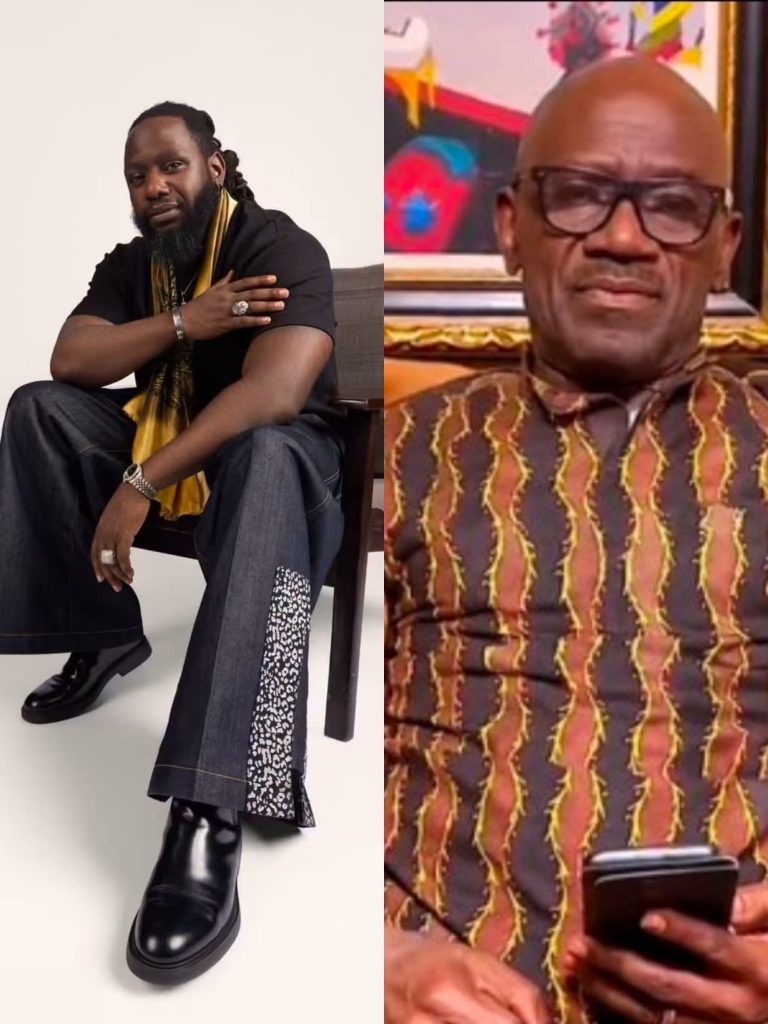
The embattled Senior Pastor of The Fountain of Life Church, Jimmy Odukoya, has explained why he retained a 2021 video in which his late father, Pastor Taiwo Odukoya, named Pastor Kunle Areogun as his preferred successor, despite allegedly being instructed to delete the recording after recovering from surgery.
Odukoya gave the explanation while addressing workers of the church on Wednesday, amid the leadership crisis that has resulted in a faction of its Board of Trustees withdrawing recognition of him as Senior Pastor, according to Church Times.
The publication reported that its correspondent was present at the meeting, where Jimmy addressed about 300 church workers.
Jimmy said the video was recorded in 2021 when his father was preparing to undergo surgery in the United States and feared he might not survive the procedure.
He said, “That was when he asked me to record him where he made the statements about succession. I was the one who recorded the video,” adding that his father’s elder brother, Pastor John Odukoya, was also aware of the recording.
Explaining what happened after the operation, Church Times quoted him as saying, “He said, however, that after the surgery turned out successful, his father asked him to delete the video as it was no longer valid. Rather than delete the video, Jimmy kept it, admitting that it was a grave mistake on his part.”
The number of children living in war zones and conflict areas worldwide has reached a new high, according to a report by child rights organisation Save the Children published on Thursday.
Around 589 million children, or nearly one in four worldwide, were living in conflict zones in 2025, the report titled, Stop the War on Children found.
Africa accounted for 44 per cent of all children affected worldwide, the organisation said.
The proportion of children living in conflict zones in Africa more than tripled between 2010 and 2025.
The number of children affected rose particularly sharply in the Middle East, including the Palestinian territories, Lebanon and Yemen, increasing from around 52 million in 2024 to 67 million in 2025. Children are often directly affected by fighting in their home countries.
They are forced to flee hostilities, while residential areas in many conflict zones are bombed or targeted by drone strikes.The destruction of schools and hospitals also disrupts access to education and healthcare.According to the report, 14,224 children were killed or maimed in conflicts last year. These figures include only verified cases.
The actual toll is likely to be higher in areas where information cannot be independently confirmed, such as Sudan.
The same applies to cases of sexual violence and the recruitment of children into armed groups.
A total of 6,576 cases of child recruitment and use in conflicts were verified.
The Democratic Republic of Congo recorded the highest number, with 1,397 children, followed by Nigeria, Haiti, and Somalia.
The report also documented 1,787 cases of sexual violence against children in conflict zones.
Around 86 per cent occurred in conflicts in Africa, including 592 cases in Congo.
Gov. Sheriff Oborevwori of Delta has warned politicians against using other peoples’ children as thugs while sending their own children abroad for safety.
This is contained in a statement by the Secretary, Media and Publicity Committee of Delta All Progressives Congress (APC) Campaign Council, Dr Tonye Timi, and made available Abuja on Thursday.
Timi quoted Oborevwori as making the appeal while addressing party faithful and residents in Warri South and Uvwie Local Government Areas on Wednesday.
It was reported that the governor used the All Progressives Congress (APC) campaign rallies to showcase some of his administration’s development projects and other achievements since his assumption of office in 2023. While reiterating his commitment to peaceful political participation in the state, Oborevwori, however, appealed for responsible political leadership.
He condemned some politicians who, according to him, usually send their own children abroad to safety while using other people’s children as instruments of political violence. The governor described such conduct as unfair to the society and urged political leaders to protect young people rather than exposing them to unnecessary danger.
For instance, he said that his own children are in Nigeria and participating in the political process ‘in a distinguished and responsible manner’.
It was reported that to prove his point, the governor introduced his son, Sheriff Jnr, to the mammoth crowd, reinforcing his message that politics should be conducted with dignity, responsibility and respect for human life.
Oborevwori, who stated that political differences should never threaten the peace and development of the state, urged residents to embrace tolerance and allow everyone to exercise their democratic rights without intimidation or violence.
He highlighted key infrastructure projects, particularly the PTI and DSC flyovers, which, he said, had significantly improved traffic flow and reduced travel time on the Warri-Uvwie corridor.
“Now journeys which previously take commuters several hours have become considerably shorter. This transformation is a testament to purposeful governance,” he said.
Oborevwori also reaffirmed his administration’s commitment to improving the lives of the people of the state through road construction and rehabilitation, bridge projects, market development and youth empowerment initiatives.
The rallies witnessed the defection of Mr Owin Ikuku, the Nigeria Democratic Congress (NDC) candidate for Warri South Constituency II, and the party’s vice-chairman into APC.
It was also reported that the defectors were formally received into APC by the state Chairman, Chief Solomon Arenyeka, who also presented party flags to APC candidates in Warri South and Uvwie council areas.
The deputy governor, Monday Onyeme, and the Director-General of Delta APC Campaign Council, Sen. James Manager, commended the governor’s developmental interventions and the growing participation of party stakeholders.
Also speaking, the Minister of Aviation and Aerospace Development, Festus Keyamo, praised the administration’s infrastructure projects, particularly the flyovers and rehabilitation of previously neglected roads.
Keyamo, a Senior Advocate of Nigeria (SAN), called for continued support for the development agenda of the Federal and State Governments.
It was reported that the rallies reinforced the importance of development, political inclusion and peaceful democratic engagement, ahead of the 2027 general elections.
The National Agency for Food and Drug Administration and Control (NAFDAC) has intercepted 17 cartons of suspected unregistered beverages and skin-lightening and anti-ageing injections at the Mallam Aminu Kano International Airport, Kano.
The interception was carried out by the agency’s Port Inspection Directorate (PID) during a joint examination at the Skyway Aviation Handling Company Plc (SAHCO) Shed.
The products were discovered concealed in a 33-carton consignment declared as “personal effects” and transported aboard an Ethiopian Airlines flight that arrived the previous day.
A physical examination revealed that the products had no NAFDAC registration numbers, while the consignment lacked the required import documentation.
The entire consignment was placed on hold in the custody of the Nigeria Customs Service. The importer was subsequently invited for questioning, and a statement was obtained as part of the investigation.
NAFDAC said the products remain on hold pending further regulatory directives, adding that their quality and authenticity have not yet been established.
The agency reiterated its commitment to strengthening surveillance and enforcement at Nigeria’s entry points to prevent the unlawful importation and circulation of unregistered, substandard and falsified regulated products and protect public health.
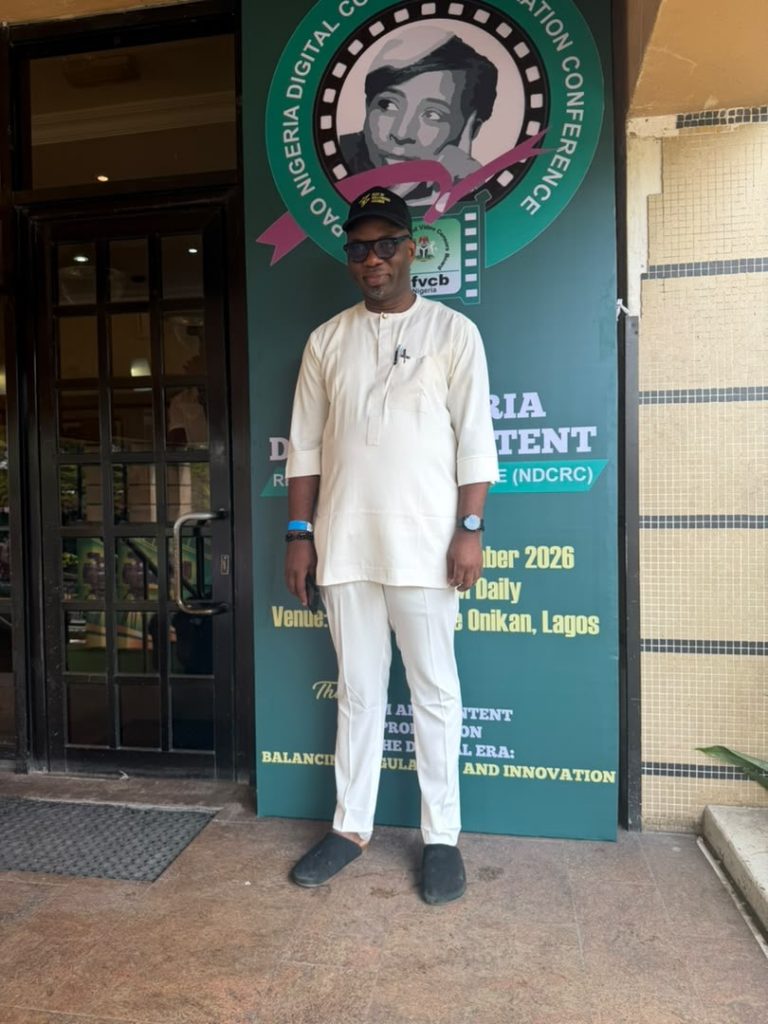
The National Film and Video Censors Board (NFVCB) on Tuesday honoured the founder of the Best of Nollywood (BON) Awards, Seun Oloketuyi, at the 6th Peace Anyiam-Osigwe Nigerian Digital Content Regulation Conference held at Shell Hall, MUSON Centre, Lagos.
The event, led by the Director-General of NFVCB, Dr. Shaibu Husseini, had Nollywood icon Richard Mofe-Damijo (RMD) as keynote speaker, with the theme: _”Film and Content Production in the Digital Era: Balancing Regulation and Innovation.”
Oloketuyi was rewarded for his consistency in producing the BON Awards for the last 18 years, making it Nigeria’s longest-running film awards platform.
The media entrepreneur and filmmaker, who is also author of Making Movies the Nollywood Way, has sustained the awards since 2009, moving it across states and celebrating Nollywood stars and crew despite industry challenges. The two-day conference brought together filmmakers, actors, content creators and stakeholders including Mildred Okwo, Judith Audu and Fidelis Duker who were named as panellists.
Candidates seeking to change their preferred institutions or courses in the Unified Tertiary Matriculation Examination (UTME) can now do so from the comfort of their homes without visiting offices of the Joint Admissions and Matriculation Board (JAMB) or its accredited centres.
The Board, which announced the introduction of the new service in Abuja, said the initiative would eliminate the stress, transportation costs and long waiting periods associated with physical visits to its offices, while making its services more accessible and convenient for candidates across the country.
It explained that candidates could now effect changes to their institutions and courses from any location with internet access through their registered JAMB profiles, describing the development as another milestone in its ongoing digital transformation.
In a statement issued by its Acting Director, Public Affairs and Protocol, Fabian Benjamin, JAMB said the initiative was part of efforts by its Registrar, Segun Aina, to reposition the Board as a service-oriented and digitally driven institution.
The Board said the arrangement aligned with the Federal Government’s Ease of Doing Business policy and global best practices in digital public service delivery, adding that it would significantly reduce congestion at JAMB offices and accredited facilities nationwide.
Explaining the procedure, JAMB said candidates were required to log into its e-Facility portal using their registered email addresses and passwords, select the Corrections and Uploads option on the sidebar menu and click on Change of Programme/Institution.
“Under the arrangement, candidates can process changes to their institutions and/or programmes directly through the JAMB e-Facility portal using their registered email addresses and passwords.
“To access the service, candidates are required to log into the portal, select the Corrections and Uploads option on the sidebar menu and click on Change of Programme/Institution.
“They are also required to select UTME, choose the relevant examination year and initiate payment for the service,” the statement explained.
JAMB said candidates would thereafter be redirected to the CREDO payment platform to complete their transactions using debit cards or bank transfers. It advised candidates to return to their payment pages after completing the transactions to ensure that their payment status reflected “PAID (Not Used)” before proceeding with the changes.
“Thereafter, candidates can return to the Change of Institution/Course page, enter their preferred institution and/or programme details and validate the transaction using a One-Time Password (OTP) sent to their registered email addresses. Upon successful OTP validation, candidates can submit their changes by clicking the SAVE button,” the Board stated.
It explained that a confirmation message would appear once the change of institution or course had been successfully processed, after which candidates were expected to print their Change of Programme/Institution slips.
The Board also directed candidates to log into the Central Admission Processing System (CAPS) to confirm that their new institution and course selections had been updated.
JAMB, however, cautioned candidates against making errors in their selections, advising them to carefully review their preferred institutions and courses before submitting their requests.
It stressed the need for candidates to ensure that their payments had been confirmed and that their registered email accounts remained accessible for OTP authentication.
The Board also warned candidates against engaging intermediaries or paying individuals to undertake the exercise on their behalf, insisting that the process was designed to be completed personally through their individual profiles.
It urged candidates to protect their login credentials and OTPs against unauthorised access to prevent fraud and manipulation of their admission records.
Aina reiterated the Board’s commitment to deploying technology to simplify administrative procedures and ensure that candidates, irrespective of their locations, could access essential services without unnecessary difficulties.
He said the ultimate objective was to build a more responsive and efficient institution where candidates would spend less time seeking administrative services and devote more attention to pursuing their educational aspirations.
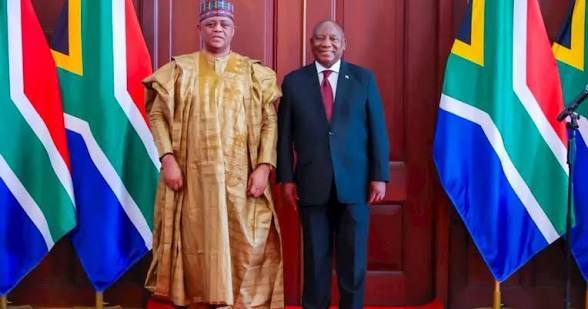
Abuja reviews Fani-Kayode’s engagement with Pretoria Federal Government has called for renewed diplomatic engagement with South Africa to resolve outstanding differences between the two countries following a disagreement over the treatment of Nigeria’s High Commissioner, Femi Fani-Kayode, during the presentation of his credentials to President Cyril Ramaphosa.
Ministry of Foreign Affairs disclosed yesterday that it was reviewing a comprehensive report on recent developments, including Tuesday’s meeting between Fani-Kayode and the Director-General of South Africa’s Department of International Relations and Cooperation (DIRCO), Zane Dangor.
The intervention followed a diplomatic controversy triggered by Fani-Kayode’s allegation that his introduction and speech were deliberately excluded from the live broadcast of the credentials presentation ceremony in Pretoria, although those of other ambassadors were aired. South African authorities disputed the allegation of deliberate exclusion, describing the incident as a broadcasting issue rather than an intentional slight against Nigeria.
The disagreement subsequently escalated into exchanges between the Nigerian High Commission and South African presidential officials, prompting DIRCO to invite the Nigerian envoy for discussions.
In a statement issued after Tuesday’s meeting, DIRCO said Dangor expressed South Africa’s concern over the events surrounding the credentials ceremony and the envoy’s subsequent remarks on social media.
The South African official also reminded Fani-Kayode of Article 41 of the Vienna Convention on Diplomatic Relations, which requires diplomatic representatives to conduct official business with their host governments through established diplomatic channels.
However, the Nigerian High Commission rejected suggestions that Fani-Kayode had been reprimanded, describing the meeting as cordial and constructive and insisting that both sides had exchanged views on matters of mutual concern.
The envoy also raised concerns about the safety and treatment of Nigerians living in South Africa, an issue that has repeatedly strained relations between the two countries.
Against this background, spokesperson for Nigeria’s Ministry of Foreign Affairs, Oluwafemi Adeniyi, said the Federal Government was closely monitoring developments and reviewing reports of the discussions between its envoy and South African authorities. Adeniyi stressed that both countries must deepen engagement to resolve outstanding issues while preserving their longstanding relationship founded on African solidarity, friendship and mutual respect.
“Particularly, as we both work assiduously to revitalise our longstanding bilateral relations, such is a relationship founded on African solidarity, friendship, and mutual respect.
“In this regard, the ministry reiterates commitment to sustained diplomatic engagement, while reviewing comprehensive report on the events that transpired in recent days,” he said.
The latest disagreement comes against a history of diplomatic tensions between Africa’s two major economies, particularly over attacks on foreign nationals, including Nigerians, in South Africa.
Relations between Abuja and Pretoria have periodically been strained by xenophobic violence, immigration disputes and concerns over the protection of Nigerian citizens and businesses.
In 2019, attacks targeting foreign nationals and their businesses in South Africa triggered diplomatic protests from Nigeria and retaliatory attacks on some South African-linked businesses in Nigeria.
Fresh concerns over attacks on foreigners in South Africa resurfaced in 2026, renewing demands for stronger protection of Nigerians and more effective bilateral cooperation.
Despite these differences, both countries have maintained significant diplomatic, economic and political ties, with cooperation extending to trade, investment and regional affairs.
South Africa’s foreign affairs department reaffirmed its commitment to strengthening the strategic partnership with Nigeria, stressing that the relationship should continue to be guided by mutual respect, cooperation and African solidarity.
The Nigerian Foreign Affairs Ministry did not specify the outcome of its review or announce further diplomatic measures, but maintained that sustained engagement remained the preferred approach to resolving the outstanding issues.
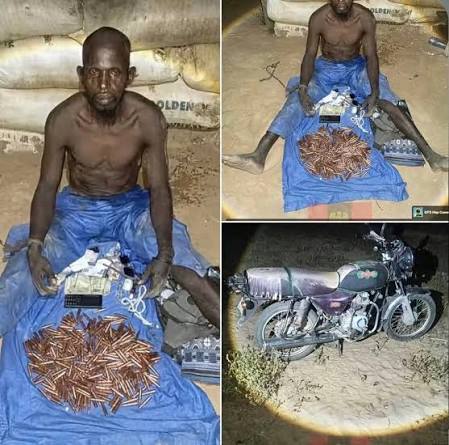
Troops of the Nigerian Army have arrested a suspected ammunition supplier to bandits and recovered 300 rounds of 7.62 x 39mm ammunition concealed in a sack of beans in Kogi State.
The suspect, identified as 47-year-old Umaru Muhammad of Ashe Village, was intercepted at about 9:30 p.m. on Tuesday, November 17, by troops of the Atsawa Blocking Force, working in collaboration with local vigilantes, following intelligence on the movement of ammunition allegedly destined for criminal networks. The Army said preliminary interrogation linked the consignment to two individuals identified as Gimba and Dare, residents of Gori Village along the River Niger corridor in Lokoja, who were described as local vigilantes.
The development, according to the military, has raised concerns over the possible infiltration and exploitation of community security structures by criminal ammunition supply networks.
In a statement, the Army said the suspect allegedly concealed the ammunition in a sack of beans in an attempt to disguise the consignment as legitimate commercial goods and evade security checks.
It said a thorough search of the suspect exposed the concealed ammunition, while other items recovered included a Bajaj motorcycle, a mobile telephone and N30,500 in cash.
The Army said Muhammad remained in military custody as investigations continued to unravel the suspected supply network and identify other persons involved in the transaction.
It described the arrest as part of ongoing operations to dismantle the supply chains providing arms, ammunition and other logistics to bandits, terrorists and kidnapping gangs across the country.
“The successful interception underscores the Nigerian Army’s sustained determination to dismantle criminal supply chains and deny terrorists and bandits access to critical resources required to perpetrate violence against innocent citizens,” the statement said.
The military added that troops would intensify intelligence-driven operations and strengthen collaboration with local security stakeholders to identify and dismantle criminal support networks before they could facilitate attacks on vulnerable communities.
It urged residents to promptly report suspicious movements, particularly the transportation of concealed weapons, ammunition and other prohibited items, to security agencies.
The Army reaffirmed its commitment to disrupting the activities of criminal groups and sustaining security operations aimed at restoring peace in affected communities.
•Marketers warn Iran-US tensions could trigger fresh fuel supply crisis 202 days after signing a strategic partnership agreement with two Chinese companies, the Nigerian National Petroleum Company (NNPC) Limited is under pressure to fast-track the rehabilitation of the Port Harcourt and Warri refineries.
This comes as the Petroleum Products Retail Outlets Owners Association of Nigeria (PETROAN) warned that escalating tensions between Iran and the United States could disrupt global petroleum supplies.
The association argued that any prolonged disruption around the Strait of Hormuz could trigger fresh shocks to crude oil supply, petroleum product availability, shipping costs and international energy prices, leaving Nigeria vulnerable because of its continued dependence on imported refined products.
National Public Relations Officer of PETROAN, Mr. Joseph Obele, who raised the concern in a statement yesterday, said the unfolding geopolitical tensions should serve as a wake-up call for NNPC Limited to move beyond agreements and technical assessments and translate its refinery revival plans into concrete action.
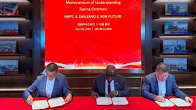
Obele noted that NNPC Limited signed a Memorandum of Understanding (MoU) on April 30, 2026, with Sanjiang Chemical Company Limited and Xinganchen (Fuzhou) Industrial Park Operation and Management Co. Ltd. for a proposed technical equity partnership covering the completion, operation, maintenance and expansion of the Port Harcourt and Warri refineries.
However, with exactly 202 days gone since the agreement was signed, he said Nigerians were yet to see the concrete implementation measures needed to bring the facilities back to productive operations.
Although plant assessments had reportedly been conducted on both refineries, the PETROAN spokesman insisted that such exercises must translate into clearly defined implementation timelines, investment commitments and commencement of rehabilitation and upgrade works.
“An MoU must not remain a ceremonial document. It must translate into measurable action, investment, infrastructure development and sustainable petroleum production,” he said.
He called on NNPC to make public the implementation status of the Chinese partnership, including the investment commitments, technical responsibilities, rehabilitation roadmap and expected delivery dates.
Obele also demanded the release of details of the plant assessment reports for both refineries, alongside clear performance targets and accountability mechanisms to ensure that the proposed partnership delivers on its objectives.
The PETROAN spokesman warned that Nigeria’s continued dependence on external refining capacity was a major vulnerability, particularly at a time when geopolitical tensions threaten the stability of international energy supply chains.
He said the consequences of a prolonged disruption in the Middle East would extend beyond the petroleum industry to transportation, food prices, manufacturing, businesses and household incomes.
Beyond the national energy security implications, Obele, an indigene of Ogoni, said the revival of the Port Harcourt Refinery carried significant economic and social implications for its host communities.
He lamented that thousands of Ogoni indigenes and other residents whose livelihoods depend directly or indirectly on the refinery had suffered economic hardship following its prolonged inactivity.
According to him, the shutdown has weakened employment opportunities, commercial activities and other livelihood sources, leaving families and businesses struggling.
He argued that restoring the refinery to productive operations would help revive local businesses, create jobs and rebuild economic confidence among host communities.
Obele urged NNPC to give special consideration to the social and economic importance of restarting the Port Harcourt facility as part of efforts to strengthen confidence between the oil industry and communities that have hosted petroleum operations for decades.
He further called for stronger strategic petroleum product reserves and improved domestic supply preparedness to cushion the country against possible international market disruptions.
“NNPC must recognise that refinery development is not merely a commercial undertaking; it is a critical component of Nigeria’s national energy security,” he said.
He maintained that Nigeria could no longer afford to remain heavily exposed to external refining capacity when its own refineries were yet to operate at their expected potential.
“ Nigeria has the crude oil. Nigeria has the market. What Nigerians urgently need is functional domestic refining capacity. The time for implementation is now. Another international petroleum crisis should not find Nigeria unprepared,” he added.
ADC demands probe of $4.5m contract, Atiku seeks release of President’s unedited interview • Atiku’s US lobbyist disputes Congress endorsement of Obi, NDC candidate denies seeking foreign backing
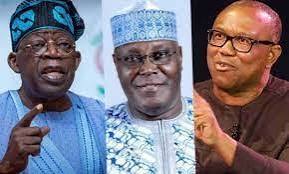
A widening row over American lobbying activities has embroiled President Bola Tinubu and opposition presidential candidates, Atiku Abubakar and Peter Obi, in separate political disputes, raising questions over foreign influence, the use of public funds and claims of international endorsement ahead of the 2027 general elections. While the African Democratic Congress (ADC) has demanded an investigation into a $4.5 million lobbying arrangement involving the Federal Government, Atiku has challenged Tinubu to release the unedited recording of his interview with American political consultant Diana London and disclose the terms of the contract.
Obi, on his part, has dismissed claims that he sought or secured the endorsement of the United States Congress during his visit to Washington, following a public challenge by an American lobbying firm engaged by Atiku.
The former Anambra State governor and presidential candidate of the Nigeria Democratic Congress (NDC) has insisted that his meetings with American lawmakers and other influential figures were aimed at strengthening Nigeria’s democratic institutions, addressing security challenges and promoting national development rather than soliciting foreign political backing.
“As I expressly noted in my remarks, my visit to the United States was not intended to secure an endorsement, and I did not characterise my meetings as endorsements of my political aspirations by the US Congress or any of its members,” Obi declared yesterday.
His clarification followed a statement by Karl Von Batten, principal of Washington-based Von Batten-Montague-York, who disputed reports suggesting that Obi’s engagements amounted to an official congressional endorsement.
Von Batten, whose firm is engaged by Atiku, maintained that the event attended by Obi was a private gathering involving individual American political figures and not an official meeting of Congress.
“Congress did not meet with or endorse Mr Obi. The event he attended was private, and no one in the video is a member of the House Foreign Affairs Committee or its Subcommittee on Africa,” he said.
The separate disputes have placed the international engagements of Nigeria’s major political actors under scrutiny, particularly the distinction between paid lobbying, private meetings with foreign lawmakers and official institutional endorsements.
At the centre of the controversy involving Tinubu is an agreement signed in December 2025 between Washington-based DCI Group and Aster Legal, a Nigerian law firm engaged in connection with the Federal Government’s efforts to communicate its security policies to American officials.
Documents filed under the United States Foreign Agents Registration Act (FARA) indicated that the agreement provided for a monthly retainer of $750,000, amounting to $4.5 million for an initial six-month period, with a provision for renewal that could raise the contract’s total value to $9 million.
The arrangement was intended to communicate Nigeria’s efforts to protect Christian communities, address security concerns and sustain American support for counterterrorism operations.
The controversy intensified after London, whose company was linked to the lobbying engagement, recorded an interview with Tinubu at the Presidential Villa, Abuja, and subsequently deleted social media posts praising security cooperation between Nigeria and the United States.
Photographs of the engagement showed Tinubu seated with the American consultant, with Chief of Staff Femi Gbajabiamila also present.
The interview was publicly confirmed by Imran Muhammad, Senior Special Assistant on New Media to APC National Chairman Nentawe Yilwatda, who announced that the recorded conversation would be released soon.
“President Tinubu has held an exclusive interview with Diana London, a prominent American media personality. The interview is anticipated to be released soon,” Muhammad wrote in a social media post.
However, the publicity surrounding the interview has not resolved questions about the lobbying agreement, the source of its funding or whether London’s engagement with the President formed part of the services covered by the contract.
As of last night, no verified statement from the Presidency had been established directly addressing the demands by Atiku and the ADC for disclosure of the contract, relevant payments and the circumstances surrounding the interview.
In a statement issued by its Director of Media and Publicity, Kola Ologbondiyan, the ADC Presidential Campaign Council questioned the government’s priorities, arguing that Nigerians deserved an explanation of the expenditure at a time of widespread economic hardship.
“At a time Nigerians are groaning under hunger, insecurity, failing public institutions, unpaid salaries and an unbearable cost of living, the reported expenditure of $4.5 million — running into billions of naira — on foreign image management raises serious questions about the priorities of the Tinubu administration.”
The opposition party demanded disclosure of the source of the funds, the officials who authorised the transaction, the contractual obligations involved and the services rendered.
It also sought clarification of the role played by the Office of the National Security Adviser in facilitating the arrangement.
“This is not merely a public relations issue. It is a matter of accountability, transparency and responsible governance,” the statement declared.
The ADC called on the National Assembly, the Economic and Financial Crimes Commission (EFCC) and the Auditor-General of the Federation to investigate the expenditure and make their findings public.
The party argued that foreign lobbying could not replace effective governance or address the economic and security challenges confronting Nigerians.
“You cannot polish failure. You cannot lobby away hunger. And you cannot buy credibility abroad when you have lost the trust of your own people at home,” the council said.
Atiku, in a separate statement issued through his Director of Strategic Communication, Phrank Shaibu, also challenged Tinubu to explain the circumstances surrounding the interview and submit himself to similar questioning by Nigerian journalists.
He questioned whether London’s engagement with the President was an independent journalistic exercise or part of a government-sponsored communications arrangement.
The former Vice-President demanded publication of the lobbying agreement, disclosure of relevant invoices and payments, identification of those who authorised the expenditure and release of the complete, unedited recording of the interview.
He argued that Nigerians deserved answers from the President on the rising cost of food, transportation, wages and other economic difficulties rather than what he described as a favourable interview conducted by a foreign consultant.
“Who authorised the $4.5 million payment, and from which public account did it come? At a time when Nigerians are told to endure the pain of fuel subsidy removal, they deserve to know whether the money saved is being spent on foreign publicity,” he said.
Atiku also questioned the presence of a large screen positioned within Tinubu’s line of sight during the recording, suggesting that it might have been used to display prepared prompts.
He challenged the Presidency to release the full recording, including what appeared on the screen, to establish whether the President answered questions spontaneously. The former VP maintained that Nigerian journalists were capable of conducting rigorous interviews with the President, naming Rufai Oseni, Ojy Okpe, Seun Okinbaloye and Reuben Abati among those who could question him on pressing national issues.
“Tinubu cannot ask families to suffer in silence while millions of dollars are committed to polishing his image. Publish the contract. Show the invoices. Release the unedited interview. Then face Nigerian journalists and answer the people,” Atiku declared.
The lobbying arrangement followed diplomatic tensions arising from allegations of religious persecution in Nigeria and the decision by United States President Donald Trump in November 2025 to designate the country as one of particular concern.
The Tinubu administration rejected suggestions that it was deliberately tolerating attacks on Christians, maintaining that terrorism, banditry and communal violence affected Nigerians across religious and ethnic divides.
The Federal Government subsequently intensified diplomatic engagements aimed at explaining its security policies and strengthening cooperation with Washington.
Against this background, Aster Legal engaged DCI Group under an agreement signed on December 17, 2025, by the Nigerian firm’s Managing Partner, Oyetunji Olalekan Teslim, and DCI Group Managing Member, Justin Peterson.
Further disclosures linked London Global Strategies, a company headed by Diana London, to payments made by DCI Group in connection with the Nigerian engagement.
According to records reported by TheCable, DCI Group disclosed payments of $75,000 and $375,000 to London Global Strategies on December 23, 2025, bringing the total to $450,000.
Although the filings establish a financial relationship between DCI Group and London’s company, they do not establish that the entire $4.5 million retainer was paid to London personally or that her interview with Tinubu was commissioned for that amount.
The distinction is central to the dispute as opposition politicians demand greater transparency over the contract and the nature of the presidential engagement.
In social media posts subsequently deleted, London praised cooperation between Nigeria and the United States, particularly in the area of security.
“The U.S-Nigeria security partnership is delivering results. Peace Through Strength,” she wrote.
She also described Nigeria as an important American ally in Africa and expressed optimism about opportunities for stronger economic and trade relations between the two countries.
The deletion of the posts intensified questions about the engagement, although no verified explanation had been established for their removal.
Meanwhile, the dispute surrounding Obi’s Washington visit also gathered momentum following Von Batten’s challenge to reports suggesting that the NDC candidate had secured the endorsement of the United States Congress.
Von Batten acknowledged that two serving American lawmakers, Marlin Stutzman and Beth Van Duyne, attended the gathering but stressed that neither belonged to the House Foreign Affairs Committee, which oversees aspects of American foreign policy.
“I recognise Congressman Stutzman and Congresswoman Van Duyne, but neither serves on the House Foreign Affairs Committee. They serve on other committees responsible for the budget and small businesses.”
He also maintained that no official of the United States Department of State’s Bureau of African Affairs appeared in the video circulated after Obi’s engagement.
Von Batten said his intervention was not intended to diminish the significance of Obi’s visit but to correct reports suggesting that the American legislature had officially received or endorsed the Nigerian presidential candidate.
“I am not trying to diminish the significance of Mr Obi’s visit, merely to set the record straight since my firm was mentioned,” he said.
The clarification followed Obi’s announcement on Tuesday that he had arrived in Washington on Monday, November 16, for meetings with congressional leaders and other influential American figures.
The former Anambra State governor identified Stutzman, Van Duyne, former Congressman Todd Tiahrt, Suzanne Bock Grisham and retired United States Army Colonel Albert V. Short among those he engaged.
He said the discussions focused on Nigeria’s development, security challenges, citizens’ welfare and the need to strengthen democratic institutions ahead of the 2027 elections.
Obi also disclosed that he granted an interview to American television commentator Glenn Beck, during which they discussed leadership, accountability and the management of Nigeria’s resources.
Responding to the controversy, Obi maintained that the primary purpose of his visit was to engage American political figures on matters affecting Nigeria rather than seek their endorsement of his presidential ambition.
“The primary purpose of the visit was to engage with congressional leaders and other influential American stakeholders, exchange perspectives, and discuss matters related to Nigeria’s development, the welfare of our citizens and, most importantly, the consolidation of our democracy.”
Obi stressed that particular attention was given to the need for credible elections, accountability and the protection of Nigeria’s democratic institutions.
“I am especially concerned with strengthening democratic institutions, advancing accountability, and ensuring that Nigeria’s electoral process produces elections that are free, fair, transparent and credible. These matters should concern every Nigerian who is committed to our country’s future.”
Obi maintained that constructive international engagements were important to strengthening Nigeria’s democracy and urged political leaders to pursue similar discussions with foreign stakeholders.
He cautioned against sensational interpretations of his visit, insisting that his mission was not to obtain foreign political backing.
“Nigeria’s democratic future is far too consequential to be distorted by sensational headlines or inaccurate interpretations. My mission centred on Nigeria, its people and the future of our democracy—not on endorsing any individual,” he said.
His media office also issued a clarification signed by Indris Zekeri Jnr., stressing that the former governor had neither sought nor claimed the endorsement of the United States Congress or the American government.
The office acknowledged that some American political figures made favourable comments about Obi’s leadership record but maintained that such remarks should not be interpreted as an official endorsement.
It also stressed the distinction between meeting individual members of Congress and being formally received or endorsed by Congress as an institution.