Home Blog Page 584

Toyin Abraham says supporting Tinubu publicly affected her, advises Timini Egbuson to stay neutral

0


Famous Nollywood actress, Toyin Abraham, has revealed that her open support and campaign for President Bola Tinubu during the past election affected her.

The actress revealed this while instructing actor Timini Egbuson on how to sell out his movie at the box office.

Toyin said, “The first advice I will give you in my entire life is don’t put your mouth in politics. Don’t tell them you’re supporting anybody. Don’t support anybody, just be on your own. Be neutral.”

When Timini tried to remind her of her open support for the Tinubu presidency during the last election, the actress stated: “That was then.”

While revealing the negative impact on her craft, Toyin shouted “Haaaaaaa, it affected me oooo.”

Toyin Abraham had cried out in early 2024 after her new release movie ‘Ijakumo’ (Born-Again Stripper) was allegedly being shared on WhatsApp.

While lamenting poor reviews on Ijakumo, the actress said, “You all will tell the world why choosing my own candidate is a crime and yours is not.”

This came after netizens vowed not to watch her movie for campaigning for Tinubu.

Sun

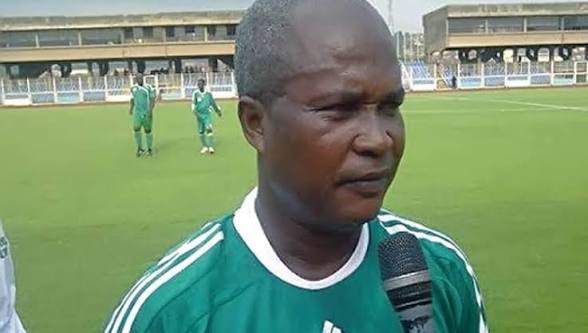
Former Green Eagles captain, Henry Nwosu dies at 63

0


The Nigerian football community has been thrown into mourning following the death of former Green Eagles midfielder and captain, Henry Nwosu.

Nwosu passed away in the early hours of Saturday after a brief illness, less than a week after the death of former Super Eagles coach Festus Onigbinde.
The news of his passing was confirmed by former Nigerian international, Segun Odegbami, who disclosed that the football legend died at about 4:00 a.m. after spending five days in hospital battling for his life.

According to Odegbami, the late Nwosu had been receiving treatment in the Intensive Care Unit of the Lagos State University Teaching Hospital where he had been admitted since Wednesday.

In an emotional message announcing the loss, Odegbami expressed deep sorrow over the passing of the former national team star, whom he fondly referred to as the “Youngest Millionaire.”
“It is with deep pain in my heart that I have to be the conveyor of the news of the death of Henry Nwosu MON,” Odegbami said while praying for the repose of his soul.

Widely regarded as one of Nigeria’s most gifted midfielders during his playing career, Nwosu played a pivotal role for the national team in the 1980s and remains one of the notable figures of his generation.
Further details regarding the circumstances of his death and funeral arrangements are expected to be announced by his family.

Sun

Cybercrime: 45,000 malicious IP addresses dismantled, 94 suspects nabbed in Nigeria, 71 other countries

0


An international cybercrime operation coordinated by INTERPOL has dismantled 45,000 IP addresses and servers responsible for phishing, malware and ransomware attacks, leading to the arrest of 94 suspects across Nigeria and 71 other countries and territories.

INTERPOL disclosed in a Friday statement obtained by SunOnline that law enforcement from 72 countries and territories participated in the operation.

The six-month exercise codenamed Operation Synergia III took place between July 2025 and January 31, 2026.

Besides the 94 suspects already arrested, another 110 individuals remain under investigation.

INTERPOL disclosed that during the operation, it transformed data into actionable intelligence, facilitated cross-border collaboration, and provided tactical operational assistance to member countries.

It said preliminary investigations led to a series of coordinated actions by national authorities, including raids on key locations and the disruption of malicious cyber activities.

This, it said, led to the seizure of 212 electronic devices and servers.

INTERPOL said the biggest success was recorded in Macau, China, where law enforcement identified more than 33,000 phishing and fraudulent websites, related to fake casinos and critical infrastructure, such as official bank, government and payment service sites.

It noted that victims were defrauded by topping up their accounts via the fraudulent sites or by having their personal information and credit card details stolen.

In Togo, police arrested 10 suspects operating a fraud ring from a residential area.

Some of the suspects specialised in technical crimes such as hacking social media accounts, while others carried out social engineering schemes including romance scams and sextortion.

“After gaining access to an account, the criminals contacted the victim’s online contacts, impersonating the account holder to build fake romantic relationships or deceive friends and family members.

“Their ultimate goal was to persuade these secondary victims to make money transfers,” the statement reads in part.

In Bangladesh, police arrested 40 suspects and seized 134 electronic devices related to a large range of cybercrime schemes, including loan and job scams, identify theft or credit card fraud.

INTERPOL’s Director of the Cybercrime Directorate, Neal Jetton said, “Cybercrime in 2026 is more sophisticated and destructive than ever before, but Operation Synergia III stands as a powerful testament to what global cooperation can achieve. INTERPOL remains at the forefront of this fight, uniting law enforcement agencies and private sector experts to dismantle criminal networks, disrupt emerging threats and protect victims around the world.”

According to the statement, several investigations are still ongoing in participating countries.

INTERPOL noted that during Operation Synergia III, it worked closely with its partners, Group-IB, Trend Micro and S2W, to track illegal cyber activities and identify malicious servers.

Participating countries and territories include Angola, Argentina, Austria, Bahrain, Bangladesh, Bolivia, Bosnia and Herzegovina, Botswana Brazil, Brunei, Burkina Faso, Burundi, Cameroon, Colombia, Democratic Rep of Congo, Eritrea, Eswatini, France, Gambia, Georgia, Greece, Guatemala, Guinea, Guinea Bissau, and Guyana.

Others are Honduras, Iceland, India, Iraq, Ireland, Israel, Japan, Jordan, Kazakhstan, Kenya, Kuwait, Latvia, Lebanon, Lesotho, Liechtenstein, Macao (China), Madagascar, Malaysia, Maldives, Moldova, Mongolia, Niger, Nigeria, North Macedonia, Oman, Pakistan, Palestine, Paraguay, Philippines, Poland, and Qatar.

Also on the list are Singapore, South Africa, South Sudan, Spain, Sri Lanka, Switzerland, Tanzania, Togo, Türkiye, Uganda, Ukraine, United Arab Emirates, United Kingdom, Venezuela, Zambia, Zimbabwe.

Sun

Tinubu hails ex-Plateau gov Jonah Jang at 80

0


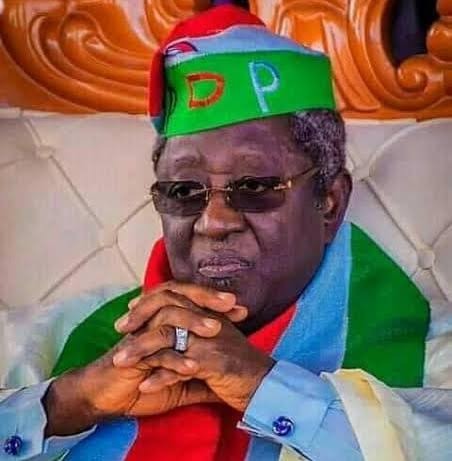
President Bola Tinubu has congratulated former Governor of Plateau State, Jonah Jang, on his 80th birthday, describing him as a statesman, who has devoted his life to public service and the pursuit of peace.

In a statement issued on Friday by his Special Adviser on Information and Strategy, Bayo Onanuga, President Tinubu commended Jang for his “many years of dedicated service to the state and the nation.”

“President Tinubu rejoices with the elder statesman on the milestone, marked by many years of dedicated service to the state and the nation,” the statement read.

The president lauded the former governor’s efforts in fostering peace and harmony in Plateau State, noting his role in de-escalating religious and ethnic tensions through dialogue and community engagement.

“The President notes the former governor’s interventions in promoting peace and harmony in the state, particularly his efforts to de-escalate religious and ethnic tensions through greater enlightenment and interaction,” Onanuga stated.

President Tinubu also recalled Senator Jang’s earlier service as a military officer and administrator, where he governed Benue and the old Gongola states before transitioning into politics. He described Jang’s time in office as one of visionary leadership marked by “legacy projects, such as road construction, civil service reforms, and the repositioning of health and educational institutions.”

While congratulating the former governor, his family, and political associates on the milestone, Tinubu prayed for his continued good health.

“The President prays that the Almighty God will strengthen the octogenarian with good health to keep serving the state and the nation,” the statement added.

Sun

NUPRC moves against dormant oil licences

0


Chief Executive of the Nigerian Upstream Petroleum Regulatory Commission (NUPRC), Oritsemeyiwa Eyesan, has declared that the era of oil companies holding on to prospecting licences without developing the assets is over.

Eyesan said the regulator is now strictly enforcing the “drill-or-drop” provision contained in the Petroleum Industry Act (PIA), compelling operators to either commence exploration activities or relinquish idle oil blocks.

She made this known while receiving a delegation from the Petroleum Directorate of Sierra Leone at the Commission’s headquarters in Abuja.

According to her, the enforcement of Section 94 of the PIA has fundamentally changed the landscape of Nigeria’s upstream sector by eliminating the long-standing practice where operators held licences for decades without developing the assets.

She explained that the new regime has begun to attract more serious investors into Nigeria’s upstream sector, particularly in the on-going 2025 licencing round, which is expected to boost the country’s petroleum reserves and unlock new exploration opportunities.

“The PIA has opened opportunities for both small and big players because there is now a drill-or-drop provision in the Act. In the past, we had operators who held licences for as long as 20 years and sat on those assets without doing anything. That era is now over,” Eyesan said.

She noted that the enforcement of the provision has expanded the pool of available assets and strengthened the Commission’s capacity to organise more frequent bid rounds, with the possibility of conducting annual licencing rounds going forward.

Eyesan also expressed satisfaction with the level of interest shown by investors in the 2025 licencing round, describing the number of applicants that participated in the pre-qualification stage as impressive.

She explained that the licensing round offers 50 oil blocks but the guidelines restrict each company, whether bidding independently or as part of a consortium, to a maximum of two blocks, a measure designed to encourage wider participation and promote fairness in the allocation process.

Earlier, the Director-General of the Petroleum Directorate of Sierra Leone, Foday Mansaray, said the delegation came to Nigeria to understudy the country’s petroleum regulatory framework and draw lessons that could help strengthen Sierra Leone’s hydrocarbon sector.

Sun

Alleged fraud: Ex-Jigawa gov, Sule Lamido, sons, others for fresh trial April 1

0


A Federal High Court sitting in Abuja, has fixed April 1, for fresh arraignment of former governor of Jigawa State, Sule Lamido, over the N1. 3 billion corruption charges brought against him by the Economic and Financial Crimes Commission (EFCC).

Lamido is to be re-arraigned alongside his two sons, Aminu Lamido and Mustapha Lamido, who allegedly committed the fraud with their father through fictitious contract award.

Justice Peter Lifu fixed the new date on Friday, following the absence of the former governor and his sons in court to take their plea.

Although, the fresh arraignment was scheduled for Friday, the defence counsel, Mr Joe Agi SAN, apologised for their absence in court, explaining that information about the trial came on Thursday evening.

Agi said that the former governor and his children reside in Kano and could not make it to the court because of the distance and lateness of the notice of hearing.

The senior lawyer thereafter undertook to produce the accused persons on the adjourned date to face their trial.

However, the prosecution counsel, Mr Chile Okoroma SAN, said he was taken aback that the three defendants were not in court, having been served with the trial notice.

Okoroma SAN said that EFCC had written a letter to the Chief Judge of the court, Justice John Tsoho, demanding that the initial trial judge, Ijeoma Ojukwu now in Calabar on transfer to be brought back to Abuja for the trial of the defendants. Justice Lifu said that the issue of EFCC letter was an administrative one and would be determined by the Chief Judge, but fixed April 1 for arraignment.

EFCC had in 2015, charged Lamido, his two sons and their companies before the Federal High Court in Abuja on a 27-count charge of money laundering involving N1.35 billion allegedly siphoned from the state in a money laundering scheme.

Sun

Rising fuel prices spread panic

0


•Manufacturers, small business owners lament rising costs
•Nigerians groan as transport fares, food costs surge

Economists and development experts have warned that the recent surge in global crude oil prices, which is driven by escalating tensions in the Middle East, will continue to push up transport fares, food prices and the overall cost of living in Nigeria in the coming months.

They noted that disruptions in global oil supply could worsen inflationary pressures in the country, particularly as the country remains heavily dependent on imported refined petroleum products.

Professor of Economics and Public Policy at the University of Uyo, Akpan Ekpo, said the rising global oil prices, linked to the on-going conflict involving Israel, the United States and Iran, could lead to higher fuel prices locally, which would ultimately translate to higher inflation.

According to him, once fuel prices increase, transport costs, airfares and prices of goods and services are also likely to rise.

“The spike in oil prices globally will result in rising inflation and affect the cost of living. When the price of fuel goes up, transport prices will increase and virtually all sectors of the economy will be affected because the economy is largely driven by petroleum resources,” he said.

Ekpo explained that the impact could be felt both in the short and medium term if the crisis persists, noting that prolonged supply disruptions in the global oil market could worsen the situation.

He added that rising transport costs could also push food prices higher since farm produce must be moved from rural areas to urban markets.

“To cushion the extraordinary increase in food prices in the short term, the government may need to import food. In the long term, however, Nigeria must take agricultural production more seriously and address security challenges so that farmers can return to their farms and increase food output,” he said.

Also speaking, Group Managing Director and Chief Executive Officer of Bristol Investments Limited, Dr Chijioke Ekechukwu, said the extent to which inflation may rise would depend largely on how long the conflict lasts. He said government still has a role to play in preventing further price shocks within the domestic economy.

According to him, Nigeria, as an oil-producing country, can stabilise petroleum product prices locally by ensuring that crude supplied to domestic refineries is sold at controlled rates rather than prevailing international market prices.

“If this is done, petroleum product prices can remain relatively stable in Nigeria,” he said.

Ekechukwu also urged the authorities to strengthen border security to prevent the smuggling of petroleum products to neighbouring countries.

Similarly, economic and development expert, Dr Aliyu Ilias, warned that disruptions in the global oil supply chain, particularly around the Strait of Hormuz, could further drive up crude oil prices and fuel inflationary pressures in Nigeria.

He noted that although higher oil prices could increase government revenue since Nigeria’s 2026 budget benchmark was set at $64.8 per barrel, ordinary citizens may face more economic hardship due to rising fuel and transportation costs.

“When the price of crude oil increases, it should ordinarily benefit Nigeria because we produce oil. But the reality is that while government earns more revenue, citizens pay more because we still rely heavily on imported refined products,” he said.

Ilias also pointed out that petrol prices have already begun to rise in some areas, with some filling stations selling for as high as N1,300 per litre. He warned that higher fuel prices would inevitably translate into increased transportation costs, which would then push up the prices of goods and services across the country.

“Anything that affects transportation will affect goods and services, especially food items that have to be transported from farms to markets. That will ultimately drive inflation,” he said.

He further cautioned that the development could erode some of the macroeconomic gains recently recorded in the country if urgent steps are not taken to address the situation. The expert therefore urged the government to accelerate efforts to boost local refining capacity, build strategic fuel reserves and strengthen regulatory oversight in the petroleum sector to cushion Nigerians from the impact of global oil market shocks.

Fuel prices and cost of doing business

Nigerian manufacturers and small business owners are worried that higher fuel prices are resulting in high costs of doing business. With fuel playing a central role in transportation, production, and power generation, stakeholders say Nigerian businesses, particularly small and medium-scale enterprises (SMEs), are already feeling the pressure from rising global oil prices triggered by the geopolitical crisis in the Middle East.

Chairman of the Lagos chapter of the National Association of Small Scale Industries (NASSI), Gertrude Akhimien, explained that the ripple effects of higher fuel prices will spread across the entire supply chain.

According to her, the transportation of goods, including raw materials and finished products, will become more expensive, while the cost of staff commuting to and from work will also rise.

“The overheads for warehousing, distribution, and logistics services will go up. There will also be pressure on profitability, especially for low-margin or commodity-driven sectors,” she said, warning that as operational costs increase, businesses will have little choice but to pass the additional costs to consumers.

Akhimien noted: “This will ultimately result in higher prices of goods in the market because businesses must transfer the increased cost of production and logistics to the final consumer.”

She therefore called for urgent government intervention to cushion the impact on SMEs and critical sectors of the economy.

According to her, temporary relief measures such as targeted subsidies for essential sectors, tax reductions for critical services, and financial support for struggling small businesses would help them remain afloat during the crisis. She suggested that government could temporarily reduce or exempt certain taxes on essential goods and the transport sector to reduce the cost of moving goods and services. In addition, she advocated subsidies or grants for micro, small, and medium enterprises to help them survive until global energy markets stabilise.

How Nigeria can shield economy from global oil price shock

Providing another perspective, David Etim, Project Lead, Calabar and Gulf of Guinea Municipal and Trade Centre, argued that Nigeria could shield its economy from global oil price shocks by strengthening domestic refining.

He noted that with the operational capacity of the Dangote Refinery, the government could allocate a portion of Nigeria’s crude oil production for domestic refining at controlled prices.

Etim explained that instead of selling all crude oil at international market prices, the government could supply crude locally at a moderate price to stabilise fuel costs within the country.

“If the actual production cost of crude oil is about $35 per barrel, the government could supply it domestically at around $50 per barrel, including margin,” he suggested. Such a policy, he explained, would enable local refineries to produce fuel at lower costs than international market rates, thereby helping stabilize fuel prices for businesses and consumers.

He further suggested that the government could dedicate about 450,000 barrels of crude oil per day for domestic refining while exporting the remaining output to meet national revenue targets.

According to him, this approach would ensure stable local fuel prices, reduce Nigeria’s exposure to global price volatility, and guarantee reliable fuel supply for businesses. Etim also pointed out that fuel smuggling across borders worsens shortages and drives up local prices.

He recommended that agencies such as the Nigeria Customs Service deploy digital tracking and geo-fencing technology to monitor fuel trucks leaving refineries. With such technology, trucks attempting to divert fuel across borders illegally could be detected and stopped, helping to maintain supply within the country. He added that Nigeria could still meet its budgetary obligations by exporting the remaining crude oil within its quota under the Organisation of the Petroleum Exporting Countries, while reserving a portion for domestic consumption. In addition, temporary financial measures such as borrowing or other inflows could serve as buffers while production levels improve.

Oil prices and deepening economic hardship

Meanwhile, Imokhai Ehimigbai, a member of the Manufacturers Association of Nigeria Export Group, warned that rising fuel prices would deepen economic hardship for both businesses and consumers. “When fuel prices increase, transport fares rise, food prices increase, and ordinary Nigerians face more hardship,” he said. He noted that manufacturers and SMEs are deeply involved in logistics, production, and distribution, meaning they cannot escape the effects of higher energy costs.

“At the end of the day, the final consumer bears the cost,” he added.

Ehimigbai also questioned why Nigeria, despite being one of the world’s major oil producers, still struggles to supply crude oil to domestic refineries.

He expressed concern that if the Middle East conflict escalates further, Nigerians may face even greater economic hardship due to rising energy prices.

For stakeholders, the message is clear: while global geopolitical tensions may be beyond Nigeria’s control, strategic domestic policies, particularly in refining, supply management, and SME support, could help shield businesses and consumers from the worst effects of global fuel price shocks.

Why petrol prices rise in Nigeria

The removal of the long standing fuel subsidy in May 2023, by President Bola Tinubu set the stage for rising petrol prices in Nigeria. Before then, the government paid part of the petrol cost. Following subsidy removal, petrol prices are now determined by market forces such as crude oil price, exchange rate, and supply costs. This single policy change caused the largest jump in petrol prices in decades.

A weak naira and dollar dependence is also another factor. Nigeria still pays for many petroleum transactions in U.S. dollars. When the naira weakens, importers need more naira to buy fuel. This increases the landing cost of petrol, which marketers pass on to consumers. Although, with the coming on stream of the Dangote Refinery, the level of fuel imports have reduced drastically.

Petrol prices depend heavily on the cost of crude oil. When global crude prices rise, refining and import costs also increase as currently being witnessed with the geopolitical tensions in the Middle East, which have pushed oil prices up globally. Moving petrol across Nigeria is expensive because of poor road infrastructure, high transportation costs, and security issues in some regions. All these costs are added to the final pump price. Nigeria’s limited domestic refining capacity is another major setback why petrol prices remain high. Nigeria is a major crude oil producer but historically imports most of its refined fuel.

Importing petrol involves shipping, insurance, and port charges. These additional costs push up prices. The Dangote Refinery is expected to reduce imports, but prices will still reflect global oil prices and exchange rates. Market competition and depot pricing also drive up prices. Petrol retailers buy fuel from depots or refineries. When depot prices increase, filling stations adjust their pump prices. Competition among marketers also affects pricing.

Sun

Tinubu hails ex-Plateau gov Jonah Jang at 80

0


President Bola Tinubu has congratulated former Governor of Plateau State, Jonah Jang, on his 80th birthday, describing him as a statesman, who has devoted his life to public service and the pursuit of peace.

In a statement issued on Friday by his Special Adviser on Information and Strategy, Bayo Onanuga, President Tinubu commended Jang for his “many years of dedicated service to the state and the nation.”

“President Tinubu rejoices with the elder statesman on the milestone, marked by many years of dedicated service to the state and the nation,” the statement read.

The president lauded the former governor’s efforts in fostering peace and harmony in Plateau State, noting his role in de-escalating religious and ethnic tensions through dialogue and community engagement.

“The President notes the former governor’s interventions in promoting peace and harmony in the state, particularly his efforts to de-escalate religious and ethnic tensions through greater enlightenment and interaction,” Onanuga stated.

President Tinubu also recalled Senator Jang’s earlier service as a military officer and administrator, where he governed Benue and the old Gongola states before transitioning into politics. He described Jang’s time in office as one of visionary leadership marked by “legacy projects, such as road construction, civil service reforms, and the repositioning of health and educational institutions.”

While congratulating the former governor, his family, and political associates on the milestone, Tinubu prayed for his continued good health.

“The President prays that the Almighty God will strengthen the octogenarian with good health to keep serving the state and the nation,” the statement added.

Sun

Lagos gives March 31 deadline to building owners

0


Lagos State Safety Commission has issued a directive to building owners, developers and facility managers across the state to register and obtain safety certification for all elevators and other vertical transportation equipment before March 31, 2026.

The Director-General and Chief Executive Officer of the Commission, Lanre Mojola, announced the ultimatum on Friday, warning that elevators operating without proper registration or certification would be decommissioned after the deadline.

Mojola said the move is aimed at preventing avoidable accidents in the state’s rapidly growing high-rise environment, stressing that elevator safety remains a critical aspect of urban infrastructure.

According to him, all elevators in residential, commercial and public buildings must be registered with the commission and certified before they are put into operation and throughout their service life.

“As the Lagos skyline continues to expand, the increasing reliance on vertical transportation must be matched with strict adherence to safety standards,” Mojola said.

To facilitate compliance, the commission has introduced an online registration platform where building owners can digitally register their elevators and other vertical transportation equipment. The safety agency explained that new elevators installed in both public and private buildings must be inspected before being commissioned, while existing lifts will undergo periodic safety audits to detect possible faults.

Mojola warned that enforcement would begin immediately after the March 31 deadline, adding that any elevator found without a valid registration or safety certificate would be shut down as part of a state-wide compliance exercise.

The commission also urged residents and office users to support the initiative by reporting faulty elevators, missed maintenance schedules or unregistered lifts through its safety hotlines.

The state government said the measure forms part of efforts to strengthen public safety and ensure that property owners comply with established safety standards across the state.

Sun

Lawmaker Praises Sanwo-Olu’s Development Drive at Badagry West Electrification Project Commissioning

0


BY TAIWO OGUNMOLA -OMILANI

A member of the Lagos State House of Assembly, Hon. Bonu Solomon, has commended Babajide Sanwo-Olu for what he described as the governor’s unwavering commitment to ensuring balanced development across Lagos State.
Solomon, who represents Badagry Constituency I, gave the commendation during the commissioning of the Badagry West Electrification Project in Badagry. The project was inaugurated by the governor, who was represented at the event by the Deputy Governor, Obafemi Hamzat.

While appreciating the electrification initiative, the lawmaker also urged the state government to give urgent attention to another critical infrastructure project in the area — the Gbaji–Apa–Owode Road.
Solomon expressed gratitude to the state government for the long-awaited electrification of the three HC Tower Crossings, the rehabilitation of the 33KV distribution lines along the Gbaji–Seme and Owode–Apa corridors, and the connection of 51 transformer substations.

The projects were officially commissioned on Wednesday at the Kweme Descendants Union in Badagry West.
According to him, the restoration of electricity to the communities represents the return of a vital social amenity that residents had long been deprived of.

Quoting from the Bible, Solomon said: “And God said, ‘Let there be light,’ and there was light.” He added that the project marks a new dawn for the people of Badagry West.

“On behalf of the good people of Badagry, especially Badagry West, we say a big thank you to Governor Babajide Sanwo-Olu and his deputy, Dr. Obafemi Hamzat, for commissioning this electrification project in our community,” he said.
The lawmaker also appreciated Hamzat for visiting his family home during the deputy governor’s trip to the area, describing the gesture as encouraging.

Solomon assured residents that he would continue to use his legislative influence to advocate for the construction of the Gbaji–Apa–Owode Road.
“Next in line for us in Badagry is the Gbaji–Apa–Owode Road. I promise to use my legislative influence to push this through, by God’s grace,” he added.

In his remarks, Hamzat said the electrification project was part of deliberate efforts by the state government to address long-standing electricity challenges in the Badagry axis.

He explained that the initiative aligns with the THEMES+ Development Agenda of the Sanwo-Olu administration, particularly its focus on expanding energy access and building resilient infrastructure to support economic growth.
Hamzat also noted that with the recent inauguration of the board of the Lagos State Electricity Regulatory Commission, Lagos is better positioned to regulate and expand electricity supply across the State.

According to him, the electrification projects will significantly strengthen power distribution along the Gbaji–Seme and Owode–Apa corridor, enabling thousands of homes, shops, and businesses to benefit from improved and more stable electricity supply.

He added that border communities such as Badagry deserve sustained infrastructure investment to support trade, productivity, and overall community wellbeing.
The deputy governor also conveyed the governor’s assurance that the state government would collaborate with the Federal Government to accelerate work on the Gbaji–Apa–Owode Road project.

The commissioning ceremony attracted a large turnout of dignitaries and residents, many of whom expressed appreciation to the state government for bringing electricity infrastructure to the area.