Home Blog Page 583

PDP: Makinde, Bala, Turaki, others face tough options ahead of 2027 …as Wike-backedPDP sets condition to accept them

0


Appeal Court ruling has left Nigeria’s main opposition party with only two governors and their next move could determine whether the party survives as a national political force.

Behind a small mosque known locally as Masalaci in Area 1, Mpape in Abuja, the afternoon Ramadan heat hangs heavily over a narrow line of roadside stalls. A few customers sit on wooden benches. Traders speak quietly.

Inside one stall, 41-year-old phone repairer Samaila Ibrahim bends over a cracked smartphone on his workbench. A tiny screwdriver turns carefully in his hand.

A customer reads out a headline from his phone about the crisis in the Peoples Democratic Party. Samaila pauses. For a moment, he studies the screen.

“So the court has cancelled their convention?” he asks.

The customer nods. Samaila shakes his head slightly and returns to the open phone on his table.

“If their convention no longer exists, who will present their presidential candidate?” he says, tightening a small screw.

It is a simple question. But it captures the deeper uncertainty now surrounding Nigeria’s main opposition party.

Because after a recent ruling by the Court of Appeal (Nigeria), the political future of the PDP may now depend largely on the decisions of just two men; Seyi Makinde and Bala Mohammed.

Their next move could determine whether the party enters the 2027 elections as a serious opposition force, or one without a single sitting governor.

A Ruling that Reshaped the Party

The Court of Appeal recently nullified the PDP’s national convention held in Ibadan last year, the gathering that produced a National Working Committee aligned with former minister Kabiru Tanimu Turaki.

With that decision, the leadership structure that emerged from the convention effectively disappeared.

For now, the only national leadership recognised by the Independent National Electoral Commission is the caretaker committee headed by Abdulrahman Mohammed as chairman and Samuel Anyanwu as secretary, widely seen as politically aligned with FCT Minister Nyesom Wike.

The ruling shifted the balance of power inside the party. A faction that had earlier lost the internal struggle now controls the structure recognised by law.

A senior PDP figure aligned with the Mohammed/Anyanwu leadership put it bluntly.

“Politics is about structure. Right now, the structure is not on their side,” he told Sunday Vanguard.

The Last Two Governors Standing

Not long ago, the PDP dominated Nigeria’s political landscape. The party governed the country for sixteen years and once controlled more than a dozen states before losing power in 2015.

Today, only two governors remain under its banner. Makinde governs Oyo State. Bala Mohammed leads Bauchi State. Both men are serving their final terms. Both want influence over who succeeds them in 2027. But the crisis at the national level now threatens those plans.

Under Nigeria’s electoral system, parties submit candidate nominations through their recognised national leadership to the Independent National Electoral Commission.

If that leadership structure becomes the subject of legal disputes, those nominations can also be challenged. For governors trying to shape succession politics, that uncertainty carries real risks.

A senior party official involved in recent consultations said the two governors are watching events closely.

“Both of them understand that the national structure determines who signs the candidate lists. Without influence at that level, their leverage going into 2027 becomes very limited,” the source said.

The Supreme Court Option

One possible path is to continue the legal fight. Supporters of the Turaki faction are considering an appeal to the Supreme Court of Nigeria.

But that route could take time. Months, possibly longer.

Meanwhile the electoral calendar keeps moving.

Former Senate President Abubakar Bukola Saraki warned that waiting for the final ruling could complicate the party’s preparations.

“My own position is that the Court of Appeal has ruled. However, with the revised timetable by INEC, it is obvious that there is no time to wait for the Supreme Court decision.

“Otherwise, we would not meet the deadlines for completing the process of nominating candidates. Also, uncertainty will continue to hang over the validity of the tickets issued to those nominated on the PDP platform,” he said.

Saraki urged party leaders to focus instead on reconciliation and organising a fresh convention that complies with electoral rules.

Calls for Reconciliation

Others within the party have made similar appeals. Kogi Central senator Natasha Akpoti-Uduaghan said the PDP must move beyond prolonged court battles.

“The Court of Appeal has spoken, and as a democratic party that believes in the rule of law, we must shift focus from litigation to reconciliation and rebuilding.

“Our members across the grassroots must not become casualties of prolonged disagreements among leaders,” she said.

But reconciliation could also mean accepting the authority of the Mohammed/Anyanwu-led structure, something that could strengthen the influence of the Wike faction.

Election lawyer Nnamdi Ezeobi said disputes over party leadership often create serious complications, noting that under Nigeria’s electoral framework, candidates are submitted through a party’s recognised national leadership, meaning such disputes can create legal complications for nominations.

“Under Nigeria’s electoral framework, candidates are submitted through the party’s recognised national leadership. If that structure is being contested through court rulings, it can expose those nominations to legal challenges later,” he said.

Talk of Defections

Another possibility being discussed quietly in political circles is defection. Since the court ruling, speculation has grown about whether the two governors might eventually leave the party.

Some observers believe Bala Mohammed could move to the All Progressives Congress. Makinde has also been mentioned in conversations involving the African Democratic Congress.

If either governor leaves, the consequences could be dramatic. The PDP would lose its last state governments.

The Lamido Factor

Ironically, one of the disputes that helped trigger the legal crisis did not originate within the Wike faction.

Former Jigawa governor Sule Lamido had earlier protested what he described as attempts to restrict access to nomination forms ahead of the Ibadan convention.

Lamido argued that internal democracy required open competition and publicly demanded the forms himself.

That disagreement eventually became part of the legal process that led to the convention being cancelled.

What began as a dispute over internal procedures has now reshaped the party’s leadership.

A Quiet Advantage for the Ruling Party

Beyond the PDP itself, political analysts say the broader political implications could be significant.

If the opposition remains trapped in internal disputes and legal battles, the biggest beneficiary could be President Bola Ahmed Tinubu.

The party that once posed the most serious national challenge may now enter the next election cycle without a sitting governor or its political structures in their respective states.

Public Reactions

Gbenga Giwa — Commenting on the shrinking number of PDP governors, he said the party’s constant legal battles make it unattractive to politicians seeking stability.

“The unending litigations in PDP do not augur well for any serious politicians seeking reelection. That’s why it’s only Seyi Makinde (Oyo) and Bala Mohammed (Bauchi), who cannot seek reelection, that remain as governors in PDP.”

Leo Gratias — Reflecting on the party’s emergency consultations after the ruling, he said the moment could still become an opportunity for rebuilding.

“PDP’s moment of truth (has come). Governor Makinde, Governor Bala Mohammed, and ex-Chairman Umar Damagum joined the Board of Trustees for an emergency Abuja meeting post-Appeal Court judgment on Wednesday. This gathering signals the party’s urgent push for unity, reconciliation, and strategic rebuilding ahead of 2027. Litigation over now the real work begins. Time to heal and regroup.”

Aminu Adamu — Offering encouragement to the governors, he framed the moment as a test of political conviction.

“The two of you (Bala Mohammed and Seyi Makinde) should continue to be resilient. The test of time really show those who are genuinely for the course and that have integrity.”

As the sun begins to drop behind the hills around Mpape, people start preparing to break the Ramadan fast.

Samaila finally closes the phone he has been repairing and hands it back to its owner.

The customer asks again about the PDP crisis. Samaila shrugs. He begins packing his tools.

“Everything now depends on those two governors,” he says.

The call to prayer echoes across the neighbourhood. For a moment, the stall falls quiet.

“If they leave, then the story of that party is finished,” he adds softly.

Vanguard
My father rejected my education because of my gender – Eucharia Anunobi

0


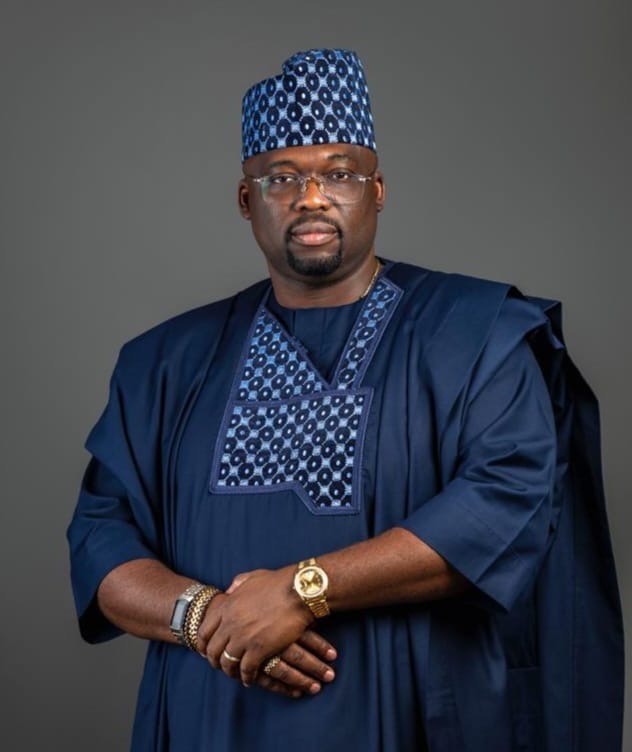
Veteran actress , Eucharia Anunobi has opened up about her difficult relationship with her father, revealing that he strongly opposed her education and career ambitions simply because she was a girl.

Speaking during an appearance on the The Honest Bunch Podcast, the Nollywood star-turned-evangelist recounted how her father believed educating a female child was a waste, insisting that a girl would eventually marry and take her husband’s name without leaving any legacy for her family.

According to Anunobi, her father’s disapproval of her education began as early as secondary school.

“My father was against me going to school. It was a thing of displeasure for him. From secondary school, he made it clear that he was not interested in my education,” she said.

She recalled that her father often questioned the value of educating a girl child.

“As a matter of fact, what is in a girl child? What legacy would it leave except that they are only going to get married. So please, cut them off from me,” she quoted him as saying.

The actress explained that her father’s refusal to support her education pushed her into modelling, a path that eventually helped her fund her studies.

“That was how I began my journey and it encouraged me into modelling. It was modelling that sustained, fuelled and financed my education. Yes, my father was wealthy in his own terms, but he did not want to have anything to do with the girl child,” she said.

Anunobi also disclosed that her father once locked her in her room for six months for refusing to take up an office job he had arranged for her.

“For six months, my father locked me in my room. There is the small white paper they call ‘use me’ paper — he would write an employment letter and push it under my door so I could fill the form and we could submit it,” she said.

However, she insisted on pursuing a different path.

“But I would write back that I don’t want to work in an office. My mum would be crying and they would be giving me food like a criminal for six months in my own father’s house,” she added.

She further revealed that her father did not pay her school fees until she got to university, forcing her to find ways to support herself.

“In his mind, I was a waste. He didn’t pay my fees till university, and after I struggled to make my university education possible, he wanted to lord over me, but I refused. All those acting jobs I did then, I used to sneak out to go and do them,” Anunobi said.

Vanguard

Why legacy is important to me – Omotola Jalade-Ekeinde

0


Veteran Nollywood actress Omotola Jalade-Ekeinde opened up about the importance of legacy, motherhood, and her personal journey in a candid interview on the Afropolitan Podcast.

“Legacy is important to me because when I am gone, that is the only thing people hold on to,” Omotola said. “You won’t think of how much I had, how much I made, or how much I spent. It would be what I stood for.”

Reflecting on her life, she added, “Emotionally or sentimentally, people would want me to say that I am a mother. But I am proud of all my achievements—from that little girl who lost her father at 12 and was living in Iyana Ipaja, to where I am today.”

The gifted role interpreter also recalled a point in her life when she felt alone.

According to her: “There was a time when I felt very down. All my friends started travelling abroad. Four of my best friends left for the UK or America. I felt like life had left me.”

Vanguard

Ramadan Talk Day 26: Essence of Zakatul Fitr

0


At the end of Ramadan, Muslims perform a unique act of charity known as Zakatul Fitr. This obligatory charity represents the social and spiritual completion of fasting and ensures that the blessings of Ramadan extend to every member of society, especially the poor and needy.
Zakatul Fitr was prescribed by the Prophet (s.a.w) as a purification for the fasting person and as support for those in need. Ibn Abbas reported: “The Messenger of Allah ﷺ prescribed Zakatul Fitr as purification for the fasting person from idle talk and indecent speech, and as food for the poor.” (Abu Dawud).
This statement reveals the dual essence of Zakatul Fitr: spiritual purification and social compassion.
During Ramadan, despite sincere efforts, believers may fall into minor mistakes such as careless speech or moments of impatience. Zakatul Fitr serves as a form of spiritual cleansing, completing the fasting experience and helping to compensate for shortcomings.
At the same time, it ensures that the poor can also celebrate the joy of Eid al-Fitr. Islam does not allow a society where some celebrate while others remain hungry. By requiring every financially capable Muslim to give Zakatul Fitr, the religion creates a system of social solidarity and dignity.
The Prophet (s.a.w) required that Zakatul Fitr be given in the form of staple food such as dates, barley, or grain—items commonly consumed by the community. The amount prescribed was one ṣā‘ (approximately 2.5–3 kilograms) per person.
This charity is not limited to individuals themselves; rather, the head of a household is responsible for paying it on behalf of all dependents, including children. In this way, the act becomes a family participation in generosity.
The essence of Zakatul Fitr therefore lies in gratitude, purification, and compassion. It reminds believers that Ramadan is not solely about personal spiritual growth but also about uplifting others. Hunger experienced during fasting encourages empathy, and Zakatul Fitr transforms that empathy into concrete action.
Ramadan reflection on Zakatul Fitr highlights Islam’s balance between spirituality and social justice. As believers conclude the month of fasting, they are reminded that worship must lead to generosity, and personal devotion must translate into collective wellbeing.
Thus, Zakatul Fitr becomes the final act that completes Ramadan—purifying the fast, supporting the poor, and spreading joy throughout the community as Muslims prepare to celebrate Eid.

Vanguard

Uncertainty mars IPAC election in Osun as delegates leave venue

0


An Inter‑Party Advisory Council (IPAC) election scheduled for Saturday in Osogbo, Osun State, descended into uncertainty after representatives of registered political parties abruptly left the venue and the electoral committee failed to appear.

The exercise, slated to begin at 10:00 a.m., did not hold after delegates — who had registered with the Independent National Electoral Commission (INEC) — departed unexpectedly as at 2pm.

Findings at the scene revealed that the electoral committee appointed by the national IPAC body was not present at the venue; sources indicated the committee members were elsewhere in the town.

Chinyere Kalu, national organising secretary of IPAC, told reporters by phone that he would communicate a new time for the election. He said he was in a meeting and reassured stakeholders that the election would be conducted.

Attempts to obtain further details about why delegates left or the whereabouts of the electoral committee were not successful at press time.

Sun

Apapa LG Chairman Dares LASG, Rejects Supervisors List, Holds Late-Night Swearing-In

0

A fresh political storm is brewing in Apapa Local Government after the council chairman, Senbanjo Idowu Adejumoke, reportedly defied the Lagos State Government’s directive on the composition of her executive council and conducted a late-night swearing-in ceremony for a new set of officials.

According to sources familiar with the development, the Lagos State Government, through the Commissioner for Local Government and Chieftaincy Affairs, had earlier forwarded a list of 16 nominees to the Apapa chairman to constitute the local government’s executive council.

The list reportedly included the Secretary to the Local Government (SLG) and several supervisory councillors expected to form the administrative backbone of the council.

However, in a move that has sparked political tension within the Apapa political structure, Chairman Senbanjo did not fully adopt the list provided by the state government.

Sources say the chairman selected only five names from the list of 16, one of which included the SLG, while discarding the remaining eleven nominees.

In a dramatic twist, Senbanjo reportedly added ten new names of her own choosing individuals who were not part of the list sent by the state government.

Late Tuesday night, the chairman is said to have quietly conducted a swearing-in ceremony, inaugurating the newly assembled executive team made up of the five selected from the state list and the ten additional appointees she personally introduced.

The move has sent shockwaves through the local political establishment, particularly among party leaders and stakeholders believed to have played major roles in compiling the original list forwarded from the state level.

Political insiders say the development effectively means the chairman rejected eleven of the nominees endorsed by the Lagos State political structure, replacing them with individuals she prefers to work with.

While details of the late-night ceremony are still emerging, sources say the decision was taken to quickly establish a working executive team under her leadership rather than continue negotiations over the composition of the council cabinet.

The development is now being interpreted by many political observers as a bold assertion of authority by the Apapa chairman, who appears determined to shape her administration on her own terms despite pressure from political stakeholders.

Within Apapa’s political circles, reactions remain mixed. While some view the move as a necessary step for the chairman to build a team she trusts, others see it as a direct challenge to the political structure that helped produce her emergence.

The situation now sets the stage for what could become a significant political confrontation between the Apapa council leadership and powerful stakeholders within the Lagos political establishment.

As the dust settles from the unexpected late-night swearing-in, attention will now turn to how the state government and party leadership respond to a development many insiders say has altered the political equation in Apapa Local Government.

Troops Arrest Two Suspects With 192 Rounds of Ammunition in Cross River

0

Troops of the 13 Brigade of the Nigerian Army, under the operational command of Headquarters 82 Division, have recorded another operational breakthrough in ongoing security operations in Obubra Local Government Area of Cross River State.
The development is part of sustained efforts by the military to consolidate earlier successes against armed criminal elements operating in the Odonget community and its environs.

The latest operation follows the recent neutralisation of five armed criminals and the discovery and destruction of an illegal gun manufacturing facility in the Odonget general area. The discoveries were made during exploitation operations conducted by troops after security personnel were ambushed while responding to a communal crisis in the area.

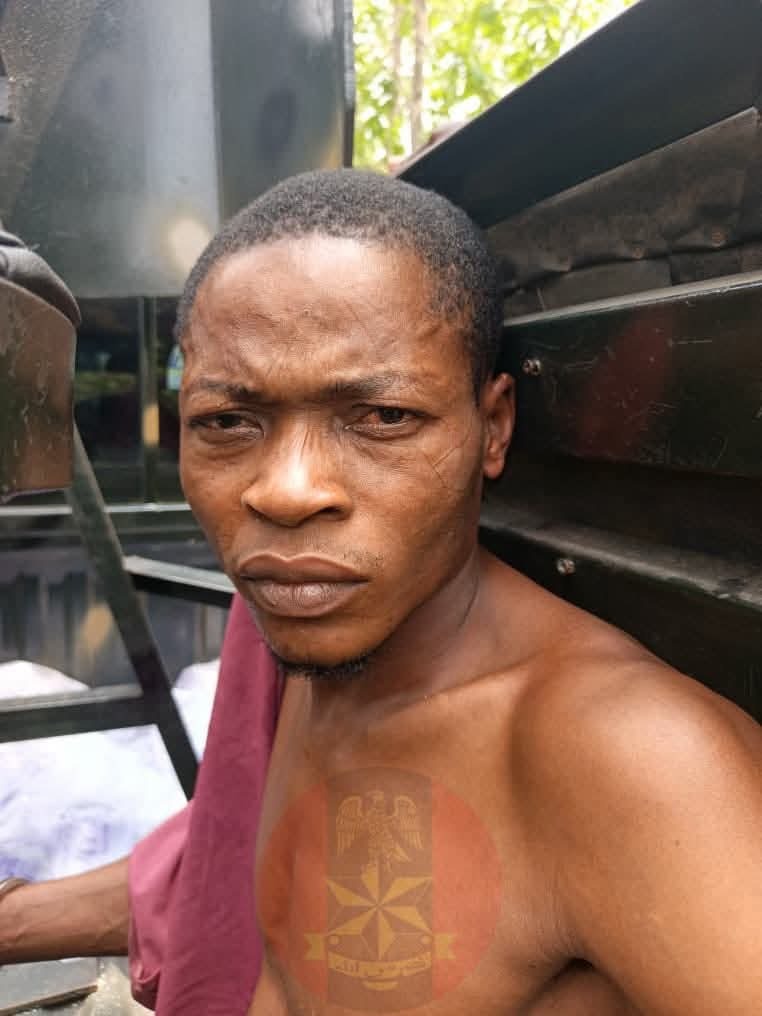
Continuing the offensive to deny criminal elements freedom of movement, troops conducting a stop-and-search operation at the Obubra checkpoint at about 12:58 p.m. on March 13, 2026, intercepted and arrested two suspects identified as Sunday Ayam and Afriday Augustus.

The suspects were reportedly found in possession of 192 rounds of Norinco and .223 Remington ammunition, commonly used with AK-pattern rifles.
Preliminary assessments indicate that the suspects and the recovered ammunition may be connected to the ongoing hostilities around the Odonget general area.

The suspects are currently in custody while investigations have commenced to determine the source of the ammunition, its intended destination, and the extent of the suspects’ possible involvement in recent security disturbances.

The Commander of the 13 Brigade, Brigadier General Patrick Alimikhena, commended the vigilance and professionalism of the troops, noting that the arrest further demonstrates the effectiveness of ongoing military operations aimed at dismantling criminal networks in the area.

He reassured residents that troops will sustain aggressive operations, checkpoints, and patrols across the Brigade’s Area of Responsibility to prevent the movement of illegal arms and ensure lasting peace and security.

The Army also urged members of the public to remain law-abiding and continue to support security agencies by providing timely and credible information that could aid efforts to apprehend criminal elements and maintain peace in the area.
Further details will be communicated as investigations progress.

Sanwo-Olu, Deputy Lead Cleanup of Mushin Corridor as Lagos Reintroduces Monthly Environmental Sanitation

0


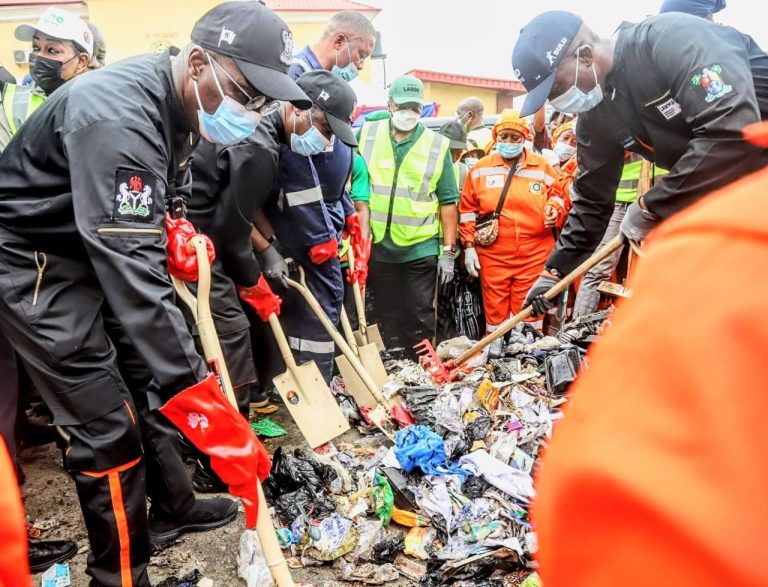
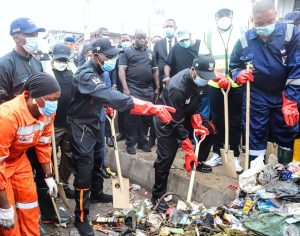
Governor of Lagos State, Babajide Olusola Sanwo-Olu, on Saturday led state officials on a cleanup exercise along the Mushin–Agege Motor Road corridor in Mushin, while announcing the reintroduction of the Monthly Environmental Sanitation exercise across the State.

Sanwo-Olu said the sanitation exercise would now be observed on the last Saturday of every month between 6:30 a.m. and 8:30 a.m., but without the restriction of movement that previously accompanied the exercise.
The governor made the announcement during the symbolic flag-off of the monthly environmental sanitation exercise held along the Mushin–Agege Motor Road corridor in Mushin.

He explained that the initiative aims to revive the culture of environmental responsibility among residents and communities across the State.

According to him, environmental sanitation was previously observed nationwide on the last Saturday of every month and had become a way of life for many residents who came out regularly to clean their surroundings.

“It was a moment when citizens across the country came together to clean their surroundings, clear their drains and contribute to a healthier environment across the metropolis,” he said.

Describing the exercise as a collective civic responsibility, the governor noted that many Nigerians would recall when the monthly environmental sanitation exercise was a national practice.
Sanwo-Olu said the exercise reinforced the principle that a clean city depends not only on government but also on the discipline and cooperation of its citizens.
He recalled that a court judgment had ended the restriction of movement that previously accompanied the sanitation exercise, stressing that the state government has always respected the rule of law and the authority of the courts.

While noting that enforcement mechanisms had changed, the governor emphasised that the responsibility of maintaining a clean environment remains unchanged.
He said the condition of streets, markets, drainage channels and public spaces reflects the seriousness with which residents treat their shared environment.
“In a city as large and dynamic as Lagos, maintaining a clean and healthy environment must remain a collective civic duty and responsibility of all residents,” he said.

Sanwo-Olu reiterated that the reintroduced monthly sanitation exercise provides an opportunity for residents to revive environmental consciousness within their communities and across the State.

He added that the exercise would be driven by public awareness, partnership and voluntary participation, while the government continues to strengthen waste management systems and improve drainage infrastructure across the state.
The governor also warned against indiscriminate waste disposal, noting that dumping refuse on streets and into drains damages public infrastructure and contributes to flooding.

He urged residents to adopt responsible waste disposal habits, stressing that simple actions such as properly disposing of plastic bottles, wood, wrappers and other solid waste could make a significant difference.
Sanwo-Olu further called on residents to embrace regular sanitation practices to help prevent the spread of communicable diseases and ensure a cleaner, safer and more sustainable Lagos.

Earlier in his welcome address, the Commissioner for the Environment and Water Resources, Tokunbo Wahab, described the sanitation flag-off as a bold step by the present administration to improve the well-being of residents while ensuring a safe, clean and sustainable environment.
He said the initiative aligns with the T.H.E.M.E.S Plus Agenda of the state government, which prioritises a conducive and liveable environment for all Lagosians.

Wahab recalled that the monthly sanitation exercise was once a strong culture in Lagos, helping to promote a healthy environment, encourage community participation in waste management and reduce the risk of disease outbreaks.

He explained that residents are encouraged to clean their homes, surroundings and drainages in front of their houses and streets, while officials of the Lagos Waste Management Authority (LAWMA) would collect properly bagged waste for disposal.
Wahab said one of the key goals of the exercise is to educate residents on the need to take ownership of their environment by maintaining cleanliness and disposing of waste responsibly.

“As a government, it is our collective responsibility to continue developing strategic methods to improve the environment, ensure it is flood-free and make it conducive for residents. This can only be achieved through continuous environmental sanitation,” he said.

He also warned residents against violating environmental laws, noting that the Lagos State Environmental Protection Law 2017 remains in force and offenders would be sanctioned in accordance with the law.

The sanitation exercise was attended by government officials, community leaders and residents who participated in the cleanup along the Mushin corridor.

Troops Foil ISWAP Infiltration Attempt in Bitta, Inflict Heavy Losses

0


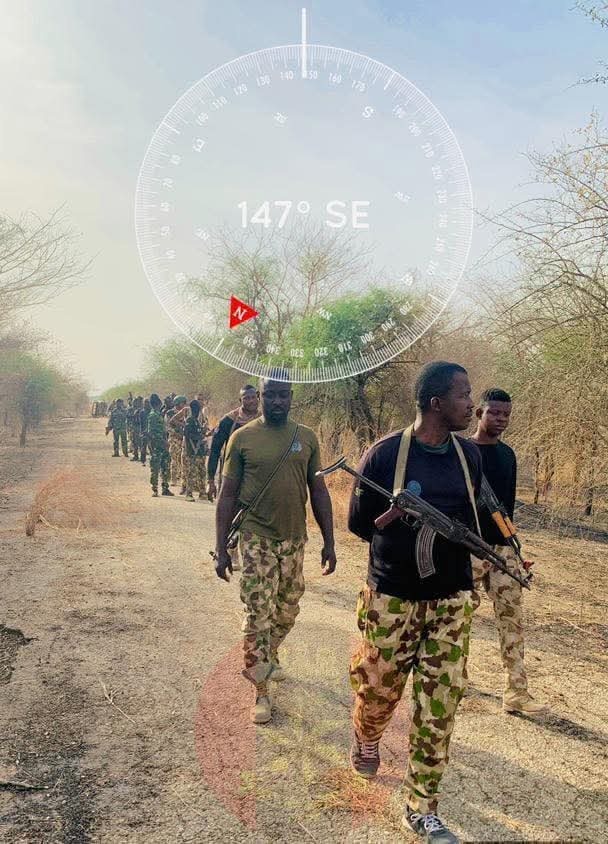
Troops of the Joint Task Force (North East), Operation HADIN KAI (OPHK), have once again demonstrated superior combat readiness and tactical dominance by foiling a terrorist infiltration attempt at Bitta in Sector 1.

The failed attack occurred when fighters of the Islamic State West Africa Province (ISWAP), in a desperate bid to regain the initiative after recent battlefield setbacks, attempted to infiltrate the troops’ location. Unknown to the terrorists, vigilant OPHK troops had anticipated the move and prepared a decisive offensive-defensive battle plan.

As the insurgents advanced toward the position, the troops launched coordinated spoiling actions that disrupted the assault formation while simultaneously manoeuvring to cut off the attackers’ withdrawal routes. The terrorists were met with overwhelming resistance and superior firepower, forcing them into a chaotic retreat while suffering significant losses.

The latest defeat marks the third major setback inflicted on the terrorists within the last 24 hours, following their failed attacks at Banki and Azir Bridge.

These successive setbacks underscore the sustained operational pressure being mounted by troops of Operation HADIN KAI across the theatre, significantly constraining the terrorists’ freedom of action and denying them the opportunity to exploit propaganda narratives.
Troops remain firmly in control of all locations and continue to dominate the operational environment with high morale, strong tactical coordination and sustained offensive operations.

The Military High Command commended the troops for their gallantry and resilience, urging them to maintain the current operational tempo.

Middle East Conflict May Force CBN to Review Monetary Policies Again — Onafowokan

0


BY TAIWO OGUNMOLA -OMILANI


The Managing Director and Chief Executive Officer of Coleman Technical Industries Limited, George Onafowokan, has warned that rising geopolitical tensions in the Middle East could compel the Central Bank of Nigeria (CBN) to adjust its monetary policy stance again if global oil prices continue to climb.

Onafowokan said the ongoing conflict involving the United States, Israel and Iran could push global crude oil and fuel prices higher, a development that may trigger fresh inflationary pressures in Nigeria.

According to him, if inflation begins to rise again as a result of higher energy costs, the CBN may be forced to respond by tightening monetary policy through interest rate adjustments or other policy tools.

“The price of crude oil and petrol has already increased due to the conflict, and inflation may rise again. If that happens, the CBN may need to respond either through interest rates or other policy tools,” he said.

The industrialist also cautioned that the ripple effects of higher fuel prices could significantly raise production costs for manufacturers, particularly companies that rely heavily on diesel to power their operations.

“For businesses relying on diesel, operating costs may rise sharply. Diesel prices have already climbed significantly compared to previous levels,” he noted.

Onafowokan urged manufacturers to adopt dynamic risk-management strategies to navigate the uncertainties created by global geopolitical tensions and energy price volatility.

Despite the concerns, he expressed optimism about Nigeria’s economic outlook, noting that reforms introduced since 2023 have helped improve macroeconomic stability.
He pointed to the removal of fuel subsidies and exchange-rate adjustments as difficult but necessary measures that have begun to stabilise the economy and restore investor confidence.

“The stability of the naira and reforms undertaken since 2023 have begun to restore investor confidence and stimulate expansion within existing businesses,” he said.
Onafowokan added that the manufacturing sector is already witnessing increased activity, particularly in construction and infrastructure projects that are driving demand for electrical cables.

“The cable industry is a good indicator of infrastructure development. When construction and industrial expansion increase, we see it immediately through demand for cables,” he explained.

He disclosed that Coleman recorded a noticeable rise in demand for its products in the first quarter of 2026, driven by factory expansions and construction projects across the country.
Looking ahead, the Coleman CEO projected that Nigeria’s economic growth could reach about 4.5 per cent by the end of the year if current economic trends continue.
“I believe achieving 4.5 per cent GDP growth this year is realistic, but if Nigeria aims to reach a $1 trillion economy, growth rates will need to move closer to eight or nine per cent,” he said.

According to him, achieving such growth would require increased foreign direct investment, stronger domestic investment and sustained infrastructure spending.

Onafowokan concluded that although challenges remain, Nigeria’s manufacturing sector is entering a period of cautious optimism as confidence in the economy gradually improves.