Home Blog Page 577

Papa Ajasco: The Mix of Ignorance and Entitlement

0


The core issue that needs addressing in the Nigerian entertainment industry is a dangerous and growing trend of historical revisionism. It is the mistaken belief held by some actors that after being hired to perform a role, they somehow acquire ownership of the character they played. This sense of entitlement often leads to public campaigns of gaslighting against producers who have fully met their contractual obligations. This must stop.

A recent interview conducted by a young man named Lucky Udu with veteran actor Abiodun Ayoyinka perfectly illustrates this problem. Ayoyinka is widely known for playing the iconic role of Papa Ajasco. For context, this character originates from the Wale Adenuga production franchise. It began as a comic book in the 1970s, created by Adenuga when he was a young University of Lagos graduate. The story was later adapted into a 16mm celluloid film in 1984, featuring theatre lecturer and veteran actor Peter Fatomilola as the original Papa Ajasco. The character was eventually brought to television screens in 1996. While Ayoyinka is the most recognized face for the role, it’s important to note that he is not the only actor to have portrayed him. The late musicologist Femi Ogunrombi also played the part from 2005 to 2006 when Ayoyinka was temporarily off the show due to contractual issues regarding the character’s rights.

The interview conducted by Idu was, to put it mildly, poorly executed. It demonstrated either a profound ignorance of how to conduct a sensitive interview or a deliberate attempt to paint the producers as insensitive and exploitative.

Now, to the crux of the matter. At no point in the interview did Ayoyinka claim he was not paid the fees agreed upon for the 10 years he played Papa Ajasco. The interviewer, however, kept emphasizing the fee of N2,500 per week in 1996, portraying it as exploitative. As a TV producer myself for over 30 years, I can put this into perspective.

We say Context is King, so in 1996, the exchange rate was approximately ₦22 to $1. This means ₦2,500 was equivalent to about *$114*. For further context, a reliable used Toyota Starlet or similar sedan could be purchased for between ₦50,000 and ₦100,000 at that time. A weekly fee of ₦2,500 was a significant sum. Over 10 years, assuming a conservative 52 episodes a year, that amounts to a minimum of 520 episodes and a substantial, agreed-upon income. This is if he got N2500 fir 10years but no the fees were reviewed from N2500 to about N50,000 per week which he acknowledged. It was also conveniently omitted that during his time on the show, Ayoyinka was not solely dependent on this acting fee. He was a civil servant employed by the Lagos State Arts Council, from which he retired with full benefits just four years ago.

To now claim, years later, that he has no car or house and was not duly compensated is being “economical with the truth” and is a disservice to the facts. I can forgive Idu’s ignorance on historical economic values, as he likely wasn’t born in 1996, but a filmmaker and storyteller which he claims to be he has a responsibility to research and understand the context of the topic he is discussing.

However, this isn’t an isolated incident. In another interview which he conducted same day, Idu spoke with Chimuanya Aruma Ofodike, who in 2009 became the first and only winner of the ₦10 million grand prize on the Nigerian version of Who Wants to Be a Millionaire? In that interview, Idu repeatedly tried to drag the brands involved (MTN and the producers) by questioning if they still cared about Ofodike’s welfare. Ofodike himself had to correct this narrative, explaining that ₦10 million in 2009 had the spending power of over ₦200 million today, and that he had wisely invested his winnings in his steel business, which is the foundation of his current success.

I bring up this parallel example to highlight a clear pattern: the interviewer’s apparent intention is to demonize producers and brands, insinuating they have abandoned the talents they once worked with, even when all contractual obligations were met or a way to get the public to sympathise with the guest on his show and start donating funds. Its either of the two reasons.

Its important to reiterate that you don’t own a character simply because you played the character. The interview also touched on another point of ignorance: the claim that producers have refused Ayoyinka permission to use the “Papa Ajasco” brand. This reveals a fundamental misunderstanding of intellectual property law. The character PAPA AJASCO was created by Chief Wale Adenuga MFR. As the creator, he holds the patent, trademark, and copyright to that character. An actor is hired to perform a character, not to own it.

If an actor has a genuine, respectful project that requires the character, the proper procedure is to seek permission from the producers and rights holders. An agreement would then be negotiated. This is the professional standard. In fact, unconfirmed sources suggest that Ayoyinka’s suspension in 2006 was precisely because he and others used the characters for unauthorized projects.

This sense of entitlement is akin to an actor who played James Bond or Spider-Man believing they can now use that character’s likeness for their own personal endorsements. It is illogical and legally untenable. This incident sadly reflects the poor understanding of legal and professional norms held by many so-called social media influencers.

Ultimately, this interview felt like a calculated attempt to gaslight the producers and turn public opinion against them.

I must conclude by addressing a deeply troubling trend: actors and entertainers who, after years of work and presumably meeting their contractual obligations, go on public platforms to blame their producers for their current life circumstances. This public self-pity is not a solution. I recall watching a Yoruba female gospel musician complain about her dire condition, claiming she was homeless, yet in the same interview, she mentioned she was staying in a hotel costing her ₦60,000 a day. The math and the logic simply do not add up. Not forgetting another actress who cried out she was homeless and the public contributed money and bought a house for her.

In Ayoyinka’s case, Lagos State is one of the few states that diligently pays pensions and gratuities. He retired from the civil service and receives his pension. This crucial fact was omitted from the sob story.

As practitiners in Nollywood and the wider entertainment industry; we must realise we are not the only Nigerians who have served the country through our craft. This constant parade of half-baked stories of pity to the public is untenable. We must individually and collectively plan for our future.

My final thought is for the younger generation, including Lucky Udu himself. I recall seeing a video a few months ago of Udu crying, soliciting for help to feed, and claiming he was homeless. My question, which remains unanswered, was: “Is he not making money from his online activities?” This culture of social media begging must stop. When genuine people eventually need help, they may find the well of public sympathy has run dry. We must all strive to do better.

Fidelis Duker is a Filmmaker and Media Practitioner who writes from Abuja

Amuwo Odofin Council Manager, Bakare, Dies After Protracted Illness

0


The Council Manager of Amuwo Odofin Local Government Area, Mr. Olakunle Bakare, is dead.

Mr. Bakare, who was in his late fifties, reportedly passed away in India a few days ago after a prolonged battle with a cancer-related ailment.

It was gathered that the deceased was a former chairmanship aspirant of Igbogbo Bayeku Local Council Development Area (LCDA).

His death was confirmed by Duke Olabode Garbadeen in a Facebook post, where he described the late council manager as a dedicated and brilliant officer.

“The Council Manager, in his late fifties, died of a cancer-related ailment in India a few days ago. Bakare was a level-headed, brilliant officer whom I had worked with at various times in the past. He was a friend and brother and will be sorely missed. It is painful losing him so early,” he wrote.

Meanwhile, another source disclosed that Mr. Bakare was among aggrieved aspirants involved in the unresolved refund of a ₦5.5 million nomination fee. The source added that he passed away on Monday without receiving the refund.

Reacting to the development, the Executive Chairman of Amuwo-Odofin Local Government, Prince Lanre Sanusi, expressed deep sorrow over the loss, describing it as painful and irreplaceable.

In a condolence message issued on behalf of the Executive and Legislative Arms, management, and staff of the council, the chairman noted that the late administrator was dedicated, hardworking, and widely respected for his contributions to the growth and stability of the local government.

He added that Mr. Bakare was known for his calm disposition, integrity, and commitment to public service, qualities that endeared him to colleagues and associates.

“This is a deeply painful loss for us as a Local Government. Mr. Bakare worked with excellence, humility, and a strong sense of duty. We will not forget his contributions,” the chairman stated.

He also extended condolences to the bereaved family, praying that God grants them the strength to bear the loss and repose the soul of the deceased.

The Amuwo-Odofin Local Government community has continued to mourn the late council manager, describing his death as a significant loss.

Trump dismisses possibility of Israeli nuclear strike on Iran

0


The U.S. President, Donald Trump, on Tuesday dismissed speculations raised by one of his advisers that Israel might resort to using nuclear weapons against Iran in any conflict.

Speaking to reporters, Trump responded to remarks made by adviser David Sacks, who had suggested in a podcast that Israel might escalate a war to the point of considering nuclear options.

”Israel wouldn’t do that. Israel will never do that,” Trump said.

Israel has long maintained a policy of deliberate ambiguity regarding its nuclear capabilities, neither confirming nor denying possession of such weapons.

The approach is widely seen as a strategy to avoid regional escalation and international scrutiny.

Israeli officials have consistently stated that the country would not be the first in the Middle East to introduce nuclear weapons.

However, estimates from the Stockholm International Peace Research Institute suggest that Israel possessed approximately 90 nuclear warheads, making it one of the world’s undeclared nuclear powers.

NGX ASI hits historic 201,000 mark, investors gain N1.97trn

0

The Nigerian stock market recorded a major milestone on Monday as the NGX All-Share Index crossed the 201,000-point mark for the first time.
The benchmark index rose by 1.55 per cent to close at 201,474.89 points, up from 198,407.30 points recorded in the previous trading session.

Similarly, the market capitalisation rose to N129.329 trillion, from N127.360 trillion previously, representing a gain of about N1.97 trillion for investors.
This was driven by strong investor demand and widespread gains across key sectors.

With the rally, the market’s month-to-date (MTD) return climbed to 4.48 per cent, while the year-to-date (YTD) return advanced to 29.47 per cent, reflecting sustained bullish momentum in the equities market.

Market sentiment remained positive, with 38 stocks closing higher compared to 30 decliners, indicating broad-based buying interest across the market.

BUA Cement led the gainers’ chart by 10 per cent, ending the session at N297, Premier Paints trailed by 9.79 per cent, settling at N21.30 while John Holt gained by 9.52 per cent, closing at N10.35 per share.

Guinea Insurance increased by 9.38 per cent, finishing at N1.40 and Fortis Global Insurance added by 9.32 per cent, closing at N1.29 per share.
On the flip side, VFD Group led the losers’ chart by 10 per cent, finishing at N11.25.
Royal Exchange followed by 9.63 per cent, settling at N1.69 and Omatek Ventures dropped by 9.62 per cent, ending the session at N2.35 per share.

Sovereign Trust Insurance fell by nine per cent, closing at N1.92 while Regency Alliance shed by 8.94 per cent, settling at N1.12 per share.
Trading activity remained robust, with total deals rising to 72,735 while investors exchanged 948.2 million shares valued at N49.17 billion.

Financial services stocks dominated transactions by volume, reflecting heightened investor interest in the sector.
Sovereign Trust Insurance recorded the highest volume with 72.56 million traded shares, accounting for 7.65 per cent of the volume traded for the day.
Zenith Bank recorded the highest value with N5.96 billion, accounting for 12.11 per cent of the day’s total value.
Reacting, Mr Temi Popoola, Group Chief Executive Officer of Nigerian Exchange Group, described the milestone as a sign of growing confidence in Nigeria’s capital market.

“Nigeria’s ongoing reforms are strengthening domestic capital formation, and the market is responding positively.
“Increased participation by local investors, improving corporate fundamentals, and continued market modernisation are reinforcing the role of the capital market as a catalyst for long-term wealth creation and sustainable economic growth.”

Also, Mr Jude Chiemeka, Chief Executive Officer of Nigerian Exchange Ltd., attributed the milestone to sustained demand and active participation across the market.
“Crossing the 200,000-point mark reflects strong investor engagement and consistent demand across key sectors.

“At the Nigerian Exchange Ltd., we remain focused on deepening market liquidity, enhancing trading infrastructure, and ensuring efficient price discovery to support a resilient and transparent marketplace.”

The latest milestone highlights the sustained momentum in Nigeria’s equities market, which continues to attract growing interest from both domestic and institutional investors.

Nigeria’s inflation rate eases to 15.06% in February – NBS

0


The National Bureau of Statistics (NBS) says Nigeria’s headline inflation rate eased to 15.06 per cent in February.

The NBS disclosed this in its Consumer Price Index (CPI) and Inflation Report for February 2026, released in Abuja on Monday.

According to the report, the February headline inflation showed a decrease of 0.04 per cent compared to the 15.10 per cent recorded in January.

It said that on a year-on-year basis, the headline inflation rate in February was 11.21 per cent lower than the rate recorded in February 2025 at 26.27 per cent.

The report said on a month-on-month basis, the headline inflation rate in February was 2.01 per cent, which was 4.89 per cent higher than the rate recorded in January at -2.88 per cent.

“This means that in February, the rate of increase in the average price level was higher than the rate of increase in the average price level in January.”

It said that the three major contributors to the headline inflation year- on- year were food and non-alcoholic beverages at 6.03 per cent, restaurants and accommodation services at 1.95 per cent, and transport at 1.61 per cent.

The report said that the least contributors were recreation, sports, and culture at 0.05 per cent, alcoholic beverages, tobacco, and narcotics at 0.06 per cent, and insurance and financial services at 0.07 per cent.

It said that the CPI increased to 130.0 in February, and reflected a 2.6-point increase from the 127.4 recorded in January.

The report said the food inflation rate in February was 12.12 per cent on a year-on-year basis, which was 14.86 percentage points lower compared to the rate recorded in February 2025 at 26.98 per cent.

However, it said on a month-on-month basis, the food inflation rate in February was 4.69 per cent, which increased by 10.70 per cent compared to the -6.02 per cent recorded in January.

The NBS attributed the increase in food inflation on a month- on- month basis to the increase in the average prices of beans, carrots, okapi leaf, cassava tuber, and crayfish.

“Others are millet flour, yam flour, snails, avenger(ogbono/apon)-dried ungrinded, cow peas, among others.”

The report said, “All items less farm produces and energy” or Core inflation, which excludes the prices of volatile agricultural produce and energy, stood at 15.88 per cent in February, on a year-on-year basis.

“This shows a decline of 9.78 per cent when compared to the 25.66 per cent recorded in February 2025.

“On a month-on-month basis, the core inflation rate was 0.89 per cent in February, which increased by 2.58 per cent compared to the -1.69 per cent recorded in January.”

The report said that the inflation rate of the sub-indices on a month-on-month basis for February showed that farm produce stood at 3.7 per cent, an increase from the -5.10 per cent recorded in January.

It said energy and services recorded a decline at -0.2 per cent and -0.3 per cent, respectively, from the -3.13 per cent and 0.48 per cent recorded in January, respectively.

The report said goods and imported foods recorded an increase at 2.8 per cent and 0.6 per cent, respectively, from the -4.63 per cent and -6.81 per cent recorded in January.

It said that on a year-on-year basis in February, the urban inflation rate was 15.53 per cent, which was 12.96 percentage points lower than 28.49 per cent in February 2025.

“On a month-on-month basis, the urban inflation rate was 2.55 per cent, which increased by 5.27 per cent compared to January at -2.72 per cent.”

The report said that in February, rural inflation rate was 13.93 per cent on a year-on-year basis, which was 8.80 percentage points lower than the 22.73 per cent in February 2025.

“On a month-on-month basis, the rural inflation rate was 0.71 per cent, which increased by 4.00 per cent compared to January at -3.29 per cent.”

On states’ profile analysis, the report showed that in February, the all-items index inflation rate on a year-on-year basis was highest in Kogi at 23.57 per cent, followed by Benue at 22.85 and Anambra at 22.09 per cent.

It said that the lowest rise in headline inflation on a year-on-year basis was recorded in Katsina at 7.78 per cent, followed by Imo at 11.66 per cent and Ebonyi at 11.71 per cent.

However, the report said that in February, the inflation rate on a month-on-month basis was highest in Enugu at 5.92 per cent, followed by Ogun at 4.39 per cent and Anambra at 4.11 per cent.

“Zamfara at -2.14 per cent, followed by Bauchi at -1.23 per cent and Katsina at -1.06 per cent recorded a decline in month-on-month inflation.”

It said that on a year-on-year basis, food inflation was highest in Kogi at 26.91 per cent, followed by Adamawa at 23.12 per cent, and Benue at 21.89 per cent.

“Katsina is at 5.09 per cent, followed by Bauchi at 7.09 per and Imo at 7.65 per cent recorded the slowest rise in food inflation on a year-on-year basis.’’

However, it said that on a month-on-month basis, food inflation was highest in Bayelsa at 8.81 per cent, followed by Ebonyi at 8.51 per cent, and Edo at 7.72 per cent.

“Katsina at -0.70 per cent, followed by Nasarawa at 0.17 per cent and Kano at 1.39 per cent, recorded a decline in food inflation on a month-on-month basis.”

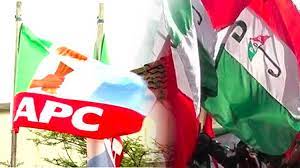
PDP Fires Back at APC Spokesman Morka Over Claim Party Is ‘No Longer a Political Party’

0


The Peoples Democratic Party (PDP) has strongly criticised the National Publicity Secretary of the All Progressives Congress, Felix Morka, over his claim that the opposition party has effectively ceased to exist as a political force following recent defections by some of its members.

In a statement issued on Monday by its National Publicity Secretary, Ini Ememobong, the PDP described Morka’s remarks as “most unfortunate” and accused the ruling All Progressives Congress (APC) of orchestrating the defections it now uses to mock the opposition.
The party alleged that many of the defections were secured through “force and inducement,” arguing that despite these moves, Nigerians continue to reject the APC and its policies.

According to the PDP spokesman, the ruling party has also struggled to build genuine grassroots support, alleging that in several states, APC governors relied on databases from state empowerment programmes to inflate membership registration figures.

Ememobong further cited the disruption of a recent “City Boys” political event in Owerri as a sign of growing public dissatisfaction with the APC government.

The PDP also accused Morka of engaging in propaganda in defence of the administration of President Bola Ahmed Tinubu. Ememobong likened the APC spokesman’s rhetoric to propaganda tactics used in Nazi Germany under Adolf Hitler and his minister of propaganda, Joseph Goebbels.
He warned that history would judge those defending what he described as the “maladministration” of the APC-led federal government.

“When the history of this period is written and the threat to democracy is fully documented, his name will be boldly written in the pages of infamy as one of those who actively defended the Tinubu administration,” the statement added.
The PDP maintained that it remains a viable political party and vowed to continue challenging the policies of the ruling APC government.

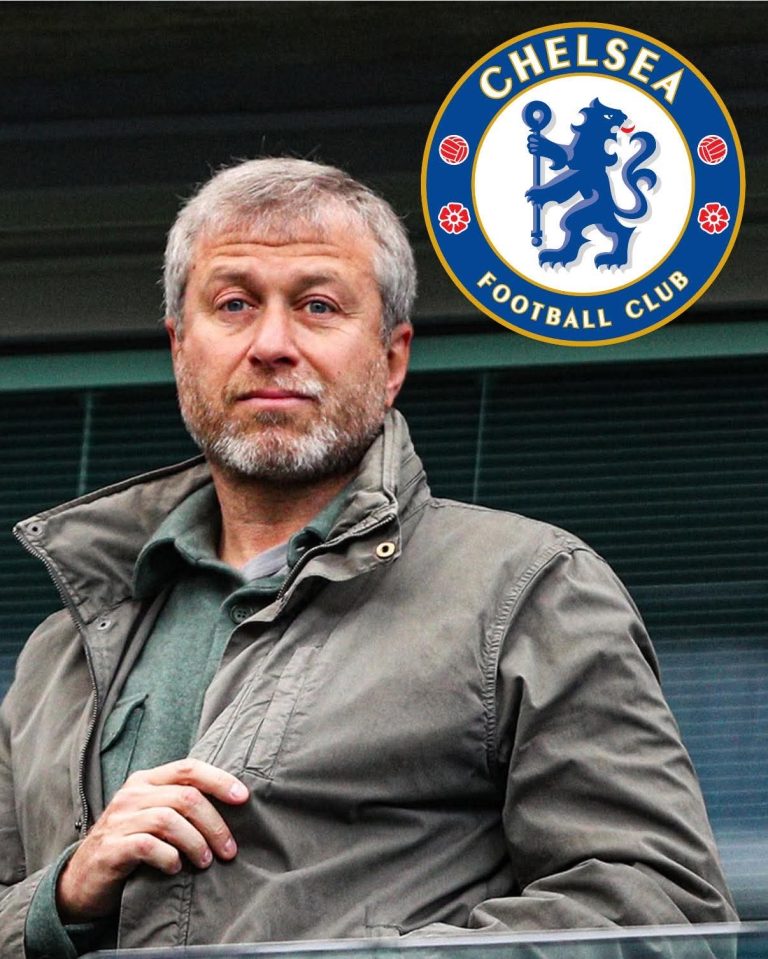
Chelsea Fined £10.75m, Given Suspended Transfer Ban Over Premier League Financial Rule Breaches

0


Chelsea FC have been fined £10.75 million by the Premier League after an investigation found the club guilty of breaching financial regulations during the ownership of former Russian billionaire Roman Abramovich.
In addition to the financial penalty, the London club has been handed an immediate nine-month ban on registering academy players from other English clubs.

The Premier League also imposed a one-year first-team transfer ban, although the sanction has been suspended for two years and will only take effect if further rule breaches occur during that period.
The violations relate to undisclosed third-party payments made between 2011 and 2018 to agents and other intermediaries in connection with player transfers. These payments were not reported to football authorities at the time.

The irregularities were discovered during the due-diligence process when Chelsea’s current owners reviewed the club’s accounts following the 2022 takeover. The club subsequently self-reported the issues to the Premier League and cooperated with the investigation.

Authorities said Chelsea’s cooperation and voluntary disclosure were considered mitigating factors in determining the sanctions.

Tinubu Swears in Taiwo Oyedele as Minister of State for Finance

0

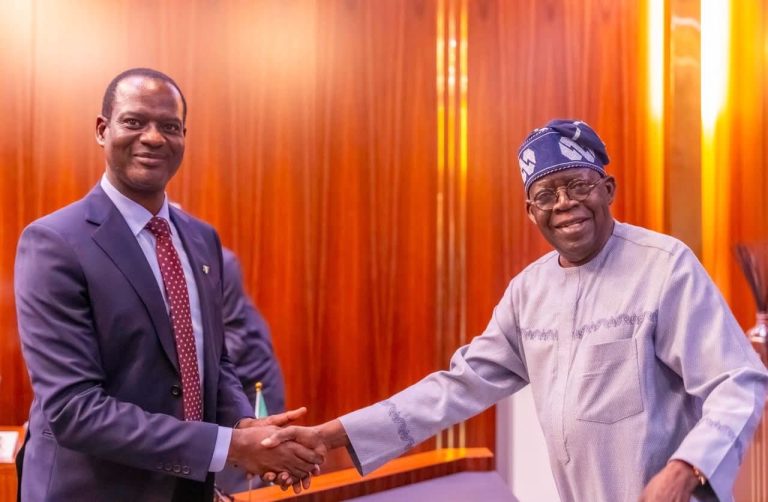
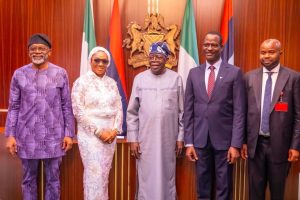
President Bola Tinubu on Monday swore in Mr. Taiwo Oyedele, Chairman of the Presidential Committee on Fiscal Policy and Tax Reforms, as Minister of State for Finance, praising his dedication and professionalism.

Speaking shortly after the brief ceremony at the Presidential Villa, the President described the appointment as a vote of confidence in Oyedele’s competence and commitment to public service.

Tinubu commended the new minister for his leadership in coordinating the work of the Tax Reforms Committee, noting that his expertise and commitment had been instrumental in shaping reforms aimed at simplifying Nigeria’s tax system, expanding the revenue base, and creating a more business-friendly environment.

“We are very proud of your knowledge, your simplicity, ambition, and excellence. I congratulate your wife for standing up to our challenge of time management and long hours of absence,” the President said.

“This is additional responsibility, and I hope you will encourage and support him,” Tinubu added while addressing the minister’s wife.
The President also praised Oyedele’s zeal, patience and determination to serve the nation.

“Thank you for accepting to serve your country, especially for reforming the entire tax policy of this country that was obsolete and fundamentally against every progressive thinking.

“You are a very dedicated and highly determined individual. It didn’t take much for me to decide where you fit and where you need to be to further help with the economy.
“It is a very challenging job because we look at the fiscal policy and responsibility that come with it at a time when economic stability is being experienced but without exponential growth. It’s always very difficult, but you are fit to be there,” Tinubu said.

Oyedele, who hails from Ikaram in Akoko area of Ondo State, is an economist, accountant and public policy expert.

He studied at Yaba College of Technology where he obtained a Higher National Diploma (HND) in Accountancy and Finance before proceeding to Oxford Brookes University where he earned a Bachelor of Science degree in Applied Accounting.

He also completed executive education programmes at the London School of Economics, Yale University, Gordon Institute of Business Science, and the Harvard Kennedy School.
Oyedele spent 22 years at PricewaterhouseCoopers (PwC), joining the firm in 2001 and rising to become Fiscal Policy Partner and Africa Tax Leader.

He currently serves as a professor at Babcock University in Ogun State and as a visiting scholar at the Lagos Business School.

Tinubu to Embark on State Visit to UK, Meet King Charles III and PM Starmer

0


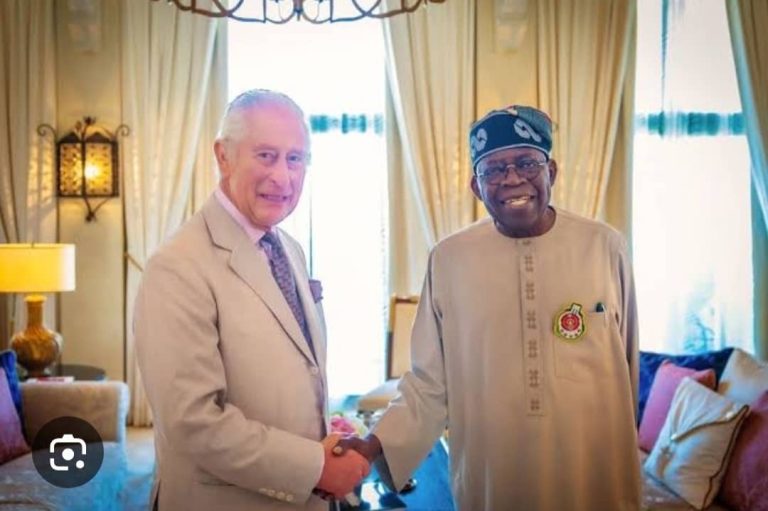
President Bola Ahmed Tinubu, accompanied by the First Lady, Oluremi Tinubu, will depart Abuja on Tuesday, March 17, for a State Visit to the United Kingdom as guests of Their Majesties King Charles III and Queen Camilla.

The British monarch will host the Nigerian leader and his wife at Windsor Castle from Wednesday, March 18, to Thursday, March 19.

The visit marks the first state visit by a Nigerian leader to the United Kingdom in 37 years. It will also be the first time a Nigerian president is hosted by the British monarch at Windsor Castle.

Nigeria and the United Kingdom share longstanding historical ties, and the visit is aimed at strengthening bilateral relations while exploring opportunities for deeper collaboration in areas such as immigration, trade, investment, and cultural exchange.

During their stay at Windsor Castle, the monarchs will invite President Tinubu and the First Lady to view a special exhibition from the Royal Collection featuring items related to Nigeria. The King and the President are also expected to hold private discussions and meet with organisations engaged in interfaith dialogue at both national and international levels.

A State Banquet will be hosted by the Royal Family in honour of the Nigerian delegation.

President Tinubu will also hold a bilateral meeting with British Prime Minister Keir Starmer at 10 Downing Street. The meeting is expected to deepen engagement between senior officials of both countries and culminate in the signing of several Memoranda of Understanding covering trade, investment, defence, and cultural cooperation.
The President will also witness the signing of a £746 million financing agreement between UK Export Finance (UKEF), the Nigerian Ports Authority (NPA), and the Federal Ministry of Finance. The agreement is aimed at supporting the refurbishment of two key maritime facilities: the Lagos Port Complex (Apapa Quays) and the Tin Can Island Port Complex.

In addition, President Tinubu will attend the Nigerian Modernism exhibition as guest of honour, showcasing contemporary Nigerian arts and culture. He will also participate in a reception with Nigerian and British business leaders, as well as members of the diaspora community.

Members of the President’s delegation include Senate President Godswill Akpabio; Attorney General and Minister of Justice Lateef Fagbemi; Minister of Solid Minerals Dele Alake; Minister of Information and National Orientation Mohammed Idris; Minister of State for Foreign Affairs Bianca Ojukwu; Minister of Finance and Coordinating Minister of the Economy Wale Edun; and Minister of Industry, Trade and Investment Jumoke Oduwole.

Others are Minister of Culture and Creative Economy Hannatu Musawa; Minister of Communications and Digital Economy Bosun Tijani; Chief of Defence Staff Christopher Musa; National Security Adviser Nuhu Ribadu; and Director-General of the National Intelligence Agency, Mohammed Mohammed.

President Tinubu is expected to return to Nigeria at the conclusion of the state visit.
Bayo Onanuga
Special Adviser to the President (Information & Strategy)

Faithia Williams Returns to Work, Announces Promotion of Debut Cinema Project “Efunroye – The Unicorn”

0


Nollywood actress and filmmaker, Faithia Williams, has announced her return to work following the recent burial of her mother, expressing gratitude to fans and supporters who stood by her during the difficult period.

The actress disclosed that she is resuming professional activities as she begins the promotional journey for her debut cinema project as a producer, Efunroye – The Unicorn.

Williams described the film as a deeply personal project and expressed excitement about sharing the story with audiences around the world.

She noted that the past few weeks had been emotionally challenging for her and her family due to the passing of her mother, who has now been laid to rest.

The actress extended appreciation to fans, friends, colleagues, family members, and well-wishers for their prayers, calls, messages, and support during the period of mourning.

According to her, the outpouring of love and kindness provided comfort to her family during the difficult time.

Williams also revealed that although her mother has been given a peaceful burial, the family has decided to postpone the major celebration of her life and legacy until next year, when they intend to properly honour the impact she had on those around her.

As she returns to work, the actress said she will be focusing on the promotion of Efunroye – The Unicorn and remains open to collaborations, partnerships, and professional engagements aimed at taking the project to wider audiences.

She concluded by once again thanking supporters for their patience, love, and unwavering support.