Home Blog Page 576

ADC alleges plot to make Tinubu sole presidential candidate

0


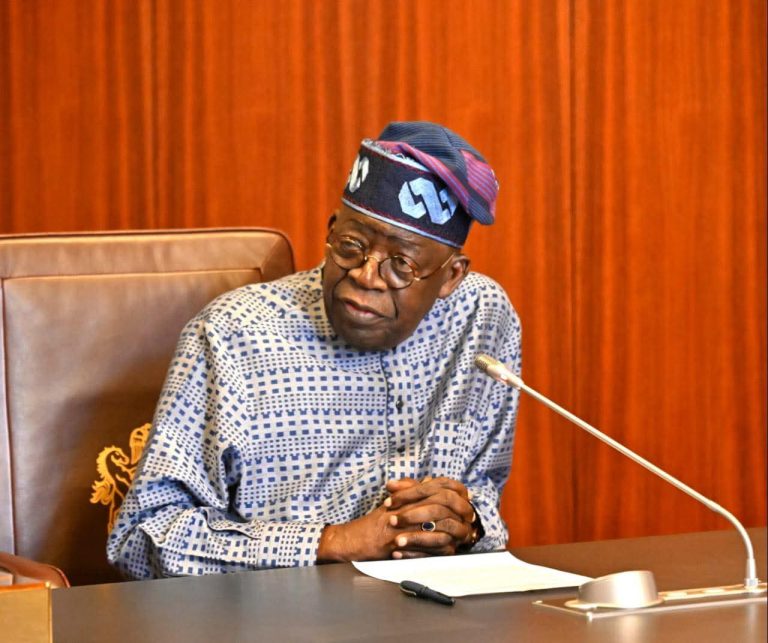
The African Democratic Congress (ADC) has said it has uncovered an alleged plot to destabilise the party, so as to make President Bola Tinubu the sole presidential candidate in the 2027 general election.

The ADC, in a statement by its National Publicity Secretary, Bolaji Abdullahi, said some powerful figures in the All Progressives Congress (APC) were allegedly plotting to pressure the Independent National Electoral Commission (INEC) to recognise Mr. Nafiu Bala Gombe, as the national chairman of the ADC.

The party said the move is part of an elaborate plot by the APC to allegedly destabilise the ADC and forcefully take over its leadership, so that President Tinubu could emerge as the only serious contender on the presidential ballot in the next general election.

Consequently, it vowed to deploy every legitimate means to resist alleged plots by anti-democratic forces within the ruling party to end competitive democracy in Nigeria.

“Mark emerged the ADC national chairman last July, after the party emerged as the opposition coalition, for the next general election.

Shortly after, Gombe started laying claim to the leadership of the party. The ADC, while insisting that there is no legal basis for any confusion about its leadership, noted that the Senator David Mark-led National Working Committee (NWC) emerged at a combined meeting of the NWC and the National Executive Committee witnessed by the INEC officials in July 2025.
“The ADC has uncovered a desperate and sinister plot allegedly being orchestrated by powerful figures within the ruling All Progressives Congress (APC) to pressure INEC into recognising a certain Nafiu Bala as the National Chairman of the ADC.”

The objective is clear: to manufacture confusion within the ADC, sponsor illegitimate leadership claims and ultimately cripple the only credible opposition platform that Nigerians are increasingly looking up to as a genuine alternative, thereby leaving Nigerians with no choice in the next general election, despite widespread suffering that the ruling party has brought upon the people,” the opposition party stated.

“It may be worth reiterating that a properly constituted combined meeting of the National Working Committee (NWC) and National Executive Committee (NEC), witnessed by officials of the INEC, transferred leadership to the coalition led by Senator Mark and Rauf Aregbesola in July 2025. This exercise was duly acknowledged by INEC with a formal recognition of the Mark leadership in September.
“And most recently, on March 6, a Federal High Court had dismissed a case challenging Mark’s leadership of the party, affirming a well-grounded Supreme Court judgement that matters of leadership is wholly an internal affair of political parties.

“We, therefore, wonder at the level of desperation that is driving these anti-democratic forces to continue in their sinister efforts to impose expelled individuals on the party or manipulate its internal structures through external political pressure on judges and electoral officials.

“Nigeria’s democracy cannot thrive where the ruling party seeks to capture, infiltrate or manufacture opposition parties for its own political convenience and survival. Such actions represent a dangerous assault on democratic pluralism and the constitutional right of Nigerians to freely organise and support credible political alternatives.”

Sun
Strait of Hormuz: EU rejects Trump’s demand to help

0

•IEA prepared to release more oil reserves


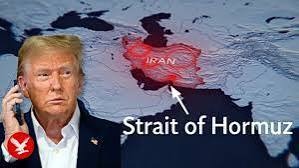
European leaders have rejected demands by the US President, Donald Trump, for help to clear the strait of Hormuz, as foreign ministers from the European Union gathered in Brussels yesterday to discuss skyrocketing oil prices from the US-Israeli war on Iran.


The push back came after Trump called on the UK, China, France, Japan, South Korea and other NATO countries to send ships to secure the Strait of Hormuz, saying it would be very bad for the future of NATO if allies don’t help secure the strait.

US officials had also spent much of the weekend working to rally support behind Trump’s demand and said they hoped to announce a new coalition in the coming days, according to people familiar with the matter.

Who that coalition consists of, and when it might be announced, remain open questions.

Even staunch US allies sound cautious about sending their militaries into the contested waterway while an active war is underway.

Still, US officials said they hoped to, at least, receive preliminary commitments of support for securing the strait, even if countries left the specifics, such as what ships were deployed and when, to a later date.

But the EU foreign ministers at the meeting demanded to know more about Trump’s plans for the war on Iran and when the conflict might end, even as they weighed his request for help.

Speaking at the meeting, German Foreign Minister, Johann Wadephul, said Berlin had no intention of joining military operations during the conflict, adding that NATO needed clarity on when US and Israel considered the military aims of their deployment to have been reached.

“We expect from the US and Israel to inform us, to include us into what they’re doing there and to tell us if these goals are achieved.

Trump pushes for ‘enthusiasm’ from allies to secure Hormuz
“Once we have a clear picture of that, we believe we need to move into the next phase, namely, defining a security architecture for this entire region, together with the neighbouring states,” he told reporters before the meeting in Brussels.

Wadephul added that NATO had not made any decision on assuming responsibilities in the Strait of Hormuz.

German Chancellor, Friedrich Merz’s spokesperson, Stefan Kornelius, underlined that “it is not NATO’s war. NATOis an alliance to defend the alliance area.”

Kornelius said Berlin “took note” of Trump’s comments, but added that “the United States did not consult us before this war, and so we believe this is not a matter for NATO or the German government.

“What does … Trump expect a handful or two handfuls of European frigates to do in the Strait of Hormuz that the powerful US Navy cannot do?” German Defence Minister, Boris Pistorius, said in Berlin.

“This is not our war. We have not started it,’’ he said.

Greek government spokesman, Pavlos Marinakis, said that Greece would not engage in any military operations in the Strait of Hormuz, while Italian Foreign Minister, Antonio Tajani, said Italy was not involved in any naval missions that could be extended to the area.

Meanwhile, Estonian Foreign Minister, Margus Tsahkna, also said US allies in Europe wanted to understand Trump’s “strategic goals. What will be the plan?”, while Polish Foreign Minister, Radek Sikorski, invited the Trump administration to go through the proper channels.

“If there is a request via NATO, we will, of course, out of respect and sympathy for our American allies consider it very carefully,” he said.

However, the Danish Foreign Minister, Lars Lokke Rasmussen, said Europe should keep an open mind on helping to ensure freedom of navigation in the strait, even if the continent did not support the US-Israeli decision to go to war with Iran.

“We must face the world as it is, not as we want it to be,” Rasmussen said, adding that the EU must decide on a plan “with a view towards de-escalation.”

Meanwhile, the United Kingdom said it was working on a collective plan to reopen the Strait of Hormuz and restore freedom of navigation in the Middle East but noted that doing so would not be easy.

‘’UK won’t be drawn into ‘wider war’ and will work with allies on Strait of Hormuz plan,’’ Prime Minister Keir Starmer, said

EU foreign policy chief, Kaja Kallas, told reporters before the meeting in Brussels that the bloc’s leaders would focus on how the EU could contribute to reopening the waterway.

“We first need to discuss what the member states are willing to do in the Strait of Hormuz. Of course, the needs to open the Strait of Hormuz are there right now,’’ she said.

Kallas said the strait’s closure, which had sent oil prices to more than $100 a barrel, was benefitting Russia’s war on Ukraine, which is largely funded by Moscow’s energy revenues.

IEA prepared to release more oil reserves

Meanwhile, the International Energy Agency, IEA, said it was prepared to release more oil reserves, if needed, amid what it said was the “largest supply disruption in the history of the global oil market”.

IEA had last week released a record 400 million barrels of oil to cushion the effect of the strait’s bloackade.

IEA’s Executive Director, Fatih Birol, said the volume of oil supply offline was already higher than during any previous disruption, including the oil crisis of 1973.

“Oil prices today are significantly lower than they were one week ago,” he said, but added that the reserves were not a lasting solution while passage through the strait remains uncertain.

The IEA still has more than 1.4 billion barrels of oil remaining, “which means we can do more later as, and if needed,” Birol said.

Vanguard

Peterside backs GoNigeriaNG, identifies four pillars for strengthening Nigeria’s democracy

0

Atedo Peterside

Business leader and founder of Stanbic IBTC Bank, Atedo Peterside, has thrown his weight behind the advocacy of civic platform GoNigeria, highlighting four key pillars essential for sustaining Nigeria’s democracy.

Peterside, in a post shared on his X (formerly Twitter) platform on Tuesday, said Nigeria’s democratic system rests on electoral reform, judicial reform, freedom of speech, and the security of life and property.

He stressed that electoral reform remains the most critical of the four, noting that credible elections are fundamental to building legitimacy, strengthening institutions, and ensuring effective governance.


“Elections do not simply select leaders; they determine whether power is accepted as legitimate, whether institutions are trusted, and whether governance will be effective,” he stated.

The position aligns with a statement released by GoNigeria on Tuesday, which underscored the urgency of electoral reform in safeguarding the country’s democratic future.

The group referenced the recommendations of the electoral reform committee led by Mohammed Uwais, which emphasised the independence of the electoral body, transparency in processes, credible dispute resolution, and strict enforcement of electoral laws.

It noted that subsequent reforms, including the introduction of biometric voter registration, Permanent Voters’ Cards, and electronic accreditation, were aimed at enhancing transparency and public trust through the use of technology.

According to GoNigeria, Nigeria reached a democratic milestone in 2015, widely regarded as a benchmark election. However, it observed that progress has since faltered, with declining public confidence following the 2019 and 2023 elections due to inconsistent use of technology, weak enforcement, and increased reliance on the courts to determine electoral outcomes.

The group cited surveys indicating that fewer than half of Nigerians currently trust the electoral commission, with distrust particularly high in the South-South and South-East regions. Among young Nigerians aged 18 to 35, nearly three-quarters reportedly lack confidence in the system’s ability to deliver free and fair elections.

It warned that a weak electoral system could lead to increased violence, unaccountable leadership, and weakened institutions, stressing that urgent reforms are necessary to avert further democratic decline.

GoNigeria also highlighted concerns over the discretionary powers of electoral officials, particularly regarding manual transmission of results during network failures, and called for clearer guidelines, stronger safeguards, and improved transparency.

The Electoral Act 2026: Promise, progress and persistent challenges
Following the recent assent to the Electoral Act 2026, the group urged stakeholders to focus on effective implementation, public engagement, and rebuilding trust in the electoral process.

It reaffirmed its commitment to promoting credible elections through advocacy, stakeholder engagement, and informed public discourse, with the goal of ensuring that electoral outcomes reflect the will of the people and are widely accepted.

The statement was endorsed by a broad coalition of prominent Nigerians, including Aisha Yesufu, Arunma Oteh, Matthew Kukah, Muhammadu Sanusi II, and Folarin Falana, among others.

Vanguard

UK, Nigerian Institutions Expand Education, Innovation Partnerships

0

Nigeria is strengthening its role in training the next generation of scientists, technologists, and innovators through a series of new partnerships with institutions in the United Kingdom.

The collaboration highlights Nigeria’s growing importance as a key education partner under the UK’s International Education Strategy.

As part of the initiatives, the University of Birmingham and the University of Lagos have signed a new agreement to deliver programmes in Applied Artificial Intelligence, Digital Communications and Global Surgery.

The programmes are expected to strengthen research collaboration and provide Nigerian students with expanded opportunities in emerging technology and healthcare fields.

In another development, the London School of Economics and Political Science (LSE) launched a new Data Science partnership with Nile University of Nigeria. Similarly, the University of the West of England has established a dedicated office in Lagos to support academic collaboration and student engagement.
Education investment is also expanding at the secondary school level. Wellington College International has announced plans to open Wellington College International Lagos in 2027. The institution will offer the British curriculum to about 1,500 students and is expected to become one of West Africa’s flagship British-curriculum schools.

In the area of digital learning, EStars, a UK-owned educational esports and technology company, will partner with the Lagos State Ministry of Basic and Secondary Education to deliver esports-based digital learning programmes to approximately three million students across the state.

The growing educational ties come as bilateral trade between Nigeria and the UK reaches an all-time high of £8.1 billion annually, underscoring the expanding economic and academic cooperation between both countries. Officials say the partnerships demonstrate how stronger collaboration can accelerate growth and innovation in both nations.

Tinubu leads 17-member delegation on historic UK state visit

0


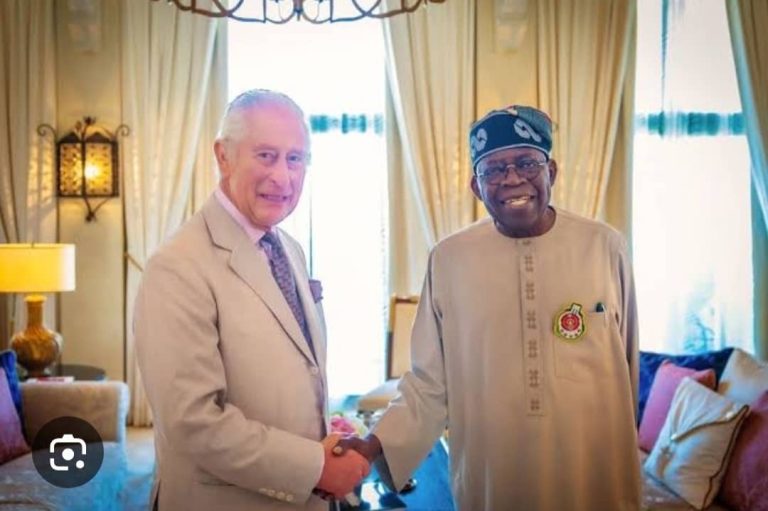
President Bola Tinubu will commence a landmark state visit to the United Kingdom today leading a high-profile 17-member delegation including First Lady Oluremi Tinubu, as guests of King Charles III and Queen Camilla at Windsor Castle today.

The visit marks the first by a Nigerian leader in 37 years and the first time a Nigerian head of state will be hosted by the British monarch at Windsor Castle. Departing Abuja on Tuesday, the two-day royal engagement from March 18 to 19 underscores the deep historical ties between Nigeria and the UK.

The visit aims to boost relations across key areas including immigration, trade, investment, and cultural exchange. At Windsor Castle, President Tinubu and the First Lady will tour a special exhibition from the Royal Collection featuring Nigerian-related artifacts. The King and President are scheduled for private discussions, alongside meetings with organizations focused on interfaith dialogue.

A highlight will be a State Banquet hosted by the Royal Family in honor of the Nigerian delegation. The statement emphasised the significance: “Nigeria and the United Kingdom share a deep history of ties and a special bond. The purpose of this visit is to strengthen bilateral relations and explore avenues for collaboration.”

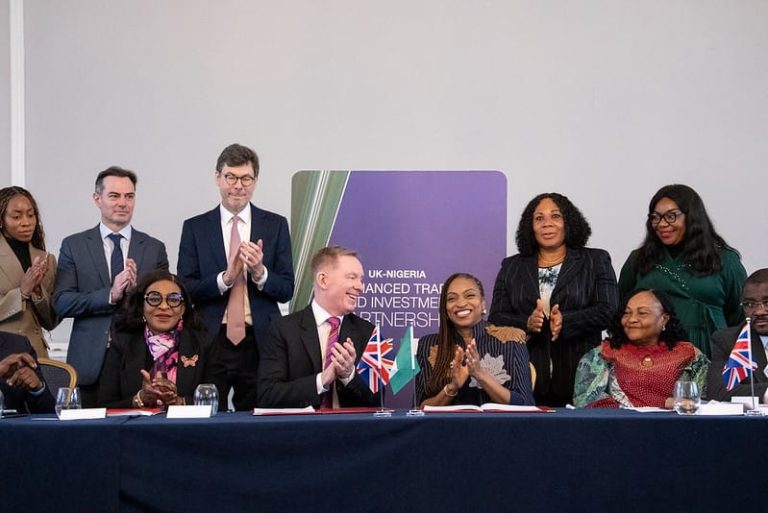
Beyond the royal welcome, President Tinubu will hold talks with Prime Minister Keir Starmer at 10 Downing Street. These discussions will expand senior-level engagements and culminate in signing Memoranda of Understanding on trade, investment, defense, and cultural cooperation. A major outcome includes President Tinubu witnessing the £746 million financing agreement between UK Export Finance (UKEF), the Nigerian Ports Authority (NPA), and the Federal Ministry of Finance. This deal targets refurbishment of critical infrastructure at Lagos Port Complex (Apapa Quays) and Tin Can Island Port Complex, boosting Nigeria’s maritime sector.

President Tinubu will serve as guest of honor at the Nigerian Modernism exhibition, celebrating modern arts and culture, followed by a reception with Nigerian and British business leaders and the diaspora community. These events highlight cultural diplomacy and economic opportunities.

The 17-member delegation comprises key figures including Senate President Godswill Akpabio; Attorney General, Lateef Fagbemi; Ministers Dele Alake (Solid Minerals), Idris Mohammed (Information), Wale Edun (Finance), Jumoke Oduwole (Industry, Trade and Investment), Hannatu Musawa (Culture), Bosun Tijani (Communications), and Bianca Ojukwu (State for Foreign Affairs); Chief of Defence Staff General Christopher Musa (retd); National Security Adviser Nuhu Ribadu; and National Intelligence Agency Director-General Mohammed Mohammed.

Dangote seals $4.2bn gas deal with China’s GCL to power Ethiopia Fertiliser Megaproject

0


Dangote Industries Limited (DIL) has sealed a key $4.2 billion, 25-year natural gas supply agreement with China’s GCL Group to power its fertiliser expansion in Ethiopia, marking one of the most significant China–Africa industrial partnerships to date.

The deal, signed in Lagos, will supply stable natural gas to Dangote Group’s upcoming 3‑million‑tonne‑per‑year urea fertilizer complex in Gode, Somali Region.

The fertiliser plant, valued at $2.5 billion, is being developed under a 60:40 equity structure between Dangote Group and Ethiopian Investment Holdings (EIH), and is slated to begin operations in 2029. Once operational, the facility will be East Africa’s largest modern fertiliser hub, meeting Ethiopia’s current urea import demand while supplying neighbouring regional markets. The project is expected to reshape the region’s fertilizer landscape, reduce reliance on imports, and enhance agricultural self-sufficiency.

The natural gas required for the project will be sourced from the Calub Gas Field in Ethiopia’s Ogaden Basin and delivered via a dedicated 108-kilometre pipeline directly to the fertilizer complex.

The initiative aligns with Africa’s greater objective of creating an integrated energy-to-food value chain, leveraging local resources to drive industrial autonomy.

Speaking on the significance of the partnership, Aliko Dangote, President and Chief Executive Officer of Dangote Industries Limited, said: “Africa’s energy industry cannot continue indefinitely exporting raw materials while importing finished products.

We must pursue a new path of highly autonomous development. Through seamless integration and strategic cooperation with GCL, we will achieve an efficient closed-loop value chain from natural gas extraction to fertilizer production, taking a crucial step toward enabling Africa to secure greater autonomy over its food security.”

Mr. Zhu Gongshan, Chairman of GCL Group, reaffirmed the company’s confidence in the partnership, highlighting the Ethiopian government’s facilitation: “This cooperation will enable both sides to expand new frontiers in Ethiopia’s energy, chemical, and food security sectors while transitioning from a ‘business going global’ model toward a mutually beneficial ecosystem-based framework. Leveraging GCL’s integrated oil and gas operations in Ethiopia and Dangote Group’s extensive industrial footprint across Africa, the partnership will significantly enhance our service capabilities and market reach across the continent.”

The agreement marks a historic milestone in China–Africa industrial cooperation and is expected to catalyse long-term economic transformation in East Africa. GCL will leverage its “gas–power–computing” industrial model and Chinese technological solutions in synergy with Africa’s development needs, deepening industrial and energy integration in the region. Both parties credited the Ethiopian government for strong leadership and support in bringing the project to fruition.

Over the past two decades, GCL has evolved in Ethiopia from oil and gas exploration to developing the country’s first natural gas liquefaction project and advancing integrated industrial strategies, earning high trust from senior government leadership.

Industry analysts note the project carries multiple strategic benefits. It will enable Ethiopia to achieve fertiliser self-sufficiency, stimulate industrial growth in the Somali Region, create thousands of direct and indirect jobs, and advance regional infrastructure development. Additionally, by producing fertilizer using natural gas as feedstock, the project supports a low-carbon development pathway and aligns with global green industrial trends.

By integrating upstream gas extraction, midstream pipeline transport and downstream fertilizer production, the project forms a complete closed-loop “gas-to-fertiliser” industrial chain, combining Chinese technological strengths with Africa’s resource endowments.

As a flagship initiative under the Belt and Road framework, the project demonstrates the synergy between energy development and agricultural advancement, helping Ethiopia and the wider African region move toward energy independence, industrial revitalization, and food self-sufficiency.

The choice of GCL Group as a strategic partner highlights the recognition of Chinese technological expertise and local operational experience by Africa’s leading industrial enterprises.

This historic deal positions East Africa as a hub for modern fertilizer production and signals a new era of industrial collaboration between Africa and China, setting a benchmark for future large-scale, resource-driven development projects across the continent.

Sun

APC convention: Stakeholders purchase N10m nomination forms for Yilwatda’s re-election

0


The chances of national chairman of the All Progressives Congress (APC), Nantawe Goshwe Yilwatda, retaining his position has received a boost as party’s stakeholders purchased the N10 million expression of interest and nomination forms to re-contest his position in the forthcoming party’s national convention later this month.

Presenting the N10 million dummy cheque while addressing newsmen at the party’s headquarters, the stakeholders hinged their action on the conviction that the national chairman has the capacity and competence to move the party forward and secure victory in the upcoming elections.

The stakeholders revealed that the gesture came from Prince Simon Ali Support Organisation and called for the retaining of the zoning arrangement and endorsement of the national chairman for the zone.

According to Dominic Alancha, director general of the Support group, the stakeholders equally thanked President Bola Tinubu for ensuring that Yilwatda continued in the office.

“We believe in his ability and that is why we endorsed his continuation in January. For us to again consolidate our words, we are here today to make payments for his form, to buy his expression of interest and nomination forms and I am not doing that as an individual.

“We are doing that under the Prince Simon Ali Support Organisation. That is why I felt that it’s necessary because this is also my family. We didn’t just stop at calling for the retaining of the zoning arrangement and endorsing the national chairman for continuity.

“We have gone a step further to ensure that we purchase his nomination form for him to continue. We want to use this opportunity to thank Mr. President for ensuring that the zoning formula is retained in the North Central and for ensuring that Nantawe Yilwatda is returned as a national chairman in the upcoming convention.

“With what is happening in the party already, we believe that there is going to be inclusivity, there’s going to be a hitch-free national convention on March 27 and 28,” he said.

Sun

APC responsible for defection of opposition politicians – PDP

0


Tanimu Turaki-led National Working Committee (NWC) of the People Democratic Party (PDP) has claimed that the defection of some political office holders from its fold was orchestrated by the All Progressives Congress (APC).

The PDP, in a statement by its National Publicity Secretary, Ini Ememobong, made the allegation, yesterday, in a reaction to comments made about the party by the APC’s spokesman, Felix Morka.

Morka had reportedly said the PDP could no longer function as a political party owing to its internal challenges and the exit of many of its members to the APC.

However, the PDP said despite the defections allegedly induced by the ruling party, Nigerians had continued to reject the APC. “Interestingly, reality shows that despite the large-scale defections secured by force and inducement by the APC, Nigerians have consistently rejected the ruling party which is daily ruining Nigeria and Nigerians. This is evident in the struggle their party has had with membership registration, wherein many state governors have copied the database of state empowerment programmes to populate their state registers.

“The recent disruption of the City Boys event in Owerri is a foreshadow of what awaits them all over the country.

“For Morka, who is struggling to become a modern-day Joseph Goebbels, he should remember that delusional propaganda does not just destroy a nation but ultimately consumes its proponents, as it did in Nazi Germany under Adolf Hitler.

“His defence of the political genocide of Bola Tinubu’s APC-led Federal Government is akin to Goebbels’ defence of Hitler’s pogrommes and concentration camps.”

Sun

2027: INEC calls for mass voter education

0


The Independent National Electoral Commission (INEC) has called for mass education of voters ahead of the 2027 general elections.

Resident Electoral Commissioner (REC), Mr. Obo Effanga, made the call at a meeting with members of the Directorate of Politics and Governance (DPG), Redeemed Christian Church of God (RCCG), Region 57 in Uyo, Akwa Iwbom State yesterday.

Effanga said religious institutions had a crucial role to play in shaping public opinion and mobilising the citizenry.

He said the involvement of rigorous groups in voter education would enhance democratic participation and promote peaceful elections.

“We are working with a very tight election schedule and we need stakeholders to help us to sensitise the public to election procedures.

“We urge you to sensitise your members to conduct themselves in a manner that will promote peaceful and credible elections,” he said.

The REC said the commission would soon commence revalidation of the voter register to enable it to identify the actual number of voters in the country.

Earlier, Prof. Udeme Udofia, the Coordinator, DPG RCCG Region 57, Akwa Ibom, said the visit was aimed at strengthening collaboration with the INEC.

“The essence of this collaboration is to promote responsible citizenship and credible governance,” he said.

Udofia said the DPG unit of the RCCG was established to provide political education on governance processes, civic responsibility and voter participation within the church.

Sun

Tinubu Mourns Victims of Borno Terror Attacks, Orders Security Chiefs to Maiduguri

0


President Bola Ahmed Tinubu has commiserated with the people of Borno State following recent terrorist attacks in Maiduguri, describing the incident as deeply disturbing while assuring Nigerians that security forces are intensifying efforts to defeat insurgents.

In a statement issued on Tuesday, the President said the news from Maiduguri was profoundly upsetting, expressing grief over those who lost their lives and sympathy for those injured in the attacks.

Tinubu said, “The recent news from Maiduguri, Borno State, is profoundly upsetting. I mourn those who lost their lives, sympathise with the injured and stand in solidarity with the people of Borno during this challenging time.”

The President emphasised that the attacks were desperate attempts by terrorist groups to spread fear, noting that the criminals are under sustained pressure from Nigeria’s armed forces and security agencies across various operational theatres.

“I want to make it categorically clear that these acts of terror are the final desperate and frantic attempts by criminals and terrorist elements trying to instil and spread fear, as they are under constant pressure from our brave armed forces and security agencies,” he said.

Tinubu also commended the courage and resilience of Nigerian troops who successfully repelled coordinated attacks by terrorists on military positions in the State.

According to him, the assaults carried out on Monday were acts of desperation by extremist groups, adding that the military and civilian task forces would continue operations to suppress the insurgents.

The President revealed that he recently approved additional equipment and operational support for security agencies during a security meeting with leaders of intelligence and defence institutions.

He further directed security chiefs to relocate to Maiduguri to oversee the situation and coordinate ongoing operations, while also instructing emergency response agencies to ensure proper medical care for those injured in the attacks.

“There is no place in Nigeria where terrorists will find safety. We will locate them, confront them, and completely defeat them. Nigeria will not succumb to fear,” the President added.