Home Blog Page 554

APC Southeast unites, elects Arodiogbu as zonal chair

0


The All Progressives Congress (APC) in the South East, yesterday, held its zonal congress in Enugu, producing a new executive led by Dr. Ijeoma Arodiogbu through a consensus arrangement widely described as smooth and strategic.

The exercise, which took place at Hotel Presidential, drew party leaders and stakeholders from across the five states of the region. It began with the dissolution of the outgoing zonal executive before the adoption of a fresh leadership, in line with the party’s constitution.

Imo State Governor, Hope Uzodimma, who played a leading role in the process, said the decision to adopt consensus was aimed at strengthening unity within the party.

“We are here for our country. I bring you greetings from the leader of our great party, President Bola Tinubu, and to assure you that Nigeria is moving forward and our economy is progressing.

“In line with our Constitution, we agreed to conduct this congress by consensus, to ensure unity and allow our members to return home on time,” he said.

Following a motion for dissolution moved by Ebonyi State Governor, Francis Nwifuru, and seconded by Senator Patrick Ndubueze, the stage was set for the emergence of new leaders.

Deputy Speaker of the House of Representatives, Benjamin Kalu, formally presented the list of consensus candidates for adoption.
“The vice chairman’s consensus candidate for our party in the South East zone is Dr. Ijeoma Arodiogbu. I, hereby, move that these names be adopted,” he said.

The motion, along with others endorsing the consensus method and ratifying earlier ward, local government, and state congresses, was seconded by the Speaker of the Enugu State House of Assembly, Eugene Uchenna Ugwu, and overwhelmingly approved by delegates.

Other members of the new zonal executive include Chief Innocent Itakpa Azuoba as Secretary; Rex Ogbonna as Legal Adviser; Henry Onwughalaonye as Publicity Secretary; Chima Ogbonnaya as Youth Leader; Dr. Nwachukwu as Leader for Persons with Disabilities; Dr. Oby Aji as Women Leader; and Chief Arinze Ikedife as Organising Secretary.

In his remarks, Enugu State Governor, Peter Mbah, described the congress as a clear signal of unity and renewed strength within the APC in the region.

“APC in the South East is solid. Our presence here, today, shows that APC is South East and South East is APC.

“We have disappointed those who predicted the crisis. After this congress, we will emerge stronger and more united,” he said.

He also commended President Tinubu’s reforms, saying they are gradually repositioning the country’s economy.

2027: Turaki, Wike men in last ditch effort to resolve PDP crisis

0


Gladiators in the Peoples Democratic Party ( PDP) leadership crisis are making last ditch effort to resolve the leadership crisis that has polarized the opposition party since November, last year.

Daily Sun gathered that the Tanimu Turaki-led National Working Committee (NWC) and the National Caretaker Committee commenced fresh peace talks on Tuesday night.

The NWC is backed by Governors Bala Mohammed and Seyi Makinde of Bauchi and Oyo states respectively while the National Caretaker Committee enjoys the support of the Minister of the Federal Capital Territory ( FCT), Nyesom Wike.

The various organs of the PDP became polarised in the aftermath of the party’s national convention, in Ibadan, which elected a new NWC led by Tanimu, last November.

Immediately after the Ibadan convention, loyalists of the FCT minister set up a 13-man caretaker committee headed by Abdulraham Mohammed to pilot the affairs of the opposition party pending the conduct of a fresh convention. Prior to the Ibadan convention, PDP governors and Wike have been at loggerheads over party machinery.

Nonetheless, the Court of Appeal, Abuja Division, on March 9 nullified the convention and upheld the judgement of the Federal High Court Abuja, which had directed the opposition party not to go ahead with the exercise.

Also, the Court of Appeal, Ibadan, while adjudicating in an appeal against the judgment of the Federal High Court, Ibadan, which recognised the caretaker committee, admonished the parties to the suit to explore a settlement.

Chairman of the Board of Trustees (BoT), Adolphus Wabara, after an expanded meeting of the board, said party leaders are disposed to an out of court resolution of the leadership crisis.

On the flipside, the caretaker committee stated that while it is not averse to reconciliation, there is no going back in its convention scheduled for March 29 and 30.

However, the peace talks have been stalled, with both sides trading blame on who is responsible for the failure of the reconciliation move.

Nonetheless, multiple sources from both sides told Daily Sun, yesterday, that there is a renewed move to resolve the leadership crisis as soon as possible.

This renewed peace moves, it was gathered, is borne out of concerns that if the crisis is allowed to linger, both sides may suffer huge political losses, which might be inimical to the survival of the PDP.

One of the sources told Daily Sun that “the two parties opened direct communication Tuesday night and they agreed to raise a team to iron out all the issues without any intermediary.

According to the source, they have come to realise that some of the party leaders, who they were expecting to midwife the reconciliation, were allegedly compounding issues. He stated that this realisation informed their decision to negotiate directly.

Another source confirmed the renewed peace efforts, saying Wike and the Bauchi governor have spoken and were expected to meet to discuss how to resolve the contentious issues.

“Yes. It is correct. Both groups have started talking. Bala has reached out to the FCT minister and they will meet today (Tuesday),” he stated.

At a press briefing, yesterday, Turaki confirmed that both sides have renewed talks, stating that his team was ready to make sacrifices to achieve peace in the opposition party.

“I can unequivocally confirm that, as of today, leaders on both sides have broken the ice and are exploring various pathways towards a lasting resolution. We urge our supporters across the board to immediately de-escalate high-tempered communications and actions, so as not to jeopardise the ongoing peace efforts.”

“We have hope and confidence that we can still work together. We have confidence that in life there are times to fight and there are also times to make peace. But even when you choose to fight and go to war and win the war, you also need to win the peace.

“So, if you have a pathway to winning the peace without necessarily going to war, why not take peace and forgo the war? Let me also add that we understand that in human life, every time something good is coming your way, there are people from unimaginable and unbelievable quarters—sometimes those you think are friends or family—who will be the first to rise and truncate those good things coming your way.

“I am not saying there are no good elements on both sides whose sole intention is to prevent peace in this country. I am saying there are some people fighting so that this party will go down. From last night, these two elements have been identified and flushed out in the discussions between the two sides.”

Turaki explained that once agreements are reached all the cases, on the PDP leadership tussle, pending at different courts will be withdrawn.

“As I speak, there are cases filed by both parties, including appeals at the Court of Appeal. Some appeals have been filed by them, others by us, though some have not been taken. As a senior lawyer, I can say that the best judges would advise parties to explore out-of-court settlements whenever possible.

“We have chosen the path of peace in the overall interest of party members, particularly our teeming supporters who want PDP to remain an effective platform for the forthcoming elections. As soon as we reach agreeable terms, which we will honor, we will willingly withdraw all cases—whether at the Federal High Court, Court of Appeal, Supreme Court, or elsewhere—to give peace a chance. All cases will give way for peace as soon as we reach that point. “

Responding to a question on whether his team will participate in the convention being organised by the Wike camp, he said: “Issues such as attendance at the convention are among those to be discussed. Once these matters are deliberated, the parties and delegates will decide whether the convention needs to continue. These issues are on the table and will be considered carefully.

“I want to assure you that something unique about PDP is our resilience. We have internal shock absorbers that allow us to come together and resolve differences in a family manner, without giving room for outside speculation.

“On the issue of compromise, we are willing to bend as far as our necks and backs allow. We are ready to make all sorts of sacrifices in the overall interest of the party. PDP will not die.

Everything possible will be done to make this reconciliation work; nothing is impossible.”

Sun

Pope Leo urges Christians, Muslims to pursue mutual understanding for common good

0


Catholic pontiff, Pope Leo XIV, yesterday, received a delegation from the Programme for Christian-Muslim Relations in Africa (PROCMURA) at the Vatican and urged Christians and Muslims to pursue mutual understanding, respect and cooperation for the sake of peace and the common good.

This is contained in a statement by the Holy See’s press office.

Welcoming the delegation, which is headquartered in Kenya, the Pope praised its work fostering fraternity between the two faiths.

He also thanked the Dicastery for inter religious dialogue and for supporting the church’s engagement with other religions.

“The Catholic Church calls for mutual understanding and respect for the followers of other religions, affirming that she ‘rejects nothing of what is true and holy in these religions,’ for they ‘often reflect a ray of that truth which enlightens all men and women’ (Nostra Aetate, n. 2),” the pope said, quoting the Second Vatican Council declaration.

He described authentic dialogue between Christians and Muslims as “the work of the Holy Spirit” that requires “hearts open to encounter and dialogue so as to embrace one another in genuine fraternity.”

Pope Leo XIV calls on world leaders to apply diplomacy not force in resolving conflict
Such efforts, he added, help peace, justice and hope flourish in African societies and beyond.

The pope highlighted the delegation’s ongoing dialogue with the Dicastery as a positive sign, encouraging grassroots initiatives, stronger partnerships and joint action on urgent issues.

He noted that in a world marked by religious radicalisation, division and conflict, the groups’ common witness demonstrates that people of different faiths could live and work together in peace and harmony.

Quoting his own address to world religious leaders on the 60th anniversary of Nostra Aetate last October, Pope Leo reminded the delegation of their shared responsibility “to help our people to break free from the chains of prejudice, anger and hatred to become prophets of our time, voices that denounce violence and injustice, heal division and proclaim peace for all our brothers and sisters.”

He concluded with an invitation for those present to go forward as artisans of peace, witnesses of hope and builders of true fraternity.
Sun

OPL 245: AGF clarifies position, knocks Atiku for misrepresentations

0


Attorney General of the Federation (AGF) and Minister of Justice, Lateef Fagbemi, has clarified its position on the OPL 245 dispute, saying it is aimed at resolving long-standing issues and avoiding significant financial exposure, and creating the conditions necessary for the asset to be fully developed and brought into production.

OPL 245 located in deep offshore waters approximately 150 kilometres from Nigeria’s coastline has long been regarded as one of the country’s most commercially promising hydrocarbon assets.

The project is specifically designed around a large-scale floating production system and includes substantial gas export components linked to Nigeria LNG.

It is projected to contribute approximately 150,000 barrels per day to Nigeria’s oil production capacity. However, for decades, it remained largely undeveloped due to persistent legal and political disputes.

In a statement yesterday, Fagbemi accused former Vice President, Atiku Abubakar, of misrepresentations concerning the recent resolution of disputes associated with the oil block, “as he sought to downplay what is, by all objective standards, a landmark achievements of the current administration in brokering the settlement of a protracted dispute spanning nearly three decades.”

He stated that “the present resolution, achieved under the leadership of President Bola Tinubu, transforms it into a viable and bankable development opportunity capable of delivering substantial economic and social benefits, including increased government revenue, enhanced energy security, and renewed investor confidence.”

The minister traced the origin of the controversy to April 1998, when OPL 245 was initially awarded to Malabu Oil & Gas Ltd. The licence was later revoked in July 2001 and reallocated in May 2002 to Shell Nigeria Ultra-Deep Limited, a move that triggered prolonged litigation and public hearings before the National Assembly.

According to him, the dispute was eventually addressed through a 2011 Resolution Agreement involving the Federal Government, Malabu, Shell entities—now represented by Shell Nigeria Exploration and Production Company Limited – and Nigerian Agip Exploration Limited.

“Under that Agreement, Malabu relinquished all claims and interests in OPL 245 for valuable consideration, while the Federal Government reallocated the block… as joint license holders,” he stated.

The minister noted that the transactions arising from the 2011 agreement were subjected to extensive judicial scrutiny across multiple jurisdictions, including the United States, the United Kingdom, and Italy, with no findings of wrongdoing against the companies involved.

However, delays by Nigeria in converting the oil block into an Oil Mining Lease (OML) led to arbitration proceedings in 2020 at the International Centre for Settlement of Investment Disputes.

“Nigeria faced a potential liability exceeding $2 billion in damages and associated costs,” Fagbemi warned, highlighting the financial exposure confronting the country prior to the resolution.

“At no point did the individuals now laying claim… initiate proceedings in that forum, nor did they possess a legal basis to intervene.”

Fagbemi described OPL 245 as one of Nigeria’s most commercially viable offshore assets, located about 150 kilometres from the coastline, but left undeveloped for decades due to legal and political disputes.

He said the Tinubu administration’s intervention has now created a pathway for its full development.

“For decades, OPL 245 symbolised unrealised national potential. The present resolution… transforms it into a viable and bankable development opportunity,” he said.

According to the Attorney-General, the oil block is projected to produce about 150,000 barrels per day and will be developed using a large-scale floating production system, with gas export components linked to Nigeria LNG.

The Minister also cited a recent Court of Appeal judgment in Nigerian Agip Exploration Limited v. Malabu Oil & Gas Ltd (2025), which dismissed Malabu’s challenge to the allocation of the oil block, ruling that the case was statute-barred and an abuse of court process.

Fagbemi expressed concern over continued opposition to the resolution, suggesting that such criticisms may be driven by undisclosed personal interests rather than national considerations.

“The persistence of these criticisms… strongly suggests that they are driven not by patriotism or objective reasoning, but by undisclosed and self-serving interests,” he said.

He warned that attempts to undermine the resolution could derail a strategic effort aimed at unlocking economic value for the country. “Those advancing such narratives… represent an attempt to frustrate a lawful and strategic resolution that stands to unlock immense value for the Nigerian people.”

Fagbemi enjoined Nigerians to remain vigilant and reject efforts aimed at derailing progress.

“The national interest must not be sacrificed on the altar of hidden agendas,” he said.

The Federal Government maintained that the resolution of the OPL 245 dispute marks a significant milestone in Nigeria’s oil and gas sector, with the potential to boost production, increase revenue, and restore investor confidence.

Sun

Wike ally Giadom re-elected at APC South-South congress

0


Chief Victor Giadom, an ally of the Minister of the Federal Capital Territory (FCT), Nyesom Wike, has been reelected as Vice Chairman of the All Progressives Congress (APC) in the South-South.

Wike ally Giadom re-elected at APC South-South congress

Another Wike’s associate, Samuel Nwanosike, also emerged as APC South-South Zonal Publicity Secretary, while Dr. Ita Udosen, an ally of the Senate President, Senator Godswill Akpabio, emeged as zonal secretary at the party’s zonal congress held on Wednesday in Asaba, the Delta State capital.

The congress, which drew top party leaders including the Senate President, Governors, lawmakers, and delegates from across the region, was conducted through a consensus arrangement, reinforcing the party’s commitment to unity and internal cohesion.Proceedings commenced with a motion for the dissolution of the outgoing Zonal Executive Committee, moved by the Speaker of the Delta State House of Assembly, Emomotimi Guwor, and seconded by his Bayelsa State counterpart, Abraham Ingobere and was unanimously adopted.

Subsequently, a motion adopting consensus as the mode of electing new officers was moved by Senator Essien Williams of Cross River State and seconded by Senator Aniekan Bassey of Akwa Ibom North East and was also unanimously adopted by all delegates.

At the end of the exercise, Chief Victor Giadom emerged as National Vice Chairman (South-South), Dr. Ita Udosen, Zonal Secretary, Neworld Safugha, Legal Adviser, Dr. Samuel Nwanosike, Publicity Secretary, Prince Urhoro Koyoyo, Youth Leader, Suobankuo Omoni, Women Leader, Prince Edward, Organising Secretary and Prince Ayo Peter as representative of Persons with Disabilities.

Senate President, Godswill Akpabio, commended the region for its growing unity and political consolidation within the APC.

He noted that the region had witnessed remarkable transformation, moving from minimal APC presence to becoming a strong political bloc with increased alignment from governors and stakeholders.

Akpabio challenged party faithful to position the South-South as the highest vote-delivering region for the APC in the 2027 general elections, stressing that such a goal was both achievable and necessary.

Governor of Delta State, Sheriff Oborevwori, described the congress as a demonstration of the party’s strength, unity, and readiness for future political engagements.

Oborevwori emphasised the need for sustained grassroots mobilization and urged party members to deepen internal cohesion, strengthen structures across all levels, and maintain strong connections with the people.

Chairman of the South-South Governors’ Forum and Governor of Bayelsa State, Douye Diri, also underscored the importance of unity, describing the adoption of consensus as a major step in reducing internal conflicts and fostering collective ownership within the party.

He noted that for the first time in recent political history, the South-South was speaking with one voice, adding that the full attendance of governors at the congress demonstrated their shared commitment to the region’s progress.

Governors Umo Eno (Akwa Ibom), Bassey Otu (Cross River), Monday Okpebholo (Edo) and Siminalayi Fubara (Rivers) in their separate remarks, spoke in the same vein, stressing the importance of the zone aligning with the Government at the centre.

Earlier in his welcome address, Chief Giadom thanked party leaders and stakeholders for their support during his tenure and highlighted the progress made by the APC in the region, including electoral victories and increased political alignment.

Giadom expressed optimism that the party would continue to expand its influence ahead of the 2027 elections and position itself for greater success.

The congress was also attended by members of the National and State Houses of Assembly, Ministers, other top government functionaries, party leaders and stakeholders from across the zone.

The event concluded with a renewed commitment by party leaders and members to strengthen unity, expand grassroots support, and consolidate the APC’s growing influence in the South-South region.

Sun

NMDPRA’s Fresh Import Licences Will Encourage Dumping of Low-Quality Petrol, Undermine Local Refineries

0

*— Energy Transparency Group*

The decision by the Nigerian Midstream and Downstream Petroleum Regulatory Authority (NMDPRA) to resume the issuance of petrol import licences has drawn sharp criticism from industry advocates, who warn that the move risks undermining domestic refining efforts and exposing the market to substandard fuel products.

In a statement issued on Wednesday, the Energy Transparency and Market Justice Initiative (ETMJI) condemned the regulator’s action, describing it as a policy reversal that could weaken recent gains in local supply while encouraging the inflow of lower-quality petroleum products.

The regulator had earlier maintained that domestic refining capacity was sufficient to meet national demand, suspending the issuance of import licences in February. However, following supply disruptions linked to the Middle East crisis, the agency granted fresh licences to six marketers to import about 180,000 metric tonnes of petrol in a bid to stabilise supply.

While the NMDPRA has framed the move as a temporary intervention, ETMJI said the decision reflects deeper inconsistencies in regulatory direction and raises concerns about quality control in Nigeria’s downstream sector.

Dr Salako Kareem, who signed the statement, said the reintroduction of petrol imports under emergency conditions risks opening the floodgates to products that may not meet required specifications.

“What we are witnessing is a deeply flawed response to a complex problem. Attempting to resolve supply shortages by reintroducing large-scale fuel imports, without watertight quality assurance, is comparable to using poison to cure a disease. It may appear to offer immediate relief, but in reality, it introduces far more dangerous consequences for consumers, the market, and the integrity of the regulatory system,” he said.

Kareem argued that rather than reverting to import dependence, the regulator should have prioritised strengthening domestic supply chains and addressing distribution inefficiencies that often create artificial scarcity.

According to him, the decision sends conflicting signals to investors in local refining, particularly at a time when Nigeria is seeking to reduce its reliance on imported petroleum products.

“This policy direction undermines the confidence of investors who have committed resources to building domestic refining capacity. When the regulator oscillates between import substitution and import expansion without a clear framework, it creates uncertainty that discourages long-term investment and planning in the sector. You cannot, on one hand, advocate self-sufficiency and, on the other, reopen the gates to imports at the slightest disruption,” Kareem said.

The group also raised concerns about the potential economic implications of renewed import activity, noting that increased reliance on imports could exert pressure on foreign exchange and contribute to higher landing costs, which are often passed on to consumers.

ETMJI insisted that external shocks should not justify what it described as a “regulatory backslide” in Nigeria’s fuel supply strategy.

Kareem said the focus should instead be on building resilience within the domestic market by improving logistics, enforcing quality standards and supporting local refiners to operate at optimal capacity.

“Short-term fixes that rely on imports may offer temporary relief, but they do not address the structural weaknesses in Nigeria’s petroleum supply chain. What is required is a disciplined commitment to strengthening local production, enhancing regulatory oversight and ensuring that every litre of fuel consumed in this country meets strict quality benchmarks,” Kareem declared.

He further warned that the reintroduction of imports without stringent monitoring mechanisms could revive long-standing issues of product adulteration and regulatory arbitrage, where market players exploit loopholes for profit.

The advocacy group called on the NMDPRA to provide full transparency on the criteria used in issuing the new licences, including safeguards put in place to prevent the entry of substandard products into the Nigerian market.

It also urged the federal government to align regulatory actions with its broader energy transition and economic diversification goals, stressing that inconsistent policies could erode public trust and delay progress in the sector.

As Nigeria continues to navigate a complex energy landscape shaped by both domestic constraints and global uncertainties, stakeholders say the balance between ensuring supply and maintaining standards will remain a critical test of regulatory credibility.

NMDPRA’s Fresh Import Licences Will Encourage Dumping of Low-Quality Petrol, Undermine Local Refineries

0

— Energy Transparency Group

The decision by the Nigerian Midstream and Downstream Petroleum Regulatory Authority (NMDPRA) to resume the issuance of petrol import licences has drawn sharp criticism from industry advocates, who warn that the move risks undermining domestic refining efforts and exposing the market to substandard fuel products.

In a statement issued on Wednesday, the Energy Transparency and Market Justice Initiative (ETMJI) condemned the regulator’s action, describing it as a policy reversal that could weaken recent gains in local supply while encouraging the inflow of lower-quality petroleum products.

The regulator had earlier maintained that domestic refining capacity was sufficient to meet national demand, suspending the issuance of import licences in February. However, following supply disruptions linked to the Middle East crisis, the agency granted fresh licences to six marketers to import about 180,000 metric tonnes of petrol in a bid to stabilise supply.

While the NMDPRA has framed the move as a temporary intervention, ETMJI said the decision reflects deeper inconsistencies in regulatory direction and raises concerns about quality control in Nigeria’s downstream sector.

Dr Salako Kareem, who signed the statement, said the reintroduction of petrol imports under emergency conditions risks opening the floodgates to products that may not meet required specifications.

“What we are witnessing is a deeply flawed response to a complex problem. Attempting to resolve supply shortages by reintroducing large-scale fuel imports, without watertight quality assurance, is comparable to using poison to cure a disease. It may appear to offer immediate relief, but in reality, it introduces far more dangerous consequences for consumers, the market, and the integrity of the regulatory system,” he said.

Kareem argued that rather than reverting to import dependence, the regulator should have prioritised strengthening domestic supply chains and addressing distribution inefficiencies that often create artificial scarcity.

According to him, the decision sends conflicting signals to investors in local refining, particularly at a time when Nigeria is seeking to reduce its reliance on imported petroleum products.

“This policy direction undermines the confidence of investors who have committed resources to building domestic refining capacity. When the regulator oscillates between import substitution and import expansion without a clear framework, it creates uncertainty that discourages long-term investment and planning in the sector. You cannot, on one hand, advocate self-sufficiency and, on the other, reopen the gates to imports at the slightest disruption,” Kareem said.

The group also raised concerns about the potential economic implications of renewed import activity, noting that increased reliance on imports could exert pressure on foreign exchange and contribute to higher landing costs, which are often passed on to consumers.

ETMJI insisted that external shocks should not justify what it described as a “regulatory backslide” in Nigeria’s fuel supply strategy.

Kareem said the focus should instead be on building resilience within the domestic market by improving logistics, enforcing quality standards and supporting local refiners to operate at optimal capacity.

“Short-term fixes that rely on imports may offer temporary relief, but they do not address the structural weaknesses in Nigeria’s petroleum supply chain. What is required is a disciplined commitment to strengthening local production, enhancing regulatory oversight and ensuring that every litre of fuel consumed in this country meets strict quality benchmarks,” Kareem declared.

He further warned that the reintroduction of imports without stringent monitoring mechanisms could revive long-standing issues of product adulteration and regulatory arbitrage, where market players exploit loopholes for profit.

The advocacy group called on the NMDPRA to provide full transparency on the criteria used in issuing the new licences, including safeguards put in place to prevent the entry of substandard products into the Nigerian market.

It also urged the federal government to align regulatory actions with its broader energy transition and economic diversification goals, stressing that inconsistent policies could erode public trust and delay progress in the sector.

As Nigeria continues to navigate a complex energy landscape shaped by both domestic constraints and global uncertainties, stakeholders say the balance between ensuring supply and maintaining standards will remain a critical test of regulatory credibility.

Zamfara 2027: Northern APC Peace Agenda applauds Matawalle, Dauda Lawal’s reconciliation

0


*…commends Matawalle’s large heart, love for President Tinubu’s success above personal interest*

The Northern APC Peace Agenda has commended the political reconciliation between Zamfara State governor, Dauda Lawal, and his predecessor, Bello Matawalle, describing their alliance under the All Progressives Congress (APC) as a stabilising development ahead of the 2027 elections.

In a press statement issued on Wednesday in Kaduna and signed by its president, Alhaji Rabiu Ahmad, the group said Matawalle’s decision to forgo any governorship ambition and back Lawal reflects political maturity and a broader commitment to unity within the ruling party.

Matawalle, who currently serves as minister of state for defence, had publicly declared that he would not contest the 2027 governorship election, throwing his weight behind Lawal during a high-profile reception marking the governor’s defection to the APC in Gusau.

Lawal’s move from the Peoples Democratic Party (PDP) to the APC effectively realigns Zamfara’s political landscape, bringing both the incumbent and former governors into the same political fold.

The reception, attended by top party figures including Vice-President Kashim Shettima, underscored the significance of the development for the APC’s electoral calculations in the north-west region.

Reacting to the development, Ahmad said the reconciliation signals a rare moment of political responsibility and strategic foresight in a region often defined by intense rivalries.

“The coming together of Governor Dauda Lawal and former Governor Bello Matawalle under one political platform represents a turning point for Zamfara State,” Ahmad said.

“This is not just a political alignment; it is a demonstration of maturity, restraint, and a shared commitment to the stability and progress of the state. At a time when political divisions often undermine governance, this reconciliation sends a powerful message that unity can be prioritised over personal ambition.”

He added that Matawalle’s decision to step aside for Lawal underscores the “large heart” and a clear prioritisation of national interest and party cohesion.

“We commend former governor Matawalle for placing the success of President Bola Tinubu’s administration above personal political considerations,” the statement reads.

“Such a decision reflects loyalty, discipline, and an understanding that the strength of the party and the country must come before individual aspirations. This is the kind of leadership that inspires confidence and strengthens democratic institutions.”

The Northern APC Peace Agenda further noted that the development could reshape political dynamics in Zamfara and the wider north-west region if sustained.

“This alignment has the potential to reset the political trajectory of Zamfara State. With both past and present leadership working together, there is now an opportunity to deepen governance, strengthen grassroots mobilisation, and deliver meaningful development to the people. We believe this unity, if maintained, will not only benefit Zamfara but also contribute to broader stability within the region,” Ahmad said.

The group also described Lawal’s defection as a pragmatic move that aligns the state more closely with the centre, potentially improving policy coordination and access to federal support.

Top APC figures have similarly welcomed the development. The party’s national chairman, Nentawe Yilwatda, said the APC continues to attract leaders committed to governance and national development.

New Southwest APC EXCO Rallies Support for Oyebanji’s re-election

0


….Says Ekiti Success ‘ll be Blueprint for Osun, Presidential polls

The newly elected Southwest Zonal Executive Committee of the All Progressives Congress (APC) has expressed strong confidence in the re-election of Ekiti State Governor, Biodun Oyebanji, stressing that his performance has positioned him as a unifying force within the party and beyond.

This assurance was given by the Zonal Chairman, Isaac Kekemeke, in his acceptance speech, shortly after his emergence at the party’s Southwest Zonal Congress held at the Mobolaji Johnson Arena, Onikan, Lagos on Wednesday.

Kekemeke, while addressing delegates, noted that Governor Oyebanji has not only strengthened the party’s internal cohesion in Ekiti State, but has also broadened its appeal across political divides.

According to him, the Governor’s inclusive style of governance and visible developmental strides have attracted admiration even from opposition elements within the Ekiti State.

He described Oyebanji as a leader whose performance has redefined governance at the subnational level, stressing that the administration’s approach to infrastructure, public service delivery, and stakeholder engagement has restored public confidence in leadership, adding that such achievements have naturally translated into growing grassroots support for the party.

The APC zonal chairman further called for massive support for the party’s candidate in the forthcoming governorship election in Osun State, Asiwaju Bola Oyebamiji, arguing that the developmental trajectory witnessed in Ekiti under Governor Oyebanji provides a clear model of progressive governance that can be replicated.

Drawing a comparison between both states, Kekemeke maintained that the results recorded in Ekiti stand as practical evidence of what disciplined and people-oriented leadership can achieve. He urged voters in Osun to align with the progressive vision of the APC in order to unlock similar opportunities for growth and stability.

“To our governors and delegates, We can assure you that we will do better than we have done before, we will consul better with all of our leaders and the leadership of the National Assembly. We will do much better than we did in the past four years. We ask for your support. We ask for your cooperation. The immediate challenge that we have is that by June, Governor Biodun Oyebanji must return and by August, Oyebamiji must be there in Osun State. Insh Allah. With the leadership of our governor, Governor Oyebanji (BAO ) must break the jinx in Ekiti.

“Our duty as Southwest is to make sure that we give overwhelming victory and support to our President, Asiwaju Bola Ahmed Tinubu.” He remarked.

Kekemeke reiterated that the APC remains guided by a well-defined ideological framework focused on development, economic inclusion, and national cohesion. He emphasized that Governor Oyebanji has remained consistent with these principles, noting that his administration reflects the core values of the party.

In his remarks, the Lagos State Governor and Southwest Coordinating Governor of the APC, Mr Babajide Sanwo-Olu, described the election of the new executives as free fair, credible and rancour-free. He explained that the party followed strictly the recent reforms in Nigeria’s electoral framework, particularly the provisions of the 2026 Electoral Act, for enhanced credibility and accounoutability in both internal party processes and the general elections.

The Lagos Governor charged the newly elected zonal executives to adopt a forward looking approach in their leadership. He stressed the importance of unity and strategic planning in strengthening the party’s dominance in the region.

Sanwo Olu particularly urged party leaders to build a formidable structure capable of delivering victory for President Bola Ahmed Tinubu in the 2027 presidential election. He noted that the Southwest remains a critical stronghold for the APC and must continue to set the pace in political organization and governance.

“I want to congratulate our brand new zonal chairman of our party, who, we believe, will lift the zone with him and all his officials, higher.

“We thank God that everything has gone well here today, peacefully and in accordance with the provision of the law. We have followed the rules of engagement, the newly reformed electoral act and the constitution of our great party.
We all must join our hands together to deliver victory for Asiwaju Bola Tinubu by 2027”. He said

The congress also witnessed the emergence of other key officials, including Alfred Aluko as Zonal Secretary and Daramola Adesuyi as Zonal Legal Adviser.

All the APC Governors from the zone were present at the event which was also attended by the Senate Leader, Senator Opeyemi Bamidele, members of the National and state Assemblies from the zone among others.

Troops arrest 18 Boko Haram logistics suppliers in Borno

0


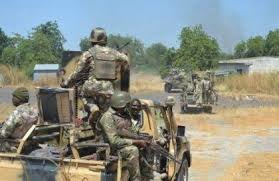
Troops of Operation Hadin Kai have arrested 18 individuals linked to the supply of logistics to Boko Haram terrorists.

The suspects were arrested between Gubio in Gubio LGA and Gudumbali in Guzamala LGA of Borno State.

In a Wednesday statement, the Nigerian Army said the development highlights a disturbing pattern of civilian involvement in support networks that sustain insurgent activities in the North East.

“Preliminary findings indicate that the suspects were intercepted while moving through Gubio towards the Gudumbali axis, allegedly to deliver supplies to terrorist elements.

“Initial confessions suggest that the individuals were drawn into the illicit trade largely due to personal economic challenges, reflecting how criminal groups continue to exploit vulnerable persons for their operations,” the statement reads in part.

The Nigerian Army strongly warned all citizens against any form of collaboration with terrorist groups.

It stated that providing logistics, intelligence, or assistance to such elements remains a serious offence, with grave consequences for national security and the safety of innocent lives.

The Army said, “The public is reminded that the fight against terrorism requires collective commitment.

“The effectiveness of ongoing operations depends greatly on the vigilance, cooperation, and active support of host communities.

“Citizens are therefore encouraged to promptly report suspicious activities and resist any inducement to aid criminal elements.

“It is equally important to recognise the need for sustained socio-economic support and community-focused initiatives that can strengthen resilience and reduce vulnerabilities within affected areas.

“Continued support for government efforts in empowerment, skills development, and access to basic services will further discourage negative influences and promote lawful means of livelihood.”

The Nigerian Army said it remains steadfast in its mandate to safeguard all communities and protect law-abiding citizens.

It noted that lasting peace and stability, however, can only be achieved through a unified approach, where security operations are complemented by broad-based developmental efforts and strong community partnerships.

“The public is therefore urged to continue standing resolutely with the Armed Forces in rejecting terrorism in all its forms,” the statement further reads.

Sun