Home Blog Page 514

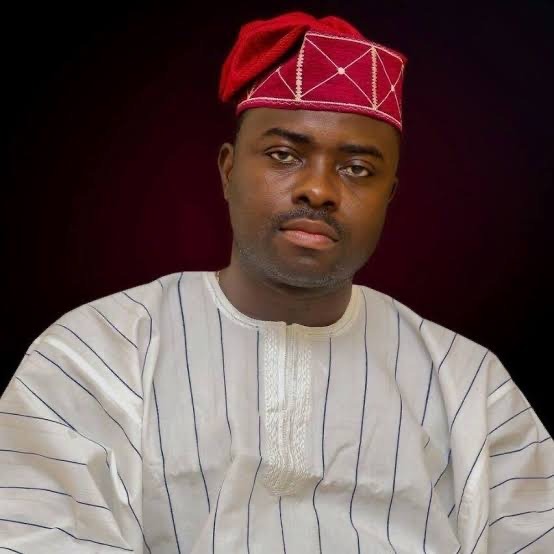
Funso Ayeni: A Strategic Political Journey, Calculated Realignment, and a Renewed Path to the Senate

0


By Ahmed Salami

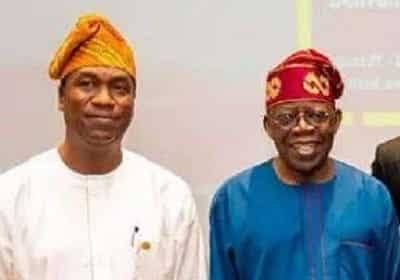
In the dynamic and often unpredictable terrain of Ekiti State politics, few individuals have combined ambition, strategy, and grassroots connection as effectively as Funso Ayeni. His political journey over the years reflects not just persistence, but a deep understanding of the realities of Nigeria’s Fourth Republic, where success is shaped by timing, structure, and the ability to read the political climate accurately.

Ayeni’s rise within the political space began under the Peoples Democratic Party (PDP), a platform that gave him the opportunity to build visibility and establish credibility among the people of Ekiti North Senatorial District. As the PDP’s senatorial candidate in the 2023 general elections, he ran a campaign that was widely acknowledged for its organization, message, and connection with the grassroots. His approach was not merely about party loyalty, but about presenting himself as a capable and forward-thinking leader with the capacity to deliver meaningful representation.

Beyond his senatorial ambition, Ayeni also positioned himself within the governorship conversation in Ekiti State. His interest in the state’s top seat signaled confidence, vision, and a desire to contribute at the highest level of leadership. While that ambition did not materialize into electoral victory, it further cemented his reputation as a serious political figure with statewide recognition and influence.

However, what distinguishes Ayeni from many of his contemporaries is his willingness to adapt and recalibrate his strategy in response to changing political realities. In Nigeria, political loyalty is often tested by internal party dynamics, power struggles, and shifting alliances. Ayeni’s recent decision to move toward the African Democratic Congress (ADC) is a reflection of calculated political thinking rather than mere opportunism.

This move is particularly significant when viewed against the backdrop of the All Progressives Congress (APC), which currently dominates the political structure in Ekiti State. While the APC remains a formidable force, there are growing indications of internal tensions as the party prepares for its primary elections. Competing interests among aspirants, the influence of entrenched political actors, and the struggle for control of party machinery have created an atmosphere that could easily spiral into division if not carefully managed.

Historically, such internal crises within dominant parties have often resulted in fragmentation, voter apathy, or the emergence of protest votes. In this context, Ayeni’s decision to align with a relatively less turbulent platform like the ADC may prove to be a masterstroke. By avoiding the uncertainties and potential fallout of a contentious primary process, he positions himself as a stable and credible alternative for voters who may be disillusioned by internal conflicts within larger parties.

*The Ikole Question: A Case for Equity and Fair Representation*

One of the most compelling arguments strengthening Ayeni’s candidacy lies in the issue of equitable representation within Ekiti North Senatorial District. The district is made up of five Local Government Areas: Oye, Ikole, Moba, Ilejemeje, and Ido-Osi. Since the return to democratic governance in 1999, representation at the Senate has rotated among these local governments except one.

Ikole Local Government, despite its size, political relevance, and contribution to the district, has never produced a senator in the Fourth Republic.

A closer look at the distribution of the senatorial seat over the years clearly highlights this imbalance:

– Moba Local Government held the seat for an extended period, from 1999 up to 2023, and continues with representation from 2023 to 2007 through the late Senator James Kolawole’s political structure.

– Ido-Osi Local Government produced Senator Olubunmi Adetunmbi, who served from 2011 to 2015 and again from 2019 to 2023. It currently holds the seat through the incumbent Senator Cyril Fasuyi from 2023 to 2027.

– Ilejemeje Local Government had representation through Senator Duro Faseyi from 2015 to 2019.

– Oye Local Government produced Senator Ayo Arise, who served from 2007 to 2011.

Amid all these, Ikole Local Government stands out as the only LGA that has never been given the opportunity to occupy the senatorial seat.

This reality raises an important question of fairness, justice, and inclusiveness in the political arrangement of Ekiti North. In a democratic setting where equity and balance are essential for unity and sustained development, the continuous exclusion of Ikole from senatorial representation presents a gap that demands urgent correction.

Ayeni’s candidacy, therefore, goes beyond personal ambition, it embodies a broader struggle for recognition and inclusion. His emergence offers the people of Ikole a long-awaited opportunity to have their voice represented at the national level. It also provides the entire district with a chance to strengthen unity by embracing a more balanced approach to leadership distribution.

A Candidate with Grassroots Strength and Broad Appeal

Equally important is Ayeni’s reputation among the people. Described by many as “a man of many parts,” he has built a personal brand that extends beyond partisan politics. His background in the corporate world, combined with his philanthropic efforts and consistent engagement with communities, has earned him respect and loyalty across different segments of society.

Unlike candidates who rely solely on party structures, Ayeni commands a level of personal support that transcends political affiliations. This kind of grassroots appeal is particularly valuable in a political environment where voters are increasingly looking beyond party labels and focusing on individual credibility, accessibility, and proven commitment to the people.

A Strategic Path Toward Victory

As the next electoral cycle approaches, the convergence of several key factors creates a unique window of opportunity for Ayeni. The potential crisis within the APC, his strategic realignment to the ADC, the growing agitation for Ikole representation, and his established grassroots support all point toward a strengthened position in the senatorial race.

However, the road ahead will require careful planning, coalition building, and sustained engagement with voters across all five local governments. Success will depend not only on the strength of his message but also on his ability to unify diverse interests and present himself as the candidate of fairness, competence, and progress.

Conclusion

Funso Ayeni’s political journey is a compelling example of strategic evolution in modern Nigerian politics. His ability to navigate complex party dynamics, recognize opportunities, and position himself accordingly demonstrates a level of political maturity that sets him apart.

More importantly, his candidacy represents a historic opportunity to address a long-standing imbalance in Ekiti North Senatorial District. For Ikole Local Government, this is more than a political contest, it is a moment of long-awaited inclusion.

If the principles of equity, competence, and strategic positioning prevail, Ayeni’s renewed quest for the Senate may not only succeed but also redefine the political narrative of Ekiti North for years to come.

Salami, a journalist and public affairs analyst, writes from Abuja
Inside the Wonder: NRS Headquarters Delivered by Zack Adedeji

0


By seun Oloketuyi

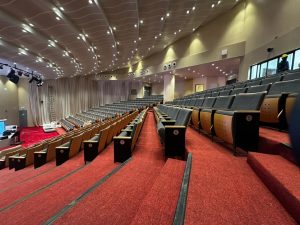
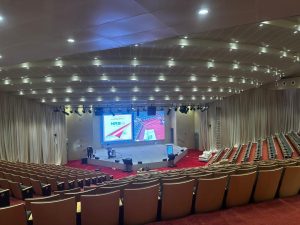
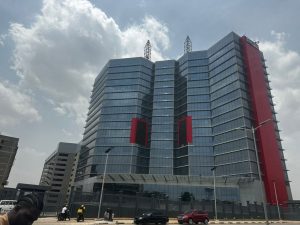
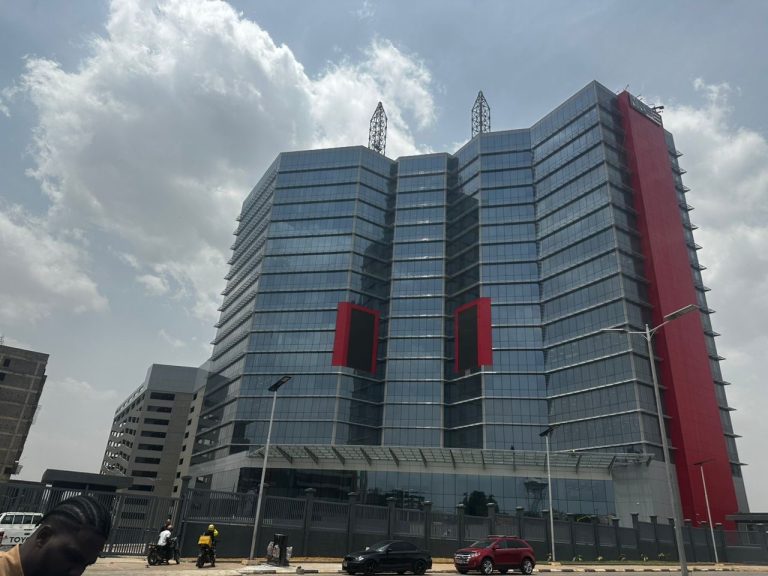
The NRS Headquarters stands as a modern benchmark for institutional excellence an environment carefully designed to balance efficiency, safety, and professionalism. Delivered under the leadership of Zack Adedeji, the facility is more than just a workspace; it is a structured ecosystem where order, discipline, and innovation converge to support organizational goals.

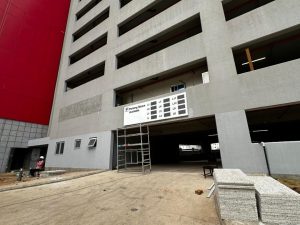
From the moment one approaches the building, the intent behind its design is evident. The architecture reflects both functionality and forward-thinking, with clearly defined access points that ensure seamless movement for staff and visitors. Staff members utilize a dedicated entrance linked directly to a multi-level parking structure, while visitors are received through a designated front entry, reinforcing both security and operational clarity. Every entry process is governed by strict identification and registration protocols, underscoring the organization’s commitment to accountability.

A defining feature of the headquarters is its 16-floor structured parking system, engineered to accommodate staff efficiently while maintaining order. Vehicular movement within the facility follows a disciplined flow guided by clear signage, ensuring that accessibility particularly for emergency response is never compromised.

Inside, the workspace reflects a culture of professionalism. Offices are organized, functional, and conducive to productivity. Staff are expected to maintain high standards of conduct, fostering an environment built on mutual respect and operational excellence. This ethos extends beyond behavior into the physical upkeep of the facility. Cleanliness is treated as a collective responsibility, with strict policies against improper waste disposal and the unauthorized use of surfaces for posters or stickers.

The attention to detail is equally evident in shared amenities. Restrooms are maintained to high hygiene standards, with clear expectations around proper usage and sanitation. Overcrowding is discouraged to preserve comfort and ventilation, ensuring these spaces remain functional for all users.

Inclusivity is another cornerstone of the NRS Headquarters. The facility is equipped with accessible entrances and restrooms for persons with disabilities, reinforcing a commitment to equity. These provisions are protected by strict usage guidelines to ensure they remain available to those who need them most.

Beyond workstations, the headquarters offers thoughtfully designed shared spaces such as a quiet library and tea rooms. These areas provide balance supporting both focused work and necessary breaks while maintaining the same expectations of order and cleanliness that define the rest of the building.

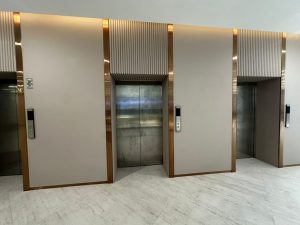
Energy efficiency is embedded into daily operations. Staff are required to switch off lights and electrical equipment when not in use, a practice that aligns with both safety standards and sustainability goals. Similarly, the use of elevators is regulated to prevent overcrowding and ensure safe, orderly movement across floors.

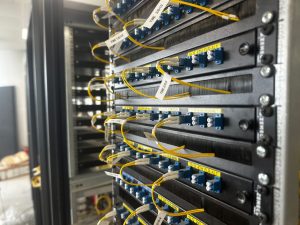
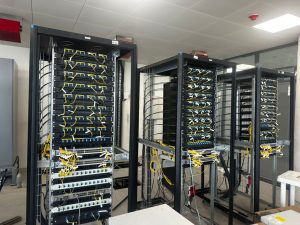
Safety infrastructure within the building is robust and uncompromising. Clearly marked emergency exits and evacuation pathways lead to a designated muster point outside the facility, ensuring preparedness in crisis situations. Fire response systems, including accessible fire service routes and specialized suppression technologies like the FM200 system, are strategically integrated and protected from unauthorized interference.

Visitor management is handled with equal precision. Every visitor must be registered and escorted, limiting access strictly to authorized areas and reinforcing the security framework of the headquarters.

At its core, the NRS Headquarters operates on a simple but powerful principle: shared responsibility. Every occupant staff or visitor plays a role in maintaining the standards that define the facility. Discipline, respect, and adherence to guidelines are not just expectations; they are essential components of the environment.

In delivering this landmark project, Zack Adedeji has established more than a physical structure. He has set a standard a model of how infrastructure, policy, and human behavior can align to create a safe, efficient, and forward-looking workplace.

The NRS Headquarters is, indeed, a wonder not just in design, but in the culture it sustains.

Lagos 2027: Qualities That Stand Hamzat out from the Crowd

0


By Musbau Rasak

In the past month, the dominating topic in the socio-political space in Lagos, the commercial nerve centre of the most populous black nation on earth, is the governorship race.

There have been discussions on who occupies the Governor’s Office in 2027 when the incumbent, Babajide Olusola Sanwo-Olu completes his constitutionally allowed two terms of four years each.

The discussions have centered on who will pick the ticket of the All Progressives Congress (APC), ruling party in the state and also at the centre which many believe, will still continue to call the shot, given the fact that the party has been ruling the state since the return to democracy in 1999.

The discussions reached a crescendo level as weekend approaches and news filtered in that the leadership of the APC with the tacit approval of President Bola Ahmed Tinubu, has decided to support the current Deputy Governor, Dr Kadir Obafemi Hamzat for the coveted position.

On Friday, 10 April, 2026, the highly respected and coveted member of the House of Representatives, Rt Honourable James Abiodun Faleke, came out boldly to announce his support for Hamzat, calling on all his supporters to do same and urging party members to vote for him in the coming primaries of the party.

Faleke’s endorsement created a high-fever frenzy in the party. Many believe with Faleke making such move, the main man, President Tinubu, has spoken.

Some people have been questioning the support for Hamzat, particularly from the other aspirant who has ruled before.

A critical analysis of the man, Kadir Obafemi Hamzat is the objective of this article.

I may not be the closest to him, but I can also lay claim to being closer to him than many who are making such claim today.

And as a journalist who has not only covered Lagos politics, particularly the Progressives camp, interact and make friends with many politicians from the Progressives camp, Hamzat inclusive for about three decades, I can humbly submit here that I am qualified to write about the man I have been interacting with for about one and half decades.

I won’t bore you with how I met and became very close to him, I will reserve that for my book on Lagos politics.

However, I will make this article centers on the qualities that set Kadir Obafemi Hamzat apart, in my interaction and closeness to him.

Education: In terms of education, Dr Hamzat is sound. He has been certified, by some of the greatest institutions in the world.

He obtained his PhD at the tender age of 27 and has been an adjunct Professor, and has also worked at Morgan Stanley where Asiwaju Bola Ahmed Tinubu head-hunted in the early 2000s.

Hamzat stands out from the crowd and even his fiercest rivals recognise his qualities.

Experienced Team-player: Since he assumed public service office as the pioneer Commissioner for Science and Technology in Lagos, Hamzat has been a deeply committed team-player. He recognised authority and is loyal and committed to a fault.
Sanwo-Olu is the third Governor Hamzat is working with and it is very instructive that none has had any cause to complain about him.

As Commissioner for Science and Technology under Asiwaju Bola Ahmed Tinubu; as Commissioner for Science and Technology and later Works and Infrastructure under Babatunde Raji Fashola, SAN; and now as the Deputy Governor under Babajide Sanwo-Olu; Hamzat has been and continue to be an epitome of loyalty and commitment and none has had cause to complain about him.

It’s instructive to note that by 2027, Hamzat will become the first Deputy Governor to serve his constitutionally allowed tenure full since the present democracy berthed in Lagos. This is a clear testimony of his team-playing ability. His loyalty and commitment have never been in doubt.

Calm but highly efficient: Hamzat is not the one to make noise. He goes delivering on duties assigned to him with calm efficiency.

No noise, no drama, just practical efficiency.

As the pioneer Lagos State Commissioner for Science and Technology, Hamzat was the arrowhead of the automation of salary payment in Lagos State.

Hitherto, Lagos has been bedeviled with cases of ghost workers leading to the loss of millions of naira monthly.

Through Hamzat’s efficiency, ingenuity and team work, the Lagos Salary payment for public workers was created via the establishment of Oracle and creation of the State Treasury Office (STO). Today, all Lagos public servants including political appointees get their salaries through the Oracle system. That’s why everyone, the Governor inclusive has an oracle number, without your Oracle number, you can’t get payment.

As Commissioner for Works and Infrastructure, Hamzat spearheaded the team that found lasting solutions to the perennial problem on WEMPCO road, Ikeja and Yaya Abatan Street to mention a few. Since the roads were constructed to standard specification, complemented with the required drainage structures, flooding on these roads have become a thing of the past.

Deep, data-driven analytical mind: In 2014, I took a team of journalists to interact with him then on his role as the state Commissioner for Works and Infrastructure, after about two hours later and a lecture on how a flood-free WEMPCO road and Yaya Abatan Street was achieved, the journalists were unanimous in acknowledging the depth of this man.
His intelligence is high, he analyses with facts and figures and he can discuss governance in Lagos for hours without mixing one fact with the other.

His interview with the Your View crew on TVC discussing Tinubu’s chance in the 2023 Presidential election is a good testimony to this.

Determined and Passionate: When Hamzat is convinced about an issue, he is not only passionate about it but also very determined to bring it into fruition, albeit through legal means, I won’t forget to add that he is a stickler for due process.

On the eve of the APC Presidential Primary in 2022 in Abuja, I was with him in his room.

We were discussing when a call came in. The person at the other appeared to be an executive member of the APC National Working Committee.
From the tone of discussion, the caller told Hamzat that the former APC National Chairman, Adamu Abdullah called an Exco meeting to inform members that then President Buhari had instructed that they back former Senate President, Ahmed Lawan for the party’s presidential ticket.

Though not good news, Hamzat displayed calm and determined mien. Looking unruffled, he calmly told the caller that Tinubu’s supporters are not afraid, whoever Buhari likes, he should support, it is his right.
However, Asiwaju and his people will go to the primary and win. The rest they say is history.

Kind but Prudent: Hamzat is kind, I can testify to that. When someone told me “Hamzat is good but tight-fisted”, I laughed.

I told him Obafemi is kind but not frivolous with money. He believes so much in teaching you how to fish rather than giving you pieces of fish to eat, and mind you, if the situation requires giving you fish to eat, he will gladly do it.

But he thrives in teaching people how to fish, he won’t just give money for the sake of it.

Meticulous: I have never seen Hamzat shouting at people. He speaks softly but convincingly because he is always has deep knowledge of what he is discussing with you.

He listens with rapt attention and does not rush into giving response.

In 2022, after some failed attempts to see him due to his tight schedule, I eventually succeeded in getting down to discuss the success of my platform with him.

I told him I need his help; he said do I want him to come and invest, I said no sir, I just need your assistance to lift the platform.

He said where is your business plan, I was surprised because I thought it is only investors that need that.

He said that even if he has to help me, which he promised to do, he had to see my plan, read and offer suggestions where necessary and see the business grow.

It was vintage Hamzat, meticulous, incisive and analytical, I learnt something new from him that day.

Ambition not Obsession: All politicians are ambitious but many have turned ambition into obsession. Hamzat is ambitious, he has a right to be but he is never obsessive about what he wants to be.

He will always tell you, yes I want to be this or that but everything depends on the final approval from almighty God and the constituted authorities (the party leaders).

In 2014, he was coasting home to winning the APC ticket but when the leadership decided otherwise, he took it with equanimity.
He worked for the success of the candidate and celebrated victory with him.

Excellent relationship with Staff: For those who have worked with him and are still working with him, Hamzat is the kind of boss anyone will work with.

“He jokes with us, meets regularly with us, discusses our personal problems offering solutions along the way,” was the general consensus of the staff in the Deputy Governor’s Office in video documentary produced to celebrate his 60th birthday.

I will sum up this with what my cousin told me about Obafemi’s relationship with his staff.

According to him, they had gone to interview Hamzat for his contribution to a documentary and were marvelled at the way he related with his staff.

“It was a mutual respect between him and his staff, no shouting match, no frowning of face and no lifting of shoulder unlike where we are coming from,” he said.

Religious but tolerant: Many don’t know that Mrs Oluremi Hamzat is a Christian and she has never been under any pressure to practice Islam.

Many don’t even know that one of Hamzat’s younger sister is a Deaconess at the Redeemed Christian Church of God (RCCG).

Obafemi does not discriminate on the matter of religion, in actual fact, he does not discriminate in any matter. He is always just, fair and upright.


Musbau Rasak is a Lagos based journalist and Publisher of popular online newspaper, thegazellenews.com

Patrick Doyle loses first child with new wife — hours after birth

0


Patrick Doyle, the ace Nollywood actor, is mourning the death of his newborn daughter Omayinuwa — just one day after announcing her birth.

The actor had shared the news on Saturday that he and his wife Olufunmilayo had welcomed their first child together. But by Sunday, celebration turned to sorrow.

In a heartfelt Facebook post, Patrick revealed that the baby passed away shortly after coming into the world.

Thecable

Joint task force intercepts three tankers with 939MT of stolen crude oil

0


Joint task force intercepts three tankers with 939MT of stolen crude oil

Apprehends 26 suspects; on the trail of three more vessels
From Aniekan Aniekan, Calabar

Troops of the Joint Task Force South-South Operation Delta Safe (OPDS) have intercepted three tankers with about 939 metric tonnes of stolen crude oil.

Acting on credible intelligence on Wednesday, April 8, 2026, the task force successfully intercepted and arrested two vessels, Motor Tanker MKPODU and Motor Tanker WESTAF.

The vessels are suspected to have been engaged in crude oil theft activities within the Calabar/Akwa Ibom maritime area.

The two vessels, with a total of 26 crew members on board, were apprehended at a wellhead located within the Calabar/Akwa Ibom Joint Operations Area while actively involved in crude oil theft.

Joint task force intercepts three tankers with 939MT of stolen crude oil

Joint task force intercepts three tankers with 939MT of stolen crude oil

Joint task force intercepts three tankers with 939MT of stolen crude oil
Motor Tanker MKPODU was arrested in the process of syphoning crude oil and was discovered to be laden with an estimated 480 metric tonnes of suspected stolen crude.

The second vessel, Motor Tanker WESTAF, on the other hand, had about 459 metric tonnes of suspected crude oil at the time of arrest.

Giving details of the operation, the Commander, Joint Task Force South-South Operation Delta Safe, Rear Admiral Olugbenga Oladipo, said the Nigerian Navy Ship SHERE and Nigerian Navy 410 Helicopter were deployed to the scene following the interception.

According to him, “The helicopter provided real-time aerial imagery of the vessels while Nigerian Navy Ship SHERE took custody of the 2 vessels at the offshore location.

“Thereafter, Nigerian Navy Ship OSE and elements of Forward Operating Base IBAKA facilitated the transfer of the arrested vessels and crew members to the Navy jetty in Calabar.

“Meanwhile, preliminary investigation led to the arrest of a third vessel, Motor Tanker STELIOS K, by Nigerian Navy Ship GONGOLA on 10 April 2026 for similar Crude Oil Theft activities,” he said.

While parading the suspects at the Nigerian Navy Ship VICTORY jetty, Rear Admiral Oladipo stated that the operation underscores the continued commitment to the OPDS mandate in combating crude oil theft and other economic sabotage, as well as securing all oil and gas installations within the Joint Operations Area.

He attributed the success of the operation to the support of the Chief of Defence Staff, as well as the Chief of the Naval Staff and the Chief of the Air Staff.

The commander also revealed that the involvement of Nigerian Navy vessels and resources, as well as Nigerian Air Force assets, was instrumental to the success of the operation.

He emphasised that the arrest of the vessels demonstrates the shared commitment and proactiveness of the Defence Headquarters and Nigerian Navy towards curbing crude oil theft in Nigerian waters through inter-service and inter-agency collaboration and sustained intelligence gathering.

Flag Officer Commanding, Eastern Naval Command, Rear Admiral Chidozie Okehie, said that one additional vessel involved in the operation was arrested earlier in the day at Bonny, while the Eastern Naval Command is on the trail of three more vessels.

He therefore appreciated the Commander, OPDS, for his support, as well as the Chief of the Naval Staff, Vice Admiral Idi Abbas, assuring that more arrests are underway.

Sun

Thousands rally in Enugu, endorse Mbah, Tinubu for 2027

0


Thousands of supporters of the All Progressives Congress (APC) at the weekend poured into Oji-River Local Government Area of Enugu State in a show of strength, endorsing Governor Peter Mbah and President Bola Ahmed Tinubu for re-election in 2027.

The rally, organised by the Ifediche Political Family, attracted a crowd estimated at over 10,000, drawn from Awgu, Oji-River and Aninri local government areas, as party faithful marched through major streets before converging at the council headquarters.

The atmosphere was charged, with chants, banners and party insignia dominating the procession, signalling what organisers described as growing grassroots mobilisation ahead of the next general elections.

Top APC stakeholders in the state graced the event, including the State Chairman, Dr Martin Chukwunweike; Chairman of Oji-River LGA, Chief Greg Anyaegbudike; and founder of the Ifediche Political Family, Mazi Dr Ezenwa A. A. Onyirimba.

Addressing the crowd, Dr Chukwunweike stressed what he described as a long-standing political culture in Enugu State, where sitting governors are traditionally supported to complete two terms.

He pointed to past administrations to reinforce his argument.

“Governors in Enugu State have always been given the opportunity to complete two terms. From Chimaroke Nnamani to Sullivan Chime and Ifeanyi Ugwuanyi, the people stood by them, and we must sustain that tradition,” he said.

According to him, Governor Mbah, who assumed office in 2023, has shown enough commitment to merit similar backing, citing developments in key sectors.

“Governor Mbah deserves the same support to complete his second term ending in 2031, considering the strides his administration has made in education, healthcare, agriculture and infrastructure,” he added.

He commended the organisers, particularly Dr Onyirimba, for what he described as effective grassroots mobilisation, urging other party leaders to replicate the model across wards and local government areas to deepen the party’s reach.

In his remarks, Chief Anyaegbudike applauded the Ifediche Political Family for strengthening party unity at the local level.

He said, “We appreciate the efforts of the Ifediche Political Family. Their activities have helped to foster unity within the APC in Oji-River Local Government Area.”

He also urged members to remain politically active at all levels.

“Party members across Awgu, Oji-River and Aninri must stay engaged from the polling units to the wards and local government structures if we are to achieve our goals,” he said.

Convener of the group and aspirant for the Awgu/Oji-River/Aninri Federal Constituency seat in the House of Representatives, Dr Onyirimba, said the rally was part of a broader effort to galvanise support for APC candidates ahead of 2027.

“We organised this rally to galvanise support for APC candidates in the 2027 elections, including Governor Mbah and President Tinubu,” he said.

Highlighting some of the group’s interventions, Onyirimba pointed to initiatives aimed at impacting lives at the grassroots.

“We have facilitated ICT training for 300 youths at the Bridge Institute in Enugu, rehabilitated boreholes, supported healthcare facilities in Oji-River and provided agricultural inputs to farmers.

“We will continue to address the needs of our people. Our efforts so far demonstrate our commitment to service, even before holding public office,” Onyirimba said, adding that greater impact would be achieved if given the mandate.

The rally climaxed at the Oji-River Local Government Secretariat, where the Director-General of the Ifediche Political Family, Evangelist Walter Madu, charged members to remain steadfast and loyal as preparations gather momentum for the 2027 general elections.

He urged sustained commitment to both the group and the APC, stressing that unity and grassroots mobilisation would be key to future electoral success.

Sun

Tax laws: Finance minister never admitted errors – FG

0


The Presidential Fiscal Policy and Tax Reforms Committee has addressed reports alleging that Minister of State for Finance, Taiwo Oyedele, admitted errors in Nigeria’s new tax laws.

Speaking in a statement shared on Oyedele’s X page on Sunday, the committee dismissed the reports, calling them “misleading” and a misrepresentation of the minister’s comments.

“Our attention has been drawn to misleading media reports claiming that the Honourable Minister of State for Finance, Mr. Taiwo Oyedele has ‘finally admitted errors in the new tax laws.’

“These publications misrepresent the Minister’s statements, falsely alleging that he urged Nigerians to await the outcome of a ‘legislative probe’, a process that has long been concluded and the gazetted copies certified by the National Assembly published since early January 2026,” the post said.

It added that Oyedele, who spoke at a fireside chat during the Nigerian Bar Association Section on Legal Practice conference in Lagos, highlighted early gains from the tax reforms.

The statement that these include an increase in the number of informal businesses seeking registration with the Corporate Affairs Commission, as well as a rise in the number of registered taxpayers from about 10 million to over 100 million nationwide.

The committee added that Oyedele acknowledged that no law is perfect, emphasising the need for continuous stakeholder engagement to address any gaps through future amendments.

“He, however, emphasised that no law is perfect. Therefore, ongoing stakeholder engagement is essential to identify and address any errors or gaps for appropriate legislative updates through Finance Bills as part of a continuous improvement process.

“We urge members of the public to disregard sensational headlines and twisted narratives and rely exclusively on official sources and credible media organisations for accurate information regarding the tax reform and other government policies,” it stated.

Sun

MMELI Arts Foundation Hosts ‘Women, Words and Wealth’ Workshop to Empower Female

0


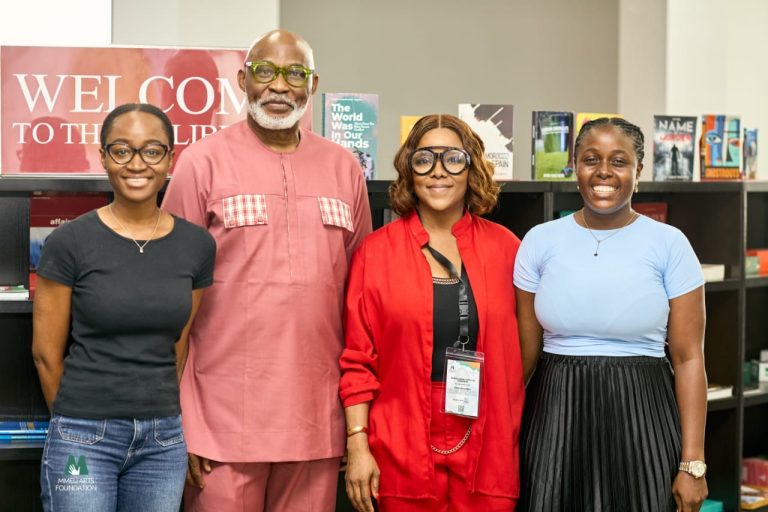
To commemorate International Women’s Day 2026, MMELI Arts Foundation, in collaboration with Alliance Française de Lagos, hosted the Women, Words and Wealth workshop in Ikoyi, bringing together women writers and creatives for an intensive programme focused on craft, voice, and pathways to publication.

Designed as a practical and hands-on session, the workshop aimed to help participants strengthen their creative identity, develop a distinctive voice, and navigate publishing opportunities. Sessions covered key areas such as Creative Identity, Developing Your Voice, and Publishing Pathways.

These were led by storyteller and filmmaker Phoenix Ezendu; actor, writer, and filmmaker Richard Mofe-Damijo; and award-winning author and journalist Nina Anyianuka.
Speaking on the significance of the initiative, Chairman of MMELI Arts Foundation, Richard Mofe-Damijo, said the organisation is committed to building structures that move African voices “beyond potential into tangible influence.” He noted that creative talent must be supported institutionally to compete on the global stage.

Also speaking, Victor Mark-Onyegbu, Head of Grants and Community Building at Africa No Filter, urged participants to harness the power of storytelling in shaping global narratives. He encouraged them to tell authentic, grounded stories capable of challenging long-standing stereotypes about Africa.

Founded by Nina Anyianuka, MMELI Arts Foundation focuses on cultural renewal and professional development for creatives. Partners for the workshop included Nestlé Nigeria, Rite Foods, Alliance Française Lagos, and Africa No Filter.
Anyianuka emphasised the foundation’s commitment to raising standards in creative practice. She said the goal is not only to encourage expression but also to equip women with the tools needed to produce work that can compete professionally on a global scale.

“That is why we created Women, Words and Wealth: to help women writers transition from private expression to public authorship, with an emphasis on discipline, structure, and intentionality,” she added.
Participants described the workshop as timely and impactful, noting that it combined cultural grounding with practical frameworks for building sustainable careers in storytelling.

Dorothy Ughenu, a television and screenwriter, described the programme as “a first-of-its-kind initiative that created a safe space for women in the storytelling community,” adding that applying the structures shared by facilitators would amplify their voices and improve their earning potential.
The foundation disclosed that details of upcoming workshops and opportunities for writers will be announced in the coming weeks.

Interested participants and partners are encouraged to follow its website and social media platforms for updates, as well as contact the editorial desk for registration and collaboration enquiries.

GIVING WELL DESERVED KUDOS TO A TIRELESS REFORMER

0


By Philip Agbese

In this present generation, institutions like the Nigerian Communications Commission (NCC) has been blessed with a leader whose tenure has become a reference point for courage, clarity, and uncommon administrative excellence. This leader has not simply supervised the agency, he has breathe a new life into the system that may have become cumbersome or directionless. The current Executive Vice Chairman and Chief Executive Officer of the Nigerian Communications Commission, Dr. Aminu Maida, is the dignified tireless reformer and leader who has performed beyond expectations in the NCC.

He came to the helm of the Commission at a time when the Nigerian telecom ecosystem required not ceremonial leadership, but strategic intelligence that needed to give results and not complacency. He came when courageous reforms were highly needed. Since he assumed office in November 2023, Dr. Maida’s transformative leadership style has produced immense results that were gotten from his numerous executed reforms. Today, these reforms has helped improve the growth of the commission and Nigeria at large.

Presently, the telecommunications industry remains one of the most consequential sectors in modern economies. It powers banking, education, commerce, governance, health systems, innovation, and social connectivity. For a nation as vast and dynamic as Nigeria, the regulator of such a sector requires a good combination of innovation with order, firmness with flexibility, and consumer protection with investor confidence. Right here is where Dr. Aminu Maida has distinguished himself from other leaders.

Under his leadership, the NCC has embraced what may be called “Intelligent Regulation”; a modern regulatory philosophy that is data-driven, transparent, responsive, and future-facing. Rather than rely on outdated bureaucratic methods, the Commission has evolved towards evidence-based governance, measurable standards, and public accountability.

This shift has not only improved the confidence of the institution alone but has also reassured operators, consumers, investors and development partners that Nigeria’s telecom industry is in a competent hand that will never leave any room for managerial failure.

The year 2025 was a significant year which saw another dimension in the evolution of the sector under Maida’s leadership.

One of the most consequential steps attributed to the NCC in 2025 was the return toward market-determined pricing principles in segments of the telecom economy. Despite not being a decision that was politically convenient or simplistic, it was economically strategic. This happened because foreign exchange volatility, tariff rigidity, and the rising cost in operation had strained operators’ ability to reinvest meaningfully in infrastructure for many years. According to available reports, these reforms have helped unlock more than $1 billion in fresh infrastructure commitments in 2025. This was a move that required foresight, courage, and the ability to prioritize long-term sustainability over short-term.

Moreover, reforms where made to see to infrastructural expansion. This led to the influx of fresh capital that translated into network upgrades, base station expansion, and procurement of modern equipment after hesitation. In practical terms, this means there will be wider coverage, stronger signals, and better user experience for millions of Nigerians. Maida’s reformist direction passed the performance test that measured leadership by an improved system and not by oratory or political alliance.

However, the NCC under Dr. Maida has also strengthened sanctions for operators who failed to deliver quality-of-service in their obligations. Reports indicate that non-compliance penalties rose significantly, including fines tied to reporting areas and persistent infractions. This reveals a working of a regulator that is unwilling to allow consumers become helpless victims of poor service delivery, further sending a clear message that profitability must coexist with responsibility. Nigerians are now saying goodbye to an era where operators act lawlessly without facing it consequences.

The year 2025 represented the act of courageous restructuring within the NCC, and so far, the year 2026 reflects measurable gains and consolidation of sacrifices made in executing big reforms in the previous year. The NCC’s fourth quarter of 2025 performance review was released in early 2026, and it pointed to clear improvement in national connectivity. It was recorded that there was increase in the median download speeds across urban and rural areas, while the quality gap between cities and remote communities narrowed. This is no ordinary achievement because it requires relentless coordination to improve digital inclusion in a country with diverse terrains, infrastructural limitations, and socioeconomic disparities,

Another laudable reform is revolutionary in its implications has been the Commission’s support for open performance data and nationwide network coverage mapping tools. These systems allow citizens to compare network quality by location and operator.

Additionally, the introduction of a Quality of Experience portal, which was designed to help monitor service performance in real time, further reflects a culture of transparency and measurable accountability. It speak more of a sector is keen on onboarding every available tools for achieving modern governance.

The renewed attention shown towards underserved and unserved communities has become one of the noblest dimensions of Maida’s tenure. Reports show that the NCC collaboration with the Association for Progressive Communications, focused on community networks and rural connectivity models through high-level engagements.

This particularly commendable because development cannot be exclusive for urban settlers. A child on a remote village also deserves access learning just as much students in Abuja or Lagos. A farmer in rural community deserves connectivity just as much as a trader in a commercial center. Breaching this gap was a very necessary and commendable effort.

In the case of cable theft, vandalism, fibre cuts, and accidental damage from road construction, the leadership of NCC under Maida has welcomed stronger legal protections for telecom infrastructure and aligned with security institutions to reduce disruptions. Now, there are new security frameworks and collaborative rapid response concepts.

Another refreshing Hallmark of Maida’s administration is the push for clearer tarrif structures and easier comprehension of service plans which would reflect good public communication and transparent pricing system. Under Maida’s stewardship, the NCC has become a regulator that is conscious of protecting consumers from being taken advantage of by operators. In the real sense, trust increases when citizens understand what they are paying for. When trust increases, markets deepen. When markets deepen, investment grows. This elegant alignment of market efficiency and consumer welfare is nothing but the writings of thoughtful leadership.

Perhaps most impressive is that Dr. Maida’s focus has not been confined to present challenges alone. In preparing Nigeria for the future, he has repeatedly emphasized on the readiness for new technologies and the urgency of ensuring that is up-to-date on global telecom evolution. While many are still adjusting to 4G and 5G realities, the world is already discussing advanced network futures. Maida is a tireless reformer who is solving today’s challenges must while preparing for tomorrow’s opportunities.

Dr Maida is not just a leader, he is a reformer is keen on fixing the present while taking care of the future. His rare and invaluable advance reforms are worthy of commendation despite inheriting a sensitive sector. His accomplishments are not accidental episodes, they are the cumulative results of when competence meets opportunity. Maida has demonstrated that Nigeria’s regulatory agencies can be modern, responsive, respected, and results-oriented.

Kudos to the tireless reformer who has shown that public service can still produce measurable progress when embraced with seriousness. Dr. Aminu Maida is steadily carving the reputation of a builder, and his fingerprints of leadership are visible and clearer for all to see.

Agbese is the Deputy Spokesperson of the 10th House of Representatives.

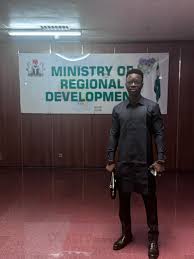
Regional development minister appoints Folagbade SA on media, communications

0


The Office of the Minister of State for Regional Development has announced the appointment of Fola Folagbade as Special Adviser on Media and Communications to the Minister, Uba Maigari Ahmadu.

This appointment comes at a critical time when effective communication is central to governance, public trust, and the successful delivery of development initiatives. As Special Adviser, Folagbade will provide strategic leadership in media engagement, public communication, and narrative development for the Minister’s office.

His role will focus on strengthening media relations, coordinating communication across key stakeholders, and translating government policies and programmes into clear, relatable, and citizen-centered messaging that drives understanding, trust, and participation.

Folagbade will work closely with the minister and relevant institutions to amplify the impact of initiatives under the Ministry of Regional Development, including projects executed through the Regional Development Commissions serving Nigeria’s North East, North West, and North Central regions.

With over a decade of experience at the intersection of media, publishing, and brand communication, Folagbade brings a rare blend of strategic thinking and execution. He is the Founder of Worital, a publishing company with over 2,000 published titles, and Worital Media, a media firm that has helped thought leaders, professionals, clergy, policymakers, and institutions build strong brands and position themselves for the evolving demands of a fast-changing global economy.

Through his work, he has consistently demonstrated the ability to shape narratives, clarify complex ideas, and position individuals and organizations for influence and impact. His expertise lies not just in telling stories, but in aligning communication with purpose, policy, and measurable outcomes.
In an era where perception, clarity, and engagement significantly influence the success of public initiatives, his appointment signals a deliberate move to strengthen the Ministry’s communication architecture and ensure that its work is not only executed effectively, but also understood, trusted, and embraced by the public.

Sun