Home Blog Page 497

Kaduna is now better than I found it – Uba Sani

0

Governor Uba Sani has disclosed that he inherited a Kaduna State which possessed immense potential but was bedevilled by security challenges, infrastructure gaps, and social indicators that required urgent attention.

The governor spoke at a workshop for senior government officials organised by the Nigerian Institute of Public Relations (NIPR), as part of the ongoing Nigeria Public Relations Week, Croc City 2026, held in Kaduna.

Themed “From Policy To Public Trust: Strategic Communication For Vision Alignment And Governance Delivery For Renewed Hope,” participants at the workshop included commissioners, special advisers, counsellors, and permanent secretaries, as well as other senior government officials.

Speaking at the event, Governor Uba Sani said, “Kaduna is not where it was. Kaduna is by far a better place today, and even more exciting is the fact that Kaduna is on the move and set to do even greater things and attain higher heights.”

He disclosed that his administration understood from the outset that incremental adjustments would not take the state to the desired heights, adding that what was required was a disciplined reorientation of governance itself.

According to him, his government then vowed that vision must translate into measurable impact, or else it would remain a mere aspiration.

“We institutionalised a performance framework built around Key Performance Indicators, ensuring that every ministry, department, and agency operates with clarity of purpose and accountability of outcome,” he added.

The governor said that he also structured his agenda around seven strategic pillars upon assuming office in 2023, and the results have started manifesting positively over the last two and a half years.

He stated that the seven pillars include safety and security; infrastructure development; strengthening of institutions; trade and investment; agriculture; human capital development; and citizens’ engagement.

Governor Uba Sani pointed out that these pillars are not isolated priorities but “interconnected levers, designed to function as a coherent system; each reinforcing the other, each contributing to a broader objective: the transformation of Kaduna State into a secure, prosperous, and inclusive society.”

He argued that security is the foundation upon which all progress rests, adding that without it, “farmers cannot cultivate their land, businesses cannot invest, and communities cannot thrive.”

The governor disclosed that he worked closely with the Office of the National Security Adviser and the military high command to establish new military bases in high-risk areas, including Giwa, Birnin Gwari, and Southern Kaduna.

“We strengthened mobility and response through the deployment of over 150 operational vehicles and 500 motorcycles to security agencies. In our urban centres, we constituted a Joint Task Force that has significantly reduced incidents of street crime and banditry generally,” he added.

Governor Uba Sani further said that his government also focused on structural outcomes.

“We have reclaimed over 20,000 hectares of previously inaccessible farmland, enabling farmers to return to productive activity, especially in places like Birnin Gwari, Giwa and Kargarko.

“We have facilitated the resettlement of over 1,000 displaced persons and continue to provide targeted support to more than 117,000 internally displaced persons, with particular attention to women and children,” he added.

The governor also disclosed that his administration has established the first forensic laboratory in Northern Nigeria, which has strengthened investigative capacity.

“The Kaduna Incident Report Centre—KAD-IR, now provides a 24-hour platform for real-time emergency response. Early warning systems are in place to detect and defuse tensions before they escalate,” he revealed.

According to him, Kaduna State has institutionalised peace dialogues, established local peace councils, and implemented a rehabilitation and reintegration framework that prioritises skills acquisition over financial inducement as part of its non-kinetic strategy.

He argued that although the result is not perfect, “security is improving, confidence is returning, and economic activity is gradually expanding in areas that were once considered inaccessible. All of this is encapsulated in what we now call the Kaduna Peace Model.”

Governor Uba Sani also said that his administration has made giant strides in the education sector by making deliberate investments to expand access and improve quality.

“We have constructed 736 new classrooms and renovated over 1,200 existing ones. We have recruited 10,000 teachers and trained more than 33,000 education personnel in modern teaching methodologies and digital skills,” he said.

The governor highlighted that “one of our most significant achievements has been the reduction in the number of out-of-school children: from approximately 550,000 to 187,720 within two years.

“This progress reflects not only investment, but also coordination, data-driven interventions, and sustained engagement with communities,” he further said.

Governor Uba Sani also said that his government is aligning education with the demands of a modern economy.

“The establishment of the Institute of Vocational Training and Skills Development marks a decisive step toward bridging the gap between education and employment.

“Through training in ICT, mechatronics, renewable energy, and other high-demand sectors, we are preparing our youth not just for jobs, but for productivity and innovation,” he said.

The governor also said that he has expanded access to healthcare, improved the quality of health facilities, and strengthened systems in the last two and a half years.

“We have upgraded 255 Primary Healthcare Centres to Level-2 facilities and established 23 Centres of Excellence; one in each Local Government Area. We have delivered a 300-bed specialist hospital to provide advanced medical services within the state, reducing the need for costly medical travel,” he said.

In terms of infrastructure development, he said that his government has initiated approximately 150 road projects, covering over 1,300 kilometres across all 23 Local Government Areas.

He argued that the projects “are part of a deliberate strategy to connect rural production centres to urban markets, to reduce travel time, and to stimulate commerce.”

The governor said that he has increased the agricultural budget from ₦1.48 billion in 2023 to over ₦74 billion this year, distributed over 900 trucks of fertiliser to farmers, and enrolled more than 100,000 smallholders into crop insurance schemes to protect them against risk.

“Through the Special Agro-Industrial Processing Zones in Chikun and Kubau, we are moving from subsistence farming to value-added agribusiness; creating jobs, increasing incomes, and enhancing export potential,” he added.

According to him, Kaduna State has created an enabling environment for private sector-led growth.

He said that his administration has actualised 23 investments valued at over $743 million between 2023 and 2025, spanning agriculture, manufacturing, energy, and other key sectors.

“In addition, we have developed a pipeline of investments worth approximately $2.77 billion. This brings our total investment portfolio to over $3.5 billion; a clear indication that confidence in Kaduna is strengthening,” he added.

The governor also said that his administration has made significant strides in social protection and inclusion by opening over 2.5 million new bank accounts for underbanked citizens and expanding financial inclusion.

He disclosed that his government has deployed over ₦18 billion in targeted support to households, farmers, and small businesses.

“Our free CNG mass transit scheme has already benefited more than 1.4 million passengers, reducing the cost of transportation and easing the burden on families,” he added.

Governor Uba Sani promised that “through Project 255, we are guaranteeing ₦100 million in public investment to each ward, ensuring that development reaches every community, urban and rural alike.”

Sun

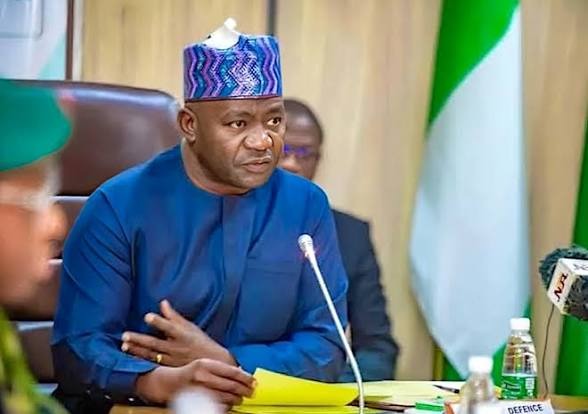
Defence minister confirms deployment of 200 troops to Türkiye for training

0


Nigeria has finalised plans to send 200 Special Forces personnel to Türkiye for advanced military training, the Minister of Defence, Gen. Christopher Musa (retd.), has confirmed.

Musa disclosed this on Saturday during the 5th Antalya Diplomacy Forum in Türkiye, following a meeting with his Turkish counterpart, Yasar Guler.

He said the arrangement forms part of a new phase of defence cooperation between both countries, with the troops expected to be deployed immediately after his return to Nigeria.

“We have a Special Forces training agreement. Türkiye has agreed to give us 200 Special Forces trainees, so as soon as I return, we are sending them here for training,” he said.

The minister added that the partnership would go beyond training, including joint military exercises scheduled for later in the year.
“We will continue to do a lot. There will be exercises. The first exercise is coming up later in the year. So, in so many areas of defence, we are going to work together,” he said.

Musa also revealed that both countries had agreed to deepen cooperation in defence production and technology transfer, describing Türkiye as a key partner in military development.

He noted that Türkiye’s experience in counterterrorism would be valuable to Nigeria, especially in strengthening its response to asymmetric security threats.

“We are going to partner together so that we have co-production of some of these items,” he added.

The minister further stated that both nations would expand collaboration through training exchanges, equipment production, and shared defence expertise.

Sun

Total shutdown as Enugu West zone endorses Tinubu and Mbah for a second term

0


Cites critical projects, policies, interventions
Donates N100m for Mbah’s Nomination Form
One-term promises a big scam, Ken Nnamani warns
The people of the Enugu West Senatorial District have endorsed President Bola Ahmed Tinubu and the Governor of Enugu State, Dr Peter Mbah, for a second term in office, citing their policies, projects, programmes, and interventions that have positively impacted the nation, the South East, and Enugu State in particular.

To make good on the endorsements, the people, who swarmed the Awgu Local Government Secretariat field in their thousands on Saturday, also presented a cheque for the sum of ₦100 million to Dr Mbah for the purchase of his nomination form, vowing to defend their position with their last vote.

This occurred as the former President of the Senate, Senator Ken Nnamani, dismissed promises by some gubernatorial and presidential aspirants to serve just one term, saying they were not being sincere with Nigerians.

Conducting the endorsement process, the lawmaker representing the Enugu West Senatorial Zone, Senator Osita Ngwu, said their decision was based on conviction informed by evident results rather than sheer politics.


“Today, we can see the best Command and Control Centre to help improve our security in Enugu. We have Smart Schools in every one of our wards. We have seen Type-2 Healthcare Centres. We have seen roads.

“Before now, if you were going to Aguobu Owa through 9th Mile, it would seem like a journey of no return. But now, it takes you only a few minutes. It is the handiwork of Governor Peter Mbah. These are not promises; these are realities; these are dividends of democracy. This is what happens when leadership is bold. No weakness, no excuse, no apologies. Just results.

“At the national level, we have seen the transformational effects of the President. We are benefiting here in the South East and Enugu State in particular. We thank our governor, who was bold and did not delay to connect us to the centre,” Ngwu asserted.

Speaking, the former Chief of the Naval Staff and Military Governor of the old Anambra State, Rear Admiral Allison Madueke (rtd), and the former Military Administrator of Gombe State, Group Capt. Joseph Orji (rtd), said they totally aligned with the sentiments expressed by their people in supporting the re-election of Tinubu and Mbah.

“The testimonies today are accurate. The people have spoken. All we want to do is to ask you to go back and do more,” Madueke stated.

Also speaking, Senator Ken Nnamani and the Deputy National Chairman (South) of the All Progressives Congress (APC), Dr Ben Nwoye, urged the people to be wary of those who promise to serve only one term, insisting they were not promise keepers.
The IMF verdict on Nigeria’s economy
“They will not keep to such promises. Some people tell lies with confidence. You should be careful. As for Enugu State, you have waited for four years, with another four years remaining. But any other candidate apart from Mbah does not guarantee Enugu West’s turn by 2031. Besides, currently on the stage, we have someone with integrity and performance. Even among his colleague governors, he is highly rated. And he is ready to continue to perform,” Nnamani added.

Addressing the mammoth crowd, an obviously elated Governor Mbah commended the people for always standing up for truth and justice like their forebears.

“This rally is of epic proportions. Nothing prepared me for this. You have also become standard bearers for equity, justice, fairness, and unity. You are also showing that you are not lightheaded; that you are strategic,” he stated.

Mbah went on to enumerate his and Tinubu’s projects, programmes, and policies that were turning the fortunes of the people for good.

On Tinubu, he said, “You have shown that you cannot stand on the margins in recognising the programmes, the policies, and the projects that Mr. President has brought to us here in Enugu.

“By this endorsement, you are recognising the positive results of Mr. President’s efforts in the stabilisation of our macro indicators, making sure that our foreign exchange is stabilised; that our inflation rate is trending downwards; that our foreign reserves are growing above the $50 billion mark, and that the states now have enough money to execute massive projects. The local governments in Enugu State are also executing numerous projects that I am being invited almost on a weekly basis to come and commission,” he stated.

He pledged to continue to justify the confidence reposed in him by the people, also assuring them that President Tinubu would not let them down.

Meanwhile, the motion for Tinubu’s endorsement was moved by the House member representing the Ezeagu/Udi Federal Constituency, Hon. Sunday Umeha, and seconded by the Executive Director (Projects) of the South East Development Commission, Hon. Toby Okechukwu, while that of Mbah was moved by the Speaker of the Enugu State House of Assembly, Hon. Uchenna Ugwu, and seconded by the member representing the Aninri State Constituency, Hon. Magnus Ede.

Others who spoke to throw their support behind the respective constituencies were the Chief of Staff to the Governor, Barr. Victor Udeh; the Chairman of the Enugu West Traditional Rulers Council, Igwe Godwin Madu; elder statesman, Igwe Lawrence Agubuzu; former Deputy Governor, Mrs Cecilia Ezeilo; former Minister of Aviation, Mrs Fidelia Njeze; the Chairman of the Enugu State chapter of the All Progressives Congress, Dr Martin Chukwunweike; the CEO of COMAG Construction Company Limited, Chief Cosmas Agu; the Chairman of the organising committee, Dr Charles Egumgbe; former Senator Ben Collins Ndu; Board member of the SEDC, Chief Ugo Agballa, as well as the Chairman of Awgu LGA, Hon. Uchenna Okolo, who spoke on behalf of the chairmen of Aninri, Awgu, Ezeagu, Udi, and Oji River LGAs, which constitute the Enugu West Zone.

Sun

Why Many Stakeholders See Sen. Sharafadeen Alli as Oyo’s Best Bet for 2027 After Winning Daily Independent’s 2025 Best Legislator Award

0

By seun oloketuyi

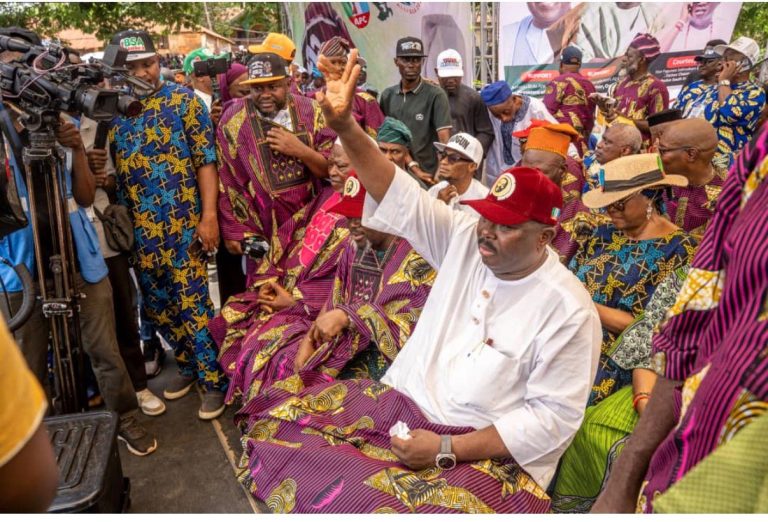
As the race for the 2027 Oyo State governorship gradually gathers momentum, growing voices within the All Progressives Congress (APC) are presenting Sharafadeen Abiodun Alli as a leading contender whose experience and policy direction position him as a strong option for the state’s next leadership. Supporters argue that his long standing involvement in governance across multiple levels gives him a rare blend of grassroots and executive experience. Notably, his profile received a further boost after he was honoured with the 2025 Best Legislator Award by the Daily Independent in Lagos.
Alli’s political journey began at the local government level as chairman of Ibadan North Local Government in 1991, a role often credited with shaping his grassroots appeal. He later moved to the heart of state administration, serving as Secretary to the State Government and Chief of Staff under former governor Rashidi Ladoja from 2003 to 2007, where he was involved in coordinating policies and overseeing implementation. His tenure as chairman of the Odu’a Group further expanded his profile into economic and corporate governance before his election to the Senate to represent Oyo South.
Within the All Progressives Congress, party leaders in the influential Ibarapa zone have already endorsed him as their preferred aspirant, citing his loyalty to the party, ability to unite stakeholders, and deep connection with grassroots structures. His declaration in Ibadan attracted key APC figures, including Minister of Power Adebayo Adelabu, former First Lady Florence Ajimobi, and Senator Teslim Folarin, reinforcing perceptions of growing internal backing.
Beyond endorsements, Alli has laid out a policy blueprint that focuses on strengthening local government autonomy, improving security, repositioning education as a hub for innovation, upgrading healthcare services, and revitalising the state economy through agriculture, rural electrification, and better road networks. Supporters say the agenda directly targets issues many residents identify as their most pressing concerns.
He has also criticised the Peoples Democratic Party led administration in the state, promising to address perceived governance lapses and revive local government administration. At the same time, his alignment with the reform agenda of President Bola Ahmed Tinubu is viewed by party insiders as a signal of potential federal–state collaboration that could attract development opportunities.
While the APC primaries remain ahead and other aspirants are expected to emerge, supporters say Alli’s mix of experience, endorsements, legislative recognition and policy focus explains why many within the party are already describing him as Oyo’s “best bet” for the 2027 governorship race.

Women affairs ministry hails Sulaiman-Ibrahim for keying into Tinubu’s vision at 46

0


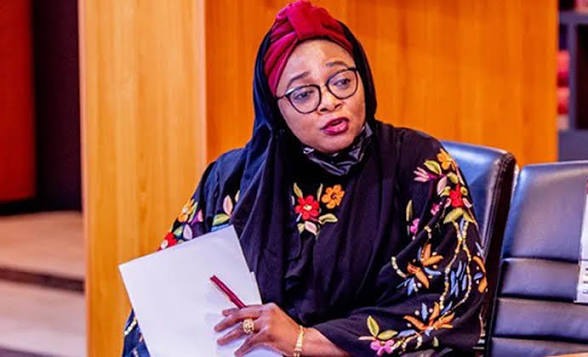
The Federal Ministry of Women Affairs and Social Development has spotlighted the Minister, Imaan Sulaiman-Ibrahim’s, pivotal role in driving President Bola Tinubu’s Renewed Hope Agenda, especially through flagship social development initiatives.

Sulaiman-Ibrahim, who turned 46 on Saturday, was further praised for her transformative leadership and commitment to national development in a statement signed by the Head of Press and Public Relations, Ahmed Danbazau.

The ministry highlighted Sulaiman-Ibrahim’s “remarkable and impactful” tenure since assuming office, noting tremendous achievements in advancing gender equality, women’s empowerment, child protection, and social inclusion. These efforts, it said, deserve public recognition.

The statement also commended her distinguished career, including roles as former Director-General of the National Agency for the Prohibition of Trafficking in Persons (NAPTIP), Honourable Federal Commissioner at the National Commission for Refugees, Migrants and Internally Displaced Persons (NCFRMI), and the first female Minister of State for Police Affairs. “Her selfless service to humanity underscores her dedication to nation-building,” the release added.

Sulaiman-Ibrahim’s work, the statement noted, aligns with President Tinubu’s Renewed Hope Agenda, particularly the 2026 Presidential Declaration as the Year of Families and Social Development. Under this, the ministry is implementing a structured, inclusive care approach through the 9-Pillar Renewed Hope Social Impact Intervention (RHSII-774).

The ministry expressed pride in her “exemplary stewardship”, which benefits women and humanity at large.

Sun

Benue kidnap: Police arrest seven suspects in joint security operation

0

• Kidnap victims not UTME candidates -JAMB


The Benue State Police Command has arrested seven suspects in connection with the kidnapping incident that occurred on April 15, 2026 in Otukpo Local Government Area (LGA) of the state.

The State Commissioner of Police, CP Ifeanyi Emenari, confirmed this yesterday is a statement signed by the Police Public Relations Officer, DSP Udeme Edet.

Emenari, who described the arrest as a significant breakthrough, said the victims were receiving medical attention. He was, however, on the number of those rescued.

He explained that the arrest followed a coordinated joint security operation involving the Police and other sister security agencies. The statement reads in part: “Further intelligence gathered in the course of the operation led to the arrest of seven suspects, who are currently in police custody while investigation is ongoing.


The Commissioner assured members of the public that the Command, in collaboration with other security agencies, would intensify efforts to rescue the remaining victims and ensure the full restoration of peace and security in the affected area.

“Members of the public are encouraged to report any suspicious activities to the following official police hotlines: 08066006475, 07067374913, or report at the nearest police station. The Command further urges continued cooperation by providing credible and timely information to security agencies,” the statement added.

In a similar reaction, the Joint Admissions and Matriculation Board (JAMB) has disclosed that the recently kidnapped travellers along Otukpo-Markudi road were not candidates of the ongoing Unified Tertiary Matriculation Examination (UTME) as erroneously reported in the media.

JAMB, in a statement on Saturday by its Public Communications Advisor, Dr. Fabian Benjamin, said the victims were participants in a police recruitment exercise who were apparently returning to their base in Otukpo.

“It is regrettable that, in moments like this, there is a tendency to hastily malign government institution such as JAMB without proper verification of facts,” Benjamin said.

Sun

Insecurity: We need state police, but govs will abuse it

0


• Govs too powerful, can determine outcomes of elections
• Why I’m fighting to return to Senate

Ayo Arise is a former Senator from Ekiti North. He’s a member of the ruling All Progressives Congress (APC). He’s one of the leading aspirants for Ekiti North Senatorial ticket. In this interview, he speaks on how governors abuse power, consensus arrangement, state police, among other salient issues.

In recent times, you have expressed strong reservations for consensus option in selection of candidates. But the Electoral Act makes provision for direct primary and consensus. In the event that the party decides to adopt a consensus candidate, what would you do?

The party cannot say we have adopted consensus without following the guidelines. Consensus means that among contestants, you have agreed that this is the person that you are supporting to represent you for a particular position. Where that is not achievable, you go for direct primaries to select your candidate. That is the stipulation on the ground. So the party is not saying that all we want to do is a consensus. How do they achieve it when you have more than four contestants in the same party running for the same office? So does the consensus now say that a governor must now point or one or two leaders must now say, we are picking somebody? There’s no picking system in that arrangement. It is either consensus or direct primaries.

Everybody has a constitutional right to say I want to go to this particular office. So if the party now says we want to adopt a consensus, then let us know, let them spell out the ways and manners to achieve that consensus. Without the participants saying, I have agreed, or we have agreed that this is our consensus candidate, it is not meant for one or two people to pick people and say these are the people we have selected by consensus. Which consensus is that? I will give an example of my senatorial district. I am a leader there, I’m the second most senior political office holder in that senatorial district in terms of ranking and the years that we went to head political office. So, other than the fact that Kayode Fayemi who was governor under APC and now an ex governor from the same local government I come from. I am next to him. So if he’s going to take a decision that seems like it’s a consensus where they’re making that consensus arrangement, he will be seated there, I should be there. It’s not for him to say, I am picking this person. That is not a consensus. Like I said, he’s free to express interest in his favourite, in whoever he feels that is good for the office. If other candidates do not agree with his position, everybody goes to the polls.

So if people do not want the due process to take place, they do not want a popular candidate to emerge, then I put it to you that those people are working against the interest of the party and against the interest of whoever is holding office within that state, and against the interest of the national election itself. So there is nothing I’m asking for that is out of place, that is unreasonable, that is selfish. Nothing.

This one is most likely going to be my last election I want to participate in. I will be 70 this year. This primary will still happen before my 70th birthday and I have told them this is what I want from the party. If they cannot give it to me on a platter of gold for my efforts, for my sacrifices, for what I’ve done for the party, then let’s go to the field. Let the people of the senatorial district speak and say, we don’t want this man. This is what we want, if you allow them to select even your candidate. Who knows then? But if I see that the process leading to the emergence of that your preferred candidate is fraudulent, I will not agree and I will go to court, and I will take my ticket back, because we have to teach our people that there is decency in integrity. When you don’t have that, you can’t lead.

Have you tried to convey your feelings to the governor? The party has always maintained that the governor is the leader of the party in the state

I’ve told you, before I started this journey, I consulted all of them. It was December 2024. I went to Niyi Adebayo, the first civilian governor of Ekiti State and actually the godfather of the current governor by any definition. Because he was his Personal Assistant, he was his Chief of Staff and he has continued to promote his political career. So I went to him and talked to him first. When I left him, I went to Fayemi. I told him, I want to run. And he said, we should just face the governor’s election first, and that after that, he will know what he will do.

So news started moving around that Fayemi is likely going to run, and which I could not have quarrelled with, because most of his colleagues, when they leave governorship seats, the next natural seat they are looking for is the Senate. But my mind was made up, that since he had deprived me twice, this one, if he’s running, I’ve told him I’m going to run, then that means we’re going to be on the field together. So I knew from the beginning that this Senate seat, I am taking it back.

So with that, I moved from him, I went and spoke with the governor himself. And he asked me, have you spoken to my boss? I said, Yes, I’ve gone to Governor Adebayo, I have told him. I have gone to Governor Fayemi. He said you have told Fayemi too? I said yes. He said I will call him. I said call him now, I’ve told him. I left that place. Even before then, I called my brother and friend, Adedayo Adeyeye, I told him. Then I called Segun Oni, I told him. These are the people that are supposed to say, yes, this man deserves the ticket. Give it to him.

Apart from that, I don’t know what the problem is, because they now started appointing, picking people. The senator, the House of Representatives member, and I told them, I’m not going to agree. If it’s not my name that you put in Ekiti North, I will not agree. So, because I already saw what they were doing, I don’t know what my offence is with them.

Governors have cashed in on this consensus arrangement to determine who becomes what in a state. So do you think this consensus arrangement that was added to the new Electoral Act has given governors so much powers over other politicians? Do you see this as a challenge, using your state as a case study?

What I’ve noticed is that there’s no method that you can use outside voting that does not give the governors advantage. Even with the voting, they have the advantage of writing the people who will go and supervise the election, who bring the results in, and they normally will capture people and keep them in their office while election is going on elsewhere, and they have written their results ready to transmit.

We are developing our democracy. We are growing it. The governors have been given tremendous powers. It’s only when they have not won an election that they listen. Once they win, they become the emperors in the state, without exception. Once you give them such powers, unless God just touches their heart, they want to use it to the maximum. And the state has more resources than individuals who want to contest, so they will give the logistics and all that to back their candidate. It’s only in this case that they have a very bad market. That is why there is nothing they can do.

Like I told people, once I believe in something, don’t just mess with me. Don’t get me angry, because it is my right. We have two federal constituencies in my senatorial district. This constituency that Senator Cyril Fasuyi represents by the end of his tenure in May next year, they would have spent 24 years. His local government has done three terms. His constituency, they’ve had about two senators from there. Then, the other local government, they’ve had eight years. In my federal constituency, which constitutes Oye Ekiti and Ikole, I am the only person that has represented in the Senate for one term.

Are you saying the zoning favours you?

Of course, if it is a matter of zoning, I am the person that is supposed to go. So, there is no question about it. These people have monopolised the thing, and at the end of the day, it’s just like some other places that monopolise power, and they have not used it for their people. My four years had very serious meaning for people of my federal constituency; that is why I don’t know what the parameters they are using to say they want somebody to go and repeat when I am standing and I’ve waited for 15 years and they have been doing it without quarrel. I said, this is my time. And you are arguing and saying you don’t want to give it to me and you don’t want to follow the law. It’s not going to happen. I’ve told them, so if they use it by force, they write somebody’s name by force, I will go and claim that victory in the court because I’m ready for them.

So what is your message to your constituents? This is not the first time you are aspiring to represent them. They know your capacity. So what is your message to them in this scenario?

Well, I have gone around the 56 wards, and I can assure you that there has been no election I’ve ever received such support at the ward level. I told them, you have only seen the little I was able to do in four years. Now I’m going in there as a ranking senator. My focus, like always, is your welfare, your development, your progress, ability for your children to go to school, and ability for them to be able to defeat poverty, that is the message. I keep on telling people, I was the Chairman, Senate Committee on Privatisation, Vice President Jonathan was the Chairman, National Council for Privatisation. So I was the only one supervising anybody in the presidency, which was the Vice President. That is how we grow some friendships. Thereafter, when I was asking for this, I never asked him to sell me any company belonging to the government. I never asked him to give me shares. All I asked him was to give me a federal university, which he did. So we have a difference. Everybody goes to the Senate for a purpose. I was there for a purpose, and I achieved that purpose for my people.

Today, villages where they were selling land for N10, 000, N20, 000, they are now selling in millions. In fact, I went to one of the towns in my local government that they have one of the campuses. I was told that they’re now selling plot of land for 600, 000 in my own hometown. When I built my house in year 2006, I bought the land for N50, 000. Today, the straight road passing through the town, you can’t see any plot of land that is less than N15 to N20 million. That is the prosperity that I took to my people. As a matter of fact, every day, they wake up, they pray for me. And that is the story in most of the towns in my senatorial district, because that university now has, like the Continuing Education Centre, which is in Ifaki, which is in Ido-Osi, they have in Oye, they have in Ayegbaju, they have in Ilupeju, they have in Ikole. This university even has a centre in Omuo. Why would anybody believe that he’s going to be able to defeat me on the field? They know they can’t because I have something to show to them.

Besides the university, I touched every local government with something that the people can always say thank you for. I put up ICT centres in many of the local governments. I even built markets. In Ileje, I built a health centre for them in a place called Eda. So I didn’t realise that I was doing that for the future. In Moba, I have an ICT centre in front of the palace. The Kabiyesi keeps referring to it. In that same Moba, I have a market that I built for them.

You just said it was mentioned to you that Dr Kayode Fayemi is also aspiring for the Senatorial seat, but there is this insinuation that you are his anointed candidate…

That was initially when I started consulting. So when I spoke with him, I asked, are you going for the Senate seat? He said, No. I came for his birthday in February last year and until we were doing affirmation for Governor Oyebanji, I didn’t see him. We were not communicating. So for anybody to say that Governor Fayemi is the one sponsoring me? I understand, when he came back, they said they were waiting for him. When they were doing all these endorsements here and there, when they were picking people. So when he came, I understand the three of them sat together. The leader of the governor, that’s Otunba Niyi Adebayo, himself and the current governor. They discussed the senatorial district, because we are from the same local government. They tabled all the people running. And he said he feels the most qualified among all the people running is Senator Arise. I think they all agreed. So I don’t know what happened thereafter.

Let’s talk about state police. Tell us why they should fast track the constitution review so that they can make provision for state police

Our greatest challenge in Nigeria today is security. And there have been two previous or three presidents that have had to face the security challenge, and it seems it is not abating, but there are improvements that we are seeing on a day-to-day basis. But the federal government with a unified structure for police will now have to be sending people from Abuja to all the nooks and crannies of this country. The state police has numerous advantages. One is attacking insecurity, the other is providing employment to the youth. When the states begin their state police structure, they will have to hire people who have left school for years and don’t have a job. It will provide a big avenue that each state, maybe the small state, might have a minimum of about 2000 new employees. So people are not even looking at that angle. The man has looked beyond that and is looking at it that when a stranger comes into a community because the police in that community are local people. They know themselves, they know the whole environment.

So when a new person, a stranger, comes in, they know a stranger is coming to town. This is where the person is. So before the person can do any damage, they would have been able to ascertain the motive of that person in that particular community. So the advantages of state police are tremendous, and the fact that the President studied in America is guiding so many of these things. I studied in the United States myself, and I know that even my campus had police. If there is a crime within the campus, the police will arrest you and carry you to the city police. And the city police, they have their own details. You have state police which mans the roads. Those are the ones issuing tickets here and there for speeding and but the federal government police, the FBI is still there.

So if there is a cross border crime, the federal government will come in. The state police would have done all the paperwork, and the federal government, as soon as they come in, will hand over to them that it is a federal matter, and they take the back seat. So I have looked at it critically that this is the best part of this policy to tackle insecurity in this country. And in the same vein, he went to Jos to go and talk of security lights because these people operate in the hours of darkness many times. So some they do operate in the daytime, whether they don’t have helpers, but even if it’s in the daytime, or in the night-time, some of these people will be caught on camera. And another thing that I will suggest to the security: let them look for technology that can possibly pass through mask, to take with infrared light, to actually take the pigment of the skin. So for us, it’s a thinking process. Nobody has all the answers, but this man is actually taking action to ensure that there is an end to insecurity. He has spoken to the American people to come and help us in training, in logistic support and all that. So he’s making moves to ensure that we live in a peaceful country, get rid of these bandits and kidnappers. It’s not going to happen just in a jiffy like that because it takes time. So I think when the people work with them, we are going to achieve an egalitarian society in this country.

Do you think there is any attempt or any plan to frustrate the amendment of the constitution?

Yes, I do not know why there is delay, but the fact that this thing, this pronouncement, came not too long ago and is now dove-tailing to an election period, some of these people are fighting the battle of their lives to come back. I mean, the man that is contesting against me now, who is in the Senate, he cannot sit down for too long because there is fire on the mountain. And that is the situation with many of them. So the period that we’re in actually has contributed to the slow movement. But I think the president should call the Senate President to let him see the urgency and what we have here. If he has to call an emergency sitting, he can do that. They can do the harmonisation between the House of Representatives and the Senate, and ensure that the bill is passed and now sent to the state, for the concurrence.

Do you nurse the fear like many others that state governors, over time, will abuse the use of state police?

There is no doubt about that, that it is a possibility, not even an ordinary possibility, it is something that is very likely to happen. The part of the development process is for us to ensure that when you do such things, many of them do invest with government money, but when they leave, they keep on visiting the EFCC and ICPC. We have organs of government saddled with the responsibility of their answering to their actions while they are in office. The success of those organisations is another issue. Whether they have been able to successfully prosecute them and deal with them to serve as a deterrent to others, we don’t know, but the law still provides that you can answer to your crimes. So if a governor stands up and shoots somebody while he’s in office, or you order somebody to be shot, and you have the evidence that he is responsible, then whatever goodwill he has amassed while in office, those things will disappear overnight.

That means he wields awesome powers while in office?

Yes, that is the constitution, because he has immunity against prosecution. But that does not mean he is going to get away with it for life. So sometimes we say the maximum a governor can stay in office is only eight years, and he has forever to answer for his crimes.

Sun
Why Bala Mohammed’s planned defection to APC collapsed

0


• Bauchi gov, state PDP explore fresh political option

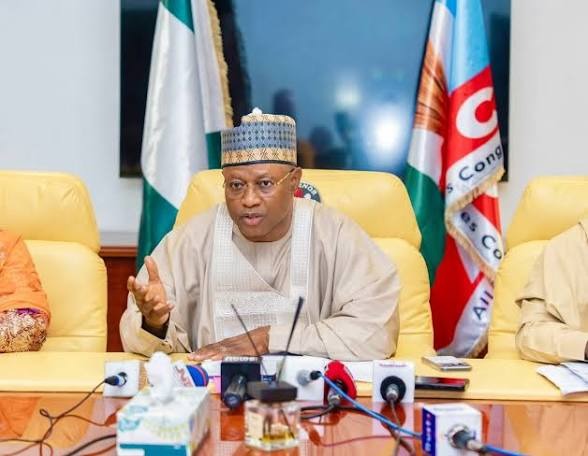
The planned defection of Bala Mohammed from the People’s Democratic Party to the ruling All Progressives Congress has reportedly collapsed following failed negotiations.

Chairman of the PDP in Bauchi State, Alhaji Samaila Burga, disclosed this while addressing journalists in Bauchi on Saturday.

According to Burga, the talks broke down over disagreements on the sharing formula and conditions presented by the APC.

He said the PDP leadership in the state was unwilling to make a hasty move that could place the party at a disadvantage, adding that some governors who defected to the APC were now regretting their decisions because they had lost political control.

Burga cited governors from Plateau State, Adamawa State, Rivers State, Kogi State and Kano State as examples.

He further stated that the PDP had intended to move into the APC with all its political structures while retaining a strong bargaining position, citing the administration’s performance in delivering democratic dividends in Bauchi State.

However, he described the conditions offered by the APC as “cancerous” and unacceptable.

Following the collapse of the talks, the PDP Chairman announced that the door is open to the governor and PDP structures in Bauchi State to join other parties, including reconsidering the African Democratic Congress (ADC), which had earlier shown interest.

However, a source told our correspondent that Governor Bala Mohammed may be reluctant to move to the ADC due to his frosty relationship with former Vice President Atiku Abubakar.

The source added that the ADC is also facing internal leadership challenges that could create problems for the party ahead of the 2027 general elections, making the governor and his camp cautious about the option.

Sun

Aftermath of convention: ADC still at crossroads

0

The African Democratic Congress (ADC) is currently grappling with an evolving crisis. What began as internal friction has snowballed into a full-scale leadership dispute, threatening the party’s status as a viable third force ahead of the 2027 general elections. With uncertainty deepening by the day, the party leadership is racing against time.

On Tuesday, despite daunting legal and logistical hurdles, the party proceeded with its National Convention in Abuja. In doing so, the leadership is attempting to construct a stable structure for the political heavyweights leading the coalition while simultaneously preventing the party from being hijacked by competing interests.

However, the situation has created a tense standoff with the regulatory authorities. By refusing to recognise the David Mark-led leadership pending judicial resolution, INEC has effectively frozen the ADC’s ability to conduct official business—from nominating candidates to receiving statutory grants.


Uncertainty

The instability facing the ADC stems from INEC’s recent decision to withdraw recognition from rival factions, leaving the party in a legal and administrative limbo. The central question remains: Will INEC eventually accept the National Convention as the supreme authority, or will the commission stick to the letter of the law regarding pre-existing court orders?

With this standoff, the party’s fate now rests on whether the High Court validates the convention or strikes it down as an act of contempt. If the leadership fails to satisfy judicial requirements by the end of this month, the ADC risks entering the 2027 season as a ghost party—a platform boasting big names but possessing no legal legs to stand on.

To some analysts, the decision to hold a National Convention despite a standing court order was a classic all-in one move. By defying the court, the leadership is betting that a successful convention will create a fait accompli that INEC cannot ignore. However, if the courts view this as contempt, it could trigger the wholesale disqualification of the party’s upcoming activities.


Rebellion within a rebellion

Already, the festering crisis has split the party into three distinct camps. On one side is the David Mark faction, backed by high-profile defectors, including former Vice President Atiku Abubakar, Senator Rabiu Musa Kwankwaso, and former Governor Peter Obi. They claim legitimacy through a July 2025 NEC resolution.

On the flipside is the Nafiu Bala group, which leans on the previous party structure, insisting it remains the authentic leadership while challenging the legality of the new arrivals. Positioned between these two rival camps are state chairmen who have rejected both factions and called for a new interim management committee—representing a rebellion within a rebellion.

Compounding these divisions is INEC’s refusal to recognise any factional leader. Without a recognised chairman, the ADC cannot access its share of joint party funds or submit official candidate lists. This looming uncertainty is no longer just a threat; it is the current reality.

Legal hurdles

The ADC leadership is currently caught in a perfect storm. They must resolve the legal battle for the chairmanship before the INEC deadline for party primaries. Failure to do so will result in the loss of the opportunity to field candidates for the general elections, likely leading to a mass exodus of the very heavyweights recruited in 2025.

The appeal filed by David Mark challenges the March 12 Court of Appeal judgment and seeks to restrain INEC from altering the party’s leadership structure while the case is pending. A five-member panel, led by Justice Mohammed Garba, has fixed April 22 to hear the appeal over the leadership tussle with Nafiu Bala. The court granted an accelerated hearing due to the urgency of the matter, ordering all parties to complete their briefs by April 20. Given the April 23 INEC deadline for candidates, a split ruling or further delay could effectively lock the ADC out of the upcoming electoral cycle.

New constitution as survival mechanism

In a strategic move to neutralise the old guard, the convention ratified a new constitution, serving as a formal vote of confidence from the delegates. By doing so, the leadership is attempting to “move the goalposts.” A new document can technically vacate previous offices and define new terms, potentially rendering current legal challenges against the leadership’s tenure obsolete by replacing the rules they allegedly broke.

The leadership intends to argue in court that the party has self-corrected through its highest decision-making body, the National Convention. However, this move could deepen the crisis. Since the convention was held in defiance of a specific court injunction, the ratification of the new constitution could be declared null and void, leaving the party operating under a document the law does not recognise.

According to renowned constitutional lawyer, Dr Tunji Abayomi, the retroactive application of a new constitution is a legal minefield. Under the law, internal party rules are generally prospective. If a court finds that the leadership’s actions in 2025 violated the then-active constitution, ratifying a new one in 2026 does not provide immunity. Furthermore, the doctrine of Lis Pendens suggests that parties should not take actions that overreach the judicial process while a matter is sub judice. If the court eventually rules that the convention itself was illegal, every act performed there becomes a nullity.

“How is that constitution going to be biding in the light of controversies on ground,” Abayomi quipped, giving analysis of different scenarios that will like play out in court. He argued: “The controversy is that the Exco of ADC is unconstitutional and unlawful. That same Exco organised a congress that now came up with a constitution, which was ratified by the same unlawful congress. Unless the court decides finally that the congress is legitimate, that constitution is a nullity. Even if the court decides in its favour, legitimacy will take effect on the date of the decision of the court. Everything done before that time is an illegality. If they have good thinking lawyers, what they should do is to file an affidavit of urgency in court instead of going on a voyage of discovery.

“You can go on a voyage of discovery, nothing stops you. But in a situation where the recognition of your candidate or congress is a matter of law, you want to be sure that the supervising agent, INEC, gives its consent and understanding. If you don’t do that, it is an exercise in futility.

“Ultimately, the matter is going to the Supreme Court. So, the crisis in ADC is serious. They are just at the preliminary stage of injunctions. After that, the matter goes to the Court of Appeal. After the Court of Appeal, it goes to the Supreme Court. If in the wisdom of the leaders or rival leaders of ADC they decide to go on a voyage of discovery, it’s okay for them. At the end of it all, they will reap the fruits of their efforts either negative or positive.”

Senator Anthony Adeniyi (SAN), adding his voice to the discourse, predicted the worse scenario where the party might lose the opportunity to have its logo on the ballots.

“The convention is an effort in futility because it was organised in defiance of court order. If they fail to comply with the provision of the law, they may not have their logo on the ballot,” he declared outright.

The old guard purge

While the elite battle continues in Abuja, the ADC’s youth wings are pushing for an immediate restoration of order. Protests in Kogi and at INEC headquarters highlight a growing tension between the original grassroots members and the new coalition of elite defectors.

The convention’s decision to purge the old guard marks a definitive shift toward a brutal internal house cleaning. Leadership has framed suspended members as “double agents” and “infidels” working to undermine the party from within. Allegations include stalling state congresses, such as in Adamawa, to maintain administrative paralysis.

There are heavy whispers suggesting some members of the old guard have acted as consultants for the ruling party, trading secrets for personal gain. They are linked by the current leadership to the endless lawsuits preventing a unified front at INEC. By removing these individuals and neutralising the Forum of State Chairmen, the Mark faction aims to eliminate dissenting voices and move away from a transactional reputation. However, this scorched-earth approach may backfire. By suspending and labelling these members as unfaithful, the party risks a mass exodus of the grassroots structures essential for any viable third-force option.

The blame game

The situation has reached a tipping point, with leadership pointing fingers at external influences—specifically the ruling party and the electoral umpire. They argue the crisis is a coordinated effort to destabilise the opposition, claiming INEC is being used as a tool to ignore valid NEC resolutions in favour of proxies for outside interests. To the ADC leadership, INEC’s interpretation of appellate rulings is not a neutral administrative act, but a deliberate attempt to keep the party in a state of permanent legal limbo.

Tunji Shelle, a chieftain of the ADC in Lagos, expressed satisfaction with the conduct of the just-concluded national convention, yet blamed the wrangling in the party on the antics of the APC and INEC. In spite of the leadership challenges crippling its activities, he declared that the ADC would take over Aso Rock Villa in 2027.

He stated: “ADC has become the darling of the people. Everybody is now showing interest in it. During the membership registration exercise, a lot of people joined within a very short time. It was a very successful one. Now that the convention has come and gone, many more people are still showing interest. It has become an organic party with people showing interest willingly. Many people didn’t believe it could go this far. It has exceeded the expectations of even the people who conceived the idea of the party. ADC is fully ready for the coming election, growing from strength to strength.”

However, Shelle attributed the prolonged litigation to the deliberate efforts of the APC and the presidency, whom he claims are scheming to achieve a one-party state. He added: “It is very obvious that the president and the ruling party (APC) are working against the interest of the ADC. The present government had done it to the PDP before, using Nyesom Wike, the Minister of the Federal Capital Territory, as a destabilising force. He even openly said that he would work for the APC and the presidency. And he has done it in Rivers State; he has done it in several other states. Unfortunately, the law court seems to be compromised.”

“The same thing happened in the Labour Party. They created a crisis, fragmented the party, and it became a lawsuit. It is the same thing they want to extend to the ADC. It is crystal clear that the present government is behind the crisis in the PDP and the Labour Party. Unfortunately for them, rather than reducing in size, the ADC has continued to grow. It is obvious to every Nigerian that the APC is out to kill the opposition so that we become a one-party state.”

In spite of the legal hurdles before the David Mark-led leadership, he exuded confidence that the party would get justice at the Supreme Court.

“We are very hopeful that we will get justice. I am optimistic because the issue is very clear and the law is on our side, except if there is an abuse somewhere. The interpretation of INEC is best known to the authorities. INEC is not a law court. INEC itself witnessed the transformation of the incumbent Chairman and the Secretary. They witnessed the transition from the old ADC to the current leadership. The party also gave notice to INEC that it was going to hold the convention and they acknowledged it. But suddenly, they came up with an issue that somebody brought a suit to their notice and as a result, they will delete the names of our National Chairman and the Secretary from their website. This is very unfortunate. The court didn’t say so. The Supreme Court had earlier said that the leadership of a party is an internal affair of the party. INEC is now trying to do the job of the court, trying to work against the progress of the party. It is assumed that INEC is being influenced by the President or the ruling party. This is very unfortunate. INEC cannot stop the ADC from being in Aso Rock come 2027.”

Asked to project an alternative option for the coalition forces in the event that the court decides otherwise, he said, “When we get to the bridge, we shall cross it.”

Chief Chekwas Okorie, sharing his perspective on the on-going power-play scenario, predicted a looming anarchy unless the judiciary can guide its conduct by the letters and spirit of the constitution.

“I have been looking at the events in the ADC with worry and concern. For me, it is a serious cause for concern because Nigeria has reached a level where political parties and individuals no longer have confidence in the democratic institutions that exist and may decide to resort to self-help. That is an invitation to anarchy.”

“About three weeks ago, before all these things began to surface in this manner, I had written an open letter to the President urging him to stop the brewing anarchy. We have only one hope left in the Supreme Court. The Supreme Court is there to give judgment in line with the spirit and the letter of the law. Where the letters of the law are not in consonance with the spirit of the law, the Supreme Court is known to have given priority to the spirit of the law as superior to the letters of the law. The case of Omoboriowo and Adekunle Ajasin in the old Ondo State comes to my mind. In that particular case, Ondo State was ablaze and Omoboriowo ran away from the state. The Supreme Court saw that the danger that was coming could be another ‘wild, wild West’ and ruled that while according to the letter of the law, Omoboriowo won, according to the spirit of the law, Ajasin won and therefore gave victory to Ajasin. Law is made for man, not man for law,” he said philosophically.

According to him, the current instability plaguing the opposition is orchestrated by the ruling party, and he therefore urged the president to be mindful of the rising tension in the country. “My advice is that the president should be mindful of the fact that there are so many flashpoints in this country today. Let the Supreme Court grant the opposition a level playing ground to operate. There are so many judgements that say internal affairs of political parties are not justiciable. If they do anything contrary to that, let it be on record that I, Chekwas Okorie, warned that it would lead to anarchy.”

Abayomi, in a sharp reaction to the discourse, dismissed the allegation of executive and judicial interference as purely nonsensical. He said: “Attacking the court and blaming the government for the act of the court is nonsensical. I don’t think any judge will take instructions from anywhere. Instead of blaming themselves for going to court, they are blaming the court for deciding a case they brought to it. It sounds very funny indeed.”

“I think we should continue to watch the drama to see whether it will become the drama of the absurd or the drama of the wise. INEC is headed by a lawyer, so they know what they are doing. And what they are doing is correct. Instead of blaming the court and blaming INEC, they shouldn’t have gone to court in the first instance. They should have settled the crisis internally. The same thing is what the Labour Party is doing. Today, they blame INEC. Tomorrow, they blame Tinubu. The following day, they blame the court. Can’t you blame yourself for your internal wrangling?”

“Does anybody go to court in the APC? They find a way to resolve their problems. The future of the ADC is already in jeopardy. They brought jeopardy to themselves. If these political parties will not learn to settle their internal affairs, they should simply stop blaming INEC, blaming Tinubu, and blaming everybody. These are the same set of people that destroyed this nation. Is it not this same Mark who said the telephone was not for the ordinary people? Nemesis is catching up with them.”

Sun

Binani-Led ADC Stakeholders Dump Party, Declare Loss of Confidence in Adamawa

0


A faction of the African Democratic Congress (ADC) loyal to Aishatu Dahiru Ahmed Binani has announced its mass resignation from the party in Adamawa State, citing the collapse of internal democracy and alleged imposition of party structures.

The decision was contained in a communiqué issued after a meeting of critical stakeholders held on April 18, 2026, at the residence of Mijiyewa Umaru Kugama.

In the communiqué, the group accused the party leadership at both state and national levels of undermining democratic principles, disregarding court rulings, and imposing leadership during the recently conducted congresses.

The stakeholders alleged that the congresses, conducted under the leadership of Ishaya Bauka, were manipulated and failed to reflect the will of the majority of party members. They further claimed that valid court judgments and injunctions were ignored, describing the situation as a “dangerous precedent of lawlessness.”

The group also accused party leaders of excluding and intimidating genuine stakeholders and aspirants, adding that the developments had stripped the party of its moral legitimacy in the state.
As part of their resolutions, the stakeholders passed a vote of no confidence on the ADC leadership and announced their “immediate and irreversible” resignation from the party.

They also rejected the outcomes of the congresses, declaring them null and void, and resolved to align with what they described as a more credible political platform ahead of the 2027 general elections.

The faction mandated Binani to lead consultations on the choice of a new political platform and to coordinate the transition of members across polling units, wards, and local government areas in the State.

According to the communiqué, the group will embark on grassroots mobilization and political reorganisation under a new platform, with the aim of securing victory in future elections, particularly the Adamawa State governorship race.

The communiqué was signed by Kugama as convener and Saidu Njobdi Komsiri as secretary.
The development signals a significant shift within the ADC in Adamawa State and could reshape the political landscape ahead of the next election cycle.