Home Blog Page 495

Police investigate Ekiti hotel stampede

0


The Commissioner of Police in Ekiti, Mr Falade Adegoroye, has ordered investigation into the death of three persons following a stampede at a hotel in Ikere-Ekiti.

The Police Public Relations Officer (PPRO) in the state, SP Sunday Abutu, disclosed this in a statement on Monday in Ado-Ekiti.

Abutu said the incident occurred at about 1:00 a.m. on April 19 at Emirate Hotel, Ikere-Ekiti.

He explained that the victims were a staff member of the hotel and two students of Bamidele Olumiluwa University of Education, Science and Technology (BOUESTI), Ikere-Ekiti.

He said that preliminary investigations revealed that the students had gone to the hotel to celebrate after their convocation ceremony held on April 18.

“During the party, which extended into the early hours of the following day, two yet-to-be-identified students engaged in an argument that escalated into a fight.

“Other attendees attempted to flee the premises, resulting in a stampede that claimed the lives of the victims,” he said.

The PPRO added that the bodies of the deceased had been deposited in a morgue for autopsy.

He said the commissioner of police sympathised with the families of the victims over the tragic incident.

Abutu urged members of the public to remain calm, assuring that the command would leave no stone unturned in uncovering the circumstances surrounding the incident.

Bank of Industry signs strategic partnership with RMRDC to foster agric value-chain growth

0


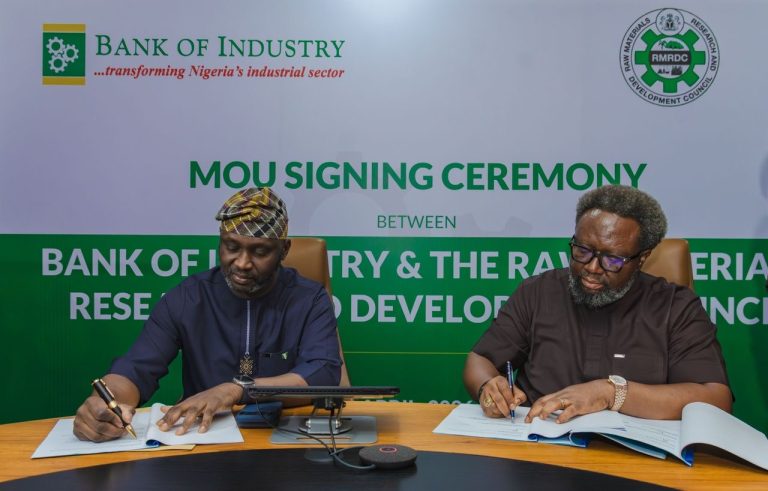
Bank of Industry (BOI), Nigeria’s foremost Development finance institution and the Raw Materials Research and Development Council (RMRDC) have sealed a strategic partnership agreement to strengthen Nigeria’s agricultural value-chain and boost country’s Gross Domestic Product (GDP) value.

The agreement was formalised on Friday, April 17, 2026 with the signing of a Memorandum of Understanding (MoU) between both organisations.

The agreement was the culmination of extensive engagements between key stakeholders of both institutions and seeks to enhance the value addition of key agricultural commodities and raw materials, addressing challenges in critical areas such as value chain development, harvesting, post-harvest losses, seedlings, cultivation, storage, processing, packaging, logistics, and marketing.

The initiative aligns with BOI’s mission to boost the Nigerian economy, entrench national goals of reducing post-harvest losses, drive promotion of import substitution, improve the nation’s GDP, enhance wealth sustainability through job creation, and foster entrepreneurship and industrial capacity in the country.

To ensure the sustainability of the MoU, BOI has established a Joint Steering Committee to oversee the implementation of the objectives which include: the development of a comprehensive strategy for minerals value-chain, agricultural value-chain development, covering seed development, cultivation, post-harvest management, processing, packaging, and market access, and facilitate the adoption and scaling of RMRDC’s locally developed machinery for raw materials value-chain development.

To address the challenges of post-harvest losses, the agreement ensures the development of a framework that improves storage, processing, logistics, and undertakes joint feasibility studies and pilot projects for key commodities such as onions, cassava, kenaf, leather, kaolin, and other industrial raw materials.
Speaking at the signing of the MoU, the Managing Director/CEO of Bank of Industry, Dr. Olasupo Olusi said, “This partnership brings together two institutions with complementary strengths: RMRDC’s deep expertise in raw materials research and development, and BOI’s capacity to translate viable projects into financed, executable industrial investments.

Together, we can do what each institution cannot do as effectively on its own. We can convert research into bankable projects that add value, create jobs, and retain wealth within our economy.
“In practical terms, this means identifying and developing raw material-based opportunities across agro-processing, solid minerals, and industrial inputs, and channeling BOI financing to the entrepreneurs and enterprises ready to process local resources into finished and semi-finished goods.

Nigeria’s raw materials should not be leaving our shores as commodities. They should be leaving as products.

“At BOI, we are ready. Ready to co-identify opportunities, structure financing, and support the enterprises that will turn this framework into concrete industrial outcomes.

Let this be the beginning of a collaboration that Nigerians will feel, in the factories that open, the jobs that are created, and the value that stays here at home.”

In his remarks, the Director General/CEO, Raw Materials Research Development Council (RMRDC), Prof. Nnanyelugo Martin Ike-Muonso, said, “We, at the Raw Material Research and Development Council, deeply appreciate this relationship, and we are thrilled to initiate the formalisation process. We are uniting on key aspects, primarily focusing on value exchange development and promoting the advancement of process technologies. These elements serve as the foundation for industrialisation, the creation of prosperity, and the generation of employment, along with all the indicators that guarantee that people live the kind of lives that they deserve.

“The future, the prosperity, the happiness of this country, partially lies in your hands (BOI). So, by accepting to work with us to finance this, we are very grateful. We are also grateful that you’re taking us in to work together in co-designing, in co-sharing, data sharing, co-service programmess, and joint implementation of these programmes, as well as joint efforts on advocacy. So, by coming up strongly to say you are going to finance and work with us on this, it gives hope, and then it gives hope to the country and all the people who believe that this project will work.”

Man drags wife to court over alleged infidelity

0


A married man, Daniel Samuel on Monday dragged his wife Godiya Daniel to an Upper Customary court sitting at Daura road, Kaduna over alleged infidelity.

Samuel, who spoke through his counsel,D.D Tanakwot stated that he was contesting the defendant’s pregnancy as his wife had left him for a while before coming back.

“We don’t mind taking care of her until she delivers”, he said.

On his part, the defendant’s counsel, I.Y Dadir, said he was not ready to address the court and prayed for more time to try and settle out of court.

The Judge, Patience Musa adjourned the matter to April 30 for a report of settlement.

4.2m Afghans face acute shelter crisis in 2026 – UN

0


About 4.2 million people in Afghanistan will require emergency shelter and non-food items throughout 2026, according to the United Nations Human Settlements Program (UN-Habitat).
The report said that displacement, natural disasters and deepening economic hardship have compounded vulnerabilities across the country.
It added that the situation made the need for immediate and scaled-up shelter assistance critical.

“We must act now to ensure adequate housing for all,” it said in a report.
Meanwhile, humanitarian partners are urging urgent international support to provide safe housing solutions and shield the most vulnerable from further hardship.

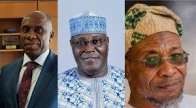
2027: Atiku, Obi, Amaechi, Aregbesola’s camps go to war

0


ADC leaders race to resolve divisions, reconcile leading aspirants

The African Democratic Congress (ADC) is facing a serious internal crisis with four of its most prominent voices publicly staking out irreconcilable positions that threaten to fracture the party before it fields a single candidate.

In a matter of days, former Vice President Atiku Abubakar, former Minister of Transportation Rotimi Amaechi, former Minister of Interior Rauf Aregbesola, and the organised supporters of former Anambra Governor, Peter Obi, have each issued statements and declarations that collectively paint a picture of a party at war with itself.

Former Vice President Abubakar has declared that he will not step down for any candidate ahead of the 2027 presidential election, dismissing behind-the-scenes efforts to persuade him to make way for a consensus arrangement.

Atiku, who has contested the Nigerian presidency more times than any other individual in the country’s democratic history, made clear that he intends to pursue his presidential ambition regardless of pressure from within or outside the party.

Sources close to the former vice president say he remains convinced that he is the opposition’s strongest presidential material and has the structure, the resources, and the experience to mount a credible national campaign.

His refusal to consider a step-down arrangement has drawn frustration from several party stakeholders who believe that a united opposition front requires one of the leading figures to make a sacrifice for the collective. So far, Atiku has shown no indication that he intends to be that person.

Amaechi, the former Rivers State governor and minister, has gone a step further, publicly stating that Abubakar is too old to contest the presidency in 2027.

The statement, delivered without diplomatic softening, has sent shockwaves through the party.

Amaechi’s remarks are being interpreted in party circles as more than a personal opinion. Many see it as a direct move to delegitimise Atiku’s candidacy in the court of public opinion before any primary process begins.

Party insiders say the relationship between the two men, never particularly warm, has deteriorated sharply in recent months as both manoeuvre for the position ahead of the party’s presidential ticket.

Amaechi has made no secret of his own presidential ambitions and is believed to be assembling a support base within the ADC.

His remarks bordering on age have angered Atiku’s camp, with one source close to the former vice president describing them as “disrespectful and politically motivated.”

The exchange has introduced a bitterness into the party’s internal dynamics that observers say will be difficult to walk.
Aregbesola has also broken cover, declaring that he will not invest his political energy in a campaign that centres on Obi and benefits the South East at the expense of other geopolitical zones.

Aregbesola’s statement is being read in the party as a significant blow to the prospects of building the kind of cross-regional coalition that any serious presidential candidate will require to win a national election in Nigeria.

His remarks directly challenge the assumption held by Obi’s supporters that the former Labour Party candidate’s appeal transcends regional boundaries and can command genuine support from political figures across the country.

Aregbesola’s blunt refusal suggests otherwise, and party officials privately acknowledge that his position reflects a broader unease among non-South East stakeholders about the direction the party’s presidential politics appear to be heading.

Adding to the party’s mounting headache, the organised supporters of Peter Obi, widely known as the Obidient Movement, have issued what amounts to an ultimatum.

They are insisting that it is Obi or they will withdraw their support and back another party entirely. The threat is being taken seriously by party leadership.

In 2023, the Obidient Movement demonstrated a capacity for political mobilisation that surprised even its own architects, delivering Obi a third-place finish and over six million votes in a presidential election he entered as a relative outsider.

The movement retains strong support among young, urban, and educated voters, a demographic that no opposition party can afford to lose ahead of 2027.

However, the ultimatum has also irritated other party stakeholders, some of whom privately complain that the Obidient Movement’s my-way-or-the-highway approach makes internal negotiation nearly impossible.

“You cannot build a party on the terms of a fan club,” one senior ADC figure said, speaking on the condition of anonymity.

ADC party leadership is understood to be deeply alarmed by the pace and public nature of the divisions.

Senior officials have held several emergency consultative meetings in recent weeks in an attempt to manage the escalating tensions, but sources within the party say no meaningful resolution has been reached.

“What we are seeing is not a disagreement about policy or direction,” one party official told our correspondent.

“It is a collision of ambitions. And ambitions of this size do not resolve easily.”

The party, which had positioned itself as a credible home for opposition figures dissatisfied with the APC and the PDP, now risks being defined not by what it stands for but by the very public spectacle of what its leading figures cannot agree on.

With the 2027 election cycle drawing closer and the window for building a coherent national campaign narrowing, pressure is mounting on the ADC to resolve its leadership question or face the prospect of arriving at the most consequential election in recent Nigerian political history divided, demoralised, and outmanoeuvred before the contest has even begun.

Sun

Strike: SSANU sets April 30 as deadline for FG

0


The Senior Staff Association of Nigerian Universities (SSANU) has issued a final deadline of April 30, for the Federal Government to conclude the ongoing renegotiations with its members or face indefinite shutdown of universities nationwide.

The warning was contained in a communiqué at the end of a Special National Executive Council (NEC) meeting of SSANU over the weekend in Abuja.

The union, in the document signed by its National President, Muhammed Ibrahim, clarified that negotiations with the government were still ongoing and have not been concluded, contrary to reports suggesting otherwise.

SSANU expressed concern over what it described as misleading information circulating in the public domain, particularly claims that a 30 percent increase in allowances had already been approved. The union insisted that no such agreement has been finalised or signed by the parties involved.

Reaffirming its stance, SSANU stressed that it would not accept any outcome that falls short of the understanding reached during the renegotiation process. It emphasised the need for fairness, due process and respect for collective bargaining principles in arriving at a final agreement.

Part of the communique read: “NEC reaffirmed that the renegotiation process with the Federal Government is still ongoing and has not been concluded.

“NEC expressed serious concern over attempts in the public domain to portray the process as concluded, particularly through the circulation of a letter suggesting approval of a 30 percent increase on allowances, when discussions are still in progress and no final agreement has been signed by the parties.

“It maintained that SSANU will not accept any outcome that falls below the negotiated understanding reached in the course of the renegotiation process and insists that fairness, due process and collective bargaining principles must be respected.

“Consequently, NEC in session, reaffirms its position by the Joint Action Committee of NASU and SSANU on the final ultimatum given to the Federal Government from April 1 to 30 to conclude the renegotiation process and sign their respective agreements. Should the Federal Government fail to conclude the renegotiation process and sign the agreements within the stated period, SSANU will have no alternative but to commence an indefinite, comprehensive and total industrial action along with NASU.

“NEC calls on all members of the Union across the branches to remain calm, vigilant, united and prepared to fully comply with the decisions of the Union in defence of their welfare, dignity and collective interest.

“NEC in session passes a vote of confidence on the National Administrative Committee under the leadership of M. H. Ibrahim and also reaffirmed its full support for the Union.

“NEC reiterates that SSANU remains committed to the defence of the rights and welfare of its members and will continue to pursue justice with firmness, unity and resolve.”

Sun

Offa robbery: Why federal DPP cleared Saraki

0


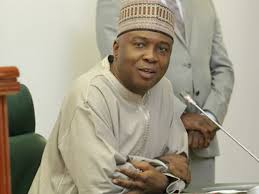
Following the fresh charges filed in the Ilorin High Court by the Kwara State Government against former Senate President, Abubakar Bukola Saraki and Abdulfatah Ahmed, his successor as governor of Kwara State on the Offa robbery incident, fresh facts have emerged on why the Director of Public Prosecutions of the Federation, E. U. (Etsu Umar) Mohammed gave the duo a clean bill of health.

Investigations indicated that the DPP pored over a 16-page police report prepared and signed by Mr Abba Kyari, deputy commissioner of police, who headed the IGP Intelligence Response Team (IGP -IRT) at the Force Headquarters, Abuja which investigated the April 5, 2018 multiple bank robbery attack in Offa town, Kwara State.

The DPP in his first report dated June 22, 2018 and signed on behalf of the Attorney General of the Federation and Minister of Justice, prepared a five-page legal advice in which he noted in paragraph 5 (f) that “for the Senate President (Saraki) and the Kwara State Governor (Ahmed), his office is unable to establish from the evidence in the interim report a nexus between the alleged offence and the suspects. Hence it is our advice that further and thorough investigation in this regard be carried out.”

Following the submission of a second report by the police investigating team to his office on July 27, 2018, the DPP prepared a second legal advice which was dated August 23, 2018.

Other News
Saraki to Kwara Gov: Offa robbery case against me, a desperate ploy by drowning politician
APC convention: Screening subcommittee clears Nwankpa, nat’l welfare scribe
EFCC vs Ahmed: Drama in court over exhibits arrangement
The three-page legal advice also has only three paragraphs.

In paragraph 3 (vi), he noted that “with regards to the Senate President, Senator Bukola Saraki, since there is no departure from the earlier findings in the interim report, this office is still unable to establish any prima facie case against him for any offences of criminal conspiracy, armed robbery, and culpable homicide punishable with death.”

Both legal advices had recommended six people – Ayoade Akinnibosun, Ibikunle Ogunleye, Adeola Ibrahim, Salawudeen Azeez, Niyi Ogundiran and Michael Adiukwu – for prosecution. One of the suspects, Michael Adiukwu later died in police custody while the other five had since been tried at the High Court in Ilorin. During the trial, the suspects revealed how they were coerced into incriminating Senator Bukola Saraki. They mentioned several inducements dangled before them including money and the promise of a visa to travel out of the country. The suspects have since been convicted and their convictions confirmed by the Court of Appeal. The matter is now pending before the apex court, the Supreme Court of Nigeria.

Sun

Rising fuel, energy costs drive Nigeria’s inflation –Experts

0


Some economic experts have identified rising fuel and energy costs as the primary drivers of the latest increase in inflation in Nigeria. They said higher petrol and diesel prices had triggered increases in transport fares, logistics costs and the general distribution of goods across the country.

Prof. Ken Ife, development economist, attributed Nigeria’s recent uptick in inflation to rising energy costs and structural inefficiencies in the oil and gas sector, calling for urgent policy actions to stabilise prices.

Ife, a public policy analyst, said Nigeria’s inflation rate, which rose slightly to 15.38 percent in March after 12 consecutive months of decline, was largely driven by increases in fuel and energy prices.

According to him, energy remains a critical driver of inflation due to its central role in transportation, production, and distribution.

“When energy prices go up, petrol and diesel prices rise, and these drive the entire transportation system.

“The cost of moving food, goods and people increases, and that translates directly into higher prices across all sectors.

“This may likely be worse on a month-on-month basis . You will see month-on-month inflation going dramatically up.”

He said rising gas prices, which are benchmarked internationally, also contribute to higher electricity tariffs and production costs.

“As gas prices increase, the cost of power generation rises, and consumers feel it in their electricity bills.

“Manufacturers also face higher costs due to increased energy and logistics expenses, leading to general price increase,” he said

The professor said that while global factors such as tensions in the Middle East may influence energy prices, Nigeria’s situation was worsened by domestic structural challenges.

He criticised the handling of crude oil allocation, saying that local refining capacity was not being prioritised as required by law.

Ife referenced the operations of the Dangote refinery, stating that it was not receiving adequate crude supply for optimal production.

“Local refiners require sufficient crude to operate efficiently, but current allocations fall short.

“This forces them to source crude externally at higher costs, including additional shipping and insurance charges, which ultimately push up domestic fuel prices.”

He said such inefficiencies put pressure on the economy and contribute to inflationary trends.

On immediate measures, the expert urged authorities to prioritise crude supply to domestic refineries and ensure compliance with existing laws.

“Providing adequate crude for local refining and allowing transactions in Naira, as stipulated, will reduce costs and ease pressure on consumers.”

He cautioned against a return to fuel subsidies or increased borrowing to cushion economic hardship, describing such measures as unsustainable.

“We are not going back to subsidies or excessive borrowing. The focus should be on fixing structural issues in the energy sector to ensure long-term stability,” he said.

Ife said addressing these challenges would help moderate inflation and improve overall economic conditions.

Also, an economist, Mr. Chidi Nwanze, said the rise in inflation could be linked to renewed pressures in transportation and service costs.

“The rise, though marginal, suggests that structural factors such as logistics costs, exchange rate fluctuations and energy prices are still influencing inflation dynamics,” he said.

A financial analyst, Mr. Segun Ibikunle, said the sharp increase in month-on-month inflation was a more concerning indicator.

“The jump to 4.18 percent month-on-month shows that price increases are accelerating in the short term.

“If sustained, it could reverse the gains recorded over the past year,” he said.

The March inflation figures showed that on a year-on-year basis, Nigeria’s headline inflation rose slightly to 15.38 percent compared to 15.06 percent and 27.35 percent recorded in February and March.

The report was released by the National Bureau of Statistics (NBS).

It said that the month-on-month headline inflation rate in March was 4.18 percent, which was 2.17 percent higher than the rate recorded in February at 2.01 per cent.

The NBS identified food and non-alcoholic beverages, restaurants and accommodation services and transport as the major contributors to the headline inflation on a year-on-year and month-on-month basis.

Sun

Nwabali: Kaizer Chiefs, Simba SC eye Nigerian goalie as transfer decision looms

0


Super Eagles goalkeeper Stanley Nwabali is attracting strong interest in the transfer market, with South African giants Kaizer Chiefs and Tanzanian side Simba SC both monitoring his situation closely.

The 29-year-old has been without a club since parting ways with Chippa United in February 2026, after mutually agreeing to terminate his contract despite still having time left on his deal.

That decision was taken in a bid to secure a more ambitious move, but months on, the Nigerian shot-stopper is yet to finalise a new destination.

His profile remains high, especially after his standout performances at the 2023 Africa Cup of Nations in Ivory Coast, where he helped Nigeria reach the final and emerged as one of the tournament’s most talked-about goalkeepers.

Kaizer Chiefs are believed to be leading the chase, while Simba SC remain firmly in contention, with Moroccan club Wydad Casablanca also tracking developments.

Former Super Eagles goalkeeper Peterside Idah has thrown his weight behind a possible move to South Africa, describing Kaizer Chiefs as a suitable destination for the player.

“I’m aware of the Kaizer Chiefs interest, and if he signs for them, which I’m hearing he might, it would be a great move,” Idah said.

He also noted that top South African clubs have the financial strength to meet expectations, adding that career stability and long-term planning are key factors for players at this stage.

Sun

Lagos State Government Unveils Comprehensive Cybersecurity Guidelines to Strengthen Digital Safety

0

The Lagos State Government has released a set of Cybersecurity Guidelines, a strategic framework designed to enhance digital safety for businesses, public institutions, and residents.
This development represents another decisive step in Lagos’ mission to become a SMART, secure, and globally competitive digital hub.
As Africa’s fastest growing technology ecosystem—home to thousands of enterprises—Lagos faces increasing exposure to cyber risks. The National Information Technology Development Agency (NITDA) estimates that Nigeria loses over $500 million (approximately ₦250 billion) annually to cybercrime, underscoring the urgency for stronger, coordinated security measures.
The guidelines note that while Lagos is rapidly evolving into a SMART City, this progress brings heightened vulnerability to cyber threats.
The newly issued guidelines, available at https://lagosstate.gov.ng/cybersecguide, outline clear, practical, and scalable cybersecurity best practices for small businesses, medium and large enterprises, and Ministries, Departments, and Agencies (MDAs). They are aligned with key national frameworks, including the Cybercrime Act (2024), the Nigeria Data Protection Act (2023), and the National Cybersecurity Policy and Strategy (2021). The document emphasizes that these recommendations are not regulatory mandates but tools designed to empower stakeholders with practical, context-specific guidance.
Breaking the news, the Lagos State Government reaffirmed its commitment to fostering a secure digital environment that promotes innovation, investment, and public trust. The guidelines further strengthen Lagos State’s leadership in advancing digital trust and building a resilient, future-ready digital economy.
The Government praised the Lagos State Cybersecurity Advisory Council, chaired by Prof. Fene Osakwe, for its strategic leadership and technical expertise in developing the framework. Special recognition was also extended to the Honourable Commissioner for the Ministry of Innovation, Science and Technology, Mr Tubosun Alake whose vision and support were instrumental in driving this initiative.
The release of these guidelines underscores Lagos State’s unwavering dedication to safeguarding digital assets, enhancing publicprivate collaboration, and ensuring that every organisation—from sole proprietorships to multinational corporations—can operate confidently in a secure digital environment. As the document highlights, A cybersecure Lagos is essential for sustaining its position as one of the most dynamic and globally competitive tech hubs of the 21st century.
The Lagos State Government will continue to refine and expand the guidelines to address emerging threats and evolving technologies, ensuring that cybersecurity remains a foundational pillar of the State’s digital transformation.

Gbenga Omotoso
Commissioner, Information & Strategy