Home Blog Page 482

Nigerians under attack in South Africa as xenophobic violence erupts

0


•NiDCOM urges Nigerians in Joburg, Durban, other cities to exercise caution

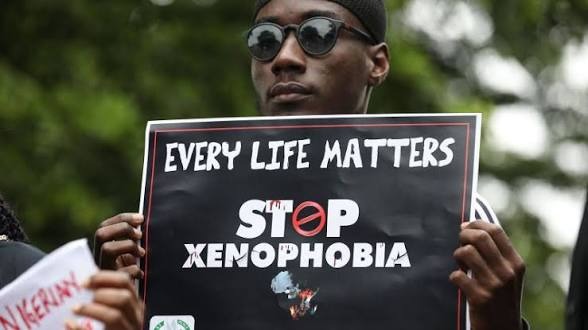
Fresh waves of xenophobic attacks have again left Nigerians in South Africa counting losses, with businesses looted and residents fleeing for safety in parts of Johannesburg and Durban this week.

The latest outbreak, which began on Monday, has seen mobs target foreign-owned shops, vandalise property and unleash violence on African immigrants, reigniting fears among the Nigerian community. Several Nigerians are said to have lost goods worth millions of naira, while others have gone into hiding.

This is not the first time. The country witnessed similar bloody attacks in 2015 and 2019, when dozens of Nigerians were attacked, their shops burnt, and many forced to return home under emergency evacuation arrangements by the federal government.


Each time, assurances were given by South African authorities that such incidents would not reoccur, yet the cycle of violence has returned.

Speaking on the crisis, Julius Malema, leader of South Africa’s Economic Freedom Fighters (EFF), has consistently and strongly condemned the xenophobic attacks, describing them as “self-hatred” and a “betrayal of African unity.”

Malema, who has become one of the loudest voices against the violence, urged South Africans to end the bloodshed and embrace Pan-African solidarity. He argued that these attacks are fuelled by colonial mindsets, stressing that attacking fellow Africans is a form of self-hatred taught by oppressors.

“We are ashamed to see black people attacking other Africans,” Malema said, noting that the violence is unjustly directed at other African nationals, rather than white, Chinese, or Indian individuals.

The EFF leader promotes a “One Africa” agenda, demanding the dismantling of colonial borders and urging African solidarity. He maintained that attacking immigrants, such as low-level petty traders, would not solve South Africa’s economic problems.

Meanwhile, Nigerian community leaders in South Africa have called on the Nigerian government to intervene urgently while appealing to the South African government to protect lives and property.

The Nigerian Union South Africa (NUSA) said it had documented fresh cases of harassment and looting, adding that many families are now traumatised.

“We can not continue to live in fear every few years. Our people are not criminals; they are contributing to the economy,” a NUSA official said.

Concerned Nigerians back home and in diaspora have questioned how many more times history will repeat itself before lasting solutions are found.

Meanwhile the Nigerians in Diaspora Commission (NiDCOM) has appealed to Nigerians in South Africa to heed warnings from the Consulate General in Johannesburg amid escalating anti-foreigner demonstrations turning violent.

According to a statement signed by Head of Media, Public Relations, and Protocols Unit, NiDCOM Abuja, Abdur-Rahman Balogun, the advisory follows an official circular (Ref No: CGJHB/AD/209/VOL I) dated April 22, 2026, reporting unrest in East London, Cape Town, Durban, and KwaZulu-Natal, including looting, property damage, and injuries.

Intelligence indicates further protests in Gauteng Province from April 27-29, 2026, as demonstrators pressure the South African government over foreign nationals.

NiDCOM advised Nigerians to avoid confrontations with protesters, refrain from engaging demonstration groups, monitor local media for updates, and remain law-abiding at all times. Business owners were urged to protect their property by closing on Freedom Day, April 27, and considering closure on April 28-29, as foreign-owned businesses are frequent targets.

While fully endorsing Consul-General Ninikanwa Okey-Uche’s position, NiDCOM noted the Johannesburg consulate remains operational and is coordinating with South African police for Nigerian safety.

Saturday Sun gathered that the Minister of State for Foreign Affairs, Bianca Onoh, was engaging South Africa’s Foreign Affairs Minister on the matter.

Sun
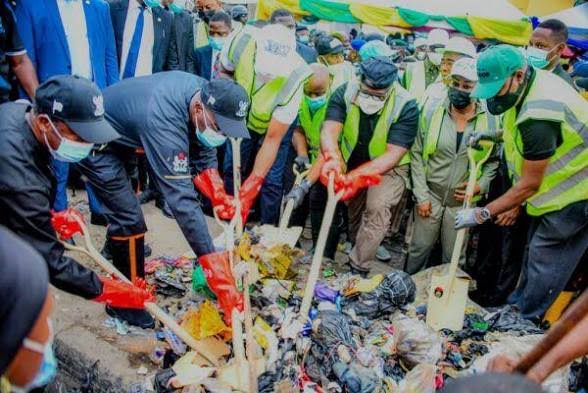
Sanitisation exercise: Rhodes-Vivour, Lagos commissioner bicker

0


The 2023 Labour Party governorship candidate in Lagos, Gbadebo Rhodes-Vivour, and Commissioner for Environment and Water Resources, Tokunbo Wahab on Friday exchanged words over the reintroduction of the monthly environmental exercise by the Babajide Sanwo-Olu administration.

In an X post on Friday, Wahab said the exercise would hold between 6:30 am and 8:30 am on Saturday.

He disclosed that the state government had planned its reintroduction for a year, adding that no court pronouncement has halted its implementation.

“We cannot keep complaining about dirty surroundings and blaming government while shirking our own responsibilities.

“The care of our environment is a collaborative project between government and citizens,” he added.

Reacting, Rhodes-Vivour said Nigeria’s commercial nerve centre should not be shut down for hours simply to clean the environment, accusing the state government of lacking imagination about waste management logistics.

The architect-cum-politician said, “Shutting down a city of 20 million people to clean their immediate environment is parochial and lacks imagination.

“For emphasis: the issue is not so much about cleaning your environment (which is great) but the logistics of waste management – starting from the collection, to disposal and recycling.

“Anything short of rethinking this system is cosmetic and unimaginative.”

Responding, the commissioner said the 2027 gubernatorial aspirant missed the point of the exercise.

Wahab said, “@GRVlagos some have argued, just like you did, that monthly environmental sanitation is not meaning. Let me respectfully disagree.

“Shutting down a city of over 20 million people is not what we are doing.

“We are asking residents to dedicate one-hundred-and-twenty-minutes, once every thirty days, to clean their immediate surroundings. That is not a shutdown. That is called taking responsibility!”

The commissioner explained that the sanitation exercise matters because it reminds every household and business that environmental responsibility begins at the source, helps keep frontage drains, setbacks, markets, streets, and neighbourhood spaces clear before waste becomes a larger nuisance, and provides a predictable window for inspection, advocacy, and enforcement.

He added that it strengthens community ownership and supports the wider waste-management chain by encouraging proper bagging, containerisation, PSP patronage, payment compliance, and a reduction in indiscriminate dumping.

Wahab disclosed that the state government had spent the last year strengthening waste management logistics systems.

He said, “I agree completely that waste management logistics, from collection to disposal to recycling, are critical.

“That is why we have spent the past year strengthening those very systems.

“We have banned single use plastics, we are converting Olusosun landfill to energy, we are deploying biogas facilities in our markets, we are partnering with Lafarge to turn waste into valuable resources, and we are empowering young innovators with technology to improve sanitation access.

“These are not cosmetic actions. They are structural changes to how Lagos manages waste.”

Sun

LALIGA: Atletico boss Simeone gives update on Lookman’s fitness

0


Diego Simeone, Atlético Madrid manager, has confirmed that Ademola Lookman will miss Saturday’s home game against Athletic Bilbao.

Lookman sustained an adductor injury during Atlético’s Copa del Rey final defeat to Real Sociedad last weekend.

The Nigeria international was absent from Tuesday’s loss to Elche.
Although there was optimism that the winger would be fit for the visit of the Basque side, Simeone confirmed that he has not recovered in time for the match.

“Ademola Lookman is not ready for tomorrow yet; it’s a good thing we took him off in the Copa final,” Simeone said.

The 28-year-old will hope to regain fitness for the first leg of Atlético’s UEFA Champions League semi-final clash against Arsenal next week.

Sun

Transcorp Group announces Q1 2026 financial results; revenue N125.1bn, PBT N50.7bn

0


Transnational Corporation Plc (Transcorp Group) has announced its unaudited results for the first quarter ended March 31, 2026, posting a profit before tax of ₦50.7 billion despite a decline in revenue to ₦125.1 billion.

In its filing on the Nigerian Exchange, the conglomerate reported that revenue fell from ₦143.7 billion recorded in the corresponding period of 2025, reflecting operational headwinds during the quarter. However, profit before tax rose by 3 per cent from ₦49.4 billion, while profit after tax increased to ₦37.9 billion from ₦36.7 billion. Earnings per share also improved to 216 kobo, compared with 192 kobo in Q1 2025.

The company’s balance sheet strengthened within the period, as total equity grew to ₦392.8 billion from ₦353.4 billion as at December 2025. Cash and cash equivalents rose to ₦31.4 billion, up from ₦21.9 billion, indicating improved liquidity.

Transcorp noted that while revenue moderated year-on-year, finance costs improved significantly, shifting from a net cost position in the prior year to a net income position in the current period. The group said the performance highlights its ability to sustain earnings despite disruptions across key operating segments.

According to the company, its power business was affected by gas supply constraints and challenges in evacuating generated electricity due to vandalisation of critical transmission infrastructure. These issues limited the dispatch of available generation capacity to the national grid.

By contrast, the hospitality segment recorded strong growth in both revenue and profitability, driven by consistent service delivery and customer demand. The group said its expanded offerings in the segment continued to support performance.

President and Group Chief Executive Officer, Owen Omogiafo, said the company remains committed to driving growth in critical sectors of the Nigerian economy.

She stated that the group achieved an available generation capacity of 973 megawatts during the quarter but was only able to dispatch 454 megawatts due to infrastructure and gas supply challenges.

Omogiafo added that Transcorp is engaging relevant stakeholders to resolve the constraints and improve utilisation of its installed capacity. She also noted that the hospitality business sustained its leadership position, supported by the newly commissioned multipurpose events centre, which has expanded opportunities for conferences and social functions.

Despite the operating challenges, she said the group grew shareholders’ equity and maintained profitability, expressing confidence in a positive outlook for the rest of the 2026 financial year.

Sun

EFCC Arrests Cameroonian for Alleged N1.5bn Bank Fraud in Lagos

0


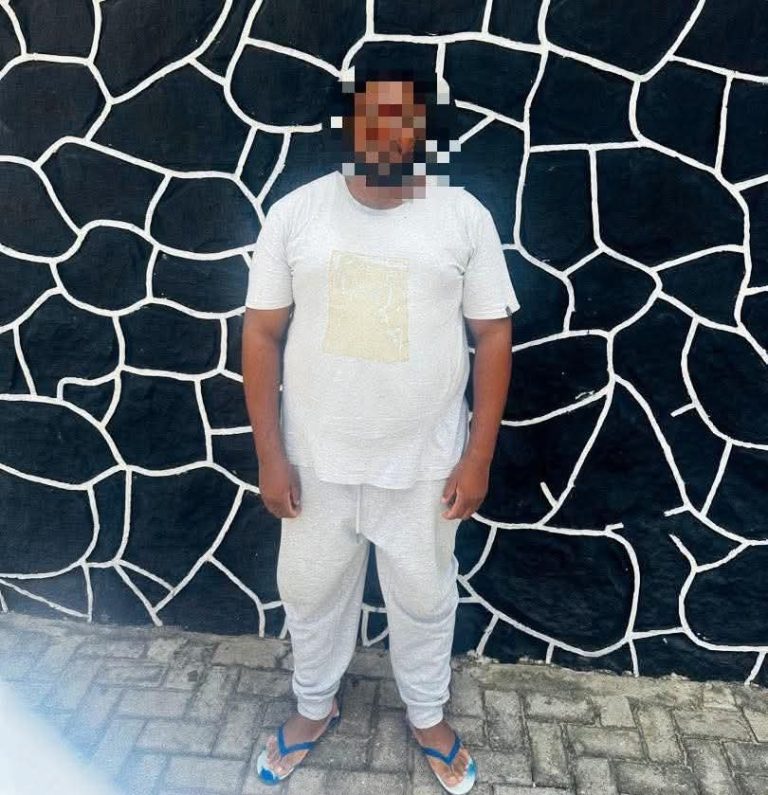
Operatives of the Lagos Zonal Directorate 2 of the Economic and Financial Crimes Commission EFCC, Ikoyi, Lagos, have arrested a Cameroonian businessman, Bekono Marc Eric, for allegedly defrauding a first-generation bank of about N1.5bn.

The 47-year-old suspect, a member of a trans-border syndicate that specialises in credit card fraud, was arrested on Thursday, April 23, 2026, in the Ikorodu area of Lagos.

Investigations revealed that members of the syndicate open bank accounts in Nigeria, obtain Automated Teller Machine (ATM) cards and PINs, and then move to neighbouring countries where they use the cards to carry out fraudulent transactions on accounts belonging to customers with high balances.

The suspect will be charged to court as soon as investigations are concluded.

Atiku tackles Tinubu over fresh $516m loan

0

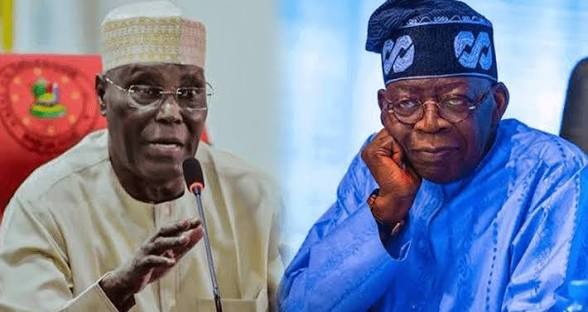
Former Vice President Atiku Abubakar has raised the alarm over a fresh $516 million external loan request by President Bola Tinubu, warning that the move could deepen Nigeria’s already precarious debt burden.

The loan, which is awaiting approval from the National Assembly, is intended to finance sections of the Sokoto–Badagry Superhighway project — an ambitious infrastructure plan linking the Northwest to the Southwest.

Senate President Godswill Akpabio read the letter from President Bola Tinubu seeking Senate’s approval for the $516, 333,070 loan at plenary on Thursday.

According to the letter, the syndicated loan will be secured through Deutsche Bank AG, supported by a partial risk guarantee from the Islamic Corporation for the Insurance of Investment and Export Credit (ICIEC), the insurance arm of the Islamic Development Bank.

The president explained that the Federal Government would provide counterpart funding in the sum of N265,542,689,569, covering land acquisition, compensation, and ancillary infrastructure.

Sokoto-Badagry Highway: Atiku blasts Tinubu over additional $516m foreign loan request

Atiku Abubakar, former Vice President, has faulted the request by President Bola Tinubu’s government for the approval of a fresh $516 million external loan to finance portions of the Sokoto–Badagry Superhighway project.

In a statement on Thursday by his Senior Special Assistant on Public Communication, Phrank Shaibu, Phrank Shaibu, Atiku noted that infrastructure development—particularly one that seeks to connect the Northwest to the Southwest is necessary; however, noble intentions cannot excuse reckless fiscal choices.
“At a time when Nigeria is already groaning under the weight of unsustainable debt, the resort to yet another foreign loan—without transparent terms, clear cost-benefit analysis, and a credible repayment framework—raises profound questions about prudence and accountability,” Atiku stated.

The African Democratic Congress (ADC) chieftain said while people of the region deserve such development, it should be sustainable, transparent, and not mortgaged against their future.

“What Nigerians expect is not just ambitious projects, but responsible financing. Development must not become a euphemism for deepening debt traps that generations yet unborn will be forced to repay,” he added.

He also stressed the need for absolute transparency in the award and execution of the projects in Nigeria, pointing to earlier concerns raised over the Lagos-Calabar Coastal Highway.

“Nigerians have not forgotten the serious questions surrounding the opaque award process of the Lagos-Calabar Coastal Highway—where due process, competitive bidding, and value-for-money considerations were widely called into question. We must not replicate such a troubling precedent,” Atiku warned.

“Public infrastructure cannot become a private bazaar for cronies and connected interests. Every kobo borrowed in the name of the Nigerian people must be matched with transparency, accountability, and strict adherence to procurement laws,” he stated.

Atiku urged the National Assembly to subject the loan request to the highest level of scrutiny.

“Nigeria must build, but Nigeria must not borrow blindly. Progress anchored on opacity and debt accumulation is neither progress nor leadership—it is postponement of crisis,” Atiku emphasised.

Sun

Zamfara: Tinubu, Lawal hold strategic meeting to end insecurity, boost economy

0

The President of Nigeria, His Excellency Asiwaju Bola Tinubu, has held a strategic meeting with the Governor of Zamfara State, Dr Dauda Lawal, to discuss strategies for ending insecurity and creating an environment where investment can thrive in the state.

The meeting was convened on Thursday, 23 April 2026, following an invitation from the Presidency to Governor Lawal immediately after the President met with the APC Progressive Governors at the Presidential Villa in Abuja.

As contained in a statement by the Governor’s spokesperson, Sulaiman Bala Idris, the meeting focused on the current state of security, economy, and politics in Zamfara.

The statement disclosed that President Tinubu reaffirmed the Federal Government’s commitment to improving troop presence and enhancing support to ensure peaceful and sustainable economic prosperity in Zamfara.

“The focus of the meeting is the security situation in Zamfara, particularly highlighting the successes achieved so far and identifying areas that require improvement to facilitate the return of peace across the state,” the statement read.

“The President stressed his commitment to providing full support to the Zamfara State Government, including deploying more troops and the essential equipment to guarantee smooth operations.”

Furthermore, Governor Lawal briefed the President on Zamfara’s economic growth, particularly the increase in the state’s Internally Generated Revenue (IGR), and discussed ways for the Federal Government to provide additional support.

President Tinubu reaffirmed his commitment to ongoing support, which encompasses exploring federal resources and programmes that could be utilised to enhance local industries and generate job opportunities in Zamfara.

Sun

South Africa Focus Week returns to Lagos, deepens bilateral economic ties

0


The fourth edition of South Africa Focus Week has commenced in Lagos, reinforcing economic cooperation and diplomatic relations between Nigeria and South Africa.

The event, hosted by the South African Consulate General in Lagos in partnership with Brand South Africa and the Development Bank of Southern Africa (DBSA), is taking place from 22 to 26 April 2026.

Since its inception in 2023, the annual platform has grown into a key initiative promoting social cohesion and strategic engagement between both countries, attracting over 1,500 participants across sectors such as trade, tourism, arts, aviation, and the culinary industry.

This year’s edition coincides with two major milestones: the 30th anniversary of the signing of South Africa’s democratic Constitution and 32 years of diplomatic relations between Nigeria and South Africa, established in February 1994.

Economic data presented at the forum highlighted the depth of bilateral ties. Trade relations remain significant, with South Africa exporting goods worth $468.48 million to Nigeria, while imports from Nigeria stand at $1.69 billion, largely driven by crude oil. This underscores a relationship defined by strategic interdependence, particularly in energy.

Both countries continue to play a dominant role in Africa’s economic landscape. Projections indicate South Africa’s economy will reach $443.6 billion in 2026, while Nigeria’s is estimated at $334.3 billion, positioning both nations as critical drivers of continental growth.
Investment flows between the two economies remain robust. South African companies such as MTN Group, Shoprite, and Standard Bank have maintained a strong presence in Nigeria. Conversely, Nigerian firms including Access Bank and Paystack are expanding operations in South Africa, reflecting a growing two-way investment corridor.

The week-long programme brings together stakeholders from government, the private sector, academia, civil society, and the media to explore opportunities under the African Continental Free Trade Area (AfCFTA), with Nigeria positioned as a central market.

Key activities include the South Africa–Nigeria Infrastructure Investment Conference, which focuses on unlocking opportunities in road, rail, and transport development through public-private partnerships. This is followed by the second Economic Diplomacy Roundtable, hosted in collaboration with MTN Nigeria, where discussions centre on the role of technology in infrastructure development.

A cultural showcase will also highlight creative collaboration through film screenings, panel sessions, and networking engagements aimed at strengthening ties within the creative industries of both nations.

The week will culminate in a Freedom Day celebration marking South Africa’s democratic journey, alongside a golf tournament at the Ikoyi Golf Club designed to promote people-to-people engagement through sports diplomacy.

Organisers said the initiative continues to serve as a platform for deepening cooperation, enhancing trade and investment, and strengthening the long-standing partnership between Africa’s two largest economies.

Sun

Sanwo-Olu Host Delegation from British Airways

0

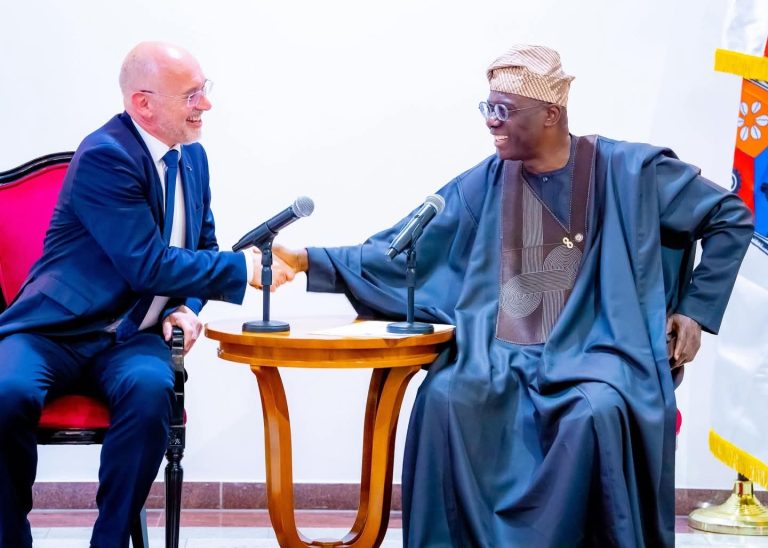
Today, Governor Babajide Sanwo-Olu received a delegation from British Airways, led by the Chief Commercial Officer Mr. Colm Lacy, at Lagos House, Marina.

According to him, We had a good conversation as they marked 90 years of British Airways’ service to Nigeria. I appreciate the visit and the long standing relationship between both sides.

Lagos State remains open to strong partnerships that support travel, trade, and deeper connections.

Battle for Return Tickets Intensifies as Lagos Assembly Lawmakers Face Tough Primaries Ahead of 2027

0
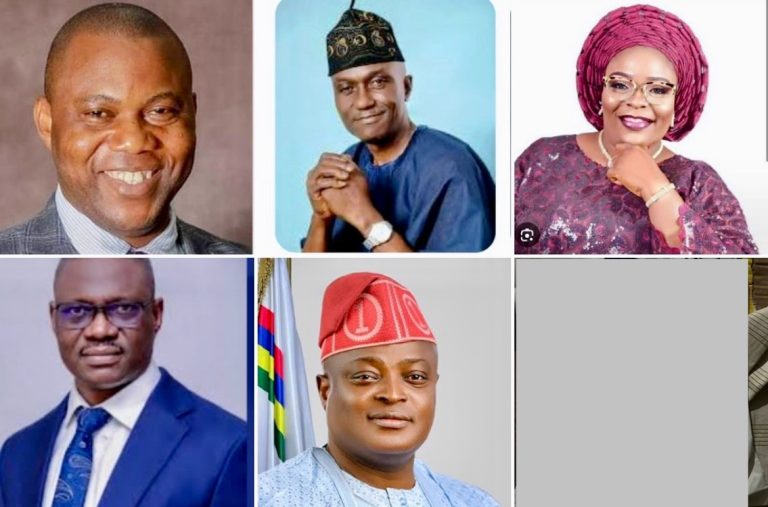
Majority leader, Noheem Adams
Sa’ad Lukman Ajeromi Ifelodun 1
Deputy Speaker Mojisola Meranda
Ogunleye Gbolahan (Ikorodu 1)

As the curtain gradually falls on the 10th Assembly of the Lagos State House of Assembly, the familiar rhythm of legislative business is giving way to a different kind of politics—one driven by ambition, survival, and strategic recalibration.

Across constituencies, lawmakers are stepping out of the chamber and into the political space seeking endorsements, renewing alliances, and confronting emerging challengers in what promises to be a fiercely contested return bid ahead of the 2027 general elections.

Traditionally, legislative activities slow down in pre-election periods, as attention shifts to grassroots consultations and internal party negotiations. This cycle is no different. For many of the 40 lawmakers, the pressing question is no longer about bills or motions, but about political survival: who secures the party’s ticket, and ultimately, who returns to the hallowed chamber?

Rising Tensions and New Challengers
The political atmosphere is already charged. In Kosofe II, Hon. Femi Saheed is facing mounting pressure from Muritala, the Lagos APC Youth Leader, whose interest in the seat has altered the dynamics of the race. Observers say Saheed will need to expand his political outreach to retain his footing.

Similarly, Deputy Speaker Mojisola Meranda’s quest for a fourth term is far from assured. Unlike previous election cycles where incumbency offered a smoother path, this time she faces a crowded field of aspirants determined to unseat her.

The shifting terrain is partly attributed to the evolving political ambitions of Speaker Mudashiru Obasa. Having spent over a decade at the helm, making him the longest-serving Speaker in the Assembly, Obasa is now setting his sights on the Senate. His potential exit removes a central figure who previously influenced the return of many lawmakers through strategic backing.

Constituency Battles Heat Up

In Ajeromi-Ifelodun Constituency I, a fierce contest is unfolding between incumbent Lukman Olumoh and former Ifelodun LCDA chairman, Suaib Fatai Ajifat. The rivalry has escalated into a war of words, underscoring the high stakes involved in securing the party ticket.

Elsewhere, the political climate varies. In Ifako-Ijaiye I, Hon. Temitope Adewale appears to enjoy relative calm, buoyed by strong backing from constituency leaders who have openly endorsed his return.
However, in Ikorodu I, Hon. Ogunleye Gbolahan faces a formidable challenge from Ayoyinka Adebola Ogbe, while in Surulere I, Nollywood actor-turned-lawmaker Desmond Elliot is under renewed scrutiny following his declaration to run again. His seat has attracted multiple aspirants eager to capitalize on perceived vulnerabilities.

In Ojo Constituency II, the contest between incumbent Suraj Tijani Olatunji and Ibrahim Adefolarin Durosimi is shaping up to be another closely watched battle.

The Majority Leader, Noheem Adams, also faces an uncertain path, despite his close ties to the Speaker, as political calculations within his constituency continue to evolve.
Somolu I presents perhaps one of the most crowded races, with Orekoya Abiodun up against four strong contenders, including former Sole Administrator Gbolahan Bago-Stowe, Hajia Afusat Kassim, Ezekiel Ayowole Fawole, and Remi Ogbara. With no clear consensus in sight, party insiders suggest a direct primary may be inevitable.
Party Dynamics and the Road Ahead
Within the ruling All Progressives Congress (APC), internal competition appears widespread. Most incumbents are contending with challengers from within their own party, reflecting both the party’s dominance in Lagos politics and the attractiveness of legislative seats.
Party leaders have begun to signal the importance of discipline and adherence to party decisions.

At a recent constituency event hosted by Hon. Kehinde Joseph, Speaker Obasa emphasized the need for aspirants to respect party structures and outcomes, a message widely interpreted as a call to manage post-primary tensions.

The APC has already adjusted its timetable for the 2027 elections, rescheduling its presidential primaries to May 23, 2026, and governorship primaries to May 21. These timelines set the stage for what will likely be decisive weeks in determining the political future of many Assembly members.


As the primaries approach, one reality is becoming increasingly clear: not all members of the 10th Assembly will make it back. While some enjoy strong grassroots support or elite backing, others face uphill battles against well-connected challengers.

The contest for the Speaker’s seat in the next Assembly adds another layer of intrigue. With Obasa stepping aside, the position is wide open, setting the stage for a new power struggle that could reshape the Assembly’s leadership dynamics.

For now, the corridors of the Assembly may be quieter, but across Lagos, the political ground is anything but still. In wards, local council areas, and party offices, the real contest has begun.

The coming weeks will not only determine candidates but will also redefine alliances, test loyalties, and ultimately shape the composition of the 11th Lagos State House of Assembly.