Home Blog Page 44

We Must Invest in Youths’ Future to Be Remembered as Good Leader says President Tinubu

0

President Bola Tinubu has called on leaders to prioritise investment in the future of Nigerian youths, warning that their legacy would be determined by the opportunities they create for the next generation.

Tinubu said leaders must reflect on how they would be remembered in the next 50 years if they failed to invest in the future of young people.

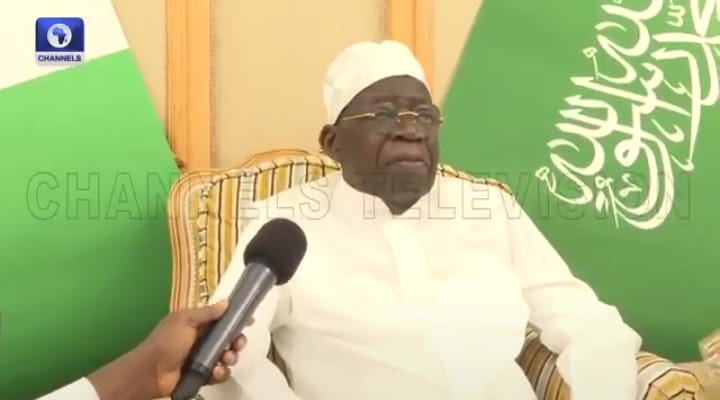
The President made the remarks during an interview at the Al-Kaaba, the holy mosque in Makkah, Saudi Arabia, following his spiritual journey to the Kingdom to perform Umrah.

“We need to build the future for our youth. If we don’t invest in their future, in 50 years from now, how do we want to be remembered as leaders? That’s the main thing. I’m not looking for anything else,” Tinubu said.

The President reaffirmed his commitment to national development, expressing determination to build a prosperous Nigeria in line with the will of Almighty Allah and the aspirations of the people.

He said his commitment to the Nigerian project had become stronger, adding that he would continue to seek divine wisdom and resilience to serve the country.

“My commitment is higher. Determined to bring prosperity, to develop the country consistent with the wish of Allah and the support of the people,” he said.

Tinubu also expressed gratitude to Almighty Allah for the opportunity to lead Nigeria, describing his emergence as President and Commander-in-Chief of the Armed Forces as a divine favour.
He said Nigeria’s diversity in faith and culture should be a source of strength, praying for unity and prosperity across the country.

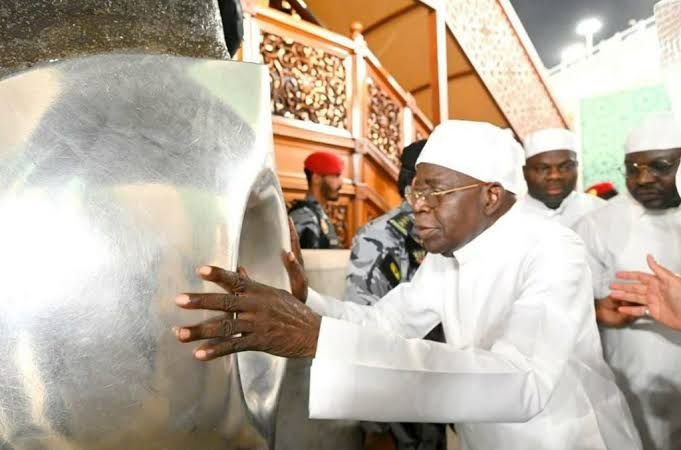
The President further expressed appreciation to the Saudi King, Salman bin Abdulaziz, and the Crown Prince for the hospitality and honour accorded him, particularly the opportunity to enter the Kaaba.

He expressed optimism that Nigeria would overcome its challenges through faith in God and commitment to the right path.

Tinubu Reaffirms Commitment to Project Nigeria, Vows Prosperity After Umrah

0

President Bola Ahmed Tinubu has reaffirmed his commitment to Project Nigeria, pledging to build a prosperous nation, invest in the future of young Nigerians and pursue national development in line with the will of Almighty Allah and the aspirations of the people.

The President stated this on Monday while reflecting on his spiritual journey to the Kingdom of Saudi Arabia to perform Umrah, during which King Salman bin Abdulaziz Al Saud, Custodian of the Two Holy Mosques, granted him the rare privilege of leading Nigeria’s delegation to pray inside the Holy Ka’abah in Makkah.

At the Ka’abah, President Tinubu offered prayers of gratitude to Almighty Allah for the privilege of serving as Nigeria’s President and Commander-in-Chief of the Armed Forces. Sheikh Dahlulah Muthawal of Masjid al-Haram led the President into the sacred structure.

Tinubu thanked King Salman and Crown Prince Mohammed bin Salman for granting him and members of his Nigerian delegation the opportunity to enter the Holy Ka’abah and offer prayers.

He described the honour as a historic and deeply cherished spiritual experience, reflecting the longstanding bonds of friendship, mutual respect and cooperation between Nigeria and Saudi Arabia.

“I want to say a big thank you for the faith, for the recognition. I can’t believe the fencing of the Ka’abah is in Green-White-Green, which reminds us of the Nigerian identity.

“I thank the Crown Prince and all the administrators of the holy land. I thank them for the hospitality and recognition given to me as the leader of the delegation and the country.

“We are all facing challenges and hostility around us. We will overcome them with faith in God Almighty. I’m grateful forever. I thank the King and the royal Crown Prince.

“It is an honour that I enjoyed, and it is gracious of them to have allowed me to enter inside the Ka’abah. This is history,” the President said.

Tinubu disclosed that he prayed for wisdom and resilience to continue serving Nigerians, expressing confidence that his prayers had been answered.

“Well, I asked for wisdom and resilience to continue to serve the people. I know that prayer has been granted. Before the 2023 election, I did the same thing.

I asked Allah to bless my Umrah then, and He did. And I promised that I would come back to thank Him,” he said.

Reflecting on Surah Aal-Imran, Verse 26 of the Holy Qur’an, which affirms that Almighty Allah is the ultimate owner of sovereignty and grants power to whom He wills, the President said leadership must be exercised with humility, responsibility and dedication to the people.

He stressed that positions of authority were temporary and that ultimate power rested with Almighty Allah.
“There is no other God but Almighty Allah. He is the giver and the taker.

He owns power and authority. He says, ‘If I give you, use it well. If you don’t use it in accordance with my dictates, I can take it from you and give it to another person. I am the only One who has that authority,’” the President said.

Tinubu said his faith had strengthened his conviction that his emergence as Nigeria’s leader was an extraordinary blessing that must be matched with dedicated service to the country.

“I have faith in that, and I believe extremely well that He has done me and my country a great favour. Out of many millions of people, to be the President and Commander-in-Chief is a favour that only Almighty God can do to a human being,” he stated.

Reaffirming his commitment to national development, the President said his determination to advance Project Nigeria had become stronger, promising to pursue policies and programmes that would promote prosperity, shared progress and sustainable development.

“My commitment to Project Nigeria is higher. I am determined to usher in prosperity and fully develop the country, consistent with the wish of Allah and the support of the people.

“It is important to put Allah first, then move on. Follow your conscience. Follow the right path that will lead Nigeria to that greatness,” he said.

On the economy, Tinubu expressed optimism about the progress recorded under his administration,
describing the country’s economic foundation as solid and its emergence from a difficult period as encouraging.
“The foundation is solid, and the economy has come out of the dark tunnel. This is inspiring,” he said.

The President also emphasised the need for sustained investment in young Nigerians, noting that decisions taken by current leaders would shape how future generations remember them.

“We need to build a future for our youth. If we don’t invest in their future, how do we want to be remembered as leaders 50 years from now? That’s the main thing. So this is a rare privilege to lead the country,” he added.

Tinubu reiterated that his administration would remain focused on strengthening the economy, expanding opportunities for young people and creating an enabling environment for Nigerians to realise their potential.

He thanked Almighty Allah for the opportunity to lead the country and pledged to justify the confidence reposed in him by Nigerians through purposeful leadership and sustained commitment to national progress.

Meanwhile, Minister of Justice, Lateef Fagbemi, SAN; Coordinating Minister of Health and Social Welfare, Ali Pate; governors of Borno, Sokoto, Jigawa, Kaduna, Yobe and Kwara states; and business leaders, including BUA Chairman, Abdulsamad Rabiu, and Oando Chief Executive Officer, Wale Tinubu, reportedly expressed gratitude to Allah and the President for the privilege of entering and praying inside the Holy Ka’abah.

Court Jails Applewood Estate Suspect for Gift Card Fraud in Lagos

0

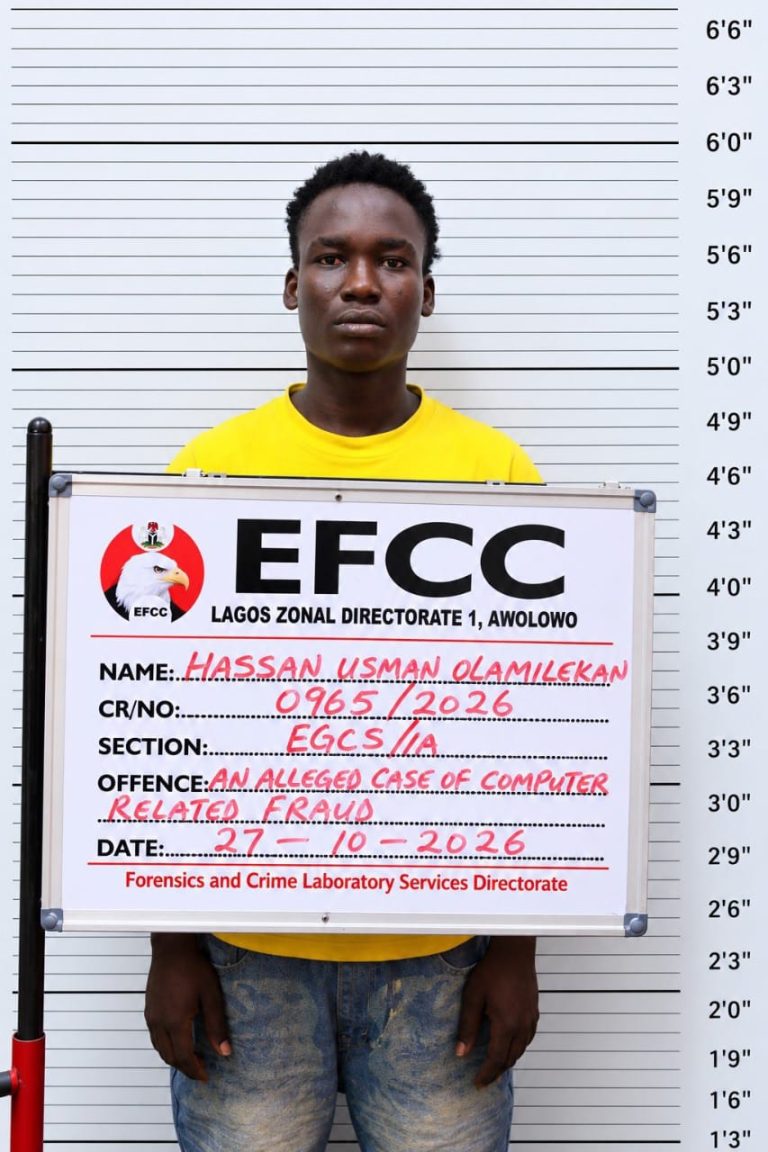
Justice Dipeolu of the Federal High Court, sitting in Ikoyi, Lagos, on October 30, 2026, convicted and sentenced one Hassan Usman Olamilekan for offences bordering on money laundering.

Olamilekan was convicted following his arraignment by the Lagos Zonal Directorate 1 of the Economic and Financial Crimes Commission (EFCC) on a one-count charge of money laundering, contrary to Section 18(2)(a) and punishable under Section 18(3) of the Money Laundering (Prevention and Prohibition) Act, 2022.

The count reads:
“That you, Hassan Usman Olamilekan, sometime in 2026 in Lagos within the jurisdiction of this Honourable Court indirectly disguised the origin of the sum of $800 (Eight Hundred United States Dollars) in gift cards, which sum forms part of the proceeds of your unlawful activity, and you thereby committed an offence contrary to Section 18(2)(a) and punishable under Section 18(3) of the Money Laundering (Prevention and Prohibition) Act, 2022”.

The defendant pleaded guilty to the charge.

Following his plea, the facts of the case were reviewed by an EFCC operative, Ebuka Abanga. The court subsequently found him guilty and convicted him accordingly.

Justice Dipeolu sentenced to a fine of N200,000 and ordered him to remit the sum of N1,000,000 (One Million Naira) to the Federal Government of Nigeria. He is to remain in the Correctional centre pending the payment of the fine and restitution.

The court also ordered the forfeiture of an iPhone 11 Pro and a Poco C71 mobile phone, being items recovered in connection with the offence.

Investigation revealed that Olamilekan, 18, who claimed to hail from the Republic of Benin but was born in Nigeria, was involved in lottery scams and operated several social media platforms, including Facebook, Instagram, TikTok, Zangi and iMessage.

He reportedly met his victim, one Gary Brewer, a United States citizen, through the Zangi application, where he impersonated a white American woman identified as Julie Leach.

Olamilekan told the victim that he had won a lottery prize of $250,000,000 and needed money to activate the winnings before he could claim the prize. He subsequently persuaded the victim to send him gift cards through the Zangi application.

The defendant admitted selling the gift cards through the Cardsonic application, converting them to Naira and transferring the proceeds to his grandmother’s OPay account. He confessed to benefiting from a total of $800 from the fraudulent scheme.

Olamilekan was among the 21 suspected internet fraudsters arrested by operatives of the Lagos Zonal Directorate 1 of the EFCC during a sting operation at Applewood Estate, Orchid Road, Lekki, Lagos State, on October 26, 2026.

President Tinubu First Nigerian Leader to Visit Vatican, Kaaba, Says Reno Omokri

0

Former presidential aide, Reno Omokri, has described President Bola Ahmed Tinubu as the first Nigerian leader to visit both the symbolic centre of the Roman Catholic Church and the holiest site in Islam.

Omokri made the assertion in a statement, citing Tinubu’s attendance at the inauguration of Pope Leo XIV at St. Peter’s Square in Vatican City on May 18, 2025, and his recent visit to the Kaaba in Mecca, Saudi Arabia.

According to him, Tinubu’s visits to the two sacred religious sites demonstrate his commitment to religious tolerance, interfaith understanding and the protection of religious freedom in Nigeria.

Omokri noted that the President’s engagements with both Christianity and Islam reflected his respect for the diverse religious beliefs of Nigerians.

He said Nigeria was fortunate to have a leader who cared for people across religious and ethnic divides and encouraged them to freely practise their faiths and ways of life.

The former presidential aide described Tinubu as a dynamic leader whose disposition promotes inclusiveness and religious harmony among Nigerians.

Omokri’s statement comes amid ongoing conversations about religious tolerance, national unity and the need to protect freedom of worship in the country.

2027: South East has no presidential candidate -Umahi

0

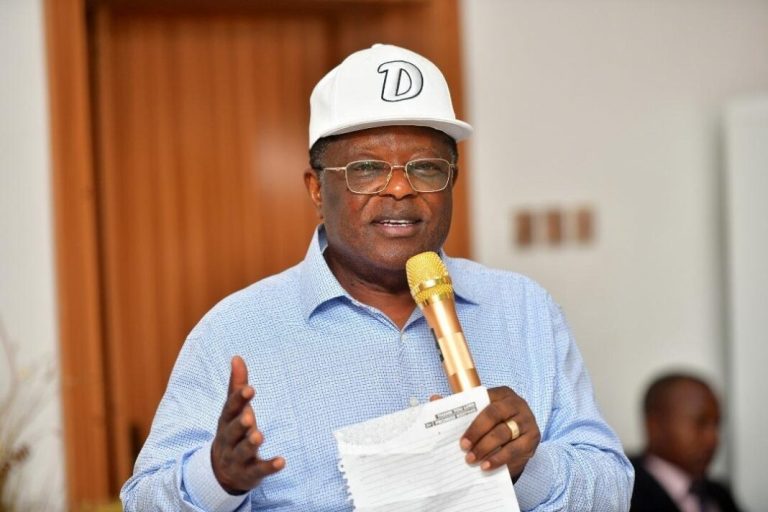
Minister of Works, David Umahi, yesterday declared that there was no presidential candidate in the South East in the 2027 general election.

He dismissed the Nigeria Democratic Congress (NDC) candidate, Peter Obi, from the zone as “nobody”.

Umahi said Obi is not better than some prominent persons in Ebonyi State, including himself, former Senate President, Anyim Pius, former Minister of Education, Sen. Sam Egwu, and former Chairman, Revenue Mobilisation, Allocation and Fiscal Commission, Chief Elias Mbam, and urged the people of the state and South East to deliver President Bola Tinubu in the 2027 general election to be able to get the position when it is their turn

Umahi stated this in Abakaliki, the state capital, during a town hall meeting powered by the Directorate of Infrastructure, Mobilisation and Sensitisation of All Progressives Congress (APC) Presidential Campaign Council (PCC). He urged religious and traditional rulers to openly declare support for Tinubu and stop sitting on the fence.

“I want to tell our religious leaders and Christian Association of Nigeria (CAN), ‘do not stay on the fence. I know when I was struggling to be governor, CAN took a decision and said justice must prevail. CAN don’t keep quiet, let us toe the path that must sustain our freedom’.

“There is no way an Igbo man, after staying for 60 years, will want to be president for four years. There is nobody that can accept that. The North has not accepted a president for four years.

“Somebody was telling me that Atiku’s son bought buses and donated to President Bola Tinubu and said it was his personal donation.

“Igbo need wisdom, not sentiments. Igbo should not allow people to be dishing hate speeches in the social media on their behalf. Today, our people in commerce, we clear our goods with ease. Today, our roads are being revived in the path of economic activities.

“Today, we can boldly say we have been integrated. The last time they were choosing service chiefs, it was Naval Chief. This time, it is the Chief of Air Staff, Minister of Works, other ministers, SSAs, what else? When I say South East has been fully integrated and included, I mean it.

“My mouth will not shut up because I am telling our people for a reference for tomorrow. We are supporting President Bola Tinubu to finish his remaining four years, so that the South East would have strategically supported another region. So that when it is our turn, we will not get this thing by hate speeches, they will not give to us by sentiments. Strategic leaders of the South East say this, you will now insult them.

“You insult anybody that is not supporting Peter Obi. Anybody that is not supporting Peter Obi is a saboteur, you insult the person. Who is Peter Obi better than? Who is he better than? Is he better than Sam Egwu? Is he better than Elias Mbam? Is he better than the lion of the South East, myself? Is he better than Anyim Pius? Who is here better than?

“So, I don’t want us to be deceiving ourselves. We don’t have any presidential candidates in the South East. We have people that are vying. Ebonyi has a right to make a choice. Traditional fathers do not stay on the fence, religious leaders do not stay on the fence. Our people in the North do not, our people in the South West, they do not. Guide our people, let them know what to do”, the minister stated.

Umahi, a former governor of Ebonyi State, said he will deliver 1.3 million votes for the President and Governor Francis Nwifuru in the next year’s general election. He boasted that he can’t sit down and watch another party produce a governor in the state during the general election, describing those who think they can defeat Nwifuru as jokers.

“We have 1.8 million registered voters in Ebonyi State. Let me tell you, if we are not donating 1.3 million votes for the President, for the Governor, we are doing ourselves a disservice”, he said.

17 abducted worshippers die in captivity, 4 still held –CSW

0

.Says 99% of victims in some Northern communities Christians

.Recounts killings, sexual violence, mass displacement in Kaduna

  • .Seeks release of Leah Sharibu, other captives

Christian Solidarity Worldwide Nigeria (CSWN) has raised the alarm over the continued killing and abduction of Christians in parts of Kaduna State, disclosing that 17 worshippers kidnapped during an attack on churches in Ariko community, Kachia Local Government Area, in April died in captivity, while four victims of a separate abduction in Awon village have remained in the custody of their abductors for more than six months.

The organisation also alleged that Christians accounted for about 99 per cent of victims in some of the communities affected by insecurity in Northern Nigeria, where persistent attacks, mass kidnappings, sexual violence and displacement had forced thousands of residents to abandon their homes and disrupted religious activities.

Its Chief Executive Officer, Rev. Dr. Yunusa Nmadu, who disclosed this during a presentation at ECWA Goodnews Church, Kaduna, to mark the International Day of Prayer for the Persecuted Church (IDOP), yesterday said the security situation in parts of Kaduna had deteriorated to the point where worshippers could no longer freely attend church services without fear of attacks.

Speaking on the theme, “Light in the Darkest Places,” Nmadu cited incidents in Kachia, Kajuru, Kauru and Kagarko local government areas, where he said armed groups had repeatedly attacked communities, abducted residents and subjected captives, particularly women and children, to degrading treatment.

He recalled the April 5, 2026, attack on Ariko community in Kachia Local Government Area, during which gunmen reportedly invaded three churches while worshippers were attending services, killing five people and abducting 37 others, mostly women and children.

According to him, 12 of the abducted victims escaped at different times, 17 reportedly died in captivity, while the remaining eight were eventually released after spending five months with their abductors.

Nmadu also drew attention to the April 20 kidnapping in Awon village, also in Kachia Local Government Area, where 11 people were abducted.

He said one victim escaped, six were confirmed dead, while four remained in captivity after more than six months and were reportedly in critical condition.

The CSWN chief executive described the incidents as evidence of the continuing vulnerability of rural communities, where residents faced repeated attacks despite appeals for improved security.

He also recalled the January 18, 2026, mass abduction at Kurmin Wali in Kajuru Local Government Area, where 177 worshippers were reportedly kidnapped during Sunday services in three churches.

Nmadu alleged that the authorities initially denied the incident but subsequently acknowledged it following interventions and public advocacy by organisations, including CSW.

He said the victims regained their freedom after spending 18 days in captivity.

The cleric maintained that the attacks had created widespread fear among Christian communities, disrupted religious activities and forced many families to seek refuge in internally displaced persons’ camps.

He expressed concern that thousands of residents had been uprooted from their ancestral communities, while those who remained continued to live under threats of further violence.

Nmadu also described the prolonged captivity of Leah Sharibu, abducted in February 2018, as a painful reminder of the plight of victims who remained in the hands of armed groups years after their abduction.

Beyond the killings and kidnappings, he raised concerns over the conditions in which abducted persons were held, alleging that women and children were particularly vulnerable to sexual violence, hunger and other forms of abuse.

According to him, abductors routinely separated male and female captives upon arrival at their camps, restricted their movement and denied them adequate access to food, clean water and basic hygiene facilities.

He alleged that women, including elderly victims and nursing mothers, were repeatedly subjected to sexual violence, with some survivors returning home pregnant after regaining their freedom.

Nmadu said the conditions in the camps were often inhumane, as captives reportedly endured prolonged periods without proper meals, soap or adequate sanitation.

He lamented that the suffering of victims frequently continued after their release because of the physical and psychological consequences of their experiences.

The CSWN chief executive said the International Day of Prayer for the Persecuted Church should draw attention not only to the plight of Christians facing violence but also to the responsibility of religious organisations and the wider society to support victims and advocate for their freedom.

He explained that CSW had spent more than 17 years documenting violations of freedom of religion or belief in Nigeria, supporting victims and survivors, training human rights defenders and engaging government institutions on human rights concerns.

“Behind every report and every statistic is a person: a widow, a child, a pastor, a family who has lost a home or a loved one. They are not numbers to us. They are our brothers and sisters, and when one part of the body suffers, we all suffer with it.”

Nmadu urged churches to sustain prayers and advocacy for people still in captivity, particularly those whose families had spent months or years seeking their release.

Reflecting on the theme of the observance, he cited John 1:5, which speaks of light shining in darkness without being overcome, and encouraged Christians to remain steadfast in their faith and solidarity with victims of persecution.

“We are one Church. One Family. If one bleeds, we all pray. Faith under fire still burns. The persecuted Church doesn’t need our pity. They need our prayers.”

He called on Christians to remember victims during personal prayers, family devotions and church gatherings, while seeking divine intervention for the release of those still being held.

A similar presentation and prayer session for persecuted Christians was held at Albaraka Baptist Church, near Mobile Police, Kaduna.

Nmadu also announced plans by CSW to organise an online prayer session as part of the IDOP activities, inviting Christians to participate in prayers for victims of persecution in Nigeria and other parts of the world.

2023 campaign loyalists feel abandoned, supporter tells Tinubu

0

A member of President Bola Tinubu’s 2023 Presidential Campaign Council, Abdulhakeem Adegoke Alawuje, has expressed concern over growing dissatisfaction among some of the President’s campaign supporters who believe they have been abandoned after committing their time, resources and personal sacrifices to his electoral victory.

Alawuje, who appealed to the aggrieved supporters to exercise patience and political maturity ahead of the 2027 general elections, also urged Tinubu to address their grievances, recognise their contributions and ensure that the administration’s economic reforms produced tangible improvements in the living conditions of Nigerians.

In a message to Nigerians who participated in Tinubu’s 2023 presidential campaign, the political advocate said many supporters were disappointed that their loyalty and contributions had not translated into the recognition and opportunities they expected after the election.

He warned that the dissatisfaction could deepen unless the administration demonstrated greater sensitivity to the concerns of those who worked for its emergence.

“Those who stood with you in 2023 are human beings with families, responsibilities, aspirations and legitimate expectations.

“They are not political statistics. They are not disposable campaign materials. They are not people whose usefulness ended immediately after the declaration of election results,” he told the President.

Alawuje maintained that political loyalty should not override merit in appointments and other opportunities, but argued that the principle of merit should not become an excuse for disregarding genuine contributions to the administration’s electoral success.

“The Renewed Hope agenda must also renew the hopes of those who worked to make it possible,” he said.

He acknowledged that many campaign supporters had endured difficult conditions, committed personal finances and defended Tinubu against political criticism during the 2023 election.

“You deserve to be heard. Your sacrifices deserve recognition. Your concerns deserve attention,” he told them.

Alawuje, however, cautioned the aggrieved supporters against allowing their disappointment to determine their political decisions ahead of 2027, urging them to assess political alternatives carefully.

“Don’t make decisions, and particularly don’t speak when you are angry. Otherwise, you may end up adding more unbearable pepper to the very wounds that caused your anger in the first place,” he said.

He also warned against abandoning political convictions solely because of grievances arising from unmet personal expectations.

“Let your disappointment not become your political destruction. Let your anger not become an instrument for restoring the very political interests you once worked tirelessly to displace,” he appealed.

Beyond the grievances of campaign supporters, Alawuje acknowledged the economic difficulties confronting Nigerians, including rising food prices, transportation costs, unemployment and the impact of government policies on household finances.

He said the removal of petrol subsidy and changes to the foreign exchange system had imposed considerable hardship on citizens, even as the administration maintained that the measures were necessary to address structural weaknesses in the economy.

According to him, the Federal Government must ensure that Nigerians are protected from the most severe consequences of its economic policies.

“The responsibility of government is not merely to introduce reforms; it is also to ensure that the people survive those reforms,” he stated.

Alawuje argued that the administration’s performance should be measured by improvements in employment opportunities, purchasing power and general living conditions rather than the intentions behind its policies.

“The success of the Renewed Hope agenda must ultimately be measured by improvements in the lives of Nigerians, not simply by the intentions of those implementing it,” he added.

He cautioned the APC against interpreting perceived weaknesses among opposition parties as evidence that Nigerians were satisfied with the government’s performance.

“Nigerians deserve better, and the administration must continually earn their confidence,” he said.

The political advocate also challenged opposition politicians, particularly former public officeholders, to explain their previous records in government and present practical alternatives to the administration’s policies.

He maintained that criticism of economic hardship, without clear proposals for addressing it, was insufficient to establish the credibility of political alternatives.

“Have temporary economic difficulties completely erased our political memories? Must the pain of today make us romanticise the disappointments of yesterday?” he queried.

Alawuje reaffirmed his support for allowing Tinubu to demonstrate the results of his reforms within his constitutional tenure, while insisting that the administration must remain accountable to Nigerians.

“My position remains that President Bola Ahmed Tinubu deserves the opportunity to demonstrate the full results of his reform agenda within his constitutionally guaranteed tenure, while remaining accountable to Nigerians,” he said.

He urged the President to respond to the grievances of campaign loyalists, improve the living conditions of citizens and ensure that political supporters did not feel abandoned after elections.

Alawuje maintained that loyalty to the administration should not prevent supporters from questioning unfulfilled promises, criticising government policies or demanding measures to alleviate economic hardship.

Lotus Capital targets SMEs, large corporations with tailored financing

0

Lotus Capital Limited has announced plans to develop financing solutions for small and medium-sized enterprises (SMEs), large corporations and other industry players, with a focus on expanding investment in agriculture, real estate, renewable energy and other productive sectors of Nigeria’s economy

The founder and Managing Director of the non-interest investment management firm, Hajara Adeola, disclosed this at its 20th anniversary celebration in Lagos on Friday, saying the company would work more closely with businesses to address their financing needs, support production and create employment.

Adeola said the next phase of the company’s development would include deploying technology and working with entrepreneurs to identify financing opportunities across different sectors and business sizes.

“We want to move closer to the real economy, we want to contribute to the productive economy, finding innovative ways through technology as well to finance the agriculture sector, the real sector, the real estate sector, the renewable energy sector and to contribute to the production and employment of the Nigerian economy and the development of the Nigerian economy,” she said.

She added that the company’s ambition was to support businesses “from the SME all the way to the big behemoth like the Dangote Group, to find solutions to their financial needs and to be a partner in prosperity with them.”

President of Dangote Group, Aliko Dangote, said non-interest financing could provide additional channels for mobilising long-term capital for industrial projects and other productive investments.

He explained that such projects often require substantial funding and long periods before generating meaningful returns, creating a mismatch between their financing needs and the structure of available funds.

Dangote called for greater private-sector participation in Sukuk financing, citing the Federal Government’s use of sovereign issuances to support road infrastructure.

“The next challenge is to extend this opportunity substantially to the private sector,” he said.

He identified manufacturing plants, industrial parks, ports, agricultural processing facilities, renewable energy projects and transportation networks as areas where non-interest financing could support investment.

Dangote also stressed the need for non-interest finance to complement conventional financing, saying both systems could expand the capacity of Nigeria’s financial markets to mobilise capital.

Lagos State Governor, Babajide Sanwo-Olu, similarly identified non-interest finance as a potential source of investment in infrastructure, housing, manufacturing, technology and small businesses.

Represented by the Permanent Secretary, Lagos State Ministry of Finance, Mahmud Tajudeen Alao, the governor said the model could broaden the sources of long-term investment available to the state’s economy.

He said there were opportunities to extend financing to young entrepreneurs, women-led businesses and SMEs, while exploring investments in affordable housing, renewable energy, agriculture and infrastructure.

Alao urged Lotus Capital to build on the confidence it had established by developing financing solutions that connect investment capital with the needs of businesses and the wider economy.

The company’s board chairman, Fola Adeola, said Lotus Capital had helped expand awareness of non-interest finance and created opportunities for individuals, families and institutions to participate in Sharia-compliant investing.

He recalled that the company’s first Halal Fund attracted subscriptions exceeding its initial target of N1 billion, describing the response as an indication that investors were willing to consider alternatives to conventional investment products.

Over the past two decades, Lotus Capital has established four Securities and Exchange Commission-registered public mutual funds, collaborated with the Nigerian Exchange to develop the NGX Lotus Islamic Index and introduced a Waqf Endowment Fund through which investment income can support charitable activities.

The company also advised the Federal Government on its first three sovereign Sukuk issuances, which were used to finance road and bridge projects. Hajara Adeola said the firm continued to advise the government on Sukuk-related matters.

Rising revenue, worsening hardship: Nigerians deserve better -Oye, ex-NACCIMA boss

0

Erstwhile president of the Nigerian Association of Chambers of Commerce, Industry, Mines, and Agriculture (NACCIMA) and Chairman of the Alliance for Economic Research and Ethics, Dele Kelvin Oye, has expressed concern over the persistent hardship, poverty and deteriorating living conditions confronting Nigerians despite increased revenues accruing to the Federal and state governments, insisting that improved government finances must translate into jobs, functional infrastructure, quality public services and better living standards.

Oye said the growing disparity between government revenue and citizens’ satisfaction with public services raised serious questions about the management of public resources, warning that increased allocations, bigger budgets and impressive revenue figures would amount to little unless they produced measurable improvements in people’s lives.

His concerns followed the release of the revised 2026 State Performance Index (pSPI) by Phillips Consulting, which revealed that despite stronger fiscal conditions across parts of the federation, Nigerians remained largely dissatisfied with employment opportunities, access to clean water, government support for businesses, security and other essential services.

The report recorded a national composite citizen satisfaction score of 3.01 out of five, barely above the neutral midpoint of 3.00, while employment opportunities received the lowest rating of 2.31, placing them in the critical category.

Access to clean water scored 2.67, government support for businesses 2.71, security 2.84 and law-enforcement conduct 2.85, reflecting the difficulties citizens continued to experience in areas directly affecting their welfare and economic opportunities.

Oye said the findings exposed the disconnect between improved government finances and the everyday realities of Nigerians, many of whom continued to contend with unemployment, inadequate infrastructure, insecurity and poor access to basic services.

According to him, higher revenues from Federation Account distributions, Value Added Tax receipts, exchange-rate adjustments and other fiscal developments should provide governments with greater capacity to address these challenges, rather than merely increase the size of public budgets.

“Nigeria is at a crucial point in its public-finance journey. State governments have recently received and reported higher nominal revenues. That should create room to repair roads, improve water systems, equip health facilities, support enterprise and strengthen education. But revenue is not development; it is only the resource from which development may be built.

“The revised 2026 pcl. State Performance Index (pSPI) puts this challenge in clear view. It records stronger fiscal conditions across parts of the federation, aided by larger Federation Account distributions, higher VAT receipts, exchange-rate effects and other national macroeconomic adjustments. Yet the report’s 2026 citizen survey records a national composite score of only 3.01 out of 5, just above its neutral midpoint of 3.00.”

Oye cautioned against interpreting the findings as evidence that governments had achieved nothing, explaining that the figures instead demonstrated that improvements in public finances had not generated sufficient satisfaction among citizens.

“The conclusion should be sober. The figure does not prove that public services have not improved at all. It does show that stronger fiscal conditions have not yet translated into a level of citizen experience that commands broad confidence. Under the report’s own scale, satisfaction only marginally outweighs dissatisfaction,” he stated.

The Alliance chairman maintained that the fundamental responsibility of government was not simply to generate and distribute revenue but to ensure that public expenditure produced tangible benefits for citizens.

He said governments must move beyond celebrating increased allocations and budgetary provisions to demonstrating how public funds were improving schools, hospitals, roads, water supply, security and economic opportunities.

Oye identified poor allocation of resources, delayed release of funds, weak procurement processes, abandoned projects and inadequate maintenance of public infrastructure as factors capable of undermining the developmental impact of increased government revenues.

He argued that a government could record significant growth in revenue without achieving corresponding improvements in public welfare if the additional resources were poorly managed or directed towards projects that failed to address citizens’ priorities.

He consequently called for a fundamental change in the assessment of government performance, stressing that public officials should be judged not merely by the amounts budgeted or spent but by the quality, functionality and accessibility of services delivered.

According to him, government spending should be subjected to measurable performance indicators, including project completion timelines, compliance with approved budgets, functionality of public facilities and the number of citizens who benefit from public investments.

He urged the Federal, state and local governments to publish comprehensive information on public expenditure, procurement processes, project implementation and service delivery to enable citizens to independently assess the utilisation of public funds.

As an immediate accountability measure, Oye proposed that every state, the Federal Capital Territory and local government should publish a 90-day public delivery plan concentrating on no more than three of its weakest service areas.

He explained that each plan should contain specific targets, implementation timelines, funding arrangements and publicly accessible monitoring mechanisms, with governments required to explain missed deadlines and disclose corrective actions.

Oye, however, clarified that the proposed 90-day plans were not intended to suggest that complex problems such as unemployment, insecurity and inadequate water supply could be resolved within three months.

Rather, he said, they should constitute the first phase of longer-term programmes through which governments could demonstrate measurable progress and sustain public accountability.

He also advocated stronger collaboration among the three tiers of government, noting that employment creation, public safety, sanitation, primary healthcare and access to clean water required coordinated interventions.

While the Federal Government had responsibility for providing a stable economic environment and transparent funding arrangements, he said state and local governments must ensure that resources under their control were efficiently deployed to address the needs of their communities.

Oye disclosed that the Alliance would use the findings of the performance index to strengthen public accountability by examining government spending, project implementation, fiscal risks and service delivery outcomes.

“Alliance for Ethics will treat the pSPI as a starting point for accountability, not a final judgment on any state. We will ask whether governments publish delivery compacts, make data usable, manage fiscal risks, complete projects, maintain public assets and respond to the services citizens rate most weakly.

“Citizens, journalists, civil society and businesses should keep asking five questions: What exactly changed? Where is the independent evidence? Who benefited and who was left out? What did it cost, including future debt? Can the public inspect the result without an appointment, a press pass or special access?”

He maintained that Nigerians deserved greater transparency in the management of public resources, particularly at a time when governments were reporting increased revenues while citizens continued to face difficulties accessing essential services.

“Nigeria does not lack revenue headlines, plans or project announcements. What it needs is a more rigorous public ethic: money must be allocated well, released on time, spent transparently, converted into functioning services and measured by the change it produces in people’s lives.

“The pSPI’s score of 3.01 is not a reason for despair. It is a reason for discipline. Higher nominal receipts create an opportunity; only effective utilisation and measurable outcomes create development. A government should be judged not only by the size of its budget, but by the quality of life its budget makes possible,” Oye declared.

Poultry farms shut, Nigerians cut meat consumption as production costs soar

0

.Farmers in South-West, North-East raise alarm over rising feed prices, dwindling profits

.Industry operators seek subsidies, single-digit loans, warn of job losses, food insecurity


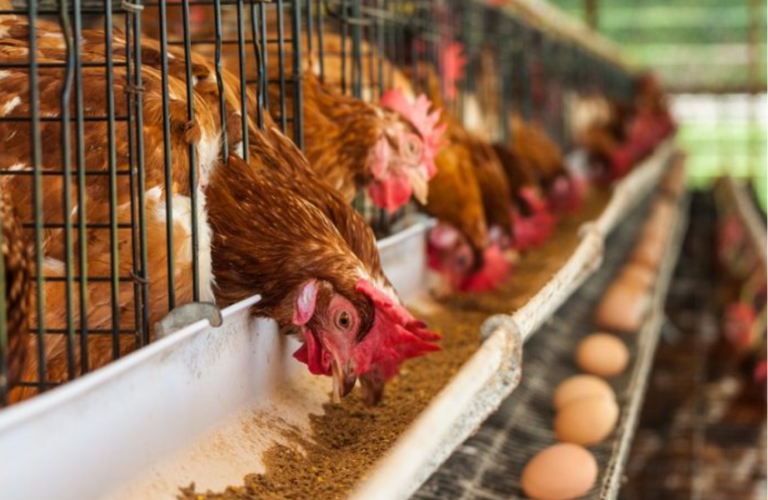
Spike in poultry production costs, shrinking profit margins and declining consumer purchasing power are threatening the survival of poultry farming across Nigeria, forcing operators to shut down farms or reduce production while households struggle to afford chicken, meat, fish and other sources of protein.

Reports from Osun, Ondo, Ekiti, Borno, Yobe and Adamawa states indicate that rising prices of poultry feed, day-old chicks, vaccines, transportation and other essential inputs have pushed many small-scale farmers out of business, with those still operating reducing their flock sizes, rationing feed or selling below profitable levels to avoid further losses.

The situation has also spread to the consumer market, where rising food costs and weakened purchasing power are forcing households to reduce meat portions, substitute eggs for beef and chicken or prepare meals without animal protein.

While poultry farmers across the South-West and North-East are appealing for government intervention to prevent further closures, traders and consumers in Lagos say the high cost of meat and other protein sources has continued to affect household budgets, despite occasional reductions in the prices of some products.

Chairman of the Poultry Association of Nigeria (PAN) in the South-West, Oluleye Olugbeja, warned that the industry faced a serious threat unless the Federal Government intervened to reduce feed costs, improve access to credit and provide insurance against disease outbreaks.

Olugbeja, who put the industry’s value at N4.2 trillion and its employment contribution at 25 million jobs, said feed alone accounted for about 75 per cent of production costs, leaving farmers with little room to absorb further increases.

“If government can release grains from the national reserve at subsidised price, give single-digit loans from Bank of Agriculture, and support insurance against disease, farmers can survive.

“Otherwise, this N4.2 trillion industry that gives 25 million jobs will collapse,” he warned.

In Ekiti State, Chairman of PAN, Alonge Oluwasetemi, painted a disturbing picture of declining production, disclosing that only between 15 and 25 per cent of the association’s members were still operating at optimal capacity.

He attributed the development largely to the high cost of feed and the inability of consumers to pay prices that would enable farmers to recover their investments.

“Feed now accounts for about 75 per cent of production cost, making it impossible for farmers to break even when consumers cannot afford the products,” he said.

A poultry farmer in the state, Daniel Ajayi, said a bag of feed that previously sold for N9,000 now cost between N20,000 and N23,000, while maize and soya, the major ingredients used in feed production, had tripled in price.

According to him, the increases have forced many smallholder farmers to reduce their flock sizes, resort to alternative local feed or abandon poultry production altogether.

The situation has also affected traders. A broiler seller at Oja Oba Market in Ado-Ekiti, Funmi Ajayi, said she previously sold about 100 birds daily but now struggled to sell 30 because of declining demand.

“People don’t have money to buy. A medium chicken that was N3,500 is now N7,000 and customers are negotiating N4,000. Farmers now struggle to sell or even offer birds on credit,” she said.

A veterinary doctor in Ikere-Ekiti, Femi Olabode, raised another concern over the quality of poultry feed, alleging that some manufacturers had reduced the proportion of essential ingredients to protect their profit margins.

“Maize should be 50 per cent of feed but now they put 35 per cent to make profit.

“So, birds don’t gain weight, layers produce 50 per cent instead of 90 per cent. This increases mortality and disease risk. It is a vicious cycle,” he said.

In Osun State, PAN Chairman Alaba Towoju said poultry farmers were struggling with the rising prices of feed, day-old chicks and pullets, which he said now sold for about N2,000 each.

He accused some feed millers of failing to pass the benefits of government-subsidised maize to farmers, calling for closer monitoring of agricultural intervention programmes.

“Poultry farmers buy feed at high prices from feed millers and are later forced to sell their products below profitable levels, leaving them in perpetual losses.

“Maize supplied by the government to support poultry farmers often ends up with feed millers, who allegedly increased prices, making it difficult for farmers to afford feed.

“Government should closely monitor the distribution of subsidised maize to feed millers to ensure that the benefits are passed on to farmers through affordable feed prices,” he said.

Chairman of the All Farmers Association of Nigeria (AFAN) in Osun, Wahaab Bello, acknowledged previous government interventions, including the FADAMA III programme and the distribution of chicks and feed, but maintained that more assistance was necessary.

He said feed manufacturers were also contending with expensive raw materials and should not bear sole responsibility for rising prices.

“High cost of feed is the major challenge facing poultry farmers while the prices of ingredients used in its production are also high.

“Feed sellers cannot be entirely blamed for the high prices because the raw materials required for production are equally expensive.

“The government should intervene by reducing the cost of agricultural inputs and providing grants to ease farmers’ operational challenges,” he said.

In Ondo State, Joshua Sunday Ayantayo, SIWE Coordinator at the Federal College of Agriculture, Akure, said raising 50 birds to marketable size now required at least N400,000, excluding losses arising from mortality and other expenses.

Ayantayo, who is also a poultry farmer, said some operators were cutting corners on vaccination because they could no longer afford both feed and medication.

“Those who have been raising 1,000 are reducing to around 500, some are reducing from 500 to 300.”

He called for subsidies on feed production and greater support for farmers cultivating maize and other raw materials required by the industry.

However, Chief Executive Officer of Wholesome Chicken Farm, Akure, Tayo Ayorinde, said rising production costs were not the only factors responsible for the difficulties confronting poultry farmers.

He identified poor farm management, inadequate marketing arrangements, disease outbreaks, theft and corruption in government intervention programmes as additional problems undermining profitability.

According to him, farmers who maintain good production standards, enforce biosecurity measures and plan their marketing properly can remain profitable despite the prevailing challenges.

A poultry inputs dealer in Akure, Aminat Olaitan, said a bag of finisher feed now sold for between N22,000 and N24,000, compared with N16,000 to N18,000 previously.

She said weekly sales at her store had fallen from between eight and 10 bags to fewer than four, reflecting the reduced purchasing capacity of poultry farmers.

Similarly, Chief Executive Officer of PearlFak Limited, Abiola Fakinlede, blamed expensive diesel, poor roads and rising transportation costs for the persistent increase in feed prices.

“From July to date, feed prices have been going up drastically, and within a single week, the price can change more than once,” she said.

Fakinlede explained that some farmers had resorted to purchasing half bags of feed and rationing what they bought, a practice she said was affecting bird growth and egg production.

“When farmers come to buy feed, instead of buying full bags, many end up buying half bags, which forces them to ration the feed and causes their birds to suffer,” she added.

The difficulties are equally pronounced in the North-East, where poultry farmers in Borno, Yobe and Adamawa states warned that continued increases in production costs could force more operators out of business.

In Adamawa, a poultry farmer in Yola-South, Haruna Ismail, said the price of day-old chicks had increased from between N980 and N1,050 in 2025 to N2,270.

He said a bag of poultry feed previously sold for between N16,000 and N18,000 but now cost between N21,600 and N23,000, while some poultry medicines had risen from N400–N800 to between N1,800 and N2,000.

Ismail said the increases had compelled him to reduce the number of birds he raised and adjust expenditure on feeding and medication.

Another farmer in Yola-North, Peace Samuel, said the cost of raising birds for six to seven weeks had made poultry farming increasingly unprofitable.

“After rearing birds for six to seven weeks and feeding them at such high costs, it will be fair to sell at N20,000 each.

“But some people may prefer to buy beef for N10,000 instead of chicken,” she said.

Samuel added that farmers sometimes had to reduce their selling prices to attract buyers because keeping mature birds longer would mean additional expenditure on feed.

She identified coccidiosis, Newcastle disease and Gumboro as other threats to poultry production, warning that delayed treatment could lead to high mortality and financial losses.

In Biu, Borno State, the Manager of Shettima Farms in Tum, Shettima Isa, said the price of a bag of feed had risen from N10,000 to N18,000, while broilers sold for between N8,000 and N12,000, depending on their sizes.

“This is increasingly becoming unbearable because you will spend huge money on feeds and vaccines and end up selling the broiler for between N8,000 and N12,000 depending on their sizes.

“We hardly make enough profit, and so many stopped the business, and many jobs were lost too because it’s a value chain.

“If the government will support poultry farmers in Biu and in the entire state, we will have more jobs created and have more food for Nigerians,” he said.

Another farmer in Biu, Usman Kabiru, said he had abandoned poultry farming because of high feed costs and poor market prices but would consider returning if the government subsidised essential inputs.

In Yobe State, a poultry farmer in Potiskum, Isa Bawa, said feed prices had risen sharply over the past four to five years, from between N5,000 and N7,000 per bag to N23,000 for starter feed and N21,000 for finisher feed.

Another farmer, Usman Maidede, said the rising costs had reduced the number of poultry producers in the area, sometimes resulting in shortages of eggs and birds.

“When the price is high, the farmers rear less, which in turn causes less availability for the buyers,” he said.

A farmer and dealer in poultry feed and medicines, Godwin Dedan, urged the government to subsidise feed ingredients, support local maize and soybean production and establish affordable feed-milling facilities.

He also advocated low-interest loans and grants to enable smallholder farmers to purchase chicks, feed, vaccines and other inputs.

Meanwhile, the effects of rising food production and distribution costs are being felt by consumers in Lagos, where households are adjusting their diets and cutting expenditure on meat, chicken and fish.

Investigation at Oyingbo, Ijora Olopa, Ikotun and FESTAC markets showed that although some chicken and fish prices had declined intermittently, many households continued to struggle with the cost of animal protein.

A mobile butcher, Abubakar Sodiq, said beef prices had increased from N6,000 per kilogramme in August to N8,000, attributing the increase to fuel prices and the cost of purchasing cattle.

He said portions of slaughtered cattle that previously cost about N60,000 now sold for between N100,000 and N120,000, sometimes reaching N130,000.

Another butcher at Oyingbo Market, Musa Danjuma, said a lap of meat now sold for between N30,000 and N45,000, compared with about N25,000 in August, while a neck portion cost N10,000.

At Ijora Olopa Frozen Food Market, a chicken trader, Mahmoud Ganiyat, said a carton of soft chicken sold for N41,000, while other varieties ranged from N52,000 to N54,000.

She said fluctuations in prices had affected demand and forced her to reduce her stock purchases from 200 cartons to 150.

Another trader, Akeem Abdullahi, said a carton of fryer chicken had declined from between N41,000 and N42,000 the previous week to N39,000, while hard Orobo chicken had fallen from N62,000 to N52,000.

He attributed the fluctuations to supplier prices in Cotonou, adding that some customers now purchased half a kilogramme instead of one kilogramme.

An egg trader at Ijora Olopa, Rokibat Hamzat, said a crate of small eggs sold for N5,800, while larger eggs cost N6,200, with individual eggs selling for between N200 and N250.

Another trader, Williams Chinaza, said a crate sold for N6,500, compared with about N7,000 previously, attributing the fluctuations to feed, transportation and supply costs.

Despite these occasional price reductions, consumers said the cost of providing adequate protein for their families remained a challenge.

A graphic designer residing on Governor’s Road, Ikotun, Olayinka Oluwafemi, said a piece of beef that previously cost N100 now sold for N200, forcing him to reduce his meat consumption by about 80 per cent.

He said he had increasingly turned to eggs as a cheaper alternative.

A cosmetics seller in FESTAC, Chidinma Samuel, said her family’s expenditure on meat had risen from between N3,000 and N3,500 to between N5,000 and N6,000.

She said a large catfish previously purchased for N3,500 now cost N5,000, forcing the family to occasionally prepare meals without meat.

Another consumer in Mushin, Adebanke Agbo, said she substituted eggs whenever she could not afford meat or chicken. “Once you prepare a tasty stew and add eggs, you are good to go.”

Agbo, however, lamented that even eggs, which were previously considered a relatively affordable source of protein, had become expensive for many households.

Across the affected states, farmers maintained that unless the government addressed the cost of feed, agricultural inputs, transportation and access to affordable credit, more poultry businesses could shut down, worsening unemployment and putting additional pressure on food supplies.

They called for cooperative feed-milling facilities, subsidised grains, improved access to single-digit loans, disease insurance and closer monitoring of agricultural support programmes to ensure that interventions reached their intended beneficiaries.