Home Blog Page 411

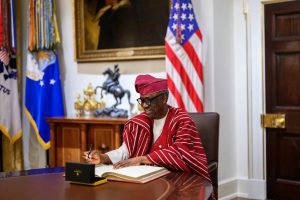
PHOTOS: Kayode Are assumes office as ambassador to US, presents letter of credence to Trump

0

Kayode Are, former director-general of the Department of State Services (DSS), has formally begun his diplomatic assignment as Nigeria’s ambassador to the United States.

Are officially took up the role on Thursday after presenting his letter of credence to the US government and President Donald Trump at the White House.

His appointment is part of the ambassadorial nominations forwarded to the senate by President Bola Tinubu in November 2025.

Thecable

Yishawu Celebrates Ileya with Food Discount Market 2.0 for Eti-Osa II Constituents

0

  BY TAIWO OGUNMOLA -OMILANI


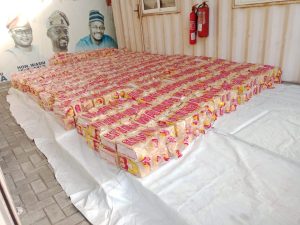
Residents of Eti-Osa Constituency II in Lagos thronged the venue of the Food Discount Market 2.0 organised by lawmaker, Hon. Gbolahan Yishawu, as essential food items were sold at heavily subsidised rates to support constituents ahead of the Ileya festival.

The initiative, exclusively organised for residents of the constituency, offered staple food items at prices far below prevailing market rates.

Items sold included 5kg of rice for N3,000, 5kg of beans for N3,000, 5kg of garri for N1,000, a crate of eggs for N2,500, live chicken for N5,000, loaves of bread for N1,000, 75cl of palm oil for N1,000, a tuber of yam for N2,000, a carton of noodles for N5,000, 1kg of beef for N3,500, and smoked catfish for N3,000.

Speaking during the exercise, Hon. Yishawu said the programme was designed to ease the economic burden on residents by making food items more affordable.
According to him, the initiative started during the Christmas period last year and has now entered its second edition.

“We started this programme last year during the Christmas period. The aim is to support our constituents so that they can put food on their tables at cheaper costs,” he said.
He explained that the market offers discounts of up to 50 per cent and above on essential food items including rice, beans, garri, chicken, beef, eggs, bread, pepper and others.

Yishawu added that every resident who visited the market also received a free pepper combo valued between N4,000 and N5,000.

“This second edition is targeted at the Ileya festival. We want to ensure that during festive periods, our people can afford basic food items. People are not getting free rice as being speculated; rather, we are reducing the prices significantly to make things easier for them,” he stated.

The lawmaker noted that the scale of the programme had increased compared to the maiden edition, adding that the turnout reflected the growing acceptance of the initiative among residents.

He acknowledged the large crowd at the venue, saying organisers had to regulate entry into the compound to maintain order.
“From the feedback we are getting, people are happy with what we are doing, and we will continue to improve on the programme as much as we can,” he added.
Some beneficiaries commended the initiative, describing it as timely and impactful.

One of the beneficiaries, Mr. Ibiaji Amos, praised Yishawu for consistently supporting the people.

“We are delighted. The lawmaker has been a beacon of hope. This is the second time he is doing this, and we are happy. I bought items worth N11,000 here, but the same goods would cost about N60,000 in the open market,” he said.

Another resident, Banky Brown, described the programme as commendable and urged other lawmakers to emulate the initiative.
“This is an interesting programme. I wish other constituencies could organise this kind of support, especially during the Sallah celebration when people need food items. APC members and people from other parties are all here buying without discrimination,” he said.

Similarly, Mrs. Rita Olumegbon said the prices were far cheaper than what obtains in regular markets.
“The prices are much lower than what is sold outside. Hon. Yishawu has really tried for us,” she said while offering prayers for the lawmaker.

Also speaking, Alhaja Mulikat Calfos commended Yishawu’s efforts in supporting residents of the constituency.
“He is doing a lot for the people. We are with him and we love him. He should continue these programmes when he returns to office in 2027,” she said.

Tinubu: APC primaries proof of internal democracy

0


Says exercise deepened grassroots politics

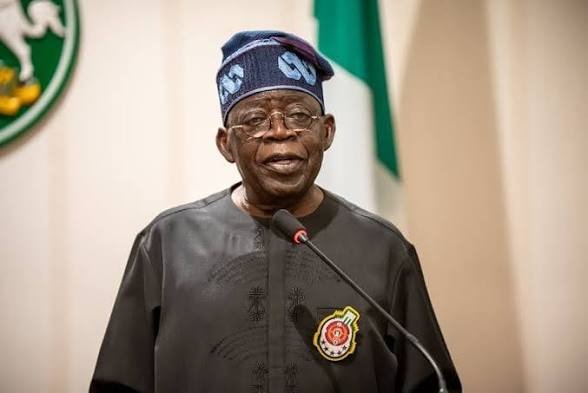
President Bola Tinubu on Saturday described the 2026 All Progressives Congress (APC) primaries as a robust demonstration of internal democracy that has deepened grassroots participation across the country.

According to a statement issued by his Special Adviser on Information and Strategy, Bayo Onanuga, and speaking after casting his vote at the Ikoyi-Obalende Ward L2 polling unit in Lagos, the President praised party members for the orderly conduct and enthusiasm that marked voting in various states.

He, who was accompanied to the venue by his wife, Oluremi Tinubu, and received by Governor Babajide Sanwo-Olu; Lagos APC chairman, Cornelius Ojelabi; Minister of Industry, Trade and Investment, Jumoke Oduwole; former Minister of Finance and coordinating minister of economy, Wale Edun; and other party leaders.

“This is a demonstration of internal democracy, and it has been going on very well according to plan. This is grassroots politics where every member of the party has the right to participate,” Mr Tinubu said. “It shows that we have internal democracy and it’s peaceful and well organised.”

On the nationwide conduct of the primaries, the president commended state governors and party officials for their roles in ensuring a credible process. “I am very satisfied that governors have done well in their various states, from the ward congresses to local government congresses to the delegate accreditation, validation, membership registration and the certification of the electoral process. It has been done very well, and with this, you could rate democracy at a high level,” he said.

Tinubu also lauded electoral officials, party leaders and security agencies for helping to keep the exercise peaceful and credible and urged Nigerians to continue supporting democratic institutions and national unity.

He reiterated his administration’s commitment to democratic ideals, good governance and policies aimed at improving the welfare of citizens while reinforcing political stability nationwide.

Sun

White House: Gunman killed after shootout scare

0


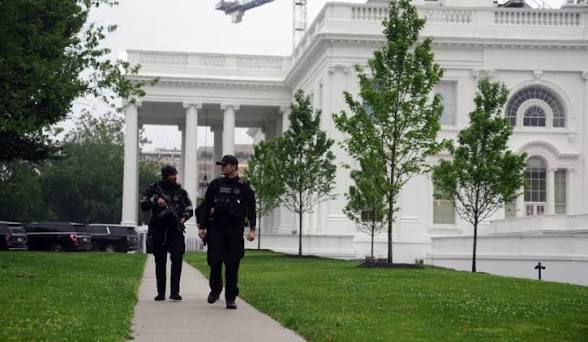
A gunman was shot dead after opening fire near the White House on Saturday evening, triggering a heavy security response from the US Secret Service, police and federal agents.

The shooting happened close to the White House security perimeter while President Donald Trump was inside the presidential residence, where he was reportedly engaged in discussions related to negotiations with Iran.

According to Secret Service communications chief Anthony Guglielmi, the incident began shortly after 6pm local time when a man “pulled a weapon from his bag and began firing.”

Secret Service officers immediately returned fire, fatally wounding the suspect.

“Secret Service Police returned fire striking the suspect who was transported to an area hospital where he was pronounced deceased. During the shooting one bystander was also struck by gunfire,” Guglielmi said.

Authorities confirmed that no Secret Service personnel were injured during the exchange.

Trump later praised the security response, saying on Truth Social: “Thank you to our great Secret Service and Law Enforcement for the swift and professional action taken this evening against a gunman near the White House, who had a violent history and possible obsession with our Country’s most cherished structure.”

Several US media outlets identified the suspect as 21-year-old Nasire Best from Maryland, reporting that he had a record of mental health concerns and previous encounters with Secret Service personnel.
The shooting forced a lockdown around the White House area, with police sealing off nearby roads while National Guard troops restricted access in parts of downtown Washington.

Canadian tourist Reid Adrian, who witnessed the chaos, described the frightening moment.

“We heard probably 20 to 25 what sounded like fireworks, but they’re gunshots, and then everyone started running,” he told AFP.

Journalists gathered on the White House North Lawn also said they were ordered to take cover inside the press briefing room as gunfire erupted.

ABC News correspondent Selina Wang, who was filming when the shooting began, captured the sound of repeated shots before diving for safety.

“It sounded like dozens of gunshots,” she wrote on X.

The incident adds to growing security concerns around Trump, who has faced multiple alleged assassination attempts in recent years, including a 2024 campaign rally shooting in Pennsylvania and another armed incident near a golf course in Florida.

Earlier this year, an armed man also breached a security checkpoint during a media event attended by the US president.

Sun

Agitation persists in Lagos Mainland APC over reps primary

0


Fresh agitation has continued to trail the disrupted All Progressives Congress (APC) House of Representatives primary election in Lagos Mainland Federal Constituency, as party members and stakeholders raise concerns over alleged irregularities and fraud in the conduct of the exercise.

The controversy surrounding the primary has reportedly attracted the attention of influential leaders within the party at both the state and national levels amid growing fears that the crisis could deepen divisions within the APC in Lagos Mainland.

The primary election, which ended abruptly following disagreements and confusion among party officials and delegates, has continued to generate tension across the constituency, with supporters of various aspirants accusing one another of manipulation and lack of transparency during the process.

Party sources disclosed that several stakeholders have commenced fresh consultations aimed at resolving the lingering crisis and preventing further breakdown of cohesion within the Lagos Mainland APC structure ahead of future electoral activities.

Findings revealed that discussions among party leaders have also centred on possible political arrangements capable of restoring peace within the constituency, including calls by some stakeholders for the House of Representatives ticket to be zoned to Ebute Metta West.

Supporters of the proposal argued that the area has allegedly suffered years of political marginalisation despite its contributions to the electoral strength and grassroots structure of the APC in Lagos Mainland Federal Constituency.

According to party insiders, some APC leaders believe that allowing Ebute Metta West to produce the party’s candidate may help calm aggrieved members, address complaints arising from the disputed primary election and strengthen unity within the party.

The development has equally heightened calls for decisive intervention by the APC leadership in Lagos State and at the national level to prevent the crisis from escalating into prolonged internal disputes capable of affecting the party’s fortunes in the constituency.

Political observers noted that the outcome of ongoing consultations among ward leaders, stakeholders and national figures may determine the next political direction of the party in Lagos Mainland.

There are also indications that loyalists of President Bola Ahmed Tinubu within the constituency are closely monitoring developments as pressure mounts on the party leadership to adopt a solution that would promote inclusiveness, stability and reconciliation among members.

Although the APC is yet to officially announce any decision regarding the disputed primary or possible zoning arrangement, consultations among stakeholders were said to have intensified in the aftermath of the controversial exercise.

Meanwhile, supporters of Prince Abdulhakeem Omolaja Animashahun from Ebute Metta West have continued grassroots consultations and political engagements, insisting that the constituency requires a fair and inclusive arrangement capable of ending the lingering crisis within the Lagos Mainland.

Sun

Troops rescue 92 kidnapped civilians in Borno

0


Troops of the Joint Task Force (North East) Operation HADIN KAI (OPHK) have rescued 92 persons from the den of kidnappers in Borno State.

The troops also detonated three improvised electronic devices (IEDs) placed on the road by the bandits to delay their advance.

A statement by the Media Information Officer, Headquarters Joint Task Force (North East) Operation HADIN KAI, Lt. Col. Sani Uba, said that a detachment of 135 Special Forces Battalion deployed at Dutse Kura in Borno State had, using their surveillance system, detected Boko Haram/ISWAP terrorists forcibly herding civilians and vehicles off the road and into the surrounding bush.

Sani said that the unit’s Quick Reaction Force was immediately mobilised, while reinforcement troops from 27 Task Force Brigade Garrison were simultaneously activated to join the rescue.

He said that the troops converged on the terrorists in a well-coordinated pursuit towards the Mangari–Dora general area, where they engaged the insurgents and forced them to abandon their captives and flee in confusion.

The media officer said that all 92 victims, comprising 52 males, 33 females and seven children, were successfully rescued and eight vehicles were recovered.

The statement said, “Troops of the Joint Task Force (North East) Operation HADIN KAI (OPHK) have demonstrated their unrelenting commitment to the protection of civilians, executing a swift and decisive rescue operation that freed 92 kidnapped victims from BH/ISWAP terrorists along the Buratai–Kamuya road, Biu Local Government Area, Borno State, on Saturday, May 23.

“At approximately 1122 hours, alert troops of the 135 Special Forces Battalion deployed at Dutse Kura detected BH/ISWAP terrorists forcibly herding civilians and vehicles off the road and into the surrounding bush using their surveillance system.

“The unit’s Quick Reaction Force was immediately mobilised, while reinforcement troops from 27 Task Force Brigade Garrison were simultaneously activated to join the rescue.

“Converging on the terrorists in a well-coordinated pursuit towards the Mangari-Dora general area, OPHK troops engaged the insurgents and forced them to abandon their captives and flee in confusion.

“All 92 kidnapped victims, comprising 52 males, 33 females and 7 children, along with 8 vehicles, were successfully recovered.

“In a desperate bid to delay the advancing troops, the fleeing terrorists covertly emplaced three IEDs along the Bula Zarma, Mangari general area in a calculated ambush attempt. The plot failed completely.

“The unit’s Explosive Ordnance Disposal team responded with precision and successfully detonated all three devices, clearing the route and enabling troops to press the pursuit approximately five kilometres beyond the Mangari general area.

“Subsequent search operations were conducted across the area, but the terrorists having abandoned their captives, their vehicles and their tactical objectives had scattered in complete disarray.

“OPHK troops sustained zero personnel or equipment casualties throughout the operation. The rescued civilians were consolidated, provided immediate welfare support and escorted by troops all the way to Damaturu, where they were released to continue their journey.

“This operation once again affirms the operational reach, surveillance capability and combat readiness of OPHK and serves as an unambiguous message that any attempt by terrorists to harm, kidnap or intimidate civilians will be met with swift and overwhelming force across the entirety of the North East Theatre.”

Sun

The Sun Foundation Fallout of primaries: Internal war rocks APC

0


• Petitions flood appeal committee, as aggrieved contestants weigh options
• Party leaders, stakeholders allege intimidation, imposition, name substitutions in primaries in states

The close of APC’s primaries over the weekend marks the end of voting, but the start of a nationwide legal and political firestorm.

What was sold as a cleaner, more democratic process under the Electoral Act 2026 has left the party more fractured than the indirect primaries it replaced. Instead of eliminating imposition, the new system moved the fight from state headquarters to the wards. Now, the party is paying for it with rejected results, bruised egos, and a base that looks less united heading into 2027.

Fubara

The National Working Committee shifted to direct primaries after consensus collapsed in most states. But the crises are no longer threats. They are full-blown institutional emergencies the party has to manage before the general election window slams shut.

Daniel

High-profile casualties and fallout

The governorship and senatorial primaries produced high-profile casualties, widespread protests, and outright rejection of results. The defeat or alleged exclusion of veterans like Otunba Gbenga Daniel and Ibikunle Amosun sent shockwaves through the party’s South-West chapters.

Beyond the South-West, several senior legislators either withdrew in protest or lost to parallel exercises. In the South-East, former Imo governor Rochas Okorocha lost heavily. In Delta, former Deputy Senate President Ovie Omo-Age was crushed.

These defeats show how internal warfare has changed under the new rules. Previously, a wealthy heavyweight could protect themselves by controlling a small pool of delegates. Direct primaries forced candidates to defend hundreds of wards at once.

The national leadership also used screening and clearance as a gatekeeper, allegedly filtering out strong, independent-minded veterans before voting started. In states where governors or dominant factions controlled the digitisation and distribution of biometric registers, independents found it nearly impossible to validate their voter base.

With these generals shoved aside, the battle has shifted to anti-party mobilisation and courtroom warfare. Side-lined heavyweights rarely retire quietly. They usually make sure the ticket they were denied becomes expensive to defend in the general election.

Opposition moves in

The opposition is watching for openings. The Nigeria Democratic Congress extended form sales to May 24 to court aggrieved aspirants. The Taminu Turaki faction of the PDP is pushing Goodluck Jonathan as sole presidential candidate ahead of a May 26 court ruling on eligibility. None of these coalitions is perfect, but they are positioned to capitalise on APC’s resentment and division.

Ogun

Ogun is the South-West’s most dramatic flashpoint. Five of nine serving House of Assembly members lost return tickets. Deputy Chief Whip Ibrahim Isiaka fell in Ifo/Ewekoro, alongside Ishaq Akinlade, Tunji Akinosi, and Femi Ogunbanwo.

For the Senate, former governor and incumbent Otunba Gbenga Daniel hit a roadblock in Ogun East. His grassroots mobilisation collided with a fortified state party machinery. The fight exposed a deep rift between legacy structures and the current executive alignment.

Senator Ibikunle Amosun faced the same friction. Trapped between a hostile state executive and the centralising pressure of the 2026 rules, his network was sidelined during screening and filtering.

On Monday, May 19, during the senatorial primary, APC stakeholders reaffirmed Governor Dapo Abiodun for Ogun East Senate while OGD tactically withdrew from the race. Senator Daniel had earlier protested his exclusion from the Ijebu-Ode meeting where Abiodun was endorsed as consensus candidate.

Party officials defend process, elders allege secrecy. The APC spokesperson, Mr Femi Nuberu, defended the primaries as procedurally sound. In a chat with Sunday Sun, he said: “The primary is essentially to fulfil the requirements of the electoral laws and the provisions of the APC constitution. In the recently concluded or on-going primaries, the party has brought to bear the inherent authority of a political party, as opposed to a political movement. Based on party ideology and conviction, the party assessed aspirants and adopted one among them as a consensus candidate, without necessarily compelling others who were, or are, convinced of their political clout to defy the party’s resolution and vie. Though no results have been officially released by the national secretariat, substantially, the observations of the pattern, decisions, and responses of the members show they towed the party line and directives.”

That official position is contested on the ground. A concerned party elder in Ogun State, who did not want his name in print, said the exercise was “shrouded in secrecy and undue brigandage.”

He pushed back against reports that he endorsed Governor Dapo Abiodun as consensus candidate for Ogun East Senatorial ticket at a stakeholders’ meeting in Ijebu-Ode. “The agenda was not disclosed. And so I had to walk out quietly.”

Speaking directly on the process, he said: “For God’s sake, we advocated direct primaries. But the situation is such that the whole process is shrouded in secrecy and characterised by undue brigandage. I will continue to pray for the country and for a better electoral process to come.

“Under the current circumstances, I think silence would be the best response. I don’t think we are ready for democracy the way things are going. If democracy is truly for the people and by the people, it wouldn’t be the case that someone in Abuja or a state capital dictates who the people’s representatives will be. The people are not actually choosing their leaders; someone is dictating who the leaders should be. We will watch events as they unfold.

“Between you and me, the so-called endorsement some people are talking about took place at a meeting where the agenda was not specified. So you get there only to discover the game they are playing. For example, on two occasions in Ijebu-Ode, I had to walk out quietly when I discovered the hidden agenda.

“That is why I used the word secrecy. Without being there, there was no way I would have known what transpired. It would have been a third-party reporting. I am not contesting any election; my intention is to have a free and fair election. But some people are hell-bent on not allowing it to happen.”

Imo

In Imo West, Governor Hope Uzodimma defeated former governor Rochas Okorocha 230,464 to 1,098 to clinch the APC senatorial ticket. The result shows how sitting governors used the direct primary structure to lock down tickets.

Okorocha’s camp, locked in a long-running feud with the state executive, could not navigate the screening and voting mechanisms. Control of ward registers proved decisive.

Abia

Abia State chapter of the APC is enmeshed in fresh crisis following the governorship and State House of Assembly primaries. Parallel claims of victory, allegations of imposition, and protests have left the party divided ahead of 2027.

The crisis centres on the governorship contest where two aspirants emerged as candidates through separate processes. On Thursday, 13 of 18 members of the Abia APC State Working Committee adopted former Minister of State for Science and Technology, Chief Henry Ikechukwu Ikoh, as the consensus candidate. The resolution, signed by the State Secretary and other SWC members, cited Ikoh’s experience and grassroots acceptability.

Hours later, Chairman of the APC Governorship Election Committee, Hon. Bartho Lalong, announced Chief Eric Opah as the winner, saying he polled 126,977 votes against Ikoh’s 5,905. The Ikoh camp rejected the result as a “sham,” arguing it violated party guidelines and ignored the SWC adoption. It vowed to petition the national leadership.

The APC national headquarters distanced itself from both claims. National Publicity Secretary Felix Morka said no official results had been released and urged members to disregard figures circulating on social media.

The crisis extended to the State House of Assembly primaries. In Bende North, supporters protested after Hon. Ngozi Vivianne Orji, who reportedly scored 7,918 votes across seven wards, was replaced with Orji Udeagha on the official list. Protesters stormed the Umuahia secretariat demanding justice.

In Bende South, the result was withheld amid conflicting claims. Aspirant Hon. Victor Anyaogu said he polled 8,325 votes to defeat Emmanuel Ndubuisi’s 4,567, but the constituency was omitted from the official candidate list.

Party stakeholders lamented the lack of result sheets at several wards, alleging the outcome was predetermined. They warned that unresolved disputes could weaken APC’s chances in 2027.

Rivers

Governor Siminalayi Fubara’s withdrawal from the APC governorship primary on Wednesday changed the calculus in Rivers. His exit followed the disqualification of key loyalists, including grassroots mobilisers and assembly aspirants, by the screening committee. Appeals left most decisions unreversed due to alleged missing documents.

Facing a fortified register and hostile structure, Fubara’s camp concluded a direct vote would produce a predetermined defeat. By withdrawing, he denied opponents a tactical landslide and reframed the move as a sacrifice for peace.

In his statement, Fubara said silence should not be mistaken for fear. In Rivers politics, when an incumbent steps back from an explosive internal battle, it rarely means surrender. It preserves political capital. By avoiding a compromised primary, he keeps his options open.

Tonye Cole also withdrew, leaving the Rivers APC ticket in the hands of a single faction. That delivers a short-term win for the anti-Fubara camp, but strips the party of any pretence of inclusivity.

Fubara still controls the executive machinery, state resources, and an aggrieved grassroots base. His statement signals to that network to prepare for alternative alignments. Whether through silent backing of another party or under-the-table anti-party work, the APC’s candidate now faces an uphill battle.

Delta

Delta APC is dealing with post-primary tremors across its senatorial districts. Former governor Ifeanyi Okowa won Delta North with 113,309 votes to defeat incumbent Ned Nwoko’s 2,612. In Delta Central, incumbent Ede Dafinone crushed Ovie Omo-Age 116,252 to 3,643.

Defeated aspirants allege the direct primary registers were manipulated at the LGA level to deliver predetermined outcomes, deepening the rift between the grassroots base and the emerging elite.

Benue

The rift between the executive arm under Governor Hyacinth Alia and the party structures loyal to the NWC and local stakeholders hit a boiling point. After the primaries, angry party faithful and aggrieved aspirants protested what they termed “vote-rigging” and heavy-handed delegate list manipulation.

Plateau

Plateau recorded major upsets during the legislative primaries. High-profile figures, including incumbent rep Yusuf Gagdi, faced intense resistance and shocking losses despite alleged stakeholder backing, leading to deep structural fracturing within the state chapter ahead of the broader electoral cycle.

Ondo

In Ondo, the highly volatile primaries were characterised by alleged imposition of candidates and manipulated delegate rosters, sparking widespread protests. The ensuing internal party violence escalated to a deadly shootout in areas like Idanre.

Ekiti

In Ekiti, aggrieved aspirants, including two House of Representatives contenders, rejected the May 16 results outright. Teju Okuyiga, who polled 1,032 votes but lost to incumbent Richard Bamisile’s 4,379 in Ekiti South II, called the exercise flawed. She said delegate accreditation, voting, and collation were openly disregarded in multiple wards. “Figures were allocated, and results were announced in several wards where no voting took place,” she said. Victor Kolade in Ekiti Central II described it as a filthy exercise with nothing encouraging to write home about.

Cross River

Friction in Cross River stems from a top-down push for consensus on legislative tickets. Instead of stabilising the party, it triggered a revolt. Protest marches and petitions have flooded the appeals panel, with aspirants accusing the leadership of using the 2026 Act’s consensus clause to impose candidates. The party is now fractured along North and South lines.

Kaduna

Kaduna’s legislative primaries triggered an internal rebellion. Senatorial aspirants rejected the results, alleging breaches of the APC NWC’s transparency and fairness standards. Factions accused each other of hijacking result sheets and using unverified ward registers, shattering the illusion of executive control.

Lagos

Lagos was not spared. In Alimosho, the APC West Senatorial primary descended into factional violence with 15 injured. Violence broke out at the LGA secretariat as members were called to vote. Chairs, glass windows, and doors were shattered in the stampede.

An aide to Governor Sanwo-Olu was hospitalised after a peace meeting turned violent. Monarchs and party leaders later intervened to call for calm.

Meanwhile, Lagos East affirmed Tokunbo Abiru unopposed. The contrast sums it up: direct primaries moved the battleground to the wards, producing landslides where one structure dominates, violence where two clash, and consensus where elites agree not to fight.

On the whole, former Chairman of the Lagos chapter of the APC, Chief Henry Ajomale, described the exercise as a huge success. In an interview with Sunday Sun, he said: “To a large extent, the exercise was very peaceful. It was well organised, and I give kudos to those behind it. From the House of Representatives primaries to the governorship primaries and finally the presidential primary, the exercise was interesting and exciting, especially in Lagos. Of course, there were small hitches here and there. But overall, I think it was a credible exercise.

The issue of people protesting the outcome of primaries is not peculiar to APC primaries. Even during general elections, losers will always claim to have been manipulated. We are not angels, and I don’t think anybody is perfect. Everything cannot be perfect. People will always complain, even where there are no real issues. And you cannot avoid that in an exercise as big as APC primaries conducted across Nigeria, because everybody is desperate to represent the party. They consider their election a done deal once they get the APC ticket. So, if you lose, you will claim to have been robbed.”

Oyo

In Oyo State, the protest by immediate past Minister of Power, Adebayo Adelabu, over the governorship primary mirrors the national pattern. Senator Sharafadeen Alli clinched the ticket amid claims that the registers were skewed and selectively distributed to favour his network.

Before voting, Oyo APC had warned against top-down consensus and demanded an open direct primary. Now that the vote produced a disputed outcome, Adelabu’s allegations strip away any illusion of fairness.

Oyo is repeating history. Past internal rifts and failed reconciliation opened the door for the opposition to take the state. If Adelabu and his allies pursue anti-party mobilisation or legal warfare, Alli’s ticket will face sabotage from within.

Adelabu has filed a petition to the APC National Appeals Committee alleging manipulation of the delegate list, intimidation and exclusion of aspirants and agents, and violation of APC guidelines.

He argued that the process contradicted the party’s own rules. “In multiple wards across Oyo State, no actual voting took place. Yet, results were allegedly written and transmitted as if elections had occurred. This constitutes a violation of Article 20 of the APC Constitution and the Electoral Act 2026 provisions on internal party democracy,” he said.

Adelabu said the delegate list was the core of the problem. “The delegates list used for the exercise was selectively compiled and altered to favour a preferred aspirant. Eleven aspirants were cleared by the National Screening Committee, but the process was structured to deny others a level playing field.”

He added that monitoring was blocked at key points. “Agents of several aspirants, including mine, were denied access to collation centres and ward venues. In some instances, there were reports of intimidation aimed at suppressing participation.”

For Adelabu, the use of a pre-approved list undercut the entire premise of direct primaries. “The use of a pre-approved delegates list contradicted the directive for a direct primary across all wards.”

Explaining why he stayed away from the venue, he said it was to avoid violence. “My decision to stay away from the venue on the day of the primary was to avoid bloodshed and to preserve the lives of party members. My ambition has never been worth the blood of any Oyo citizen. However, silence in the face of this subversion would amount to endorsing impunity.”

He now looks to the party’s internal mechanism for redress. “I trust the committee will act decisively to uphold justice, protect the integrity of the APC, and reassure members that the party remains committed to internal democracy.”

When veteran heavyweights and incumbent power brokers are locked out or handed defeated tickets, they do not fade away. They become dangerous internal saboteurs.

Petitions flood Appeal Committee and Reconciliation Committee

The conclusion of the primaries has opened the floodgate of petitions by aggrieved aspirants. From Monday, the National Assembly Primary Election Committees and Appeals Panels will be the most stressed institutions in the country.

In states like Ogun, the party is playing a cautious game. Declaring provisional outcomes while stating that no final winner will be declared until every petition is reviewed shows how wary the leadership is of legal landmines.

In places like Edo and Ondo, where parallel exercises and multiple victory claims emerged from rival factions, the national headquarters will have to choose which faction to validate. Whichever way they rule, a lawsuit is virtually guaranteed.

The strategic objective of the appeal committee is to offer a credible exhaust valve for anger. As President Bola Tinubu noted in his recent address on the primaries, winners must hold olive branches, and losers must use internal redress mechanisms rather than wrecking the boat.

The committee’s task is to provide enough perceived transparency and compromise, such as offering alternative political concessions or ordering selective re-runs where irregularities are undeniable, to keep powerful, aggrieved losers from defecting or funding anti-party activities from within.

Ultimately, the committee’s job is a balancing act between strict adherence to party guidelines and raw political pragmatism.

Ajomale expressed confidence that all disputes would be amicably resolved. “The machinery is there for aggrieved aspirants to appeal. I am sure the Appeal Committee will look at the issues to see if they are genuine and make corrections where necessary.

“It is always anticipated that there will be disputes. Where you don’t have the support of the people, you will claim to have been rigged out.

“The best we have done so far is giving every member the opportunity to choose the candidates they want. It was an open exercise. People queued behind the aspirants of their choice, and the process was transparent enough that manipulation was difficult where people lined up and were counted. Claiming to have been robbed is a human attitude.

“Every dispute will be resolved by the Appeal and Reconciliation Committee, which will try to bring back all aggrieved members.

Thank God, there is enough time for reconciliation and to settle all the rifts. The election will hold in January, and we are in May. Within that period, we will resolve and settle all aggrieved members.”

Meanwhile, Wednesday’s judgment of the Federal High Court, Abuja, which ruled that INEC exceeded its statutory powers by imposing timelines that conflict with provisions of the Electoral Act, 2026, has opened a window for parties to re-conduct primaries where there is clear evidence of manipulation.

The court held that while INEC has the power to monitor and observe party primaries, it lacks the authority to dictate when political parties must conduct them.

“A declaration is hereby made that upon a proper consideration and interpretation of the provisions of Sections 29, 82 and 84(1) of the Electoral Act, 2026, the powers of the Defendant to receive notice of party primaries and the personal particulars of candidates, and its duty to attend, observe and monitor such primaries, does not extend to fixing or prescribing the timetable within which political parties may conduct their primary elections for the purpose of nominating candidates for the 2027 general elections,” the court ruled.

This development may offer political parties an opportunity to replace candidates or allow those who lost their primaries to defect.

Ajomale dismissed the threat of losing aggrieved members to the opposition. “In the past, you could lose here and join another party. But that is not possible now. It is a good thing that we no longer have political prostitutes jumping from one party to another. Knowing that they have nowhere to go, I think they will listen to the voice of reason and join those who have won as members of one family,” he said.

Tinubu applauds exercise

President Bola Ahmed Tinubu, addressing journalists at his Ward E polling unit in Ikoyi, Lagos, described the entire primary exercise as peaceful and organised. He said:

“The exercise is a demonstration of internal democracy. It has been going very well according to plan. This is politics—grassroots politics. Every member of the party has a right to participate and be involved to ensure that we have internal democracy. It is peaceful and well organised.

I am very satisfied that the governors have done well in their various states. From ward congresses to local government congresses, to delegate accreditation, validation of members’ register, and certification of the electoral process, it has been going on very well. At least, you will score democracy at a high level.

Sun

2027: ADC clears Atiku, Amaechi, Hayatu-Deen for presidential primary

0


The African Democratic Congress ( ADC) has cleared former Vice President, Atiku Abubakar, former Minister of Transportation, Rotimi Amaechi, and foremost banker, Mohammed Hayatu-Deen for its presidential primary scheduled for Monday, May 25.

A statement by the ADC National Publicity Secretary, Bolaji Abdullahi, indicated that the primary would hold in all the wards across the 774 local government areas in the country.

Abdullahi noted that a total of 513, 109 and 80 candidates were also cleared for the House of Representatives, Senate and gubernatorial primaries respectively.

However, Hayatu-Deen, while addressing party stalwarts, at the town hall for ADC members in North Central, yesterday, said the exercise would determine whether the opposition party is actually serious about rescuing the country. He urged party members not to treat the presidential primary as merely an internal affair of the party, but as a decision that could shape the country’s future ahead of the 2027 polls.

The presidential hopeful added that the ADC is facing a defining choice between “serious leadership” and “recycled politics,” and cautioned the opposition party against fielding “a recycled candidate carrying old political burdens and failed ideas.”

He said “Monday is not merely about selecting a candidate. Monday is about determining whether the ADC is truly serious about rescuing Nigeria and offering Nigerians a credible alternative to the failed politics they have endured for too long.”

Hayatu-Deen, while positioning himself as candidate best equipped to win the presidential election for the ADC and unite Nigerians across regions, generations, and religious divides, stated that he does not carry any political baggage.

Sun

Tinubu deforming, not reforming Nigeria – SDP candidate, Adebayo

0


The candidate of the Social Democratic Party (SDP) in next year’s presidential election, Prince Adewole Adebayo, has lambasted President Bola Tinubu, saying that the All Progressives Congress (APC)- led Federal Government reforms programmes are deforming Nigeria instead.

He also described the government’s student loan programme as unconstitutional and as a crime against Nigeria.

He passed the damning verdict on the government’s reforms and programmes shortly after he emerged as the SDP’s presidential candidate last week.

In this interview, he spoke on a wide range of issues including President Tinubu’s scorecard so far, party crisis, allegations of infiltration and state-backed destabilisation of opposition parties,

education collapse, the government’s prioritization of electoral advantage over governance outcomes and Nigeria’s economic future as well as his emergence as the SDP flag bearer and his political and

economic agenda on social welfare, education reform, and institutional accountability, among others.

How does that feel emerging the presidential candidate in the 2027 elections for the SDP?

It feels good, though challenging. It’s a new opportunity for the country and for the sovereign people of this country who need a good government and a good plan.

Your former national chairman is in court, and now you have another national chairman. What’s the plan going forward?

Well, I’m in a corner here because I’m a lawyer. Once you start with something in court, especially someone who is at the risk of losing his liberty and facing a criminal trial, it is unethical for me to

comment on it. But I hope the rule of law will work and that there will be political settlement without compromising the need not to encourage criminality or say criminality is politics. I think we should just allow the law to take its course.

Has this caused some kinds of friction in your party?

Not really. From what I know, they are trying to use the disciplinary powers of the party to hold party officials accountable. In doing that, some people won’t be happy about it. Some may even have genuine complaints that certain procedural rights were breached. What we can

do is to ensure that people follow the constitution of the party. If you want to discipline somebody, you have to follow the law, and if you are facing disciplinary action, you have to respect it. If you are

not satisfied, you can go to the appellate component of it.

Institutions like the Independent National Electoral Commission (INEC), and the police should not take sides; they should do their own duty.

It was N35 million. Why wasn’t this sorted within the party? Why did we have to go to court, get someone arrested?

I don’t know why it couldn’t have been sorted. As a lawyer, what I can say is that someone is alleged to be involved in several amounts, maybe you’re mentioning just one, and the person has pleaded not

guilty in a court of law. What the law expects of me is to presume the person innocent while the accusers provide evidence. If the law is working the way it should, the person is on bail, attends trial and politics should not interfere. If we want to solve Nigeria’s problems, we cannot become another Tinubu administration where, through allies, people imply that joining the ruling party wipes away sins. If I take sides in favour of the accused because they are politically useful, it means that when I become president, I might influence law enforcement to protect friends. If I side with the accusers against someone presumed innocent, then I don’t respect the

rule of law.

The best thing is to let the law work. Stealing money is not a joke. Breach of trust is not a joke. In the past, people went to prison for N20, while today, VIPs loot billions of Naira and still receive applause. We should stop that attitude. If money belongs to an institution and you had access to it because of your office, you must be accountable.

Did you speak to those supporters, the ones we saw pulling down the gate of the secretariat?

No. For me, it’s the police that are responsible because you don’t escort criminals to go and pull down gates.

Okay, so they came with the police, right?

It’s the police that brought them, and the police used them to pull down the gates because they didn’t want to do it themselves. I wasn’t there, so I’m careful. I only saw what was shown on television because I had finished my screening and left before it happened. The party contacted the Inspector General of Police, who said he would investigate, and also contacted the Commissioner of Police. The last time I spoke with party officials, they said they were giving the IG a few more days to act. If nothing happens, the party will take further action.

What should the people know about the Social Democratic Party? What does it stand for when it comes to the Nigerian people?

Without sounding too professorial, the SDP is the party that has solutions to your social problems. It’s a party meant for ordinary people. When you wake up in the morning, you think about feeding your

family, transport costs, education, healthcare, jobs and survival; those are the issues the SDP focuses on. That’s why in some countries they call it the “kitchen table manifesto.” It’s about everyday life. A social democrat won’t wake up and remove subsidies without thinking about the impact on transport, But if you are APC, your focus is on winning elections and congratulating yourselves afterward.

The SDP focuses on social progress. Nigeria is a country where most people are poor and cannot afford basic hygiene, nutrition, education or safety. You need a political party focused on solving those

problems, not one built around ethnicity or religion. We are concerned with how the government can help people achieve their aspirations.

We know the education failure rates in many states are terrible, and in some places, children don’t go to school at all. Politics should solve these problems. The APC treats education and food as personal

problems until election season comes around.

First of all, you emerged as a consensus candidate because you didn’t have any opponents. Were there people holding grudges against you in your party?

No, I don’t think so. The party understands three things. First, we are facing an incumbent government, so we cannot afford internal struggles. Second, we are fundamentally an ideological party, so it’s

not about personality triumphs.

You are from the South West. How do you want to beat Tinubu? A lot of people say it isn’t wise to field someone from the South West against Tinubu, who is also from the South West. What can you do about that?

We don’t think like that in the SDP. A hungry person in the South West is still hungry. Someone buying petrol at outrageous prices won’t care about regional identity. A student taking loans to attend schools with unpaid lecturers and empty laboratories won’t remember that the president is from the South West.

Other political parties have complained about the APC sending moles into their parties to destabilise them. Did SDP experience that?

Yes, we are dealing with that. It is the desire of President Tinubu to be the only person in the race. But this is not new. The PDP governments also attacked opposition parties during Obasanjo’s era.

Were you able to identify these moles in your party?

They will always exist. The important thing is leadership and helping people understand that transactional politics may give temporary benefits, but the long-term consequences are dangerous for the country.

So, you don’t want to give details, right?

I don’t run the party directly. I’m the presidential candidate and ambassador of the party, but the party has elected officials who manage operations. My role is ideological and philosophical.

I was looking at some of the things you said you would deliver on, especially education. We are seeing changes in the education system, ranging from lower cut-off marks to shortened NCE routes and so on. What do you think? Would you keep these reforms if elected?

These are not reforms; they are deformations. The lowest-quality people are in government, and they want standards to fall because an educated population asks questions and challenges bad governance.

If you look at the controversies around the educational qualificationsof some leaders, you’ll see they are producing people like themselves. Education creates critical thinking beyond ethnicity and religion.

There are also conversations about the unemployability of Nigerian youths. How would you tackle that as president?

The solution is not difficult. In our time, public schools kept students occupied productively from morning till evening. We had physical education, extracurriculars, prep classes and exam coaching.

Society must occupy young people constructively from childhood.

Would you continue with the student loans?

Student loans are a crime.

How so?

Yes. It’s a crime against the constitution and against the people.

So, would you remove the student loan? Are you aware that many students are happy about it?

No, they are not. Why should students borrow money for education if education is supposed to be free, compulsory and qualitative? The National Assembly members didn’t take loans for their own education. They enjoyed free education. Education should be free because if you don’t invest in your people, you destroy your society.

You will turn scientists into taxi drivers. You destroy civilization, and insecurity grows because the people who should become innovators are abandoned. That is the kind of society APC is creating.

Sun

Ebola scare: PSN issues emergency guidelines to Nigerian pharmacies

0


The Pharmaceutical Society of Nigeria (PSN) has urged pharmacists and operators of pharmacy facilities across the country to heighten surveillance and strengthen infection prevention measures following recent outbreaks of Ebola Virus Disease in parts of Central and East Africa.

The society said although Nigeria has not recorded any case of Ebola, pharmacists must remain on high alert because community pharmacies are often the first point of contact for sick individuals seeking treatment.

The Coordinating Minister of Health and Social Welfare, Prof. Muhammad Ali Pate, had confirmed that there were currently no cases of Ebola in Nigeria.

In an advisory released yesterday and signed by the PSN President, Ayuba Tanko, the body called on community pharmacies and institutional pharmacy departments to immediately strengthen national biosecurity measures to prevent any possible outbreak.

The PSN noted that pharmacists in all 36 states and the Federal Capital Territory must maintain a high index of suspicion for patients presenting symptoms associated with Ebola, especially those with recent travel history to affected countries in East and Central Africa.

According to the advisory, the incubation period for the disease ranges from two to 21 days, while infected persons only become contagious after symptoms appear.

It identified early symptoms as sudden high fever, severe fatigue, muscle and joint pains, headaches and sore throat, while advanced symptoms include vomiting, diarrhoea, skin rashes, impaired kidney and liver function, and bleeding from body openings.

The society directed pharmacists to routinely ask patients with sudden fever about recent international travel or possible contact with travellers from affected regions within the previous 21 days.

The PSN also ordered the immediate restoration of hand hygiene stations in pharmacies nationwide, stressing that hand washing points with soap and running water or alcohol-based sanitisers containing at least 70 per cent alcohol should be positioned at pharmacy entrances.

It further urged pharmacists and dispensing assistants to wear personal protective equipment, including masks and disposable gloves, when attending to patients showing signs of respiratory or systemic illness.

The society advised operators of pharmacies to intensify disinfection of high-contact surfaces such as counters, payment terminals, door handles and consulting areas using bleach solutions or alcohol-based disinfectants.

The PSN also cautioned against conducting non-essential invasive point-of-care tests such as blood glucose checks and malaria rapid diagnostic tests for patients with unexplained fever in order to minimise possible blood-borne exposure.

On self-medication, the society warned pharmacists against the indiscriminate dispensing of antimalarial drugs and antibiotics for unexplained fever cases that fail to respond to standard treatment or are accompanied by severe gastrointestinal symptoms.

It also urged pharmacists to counter misinformation and false claims surrounding herbal cures, saltwater baths and other unverified remedies for Ebola, insisting that early supportive treatment in designated health facilities significantly improves survival chances.

The PSN outlined emergency response steps for suspected Ebola cases presenting at pharmacies, directing pharmacists to immediately isolate such individuals in low-traffic areas while maintaining a safe distance.

It warned pharmacy personnel against direct contact with bodily fluids such as blood, vomit or sweat without specialised protective equipment.

The society instructed pharmacists to immediately contact the Nigeria Centre for Disease Control (NCDC) and Prevention through its toll-free emergency line, 6232, or notify state epidemiology units and Disease Surveillance and Notification Officers.

It added that suspected patients should remain isolated until trained emergency response teams arrive for safe evacuation to designated isolation centres, warning against the use of public transport for such movement.

The PSN said the vigilance and professionalism of pharmacists and other healthcare workers would play a critical role in preventing any possible outbreak in Nigeria.

Sun