Home Blog Page 410

11 Nigerian airlines risk NCAA’s hammer over mounting debts

0


…As FAAN, foreign carriers meet to fix service gaps

The Nigerian Civil Aviation Authority (NCAA) has put 11 domestic operators on a “No-Pay-No-Service” list over outstanding debt to the regulator.

In an internal memo dated May 22, 2026, signed by the Director of Finance and Accounts, Olufemi Odukoya and circulated across the authority’s operational departments and regional offices, all NCAA directorates were directed to withhold services from affected airlines pending financial clearance from the directorate.


The directive was also copied to the Director-General of Civil Aviation (DGCA), regional managers and other senior officials within the authority.

Airlines named in the directive include Air Peace, Ibom Air, Arik Air, Umza Air, NG Eagle, Max Air, Caverton Helicopters, Overland Airways, Rano Air, ValueJet and United Nigeria Airlines.

The NCAA generates revenue through statutory charges and service-related payments from airlines to fund inspections, oversight responsibilities, personnel obligations and other regulatory functions. When remittances are delayed, it affects the authority’s operations.

With the jet A1 crisis, multiple charges and taxation, airlines are struggling to stay afloat and sustain daily operations, hence unresolved financial issues could worsen the pressure they are facing.

Several stakeholders believe both airlines and the regulator may seek measures that allow essential services to continue while outstanding financial obligations are addressed.

Meanwhile, the Federal Airports Authority of Nigeria has intensified efforts to tighten airport operations and improve passenger experience, following a high-level engagement with airline operators at the Murtala Muhammed International Airport.

The meeting, held on May 21, 2026, brought together FAAN’s Director of Public Affairs and Consumer Protection, Henry Agbebire, and members of the International Airlines Association of Nigeria in a candid session focused on resolving operational bottlenecks and strengthening coordination.

Agbebire said the engagement was part of a broader strategy to deepen collaboration between FAAN’s Protocol and Passages Department and airline operators, while creating a feedback loop to address service gaps affecting passengers.

“This platform allows us to engage directly, understand concerns, and work towards practical solutions that enhance service delivery,” he said.

Airline representatives pointed to several pressure points linked to ongoing infrastructure upgrades at the airport.

Chief among them were poor signage around landside construction areas, a shortage of functional lifts, inefficiencies in shuttle bus services, and disruptions to airside ramp markings caused by construction works.

They noted that these challenges, though tied to long-term improvements, are already affecting passenger flow, increasing wait times and creating avoidable confusion within terminal environments.

Operators also called for more structured support from FAAN to maintain service standards during the upgrade phase, stressing that consistency in passenger handling is critical to airline performance and customer satisfaction.

Responding, Agbebire assured that all concerns raised would be reviewed and addressed, with FAAN prioritising measures that improve both operational efficiency and user experience.

He reiterated the authority’s commitment to aligning airport services with global standards, even as construction activities continue across major facilities.

The engagement underscores a growing recognition within the aviation ecosystem that infrastructure upgrades must be matched with real-time operational adjustments.

For FAAN and airline operators, stakeholders say, sustained dialogue and quick response to emerging issues will be crucial to ensuring that ongoing investments translate into smoother, more reliable airport experiences for travellers.

Sun
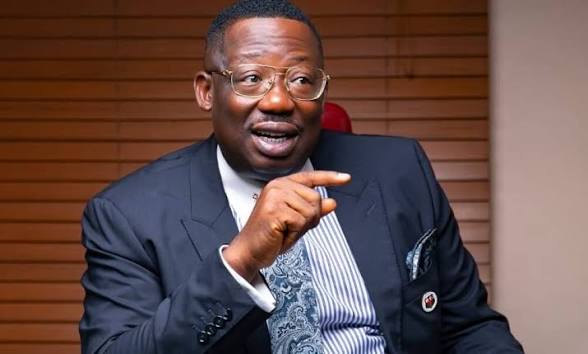
Oye raises the alarm over rising debts, says Tinubu’s N65.9trn 2-year borrowing dwarfs 55-year debt record

0

…Says with N159.28trn debt, each Nigerian owes N670,000
The Chairman of the Alliance for Economic Research and Ethics LTD/GTE, Dele Oye, has raised the alarm over Nigeria’s accelerating debt profile and warned that the N65.9 trillion borrowed under President Bola Tinubu in just 24 months has outstripped the country’s cumulative borrowing over the previous 55 years, which is about N12 trillion.

He added that the nation’s total debt stock, now put at N159.28 trillion, translates to an average burden of about N670,000 on every Nigerian, a development he said highlights the growing fiscal pressure and sustainability concerns in coming years.

Oye, who is the immediate past chairman of the Organised Private Sector of Nigeria (OPSN), cautioned that unless urgent measures are taken to strengthen revenue generation and fiscal discipline, the rising debt burden could place long-term pressure on public finances and constrain government spending on critical sectors.

He said, “Cast your mind back to 2006. Nigeria had just pulled off one of the most celebrated fiscal feats in African history. President Olusegun Obasanjo paid $12 billion to extinguish $30 billion in Paris Club debt. Nigeria was, briefly, externally debt-free. The Excess Crude Account was flush. The future looked fundable. Twenty years later, that golden moment reads like a fairy tale. Under President Goodluck Jonathan, debt crept back to N12.06 trillion by 2015 manageable, but the warning signs were already blinking. Then came the Buhari years.

“In eight years, the debt exploded from N12.06 trillion to N87.38 trillion, a 620% increase. The Central Bank was pressed into printing money through “Ways and Means” advances; N23.7 trillion of this was eventually securitised into long-term bonds, effectively converting a government overdraft into a generational liability. President Bola Tinubu’s administration has added a further N65.9 trillion in just two years. To put that in perspective: it took Nigeria’s first 55 years of independence to accumulate N12 trillion in debt. The current administration has added more than five times that amount in 24 months.”

According to Oye, “Governments love to quote the debt-to-GDP ratio. Nigeria’s is 35.5% well below the IMF’s 55% distress threshold, and far more comfortable-looking than South Africa’s 78.8% or Kenya’s 65.6%. Politicians wave this number like a clean bill of health.

“Do not be deceived. The number that actually matters is the debt service-to-revenue ratio of how much of every naira earned goes straight to paying creditors. Nigeria’s ratio stood at 116.8% in 2024, easing only slightly to 113% in Q1 2025, according to the Nigerian Economic Summit Group (NESG). In January 2025 alone, the CBN’s own data showed the Federal Government paying out N696.27 billion in debt service against total retained revenue of just N483.47 billion. That is a 144% coverage ratio in a single month.
“The reason for this paradox is brutally simple: Nigeria has a large economy but collects almost nothing from it. The country’s tax-to-GDP ratio is just 8.2%, the lowest among major African economies. South Africa collects 24% of its GDP in taxes. Kenya collects 16%. Ghana collects 13%. The Sub-Saharan African average is 15%. Nigeria, Africa’s largest economy by GDP and most populous nation, manages 8.2%. Every percentage point Nigeria fails to collect is a school not built, a road not paved, a soldier not paid.

“The 2026 Appropriation Act, signed by President Tinubu in April 2026, totals N68.32 trillion, the largest budget in Nigeria’s history. Of this, N15.8 trillion is earmarked for debt servicing alone. That single line item exceeds the entire N15.4 trillion budgeted for recurrent non-debt expenditure. It is more than Nigeria will spend on education, health, and security combined.

“Meanwhile, the fiscal deficit in the 2026 budget is projected at approximately N25.3 trillion roughly 4.5% of GDP, well above the 3% ceiling mandated by the Fiscal Responsibility Act. The law is being broken in the very document that is supposed to uphold it.”

Noting that Nigeria has the potential to overcome the challenges, Oye said, “Nigeria has the tools. It has talent. What it has lacked, consistently and consequentially, is the political will to deploy them.”

He advised, “The prescriptions are not secret: digitize tax collection and broaden the base; enforce the Fiscal Responsibility Act with criminal sanctions; restructure Eurobond maturities before the 2027–2029 redemption wall arrives; channel oil windfalls into a constitutionally protected stabilisation fund; and empower states to generate their own revenue rather than queue at Abuja’s door every month.”

“Nigeria does not have a debt problem. It has a revenue problem wearing a debt costume. For 237 million Nigerians the farmer in Benue, the trader in Onitsha, the graduate in Lagos who cannot find a job because interest rates are too high for any employer to borrow and expand this is not an abstract fiscal debate. It is the reason the roads are broken, the hospitals are empty, and the lights go out. The numbers do not lie. The question is whether the people in power are finally ready,” Oye added.

Sun

FIFA approves Iran’s World Cup base shift from US to Mexico

0


Iran’s national football team will now conduct their 2026 FIFA World Cup preparations in Tijuana, Mexico, after world football governing body FIFA approved a request to relocate their training base from the United States.

The Iranian Football Federation confirmed that the team will no longer be based in Tucson, Arizona, but will instead camp in the Mexican border city, a move officials say improves logistics and reduces travel time to group-stage venues.

According to Iranian FA president Mehdi Taj, the decision followed discussions with FIFA officials during meetings in Istanbul and further consultations with FIFA secretary general Mattias Grafström.

“We will be based in the Tijuana camp, which is near the Pacific Ocean and on the border between Mexico and the United States,” Taj said, noting that the location offers easier access to match venues in Los Angeles and Seattle.

The 2026 World Cup, jointly hosted by the United States, Canada and Mexico, has been clouded in recent months by political and security tensions linked to wider Middle East developments, with Iran’s participation drawing additional scrutiny.

Iran are scheduled to play their group matches in Los Angeles and Seattle, with officials arguing that the new base significantly improves travel efficiency, cutting down flight times compared to the originally assigned Arizona camp.

The team is currently training in Antalya, Turkey, while administrative processes around visas and entry clearance continue for players and officials ahead of the tournament.

The Iranian federation has also raised concerns over visa approvals, particularly for players with past military service linked to the Islamic Revolutionary Guard Corps, a matter still under review by US authorities.

US Secretary of State Marco Rubio has previously stated that Iranian players are welcome for the tournament, though individuals with security-related concerns may face additional entry checks.

FIFA has yet to issue a formal public confirmation of the base relocation, but Iranian officials insist approval has already been granted following internal meetings with tournament organisers.

The adjustment adds another layer of political sensitivity to preparations for the global showpiece, which is already being closely watched due to its expanded format and tri-nation hosting arrangement.

Sun

Ndigbo media forum rejects Gowon’s claim on Ojukwu, civil war peace efforts

0


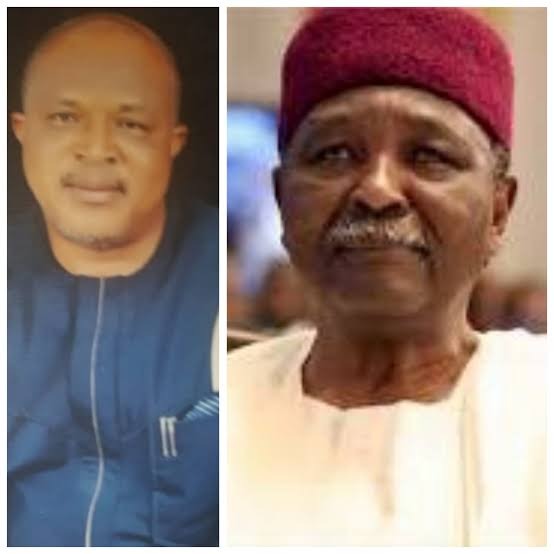
The Ndigbo Media Forum has rejected claims by former Head of State, Yakubu Gowon, that late Biafran leader, Chukwuemeka Odumegwu Ojukwu, frustrated efforts to prevent the 1967 Nigerian Civil War.

In a statement signed by its National Coordinator, Rev. Paul Eze, the group described Gowon’s remarks as “historically inaccurate, insensitive to the wounds of the past, and unhelpful to the national healing Nigeria desperately needs.”


The forum argued that Ojukwu did not go to war out of personal ambition but to protect the Igbo people following the 1966 anti-Igbo killings in Northern Nigeria, which reportedly led to the deaths of thousands and displaced many others back to the Eastern Region.

According to the group, “when the state abandons its people, self-preservation becomes a right.”

The statement further noted that Ojukwu’s actions were also driven by the collapse of the Aburi Accord reached in Ghana in January 1967.

It claimed that while Ojukwu honoured the agreement, the federal government allegedly failed to fully implement its terms through the introduction of Decree No. 8.

The forum maintained that Ojukwu consulted traditional rulers, clergy, market leaders and other stakeholders before declaring the Republic of Biafra on May 30, 1967, describing the move as “a mandate of the people to live free from persecution.”

Reacting to Gowon’s claim that Ojukwu frustrated peace efforts, the group insisted that available historical records showed the breakdown of negotiations came from the federal government’s refusal to implement agreements reached at Aburi.

“To blame the dead for a war that started after federal troops invaded Biafra on July 6, 1967, is to invert history,” the statement added.

The forum also faulted what it described as attempts to reopen old wounds through narratives surrounding the civil war, saying true statesmanship should prioritise “healing over vindication.”

On post-war reconciliation, the group said the federal government failed to fully implement the promised policy of “Rehabilitation, Reconstruction and Reconciliation” in the South-East after the war.

“We do not seek war, but we will not allow the historical record to be distorted to serve political narratives,” the statement said, while urging Gowon to let his legacy reflect “truth and reconciliation, not blame and division”.

Sun

APC Releases Official List of Lagos Assembly Primary Winners as Principal Officers, Incumbents Lose Out

0
Noheem Adams, Majority leader
David Setonji Badagry 1 deputy Chief whip
Stephen Ogundipe Oshodi-Isolo 1
Hon. Femi Saheed Kosofe 2

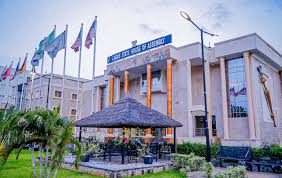
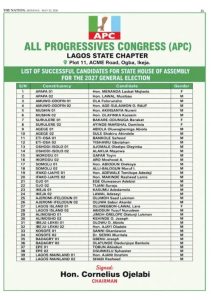
The Lagos State chapter of the All Progressives Congress (APC) has released the official list of successful candidates for the State House of Assembly ahead of the 2027 general election, with several incumbent lawmakers and principal officers missing from the final list.

The list, signed by the Lagos APC Chairman, Hon. Cornelius Ojelabi, contains 40 candidates who emerged victorious across the state’s constituencies following the party’s primary election.

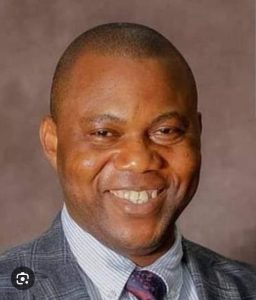
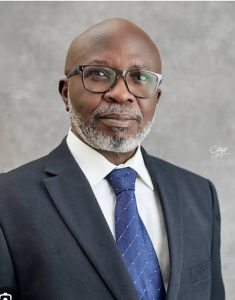
Among the notable names absent from the list are three principal officers of the Lagos State House of Assembly. They include Noheem Adams, Majority leader (Eti-Osa II, and David Setonji (Badagry 1), Chief whip.

Other incumbent lawmakers who also failed to secure tickets include Femi Saheed (Kosofe 2), Desmond Elliot (Surulere 1), Emmanuel Olotu (Ifako-Ijaiye 2), Noheem Adams (Eti-Osa 1), Fatai Mojeed (Ibeju-Lekki 1), Bonu Solomon (Badagry 1), Sentoji David (Badagry 2), Samuel Apata (Somolu 2), and Lanre Afinni (Lagos Island 2) and Stephen Ogundipe (Oshodi-Isolo 1).

The party’s official publication also indicated that two lawmakers, Mudashiru Obasa and Sangodara Mosunmola, did not purchase nomination forms for the Lagos Assembly race.

Meanwhile, four women emerged on the APC’s official list of successful candidates. They are Hon. Meranda Lasbat Mojisola (Apapa 1), Bakare-Odunuga Barakat (Surulere 1), Ayinde-Marshal Damilola (Surulere 2), and Olumegbon-Lawal Lara (Lagos Island 1).

According to the released list, candidates who secured the APC tickets include Saheed Bankole (Eti-Osa 1), Gbolahan Yishawu (Eti-Osa 2), Toyin Gafar (Ikorodu 1), Saad Lukmon Olumoh (Ajeromi-Ifelodun 1), Yusuf Abiodun Nurudeen (Lagos Island 2), Joseph Gbenu (Badagry 1), and Ibrahim Ajani (Lagos Mainland 1), among others.

The development signals a major shake-up within the Lagos Assembly as several ranking lawmakers lost their return bids ahead of the 2027 elections.

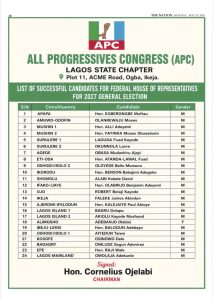
APC Releases List of Successful House of Reps Candidates in Lagos

0


The Lagos State chapter of the All Progressives Congress (APC) has released the official list of successful candidates for the House of Representatives ahead of the 2027 general election.
The list, published on Monday and signed by the Lagos APC Chairman, Hon. Cornelius Ojelabi, contains the names of candidates who emerged victorious in the party’s primaries across the 24 federal constituencies in the state.

Among the notable winners is Speaker of the Lagos State House of Assembly, Mudashiru Obasa, who clinched the APC ticket for Agege Federal Constituency.

Also on the list are Hon. Atanda-Lawal Fuad for Eti-Osa, Hon. Benson Babajimi Adegoke for Ikorodu, Hon. Raji Wale for Epe, and Alabi Kolade David for Shomolu.

In Alimosho Federal Constituency, Adebanjo Olabisi emerged as the only female candidate on the APC list.

The published list includes:
Apapa – Hon. Egberongbe Muftau
Amuwo-Odofin – Olanrewaju Moses
Mushin I – Hon. Alli Adeyemi
Mushin II – Hon. Fayinka Moses Oluwatosin
Surulere I – Laguda Fuad Kayode
Surulere II – Okunnola Lanre
Agege – Obasa Mudashiru Ajayi
Eti-Osa – Hon. Atanda-Lawal Fuad
Oshodi/Isolo II – Oloyede Bello Monsuru
Ikorodu – Hon. Benson Babajimi Adegoke
Shomolu – Alabi Kolade David
Ifako-Ijaye – Hon. Olabinjo Benjamin Adeyemi
Ojo – Robert Bolaji Kayode
Ikeja – Faleke James Abiodun
Ajeromi-Ifelodun – Hon. Kalejaiye Paul Abioye
Lagos Island I – Badru Dolapo
Lagos Island II – Akiolu Kayode Moshood
Alimosho – Adebanjo Olabisi
Ibeju-Lekki – Hon. Balogun Adebayo
Oshodi/Isolo I – Aiyedun Taiwo
Kosofe – Osinowo Dele
Badagry – Onilude Segun Adeniran
Epe – Hon. Raji Wale
Lagos Mainland – Omolaja Adekunle

The APC said the successful candidates would fly the party’s flag in the 2027 National Assembly elections in Lagos State.

Just in: APC Releases Lagos Assembly Primary Winners, Obasa’s Candidates Lose Out

0


The All Progressives Congress (APC) has released the list of winners of the Lagos State House of Assembly primaries through a newspaper publication, with two candidates reportedly backed by Lagos State House of Assembly Speaker, Mudashiru Obasa, losing out in the exercise.

According to the published results, about 14 incumbent lawmakers failed to secure return tickets during the primaries. Those affected include Stephen Ogundipe, Noheem Adams of Eti-Osa I, Femi Saheed, and several others.

More details shortly.

Aftermath APC Primaries, Kalu Prays For Peace, Unity On Pentecost

0


By Dr. Violet Akifagbowo

Senator Orji Uzor Kalu is stepping up his political moves ahead of the next elections, using recent events in Abia North to back President Bola Tinubu and celebrate his own win in the APC senatorial primary.

The former Abia governor, who now represents Abia North in the Senate, joined thousands of APC members in Igbere Ward A for the party’s presidential primary. Supporters said the gathering was peaceful and lively, with more than 2,000 people turning out to endorse Tinubu’s re-election bid.

After the exercise, Kalu said the crowd showed that people still have confidence in Tinubu’s leadership and the APC’s direction. He argued that the turnout reflected growing trust in the president and the “Renewed Hope” agenda.

According to him, the overwhelming support from his ward proves that many Nigerians want continuity and stability. He added that the APC is focused on holding its ground in Abia and expanding its influence across the South-East and beyond.

Kalu also noted that Tinubu got the highest votes in the ward during the primary. Party leaders, he said, are already working to build on that momentum for future elections.

Political observers say Kalu’s public backing of Tinubu is part of a wider push by APC leaders to win more support in the South-East, a region where the party has struggled against stronger rivals.

At the same time, Kalu has been receiving congratulations for winning the APC senatorial primary in Abia North. One message came from Olufemi Adegbulugbe, a Nigerian based in Alberta, Canada. He said he isn’t from Abia and isn’t an APC member, but believes national interest should come before party loyalty.

Adegbulugbe argued that senators make laws that affect every Nigerian, so their work should be judged on national impact, not just local politics. He said he has followed Kalu’s time in the Senate and believes he has shown experience and capacity. He also mentioned other lawmakers in the 10th National Assembly who he thinks are doing well.

The figures from the primary show Kalu won by a wide margin. He secured 65,651 votes, about 96.7 percent of the total, across the 57 wards in Arochukwu, Bende, Isuikwuato, Ohafia and Umunneochi.

Adegbulugbe said the result shows that APC members in the district want continuity, experience and competence. He added that the win matters not just for Abia North but could shape politics in the South-East and Nigeria as a whole.

He described the primary as a step that could open more opportunities for Kalu and the region. He also praised other contestants, including Professor Philip Nto, for taking part in what he called a democratic process.

People who watch Abia politics say Kalu’s hold on the APC structure in Abia North shows his influence hasn’t faded since he left office as governor in 2007. Allies point to his background in governance, business and national politics as reasons he remains relevant. Critics say the South-East is still competitive, with other parties fighting hard for control.

Kalu’s recent activities suggest he isn’t stepping back. He seems set on staying visible both in the APC and in national politics.

Alongside the politics, Kalu also sent a message to Christians during Pentecost. He prayed for peace, unity and love, and said the celebration should remind Nigerians to work together for a stable and prosperous country. He expressed hope that the meaning of Pentecost would push citizens to commit to service and national development.

For APC supporters in Abia North, Kalu’s recent wins and statements look like the start of a stronger push in the South-East. Whether the party can make real gains there is still unclear, but its leaders appear determined to build more alliances and strengthen their presence.

• Akifagbowo writes from Australia

Tinubu Wins APC Presidential Primary, Emerges Party’s Candidate for 2027 Election

0

President Bola Tinubu has emerged as the presidential candidate of the All Progressives Congress (APC) for the 2027 general election after winning the party’s presidential primary election by a landslide.

According to the official results announced by the party, President Tinubu secured 10.9 million votes, defeating his challenger, Stanley Osifo, who polled 16,503 votes.

Speaking after the announcement of the results, President Tinubu acknowledged the sacrifices Nigerians have endured amid ongoing economic reforms.

“I shared the pain with you. I know what it takes to reform this economy that was in tatters. If you lost sleep, I lost some too. If you have lost weight, I think I have lost some too,” the President said.

Following the declaration of the results, Stanley Osifo congratulated President Tinubu on his victory in the APC presidential primaries.

The APC National Chairman, Prof. Nentawe Yilwatda, subsequently presented the Certificate of Return and the APC flag to President Tinubu, officially confirming him as the party’s candidate for the 2027 presidential election.

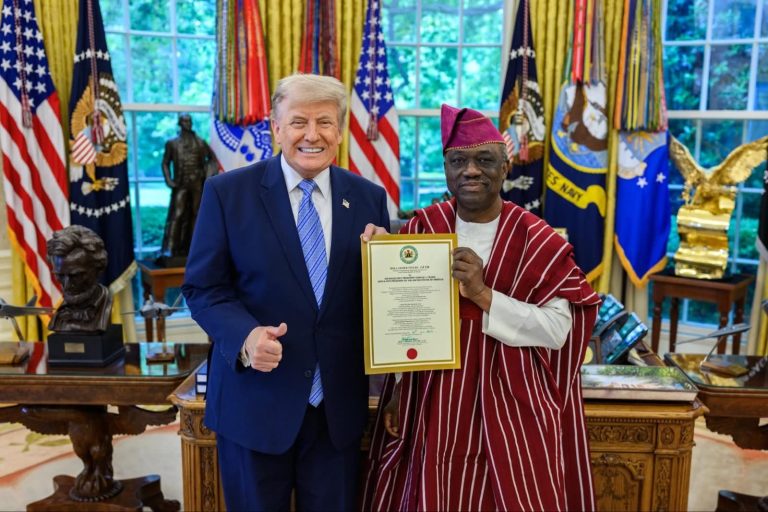
PHOTOS: Kayode Are assumes office as ambassador to US, presents letter of credence to Trump

0

Kayode Are, former director-general of the Department of State Services (DSS), has formally begun his diplomatic assignment as Nigeria’s ambassador to the United States.

Are officially took up the role on Thursday after presenting his letter of credence to the US government and President Donald Trump at the White House.

His appointment is part of the ambassadorial nominations forwarded to the senate by President Bola Tinubu in November 2025.

Thecable