Home Blog Page 405

When Will Nigeria Honour Ken Calebs Olumese? – By Azuh Arinze

0


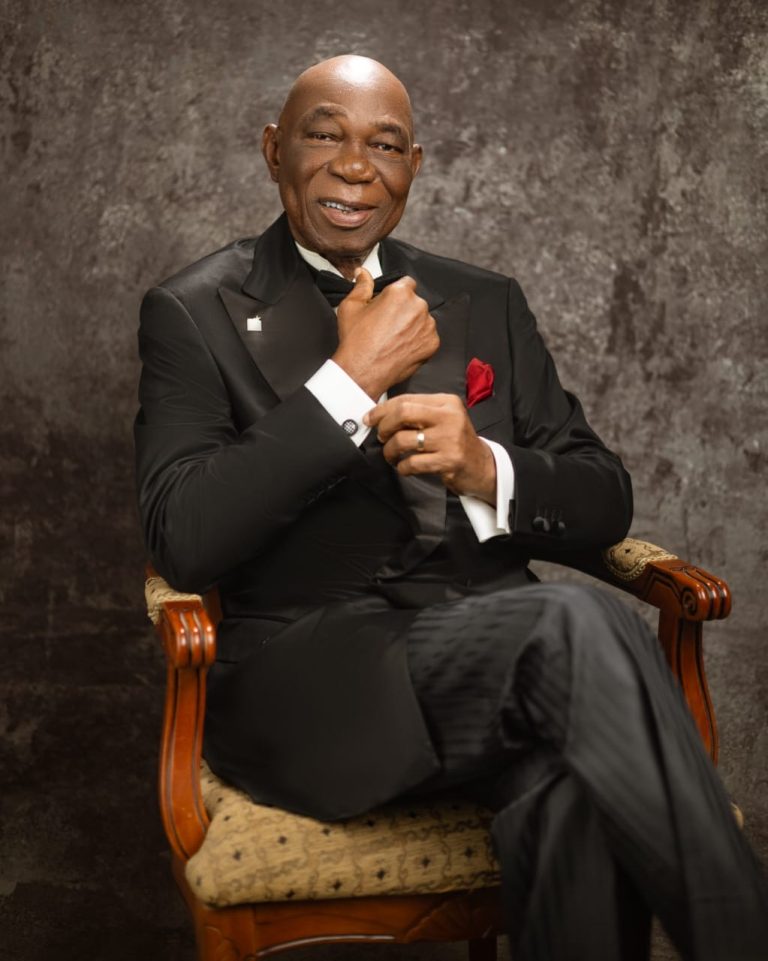
On May 27, 2026, Nigeria’s entertainment icon, businessman and cultural trailblazer, Mr. Ken Calebs Olumese, popularly known as “The Guvnor,” turned 82. The milestone naturally triggered tributes from friends, admirers, celebrities, captains of industry and ordinary Nigerians whose lives he touched in one way or another. Yet beyond the birthday wishes and social media celebrations lies a more important question: when will Nigeria truly honour Ken Calebs Olumese?

For decades, the Guvnor has remained one of the most influential figures in Nigeria’s entertainment and hospitality industry. Long before nightlife became fashionable and entertainment became a billion-naira industry, Ken Calebs Olumese had already built a cultural institution known as Niteshift Coliseum – arguably Africa’s most famous entertainment venue at the time. Situated in Opebi, Ikeja, Lagos, the venue was not merely a nightclub. It was a melting pot of power, politics, business, culture and entertainment.

At Niteshift Coliseum, governors mingled with musicians, diplomats sat beside actors, and presidents interacted with ordinary citizens. The venue hosted some of the most influential personalities on the African continent, including President Bola Ahmed Tinubu, former Vice President Atiku Abubakar, former Ghanaian President Jerry Rawlings and countless dignitaries from across the world. In many ways, Niteshift Coliseum became an unofficial cultural embassy of Nigeria’s entertainment and social life.

Yet, despite his enormous contribution to the nation’s cultural history, Ken Calebs Olumese remains one of those rare pioneers Nigeria appears content to celebrate only in private conversations and birthday tributes, rather than through institutional recognition.

Why?

Why do we wait until our icons are gone before we remember their contributions? Why are we so quick to immortalise people after death, while hesitating to celebrate them meaningfully when they are alive to appreciate it?

This is not merely about one man. It is about a national culture that often fails to honour visionaries in real time.

Ken Calebs Olumese helped shape Nigeria’s entertainment ecosystem long before Afrobeats conquered the world. Today, Nigerian music dominates global charts. Nigerian nightlife is a global attraction. Lagos is recognised internationally as Africa’s entertainment capital. But pioneers like the Guvnor laid the foundation for that recognition decades ago.

The irony is painful. Nigeria often borrows the culture of honouring living legends from other nations only after their passing. Streets are renamed after them when they can no longer walk through them. Institutions are named after them when they are no longer alive to witness the appreciation. National honours suddenly arrive wrapped in regret and posthumous speeches.

Surely, we can do better.

What exactly stops Lagos State or even the Federal Government from naming a street after Ken Calebs Olumese? Why can’t there be a cultural centre, entertainment hub or tourism initiative bearing his name? Why shouldn’t a man who transformed nightlife into a respectable business model in Nigeria receive formal recognition from the country he served with passion and creativity?
This is not about hero worship. It is about acknowledging impact.

The Guvnor did not simply run a nightclub. He built an ecosystem. He created opportunities. He supported entertainers. He elevated hospitality standards. He created a safe social environment where Nigeria’s elite and middle class could interact freely. At a time when entertainment entrepreneurship was poorly understood, he was already operating at an international standard.

Beyond business, those who know Ken Calebs Olumese often speak about his generosity, mentorship and loyalty to friends and associates. Many successful people in Nigeria’s entertainment and hospitality industry today passed through doors he opened directly or indirectly.

At 82, he remains a symbol of resilience, style, excellence and reinvention. His life represents a significant chapter in Nigeria’s modern cultural evolution.

The truth is simple: nations that fail to honour their living legends risk discouraging future pioneers. Recognition is not merely ceremonial; it is educational. It tells younger generations that service, innovation and consistency matter.

As Nigerians celebrate the Guvnor at 82, perhaps this is the right moment for government, corporate Nigeria and the entertainment industry to ask themselves difficult questions. Must we always wait for funeral tributes before acknowledging greatness? Must immortality only come through obituary headlines?

Thankfully, Mr. Ken Calebs Olumese is still here with us – vibrant, respected and deeply admired. And while we continue to pray that God grants him many more years in good health, strength of mind and peace, perhaps Nigeria should begin to think seriously about giving him his flowers now.

Not tomorrow.

Not posthumously.

But now.

Because some legends deserve to witness their own immortality.

– Azuh Arinze, FNGE, is the Publisher/Editor-in-Chief of YES INTERNATIONAL! Magazine and author of important books like The CEO’s Bible 1 and 2, Anything and Everything Journalism, Success Is Not Served A La Carte, A Taste of Success, My Story of Many Colours, etc

Bola Tinubu: the man who took the bullet for Nigeria to survive

0


By Bayo Onanuga


With politicking intensifying ahead of the January 2027 election, opposition politicians have escalated their campaign of misinformation and calumny to diminish the impact and achievements of this administration over the last three years.

Two years ago, when the administration was struggling to deal with the unintended consequences of its historic reforms, the campaign would have made sense. But not anymore, as the administration can rightly claim bragging rights for what it has achieved against all odds and why the international community is applauding it for putting Nigeria irrevocably on the path of growth and development.

The impact of the three-year-old government is best felt at the subnational level – state and local levels. States that hitherto were unable to pay salaries by May 2023, with months of unpaid obligations to their workers and pensioners, are now doing so with ease and dreaming big about infrastructure. In every state I have visited, I have seen this development. Ogun, my state, Oyo, Nasarawa, Enugu, Ebonyi, Kaduna, Kano, Kebbi, Katsina, and others have witnessed development projects spring up, thanks to President Tinubu’s re-engineering of the federation’s finances and increased allocation to the states. When local councils begin to receive their allocations directly from the Federation Account, the Tinubu effect will ensure that more governance cascades down to the 774 local councils.

State governors who have benefited from this policy have openly admitted that increased allocations have enabled them to bring social and infrastructural development to their states. Many opposition PDP governors who joined the APC did so for this reason—not for the baseless claim that President Tinubu bribed them. Governor Abdulrazak said in December 2024 that his administration embarked on more projects in the first 18 months of Tinubu’s presidency than in his first four years. The Governor of Ebonyi, Nwifuru, who is building iconic underpasses and overpasses in Abakaliki, credited his ambition to President Tinubu. Governor Peter Mbah similarly attested to this, crediting the Naira rain from the centre for his programmes. And Nasarawa State Governor Abdullahi Sule, who understands how Tinubu’s financial re-engineering and the end of the subsidy regime have increased the states’ fortunes, said President Tinubu “has taken the bullets for all of them.”

In May 2023, President Tinubu inherited acute petrol scarcity, an unsustainable petrol subsidy regime due to expire in June 2023, multiple exchange rates, arbitrage, and low revenue, with at least 30 states unable to pay workers, let alone fund infrastructure and social projects. Debt servicing consumed 97 per cent of Federal revenue. Additionally, food scarcity and inflation plagued the country as farmers abandoned their fields, recording massive losses amid the currency squeeze introduced by former CBN Governor Godwin Emefiele.

President Tinubu, guided by the Renewed Hope Agenda, wasted no time. He threw the ruinous subsidy out of the window from Day One. Days later, he floated the Naira and ended the artificial fixing of the Naira-to-dollar exchange rate, a system that had enabled well-connected individuals to profit effortlessly. Tinubu declared a food emergency and announced the Presidential Committee on Fiscal Policy and Tax Reforms to examine our outdated tax laws, some of which date back to the colonial era. Immediate gains included encouraging dry-season farming, with subsidies and inputs provided for farmlands abutting dams and irrigation sites in at least 14 states.

Even by President Tinubu’s admission, the early months and the first year were tough as the government implemented its programme. The cost of living went up, and businesses claimed the harmonised exchange rate had put them in the red. A few companies even closed shop and left our shores. On the streets, some Nigerians claimed that the policies have left them hungry, a sentiment the opposition still parrots to this day, without any empirical proof. If not sure of the salience of his reforms, President Tinubu would have taken a reverse gear in fright and abandoned all the new reform policies amid the avalanche of attacks from critics and opposition elements in the media. Instead, he persisted.

Two years after the first challenging year, the story has changed for good. However, some opposition elements are stuck in the sentiment of 2023/24, unyielding and adamant about acknowledging the many gains and milestones achieved by the Tinubu administration.  But only the blind will fail to admit that this government has taken the country miles away from the state it inherited in 2023.

The stock market is clear proof of the administration’s economic success. In May 2023, Tinubu met the All-Share Index at 53,000 points and the market capitalisation at N30 Trillion. Today, the ASI has risen five times, to a record 250,000 and a market capitalisation of N160 Trillion.  Blue-chip companies, including those initially negatively impacted by government policies, are declaring record profits and dividends. Equally, foreign portfolio investors are flocking in to partake in the Nigerian boom. This is not a bubble. It shows that a fundamental paradigm shift has occurred in the economy, all thanks to the Tinubu administration’s policy direction.

In recent weeks, I revisited the manifesto and policy ambitions that won us the election. The Tinubu administration has faithfully implemented its Renewed Hope Agenda, striving to resolve in three years the cumulative problems of decades.

Roads that will outlast this generation are being built nationwide. I recently went home to Ijebu-Ode, Ogun State, and was amazed that the highway to my town from the Shagamu intersection now has a concrete pavement, thick enough to withstand the traffic of trailers from the West to the East. The most audacious road projects ever undertaken by any administration since independence are the Illela-Sokoto-Badagry and the Lagos-Calabar coastal superhighways. President Shehu Shagari conceived the Sokoto-Badagry highway in the early 80s. Succeeding administrations, afraid of the huge cost, abandoned the road. The Lagos-Calabar has also been on the map for decades, but no leader has ever dared to turn the idea into reality. President Tinubu has proven to be a transformative leader who has decided to turn the roads into reality, adding new roads to our road network for the first time, beyond those we inherited from the colonialists. Myopic critics of the two roads have assailed the Tinubu administration for taking loans to accomplish them. How else could the roads have been built if we rely only on FG’s share from FAAC? Relying solely on federal allocations would mean waiting 50 years or more, with costs ballooning out of reach, as in the metro-rail to nowhere started by presidential aspirant Rotimi Chibuke Amaechi in Port Harcourt, Rivers State. In the states, governors are building roads of similar standards. I saw some of these in Ogun,  Kaduna, Ebonyi and  Enugu.

As with roads, the Tinubu administration is also investing heavily in rail transportation, with the Kaduna-Kano-Gusau-Maraadi rail network scheduled for completion next year. City rail networks in Kaduna, Lagos, Kano and Enugu have been approved for construction, along with the Lekki-Ibadan rail.

When historians write about the Tinubu administration in 2031, they will not remember it only for audacious road and rail networks, but also for historic reforms. The oil and gas sector is one area in which the administration has impacted the country. Apart from ending the regime of wasteful subsidies, the government has instituted reforms that have made the sector attractive to fresh investment. International Oil Companies(IOCs) that once shunned our country are returning with billions of dollars in investment. Domestic refining and the innovative Naira-for-crude policy are ensuring energy security, thereby avoiding acute scarcity arising from the disruptive war against Iran and the closure of the Strait of Hormuz. More recently, the administration enacted a policy requiring the NNPC to remit oil sales proceeds to the Federation account.

When historians write about the Tinubu administration in 2031, they will not remember it only for audacious road and rail networks, but also for historic reforms. In the oil and gas sector, the government ended wasteful subsidies, instituted reforms to attract fresh investment, and brought international oil companies back to Nigeria. Domestic refining and the innovative Naira-for-crude policy are ensuring energy security, avoiding disruptions from global crises. Recently, NNPC was required to remit oil sales proceeds to the Federation Account.

Confronted by the administration’s stellar performance, the opposition and media propagandists dredged up a campaign video of the President promising a 24/7 power supply. They distorted his words. What he actually said was: “Whichever way, by all means necessary, you will have electricity, and you will not pay for an estimated bill anymore. A promise made will be a promise kept. If I don’t keep the promise and I come for a second term, don’t vote for me, unless I give you adequate reasons why I couldn’t deliver.”

What the distorters failed to admit was that the Discos, privatised since 2013 by President Goodluck Jonathan, are responsible for delivering power to the end consumers, not the Federal Government. What this government has done in the last three years has been to address the problems hindering the capacity of Discos to deliver, such as bringing Siemens to strengthen the grid, activating idle GENCOs,  and planning to clear the N4 trillion legacy debts owed to GENCOs and GASCos, which will encourage new investments in the sector. The government has also massively implemented its metering policy, providing over 2.5 million meters to homes. Recently, the Tinubu administration announced the establishment of GAMCO, the Grid Asset Management Company, which will optimise power supply and activate idle facilities.

One of the administration’s impactful programmes, apart from issuing passports in less than a week, is the introduction of NELFUND and CREDICORP in 2024. While Credicorp is making loans available to civil servants to buy Made-In-Nigeria products, NELFUND, with N282 billion committed so far, has made tertiary education more accessible for our children.  About 1.6 million Nigerian students have benefited. Payment of school fees and stipends is assured for the children, and the government has also renegotiated the 2009 ASUU-FG agreement, such that in the last three years, our universities, along with the Polytechnics and Colleges of Education, have been spared the disruptive academic strikes. Let’s give the Tinubu government some slack: a four-year programme is now a four-year programme.  He promised it during the campaign and has delivered. The government has also invested in technical schools, offering students pursuing vocational education allowances. In the universities, TETFUND is once again funding research grants for dons willing to pursue ideas that will be useful to our society.

Among impactful programmes, apart from issuing passports in less than a week, are NELFUND and CREDICORP, introduced in 2024. Credicorp makes loans available to civil servants for Made-In-Nigeria products, while NELFUND, with N282 billion committed, has made tertiary education more accessible. About 1.6 million students have benefited. School fees and stipends are assured, and the government has renegotiated the 2009 ASUU-FG agreement, sparing universities from disruptive strikes. Today, a four-year programme in the universities, polytechnics and colleges of education is completed in four years. Technical schools offer allowances to vocational students, and TETFUND is funding research grants to academics.

It has not been all rosy the past three years, especially in the area of making our people safe from the band of bandits and terrorists. While the armed forces have been locked in an asymmetrical war against these heartless elements, neutralising their leaders and foot soldiers in several theatres of conflict, the displaced terrorists are attacking vulnerable areas in some of the states, killing and kidnapping. The government is unrelenting in providing the armed forces, intelligence agencies, and police with the tools they need to wage the war. With support from friendly governments like the US, France, and the UK, there is hope that the menace of kidnappers and their political sponsors will become history. The man who has taken the bullets to make Nigeria survive a fiscal disaster is even more willing to take additional bullets to make all Nigerians safe.

-Onanuga is Special Adviser to President Tinubu on Information and Strategy

Insecurity: Nigerians now budget for ransom -Atiku

0


Amid worsening insecurity, African Democratic Congress ( ADC) Presidential candidate for the 2027 general election, Atiku Abubakar, has said Nigerians now budget for ransom, the same way they budget for school fees.

Atiku, who decried the deplorable security situation in the country, accused the President Bola Tinubu administration of reckless borrowing, while Nigerians sink deeper into hunger, fear and despair.
The former Vice President, in a statement by his Senior Special Assistant on Public Communication, Phrank Shaibu, said it was particularly shameful that government officials continue to speak casually about debt while insecurity has reached alarming levels.

According to him, “Across the country, farmers can no longer safely access their farmlands because vast territories have effectively fallen under the control of armed gangs and terrorists. Food production has declined sharply because rural communities now live under constant threat of attacks, abductions and killings.

“The inevitable result is what Nigerians are currently witnessing, astronomical food prices, widespread hunger, malnutrition and rising anger among citizens abandoned by their own government.”

Atiku added”in many parts of Nigeria today, travelling by road has become a gamble with death. Families go to bed praying not to receive midnight calls announcing the abduction of loved ones.

“Villages are sacked almost routinely while those in power appear more concerned about image management than decisive action. What exactly are Nigerians benefiting from all these loans if insecurity continues to spread and the economy continues to suffocate?”

Furthermore, the ADC candidate, who accused the government of deploying propaganda to distract Nigerians from the consequences of alleged mismanagement of the economy, said no amount of media spin can conceal the frustration in the country.

“It is both astonishing and insulting that at a time when millions of Nigerians can barely afford one meal a day, when parents are withdrawing children from school because of crushing hardship, when businesses are collapsing under unbearable electricity tariffs and inflation, and when entire communities are being overrun by terrorists, bandits, and kidnappers, the Presidency is celebrating debt figures as though indebtedness itself were an economic achievement.

“No nation becomes prosperous by borrowing to finance consumption, sustain wasteful government lifestyles, and paper over policy failures. Countries that borrow responsibly do so to expand productivity, create jobs, secure critical infrastructure, and improve the welfare of their citizens. In Nigeria today, however, citizens see no correlation between the mounting debt profile and improvement in their daily lives,” he stated.

Atiku added that “Nigerians do not care about statistical gymnastics from government spokespersons. They care about whether food is affordable, whether their children are safe, whether businesses can survive, whether farmers can return to their lands, and whether the future still holds any promise. Sadly, under this administration, the answer to those questions is becoming increasingly bleak.”

Sun

2027: Omo-Agege joins NDC, declares for Delta Central

0


Former Deputy President of the 9th Senate, Ovie Omo-Agege, has officially defected to the Nigeria Democratic Congress (NDC), a day after he announced his exit from the All Progressives Congress (APC).

In a statement yesterday, Omo-Agege announced his intention to contest for the Delta Central senatorial seat on the platform of his new party, setting the stage for a high-stake legislative battle in Delta State.
Omo-Agege, who was the All Progressives Congress (APC) governorship candidate in Delta State during the 2023 elections, revealed that his decision followed weeks of extensive national and grassroots consultations with political associates, stakeholders and traditional institutions.

According to the statement, top hierarchy members of the NDC were instrumental in courting the veteran lawmaker.

He thanked the party’s leadership, including Senator Seriake Dickson (Leader and Founder), Senator Moses Cleopas (National Chairman), former Governor Peter Obi (Presidential aspirant) and Senator Rabiu Musa Kwankwaso (Kwankwasiyya Movement Leader), praising their commitment to building a credible alternative for Nigerians.

The Obarisi of Urhoboland, while explaining his departure from his former political party, noted that the NDC represents a governance model built on transparency, grassroots inclusion and true federalism.

“This is not about me,” Omo-Agege stated, adding, “This is about the mandate you entrusted to me in 2019 and the renewed call from our people for my return to the Senate to provide effective representation. That call is loud, consistent, alive and urgent. I cannot ignore it.”

The frontline politician used the declaration to launch a scathing critique of the current administration in Delta State, pointing out the stark contradiction between the state’s massive federal allocations and the reality of its decaying infrastructure.

He lamented that despite Delta being one of the nation’s largest oil and gas producers, yielding hundreds of billions of Naira annually, the state remains plagued by impassable roads, understaffed health centres and high youth unemployment.

“Right now, too much of Delta’s wealth sits in CBN accounts while our people suffer from bad roads, collapsed hospitals and abandoned communities. “This is not governance. It is a failure of leadership and a betrayal of public trust. Deltans deserve better than press releases, billboards and photo-ops,” he stated.

Reflecting on his political track records, he reminded stakeholders of his capacity to build formidable opposition structures, drawing parallels to how he previously led the growth of the APC in Delta State.

“We mobilised at the grassroots, organised our people and changed the political equation. I bring that same resolve and experience to the NDC,” he said, adding that his immediate priority is to aggressively register new members and fortify the party from the ward level upward.

Vowing to offer proactive, results-oriented representation rather than “warming the bench in Abuja,” he promised to champion federal project allocations, strict accountability for state resources and legislative policies that foster job creation and agricultural productivity.

He also stressed his commitment to unifying Delta North, South and Central districts to give the state a stronger bargaining chip in national politics.

As the political landscape shifts toward 2027, Omo-Agege issued a passionate charge to youths, women and traditional rulers to safeguard their Permanent Voters Cards (PVCs), promising that the NDC would field credible candidates across all levels, including the governorship, to reclaim Delta State and Nigeria.

The statement read: “Today, I formally announce my decision to join the National Democratic Congress (NDC). This decision is the product of weeks of reflection, wide consultations and honest conversations with the people I serve. I have consulted with my political associates nationwide, supporters and stakeholders, who are the backbone of our communities. Across all these engagements, one truth stood out: Deltans want leadership that listens first, acts with integrity and delivers results that can be seen and felt in daily life.

“I thank the leadership of the NDC for reaching out and engaging me in this process: Senator Seriake Dickson, Leader and Founder; Senator Moses Cleopas, National Chairman; Former Governor Peter Obi, Presidential Aspirant; and Senator Rabiu Musa Kwankwaso, Leader of the Kwankwasiyya Movement and NDC Chieftain. Their commitment to building a credible, people-first alternative gives me confidence that the NDC is the right platform for Delta State and Nigeria.

“The NDC represents that kind of leadership. It is a party built on the principles of inclusion, accountability, grassroots participation and true federalism. It is a platform where decisions are not made in closed rooms but through open consultation with stakeholders and members. It is a platform where public office is treated as a duty to the people, not a privilege for a few. After careful consideration, I am convinced that the NDC offers the clearest path to advance the interests of Delta Central, Delta State and Nigeria.

“On this platform, I will contest for the Delta Central senatorial seat in the 2027 general elections. Let me be clear: this is not about me. This is about the mandate you entrusted to me in 2019 and the renewed call from our people for my return to the Senate to provide effective representation. That call is loud, consistent, alive and urgent. I cannot ignore it and I will not betray the trust you have placed in me.

“Delta State holds a position of immense responsibility in Nigeria. We are among the largest producers of oil and gas, resources that have sustained the national economy for decades. Our agricultural lands are fertile and capable of feeding millions. Our business community has shown remarkable resilience despite harsh economic conditions. Our young people are educated, innovative and ready to lead if given the opportunity. Yet, the reality on the ground does not match this potential.

“In too many communities, roads have collapsed and remain impassable for months. Primary health centres lack drugs, equipment and staff. Schools struggle with overcrowding and inadequate facilities. Young graduates return home without jobs and small business owners battle a hostile environment and poor infrastructure. Meanwhile, federal allocations to Delta State have consistently run into hundreds of billions of Naira annually. The gap between these resources and the lived reality of our people is unacceptable.

“Right now, too much of Delta’s wealth sits in CBN accounts while our people suffer from bad roads, collapsed hospitals and abandoned communities. This is not governance. It is a failure of leadership and a betrayal of public trust. Deltans deserve better than press releases, billboards and photo-ops. Nigeria deserves better than a political class that treats public office as a personal business.

“I believe this situation can and must change. Change requires a platform committed to discipline, transparency and service. The Nigeria Democratic Congress was built for this moment. It stands for accountability, for justice, for inclusion and for true federalism. It is the only platform strong enough to challenge the cycle of failure and return power to the people where it belongs. That is why I am joining the NDC.

“I know what it takes to build a political structure and make it competitive in Delta State. We did it before for the APC when many said it was impossible. We mobilised at the grassroots, organised our people and changed the political equation. I bring that same resolve and experience to the NDC. Our immediate priority will be to strengthen the party from the ward level upward, register new members and prepare a credible slate of candidates for the 2027 elections.

“I will not go to Abuja to warm the bench. I am going to fight for Delta Central, and as your senator, my focus will remain on delivering representation that matters. I will take the concerns of Delta Central directly to the National Assembly and ensure they are debated, addressed and followed through. I will push for fair allocation of federal projects and resources to our senatorial district. I will work to ensure that every kobo released to Delta State is accounted for and applied to projects that improve the lives of our people. I will also advocate for policies that create jobs, support small and medium enterprises, improve agricultural productivity and expand access to quality healthcare and education.

“I will represent Delta North, Delta South and Delta Central with fairness and balance. A divided Delta is a weakened Delta. When we speak with one voice, Abuja listens. When we work together, we can secure the infrastructure, investments and policies that our state deserves.

“Beyond the Senate, the NDC will field candidates for the governorship and other elective positions who understand the challenges of Delta State and have the competence, humility and character to address them. Nigeria itself needs a reset. We need leadership that truly restores hope, protects citizens, grows the economy and respects the rule of law. I will work tirelessly for the victory of our presidential candidate and for a government that puts Nigerians first.

“This is more than an election cycle. This is a defining moment for Delta State and for Nigeria. It is a choice between continuing with a system that rewards silence and mediocrity, or choosing a new direction built on accountability and service.

“To the youth of Delta State: your time is now. Do not accept the lie that you must wait for your turn. Organise in your communities, register to vote and make your voices impossible to ignore. Your energy, creativity, and courage are the most powerful tools we have to change this state.

“To the women who hold our families and communities together: mobilise your networks, your markets, your churches and your neighbourhoods. Your participation will determine the outcome of 2027.

“To our elders and traditional rulers: your wisdom has guided us through difficult times before. Speak now for the generation coming behind you. Your voice gives legitimacy and direction to this movement.

“And to every registered voter: your Permanent Voter’s Card is your greatest power. It is stronger than money, stronger than intimidation and stronger than propaganda. Protect it, use it and use it wisely in 2027.

“In 2027, we will end the era of excuses, empty promises and leaders who vanish after elections. We will return power to the people of Delta State and to the people of Nigeria. Together, under the banner of the Nigeria Democratic Congress, we will reclaim Delta State. Together, we will reclaim Nigeria. The work starts now. The time is now. The people are ready.”

Sun

Q3 2025: Nigeria missed oil revenue target by 62%, recorded 41.57% spending shortfall

0

Nigeria’s oil revenue performance deteriorated sharply in the third quarter of 2025 and missed budget expectations by a wide margin.

This reinforced concerns over the country’s fragile fiscal position, even as modest gains were recorded in actual receipts.
In the same vein, Nigeria’s total government expenditure fell significantly below projections in the third quarter of 2025, coming in at N8.03 trillion, 41.57 per cent short of the prorated quarterly budget estimate of N13.75 trillion.

Fresh data from the Budget Office of the Federation showed that gross oil revenue for the quarter stood at N4.87 trillion, far below the prorated quarterly projection of N12.76 trillion. This represents a shortfall of N7.88 trillion, or 61.8%, underscoring the scale of the gap between projections and reality.

The development comes at a time when the federal government is contending with mounting debt service obligations, persistent fiscal deficits, and an urgent need to strengthen revenue mobilisation, particularly from non-oil sources through ongoing tax reforms and improved collection systems.

Under the 2025 fiscal framework, the government projected gross federally collectible revenue of N78.08 trillion, with oil expected to account for N51.05 trillion, representing 65.38% of total revenue. On a prorated basis, quarterly revenue was estimated at about N19.52 trillion, highlighting the extent to which oil underperformance is weighing on overall fiscal outcomes.

Despite the sharp shortfall, oil revenue showed slight improvement compared to previous periods. The N4.87 trillion recorded in Q3 was higher than the N4.77 trillion posted in Q2 2025 and N4.62 trillion in the corresponding period of 2024. According to the Budget Office, this translates to a 2.1% quarter-on-quarter increase and a 5.41% year-on-year growth, an indication of marginal recovery in oil receipts, albeit from a weak base and still far below expectations.

A detailed breakdown of oil revenue components revealed that most major streams fell significantly short of their targets.

Crude oil and gas sales generated N622.99 billion during the quarter, compared to a projected N1.18 trillion, leaving a deficit of N555.2 billion or 47.12%. Petroleum Profit Tax and gas taxes performed even worse, yielding N1.97 trillion against a target of N7.85 trillion, a massive shortfall of N5.87 trillion, or 74.82%.

Similarly, oil and gas royalties came in at N2.01 trillion, missing the quarterly estimate of N3.43 trillion by N1.42 trillion. Incidental oil revenue, which includes royalty recoveries and marginal field licence earnings, also underperformed sharply, generating just N37 billion compared to a projected N295.88 billion.

Peace in Niger Delta boosts oil, gas revenue – FIRS boss
In contrast, a handful of revenue lines outperformed expectations, offering limited relief. Concessional rentals rose significantly above projections, generating N7.89 billion against a budgeted N1.03 billion, an overperformance of 667.5%. Miscellaneous oil revenues, including pipeline fees, also exceeded estimates at N9.65 billion versus the projected N5.86 billion.

Additionally, gas flared penalties and exchange gains contributed N181.61 billion and N28.65 billion respectively, despite not being captured in the original budget projections.

The persistent underperformance highlights the structural vulnerabilities in Nigeria’s fiscal framework, which remains heavily dependent on oil revenues despite sustained policy efforts to diversify income sources. While the government has intensified non-oil revenue mobilisation through tax reforms, digitised collection platforms and broader fiscal restructuring, oil receipts continue to play a central role in financing public expenditure, servicing debt and sustaining budget implementation.

Production shortfalls have further compounded the problem. The 2025 budget was anchored on a crude oil production benchmark of 2.1 million barrels per day (mbpd), but actual output has consistently trailed this assumption.

Figures from the Nigerian Upstream Petroleum Regulatory Commission indicate that total crude oil and condensate production between January and September 2025 stood at 454.28 million barrels. This translates to an average daily production of 1.66 mbpd, well below the budget benchmark.

Nigeria has also struggled to meet its production quotas under the Organisation of the Petroleum Exporting Countries (OPEC) for several months, reflecting ongoing challenges such as oil theft, pipeline vandalism, underinvestment and operational inefficiencies in the upstream sector.

The widening gap between projected and actual oil revenue underscores the risks of continued reliance on hydrocarbons in an increasingly volatile global energy market. It also raises fresh concerns about the sustainability of Nigeria’s fiscal assumptions, especially as borrowing continues to rise to plug revenue shortfalls.

With oil still accounting for the bulk of government earnings, analysts warn that without significant improvements in production levels and a more aggressive push toward revenue diversification, Nigeria’s fiscal stability will remain exposed to recurring shocks.

Despite the shortfall against the expenditure target, spending in the period was N0.39 trillion, or 4.86 per cent, higher than the N7.64 trillion recorded in the corresponding quarter of 2024.

The report also showed that the Federal Government posted a fiscal deficit of N0.33 trillion during the quarter under review. It noted that non-debt recurrent expenditure stood at N2.66 trillion, reflecting a decline of N739.01 billion, or 21.75 per cent, below the quarterly estimate of N3.40 trillion. However, this figure was still 31.20 per cent higher than the N1.83 trillion recorded in Q3 2024.

In addition, statutory transfers amounted to N360.32 billion within the period. Overall, the fiscal deficit translated to a deficit-to-GDP ratio of 2.29 per cent, which remains within the statutory 3 per cent threshold as well as the ECOWAS convergence benchmark, indicating compliance despite elevated spending pressures and persistent implementation gaps across key budget components.

Sun

Tinubu Defends Reforms, Says Nigeria Recovering as Administration Marks Third Anniversary

0


President Bola Ahmed Tinubu has defended the economic reforms introduced by his administration, insisting that Nigeria has stabilised and is gradually recovering from years of fiscal and structural challenges.

In a nationwide statement marking the third anniversary of his administration on Friday, President Tinubu acknowledged the hardship experienced by Nigerians following the removal of fuel subsidy and foreign exchange reforms but maintained that the difficult decisions were necessary to avert economic collapse.
According to the President, his administration inherited mounting fiscal pressures, unsustainable fuel subsidies, rising debt servicing costs, insecurity, exchange rate distortions, and declining public confidence in institutions.

Tinubu revealed that Nigeria spent as much as ₦18.4 billion daily on petrol subsidy at the height of the subsidy regime, amounting to over ₦4 trillion in 2022 alone, while multiple exchange rate windows and forex arbitrage allegedly cost the country more than ₦8 trillion within three years.

“The situation demanded urgent and courageous action. Difficult but necessary decisions had to be taken to stabilise the economy and prevent a deeper national crisis,” the President stated.

He said although the reforms triggered a rise in the cost of living and placed pressure on households and businesses, the sacrifices made by Nigerians “have not been in vain.”

Highlighting achievements recorded within the past three years, Tinubu said Nigeria’s economy is now more competitive and positioned for sustainable growth, with improved public finances and growing investor confidence.

The President noted that the Nigerian stock market had witnessed significant growth, with the All Share Index rising from 53,000 in 2023 to 250,000 in 2026, while market capitalisation increased from ₦30 trillion to ₦160 trillion.

On infrastructure, Tinubu disclosed that over 2,700 kilometres of highways and major roads are currently under construction, reconstruction, or rehabilitation nationwide, including the Lagos-Calabar Coastal Highway, Sokoto-Badagry Super Highway, Abuja-Kaduna-Zaria-Kano Road, and the East-West Road.

He added that rail modernisation projects were ongoing across the federation to improve logistics and economic integration.

Speaking on the oil and gas sector, Tinubu said reforms introduced by his administration had attracted fresh investments from international oil companies, while the $5 billion NLNG Train 7 project was nearing completion.
He also stated that local refining capacity had improved Nigeria’s energy security, reducing dependence on imported petroleum products and conserving foreign exchange.
In the power sector, the President said his government was addressing legacy debts, expanding transmission infrastructure, investing in renewable energy, and strengthening the national grid to support industrial growth and economic development.
Tinubu further highlighted interventions in agriculture, education, housing, healthcare, and telecommunications.
According to him, agricultural programmes have supported millions of farmers through improved access to seedlings, fertilisers, mechanisation, irrigation, and financing.
He said the Nigerian Education Loan Fund had provided over 1.5 million students with access to higher education through the disbursement of more than ₦282 billion.
The President also disclosed that the Renewed Hope Housing Programme and Federal Housing Authority projects were delivering over 10,000 housing units across 14 states and the FCT, creating more than 300,000 jobs.
On healthcare, Tinubu said thousands of primary healthcare centres were being revitalised while health insurance coverage was expanding for vulnerable Nigerians.
Addressing security, the President commended the Armed Forces and security agencies for intensifying operations against terrorists, kidnappers, bandits, oil thieves, and other criminal elements.
While admitting that security challenges persist, he said several communities and highways were becoming safer due to increased investment in intelligence, surveillance, logistics, technology, and inter-agency collaboration.
Tinubu also appealed to Nigerians to remain united and hopeful, stressing that national development requires collective sacrifice, discipline, and patriotism.
“We must choose hope over despair, unity over division, and nation-building over narrow interests,” he said.
The President assured citizens that his administration would continue efforts to reduce food prices, lower transportation costs through the adoption of compressed natural gas and electric vehicles, and create more opportunities for jobs and enterprise growth.
Expressing optimism about Nigeria’s future, Tinubu said the country was gradually regaining global confidence and showing signs of recovery across agriculture, infrastructure, power, technology, manufacturing, and industry.
“History tests nations before it elevates them. Nigeria is passing through such a test. But I believe with all my heart that we shall emerge stronger, fairer, more united, and more prosperous than ever before,” he stated.

President Tinubu’s Full Speech on Third Year Anniversary

0

STATEMENT BY PRESIDENT BOLA AHMED TINUBU (GCFR) ON THE THIRD ANNIVERSARY OF HIS ADMINISTRATION, MAY 29, 2026.

My fellow compatriots,

Three years ago, you entrusted me with the sacred responsibility of leading our beloved nation at a defining moment in our history. I accepted that responsibility, fully aware of the magnitude of the challenges before us, but also deeply confident in the resilience and potential of the Nigerian people.

Today, on the occasion of the third anniversary of our administration, I speak to you not only as your President but also as a fellow citizen who understands the sacrifices many families have made in recent years and shares your hopes for a better Nigeria.

When this administration assumed office, our nation faced profound economic and structural difficulties. Mounting fiscal pressures, unsustainable fuel subsidies, declining revenues, exchange-rate distortions, rising debt-servicing costs, insecurity in several parts of the country, energy supply constraints, and declining public confidence in institutions all threatened our progress.

At the height of the subsidy regime, Nigeria was spending as much as ₦18.4 billion daily to sustain petrol subsidies—over ₦4 trillion in 2022 alone—resources that could have been invested in roads, healthcare, education, housing, and critical infrastructure. Multiple exchange rate windows and forex arbitrage created massive distortions, with Nigeria losing more than ₦8 trillion over three years to rent-seeking and speculative practices.

The situation demanded urgent and courageous action. Difficult but necessary decisions had to be taken to stabilise the economy and prevent a deeper national crisis. The easy choices would have been politically convenient. But leadership demands courage, especially when the right decisions are difficult.

Had we refused to act, our nation would have drifted toward fiscal breakdown, worsening poverty, and severe economic uncertainty. Together, we chose reform over ruin and decisiveness over hesitation. We chose long-term national recovery over short-term comfort.

These decisions came with sacrifice. The rising cost of living triggered by our measures placed enormous pressure on families, workers, and businesses. Young people searching for jobs felt discouraged. Many questioned whether these difficult decisions would lead to a better future.

I remain deeply conscious of those sacrifices, and I assure you: your sacrifice has not been in vain. And today, I can say with confidence that Nigeria has stabilised and is moving forward again. Across the country, visible progress is taking shape.

VISIBLE PROGRESS AND ECONOMIC GROWTH

Our economy is now more competitive and better positioned for sustainable growth than it was in 2023. Public finances are improving. States and local governments have greater resources to invest in their people. Investor confidence is growing. The stock market is booming, with the All Share Index rising from 53,000 and market capitalisation of N30 Trillion in 2023 to a record All Share Index of 250,000 and market capitalisation of N160 Trillion this year. Companies are declaring record profits and dividends.

Critical infrastructure projects are advancing at an unprecedented scale. Over 2,700 kilometres of highways and major roads are under construction, reconstruction, or rehabilitation, including the Lagos-Calabar Coastal Highway, the Sokoto-Badagry Super Highway, the Abuja-Kaduna-Zaria-Kano Road, the East-West Road, and many rural access roads. Significant sections are already completed or nearing completion, improving transportation, reducing travel time, boosting regional trade, and creating thousands of jobs.

Rail modernisation projects are ongoing to improve connectivity, logistics, and economic integration across the federation.

In the oil and gas sector, the reforms we instituted have attracted billions of dollars in fresh investment from the international oil companies that had shunned our country. The $5 billion NLNG Train 7 project is nearing completion to boost LNG production capacity, exports, and dividends.

Domestic gas utilisation is expanding. Local refining capacity has improved our energy security. With large-scale domestic and modular refineries operational, Nigeria is reducing its dependence on imported petroleum products and conserving foreign exchange.

For years, the power sector suffered from debt, underinvestment, and uncertainty, which weakened generation capacity and limited growth. Today, we are confronting those challenges directly.

Our administration is clearing legacy obligations, expanding transmission infrastructure, investing in renewable energy, and strengthening the national grid because no modern economy can grow in darkness. When power improves, businesses expand, industries grow, jobs are created, and families prosper.

We are determined to power Nigeria into a new era of industrial growth and economic opportunity.

EMPOWERING NIGERIANS: AGRICULTURE, EDUCATION, AND HOUSING

Agricultural interventions have supported millions of farmers by improving seedlings, fertilisers, mechanisation, and irrigation and by expanding access to finance and markets. We are opening new agricultural corridors to create jobs, strengthen supply chains, and reduce pressure on household incomes.

The Nigerian Education Loan Fund has provided over 1.5 million students with access to higher education, disbursing more than ₦282 billion to ensure that no willing student is denied access due to financial hardship.

Our Renewed Hope Housing Programme, along with that of the Federal Housing Authority (FHA), is delivering over 10,000 housing units across 14 states and the FCT, creating over 300,000 jobs and expanding access to affordable housing. Major Renewed Hope Cities in Abuja, Lagos, and Kano are progressing steadily. Our consumer credit initiative, CREDICORP, is opening up new economic opportunities for workers and families.

In healthcare, thousands of primary healthcare centres are being revitalised, while health insurance coverage is expanding for vulnerable Nigerians.

DEEPENING TELECOMS ACCESS AND INVESTMENT

We also took decisive action to stabilise the telecommunications sector, which remains one of the most important drivers of modern economic growth.
After years of severe operational pressures and declining investment, confidence is gradually returning to the sector. Telecom operators are expanding networks, investing in infrastructure, recruiting Nigerian talent, and widening digital access across the country.
A connected Nigeria is a more competitive Nigeria. Digital infrastructure is now essential to commerce, education, innovation, and national productivity.

YOUTH, TECHNOLOGY AND DIGITAL TRANSFORMATION

To our young people, I want you to know this nation believes in you. You are not a problem to be managed. You are the engine of Nigeria’s future. Across technology, manufacturing, creative industries, agriculture, sports, and entrepreneurship, we are expanding opportunities for you to compete and succeed. We are investing in digital skills, technical education, innovation, student financing, and enterprise support because the future must be driven by Nigerian talent, creativity, and productivity.

SECURITY AND NATIONAL UNITY

Security remains central to our national mission and to the creation of a virile and prosperous society. Our Armed Forces and security agencies have intensified operations against terrorists, bandits, kidnappers, oil thieves, and criminal networks. While challenges remain, many communities and highways are becoming safer and more economically active. We continue investing in intelligence, surveillance, logistics, technology, and inter-agency coordination. We are improving the capabilities of our armed forces and security agencies, and reclaiming the authority of the Nigerian state wherever criminality threatens peace and order. While we continue to confront the challenges head-on, progress is being made. I want to assure you that this government will not relent until every Nigerian can live, work, travel, and dream in safety.

My fellow Nigerians,
A nation develops when its people can see and touch progress. From highways under construction to rail modernisation and expanded energy investments, our goal remains clear: to build a Nigeria that works for Nigerians.

We have not solved every problem, and we are not yet where we want to be. But the foundation for recovery has been laid. The task before us now is clear: we must ensure that the benefits of reform are felt more directly in the daily lives of ordinary Nigerians.

We shall achieve this task by continuing to ensure that food prices, which have largely come down from their peak in 2023/2024, remain low.
We are also working to reduce transportation costs as operators of commercial trucks, buses, and taxis convert their petrol engines to CNG and switch to electric vehicles. We have also set our sights on creating more opportunities for decent work and enabling enterprise expansion.

A CALL TO NATIONAL PURPOSE

The journey of national renewal is not completed in a single year or a single administration’s tenure. Nations rise when their people remain united in purpose, disciplined in effort, and hopeful about the future.
We must choose hope over despair, unity over division, and nation-building over narrow interests.

But true security and prosperity require that every Nigerian feel included and valued. Nigeria belongs to all of us—no region, faith, or group should feel marginalised or forgotten. Our diversity is a source of strength. Whether Christian or Muslim, North or South, urban or rural, we rise or fall together as one nation under God.

To our youth, workers, entrepreneurs, farmers, professionals, security personnel, students, and diaspora: your sacrifices sustain our nation, and they will not be in vain. To the international community and investors: Nigeria remains committed to democratic stability, economic reform, responsible governance, and mutually beneficial partnerships.

My fellow Nigerians,
History teaches us that great nations are not built in comfort. They are built through sacrifice, resilience, courage, and collective purpose.
Ours is a nation of extraordinary people. We survived civil war and rebuilt.
We overcame dictatorship and restored democracy. We endured hardship and remain bearers of hope. The Nigerian spirit remains strong and unbroken.

Today, the world is watching our country again, not as a nation defined by its difficulties, but as a nation determined to rise. Across agriculture, infrastructure, power, technology, manufacturing, and industry, the signs of recovery are becoming clearer. Confidence is returning. Productivity is improving. Opportunity is expanding.

LOOKING FORWARD

The work ahead is enormous, but I remain optimistic because I believe deeply in this country and in you, the Nigerian people.

I ask you to keep faith with Nigeria. Let us reject cynicism and division. Let us move forward together, united in purpose, disciplined in effort, compassionate toward one another, and confident in the greatness that lies ahead.

My fellow Nigerians, history tests nations before it elevates them. Nigeria is passing through such a test. But I believe with all my heart that we shall emerge stronger, fairer, more united, and more prosperous than ever before.

Let us continue this journey together. Let us build a Nigeria that is secure, prosperous, inclusive, and respected worldwide. Let us continue to believe in the promise of our nation.

May God bless you all.
May God bless the Federal Republic of Nigeria.

Thank you.
May 29: Hardship, poverty, insecurity persist

0

June 12 declared public holiday to mark Democracy Day

Nigerians across the six geopolitical zones have expressed deep dissatisfaction with the state of the nation, declaring that the core promises of prosperity, security and the rule of law remain unfulfilled 27 years after the historic return to civilian rule.

According to a cross-section of Nigerians, civil society groups and socio-economic experts tracking the Fourth Republic, millions of citizens currently endure harsher economic and social conditions than those experienced during the pre-1999 military era.
The nationwide public assessment comes as the country marks Democracy Day, which commemorates the May 29, 1999 handover of power from General Abdulsalami Abubakar to President Olusegun Obasanjo.

From the Federal Capital Territory, Abuja, to commercial hubs like Port Harcourt and from Maiduguri in the North-East to Yenagoa in the South-South, respondents said five successive civilian administrations have failed to deliver on their developmental mandates, resulting in widespread institutional decay.

Socio-economic indicators and data from global monitoring agencies reveal that Nigeria currently holds the highest concentration of individuals living in extreme poverty globally.

Market surveys and public interest reports document a severe inflationary trend, where the high cost of essential foodstuffs has locked basic nutrition out of reach for vulnerable households.

The deficit is equally pronounced in public services. Hospital monitoring reports show acute shortages of essential drugs in public healthcare facilities, while public primary and secondary schools suffer from severe infrastructure deficits, forcing students to sit on bare floors in several states.

Furthermore, statistics on youth development indicate that graduate unemployment has evolved into an intergenerational crisis, with thousands of young degree holders entering an inactive job market alongside parents who have remained unemployed for decades.

“The ill-equipped hospitals, the schools where children sit on floors, the markets where food is now a luxury, these are not the promises of 1999,” Abuja-based lawyer, Victor Giwa told Daily Sun, stating that the current conditions reflect a systemic failure to meet the expectations set at the dawn of the democratic transition.

Security reports indicate that public safety has deteriorated significantly compared to 1999, when internal security threats were largely localised.

Security archives show that the country is simultaneously managing a multi-front security crisis.

This includes the decade-long Boko Haram and Islamic State West Africa Province (ISWAP) insurgencies in the North-East, widespread banditry and commercial kidnapping operations across the North-West and North-Central zones, violent separatist agitations in the South-East and urban criminality affecting previously stable communities.

The breakdown of rural security has directly impacted healthcare delivery and rural economics. Local sources in a troubled agrarian community recently reported an incident where an expectant mother had to deliver her child on the floor of her residence because the sole access road to the nearest functional medical facility was blocked due to active threat levels and systemic neglect.

Reacting to the trend, defence analysts and security experts warned that unless the Federal Government initiates a comprehensive overhaul prioritising the welfare of frontline security personnel alongside a broader regional development strategy, tactical military victories will not yield long-term stability or secure civilian cooperation.

Legal scholars and constitutional experts have also raised concerns over the independence of the judiciary. According to several constitutional analysts, public confidence in the judicial branch has weakened due to rulings in high-profile electoral disputes that critics allege align closely with political interests rather than clear legal precedents. They further argued that constitutional safeguards designed to protect citizens from executive lawlessness are frequently bypassed.

The institutional gap is visible in the oil-rich Niger Delta region. Community leaders in Bayelsa State, where commercial oil production first began, reported that despite the multi-billion naira statutory allocations flowing through federal, state, and local government accounts annually, host communities still contend with severe environmental degradation, oil spills, and an absence of basic infrastructure.

“The curse of oil has descended most heavily on those who live closest to it,” a community representative noted, pointing to the unresolved developmental paradox in the oil-producing region.

In the legislative sector, political commentators noted that the National Assembly has shifted away from its highly independent oversight tradition, famously demonstrated in 2006 when lawmakers blocked the executive-backed third-term constitutional amendment bid.

Analysts argue that contemporary political parties function primarily as electoral vehicles for securing state power and resources rather than as platforms for ideological debates.

Simultaneously, human rights monitoring groups have pointed to a shrinking civic space. Reports from civil society organisations indicate that independent journalists and activist groups face increasingly sophisticated regulatory and security pressures, with dissenting viewpoints frequently classified as national security threats by state actors.

As the Fourth Republic enters its 28th year, feedback from across the country indicates that public patience has worn thin, with citizens demanding immediate institutional reforms over political declarations.

Civil society coalitions, legal bodies, and community representatives interviewed by Daily Sun were unified in demanding institutional courage from leadership.

The public consensus indicates an urgent need for the strict enforcement of statutory laws, total accountability for political actors who breach constitutional boundaries, and immediate policy actions to ensure that democratic governance translates into tangible improvements in the daily lives, safety, and economic security of ordinary Nigerians.

Sun

FCTA Warns Event Centres, Hotels Against Hosting Illegal Organisations

0


The Federal Capital Territory Administration (FCTA) has warned owners of event centres, hotels and other public buildings in the Federal Capital Territory against allowing their facilities to be used by illegal organisations, threatening to revoke the titles of properties found culpable.

The warning was contained in a statement issued on Friday by Lere Olayinka, Senior Special Assistant on Public Communications and Social Media to the Minister of the Federal Capital Territory, Nyesom Wike.

According to the statement, land allocations within the FCT are meant strictly for lawful activities, stressing that any facility used for gatherings by illegal organisations risks losing its title documents.

The administration said the move was part of efforts to strengthen security and sustain ongoing measures by security agencies to protect lives and property in the nation’s capital.

“In view of the need to further ensure the security of lives and properties in the FCT and sustain the efforts of security agencies in this regard, usage of Event Centres, Hotels and other public buildings will now be closely monitored,” the statement said.

The FCTA explained that the monitoring was aimed at preventing such facilities from being used for gatherings capable of disrupting peace and public order in Abuja.
Owners of hotels, event centres and public buildings were urged to properly verify the legality of organisations seeking to use their facilities and ensure that adequate records of transactions are kept.

The administration also directed operators, especially during the ongoing political season, to deal only with leaderships of political parties recognised by the Independent National Electoral Commission in matters relating to the use of their facilities.

The statement warned that failure to comply with the directive would attract sanctions, including the revocation of property title documents.

WAEC Disowns Fake Letter on Security Deployment to Exam Centres

0


BY TAIWO OGUNMOLA -OMILANI


The West African Examinations Council (WAEC), Nigeria, has been dismissed as a fake letter circulating in the media claiming that security personnel would be deployed to examination centres across the country for the ongoing West African Senior School Certificate Examination (WASSCE).


The statement was signed by the Acting Head of Public Affairs, Moyosola Adesina, on behalf of the Head of National Office, WAEC Nigeria, Yaba, Lagos.

In a statement issued by the Council’s Public Affairs Department, WAEC said the fraudulent letter, dated May 27, 2026, with reference number L/SED/12/DIST/VOL. 4/460, was falsely addressed to proprietors and principals of schools.

According to WAEC, the forged document claimed that arrangements had been concluded for the “comprehensive deployment” of personnel from the Nigeria Police Force and the Nigeria Security and Civil Defence Corps (NSCDC) to all WAEC examination centres nationwide beginning June 1, 2026.
The Council also noted that the letter carried a forged signature purportedly belonging to the Senior Deputy Registrar/Head of Test Administration, Mr. S.D. Kum.

WAEC management, however, stated categorically that the letter did not originate from the office of the Senior Deputy Registrar (Test Administration) or any department within WAEC Nigeria.

“The said letter is fake,” the Council declared, adding that it had not issued any directive concerning the deployment of security personnel to individual examination centres as stated in the forged document.

WAEC further described the letter as the handiwork of fraudsters and mischief-makers seeking to create panic, disrupt the smooth conduct of the ongoing examination, and mislead school proprietors, principals, parents, and candidates.

The examination body therefore advised school authorities, supervisors, invigilators, parents, and the general public to disregard the contents of the fake letter entirely.
WAEC also wished all registered candidates sitting for the 2026 WASSCE for School Candidates success in their examinations.