Home Blog Page 404

First Lady Oluremi Tinubu endorses Oyebanji for second term

0


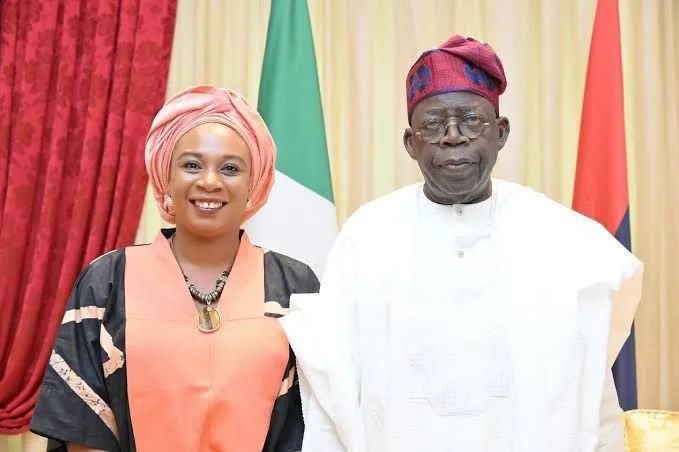
The First Lady of the Federal Republic of Nigeria, Oluremi Tinubu, has rallied support for Ekiti State Governor Biodun Oyebanji ahead of the June 20 governorship election in the state.

Governor Oyebanji, the candidate of the All Progressives Congress (APC) for the June poll, is seeking to continue in office beyond 2026.

Mrs Tinubu, who is the National Chairman of the Renewed Hope Initiative (RHI), said Oyebanji has performed remarkably well in his three and a half years in office. She urged the electorate to re-elect him on the strength of his performance in the forthcoming poll.

The First Lady made the remarks on Saturday at the flag-off of the All Progressives Congress (APC) Women Campaign Rally for Governor Biodun Oyebanji’s re-election at the Ekiti Parapo Pavilion in Ado-Ekiti, the state capital.

She said Oyebanji has done enough to justify re-election because the fortunes of the state have changed for the better since he came on board in 2022.

The First Lady, who said she was in Ekiti to appreciate the people of the state for their support for the governor and his wife, Dr Olayemi Oyebanji, also canvassed support for her husband, President Bola Tinubu, in the 2027 presidential election.

She said, “We came here just to appreciate Ekiti Kete for the support given to BAO (Oyebanji) and his wife so far. I want to plead with you: help me vote for BAO in the coming governorship election in Ekiti and, in 2027, vote for Mr President (Tinubu) because things are changing for the better.

“You have seen more money given to the states for them to work more for the people. The states no longer owe salaries. In Ekiti State, things are going on fine here, and your governor is doing a good job and should be voted in for a second term in office. I am very grateful to you for your support so far. Please, continue to support him so he can do more.”

Senator Tinubu specially appreciated the APC women in Ekiti for trooping out in large numbers to welcome her, saying she was impressed with the reception accorded to her at every place she visited during her one-day working visit to the Land of Honour.

At the event, Senator Tinubu presented cheques of N50,000 to 2,000 women to support small-scale businesses.

She disclosed that the governor’s wife would supervise the disbursement.

The First Lady also commissioned the newly built ICT Centre at Ekiti State University, Ado-Ekiti, which was facilitated by her Renewed Hope Initiative. She equally held a meeting with Ekiti Obas under the aegis of the Ekiti State Traditional Rulers’ Council at Lady Jibowu Hall, Government House, Ado-Ekiti, before attending the rally at the pavilion.

Earlier in the day, Senator Tinubu, who was accompanied by the wife of the Vice President, Hajia Nana Shettima, and other senior APC women leaders, received an impressive reception at the Ekiti State Agro-Allied International Airport shortly after the presidential jet that conveyed her from Abuja touched down.

In his remarks, Governor Oyebanji pledged a total of 700,000 votes from the people of Ekiti State for Tinubu in the 2027 presidential election in appreciation of what he described as “unprecedented support the state had so far received from the President”, which he said has positively changed the face of the state and improved the standard of living of its people.

Sun

Otti emerges Abia Labour candidate unopposed

0


Governor Alex Otti has emerged as the Labour Party (LP) governorship candidate for Abia State unopposed. He will carry the party’s flag in his bid for a second term in office in 2027.

Speaking after being announced as the LP’s consensus candidate by the party’s National Organising Secretary and Returning Officer for the primary election in Abia State, Mrs Oluchi Opara, Governor Otti said that, having been elected as the candidate, the task of winning the election had just begun.

“I want to also call our attention to the fact that the job has just started. This crosses you to where you need to start fighting from.

“If you were not a candidate, then you can’t fight. But now that you are a candidate, you know, election is contention. You have to contend with yourself. Don’t kid yourself to say no fight. It’s a contention. At the end of the day, the best person must win. And it’s only one person that will win.

“So, a lot of our candidates have already done elections before, won those elections. So, you are going to actually do better. If you look at the number of people that came out for the primaries, you will find that it was twice the total number of votes that we got the last time.”

Otti said he accepted the nomination to run for a second term because he was aware that there was still a lot of work to be done for the state in particular and the nation as a whole.

“I would like to accept this nomination. And I accept it because we know that we still have a lot collectively to deliver, to Abians, and of course, Nigeria.”

The governor appreciated the manner in which the election was conducted, noting that there was no rancour or violence anywhere.

The National Secretary of the Labour Party, Hon. Acho Obioma, had earlier, while presenting the Certificate of Return to the governor, congratulated him and other candidates on their emergence.

Obioma said this marked the beginning of the next phase of governance in Abia State.

Other candidates of the party who emerged for Senate seats included Senator Enyinnaya Abaribe, Senator Darlington Nwokocha and Chief David Ogba Onuoha for the Abia South, Abia Central and Abia North senatorial zones, respectively.

The party equally elected candidates for the House of Representatives and the State House of Assembly seats.

Sun

Aftermath of primaries: APC, ADC count losses

0


… As NDC consolidates gains

The perceived disorder in the African Democratic Congress (ADC) primaries has cut through months of “rescue Nigeria” rhetoric like a blade. For months, the party sold itself as a disciplined coalition platform, the antidote to Nigeria’s recycled political order. But within weeks of its presidential primary, it is displaying the same pathologies that have weakened Nigerian parties for decades: disputed delegate lists, parallel structures, and accusations of imposition before the first ballot is cast.

The problem isn’t just the choice of primary system. The ADC case exposes a deeper structural mismatch between coalition ambition and organisational capacity. Coalitions in Nigeria are easy to announce and hard to institutionalise. They form around personalities and grievances, not rules and structures. By failing to run free, fair, and credible primaries, the ADC might have failed the credibility test before it ever reahee the ballot.

Elections in Nigeria are often won or lost before voting day. If aspirants and members do not trust the process, no amount of messaging, money, or celebrity endorsements will mobilise them. A party that cannot manage its own house cannot convince voters it can manage the country.

This presents voters with a stark dilemma. They can stick with the incumbent All Progressives Congress (APC) they are allegedly dissatisfied with, or opt for an alternative that looks remarkably like the establishment in a different jersey. For a coalition built on the promise of change, that perception is fatal. Once voters conclude that all politicians are the same, turnout collapses and incumbency wins by default.

The coalition’s biggest weakness is ideological vagueness and its habit of absorbing the same establishment heavyweights it seeks to replace. There is no clear ADC doctrine on federalism, economy, security, or devolution that distinguishes it from APC or PDP. Without ideology, a party becomes a parking lot for ambitious individuals. Once those political gladiators walk in, the platform changes. What starts as a promise of grassroots democracy quickly becomes the usual script: elite bargains, parallel primaries, and court battles. For voters looking for a clean break, the line between alternative and establishment blurs instantly.

Cracks and widening fault lines

The ADC primaries ended in dispute after former Vice President Atiku Abubakar was declared the party’s presidential candidate. Former Rivers State Governor Rotimi Amaechi and veteran banker Mohammed Hayatu-Deen dismissed the outcome as an imposition.

Amaechi was blunt. He said: “The process bypassed internal consensus and handed the ticket to a predetermined candidate. This is not democracy, it is selection.” He argued that ward collation was manipulated and that delegates loyal to other aspirants were excluded from key venues.

Hayatu-Deen echoed the charge, warning that the party was repeating old mistakes. “If we rig our own primaries, how do we convince Nigerians we will not rig national elections? The ADC is losing its moral authority before it even begins,” he stated. He further accused the National Working Committee (NWC) of ignoring petitions and refusing to publish ward results for verification.

Prior to the primaries, Hayatu-Deen had urged members to prioritise unity, describing it as central to the ADC’s chances in 2027. But unity proved elusive. The party’s leadership crisis and multiple court cases had already forced Peter Obi and Rabiu Kwankwaso to defect to the Nigeria Democratic Congress (NDC) weeks earlier.

As ADC National Publicity Secretary, Bolaji Abdullahi put it, the defection was “a premeditated move, unrelated to the party’s internal wrangling.” Still, the damage to the coalition narrative was done. A platform meant to consolidate opposition energy is now fragmenting it.

The ADC now faces a critical crossroads. With parallel primaries reported in states like Ebonyi and widespread allegations of irregularities, the ADC’s challenge is no longer just confronting the ruling APC. It is surviving its own internal fractures. Parallel primaries are a red flag. They signal that state executives do not recognise the authority of the national leadership, and that factional loyalty outweighs party loyalty.

The main point of contention is how votes were collated across the 8,809 wards under the direct primary system. Both Amaechi and Hayatu-Deen have rejected the outcome, alleging vote-rigging and voter disenfranchisement. Without a transparent, verifiable collation mechanism at ward level, every result becomes contestable. The threat of protracted litigation looms large. If either aspirant heads to court over non-compliance with the Electoral Act, the ADC risks having its ticket tied up in legal limbo until the general election.

These irregularities compound an existing crisis between the National Working Committee and several state chairmen. For months, the NWC has struggled to assert control over state chapters, with some executives operating as independent fiefdoms. The party cannot run a cohesive national campaign when state executives are split between rival national leaders.

The primary was supposed to demonstrate superior democratic credentials compared to the ruling party. Instead, the leadership failed to transparently bridge the gap between state machinery and national leadership. That failure matters because credibility is the ADC’s only real currency.

Both Amaechi and Hayatu-Deen command significant political structures and resources. Dismissing their grievances could push them, and their loyalists, out of the party or into active anti-party activities. That would leave the ADC with a candidate but without the grassroots networks needed to mobilise votes.

The greatest casualty of this mismatch isn’t the political fortunes of any single aspirant; it is voter enthusiasm. When the rescue narrative buckles under factional infighting, it fuels the cynical belief that all politicians are the same. This drives the educated, reform-minded middle class and youth away from the polling booths entirely.

National Chairman, Senator David Mark, has acknowledged the process was not perfect. That admission is important, but acknowledgement without remedy is not enough. Atiku is now courting Amaechi and Hayatu-Deen, urging them to close ranks. He publicly stated that, “there are no losers in the contest”, and appealed for unity to build a stronger party ahead of the general elections.

Sanwo-Olu urges APC candidates to unite ahead of Lagos Assembly election
The lesson for 2027 is clear. Coalitions can generate headlines and negotiate elite pacts, but they cannot substitute for party machinery. Until the ADC builds ward-to-state structures with clear rules, dispute mechanisms, and transparent delegate selection, its primaries will keep producing rumbles.

The next 30 days are decisive. Publishing ward results, resolving disputes through internal mechanisms, and reconciling with aggrieved aspirants are not optional. Without them, the rescue Nigeria slogan will remain a slogan.

Rumbles in APC despite incumbency

The ruling All Progressives Congress is facing the same test from a different angle. Holding federal power usually gives a party leverage to manage dissent, but APC’s primaries are still producing friction across several states because incumbency cannot paper over weak internal democracy.

Aggrieved aspirants in Bauchi, Delta, Kogi, Osun and Ondo accused the party of “imposing candidates, manipulating primary election results and violating internal democratic procedures.”

In Bauchi, mass defections followed the primaries. Senator Shehu Buba Umar, who lost the Bauchi South ticket, said: “APC has abandoned internal democracy. Delegates were bought, results were written, and the voices of grassroots members were silenced. I cannot stay in a party that punishes loyalty.”

Senator Samaila Kaila Dahuwa added: “This is not the APC we joined. The party has been hijacked by a few powerful interests who decide everything in Abuja without consulting the base.”

In Delta, Senator Ovie Omo-Age left after losing the Delta Central ticket to Senator Ede Dafinone. In his May 22, 2026 resignation letter he wrote: “I refuse to remain a sitting duck in a party where I can no longer advance my constituents’ interests. The primary was a charade and my people deserve better representation.” He has since moved to the NDC.

In Osun, APC members in Obokun LGA staged a protest at the Osogbo secretariat, alleging plots to replace primary winner Gbenga Falope with the runner-up. Protest leader Oyewole Oyebanji told reporters: “We voted, we won, but now they want to impose someone we rejected. If APC kills internal democracy in Osun, we will have no reason to campaign for the party in 2027.”

Even in Lagos, internal friction reached the President’s household. Iyaloja-General Folashade Tinubu-Ojo, the president’s daughter, challenged the party leadership over manipulated results: “We are ready to protest because we know they won this election. Their mandate should not be given to somebody else. Seye Oladejo won Mushin 2, Mutiu Oladeebo won Agege 2, Olotu Ojo won Ojokoro. Don’t turn the table against the people.”

When the President’s daughter is threatening protests, party cohesion is in crisis.

In Kogi Central, a petition alleged “widespread irregularities, violence, intimidation and manipulation of results” and claimed the election committee, “abandoned due process by isolating itself inside the Kogi Government House.”

The tension between consensus and direct primaries is evident. Party Organising Secretary Sulaiman Argungu said consensus remains the first option, but “where consensus is not mutually agreed upon by all concerned stakeholders and aspirants in any constituency, the party will proceed with a direct primary.”

Yet in Ondo, a group said “what happened in Ondo was not consensus… it was imposition.” Where elite consensus fails, protests and petitions follow.

NDC consolidates gains

The Nigeria Democratic Congress (NDC) faces an even more basic problem. Unlike the ADC and APC, the NDC lacks a functioning party structure across most states. That creates a vacuum where multiple factions claim control, and any primary outcome is immediately contested.

Within the NDC, the entry of Kwankwaso triggered a leadership dispute in Kano. Hon. Husaini Isah Mai Riga accused Kwankwaso of trying to “hijack the party structure and turn NDC into Kwankwasiyya 2.0.” The national leadership intervened, reaffirming Mai Riga as chairman while ceding 60 per cent of the leadership structure to Kwankwaso.

At the NDC’s convention, leaders zoned the 2027 ticket to the South and 2031 to the North. But analysts warn of a looming legal battle because zoning without internal consensus often breeds litigation.

Nevertheless, the political landscape has witnessed a massive wave of high-profile defections to the NDC. Driven by internal crises in the ADC, APC and NNPP, several heavyweights have migrated. They include Peter Obi, Rabiu Musa Kwankwaso, Victor Umeh, and Chief Peter Ameh. Senator Rufai Hanga, who defected from NNPP, said: “I left because NNPP became a one-man show. NDC offers room for collective leadership, though we must now prove it with our actions.”

In the House of Representatives, 17 lawmakers jointly dumped the ADC for the NDC. Afam Ogene of Ogbaru said: “ADC promised a new Nigeria but delivered old politics. We are joining NDC to test if a new platform can truly respect internal democracy.”

The NDC is consolidating personnel but not yet structure. That works in the short term because defectors bring followership. But without ward offices, membership registers, and transparent rules, the NDC risks becoming a transit lounge for politicians fleeing crisis in other parties. If it cannot institutionalise quickly, it will inherit the same fractures it is exploiting in ADC and APC.

Sun
2027: Whoever becomes president will likely disappoint Nigerians – Osuntokun

0


• Leaders asking Nigerians to make sacrifices should lead by example

Akin Osuntokun, former Political Adviser to former President Olusegun Obasanjo has lamented that Nigerians are too focused on who becomes president while abandoning issues of constitutional reform.

He asserted that the central government has become too powerful, forcing many to covet or be passionately fixated on who occupies the nation’s highest and most powerful office.

“The centre has become too powerful due largely to years of military rule and centralized governance. There is this obsession to get there because it operates under the spirit of winner takes all and disbursement of patronage. Nigeria is a product of its history; the trend started in 1966 and has remained more or less till date.

He insisted that; with the level of fundamental dysfunction in the country, the emphasis should be on constitutional reforms and not who becomes the president next year.

He spoke more in this interview with Sunday Sun,

You have been relatively silent politically in recent times. Why?

I am disillusioned about the state of the country. I do not think we are getting our priorities right. Nigerians are overly focused on who becomes president, whereas the real issue is constitutional reform. The presidency has become the most destabilising factor in Nigerian politics because it operates as a winner-takes-all system. My priority therefore is not who wins the next election but how we can reform the constitution. If Nigerians cannot even agree on simple principles like power rotation between North and South, then it reflects poorly on the country. The obsession with the centre illustrates why Nigeria needs decentralisation and constitutional restructuring. In the first republic, leaders like Ahmadu Bello preferred remaining regional leaders rather than concentrating all power at the centre. Today, however, the centre has become too powerful due largely to years of military rule and centralised governance. There is this obsession to get there because it operates under the spirit of winner takes all and disbursement of patronage. Nigeria is a product of its history which the trend started in 1966 and has remained more or less till date. For those who do not want Nigeria to change for the better, when the game is played, they are the ones who will tell that the problem of Nigeria is about who becomes the president and not the constitution. So the focus is obsessively on the centre.

Why do you believe constitutional reform is more important than electing a new president?

Whoever becomes president under the current structure will likely disappoint Nigerians because the system itself is flawed. Even if someone like Peter Obi who seems to be the closest and best opposition becomes president, he would still have to work with a compromised political structure, including the National Assembly and entrenched patronage networks.

The president is immediately pressured by political interests, regional demands, and patronage expectations. The system compromises leaders from day one. If Obi becomes president, he has to work with the National Assembly and the judiciary. The National Assembly that we have today will be replicated and they will be a cog in the wheel of whatever Obi wants to do. He will encounter a lot of frustration. He will encounter some of the things about Nigeria that maybe he did not realise before. Assuming he gets to the presidency, some people will prove to him that he was elected by their proxy; and therefore make unnecessary demands and positions. So effectively, from day one, the fellow is compromised. I do not know who can envision Obi with the kind of tax, patronage, tons of money which the National Assembly arrogates to themselves.

Nigeria is bogged down by patronage politics and excessive concentration of power. That is why I insist that the focus in 2027 should be constitutional reforms and not personality.

How would you assess President Bola Ahmed Tinubu’s performance so far?

I align with the position of World Trade Organization (WTO) Director-General Ngozi Okonjo-Iweala, who said that an economy must first be stabilised before it could be grown. The policies introduced by Tinubu, such as subsidy removal and exchange-rate reforms, were painful but inevitable.

However, government communication has been poor. Nigerians are suffering and leaders must demonstrate empathy and sacrifice. It is difficult to ask citizens to tighten their belts while political elites continue living extravagantly. Leadership by example is critical, not leaders living ostentatious lifestyle while the citizens face hardship alone. If leaders share in the sacrifice, citizens will be willing to endure the hardship.

Again, politically, people have challenged him on developmental strides like power, good road network, health, education etc. Well, I can tell that all political players make promises during their electioneering campaign; and when they get there, the reality becomes different from what they will see. I recall former American President Obama, when he said the red line would be if Syria president uses chemical and biological poison to fight America. Well, Bashar, the Syrian president dared him, crossed the line and nothing happened. Obama did not do anything about it. One may mean the best, but situation might be something else.

Almost all politicians and leaders promise heaven and earth, but when they get there, they might be limited by resources especially in a country with a systemic crisis. Every aspect of the economy and society requires emergency attention. So at the end of the day, one is not able to keep to promises because the reality stares him eye-ball to eye ball.

Do you think Nigeria’s current challenges stem from systemic issues?

Absolutely, Nigeria faces a systemic crisis because every sector requires emergency attention. The major solution remains decentralisation of power and constitutional restructuring.

State police, for example, has become necessary. The original independence constitution prioritised regional autonomy for a reason. Unfortunately, military interventions dismantled that structure and centralised power excessively. Nigeria today is suffering from the consequences of abandoning true federalism.

Some people have said that certain contestants, especially in the opposition parties, should have buried their persistent presidential ambitions and allowed younger players to run. What is your view on this?

The question Nigerians should ask is; what exactly drives these ambitions? Is it competence, regional politics, or ethnic expectations? Unfortunately, Nigerian politics often rewards ethnic loyalty and financial strength rather than competence. That is why we frequently end up with sub-par leadership. Those factors that become the outcome of elections in Nigeria are not likely to produce the ideal leader that the country wants. That was what led Peter Obi to abandon ADC for NDC.

Do you think Peter Obi made the right political decision by moving to the NDC?

Yes. If Peter Obi wants to realistically pursue the presidency and secure a party ticket, it is a practical move. In parties like ADC, ticket allocation is heavily influenced by money and political structures. Politics in Nigeria is still dominated by financial power and patronage, making it difficult for competent leaders without deep pockets to emerge. Until the desperation for the centre rubs off on the citizenry, we will keep sharing the same anxiety because we want our kinsmen to be there whether they are doing well or not. With the kind of outrageous money politician spends presently, the parliamentary system of government is qualitatively different and puts Nigeria better than what we have now.

Do you believe that the president is strangulating opposition political parties as being alleged in different political quarters?

The issue again comes back to the constitution. The enormous powers vested in the presidency make abuse almost inevitable. The president controls resources, patronage, and major institutions. How can a president strangulate some other national levels of political parties and command dictatorship? That is why I keep saying constitutional reform is what the country needs. Whatever the president is doing is enabled by the constitution to do so. This level of concentration of power is unhealthy in a federation. Nigeria’s federal structure has been distorted by excessive centralization. Until powers are redistributed properly among federal and sub-national governments, these problems will continue.

Are you confident that INEC chairman can conduct a free and fair election in 2027?

I cannot confidently say that about any INEC chairman. The president appoints the INEC chairman and controls the institution’s funding through the executive and National Assembly. That arrangement compromises true independence. Presidential elections in Nigeria are extremely high-stakes because of the enormous powers attached to the office. As long as the presidency remains so powerful, political actors will continue trying to manipulate institutions, including INEC and the judiciary. There is no basis that I will have confidence in them. But unfortunately, that is the situation. The budget that INEC will spend will be determined by the president and the National Assembly. Therefore, one can draw conclusion on how independent and autonomous the owner of that office will be with that kind of fiscal arrangement.

A good number of Nigerians believe Tinubu’s government has failed in the areas of economy and security. Do you agree?

Nigeria’s problems are systemic and predate Tinubu’s administration. One must assess the situation objectively.

The government has at least stabilised certain economic fundamentals through subsidy removal and exchange-rate reforms. These measures have increased government revenues and reduced leakages. However, the painful impact on ordinary Nigerians is undeniable. The minimum wage is grossly inadequate under current economic realities. What is missing is empathy and visible sacrifice from leaders. Nigerians can endure hardship if they see that leaders are equally making sacrifices. I recall a scene when former Ghanaian president, Jerry Rawlings was seen shirtless driving a tractor, so, how will Ghanaians see their president shirtless driving a tractor and complain? That is why Nigerians are complaining. If you are asking them to make sacrifices, you should lead by example. That is the only way it will work. When the leaders are not reflecting on what they want Nigerians to do, they will complain.

Sun

Nigeria must be reset now – Makinde

0


•Oyo gov secures APM 2027 presidential ticket
• Promises petrol pricing reforms, state policing, refinery overhaul

Governor Seyi Makinde of Oyo State yesterday formally entered the 2027 presidential race after clinching the presidential ticket of the Allied Peoples’ Movement (APM).

He was adopted as the party’s consensus candidate during the APM presidential primary and unveiling ceremony at Emeritus Professor Theophilus Ogunlesi Hall, Ibadan, where delegates from the 36 states endorsed him through a voice vote.

He will contest against notable presidential candidates, including the sitting President Bola Tinubu of the All Progressives Congress (APC), who is also from the South West geo-political zone like himself.

Makinde’s emergence came 15 days after the Peoples Democratic Party (PDP) and APM staged a mega unity rally in Ibadan.

In his acceptance speech, Makinde declared that Nigeria requires an urgent reset through sweeping reforms in security, energy, transportation and food systems.

According to him, Nigeria could no longer afford what he described as recycled leadership approaches that have failed to deliver security and prosperity.

“Our nation is hurting. Millions of Nigerians are weighed down by hunger, insecurity, rising transportation costs and uncertainty about tomorrow,.

“I believe the answer is simple; Nigeria must reset. We cannot continue recycling the same leadership approaches while expecting different results,” he said.

Makinde unveiled what he called the ‘Reset Nigeria Agenda’, anchored on security reforms, petroleum sector restructuring, transportation support, food sufficiency and institutional efficiency.

On insecurity, Makinde pushed for decentralisation of Nigeria’s security architecture, arguing that governors currently shoulder responsibilities without constitutional powers.

“Today, innocent schoolchildren and citizens abducted by terrorists are still in captivity. Governors are called Chief Security Officers, yet lack constitutional control over the agencies required to confront these threats,” he said.

Makinde, who pledged to prioritise security decentralisation if elected president, stated: ‘The safety of Nigerians will not be treated as a political talking point. It will be a national duty.”

He also promised to reform petroleum pricing by introducing what he termed as fair, transparent and right-pricing templates to protect citizens from arbitrary fuel costs.

“Nigerians must benefit from being an oil-producing country just like other oil-producing nations,” he said.

He added that government failures should no longer determine fuel prices.

The APM presidential flagbearer pledged to overhaul the Nigerian National Petroleum Company Limited (NNPCL), restructure re

finery ownership and stop what he described as continuous resource wastage.

“I dare dream that the NNPCL will become lean, efficient and commercially driven through institutional reforms,” he stated.

He further promised targeted interventions to ease transportation costs for workers, traders and students, while prioritising food security through improved agricultural data systems, production planning, logistics and storage infrastructure.

Makinde acknowledged that the occasion should ordinarily have been celebratory but said worsening insecurity in Oyo State and across the country had overshadowed festivities.

“This should have been a moment for celebration, but the recent security situation has turned it into a moment for reflection,” he said.

Earlier, APM National Chairman, Yusuf Dantalle, who presented the party’s flag and Certificate of Return to Makinde, described his emergence as the beginning of the ‘Reset Nigeria Movement’.

He said the decision to hand Makinde the ticket was informed by his governance record in Oyo State and what he described as a growing coalition involving the PDP, APM and Nigerians seeking alternative leadership.

Dantallle, who described Makinde as a seasoned political warrior, said Nigeria was at a crossroads and needed leadership capable of restoring confidence, equity and prosperity.

But Makinde framed his ambition as a national project rather than a personal quest.

“This journey is not about one man’s dream. It is about rebuilding belief in Nigeria again. It is about the Nigerian Dream,” he said.

Sun

Senator Orji Kalu Mourns AIG Kanayo Uzuegbu, Describes His Death as a Great Loss

0


Former Governor of Abia State and Senator representing Abia North Senatorial District, Senator Orji Uzor Kalu, has expressed sadness over the death of the Assistant Inspector-General of Police in charge of Zone 9 Headquarters, Umuahia, AIG Kanayo Uzuegbu.

In a statement personally signed on Sunday, Senator Kalu described the late senior police officer as a dedicated, disciplined, and highly professional officer who served Nigeria with honour and commitment throughout his distinguished career.

The former Senate Chief Whip noted that the late AIG made great contributions to maintaining peace, security, and public order, particularly in the South-East region, adding that his death is a painful loss to the Nigeria Police Force and the nation at large.

Senator Kalu extended his heartfelt condolences to the Inspector-General of Police, the officers and men of the Nigeria Police Force, the Government and people of Imo State, the people of Njaba Local Government Area, the Government and people of Abia State, as well as the family of the deceased.

He prayed for the peaceful repose of the soul of the late AIG Kanayo Uzuegbu and asked God to grant his family, colleagues, and loved ones the strength to bear the irreparable loss.

“His dedication to duty, professionalism, and commitment to national service will be remembered. May Almighty God grant his soul eternal rest and comfort all those he left behind,” Senator Kalu said.

AIG Kanayo Uzuegbu served as the Assistant Inspector-General of Police in charge of Zone 9 Headquarters, Umuahia, overseeing policing activities across states within the zone until his death.

https://www.facebook.com/share/p/1U9pvTZZ9U/?mibextid=wwXIfr

Re: Hamzat and the Future of Lagos: A Response to Bolaji Sanusi’s Tirade Against Sanwo-Olu, Justice Forum and Faleke

0


The article titled “Hamzat and the Future of Lagos” by former Managing Director of the Lagos State Signage and Advertisement Agency (LASAA), Barrister Bolaji Sanusi, reveals the mindset of a man seemingly desperate for attention and convinced that such attention can only be achieved by attacking individuals and institutions he believes are responsible for his unrealised political ambitions.

Sanusi’s direct assault on structures and personalities from which he has benefited in the past—and from which he still appears eager to benefit if given the opportunity—offers a revealing insight into the mentality of entitlement. His article reeks of vengeance and vindictiveness against perceived political adversaries whom he blames for his personal political setbacks.

To better understand the motivation behind the article, it is important to examine who Bolaji Sanusi is. A journalist by training, he became known through his columns in the now-defunct National Life newspaper and later The Nation. Through his media engagements, he became closely associated with the political media machinery of President Bola Ahmed Tinubu and subsequently enjoyed the benefits of that political relationship.

That relationship culminated in his appointment as Managing Director of LASAA in 2016 by the Lagos State Government—the same government and political establishment he now seeks to disparage.

One is therefore compelled to ask: why is Sanusi attacking Governor Babajide Sanwo-Olu?

It is on record that the Sanwo-Olu administration has delivered significant infrastructural and developmental projects across various sectors of Lagos State since assuming office. Is Sanusi unaware of the Blue and Red Rail Lines that have transformed public transportation in Lagos? Is he oblivious to the extensive road infrastructure projects executed across the state? Has he forgotten the completion of the Bola Ahmed Tinubu Administrative Centre in Alausa? Or the Tolu School Complex, reputed to be the largest school complex in West Africa?

Certainly, Barrister Sanusi is aware of these achievements. However, he has chosen to ignore them in pursuit of a personal vendetta, apparently fuelled by his inability to secure a place in Governor Sanwo-Olu’s cabinet after the 2023 elections.

Equally puzzling is his attack on Rt. Hon. James Abiodun Faleke.

As a lawyer and former editor, Barrister Sanusi should appreciate that certain allegations and insinuations should not be casually made against individuals without evidence. Public commentary should be guided by facts, not emotions.

It is no secret that Sanusi has not forgiven Faleke, whom he reportedly blames for his inability to secure the APC chairmanship ticket in Ojokoro LCDA. That grievance appears to have found expression in his latest article.

Sanusi accuses Faleke of imposing candidates and promoting only his loyalists. Imposed who and where? Faleke only gets involved in settling disputes and working with the party leadership to get to a compromise solution, if and when possible. It is sad that Sanusi conveniently ignores the fact that Faleke has never operated outside the established structures of the party. Decisions attributed to him are made within the framework of consultations with the leadership of the APC in Lagos State.

Indeed, Faleke’s political resourcefulness, commitment to party discipline, and ability to build consensus were among the reasons for his recent elevation into the highly respected Governance Advisory Council (GAC). Perhaps Barrister Sanusi overlooked that fact.

It is also absurd and intellectually shallow to blame Faleke for President Tinubu’s loss in Ikeja during the 2023 presidential election. The voting pattern witnessed in that election was neither peculiar to Ikeja nor attributable to any one individual. The party leadership has a clear understanding of what transpired during that election cycle and has since taken note of the relevant lessons.

The question is simple: did that voting pattern occur only in Ikeja? The answer is no. We understand the narrative being pushed and where it is coming from. At the appropriate time, those issues will be adequately addressed.

Reports from Ojokoro LCDA indicate that until the local government election period, Sanusi was largely absent from grassroots politics in Ifako-Ijaiye and Ojokoro. Many local stakeholders reportedly did not know him as an active participant in the political affairs of the area. Rather, he was reputed for boasting about his connections at the highest levels of the political hierarchy and his ability to secure outcomes from the top.

When the time came for the local government elections, party leaders in the council collectively settled on their preferred candidate. Why Sanusi would now blame Faleke for a decision jointly taken by party leaders in his own local government remains difficult to comprehend.

His hostility towards the Justice Forum is equally understandable. He served as a prominent media figure for a faction of the Mandate Movement and, has chosen to become the mouthpiece of a very small, militant arm of the mandate group. The truth is that both groups are working together in most Local governments across the state in the larger interest of the party.

It is important to state that the leadership of the APC in Lagos State is currently focused on rebuilding trust, strengthening internal cohesion, and restoring confidence among party members. These efforts involve consultations with respected leaders and elders both within and outside the Governance Advisory Council. Encouragingly, those efforts are already yielding positive results.

Rather than attempting to undermine these initiatives, Barrister Sanusi should join hands with party leaders in strengthening the unity and progress of the APC.

His allegations against the Justice Forum also collapse under the weight of facts.

Has Sanusi forgotten that the APC House of Representatives ticket in Ojo Federal Constituency was won by a member of the Mandate Movement? Ojo happens to be the home local government of Pastor Cornelius Ojelabi, whom many identify with the Justice Forum. If the Justice Forum truly manipulates outcomes as alleged, why was a Mandate Movement member allowed to emerge at the expense of the aspirant from the group?

Similarly, in Alimosho, the candidate perceived to enjoy the support of the Justice Forum and who was also the incumbent was denied the ticket in favour of another aspirant from a different political tendency. How then does one reconcile that with allegations of systemic injustice by the Justice Forum?

In Agege, the candidate that won APC House of Representatives ticket was the sole aspirant. It was Hon Faleke and others who worked hard to achieve this consensus. The candidate is of Mandate caucus. This is the story across the state.

The facts simply do not support his claims.

At a time when the party is working hard to consolidate unity and prepare for future electoral contests, divisive commentaries such as this do little to advance the collective interest of progressive politics in Lagos State.

We therefore call on Barrister Bolaji Sanusi to channel his considerable energy, intellect and communication skills towards promoting unity, cohesion and constructive engagement within the party rather than deepening divisions through personal grievances disguised as political analysis.

Attention is not earned through bitterness. Leadership is not demonstrated through division. If the goal is a stronger APC and a better Lagos, then all stakeholders must rise above personal disappointments and work together in the interest of the party and the state.

Animashaun Rilwan, a public affairs analyst, writes in from Lagos

EXCLUSIVE: APC names Damilola Sonayon-James as Lagos deputy governorship candidate

0


The All Progressives Congress (APC) has picked Princess Damilola Sonayon-James as its deputy governorship candidate for the forthcoming Lagos State governorship election.

Western Post gathered from reliable sources that Sonayon-James will run alongside incumbent Deputy Governor Femi Hamzat, who recently emerged as the party’s governorship candidate.

A grassroots politician, Sonayon-James currently serves as the Assistant State Woman Leader of the APC in Lagos. She is also an Environmental, Social and Governance (ESG) expert and Sustainability Risk Consultant, and has built a career spanning public service, community development and political mobilisation.

The APC chieftain hails from the royal family of Kweme Kingdom in Badagry West Local Council Development Area (LCDA), where she has established a strong presence in grassroots politics and community engagement.

Before her current role in the party, she served as Supervisory Councillor for Agriculture and Social Services in Badagry West LCDA.

An official announcement from the party is expected in the coming days.

Police Warn Against Reprisal Attacks Over Xenophobic Incidents in South Africa

0


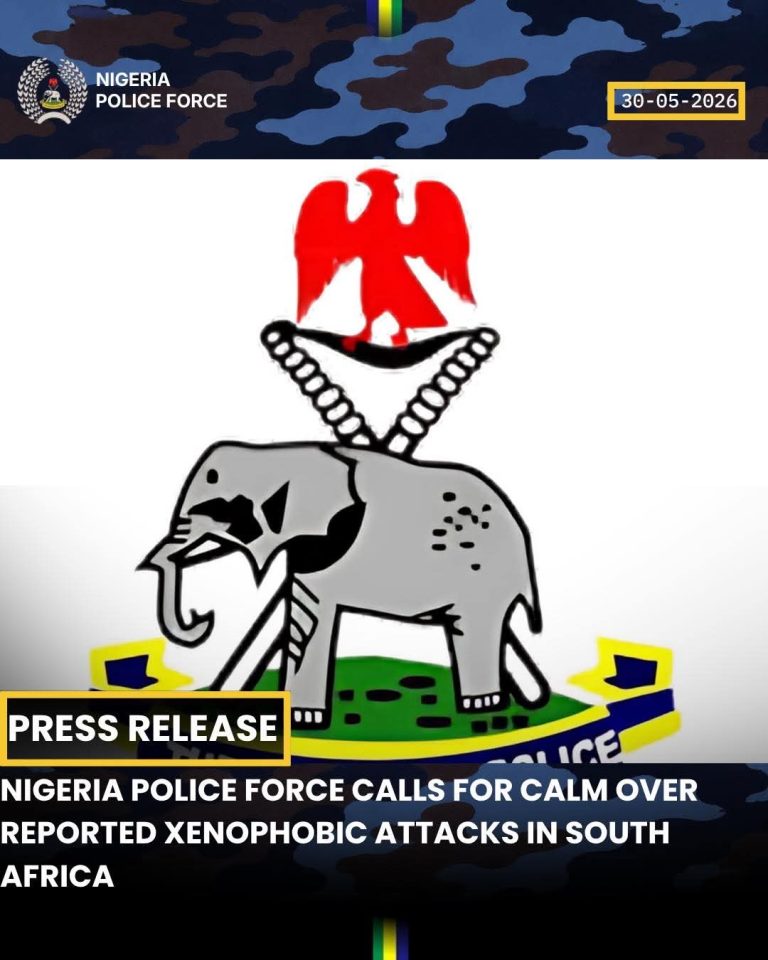
The Nigeria Police Force has urged Nigerians to remain calm and refrain from taking the law into their own hands following reports of xenophobic attacks on Nigerians in South Africa and concerns over possible retaliatory actions against South African nationals and businesses in Nigeria.
In a statement, the Force said security and intelligence agencies reviewed the situation during a Joint Intelligence Board meeting held on May 18, 2026, under the chairmanship of the National Security Adviser.

The meeting assessed the security implications of the developments and considered appropriate response measures.

The Police assured Nigerians that there is no cause for alarm, noting that the Federal Government is actively engaging relevant authorities and stakeholders through diplomatic, intelligence, and security channels to address the situation peacefully and safeguard the interests of Nigerians both at home and abroad.

While acknowledging public concerns over the attacks on Nigerians in South Africa, the Force warned against any form of reprisal attack, violence, intimidation, destruction of property, hate speech, or actions capable of threatening public peace and national security.

According to the statement, Nigeria remains a country governed by the rule of law, and all persons lawfully residing in the country, regardless of nationality, are entitled to protection under the law.

The Police stressed that any attempt to target South African nationals, diplomatic missions, businesses, or other lawful interests in Nigeria would be regarded as a criminal act and dealt with in accordance with existing laws.

The Force also cautioned the public against spreading unverified, inflammatory, or inciting information, particularly on social media, warning that false or provocative content could escalate tensions, disrupt public order, and undermine ongoing diplomatic efforts.

To prevent any breakdown of law and order, the Nigeria Police Force said it has intensified security measures in collaboration with other security and intelligence agencies. Increased surveillance has been deployed around critical national assets, foreign missions, and other key locations across the country.

The Police reaffirmed their commitment to maintaining peace and security, urging citizens to support lawful efforts aimed at resolving the situation and preserving national stability.

Kidnapping: Ogun Seriki Fulani Denies Involvement as Police Recover Ransom Bag from Home

0


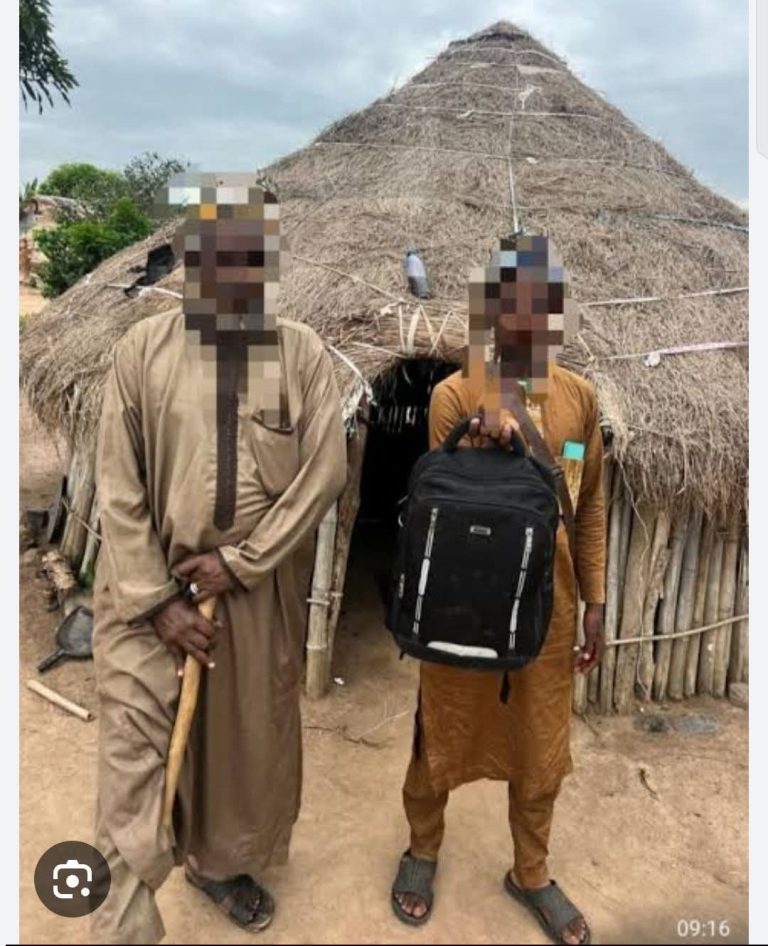
ABDULLAI Muhammadu, the 67-year-old Seriki Fulani and leader of the Fulani community in Ijebu Ode, Ogun State, has denied any involvement in a series of kidnapping incidents in communities across the Ijebu axis, despite the recovery of a bag allegedly used to collect ransom from his residence.

Muhammadu was arrested alongside his eldest son by operatives of the Ogun State Police Command in connection with ongoing investigations into kidnappings in Ijebu Ode, Imodi, Irewon, Iwode, Okun Owa and neighbouring communities.

Although he maintained his innocence, the Fulani leader admitted that one of his sons, Bala Muhammadu, had previously been convicted and imprisoned for kidnapping.

He said he believed Bala had abandoned criminal activities after serving his sentence.

According to police sources, investigators from the Anti-Kidnapping Unit of the Ogun State Police Command, led by SP Bamidele Shirtu, linked several recent kidnapping cases in the area to Bala, who was recently released from prison after serving a five-year jail term for a similar offence.

A police source disclosed that one of the bags allegedly used for the payment of ransom to kidnappers was recovered from Muhammadu’s kitchen during a raid on the family compound.

The source added that Bala and two of his brothers reportedly fled through a nearby bush after being alerted to the presence of security operatives.

“After painstaking intelligence gathering and investigation, one of the bags used in the payment of ransom for a victim was recovered from the father’s kitchen. One of the children in the community alerted Bala and his brothers, who escaped through the bush,” the source said.

The source further alleged that Bala was not the only family member involved in kidnapping activities, adding that other suspects identified as Ndaji and another brother were being tracked by security agencies.

Speaking to journalists, Muhammadu described himself as a farmer and cattle rearer who had lived in the South-West for more than three decades.

“My name is Muhammadu Abdullai. I am a cattle rearer and farmer. I have lived in Yorubaland for more than 30 years. I have four wives and 30 children. I was honoured with the title of Seriki Fulani of Ijebu Ode by the late Awujale of Ijebuland,” he said.

“I know nothing about the bag found in my house. I live in the same compound with my wives and children. I have never kidnapped anyone in my life.”

He acknowledged that Bala had previously engaged in kidnapping and served a prison sentence but insisted he had no knowledge of any renewed involvement in criminal activities.

“I knew Bala was involved in kidnapping before he was arrested and imprisoned. When he came out, he was very sick and I took him to the hospital, where he received treatment for one month. I believed he had changed because he had returned to farming and cattle rearing,” he said.

“I did not know he was still involved in kidnapping. I have never encouraged crime and I would never support such activities.”

Also speaking, Bello Muhammadu, the eldest son of the family who was arrested alongside his father, denied any connection to kidnapping activities.

“I was on the farm when the police came. My father called me because he could not understand what the officers were saying. I am a herder and I have nothing to do with kidnapping,” Bello said.

He added that while he was aware of Bala’s previous conviction, he had no knowledge of his current activities.

Meanwhile, the spokesperson of the Ogun State Police Command, CSP Oluseyi Babaseyi, attributed the command’s recent successes against kidnappers and other criminal elements to the support of the Inspector-General of Police, Kayode Egbetokun, and the operational leadership of the Commissioner of Police, CP Lanre Ogunlowo.

According to Babaseyi, the successful operation by the Anti-Kidnapping Unit, which led to the arrest of suspects and the recovery of incriminating exhibits, demonstrated the professionalism and dedication of police operatives.

He assured residents that the command would continue to intensify efforts to dismantle criminal syndicates operating across Ogun State and urged members of the public to support security agencies with timely and credible information.

The police also reaffirmed their commitment to intelligence-led policing and the fight against kidnapping and other violent crimes in the State.


Source: Nigerian Tribune