Home Blog Page 375

Niger Delta reaping democratic dividends under Tinubu – Otuaro

0


– Hails President on Warri Federal Constituency Ward delineation.

The Administrator of the Presidential Amnesty Programme, Dr Dennis Brutu Otuaro, has described June 12 as a historic day and a significant rallying point for Nigeria’s democratic advancement.


Dr Otuaro, in a statement to mark the 2026 Democracy Day celebration, said June 12 represents the cornerstone of the country’s democratic aspirations, underlined by freedom of choice by citizens in free, fair, credible elections.


Otuaro, who paid tributes to the memories of MKO Abiola and other political martyrs, and all compatriots for their heroic deeds in the June 12 struggle, stressed that their sacrifices and resilience helped to birth democratic governance in 1999.


Dr Otuaro commended President Bola Tinubu for his unwavering commitment to deepening the country’s democratic culture and also broadening the civic space for citizens’ participation in democracy and national development.


According to him, the Niger Delta is enjoying the dividends of democracy under the administration of President Tinubu.


He said the President’s massive support for the Presidential Amnesty Programme is a demonstration of his strong commitment to sustainable peace and stability in the Niger Delta, and indeed Nigeria.


He attributed the expansion of the PAP’s scholarship scheme, vocational training opportunities, and post-training empowerment initiatives, among others, to the President’s backing and approval of upward review of the programme’s budget.


Dr Otuaro noted that the over 8, 235 undergraduate and post-graduate students on the scholarship scheme, who are studying various industry-relevant courses in foreign and local universities, are a result of President Tinubu’s unprecedented support for the programme.


He also highlighted the ongoing Lagos-Calabar coastal highway project, the establishment of the South South Development Commission, Federal University of Environment & Technology in Ogoniland, and the Nigeria Maritime University, Okerenkoko, among others, as testaments to President Tinubu’s strong desire to drive socio-economic growth and development in the region.


The PAP boss reiterated his call on former agitators and the youths of the Niger Delta to safeguard the region’s peace and stability in the interest of the development of communities.


He also called on people of the Niger Delta to be wary of some deceivers, who besiege the region with fake promises and blackmail in search of votes.


On the Warri Federal Constituency delineation, Otuaro commended President Tinubu’s intervention, the peaceful and effective resolution of the disagreement.


Dr Otuaro said, “I know that this particular President has not hidden his love for the Niger Delta. His actions tell the story more than his words.


“It will be on record that this particular President has effectively addressed the perennial political crises in the Warri Federal Constituency because of his quest for peace, security, and development in the area.


“President Tinubu deserves our support because he has done well for our people. We should reward his hard work with political support come 2027.”

Sun

Gbenga Hashim condemns attack on Sowore, protesters on Democracy Day

0


Accord Party presidential candidate and Co-Chairman of the Movement for Democratic Renewal (MDR), Dr. Gbenga Olawepo-Hashim, has condemned the reported attack on human rights activist, Omoyele Sowore, and other protesters during a Democracy Day demonstration, describing it as a troubling sign for Nigeria’s democratic future.

In a statement made available to newsmen, Hashim said the right to peaceful protest, free expression, and civic participation are fundamental elements of democracy and must not be undermined.

He warned that democracy cannot survive where citizens are intimidated for demanding accountability or expressing concerns about governance.

According to him, Democracy Day should not only mark the return to civilian rule but also serve as a reminder of the responsibility to protect democratic values, including freedom of Expression justice, constitutionalism, and the rule of law.

“Democracy is strengthened when citizens can freely speak, organise, and demand accountability from those entrusted with power. Any attempt to suppress these freedoms weakens democracy itself,” Hashim said.

The Presidential candidate, who recently became co-chair of MDR alongside NLC President Comrade Joe Ajero said the movement was established to defend Nigeria’s democratic space and prevent any drift towards authoritarianism.

He also condemned what he described as the continued harassment of Sowore, including the seizure of his passport, which he said remains unresolved despite legal interventions.

Hashim said MDR would continue to mobilise democratic forces, civil society, labour, and citizens committed to protecting democratic institutions and expanding civic freedoms.

“Nigeria must not return to an era where dissent is treated as a crime and citizens are denied their democratic rights. The defence of democracy is the responsibility of all who believe in freedom and accountable leadership,” he said.

He urged security agencies and relevant authorities to respect citizens’ constitutional rights while ensuring public order.

Sun

ADC Chairman David Mark Mourns Gen. Rabe Abubakar, Describes Death in Captivity as National Tragedy

0


The National Chairman of the African Democratic Congress (ADC), David Mark, has described the death of former Director of Defence Information, Rabe Abubakar, in the custody of his abductors as a national tragedy and a stark reminder of Nigeria’s worsening security challenges.

The statement was signed by Kola Ologbondiyan, Special Adviser on Media and Publicity to the ADC National Chairman.

Reacting to the development, Senator Mark, a retired Brigadier General of the Nigerian Army, expressed deep sorrow over the incident, lamenting that Nigerians have become increasingly vulnerable due to the persistent threats of terrorism, banditry, kidnapping and other violent crimes across the country.

He said the death of the retired military officer, who dedicated his life to the service of the nation, highlighted the urgent need for a comprehensive review of the country’s security architecture.

“The death of Major General Rabe Abubakar in captivity is not only a personal loss to his family and the military community but also a national tragedy. It raises serious concerns about the safety and security of every Nigerian citizen,” Mark stated.

The former Senate President noted that insecurity has continued to escalate for more than a decade, affecting every segment of society. He therefore called on Nigerians to unite in the fight against terrorism, banditry, kidnapping and all forms of criminality threatening the nation’s peace and stability.

Questioning the safety of citizens, Mark asked what hope remains for ordinary Nigerians if pupils and teachers are unsafe in schools, homes are invaded by criminals, places of worship are no longer secure, and roads have become dangerous corridors.

He lamented that Nigeria, once regarded as the pride of Africa, is gradually losing its standing because of the inability to adequately guarantee the security of lives and property.

According to him, the country must return to the drawing board to identify the root causes of insecurity and implement practical and lasting solutions capable of restoring public confidence and national cohesion.

Despite the prevailing challenges, Mark expressed optimism that Nigeria can overcome its security problems through determination, sincerity of purpose and collective commitment.

He also extended his condolences to the family of the late Major General Abubakar, the Nigerian Armed Forces and victims of banditry and kidnapping across the country.

The ADC chairman further urged governments at all levels to mobilise the resources needed to tackle insecurity, stressing that the protection of lives and property remains the primary responsibility of government.

“The security and welfare of the people remain the primary responsibility of government. We must act decisively now before more innocent lives are lost,” he said.

Defence Headquarters Confirms Death of Retired Major General Rabe Abubakar in Kidnappers’ Custody

0


The Defence Headquarters (DHQ) has confirmed the death of retired Major General Rabe Abubakar, who tragically lost his life while in captivity after being abducted by kidnappers.

In a statement issued on Saturday by the Director of Defence Information, Major General Samaila Uba, the Armed Forces of Nigeria (AFN) expressed profound sorrow over the loss of the former military spokesman and extended its condolences to his family, colleagues, and the nation.

According to the statement, Major General Abubakar served Nigeria with distinction throughout his military career, holding several key appointments, including spokesperson for various military formations and Director of Defence Information.

The Defence Headquarters noted that the late senior officer made significant contributions to counter-insurgency operations, the professional development of the Armed Forces, and numerous other national assignments.

“His commitment to duty and to the unity of Nigeria remains a shining example for all personnel of the Armed Forces of Nigeria,” the statement said.

DHQ explained that it had refrained from making public comments about his abduction while efforts were underway to secure his release, adding that all available operational resources were deployed in the hope of bringing him back safely.

Describing the incident as a painful loss, the military said the death of Major General Abubakar would further strengthen its resolve to fulfil its constitutional responsibility of defending Nigeria’s sovereignty and protecting its citizens.

The Defence Headquarters also disclosed that military operations had been intensified in response to a series of kidnappings across the country, including the abduction of the retired general.

It stated that security forces were committed to bringing those responsible to justice and dismantling terrorist and criminal networks threatening national security.

“The Armed Forces will not relent until peace and security are restored and those responsible for terrorist activities across the nation are held to account,” the statement added.

Major General Abubakar was widely respected within military circles for his professionalism, dedication to service, and contributions to national security.

His death has sparked renewed concerns over the security challenges facing the country.

I’d gladly exchange my Ballon d’Or for World Cup trophy – Rodri

0


The 2024 Ballon d’Or winner, Rodri said he would gladly trade the individual honour for a World Cup title.

The Spain and Manchester City midfielder stated this as the 2026 World Cup got underway in Mexico on Thursday, June 11.

Rodri secured the 2024 award with 1170 points, narrowly beating Real Madrid’s Vinícius Júnior, who finished with 1129 points.

He became the first Manchester City player and the second male Spanish player in history to win it.

However, he said he would give up the coveted Ballon d’Or without hesitation if it meant he could lift the World Cup.

“I would exchange my Ballon d’Or for the World Cup trophy without a doubt,” the Spaniard said.

Sun

South Africa: Nigerian returnees share tales of horror

0

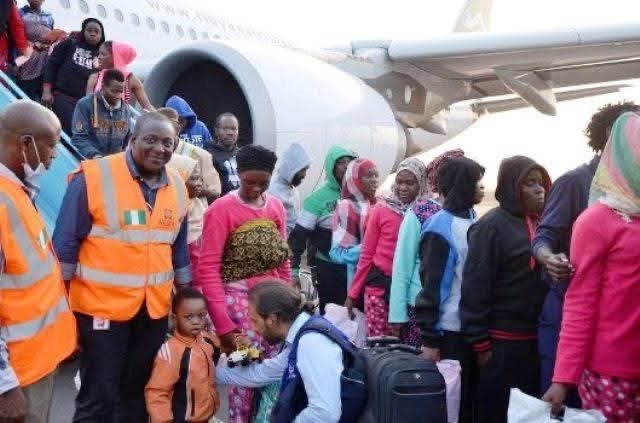
Returnees diesmbarking from the flight from South Africa at the MMIA, Ikeja, Lagos

• 12 persons got shot, including those selling tomatoes’

The Air Peace flight that brought them touched down at the Murtala Mohammed International Airport, Ikeja, Lagos about 10.30am on Thursday. They were the first set of returnees being brought back to the country following a wave of xenophobic attacks in the former apartheid enclave, in which unruly mobs, armed with dangerous weapons, unleashed hell on migrants, mostly Black Africans, especially Nigerians living in the country, claiming the foreigners were taking their jobs.

The South African government watched silently, taking no action as the thugs attacked, killed and maimed innocent migrants and destroying their businesses.

On arrival, some of the returnees shared harrowing accounts of how they were profiled, falsely labelled as criminals, and asked to leave South Africa.

A returnee said that his clothing shop was raided and looted by attackers who accused Nigerians of dealing in drugs. He recounted that he was beaten during the raid, even though he had only traded thrift clothes.

“They shot 12 people in my presence, including some Malawians who sold tomatoes. Everyone in South Africa owns a gun, including teenagers. They claim we are illegal immigrants, but I wasn’t. My children and I have our identification cards up to date.

“They don’t want to work. They are lazy and feel entitled. They question Nigerians for owning cars and doing well in their businesses. This xenophobic attack is all about envy and jealousy. For nine years, I sold fairly used clothes. I don’t work in their big companies, unlike those of them who work in Nigerian companies here in Lagos.

“A lot of Nigerians are still stranded at the Nigerian High Commission in Pretoria, waiting to be cleared for return, and a lot of Nigerians don’t have money to transport themselves to the high commission for registration.

“I thank the president for coming to our rescue. We thank Air Peace Airlines for bringing us back home in safety and comfort.”

Another returnee, simply identified as Christian, stated that it felt good to be back home in Nigeria, noting that if a country doesn’t want foreigners in their land, it’s best for the foreigners to return to their country especially when it involves the use of violence and threats to life.

Another returnee recounted that his 16-year stay in South Africa was full of struggle and restlessness. He noted that his landlord served him a 24-hour quit notice and accused Nigerian residents of being criminals who ruined the neighbourhood. He insisted that he had lived peacefully in the apartment all through his stay.

He disclosed that Nigerians were not allowed to work in South African-owned companies because they were hated.

One returnee said South Africans claimed Nigerians came to take the jobs and positions meant for them in their country. “They get jealous and envious of successful Nigerians,” he added.

Another stated that big companies are occupied by South Africans only, leaving migrants to menial jobs despite their qualifications.

While some returnees said they were happy to be back home, others expressed worry over their future in Nigeria.

In a pleasant development, the Imo State Government pledged to support each indigene of Imo State among the returnees with N1 million to aid reintegration and business restart. Officials said profiling of Imo returnees would commence immediately to ensure the cash support reaches them.

The current wave of xenophobic attacks in South Africa that forced the first batch of 262 Nigerians to be repatriated on Thursday, June 11, began weeks ago as anti-migrant protests intensified across the country with a renewed xenophobic attacks targeting foreign nationals in the country.

The evacuation flight, Air Peace Airlines was fully sponsored by the Federal Government of Nigeria, touched down at the Murtala Muhammed International Airport.

The Federal Government had earlier assured that it would continue to engage South African authorities to ensure the protection of Nigerians and prevent further escalation.

Vigilance groups, including “March and March”, organised demonstrations in April and May 2026 in Pretoria, Johannesburg, Durban, and other cities, demanding that undocumented foreigners leave by a self-imposed June 30 deadline. The protests quickly turned violent, with gangs armed with sticks, whips, and shields marching through townships, going door-to-door, intimidating, and beating foreign nationals.

The flare-up was allegedly fuelled by South Africa’s economic pressures. Unemployment exceeds 30 per cent, and protesters blamed foreigners for job losses and pressure on public services. The violence also coincided with campaigning ahead of November local government elections, making anti-immigrant politics more mainstream.

Ghana, Mozambique, and Malawi have already repatriated hundreds of their citizens in recent weeks.

In Nigeria’s National Assembly, Senator Adams Oshiomhole, representing Edo North, sparked a heated debate in May, when he called for Nigeria to retaliate economically against South Africa.

He urged the federal government to revoke the licences of South African companies operating in Nigeria, specifically naming MTN and MultiChoice/DSTV. The former Edo governor argued that Nigeria should “nationalise” MTN and withdraw its licence because the company “repatriates significant revenue while Nigerians face hostility in South Africa”.

Oshiomhole said such action would create opportunities for indigenous firms and serve as a deterrent to what he described as persistent attacks on Nigerians abroad. His stance was later backed by the House of Representatives, which asked the FG to review bilateral agreements with South Africa and temporarily suspend business permits for new South African companies.

South African authorities condemned the violence but pushed back on the “xenophobia” label. President Cyril Ramaphosa, in a televised address on Sunday, vowed to crack down on groups behind xenophobic violence.

He warned: “We will and must not allow groups to use the legitimate concerns of South Africans to destabilise our country through inciting lawlessness and violence.” Ramaphosa also announced measures including tighter border controls, dedicated immigration courts, and action against employers hiring undocumented workers.

His spokesperson, Vincent Magwenya, insisted “South Africa is not xenophobic. South Africans are not xenophobic”, arguing the protests reflect broader tensions around migration, crime, and unemployment rather than hostility toward foreigners as a whole. The government also condemned “fake videos and images” circulating online, saying they were intended to undermine South Africa’s reputation.

Minister of International Relations and Cooperation Ronald Lamola said “Acts of lawlessness, intimidation and violence against migrant communities have no place in our constitutional democracy”, while police vowed that those participating in xenophobic acts would be identified and brought before courts.

Nigeria’s Minister of Foreign Affairs, Ambassador Bianca Odumegwu-Ojukwu, took a firmer tone when she threatened that Nigeria might retaliate against South Africa for alleged attacks on its nationals. “This is a situation that we are considering; it is not off the table,” she told journalists in Abuja.

Odumegwu-Ojukwu accused the South African government of failing to respond firmly enough, she said: “Our citizens are being harassed. Our citizens’ properties are being looted. Criminal actions are being perpetrated, and the police refuse to do anything. The South African government has not come out strongly and firmly enough to condemn these incidents”.

She rejected claims that attacked Nigerians were illegal migrants, insisting “People who are doing legitimate business have their shops looted, their shops set on fire”.

The minister also cited Nigeria’s historical role in South Africa’s liberation struggle, saying the current treatment was “especially painful and unacceptable.”

She disclosed that President Bola Tinubu directed Nigerian missions in South Africa to set up a crisis notification unit for imperilled citizens and confirmed that evacuation flights were being funded fully by the Federal Government.

The Acting High Commissioner of Pretoria, Ambassador Temitope Ajayi was with the returnees.

The envoy said: “The people you see here today are our nationals, who have decided to come back to escape the irresponsible violence that has been taking place in South Africa. I want to say that they are in good spirits. They have been looking forward to being home since we started this process. I must say that, Minister, this afternoon you are receiving a total of 258 Nigerian returnees from South Africa, including women, men and children.

“I want to thank, especially Mr President, for having committed a lot of resources, both personal and otherwise, into this. Without the personal intervention of Mr President, we would not have been here. If I should take you through the road, the journey, how it started, Mr President started this process. Left to him, he would have wanted this to happen in April. That was when Mr President was so agitated and he wanted his people to return to Nigeria. It started first when the crisis happened in April. Mr President established what we call a hotline communication between himself, the Ministry of Foreign Affairs and the mission in South Africa.

“Through that, he was able to be briefed about what was happening, because Mr President wanted to know. He was so committed, so concerned about it, so every day he was on the phone asking the Minister and us what was happening on the ground and what he could immediately do to intervene. So he requested us, he directed us that we must be giving him an update every day, every minute.

“Moving beyond that, he now established what we call crisis monitoring units in the two missions, to daily apprise him with what is happening at the regions. We have nine regions in South Africa, and these demonstrations are happening sporadically at various regions there.

Mr President was put under tremendous pressure by the world leaders, even by the President of South Africa himself. He was asked to hold action on this, because of the image and the optics, the bad optics it has given to South Africa, because they don’t want Nigeria to go. The moment Nigeria made a pronouncement that we are going to repatriate our people, they were a bit jittery.

“So it got to a stage, he said, he’s no longer going to listen, that we should tell all people that wanted to come, voluntarily, that showed interest in coming back, they should start coming. So that was when we established what we call a coordination meeting with the South African Ministry of Foreign Affairs. So we were meeting on a weekly basis, two times at a time.

“So we sent notification to all the regions, for Nigerians to come forward, those that are willing to be repatriated. And I can tell you that we received a lot of interest. And going beyond that, Mr President directed the evacuation process itself.

“By establishing or creating, liaising with Air Peace, and making available five different flights to carry people from South Africa back home. This is the first batch that will be coming in, and as I mentioned, there are a total of 258 returnees. So the next batch will be coming in on Monday, which is on June 15.

“The third batch will be on June 18. The fourth batch will be returning on June 22. While the fifth and the last batch will be coming in on June 24.”

Also speaking, the Minister of State for Foreign Affairs, Ambassador Sola Enikanolaye also addressed the returnees.

His words: “It is with mixed feelings that I address you this afternoon, happy to welcome you. Just as the Acting High Commissioner has very ably pointed out. I’m a little bit not so happy because I know the kind of trauma that my people went through. Mr President has asked me to welcome you back home. Home is home. And to assure you that he is doing everything possible by way of various reforms to make the home good for all of us, such that Nigerians that travel abroad, they will be doing so out of wish for holidays. And migration has always been a part of history. We must live with that. And I am very happy to welcome you.

“Our job is to manage relations, even under the most difficult circumstances. We believe in diplomacy. We believe in engagement. We believe in dialogue. And we are confident that in this process, we will continue to engage South Africa to ensure that our nation is given better treatment. Going forward there are two mechanisms already in place for this to happen. First you have the Binational Commission between the two countries which covers the entire gamut of relations.

“And to address this specific concern, we have the warning mechanism that has just been put in place. I’m aware of some of the issues that have been raised with the latter. But I want to assure you we are going to activate these mechanisms, so that we can respond more quickly and in a more proactive manner to situations that may occur in the future.”

Chairman of Nigerians in Diaspora Commission, Hon. Abike Dabiri-Erewa was at the airport to receive the returnees.

Addressing journalists, she said: “The returnees are not criminals, but very hardworking Nigerians, who have lost everything they ever worked for in South Africa. Their only crime is being black and Nigerian.”

She added that the government had made adequate reception, documentation, and support arrangements for the returnees upon arrival.

“Their National Identification Number will be provided for them so they can register their sim cards and open bank accounts. The refugee commission will take over. We will continue to work with the private sector to follow the example of Governor Hope Uzodinma. They had to come back because lots of them were frustrated, and it became dangerous for them to remain there. The most important thing is that they are back home.”

As diplomatic tension rise, more flights are planned for the estimated 1,000 Nigerians who have registered to return home.

Sun

Banditry: Panic over mass abductions

0


• We sleep, wake up in distress –Parents • Ohanaeze, Afenifere call for state police, halt in political activities, Northern groups task FG to focus on rescue efforts

Attacks by terrorists within the last one month and the mass abductions of pupils and their teachers, as well as the deaths of some of the innocent victims, has struck fear in parents and heightened concern over the situation of the kidnap victims, who have been in captivity for 28 days.

The sudden and desperate move by bandits to abduct children from schools has engraved palpable fear and emotional torture in the minds of many children. Indeed, at the moment, learning in some parts of the country is gradually becoming a nightmare.

There is apprehension among pupils, teachers, parents and guardians, as the governments seems unsure of how to curtail the problem.

In the past four weeks, there have been a number of attacks on schools across the country. But two remain unforgettable experiences.

On May 15, 2026, armed bandits attacked three schools in the Oriire Local Government Area of Oyo State, abducting 46 individuals. The captives include 39 students (ranging from primary pupils to secondary students) and seven teachers. One teacher and an assistant headmaster were killed during the initial raid, and a mathematics teacher was beheaded in captivity.


On the same day, suspected Boko Haram insurgents attacked schools in the Mussa community of Askira-Uba Local Government Area, Borno State, abducting between 42 and 50 schoolchildren. The brazen raid targeted the Mussa Central Primary School, Government Day Junior Secondary School, and a local SUBEB school.

On Wednesday, there were reports of tension and sorrow in the Iluke Bunu community in Kogi State, as bandits reportedly killed the Vice Principal of Government Secondary School, Iluke and abducted candidates preparing for the West African Examinations Council.


And on Thursday night, another fresh round of abductions took place in Ifelodun Local Government Area of Kwara state, involving many victims.

There have been several rumours of abductions and schools shutting down and dismissing students to avert mass abductions of their students since then. But the police and other security agencies have described such rumours as fake news.

The desperation and the ease with which the terrorists operate and get away, has posed a serious concern to Nigerians with many parents withdrawing or stopping their children or wards from going to school.

Also, teachers and school operators live in fear of the unknown. They shut their schools intermittently and send their students home at the slightest terror rumour.

In the wake of the abductions and other terrorist strikes across the country, people from all walks of life have been speaking on the rapidly deteriorating security situation, even as they fume that the political parties have carried on with their schemes towards the 2027 General Elections.

Parents in panic mode

A parent known in the community as Abuchi and whose child is schooling in Christ Redeemers Academy in Nasarawa State, said that he is very apprehensive on the consistent attacks against students across the country.

According to him, his wife had to rush to the school one day to pick his child when there was a rumour that kidnappers were lurking around the vicinity.

“The government should deploy enough security to guard the schools. And the schools should not be a prison yard. Their fence should be low so that people will know what’s happening,” he said.

Mrs Nana Florence who has his daughter at Methodist High School, Masaka, told Saturday Sun that she once had a ward but that, because of the indiscriminate attacks and kidnappings in the country, she had to take her back to her parents. For her, it’s like the government has lost control of security and everyone is on their own.

Adeola Sampson, whose daughter is in boarding school in Jos, said that she sleeps and wakes up in fear without knowing what to do.

“In my office, my mind is on my child. It affects my productivity. The government should help us. Does it mean that the children cannot go to school? I have discussed with my husband to bring her closer to us” he stated.

Leaders of ethnic nationalities raise concerns

Leaders of the notable ethnic nationalities have been strident in advocating that the Federal and State governments should wake up, confront and break the worsening siege against the country.

The Yoruba pan-political organisation, Afenifere, said that Nigeria is facing a grave security emergency that requires extraordinary measures.

National Publicity Secretary of the organisation, Mr. Jare Ajayi, expressed the position of Afenifere, when contacted by Saturday Sun.

“Nigeria cannot afford to allow mass abductions, terrorism and banditry to become the norm. The time for half-measures has passed. What is required now is bold leadership, urgent action and a clear demonstration that the safety and security of Nigerians remain the foremost responsibility of the government,” Ajayi.

In addition to the recent abduction incidents, he cited attacks on security offices in different parts of the country, sporadic kidnappings such as that of Mrs Olaide John-Paul as well as Major General Rabe (rtd) and his wife.

According to him, the situation has not only made people to be living in fear, various economic activities, particularly agriculture, are suffering greatly as workers in the sector are afraid of the apparent threats to their lives and property.

“Afenifere has consistently maintained that the present security architecture has become overstretched and is no longer sufficient to effectively confront the challenges of terrorism, banditry, kidnapping and other violent crimes that are now rife in various parts of the country.

“This is why we have repeatedly called for the immediate establishment of state police. The current situation has further reinforced the urgency of that demand. Indeed, such a police formation should go down to the community level.

“Criminals are becoming increasingly sophisticated and heavily armed. It is therefore necessary for lawful security structures at the sub-national levels to possess the capacity required to protect lives and property within the ambit of the law.”

On the issue of ransom payments, Afenifere maintained that the government must focus on making kidnapping and banditry unprofitable ventures.

Ajayi noted that while families often find themselves in painful and desperate circumstances when loved ones are abducted, the long-term solution lies in strengthening intelligence operations, dismantling criminal networks, rescuing victims promptly and ensuring that kidnappers face swift justice.

Afenifere spokesman also said that possible foreign interests or involvement should not be ruled out.

Concerning calls made on the government to engage mercenaries, Afenifere stated that the overriding consideration should be the effectiveness of any strategy adopted to defeat terrorists, bandits and kidnappers.

“Where existing approaches are proving inadequate, the government should be willing to consider every lawful and practical option that can help restore security, provided such measures are not detrimental to Nigeria’s sovereignty and national interest.

“Afenifere also believes that the escalating insecurity in the country should compel political leaders across party lines to demonstrate greater sensitivity and patriotism.

“The protection of lives and property is the primary purpose of the government. Political activities should not distract attention from the urgent task of securing the country and restoring public confidence.”

“The Federal Government must therefore treat the current situation as a national emergency. Beyond immediate rescue efforts, there is an urgent need for far-reaching reforms, including state police, improved intelligence gathering, modern security technology, better inter-agency coordination, stronger border control and greater support for legitimate community-based security initiatives.”

Speaking from Kaduna State, the current National President of the Southern Kaduna Peoples Union (SOKAPU), Samuel Tabara Kato, who spoke with Saturday Sun, fumed over the deepening menace of the terrorists all over the country, particularly the abduction of school children in Borno and Oyo states.

“Enough is enough of the banditry and terrorism in Nigeria. SOKAPU demands immediate rescue of abducted children and sweeping security reforms. Payment of ransom amounts to state and citizens sponsorship of terrorism.

“Nothing short of total incarceration of the sponsors and perpetrators of terrorism will be the solution. It will not be out of place to suspend electioneering activities in the entire country until these children are recovered. There is urgent need to broaden the scope of military cooperation with the USA government to tackle this menace comprehensively,” Kato said.

On his part, National Publicity Secretary of the Arewa Consultative Forum (ACF), Tukur Muhammad-Baba said: “The problem of banditry and terrorism has been allowed to fester for too long. It seems to me that the government has been very slow in fighting this scourge. So it’s not surprising that all these desperate measures have been suggested.

“The simple fact is that this banditry and terrorism problem is expanding and the response from government has not been encouraging. Why? The reason is that the government’s measures have not been effective.

“The problem keeps expanding into many dimensions. Of course, nobody wants to pay ransom to terrorists and kidnappers, but then when you have a family – the husband, children, wife, the mothers and so on, are under the control of bandits, what else do you want them to do if they don’t pay ransom?

Mohammad-Baba urged the government to address the issue of state police, because for too long, successive administrations had paid lip service to the issue, noting that it is a constitutional issue.

His words: “There is just no seriousness in fighting this scourge. Nigerians want to see action. That is why I fully endorse the recent call by the Emir of Argungu, who said that communities need to stand up and rescue themselves. So, government should look into the possibility of making that practical.
“We cannot just sit down and allow terrorists to be taking over our lives, stopping us from farming, traveling, and harassing our families.

“There has to be a strategy that is implementable. It goes beyond mere rhetoric and pronouncements and so on. The country wants results and nobody cares about where it comes from, even if the government will bring in mercenaries.”

Chairman of Northern Christian Elders Forum (NOSCEF), Elder Sunday Oibe, lamented the situation saying, “It is unfortunate. This is a thing that I don’t want to be talking about. But I’m forced to talk about it because Nigeria is in a very dire state that all of us need to cry out.

“In the first place, there is no organized group that can be stronger than government. If the government is determined to win this war, this war could have been won against the bandit. What is the percentage of the bandit compared to the number of the military we have?

“If the government demonstrates the willpower, this issue of banditry can be done with in this scientific age. Why would the government not invest in using drones to smoke these people out from their hideout?

“Again, most of these people who are said to be the sponsors are in government. Why is government pretending? Have you forgotten that not quite long ago, we had some political appointees saying that these bandits are their brothers? People like that should be held accountable. Some of the people who caused this problem, when they recruited them to overthrow Jonathan to bring Buhari in, are still alive and some of them are in government. So we have had enough of this hide and seek. Nigerians are tired of it.

“In my opinion, it is not the lack of the capacity of the police, the military and the Department of State Services to crush these people. It is the lack of the political will by the political leaders to descend on these people.

“We have to deal with a number of questions: what is the job of some of these people who call bandits their brothers? What are they doing in government? Why is President Bola Tinubu keeping quiet? The first thing is to prove to Nigerians that they are serious. To show that they are concerned about this, the Federal Government should have suspended anything to do with the Democracy Day, because you cannot go into a celebration where our children, innocent children who went to school to better their tomorrow are in the hand of those bandits. What are you celebrating?

“If their own sons and daughters were in the hand of the bandits, would they celebrate? There should be nothing like that in this country. We are in a mourning situation. Nigeria is mourning. And until that is done, we should not go into that. Every political activity should be suspended until these people are brought back.

Every day they are killing our soldiers. If the soldiers want to engage them, they say there is no order from above. Let them use this modern technology to smoke these guys out. That is the call from Nigeria.

It is not whether it is the state police or the local government police or the world police. That is not the answer to this.

The question is: do we have the capacity to demonstrate the political will to smoke these guys out? Do we have the capacity? The Nigerian government has the capacity. Do we have the political will?

They don’t want to demonstrate political will because they are part and parcel of these bandits who are causing us pain.

In similar manner, Convener of Arewa Think Tank (ATT), Muhammad Alhaji Yakubu, expressed deep concern over the disturbing resurgence of mass abductions of school children and innocent citizens across parts of the country.

He said that the recent abductions in Borno and Oyo states had once again highlighted the urgent need for sustained and decisive action against terrorism, banditry, and other forms of violent criminality threatening the peace and stability of Nigeria.

“While acknowledging the significant gains recorded in recent years against insurgency and banditry in several parts of the country, he said that the latest incidents demonstrate that more coordinated and robust measures are required to completely dismantle the networks of terrorists and kidnappers.

The Arewa Think Tank noted with interest the growing public calls for drastic interventions, including the engagement of specialised security expert, where necessary, accelerated consideration of state policing, the strengthening of community-based security structures, enhanced support for vigilante organizations operating within the ambit of the law, and improved intelligence gathering and surveillance capabilities.

Still speaking on behalf of ATT, Muhammad emphasised that the activities of kidnappers and terrorists must never be allowed to become a profitable enterprise. He said that government at all levels must continue to develop strategies that deny criminal groups the resources, logistics, and operational freedom that sustain their activities.

Security experts offer caution

Security experts say Nigeria’s critical security challenge comes with limited viable options. While many Nigerians have called on the government to explore the option of mercenaries in tackling the rising banditry and kidnapping in the country, security experts said the suggestion could pose graver consequences for the nation. A frontline security expert, Jackson Lekan-ojo called for caution, warning that such a move could create more problems than it solves.

According to him, Nigerians must first ask critical questions: “Who are the people perpetrating atrocities across the country? Who sponsors them, and where do they obtain the sophisticated weapons they use?

“When you see individuals who appear impoverished and poorly equipped in every other respect, yet they possess bombs, rocket launchers, submachine guns and general-purpose machine guns that are clearly beyond their means, you have to ask where these weapons are coming from. They are certainly coming from somewhere, and someone is providing them,” he said.

He further recalled predictions made years ago by some foreign interests that Nigeria would break apart, noting that the country has remained united despite numerous challenges.

“Engaging foreign mercenaries could amount to giving legal access to the very people or interests that may be sponsoring or encouraging the insecurity we are facing today. We must therefore be extremely careful,” he warned.

On whether the government should ban ransom payments, he said: “From a global security perspective, discouraging ransom payments is the ideal approach because ransom ultimately finances criminal networks and enables them to carry out further attacks.”

However, he noted that where the government lacks the capacity to secure the release of abducted victims through security operations, families are often left with no alternative.

“The easiest way to dismantle these criminal networks is not necessarily to ban ransom payments outright, but to use intelligence and technology to track and apprehend the perpetrators. Communication channels can be monitored, ransom delivery routes can be tracked, and surveillance assets can be deployed to identify and arrest those involved.”

He expressed concern over situations where some kidnap victims remain in captivity for extended periods while others are rescued quickly because of their status or influence.

He concluded that Nigeria’s security strategy should prioritise human intelligence, advanced surveillance technology, CCTV coverage and other modern intelligence-gathering tools, describing them as more effective and sustainable solutions to the country’s security challenges.

Also speaking, a security consultant and safety administrator, Rotimi Aromolaran, said encouraging ransom would fuel criminal activities and undermine government’s efforts to fight insecurity.

His words: “Extracting ransom is a grave crime, and exchanging money for the release of kidnapped victims only fuels criminal activities and undermines efforts to curb the menace.

“The payment of ransom to bandits is unacceptable and requires serious national reconsideration. The exorbitant sums being demanded and paid have become unbearable, making it imperative for the government and relevant stakeholders to adopt more decisive and effective measures.”

Aromolaran also kicked against the use of mercenaries in fighting insecurity in the country. Rather, he wants the government to localise the war against insecurity.

“Community involvement in security should be strongly encouraged rather than relying on foreign mercenaries. The forest guard initiative represents a community-based security strategy that can significantly strengthen security in the country. Local residents possess valuable knowledge of their environment and can provide timely intelligence on suspicious activities.

“ In addition, our police force should be equipped with more advanced training, modern technology, and efficient information-sharing systems to enhance intelligence gathering and rapid response capabilities. A combination of community participation and a well-trained, well-equipped police force offers a more sustainable approach to addressing security challenges,” he said.

Human rights advocate, Dr Lemmy Ughegbe suggested a consistent bombardment instead of attacking and allowing them to recover and regroup.

In his opinion, Nigerian security is inadequate and so the government should seek help from Israel, Turkey, and United States of America. He equally gave a thumbs down on corruption which remained an albatross to good policies in Nigeria.

“So what we require is help from Israel, Turkey and help from the USA. But it must be sporadic and consistent so that we can reduce to the barest minimum these terrorists who are all over the place” he said.

We’ve averted many abductions silently –NSCDC

Despite the outrage, Nigerian Security and Civil Defence Corps (NSCDC) said that it has strengthened and retooled its network to ensure that schoolchildren are secure.

According to the Assistant Commandant of Corps (ACC), and National Public Relations Officer (PRO) of NSCDC, Babawale Afolabi, because of the sporadic attacks by the bandits, the corps has established sub-centres across all 36 states, further supported by dedicated Safe School Desk Officers across the 774 Local Government Areas.

He further noted that the corps had foiled many attacks and pre-empted attacks which were not in the public glare, adding that the silence on the victories is a matter of operational security, not inactivity.

“The Safe School Initiative remains a top priority for the Federal Government, and the Nigeria Security and Civil Defence Corps (NSCDC) is unyielding in its commitment to securing our educational institutions.

“While the threat environment is dynamic, it is important to understand the massive framework the corps has established to combat this menace

“The National Safe Schools Response Co-ordination Centre (NSSRCC) is fully operational at our National Headquarters. This is not a standalone effort; it is a highly integrated hub featuring dedicated desks from the Department of State Services (DSS), the Nigerian Army, and other sister agencies.

“To ensure rapid response, we have successfully decentralised this initiative by establishing sub-centres across all 36 states, further supported by dedicated Safe School Desk Officers across the 774 Local Government Areas.

“Media reports naturally focus on incidents that occur, but what remains largely unseen are the countless tragedies our operatives successfully avert. Due to the highly sensitive nature of counter-terrorism and intelligence operations, many foiled attacks and pre-emptive interventions cannot be broadcast to the public. Our silence on these victories is a matter of operational security, not inactivity.

“Furthermore, we have institutionalised a culture of proactive engagement. The NSCDC continuously collaborates with teachers’ associations, school administrators, and community stakeholders, conducting regular security audits and awareness campaigns to harden potential targets.

“Our vulnerability assessments reveal that many schools still lack basic security infrastructure, such as perimeter fencing and controlled access points. While we continue to advise relevant authorities on these structural necessities, the absolute cornerstone of modern policing is intelligence-led security.

“Security is inherently a collective responsibility. The reality of asymmetric warfare is that state actors and uniform personnel cannot be stationary at every single school simultaneously. However, the perpetrators of these crimes live within our communities.

“This is not a time for blame or despondency; it is a time for heightened vigilance and national synergy. We call upon traditional rulers, community leaders, religious bodies, and citizens to actively partner with us.

“The most effective security strategy begins with localised intelligence. When citizens ‘see something and say something,’ it empowers our constantly deploying patrols to act swiftly. The NSCDC, alongside our sister agencies, remains entirely resolute. We will not relent in our constitutional duty to safeguard the future of Nigeria and our children,” Afolabi said.

Sun
COSEYL commends Orji Kalu for demanding accountability in SEDC spending

0

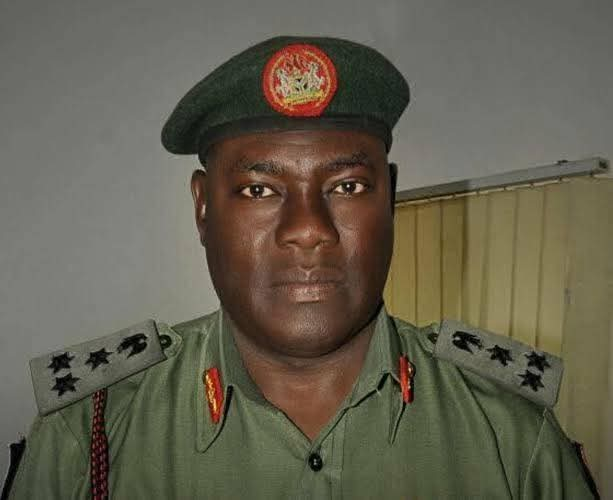
The Coalition of South East Youth Leaders (COSEYL) has thrown its weight behind Senate Committee Chairman on the South East Development Commission, Senator Orji Uzor Kalu, for demanding full accountability over funds allocated to the South East Development Commission (SEDC) .

In a press release signed by COSEYL President General, Goodluck Ibem, the apex South East youth body described Kalu’s intervention during a recent Senate oversight session as “courageous, principled, and uncompromising.”

COSEYL praised Kalu for insisting on detailed financial records for the N16.6 billion so far released to the Commission. The group specifically backed his concerns over the reported payment of N153 million monthly rent for office accommodation, calling it a matter that “demands immediate and comprehensive clarification.”

“Every kobo appropriated for the development of the South East must be accounted for and must directly impact the lives of our people through visible infrastructure, economic empowerment, and sustainable development projects,” the statement read.
The group faulted the explanations so far provided by SEDC leadership, saying they “fall short of the standards of transparency, accountability, and fiscal responsibility expected” from an agency created to drive regional development.

COSEYL said Kalu’s stance proves he is “a leader of integrity, courage, and impeccable character” at a time when “many public officials shy away from asking difficult questions.”

The group urged other lawmakers to emulate his example and called on the Senate Committee to sustain its oversight to ensure SEDC funds translate into tangible benefits for the region.

“The era of unquestioned expenditure of public funds must come to an end. Development agencies must understand that they are custodians of public trust,” COSEYL stated, adding that it remains committed to supporting efforts that promote transparency and sustainable development in the South East.

Sun

Update: Veteran Actor, Scholar Kola Oyewo Dies at 80

0


Veteran Nigerian actor, theatre icon and academic, Kola Oyewo, has died at the age of 80.
Born on March 27, 1946, in Oba-Ile, Osun State, Oyewo began his acting career in 1964 with the Oyin Adejobi Theatre Group.

He later emerged as one of the most recognised figures in Yoruba theatre and the Nigerian film industry.
Oyewo gained widespread acclaim for his portrayal of Odewale in Ola Rotimi’s classic play, The Gods Are Not to Blame, a role that earned him recognition across the African theatre scene.

During a career spanning more than six decades, he featured in several notable productions, including Saworoide, Sango, Koseegbe, Super Story, and numerous Yoruba-language films that contributed significantly to the growth and development of Nigeria’s movie industry.

Beyond his accomplishments as an actor, Oyewo distinguished himself in academia. He earned a doctorate degree in Drama from the University of Ibadan and taught at Obafemi Awolowo University, Redeemer’s University and Elizade University.

Through his work as a teacher and mentor, he trained and guided generations of actors, playwrights and scholars, leaving a lasting impact on Nigeria’s theatre, film and academic communities.

His death marks the end of an era for Nigerian theatre and film, where his contributions as a performer, scholar and mentor will be remembered for years to come.

Democracy Day: Senator Orji Kalu Salutes Nigerians’ Courage, Calls for Hope, Unity

0


Former Governor of Abia State and Senator representing Abia North Senatorial District, Senator Orji Uzor Kalu, has commended Nigerians for their resilience, patience and faith in the nation despite the economic and security challenges confronting the country.

In a Democracy Day message issued on Friday, the former Senate Chief Whip described June 12 as a symbol of sacrifice, courage and the enduring determination of Nigerians to build a democratic and prosperous nation.

Kalu acknowledged the difficulties many citizens are facing and urged leaders at all levels to remain responsive to the needs and aspirations of the people.

According to him, “Democracy Day is not only a celebration of our democratic journey; it is also a time to reflect on the realities confronting our people and renew our commitment to addressing them.”

The lawmaker praised Nigerians for their perseverance in challenging times, noting that their resilience remains one of the country’s greatest strengths.

“I salute the ordinary Nigerian who continues to work hard, raise a family, run a business, attend school and contribute positively to society despite the difficulties. Your courage and determination inspire hope for a better future,” he said.

Kalu stressed the need for unity, tolerance and collective responsibility in overcoming national challenges, regardless of ethnic, religious or political differences.

He said, “Our diversity should be a source of strength, not division. At this critical moment in our national life, we must continue to support one another and work together in the interest of peace, progress and national development.”

The former governor also called on public office holders to remain accountable and committed to policies that improve the welfare of citizens.

“As leaders, we must never lose sight of the fact that governance is about the people. We must continue to pursue policies and programmes that create opportunities, strengthen the economy and improve the quality of life of our citizens,” he added.

Expressing optimism about Nigeria’s future, Kalu urged Nigerians not to lose hope.

“I remain confident that brighter days lie ahead for our nation. With unity, sincere leadership, hard work and God’s grace, Nigeria will overcome its present challenges and emerge stronger.”

He wished Nigerians a peaceful Democracy Day celebration and reaffirmed his commitment to the development and wellbeing of the people of Abia North and Nigeria as a whole.