APC Ogun governorship candidate, Senator Solomon Olamilekan Adeola (YAYI), today officially unveiled Mrs. Kudirat Abiodun Adegunwa Balogun as the party’s deputy governorship candidate ahead of the forthcoming election.
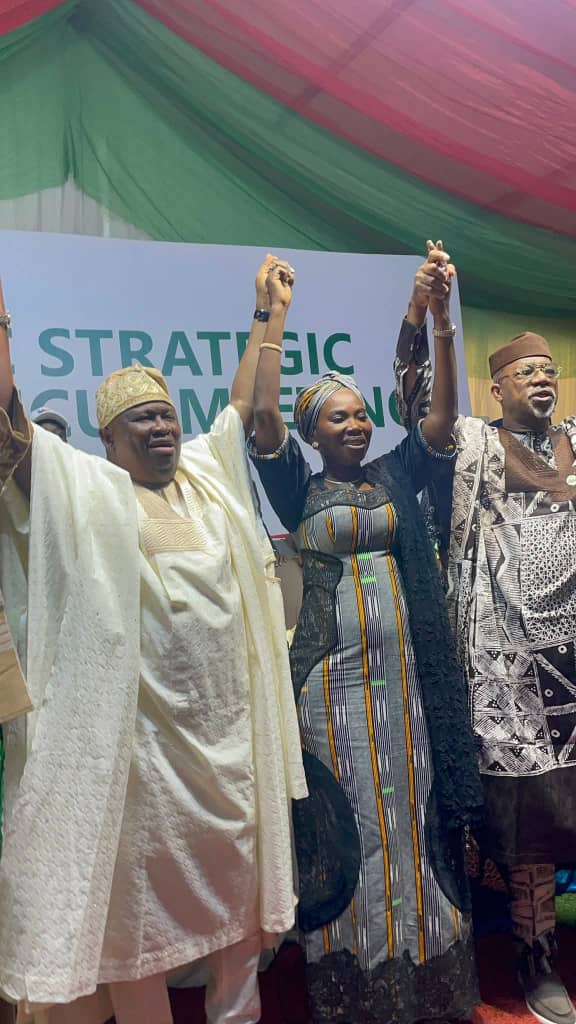
APC Ogun governorship candidate, Senator Solomon Olamilekan Adeola (YAYI), today officially unveiled Mrs. Kudirat Abiodun Adegunwa Balogun as the party’s deputy governorship candidate ahead of the forthcoming election.
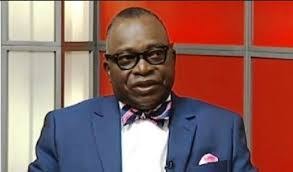
A chieftain of the All Progressives Congress (APC) and aspirant for the Ekiti North Senatorial District ticket, Senator Ayodele Arise, has insisted that the recently conducted primaries of the ruling party were a sham and cast aspersions on democracy.
Senator Arise made the remarks at the weekend while speaking with journalists in Abuja. The APC committee that supervised the process had declared the sitting lawmaker representing Ekiti North, Senator Cyril Fasuyi, the winner.
Aside from Senator Arise, other contenders for the ticket, Honourable Dipo Bamisaye and Dare Owolabi, have also dismissed the outcome as fraudulent and manipulated.
Senator Arise, who represented the senatorial district between 2007 and 2011, declared that the ruling party has continued to pay lip service to internal democracy.
He said: “When we talk about internal democracy, it is still a very big challenge. It’s one thing for us to have a Constitution, it’s another thing for people to try to circumvent it or the guidelines for any election. That was demonstrated in no small measure when I tried to come back through the primary.
“Because I knew what was in the pipeline so I went into it to prove a point. It will be a shame if some of us passed through this country and we dont have the voice to correct the anomalies and let people know that if we want to practise democracy, let us practise it. If we don’t want it, it’s a different kettle of fish.
“The experience I had during the primary I really don’t want to over beat that because I believe the chairman of the party has spoken with Mr. President and I think they are looking at all the challenges and i am sure those of us who worked and won our elections will be given our mandate in due course.”
Arise expressed the hope that the appeal panel put in place by the APC National Working Committee would do justice to his petition.
“I am not lobbying but I have put the facts on the table and I have presented to those people reviewing the election and I believe we still have men of good conscience at helm of affairs in this country who knows what is right.
“Moving forward, we should put some guidelines in place to ensure that people don’t misunderstand democracy to mean that a person in power is appointing people to different positions.
“We want to showcase the best in our country and we want to show that we understand what democracy is all about. We want to see who are the people that the community people or those voters want to represent them.
“So, i will say that there will be some changes and this practise is an ongoing, learning process and I believe they should continue to improve as we move on. There are so many things that have improved for the 27 years in our electoral process and we have to give kudos to those that have fine-tuned some of the processes.
“As we discover problems, people respond to them and I believe, more than anybody else that our President has been very proactive in terms of fixing some of these challenges, working on it and ensuring that corrections are made before it’s too late.
“So, as far as the internal democracy within parties is concerned, we still have quite a distance to cover but I believe that we will continue to improve on daily, quarterly or yearly basis.”
The aspirant attributed the crises trailing the party primaries to the overbearing influence of sitting governors.
He said: “The issue of the governors is still a major problem in terms of trying to get to the Senate. Even when you aren’t contesting against them, if you aren’t their favored candidate, chances of your making it is a little bit very challenging.
“But why is it so is because governance and political office in Nigeria has been looked at a source of building wealth.
“When a person becomes a governor, somehow the money coming for the commonwealth should be used for everybody but a sizeable part of it is actually cornered and annexed. So for you to want to unseat a governor who wants to go to Senate is a very difficult task. That’s because of the quantum of money that he has which is actually public fund is very worrisome.”
Sun

Fresh concerns over insecurity in Ondo State have emerged following the abduction of a traditional ruler, Adeniyi Adelana, by armed men who stormed his residence in Ode Oriya community, Owo Local Government Area.
The incident occurred on Saturday night when the attackers reportedly invaded the community and forcefully whisked the 60-year-old monarch into a nearby forest after attacking his home.
Confirming the development, the Ondo State Police Command said it had launched an intensive rescue operation to secure the monarch’s release and apprehend those behind the abduction.
Police spokesperson, DSP Abayomi Jimoh, disclosed that the gunmen, numbering about six, struck under the cover of darkness and escaped through bush paths leading out of the community.
According to him, security operatives moved swiftly to the area after receiving a distress call.
“The Ondo State Police Command has launched a coordinated rescue operation following the abduction of a community leader by suspected kidnappers in Ode Oriya Village, Owo Local Government Area of the state.
“Preliminary reports indicate that at about 8:05 pm on the reported date, a group of approximately six armed men stormed the residence of Mr Adeniyi Adelana, aged 60, the Baale of Ode Oriya Village.
“The assailants reportedly invaded the premises under the cover of darkness and forcefully whisked the victim away through a nearby bush path to an unknown destination.
“Upon receipt of the distress report, the Divisional Police Officer, B Division, Owo, immediately mobilised a combined team of police operatives and other security personnel to the scene.
“The area was swiftly secured, and a preliminary assessment of the crime scene was conducted as part of ongoing investigative efforts.”
The police also confirmed that the monarch’s wife sustained a gunshot wound during the attack. She was rescued and rushed to a medical facility, where she is receiving treatment.
“She was promptly rescued and taken to a nearby medical facility, where she is currently receiving treatment and responding positively to medical care.”
Jimoh said security personnel have intensified search efforts across forests and suspected escape routes around Owo and neighbouring communities.
“A comprehensive search-and-rescue operation was activated, with security operatives combing nearby forests, bush paths, and suspected escape routes in a determined effort to track the movement of the kidnappers, secure the victim’s safe release, and bring the perpetrators to justice.
“Tactical deployments have also been strengthened across the area and adjoining communities to enhance operational effectiveness.”
He added that the Commissioner of Police, Felix Ohagwu, has directed all tactical units and intelligence teams to intensify operations aimed at rescuing the traditional ruler and arresting the kidnappers.
“The command remains resolute in its commitment to ensuring that the victim is reunited safely with his family while all those involved face the full weight of the law.”
The latest incident adds to growing concerns over the increasing cases of kidnapping across parts of the South-West, with residents urging security agencies to strengthen surveillance and protect vulnerable rural communities.
Sun
A former governorship aspirant and women leader, Princess Grace Iye Adejoh, has said it is a thing of shame for Nigeria to be celebrating Democracy Day while its citizens are being murdered daily by bandits, with the masses living in fear and anguish with no respite in sight.
Princess Adejoh, while reacting to the recent Democracy Day celebration in a press statement made available to newsmen in Lokoja, said: “How can Nigerians celebrate democracy when fear has become a way of life?”
The vocal women’s leader called on President Bola Tinubu to sit up and save the nation from the killing of innocent people, stressing that the same people who are being haunted by economic hardship are also being hunted daily by bandits who kill and displace them from their ancestral lands.
The statement reads in part:
“As Nigeria marks another Democracy Day, the drums of celebration echo across the land. The political class sings songs of democratic success and invites citizens to join the chorus.
“But how can we sing?
How can we celebrate democracy in a nation where fear has become a way of life?
“Our democracy has been hijacked by looters and power merchants who see public office not as a trust, but as a prize. In their quest for power, they opened the floodgates of violence and left ordinary Nigerians to pay the price.
“Today, the masses have become hostages in their own country.
“Our children are kidnapped. Our women are violated. Our men are slaughtered. Communities are displaced. Farmers abandon their lands. Even our soldiers and commanders fall while the bloodshed continues.
“Yet we are told to celebrate.
How can we sing the democracy song in a land where bandits roam freely, corruption flourishes and too many leaders seem more concerned with power than with human lives?
“The dead seem to whisper to us: ‘Do not cry for us. Cry for those who remain. Cry for those who leave home unsure they will return. Cry for parents who cannot protect their children. Cry for a nation blessed beyond measure, yet wounded by greed, violence and failed leadership’.
“This is not the democracy our heroes fought for.
Democracy is not a holiday. It is not a speech. It is not a slogan.
Democracy is security.
Democracy is justice.
Democracy is accountability.
“When citizens live in fear, democracy is in danger. When leaders prosper while the people suffer, democracy is in danger. When power becomes more valuable than human life, democracy is in danger.
“Nigeria does not need another performance. Nigeria needs leadership, courage and truth.
“If our democracy is to survive, we must reclaim it. Not tomorrow. But now.
“History is watching. Future generations will ask whether we remained silent while our nation bled.
“The Giant of Africa has stumbled, but it has not fallen beyond redemption. The question before us is whether we will find the courage to lift it again.
“The time to answer that question is now,” Princess Grace Iye Adejoh added.
Sun
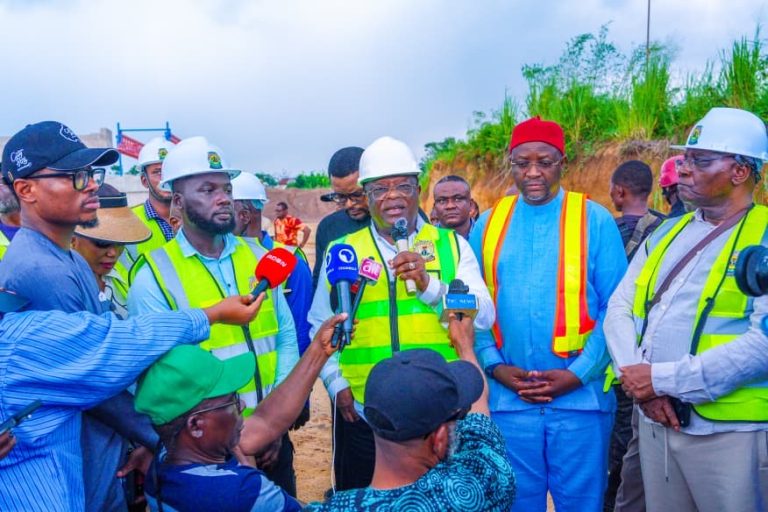

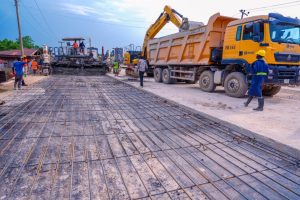
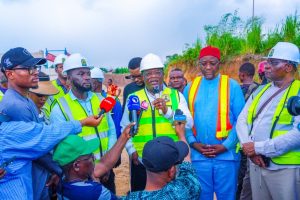
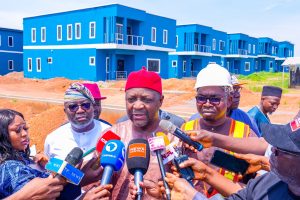
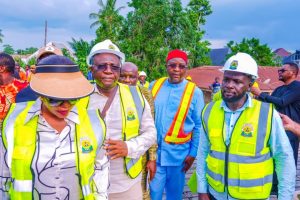
The Minister of Works, Senator Dave Umahi, has stated that several road projects for the South East region, originally conceived during the colonial era but left unrealised for decades, are now being brought to life under President Bola Tinubu’s Renewed Hope Agenda.
Speaking on Saturday in Ebonyi State, while conducting senior journalists and government officials on a tour of the administration’s legacy projects, Senator Umahi—former Governor of Ebonyi State—highlighted the Calabar-Ebonyi-Benue Trans-Saharan Superhighway as a project of strategic importance to the South East, South South, and parts of the North Central region.
“It is a colonial-era dream long forgotten, but President Tinubu has revived it, and construction is now underway. We must thank him immensely,” he said
The minister reported steady progress on the project, noting that Section One, initially 118 kilometres, has been extended to 123.6 kilometres, with a contract sum of ₦45 billion, and that dualisation works are ongoing.
According to Umahi, Section Two, which runs from the Aboadi border through Benue and Kogi States to Nasarawa, has also been awarded at a cost of ₦668 billion.
He noted that the project has reached about 28% completion in some areas, with work continuing even during the rainy season, thanks to President Tinubu’s adoption of concrete road technology.
“The Trans‑Sahara Superhighway is not just a road; it is an investment corridor that will catalyse trade in agricultural produce like cassava, yams, cashews, and palm oil from Cross River, Benue and Ebonyi, while also connecting Nigeria to Cameroon,” Umahi explained.
He noted that the concrete road technology pioneered by President Tinubu as governor is now being deployed nationwide.
Umahi expressed the gratitude of the South East to the President for ending decades of exclusion, stating, “All our forefathers sought—inclusiveness—we have it now.”
During the tour, the team, including Senator Umahi, acting Federal Controller in Ebonyi State, Engr. Maxwell Okoh, and Mohammed Mustafa, Project Manager of Infiouest International Limited (the contractor for the Calabar-Abuja Trans-Sahara Superhighway), inspected critical bridges in Section One and the concrete pavement on the Onueke section. They also inspected the 1.3-kilometre Ndi-Egbe Bridge in Afikpo LGA, Ebonyi, which links Ugep in Cross River State and is expected to be completed by December 2026.
Regarding the Onueke Flyover in Ebonyi’s Central Senatorial District, Umahi noted that the ₦35 billion project is designed to decongest the highway. The flyover stands 90 metres high and is flanked by a 2.2-kilometre road on both sides.
The minister explained that Section Two of the Superhighway, awarded to Infiouest International Limited, runs from the Ebonyi border through Benue and Kogi to the Loko-Oweto Bridge in Nasarawa State, covering 123.6 kilometres.
The team also inspected the completed concrete pavement link road between Ebonyi and Cross River States, particularly from Okposi-Ukawu in Oha-Zara Local Government of Ebonyi and Ugwulangu-Abaomege in UGEP Ugep Local Government of Cross River State.
Meanwhile, Ebonyi State Governor Francis Nwifuru has declared that his state remains the safest in Nigeria, with no reported kidnapping cases since he assumed office.
While receiving the media delegation in Abakaliki, Governor Nwifuru thanked President Tinubu for his commitment to infrastructure development in the South East, especially in Ebonyi, and for his national renewal programme. He also highlighted numerous completed and ongoing projects in the state, including rural roads, primary health centres, and water schemes.
“We have kept contractors busy in the state with projects spread across every local government area, from rural roads to primary health centres and water schemes. We do not even view the road projects as a big deal because we have road projects scattered all over the state.”
South-east governors and leaders are scheduled to converge on Abakaliki on Monday at a mammoth rally to endorse President Tinubu for a second term in office.
South East governors and leaders are scheduled to converge in Abakaliki on Monday at a major rally to endorse President Tinubu for a second term. Umahi said Governor Nwifuru would lead the people of Ebonyi State at the rally to show appreciation to President Tinubu. He urged Ebonyi citizens to ignore the ranting of opposition politicians who cannot match President Tinubu’s record.
The National Media Tour is organised by the Governor Hope Uzodimma-led Renewed Hope Ambassadors, in collaboration with the Presidential Media Team.
The visit to the South East is the team’s second regional tour, following the team’s North West tour. The delegation is led by Bayo Onanuga, Special Adviser to the President on Information and Strategy, and Chief Sunday Dare, Special Adviser to the President on Media and Public Communications.
Other team members include Mr. Tunde Rahman, Senior Special Assistant to the President on Media; Tope Ajayi, Senior Special Assistant to the President on Media and Publicity; Mr. Otega Ogra, Senior Special Assistant to the President on Digital and New Media; Segun Dada, Special Assistant to the President on Social Media; Linda Akhigbe and Fred Nwabufo, Senior Special Assistants to the President on Strategic Communications; Abdullahi Tanko Yakasai and Barrister Chioma Nweze, Senior Special Assistants to the President on Community Engagement; and Dare Olude, Senior Special Assistant to the President on Job Creation.
From Ebonyi, the team will proceed to Enugu State on Monday, and later to Abia, Anambra, and Imo States to inspect the projects undertaken under the Renewed Hope Agenda.
Tunde Rahman
Director of Media & Publicity,
Renewed Hope Ambassadors
June 14, 2026
The Christian Association of Nigeria (CAN) on Sunday lamented the escalating wave of insecurity across the country, declaring that Nigeria is “bleeding” from the effects of terrorism, banditry, kidnapping and other forms of violent crimes that have claimed thousands of lives and displaced countless communities.
The association made the declaration as Christians across the country observed a nationwide “Black Sunday” in memory of victims of insecurity and in solidarity with families and communities devastated by violence.
In a message to Christians, CAN President Archbishop Daniel Okoh said the Church could no longer remain silent in the face of persistent attacks on innocent Nigerians, stressing that the country was passing through one of its most difficult periods.
“Today, we are not only mourning; we are speaking with one voice. Our nation is bleeding, and the Church cannot remain silent while innocent lives are lost and families live in fear,” he said.
He said the “Black Sunday” was dedicated to honouring the countless victims of insecurity, including men, women, children, clergy, farmers, students and entire communities whose lives have been shattered by violence, terrorism, banditry and kidnapping.
CAN noted that the period of mourning coincided with the June 12 Democracy Day celebration, stressing that the ideals of democracy are rooted in the sanctity of human life, justice, the rule of law and the protection of citizens.
The association argued that there could be no better way to honour the sacrifices that birthed Nigeria’s democracy than by ensuring the safety and security of all citizens. “The quest for security is not separate from the democratic journey; it is central to its success and sustainability,” the statement said.
The CAN president reaffirmed the Christian belief in the sanctity of human life and expressed solidarity with bereaved families, displaced persons, victims of attacks and traumatised communities across the country.
The association also offered prayers for divine comfort, healing and justice for those affected by the nation’s security challenges.
CAN called on the federal government, state governments and other relevant authorities to take urgent, decisive and sustained measures to secure lives and property, insisting that the protection of citizens remains the foremost responsibility of government.
“The protection of citizens is a sacred responsibility entrusted to those in authority and must be treated with the utmost seriousness,” the association stated.
The Christian body also commended the House of Representatives for passing the Community and State Policing Bill on June 11, 2026, describing the move as a significant step toward strengthening grassroots security architecture and improving community participation in efforts to safeguard lives and property.
While expressing hope that the Senate would complete legislative action on the proposal, CAN said the initiative could help enhance local security responses and address emerging threats more effectively.
The association further urged churches, Christian schools, hospitals, mission institutions and other faith-based organisations to adopt proactive security measures to protect worshippers, students, workers and facilities.
It called for increased security awareness, emergency preparedness, collaboration with local security networks and greater vigilance in view of prevailing threats across the country.
“While we trust in God’s protection, we must also exercise wisdom and prudence in protecting those under our care,” the CAN president said.
CAN urged Christians to remain united, continue praying for the nation and support victims of violence, while refusing to surrender to fear.
The association also prayed for President Bola Tinubu and other leaders, asking God to grant them wisdom, courage and determination to confront the country’s security challenges and restore peace and stability across Nigeria.
Sun
The Independent National Electoral Commission (INEC) has assured an extensive security arrangements to ensure a peaceful, credible and violence-free governorship election in Ekiti State on June 20.
INEC Chairman, Joash Amupitan, gave the assurance during a mock accreditation exercise in Ado-Ekiti, where the commission tested the functionality of its Bimodal Voter Accreditation System (BVAS) ahead of the poll.
Amupitan disclosed that security personnel are deployed from different parts of the country to identified flashpoints to guarantee the safety of voters, electoral officials and election materials throughout the exercise.
The electoral umpire boss further explained that the commission, in collaboration with security agencies, has already mapped out areas of potential concern and put measures in place to prevent any breach of peace during the election.
Expressing satisfaction that beyond security preparations, the performance of the BVAS during the mock accreditation was satisfactory, the INEC Chairman noted that the device successfully accredited voters within seconds and effectively detected individuals who attempted to verify accreditation outside their designated polling units.
He further explained that the technology now contains safeguards that make it impossible for presiding officers to upload results that do not tally with figures entered on official result sheets, thereby strengthening transparency and credibility in the electoral process.
While dismissing concerns about possible delays in densely populated polling units, he stated that INEC’s polling unit splitting arrangement and deployment protocols would ensure seamless accreditation and voting.
Amupitan further disclosed that all non-sensitive election materials have been distributed and batched, while electoral officers across the state have confirmed their readiness for the exercise.
He expressed confidence that voting would commence as scheduled across the state, assuring residents that the Commission remains fully prepared to deliver a free, fair and credible governorship election.
With security deployment intensified and electoral technology successfully tested, INEC says all is set for Ekiti voters to head to the polls next Saturday under conditions designed to guarantee safety, transparency and public confidence in the electoral process.
Sun
As Prince Adewole Ebenezer Adebayo criss-crosses the country after emerging as the presidential candidate of the Social Democratic Party (PDP) ahead of the 2027 elections and meeting Nigerians from different spheres of life, he has been preaching the message of hope.
Adebayo said that successive governments in Nigeria have failed the people but argued that hope must not be lost.
According to him, leadership must begin with restoring confidence among citizens who increasingly feel disconnected from institutions and uncertain about the future.
“We believed we had to go out and restore hope to the people — to ensure that Nigerians did not lose faith in their country at a time many felt abandoned and unprotected, almost like stateless people in their own land”, he said while reflecting on one of his engagements with Nigerians.
“People were beginning to question whether anyone still cared, whether government still remembered them.
“But our message was simple: Nigeria remains a project worth believing in.
“It still holds great promise and remains one of the greatest places anyone can call home.
“The failures of government must never be mistaken for the failure of the nation itself.”
In a political culture often driven by visibility, slogans and competition for attention, where acts of generosity are frequently announced before they are felt and public life has increasingly become a theatre where giving is documented, amplified and converted into political capital, the SDP presidential candidate has proved that there are still figures whose approach to service follows a different tradition—one that values impact over applause and people over publicity.
For many who know him beyond the public stage, his philanthropy is neither an occasional gesture nor a carefully packaged image project.
Rather, it appears to be an enduring philosophy rooted in responsibility, dignity and the belief that society advances only when ordinary people are given genuine opportunities to rise.
That underlying belief has also appeared in his public reflections on politics and nationhood.
His interventions—according to records and testimonies from beneficiaries—appear to reflect more than charity.
They suggest an attempt to preserve confidence where institutions have struggled, extending across education, youth development, enterprise support and humanitarian assistance.
But what distinguishes them is not merely their scale—it is their method.
Adebayo’s giving is often quiet.
Beneficiaries are reportedly assisted without fanfare. Students receive support without being turned into campaign materials. Families are helped without public ceremonies. Young people are encouraged without being reminded endlessly of who helped them.
That deliberate silence has become one of the defining features of his humanitarian identity.
Investing in human capital
Education appears to occupy a central place in Adebayo’s philanthropic priorities.
Across universities in Nigeria, hundreds of students have reportedly received varying forms of assistance ranging from tuition support and accommodation to registration fees, books and other academic needs.
The institutions listed so far among beneficiaries include Obafemi Awolowo University, University of Ibadan, University of Lagos, Lagos State University, Federal University of Technology Akure, Ekiti State University, Federal University Oye-Ekiti, Tai Solarin University of Education, Ladoke Akintola University of Technology, Adeyemi University of Education, Adekunle Ajasin University, Adamawa State University, Abia State University, Delta State University and Ambrose Alli University.
The figures collectively suggest support reaching thousands of students in higher institutions.
Observers of educational philanthropy note that such interventions carry implications beyond individual beneficiaries. One student retained in school may translate into a family lifted, a community strengthened and future leadership preserved.
For Adebayo, education appears to represent more than charity; it reflects a belief that talent should not be defeated by poverty.
Compassion Beyond the classroom
The humanitarian footprint attributed to Adebayo does not end with education.
His support for small businesses, traders, artisans and young entrepreneurs reportedly extends to empowerment initiatives reaching more than one thousand people through different forms of direct assistance.
Unlike conventional empowerment programmes built around publicity events, many of these interventions are described as practical and personal. For a struggling trader, it may mean returning to business. For a student, remaining in school. For a family under pressure, avoiding collapse. For a young person searching for direction, beginning again.
The underlying philosophy appears simple: poverty is not merely a shortage of income; it is often a shortage of options. Creating options becomes a form of development.
That outlook also mirrors another of Adebayo’s stated convictions: “We also want Nigerians to know that politics does not have to be dirty.
“A politician can still be decent, principled and committed to the common good. “Public service can still reflect family values, faith and humanity.”
Leadership measured in human terms
Those familiar with Adebayo’s background often draw comparisons—not of circumstance, but of disposition—with the late Moshood Kashimawo Olawale Abiola, remembered widely for philanthropy and public generosity. The comparison rests less on biography and more on outlook.
Abiola became known for extending his resources to ordinary Nigerians. Admirers of Adebayo argue that he demonstrates a similar instinct for lifting others quietly and consistently. Accounts from associates portray a man whose private life mirrors his public philosophy. Stories persist of students receiving educational opportunities they never expected; of support for professional training; of assistance to businesses; and of efforts aimed at creating pathways for younger Nigerians.
Supporters also point to employment generation across sectors including media, agriculture, legal services, real estate and related ventures.
Yet perhaps what stands out most in these descriptions is not scale but temperament.
The image repeatedly painted is of accessibility over distance, simplicity over ceremony and presence over performance.
Politics of quiet service
There is a larger lesson in this style of philanthropy. Leadership is often discussed in terms of office, policy and power. But leadership can also be understood as the willingness to carry responsibility before authority arrives.
A person who understands the burden of school fees may understand educational policy differently.
One who has listened to struggling traders may think differently about economic reform.
One who has quietly supported families may approach governance with greater sensitivity.
This does not make philanthropy a substitute for public policy. But it may reveal something about instinct, values and priorities.
Adebayo himself frames that challenge in broader political terms:
“Our hope is to transform the politics that produced our present challenges. Changing one president alone will not solve Nigeria’s problems; changing the political culture will. And to change the system, we must first build better political parties and raise the expectations of the people. When citizens raise their standards, politics will rise with them.”
Supporters argue that his record reflects a broader philosophy of people-centred development: strengthen education, empower enterprise, protect dignity and expand opportunity.
Whether viewed as humanitarian engagement, social investment or simply compassion in action, the pattern that emerges is consistent.
Not every act of leadership announces itself. Some simply change lives and move on.
And perhaps that is the point.
Sun
•Despite reconciliation efforts, aggrieved aspirants insist crisis not yet over in states
Internal cohesion remains a mirage for the All Progressives Congress (APC). Weeks after the primaries, the party still cannot close ranks. Despite the administrative pageantry of setting up national screening, appeal, and reconciliation committees, the APC is wrestling with deep-seated internal fragmentation. The aftermath of the legislative and governorship primaries has made it clear that no standard reconciliation template can paper over the structural fractures across key states. Aggrieved aspirants, convinced the process robbed them, are rejecting every peace option the National Reconciliation Committees have tabled, including offer of alternative political concessions, selective re-runs where irregularities are undeniable or forward-looking promises of federal appointments and board slots. Until they bend, the APC remains a house at war with itself.
Volatile States
Several state chapters remain locked in deep structural crises. The battle lines are drawn not by ideology, but by candidate imposition, the controversial use of consensus arrangements, and existential struggles for control of party structures ahead of the 2027 general elections.
Rivers
Rivers State is currently one of the most volatile political battlefields in the country. The APC chapter is fractured by the proxy war between FCT Minister Nyesom Wike and Governor Siminalayi Fubara. The primaries bypassed Fubara’s camp, favouring figures aligned with Wike. Because the national leadership has leaned heavily toward Wike’s structure to secure the state for 2027, the local party is hostile to anyone outside that faction. “When one camp must erase the other to survive, that is not reconciliation. That is surrender.
“True reconciliation is structurally impossible when one camp requires the total political erasure of the other,” APC stakeholders in Rivers declared.
Ogun
In Ogun, tension remains high over the widening rift between Governor Dapo Abiodun and his predecessor, Senator Gbenga Daniel. The crisis boils down to a clash over process and succession. Abiodun’s camp favours tightly controlled consensus to ensure a seamless transition. The opposing camp feels short-changed, insisting the grassroots should decide. “Consensus should be agreement, not imposition from Government House,” a member of Gbenga Daniel camp who did not want his name in print said. With disputed rules of engagement, every attempt to broker peace has hit a brick wall.
Effort to get the Ogun State spokesperson of the APC, Nuberu Adesanya Olufemi, to comment on the on-going reconciliation efforts proved abortive. He ignored several phone calls put through to him as well as Whatsapp messages.
Lagos
Despite being the President’s home stat, Lagos is unsettled especially in Alimosho. Historically, Alimosho has been the “powerhouse” of Lagos politics due to its massive voting population, but it has also become a perennial battleground for internal party supremacy.
During a recent stakeholders’ meeting held at the party’s secretariat at Acme Road, what was supposed to be a peace settlement turned violent, as the state chairman, Hon C.O Ojelabi, narrowly escaped mob action. Angry party members accused him of selling the people’s mandate. Protesters cite “allegations of imposition and manipulation, accusing party officials of sidelining popular candidates”. Placards read: “Ojelabi Must Go”. “Ojelabi, Mr Voter’s Apathy”.
The party has, however, issued a rebuttal: “The party chairman was neither molested nor harassed at any point during the incident. Furthermore, the Chairman was not present at the APC Secretariat at the time the event occurred.”
The dramatic escalation at the Acme Road secretariat involving Hon. Cornelius Ojelabi underscores a deepening crisis of confidence.
The chaotic escape of the state chairman shows that standard party pacification mechanisms are failing to hold the line. For Lagos, the ultimate stronghold and home base of the presidency, to show such highly visible, volatile fractures at the secretariat is a major vulnerability. If the party cannot guarantee basic order during an internal peace settlement, it signals to opposition elements that the frontline structure is deeply stressed.
Nevertheless, former Chairman of the state chapter of the party, Chief Henry Ajomale, expressed optimism that all disputes would be amicably resolved by the reconciliation committee. “Every dispute will be resolved by the Appeal and Reconciliation Committee and keep all aggrieved members within the party.
There is enough time for reconciliation and to settle all the rifts. The election will hold in January, and we are in May. Within that period, we will resolve and settle all aggrieved members,” he told Sunday Sun in a telephone chat.
Kwara
The situation in Kwara presents a political irony. Following the emergence of Speaker Salihu Danl as the governorship candidate, another Otoge revolution is threatening with stakeholders accusing Governor AbdulRahman AbdulRasaq of candidate imposition. APC stakeholders warned “the state cannot afford to go back to Egypt” and referenced the 2019 “Otoge Revolution” that liberated Kwara from godfatherism. Integrity Group warned the party “risks losing its grip on the state in 2027” if discontent continues.
Offa LGA members protested: “They didn’t allow us to vote… They are imposing candidates on us”.
Another APC chieftain declared outright: “There is no single power centre that can impose consensus without resistance”.
For aggrieved party supporters to weaponise the same Otoge slogan against the sitting establishment is a massive warning sign. The 2019 uprising proved that Kwara electorate and party faithful know exactly how to organise when they feel cut out of the process. When the grassroots feel they no longer have a say, the transition from boardroom dialogue to open defiance happens incredibly fast.
Benue
In Benue, the party is a pressure cooker of resentment after disputed governorship and legislative primaries. High-profile aspirants, including Dr Jeffrey Kuraun, accuse the leadership of frustrating their right to a fair hearing. “Reconciliation cannot occur where there is denial of due process,” an aggrieved aspirant in Benue insisted. He alleged that the Primary Election Appeal Committees made themselves unreachable, refusing to sit or provide channels to file petitions. When members feel shut out of both the ballot and the internal justice system, they abandon the peace table for the courts or rival parties.
Nasarawa
In Nasarawa State, the internal machinery is unravelling after a governorship primary that favoured Governor Abdullahi Sule’s candidate, Senator Ahmed Wadada. The fallout triggered resignations and defections. The exit of former Inspector-General of Police Mohammed Adamu, who quit his ward membership in Lafia, proves the elite consensus model is failing. “You don’t build a party by ignoring stakeholders who built it. When reward ignores rank, loyalty leaves,” a party chieftain said after Adamu’s resignation. When the reward system ignores high-ranking stakeholders in favour of executive imposition, they take their structures elsewhere instead of waiting for empty promises.
Gombe and Kano
Gombe and Kano share similar experience. In Gombe, the defection of former Minister of Communications and Digital Economy Isa Ali Pantami to the PDP exposed deep fractures. In Kano, legislative aspirants like Abdulmajid Isa Umar Mai Rigar Fata have exited the party. Both states suffer from what analysts call “electoral predetermined outcomes.” When mobilisers believe tickets were written in hotel rooms long before primaries, the legitimacy of local leadership collapses. Defection becomes more logical than reconciliation.
Across these states, the crisis persists because the APC National Working Committee (NWC) is using reconciliation to enforce compliance with executive decisions, not to negotiate fair compromise. Until the party addresses the systemic manipulation of delegate lists and abuse of consensus, these chapters will remain political tinderboxes.
The APC National Reconciliation Committee is trapped in a profound political dilemma. After highly contentious national and legislative primaries, party leadership is discovering that the standard tools of pacification — appeals to loyalty, backroom deals, and promises of future patronage — are failing. The committee’s predicament is not for lack of effort, but for structural contradictions that make clean resolution nearly impossible. Once primaries conclude, result sheets are signed, and names are submitted to INEC, the window for structural adjustments shuts tight. The committee cannot rewrite the ballot without triggering legal crisis.
The power balance dilemma
In states where the crisis stems from executive imposition, the committee cannot overrule a sitting governor without destabilising the party’s financial and logistical backbone. The governor is the anchor. Chastise him, and the structure collapses.
Divisions over candidate emergence have created a deadlock. Incumbent structures defend consensus and indirect primaries as tools for stability and loyalty. Marginalised factions insist only direct primaries reflect the grassroots will. Because the committee is tasked with settling fallout, not fixing rules, it is treating symptoms while the disease remains. In past cycles, the party relied on the gravity of incumbency to keep people in. That calculus has changed. High-profile exits of stakeholders and former federal officials prove politicians will walk away if structurally alienated. If the committee compromises too much with rebels, it undermines official candidates and rewards rebellion. If it stays rigid, it risks an exodus of mobilisers and a hollowed-out structure.
True reconciliation requires concessions, but political tickets cannot be shared. The APC is trying to resolve an existential battle for survival with the language of family disputes. Until it addresses the integrity of internal democracy before ballots are cast, reconciliation will feel like rebuilding a house while the foundation shifts.
Factors stalling reconciliation efforts
Appeal, screening, and reconciliation committees remain critical for managing frictions and enforcing discipline. But setting up a committee is rarely the end of a crisis. More often, it is formal acknowledgment of complexity. Reconciliation requires compromise, but heavy reliance on the consensus model leaves no room for it. Tickets allegedly handed down through backroom deals have disenfranchised aspirants. For them, reconciliation means political erasure. With processes seen as biased toward incumbents, committees are viewed as pacifiers, not arbiters. “We’ve heard board appointment next cycle before. After the election, the phone stops ringing,” an aggrieved aspirant told Sunday Sun in a cynical tone.
Legal hurdles make party-switching complex, so aggrieved heavyweights stay and fight from within. Instead of defecting, they are weighing the notion of pursuing high-stakes legal battles to overturn primaries or fund parallel structures. You cannot reconcile with a faction trying to void your ticket in court.
A major roadblock is the clash between governors and state executives who demand total ticket control, and federal appointees/NASS members who claim backing from the national secretariat to bypass local hierarchies. The committee cannot bridge this gap because neither side will cede machinery. The Electoral Act has pulled the 2027 elections into Q1, compressing timelines. The fight for legislative and state tickets is now a fight for immediate political survival. Aspirants who lost know they will be side-lined from the next cycle’s governance and campaign architecture. When careers are on the line, appeals to loyalty carry little weight.
In previous cycles, leadership stalled crises by promising ministerial slots, board appointments, or lucrative state positions. Now, committees preach collective interest and offer vague future inclusion. For politicians who invested heavily in governorship, senatorial, or federal constituency tickets, there is no runner-up prize. When factions feel locked out, peace becomes an expensive luxury.
The most volatile fault lines pit sitting governors against predecessors, often sitting senators. These are not ideological battles; they are wars for control of state party machinery. A committee can broker a truce, but it cannot resolve who controls the structure before elections.
Cynicism from broken promises
From the Buni-led caretaker era to recent panels, a cynical precedent has set in. Aggrieved members saw promises to losing factions shelved once elections were won. Committees are now viewed as optics management tools to suppress dissent until defection or litigation expires. When committees paper over structural disagreements without addressing transparency, peace is cosmetic. Until the APC builds institutionalised mechanisms for fair competition, internal democracy, and genuine power-sharing, peace will remain an elusive concept, fiercely chased but rarely captured. With consolation prizes shrinking and past promises unfulfilled, sceptical politicians will no longer step down for vague patronage.
The challenge before national leadership is to pull state chapters back from silent crises and prevent aggrieved members from pretending to stay in the party while working against it through anti-party activities in the general elections.
Presidential intervention
In these circumstances, President Bola Ahmed Tinubu holds a double-edged sword. While his intervention carries immense political weight, it also exposes the delicate balance he must maintain between preserving his structural alliances and enforcing genuine party peace.
The Villa’s primary strategy for managing post-primary fallout has been an aggressive push for consensus. Before and during the nationwide primaries, the President explicitly advocated for consensus-building to “reduce rancour and internal divisions.”
From a presidential standpoint, consensus minimises public legal battles, stabilises state chapters, and presents a united front ahead of the general election cycle. But disputes arose when aspirants perceived state-level consensus not as mutual agreement, but as executive fiat dictated by sitting governors or powerful interests. In states where heavyweights feel their grassroots popularity was bypassed under the guise of consensus, the President’s endorsement of this method deepens resentment.
Traditionally, the President must back his governors. They are, after all, the chief mobilisers, financial engines, and structural anchors of the party in their states. Yet the President is cautious about stepping into crises in places like Ogun or Benue and overruling a governor’s preferred transition plan to appease aggrieved factions. Doing so risks alienating a crucial executive ally.
But the reality is stark: the President cannot rewrite INEC candidate lists already submitted without triggering severe legal and constitutional crises under the Electoral Act. Therefore, presidential intervention largely relies on forward-looking promises — federal appointments, board memberships, or assurances of inclusion in the next governance cycle. While this satisfies some career politicians, it has failed to appease local structures that feel they have lost their primary base of power. The true test of President Tinubu’s leadership in this crisis is whether his intervention moves past short-term fire-fighting. Managing a coalition of powerful, ambitious regional leaders requires more than appeals to party loyalty. Until the presidency establishes a mechanism that guarantees internal democratic equity before the ballot box is compromised, even the highest level of presidential intervention will only paper over cracks that remain fundamentally structural.
Sun
• I believe Obi will not run for 2nd term
Dr Rabiu Musa Kwankwaso, leader of the Kwankwasiyya Movement and the vice-presidential candidate of the Nigeria Democratic Congress (NDC) in the 2027 general elections has described the All Progressives Congress (APC) as a party that is on a downward trajectory.
Kwankwaso told the BBC Hausa Service, in an interview monitored by Fred Ezeh, that many APC members are disillusioned, and might work for the success of other opposition parties from the inside.
He stated that himself and Peter Obi share many common values, and one of them is the massive support they enjoy, especially among young men and women who sincerely believe that if they succeed, they too will benefit.
You recently moved to the NDC. What informed the decision?
We deliberated and concluded that we needed a political party that would be easy to build and organise. Since it is a relatively new party, it does not have many of the problems associated with older parties. That was why we joined it. Alhamdulillah, everything has now been properly settled. The congresses, the convention, and the special convention have all been conducted. Peter Obi has been confirmed as our presidential candidate, and I have been given the opportunity to serve as his running mate.
Some people believe that you left for the NDC because you realised you could not secure the presidential ticket in the ADC where Atiku Abubakar is a major figure. Is that why you moved to a party where you could run alongside Peter Obi?
Whether I contest or not, I remain a politician. Politics is not only about seeking elective office. In my political journey, I have belonged to parties where I did not contest, and I have contested and lost elections as well. Therefore, elections are not the primary issue before us. Our first concern is for the party to succeed. We also wanted a party whose principles align with our own beliefs and ideology. I have discovered that Peter Obi and I share many common values. One of them is the massive support we enjoy, especially among young men and women who sincerely believe that if we succeed, they too will benefit.
This is particularly important when you consider the Obidient Movement and the Kwankwasiyya Movement. The alliance between these two groups will benefit both our supporters and Nigeria as a whole. We are working hard to harmonise our ideas and governance plans so that they align. We do not want a situation where we enter government and begin pursuing conflicting policies or actions that are not in the interest of ordinary Nigerians.
Speaking about the strength of your party, if we compare only the NDC and the APC, how many votes do you think your party can get nationwide, and how many votes do you think APC can get?
That is a question statisticians can answer more accurately. However, I can tell you that the APC is on a downward trajectory. Every day, more people are becoming disillusioned with it and joining us. Even among politicians, many are moving toward us. As for ordinary citizens, many had already abandoned the APC long ago. When we joined the ADC, many people followed us because they saw us as a credible alternative. When we later left because of certain challenges and joined the NDC, many of those supporters came with us.
The NDC is growing steadily. In the next seven or eight months before the elections, and during the campaign period, the truth will become clear. Both genuine claims and false claims will be exposed. By the grace of God, the NDC will continue to grow stronger in Nigeria and even gain recognition beyond the country.
Are we talking about 30 per cent, 40 per cent, 50 per cent, or 60 per cent of the vote?
Our focus now is on ensuring that we have credible candidates in every constituency. We want competent and respected candidates who can effectively protect our votes. The voters are already there. They are not wandering around looking for whom to support. If you go to Kano, Sokoto, Niger, Maiduguri, and many other places, you will find that people are looking for alternatives. They do not need politicians to keep telling them stories because they have already seen what is happening in the country. Take security as an example. Initially, insecurity was concentrated in the North-East, particularly Borno and Yobe. Then Boko Haram expanded. Now look at what is happening in the North-West, where bandits and terrorists have taken over many areas. People are being kidnapped on highways almost daily. Recently, even a senior military officer was abducted. Soldiers are not spared, police officers are not spared, and certainly civilians are not spared. What is most unfortunate is that this insecurity has spread into the North-Central region, and is extending further south. Recently in Oyo State, school children and teachers were abducted. The situation worsens every day. Unless firm action is taken, the country may reach a point where there is no security, no stable education system, and no meaningful development. The nation could deteriorate completely.
Since your defection, there have been reports of disagreements between your supporters and Atiku’s supporters. Some people say there appears to be friction despite the alliance.
Politics will always have disagreements and arguments. I certainly have not instructed my supporters to attack Atiku, and I do not believe he has instructed his supporters to provoke ours either. In any movement, there will always be a few individuals who enjoy causing trouble. However, one thing I know is that we have instilled discipline in our supporters. As members of the Kwankwasiyya Movement, we teach our supporters not to provoke anyone. We do not insult people, abuse them, or attack their dignity. That is how politics should be. Politicians should focus on their plans and policies, especially what they intend to do for the people and not on insults and personal attacks.
It has now been confirmed that you will be Peter Obi’s running mate in the 2027 general election…
Yes. As everyone knows, after consultations within the party, we agreed that the presidency should go to the South because the South is currently entitled to complete its turn under the rotation arrangement. We agreed that a southern candidate should lead the ticket and serve one term of four years. After that, power would return to the North. This is the arrangement we believe in, and the one that our partners in the South also accept. Peter Obi is someone with support, credibility, and integrity. We believe he can govern fairly, treat both North and South fairly, treat Christians and Muslims fairly, and ensure justice for all ethnic groups in Nigeria. That is why we support him.
So you are indeed the vice-presidential candidate?
Yes, I am. When Peter Obi’s candidacy was formally unveiled, that announcement was made publicly. That is the arrangement we are working with today.
Some people have recalled your statement before the 2023 election that the position of vice president was largely ceremonial. Yet now you are accepting the role.
Many issues have been discussed. When the ticket was unveiled, Peter Obi himself publicly stated that he would not leave us idle. There will be responsibilities and opportunities to contribute meaningfully to governance.
There is an understanding that Peter Obi will serve for four years. Are you convinced that he will step down afterward so power can return to the North?
I believe so. As an elder statesman and a leader who made this commitment publicly, not in a private conversation, I believe he will keep his word. Politics is about trust and accountability. Both the North and the South are watching. I am convinced that he will honour the agreement because it was a carefully negotiated arrangement based on principles that have guided Nigeria’s democracy for many years.
Do you believe he has demonstrated that commitment through his past actions?
I have seen nothing from him except goodwill. Many allegations have been made, but if you examine them carefully, you will find that reasonable people did not make those accusations against me or against our arrangement. I joined him based on my own convictions. I have made it clear that this project is not about Peter Obi alone or Anambra State alone. It is about Nigeria.
Is this candidacy merely a way of testing the waters ahead of the election?
Anyone who knows me knows that I do not play politics as a game. Even when I joined the NNPP, I did so because I genuinely believed we could win. Opponents claimed I was only trying to split votes. My response was simple: whose votes was I supposedly splitting? I entered the race because I believed in it.
Likewise, this arrangement is serious, well-planned, and credible. We still have time, and people will come to understand what we are trying to achieve.
Let us return to Kano politics. Given everything that has happened between you and Governor Abba Yusuf, have you now abandoned him politically?
No, I have not abandoned anyone. We supported him and brought him forward. He won elections because of that support. In 2019, we endured injustice and remained patient because we believed in democratic processes. In 2023, we worked hard to ensure his victory. Whatever he has achieved today, may God continue to support him. We do not insult him or attack his dignity. He made his own decisions and followed his own path. Some people claimed I am worried about losing influence to him, but he knows that is not true. If elections are conducted freely and fairly, the people of Kano will decide.
Are you satisfied with the current relationship between you and him?
It is not a matter of satisfaction. I still care about him. I was not the one who pushed him away. And we never completely severed ties.
If Abba Yusuf returns and seeks reconciliation, would you accept him?
Certainly. Not only Abba Yusuf but anyone else who comes seeking reconciliation will be welcomed. Forgiveness is essential in politics. People have different backgrounds, ages, experiences, levels of education, and ways of thinking. You cannot expect everyone to think exactly like you. If we were not willing to forgive, we would never have reconciled with people like Ganduje despite all our political disagreements. Politics requires a large heart and a willingness to move forward. The same applies to Abba Yusuf. We worked together before, and we can work together again. Politics should not be driven by personal grudges but by what is best for the people.
Sun