Home Blog Page 366

We must improve our intelligence capabilities to tackle insecurity -Abbas

0

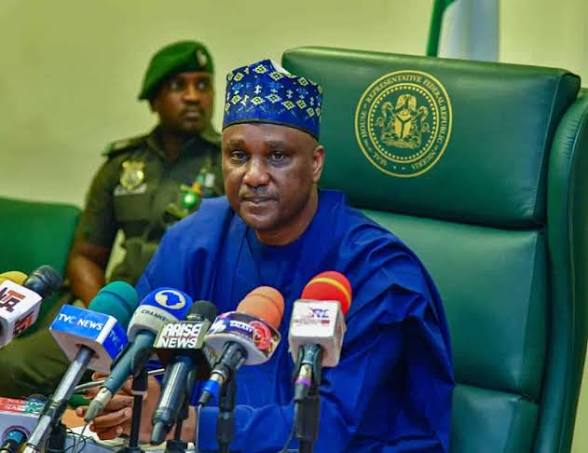
Speaker of the House of Representatives, Tajudeen Abbas, has said Nigeria must increase its intelligence capabilities to be able to combat the myriad of security challenges confronting it.

Abbas spoke while declaring open a public hearing organised by the House Committee on National Security and Intelligence, on three bills aimed at boosting Nigeria’s intelligence architecture, yesterday.

While commending the sponsors, he noted that the proposed legislation represents a comprehensive move to strengthen the country’s security framework.

The proposed legislations are Bill for an Act to Establish the Department of State Services Trust Fund, Bill for an Act to Establish the Strategic Intelligence Management Institute and Bill for an Act to Provide for the Establishment of the DSS Research & Development Institute.

According to him, “Across the country, challenges like terrorism, banditry, kidnapping for ransom, cyber threats, transnational crimes and other emerging security concerns continue to test our national institutions. In order to effectively confront these threats, we must improve our ability to gather, analyse and deploy intelligence in a timely and coordinated manner.

“A critical component of this is the issue of sustainable funding. Intelligence operations require consistency, flexibility and the capacity to respond rapidly to evolving threats. Our security forces operate in an increasingly complex and dangerous environment and require the support of certain resources, including modern equipment, logistics and welfare structures, in order to discharge their responsibilities effectively.”

He noted that “the proposed Department of State Services Security Trust Fund Bill represents an important attempt to move away from the unpredictable and sometimes inadequate funding mechanisms to a more sustainable framework that strengthens operational readiness and institutional effectiveness.”

He noted that the country cannot continue to demand outstanding commitment from security personnel, without first ensuring that they have the necessary tools and support they require in order to succeed.

He added, “Equally important is the need to build indigenous capacity in security research, technology and innovation. While Nigeria frequently benefits from partnerships and the acquisition of external security technologies, the changing nature of modern threats requires that we increasingly develop solutions that respond specifically to our own realities, including our geography, demographics, languages and unique security challenges.

“The proposed Research and Development Bureau within the Department of State Services is, therefore, a critical step towards building a more proactive intelligence system. By investing in local expertise, technological innovation and evidence-based intelligence models, we strengthen our ability to anticipate threats, rather than merely respond to them. The future of national security lies not only in acquiring capabilities, but in developing them.

“We must also recognise the human element at the centre of every intelligence institution. Behind every intelligence report, every operation and every strategic decision, are men and women who require continuous training, professional development, motivation and institutional support.

“Taken together, these three bills represent a comprehensive approach to strengthening our national security framework. They seek to provide greater capacity, promote innovation, enhance professionalism and ultimately deliver better outcomes for Nigerians.”

Earlier, the chairman of the committee, Ahmed Satomi, in his welcome address, explained that the three bills were intended to improve the funding and capacity of the intelligence security agencies.

According to him, “the bills before us seek to strengthen funding, build professional capacity and enhance indigenous research capacity within our premier domestic security agency. No law made in isolation of the people it is meant to serve can stand the test of time. That is why you are here.”

Satomi added that the three bills are interlinked, noting that one addresses funding, the second addresses professional training and coordination, while the third addresses indigenous capacity and technology. Together, they aim to position our intelligence agencies to better protect Nigerians and Nigeria’s national interest.”

Sun
Tinubu: No Community Should Suffer for National Dev, Commissions Airport Bypass Road in Abuja

0


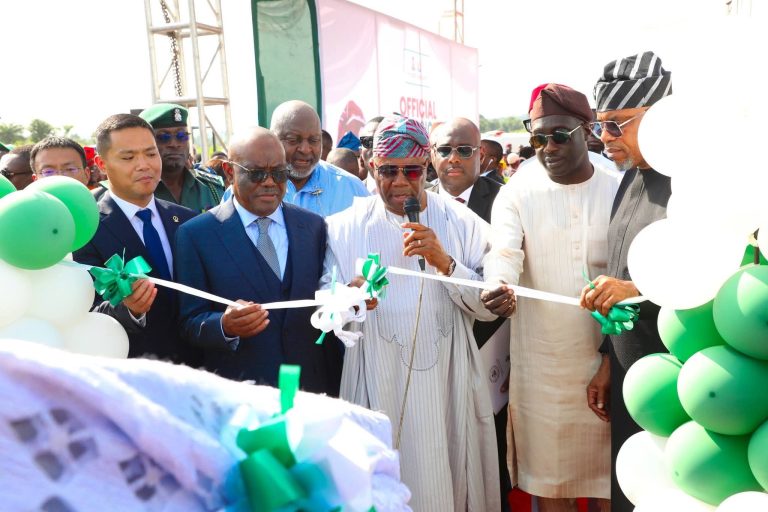
President Bola Ahmed Tinubu on Thursday, declared that no Nigerian community should be made a victim of national development, as he commissioned the 7-kilometre access road bypassing the second runway of the Nnamdi Azikiwe International Airport from Bill Clinton Drive to Tungan Madaki Settlement, completed with a four-span bridge in Abuja.

Represented by Senate President, Senator Godswill Akpabio, at the commissioning ceremony, Tinubu said the project was designed to correct years of neglect suffered by communities that sacrificed their ancestral lands for the construction of the airport’s second runway, but were left without basic road infrastructure.

According to the President, the newly completed road is not merely a transportation project but a strategic economic corridor that will improve security around the airport, ease traffic congestion and unlock development opportunities for residents of Tungan Madaki and adjoining communities.

He recalled that when the need arose to construct the airport’s second runway, host communities willingly surrendered their lands in the national interest.

“Yet, for years, the paradox remained. These patriotic communities gave up land for airplanes to fly, yet they had no motorable roads for their own feet and vehicles. They were cut off.

“Let me state this clearly; no citizen should be made a victim of national development. When the Honourable Minister of the FCT, Barrister Nyesom Wike, brought this matter to my attention, my directive was clear and unequivocal: ‘Whatever the communities ask for to make their lives whole, give it to them.’ We do not just take; we build, we replace and we elevate. Today, we have fulfilled that solemn promise,” Tinubu stated.

The President described the road as an “economic artery” that would provide an alternative route around the airport’s second runway while strengthening security around critical aviation infrastructure.

He explained that the project would help prevent local traffic from interfering with sensitive airport operations, reduce congestion along Bill Clinton Drive and stimulate economic activities in surrounding communities.

Highlighting the significance of the four-span bridge constructed along the route, Tinubu said it would ensure uninterrupted movement of people and goods throughout the year.

“Whether in the height of the dry season or the peak of the rains, our farmers can move their produce, our children can go to school, and businesses can thrive without disruption. That is what the Renewed Hope Agenda means: reducing hardship by building infrastructure that works,” he said.

The President also praised the Minister of the Federal Capital Territory (FCT), Barr. Nyesom Wike, for what he described as exemplary project delivery.

“Wike, you are ‘Mr. Project’, and you have not disappointed. In February 2025, I approved this project. You mobilised immediately.

Today, barely 16 months later, this beautiful stretch of road is completed and ready for use. No excuses. No stories. Just delivery.

“That is the standard Nigerians deserve, and that is the standard this administration will maintain,” he said.

Tinubu urged residents to safeguard the infrastructure by preventing encroachment on the road corridor and ensuring proper maintenance of drainage channels.

While acknowledging the economic challenges facing Nigerians, the President reiterated that the reforms initiated by his administration were necessary to secure long-term national prosperity.

“The reforms we embarked on three years ago were never going to be easy. We made hard choices. But they were necessary choices. Hard choices today mean a stronger Nigeria tomorrow.

“We are not building for headlines. We are building for generations to come. We will keep working day and night until every Nigerian feels the impact of good governance,” he added.

Earlier, FCT Minister, Nyesom Wike, said the commissioning formed part of activities marking the third anniversary of the Tinubu administration and the seventh day of a 31-day programme dedicated to unveiling completed projects across the territory.

Wike noted that the Tungan Madaki road project symbolised the administration’s commitment to extending development beyond Abuja’s city centre to neglected satellite communities.

He commended residents of the community for their cooperation during the acquisition of land for the airport’s second runway, describing them as a model for other host communities across the country.

“I must commend this community as a strong example for others to learn from. They did not make unrealistic demands or attempt to frustrate government efforts.

“Instead, they made two simple requests: employment for their youths and access roads for their community. They did not demand huge monetary compensation or place unnecessary conditions. They simply asked for jobs and roads,” Wike said.

According to him, government has already fulfilled the employment component of the agreement and is now delivering the road infrastructure promised to the community.

The minister recalled personally witnessing the difficult living conditions in the area during the project’s flag-off, noting that it was unacceptable for residents living close to an international airport to remain disconnected from the city.

“Under the administration of President Bola Ahmed Tinubu, we are changing that story through the Renewed Hope Agenda.

“This community, like many others in the satellite towns, had lost hope and confidence in government. But today, hope has returned,” he said.

Wike disclosed that the 7-kilometre road, which includes a major bridge, now links communities across the Abuja Municipal Area Council (AMAC) and Gwagwalada Area Council, while also improving access for residents travelling to the airport from Zuba and neighbouring settlements.

He further revealed that the Federal Capital Development Authority (FCDA) had directed the contractor, CCECC Nigeria Limited, to extend the road further to Zuba to maximise its economic impact.

The minister praised the contractor for completing the project within the agreed timeframe despite initial doubts about the feasibility of the schedule.

He, however, warned land grabbers against encroaching on the road corridor, stressing that the infrastructure was meant to serve host communities and support future development.

“This road is proof that when government and communities work together, progress is possible,” Wike said.

The project is expected to improve connectivity, boost economic activities, facilitate movement around the airport corridor and enhance the quality of life for residents of Tungan Madaki, Zuba and other surrounding communities.

INEC Monitors Receipt of Sensitive Materials for Rivers South East Senatorial Bye-Election

0


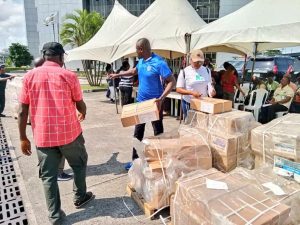
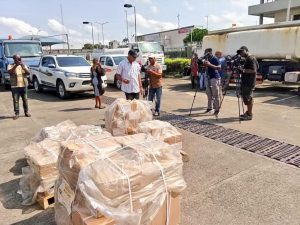
The Independent National Electoral Commission (INEC) has commenced preparations for the Rivers South East Senatorial District bye-election, with the National Commissioner supervising Rivers State, Mrs. May Agbamuche-Mbu, monitoring the receipt of sensitive election materials at the Central Bank of Nigeria (CBN) in Rivers State.

Mrs. Agbamuche-Mbu observed the process to ensure the secure receipt, handling and release of the sensitive materials in line with the Commission’s established guidelines.

The materials are expected to be distributed to the respective local government areas participating in the bye-election.

According to INEC, the monitoring exercise forms part of efforts to safeguard the integrity of the electoral process and guarantee the timely deployment of election materials.

The Commission reiterated its commitment to conducting a credible, transparent and seamless bye-election, assuring stakeholders and voters of adequate preparations to ensure a smooth electoral exercise.

Shell Appoints Elohor Aiboni as First Nigerian Executive Vice President, Country Chair

0


Shell has appointed Elohor Aiboni as its new Executive Vice President and Country Chair for Nigeria, making history as the first Nigerian to hold the combined leadership position.

Aiboni, who currently serves as Asset Director at Brunei Shell Petroleum and previously held the position of Managing Director of Shell Nigeria Exploration and Production Company (SNEPCo), will assume office on August 1, 2026.

She succeeds Marno de Jong, who is retiring after a distinguished 34-year career with the global energy company.
With more than two decades of experience across Shell’s operations in Nigeria and abroad, Aiboni has established a strong track record in driving operational excellence and advancing strategic investments in the energy sector. During her tenure as Managing Director of SNEPCo, she played a pivotal role in strengthening offshore operations and led the company through the landmark achievement of producing the one billionth barrel of oil from the Bonga field in 2023.

Her appointment represents a significant milestone for Nigeria’s energy industry and highlights Shell’s continued commitment to developing local talent and fostering leadership from within its Nigerian workforce.

Industry stakeholders have described the development as a major boost for indigenous participation in top-level leadership within the global energy sector, reflecting the growing recognition of Nigerian professionals on the international stage.

No casualties as fire guts Polaris Bank building in Lagos

0


A fire outbreak occurred on Thursday at a multi-storey building housing a Polaris Bank branch on Broad street in Lagos.

Videos shared on social media showed thick smoke billowing from the building as residents and business owners gathered around the scene.

thecable

Sanwo-Olu leads delegation to London Climate Action Week

0


The Lagos State Governor, Mr Babajide Sanwo-Olu, will lead the state’s delegation to a series of high-level engagements at the 2026 London Climate Action Week (LCAW).

The interaction is aimed at showcasing the state’s innovative climate finance initiatives and strengthening its position as a leader in subnational climate action.

This is contained in a statement signed by Sanwo-Olu’s Special Adviser on Media and Publicity, Mr Gboyega Akosile, on Thursday.

The event will take place from June 20 to June 28.

The governor is expected to participate in the Local Climate Action Summit, the flagship event for subnational governments, during the week-long programme.

The event is to be hosted by Bloomberg Philanthropies at Guildhall, London.

The summit will bring together governors, premiers, presidents, ministers and regional leaders from across the world to deepen collaboration and accelerate climate action ahead of COP31.

Sanwo-Olu is also expected to formalise Lagos State’s intention to join the Under2 Coalition, a global network of states and regions committed to achieving net-zero emissions and building climate resilience.

The move involves the signing of a memorandum of understanding with Climate Group, the secretariat of the coalition, aligning Lagos with more than 180 states and regions pursuing ambitious climate goals.

Ahead of the engagements, Sanwo-Olu said that Lagos was demonstrating that subnational governments could play a leading role in delivering practical climate solutions.

“Cities and regions are increasingly at the forefront of climate action.

“As the world moves from ambition to implementation, Lagos is demonstrating that subnational governments can build bankable pipelines, attract strategic partnerships and deliver tangible outcomes that improve livelihoods and drive sustainable economic growth.”

According to the governor, the state’s participation at the London Climate Action Week reflects commitment to positioning itself as a global model for climate innovation and investment.

Insecurity: Colleagues of Late Gen. Rabe recommend stronger action against banditry, terrorism

0


Colleagues, friends and associates of the late Retired Maj.-Gen. Abubakar Rabe have called for urgent reforms in Nigeria’s security architecture, following his death in the hands of bandits after being kidnapped in Katsina State.

The group made the call at a press briefing on Thursday in Kaduna while mourning the retired military officer, who died after being abducted alongside his wife, Hajiya Amina, around the Matazu area of Katsina State.

Speaking on behalf of the group, retired Brig.-Gen. Ismaila Abdullahi described the late officer as a distinguished military professional whose career was defined by loyalty, integrity and dedication to national service.
According to him, the death of Gen. Rabe is not merely an isolated incident but a reflection of the broader security challenges confronting the country.

“Kidnappings, banditry and terrorism have become a daily reality for many Nigerians, while public confidence in government’s ability to protect lives and property continues to decline,” he said.

The group acknowledged the efforts of the Federal Government and the Katsina State Government, particularly the operation that led to the rescue of the late officer’s wife.

They also commended President and Commander-in-Chief of the Armed Forces for his strong reaction to the incident and his pledge to take an uncompromising stance against terrorism and kidnapping.

However, the group expressed concern over what it described as persistent shortcomings in the nation’s counter-insurgency and anti-banditry efforts.
According to them, insecurity has spread across the country to the extent that it is increasingly difficult to distinguish between conflict zones and peaceful regions.

They noted that successive administrations had struggled to implement effective measures against terrorism and banditry, resulting in recurring attacks, abductions and loss of lives.

The group cautioned against politicising the nation’s security challenges or giving them ethnic and regional interpretations, stressing that terrorism and kidnapping are national problems requiring collective action.

They urged Nigerians to engage in deeper reflection on the root causes of insecurity and support efforts aimed at strengthening national unity and security cooperation.

The retired officers and associates also called for stronger political will at all levels of government to address the security crisis.
While welcoming existing bilateral security partnerships between Nigeria and countries such as the United States, they maintained that the primary responsibility for securing Nigeria rests with Nigerians and their institutions.

“No foreign nation can defend Nigeria for us. Effective security strategies must be driven by strong national institutions, adequate funding and coordinated implementation,” the group stated.

They advocated improved border security and stronger regional cooperation with neighbouring countries, including Niger, Chad, Cameroon and Benin Republic, to curb the illegal movement of arms and criminal elements.
The group further called on the 19 Northern governors to develop and implement a regional security framework aimed at addressing banditry, terrorism and the proliferation of illegal weapons.

They also urged authorities to regulate and monitor logistics and support systems exploited by criminal groups to sustain their activities.

Drawing lessons from international experiences, the group cited examples of countries that successfully confronted terrorism through sustained political commitment and coordinated security operations.

They emphasised the need for governments at all levels to provide timely support to the families of serving and retired military personnel who die in service or become victims of terrorism and kidnapping.

The group also appealed for intensified efforts to secure the release of all persons currently held in captivity across the country.

They expressed optimism that with stronger institutions, political commitment and citizen cooperation, Nigeria could overcome its security challenges.

It was reported that the press briefing was attended by retired Brig.-Gen. Ismaila Abdullahi, Amb. Mohammed Musawa, retired Air Commodore Yusuf Anas, retired Brig. General Abubakar Abdulgadir, Amb. Ibrahim Usman -Gafai-, Amb. Ahmed Musawa, retired Brig. General Maharazu Tsiga, and retired Deputy Comptroller General NSCDC – Aminu Abdullahi
NAN recalled that on 30 May late Gen. Rabe and his wife were abducted by bandits while travelling along the Marabar Musawa–Kafinsoli Road in Katsina State.

“You Were a Shining Light”- Crew Member Shares Tearful Tribute to Alex Ekubo

0


An old set video of Alex Ekubo has resurfaced online after a crew member shared it with an emotional tribute following his burial in Abia State.

In the clip, the late actor is seen encouraging and praising her performance during a film shoot.

The tribute highlighted his kindness and positive influence, with many social media users reacting emotionally and describing the moment as a powerful reminder of his legacy in Nollywood.

FAAC Distributes ₦2.30 Trillion May Revenue to Federal, State, LG

0


The Federation Account Allocation Committee (FAAC) has distributed a total of ₦2.30 trillion to the Federal Government, state governments and local government councils as revenue generated in May 2026.

The allocation represents an increase of ₦43 billion from the ₦2.26 trillion shared in April 2026, reflecting a 1.9 per cent month-on-month rise and sustaining the upward trend in federation revenue collections.

The latest disbursement was announced on Wednesday, June 17, 2026, by the Office of the Accountant-General of the Federation following the FAAC meeting held in Abuja.

In a statement issued by the Director of Press and Public Relations, Bawa Mokwa, the committee disclosed that total gross revenue available for distribution in May stood at ₦3.395 trillion.

According to the statement, deductions amounting to ₦123.546 billion were made for the cost of collection, while ₦971.610 billion was set aside for transfers, interventions and refunds. This left a net distributable revenue of ₦2.30 trillion for sharing among the three tiers of government.

The May allocation continues a steady rise in federation revenues recorded in recent months. The ₦2.26 trillion distributed in April was ₦217 billion higher than the ₦2.04 trillion shared in March, while March’s allocation exceeded February’s ₦1.89 trillion by ₦150 billion.

The sustained growth in revenue distribution is expected to provide additional fiscal support to governments at all levels as they implement development projects and meet financial obligations across the country.

Kalu: How Commissioning Roads in Sokoto Speaks to Nigeria’s Future

0


Good roads do more than carry cars. They carry dreams, food, medicine, and the quiet hope that tomorrow can be better than today.

In any country that wants to grow, roads are the backbone. They decide whether a farmer’s tomatoes rot at the village edge or reach the city market fresh. They decide whether a mother can get to the hospital in time, or whether a child can get to school without wading through mud. When roads work, the economy breathes. When they fail, everything else slows down.

That truth was on full display in Sokoto State, where Senator Orji Uzor Kalu stood among community members to commission the Arkilla Roads Network. The project was executed by the administration of Governor Ahmed Aliyu Sokoto, and from the faces in the crowd it was clear this was not just another ribbon-cutting. For the people of Arkilla and surrounding communities, new roads mean shorter trips to town, lower transport fares, and a real chance for small businesses to thrive.

It means trucks can move farm produce out without losing half of it to bad spots and potholes. It means investors who once looked away can now look twice, because moving goods and people efficiently is the first test any business puts to a place before committing money.

Senator Kalu did not speak in abstract terms. He spoke as someone who understands what infrastructure does to daily life. He noted that the project reflects Governor Aliyu’s commitment to improving transportation, opening up communities, and creating room for economic growth.

He was joined by Senator Aliyu Magatakarda Wamakko, former Governor of Sokoto State, whose years of leadership also left marks on the state’s development. The presence of both men underlined something important: good governance does not belong to one administration alone. It is a relay. One leader starts, another continues, and the people keep moving forward.

The numbers behind roads are simple but powerful. When travel time drops, vehicle owners spend less on fuel and repairs. When raw materials reach factories faster, production costs fall and prices can stabilize. When finished goods get to consumers without delay, markets expand. That is how GDP grows, not through speeches alone, but through tar and asphalt that actually work. For an agrarian economy like much of northern Nigeria, rural roads are not a luxury. They are survival. Perishable crops cannot wait for political promises. If a road is bad, the harvest is lost. If a road is good, the farmer earns more and feeds more people. That is the difference between waste and wealth.

Roads also decide who gets access. A smooth, well-marked road with proper lighting does more than reduce accidents. It connects remote villages to schools, hospitals, and jobs in urban centers. A girl in Arkilla who could not reach her secondary school during rainy season may now have a chance. A sick elder who once had to endure a bone-shaking ride to Sokoto city may now get care in time. Those are not statistics. They are lives changed by decisions made in government offices and executed on the ground.

There is also the matter of work. Construction and maintenance of roads create jobs directly, from engineers to laborers. Indirectly, better roads create jobs because businesses can expand, tourists can visit, and local shops can serve more customers. Sokoto has historical sites, culture, and trade routes that deserve more visitors. But tourists do not travel on promises. They travel on roads. When access improves, foreign exchange improves, and local income improves with it.

Governor Ahmed Aliyu’s administration deserves commendation for putting people at the center of its projects. Senator Kalu was right to call infrastructure a critical driver of growth, social development, and prosperity. Roads are not just concrete. They are statements about who matters. When a government chooses to open up communities that were cut off, it is saying those communities count.

Congratulations to the government and the good people of Sokoto State on this achievement. The Arkilla Roads Network will not solve every problem overnight, but it removes a heavy weight from many shoulders. In Nigeria, development will come road by road, project by project. When leaders choose to build what connects people instead of what divides them, the country moves forward. And on days like Thursday in Sokoto, you can feel that movement under your feet.

Rubby Obinna
June 18, 2026