Home Blog Page 365

MAGGI Strengthens Food Safety Awareness Through Stakeholder Engagement, Factory Experience

0

BY TAIWO OGUNMOLA -OMILANI


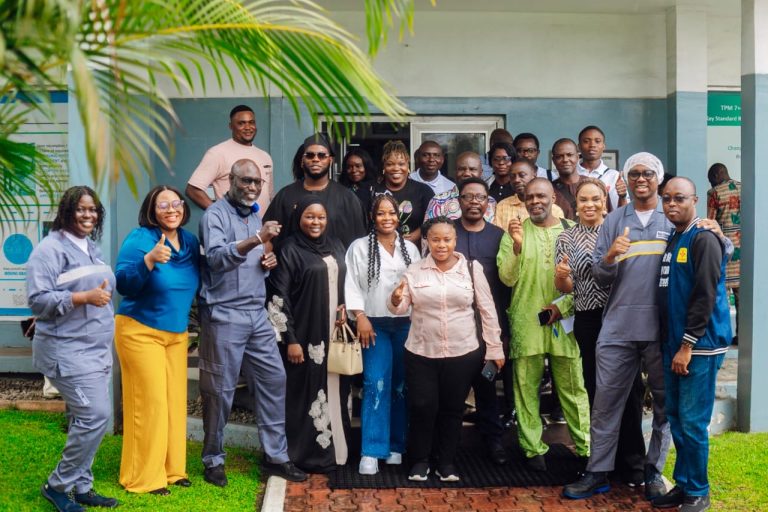
As part of activities marking this year’s World Food Safety Day, MAGGI engaged stakeholders across its value chain through a series of immersive experiences aimed at deepening understanding of food safety practices and reinforcing the shared responsibility of maintaining product quality from sourcing to consumption.

The engagements brought together suppliers, distributors, consumers, journalists, and digital content creators, underscoring MAGGI’s commitment to transparency, collaboration, and continuous stakeholder engagement.

Through interactive sessions and firsthand experiences, participants gained valuable insights into the processes, partnerships, and quality standards that contribute to delivering MAGGI products to millions of Nigerian households.

During the programme, suppliers were taken through MAGGI’s quality requirements and manufacturing standards, while distributors received guidance on best practices in product handling, storage, and warehousing to ensure product integrity throughout the distribution chain.

Consumers also interacted directly with experts, asking questions and learning more about the ingredients, processes, and expertise behind MAGGI products.

The initiative culminated in a factory tour of Nestlé Nigeria’s Agbara Factory, where journalists and digital content creators followed the production journey of a MAGGI cube—from locally sourced soya beans to the finished product.

Participants gained a deeper understanding of how soya beans sourced from Nigerian farmers are transformed through carefully controlled fermentation processes and advanced manufacturing technology to produce the distinctive taste, quality, and consistency associated with the MAGGI brand.

The tour also highlighted the connection between traditional African food preparation methods and modern food manufacturing.

Participants learned how fermentation techniques used in MAGGI production draw inspiration from indigenous food practices familiar to many Nigerian consumers through local seasonings such as iru, dawadawa, and ogiri.

A major highlight of the visit was the opportunity to observe the rigorous quality assurance and food safety systems embedded throughout the production process. From ingredient sourcing and testing to manufacturing, packaging, and distribution, participants witnessed the extensive standards, continuous monitoring, and scientific expertise deployed to ensure food safety and product quality at every stage.

Speaking during the engagement, Funmi Osineye, Category Manager, Culinary, Nestlé Nigeria, emphasized the importance of collaboration across the value chain.

“MAGGI reaches millions of consumers through a value chain that includes farmers, suppliers, distributors, retailers, consumers, and many other partners. We believe quality and food safety are shared responsibilities, which is why we continuously engage stakeholders across the value chain to build understanding, strengthen collaboration, and provide greater visibility into the journey behind our products,” she said.

According to Osineye, opening up the production process to stakeholders helps build confidence and enhances understanding of the expertise and systems that contribute to the quality consumers have come to trust from MAGGI.

Also speaking, Talla Fall, Factory Manager at Nestlé Nigeria’s Agbara Factory, reiterated the company’s commitment to maintaining high standards.

“At Nestlé, quality and food safety are embedded into every stage of our operations. From sourcing ingredients and testing raw materials to manufacturing and packaging, our teams work diligently every day to uphold the high standards that consumers expect from MAGGI.

These engagements provide an important opportunity to demonstrate the care, expertise, and rigorous processes behind every product,” he said.
The programme also featured an interactive cooking session, where participants experienced the practical application of MAGGI products in everyday meal preparation.

The session generated discussions around taste, quality, nutrition, and responsible product use, while providing participants with firsthand product experience.

Nestlé Nigeria said the initiative reflects MAGGI’s ongoing commitment to promoting food safety awareness, fostering transparency, strengthening stakeholder confidence, and delivering quality products that help consumers prepare tasty and nutritious meals every day.

About Nestlé Nigeria
Nestlé Nigeria is a leading food and beverage company committed to unlocking the power of food to enhance quality of life today and for future generations.

SEWUN Protests Alleged Dismissal of over 10,000 WEMPCO Workers, Seeks FG’s Intervention

0


BY TAIWO OGUNMOLA -OMILANI

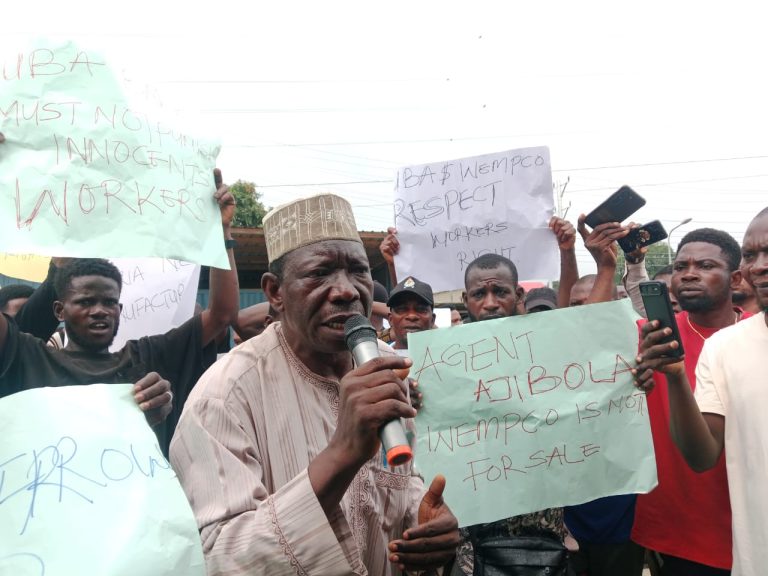
The Steel and Engineering Workers’ Union of Nigeria (SEWUN) on Friday joined workers of WEMPCO Group of Companies in Magboro, Ogun State, to protest the alleged dismissal and displacement of more than 10,000 factory workers.

The protest, held at the company’s premises, was led by SEWUN National Treasurer, Comrade Alhaji Nasiru Bello, and the union’s Deputy General Secretary, Comrade Julius Ijebor, who called on the Federal Government to urgently intervene to prevent what they described as a looming social and economic crisis.

Addressing journalists during the demonstration, Bello said the union was deeply concerned about the fate of thousands of workers whose jobs and livelihoods were now uncertain following recent developments at the company.

According to him, WEMPCO has over the years maintained a strong record of meeting its obligations to workers, noting that many employees had spent between 20 and 30 years in the organisation.

“This company is not an idle company. Some of our members have worked here for over 30 years, while others have spent more than 20 years. Throughout this period, WEMPCO has never owed workers their salaries,” he said.

Bello alleged that armed security personnel invaded the factory premises last week and forced workers out while production activities were ongoing.

He said the union was not protesting on behalf of any individual or corporate interest but was demanding clarity on the future of workers and the protection of their rights.

“We are here to protest against injustice. We want to know the fate of workers in this organisation. Throwing over 10,000 people out of work will worsen unemployment and insecurity in the country,” he stated.

The union leader argued that at a time when employment opportunities are limited across all levels of government, private sector companies remain critical sources of jobs for Nigerian youths.

He also stressed that obtaining loan facilities from financial institutions should not be criminalised, adding that any dispute between the company and its financiers should be resolved through lawful and peaceful means without jeopardising workers’ welfare.

“If there is any misunderstanding between the management and any financial institution, there are legal channels to resolve it. Workers should not be made to suffer for issues beyond their control,” Bello said.

He expressed concern over the uncertainty surrounding workers’ salaries, benefits and terminal entitlements, particularly for employees who have spent decades in service.

“We do not know whether salaries will be paid. We do not know what will happen to the entitlements of workers who have served this company for more than 35 years. These are legitimate concerns that must be addressed,” he added.

Bello further called on the Federal Government, relevant labour authorities and other stakeholders to intervene urgently to safeguard jobs and prevent further disruption to workers’ livelihoods.

He said the union would continue its peaceful protest until those responsible for the situation engage with workers and provide answers regarding their future.

“Our message is clear: workers are in danger, and the government must act to save their jobs. We will remain peaceful, but we will continue to demand answers until the rights and welfare of our members are protected,” he said.

The protesters carried placards and demanded immediate clarification on the status of affected workers, while urging authorities to ensure that any dispute involving the company is resolved without jeopardising the livelihoods of thousands of employees.


Operation CLEAN SWEEP: Troops Rescue Kidnap Victim, Recover Rustled Livestock in Katsina Offensive

0


Troops of the Nigerian Army under Operation CLEAN SWEEP have intensified offensive operations in Katsina State, delivering significant setbacks to terrorist elements through sustained intelligence-led missions.

The operations, conducted by troops of the 17 Brigade Strike Group and Quick Response Force, alongside elements of the 8 Division Special Forces, are aimed at dismantling criminal enclaves, disrupting terrorist logistics networks, and restoring security across affected communities in the North-West.

On the fourth day of the operation, troops executed a coordinated clearance mission targeting terrorist strongholds in and around Tuga, located in Matazu Local Government Area of Katsina State.

The mission was supported by real-time Intelligence, Surveillance and Reconnaissance (ISR) assets, as well as precision air strikes by the Air Component of Operation FANSAN YAMMA, leading to the successful clearance of several settlements.
During the operation, troops recovered a large number of rustled livestock believed to have been stolen by terrorist groups.

The recovered animals included 36 cattle, 280 sheep and two donkeys. Military authorities said the recovery dealt a major blow to the economic activities of the criminal groups, whose operations are largely sustained through cattle rustling and other illicit ventures.

Maintaining the momentum, troops advanced into the notorious Fafu Forest under the Army’s Relentless Incursion Strategy, designed to deny terrorists safe havens. Following coordinated aerial and artillery bombardments of identified targets, ground forces moved into the area and successfully engaged and destroyed several terrorist camps and concealed hideouts located in difficult terrain.

During follow-up exploitation operations, troops discovered a hideout linked to a notorious terrorist leader where kidnapped victims were being held in harsh conditions. Two lifeless bodies were recovered at the location, while one victim, identified as Nura Yar’Adua, was found in chains and successfully rescued.

The rescued victim was administered first aid before being evacuated to the Federal Teaching Hospital, Katsina, for advanced medical treatment.

Further assessments indicated that several terrorist logistics structures were destroyed during the operation, while signs of enemy casualties were observed across targeted locations, suggesting a significant degradation of the terrorists’ operational capabilities.

The Nigerian Army reaffirmed its commitment to defending the nation’s sovereignty and territorial integrity, while urging members of the public to continue supporting security agencies with credible and timely information.

According to the Army, the fight against insecurity remains a collective responsibility requiring the support and cooperation of all citizens.— Headquarters, Nigerian Army

Ex-military generals, others seek decisive action against banditry

0

• Say death of ex-Gen. Rabe in captivity signs of worsening insecurity

Colleagues, friends and associates of the late director, Defence Information, Maj.-Gen. Abubakar Rabe (retd), have called for urgent reforms in Nigeria’s security architecture, following his death in the hands of bandits after being kidnapped in Katsina State.

The group made the call at a press conference in Kaduna yesterday while mourning the retired military officer, who died after being abducted alongside his wife, Hajiya Amina, around the Matazu area of Katsina State.

On May 30, the late Gen. Rabe and his wife were abducted by bandits while travelling along the Marabar Musawa–Kafinsoli Road in Katsina State.

Speaking at the briefing attended by Amb. Mohammed Musawa, Air Commodore Yusuf Anas (retd), Brig. General Abubakar Abdulgadir (retd), Amb. Ibrahim Usman -Gafai, Amb. Ahmed Musawa, Brig. General Maharazu Tsiga (retd) and retired Deputy Comptroller General Nigeria Security and Civil Defence Corps (NSCDC), Aminu Abdullahi, Brig.-Gen. Ismaila Abdullahi (retd) described the late officer as a distinguished military professional whose career was defined by loyalty, integrity and dedication to national service.

According to him, the death of Gen. Rabe is not merely an isolated incident but a reflection of the broader security challenges confronting the country.

“Kidnappings, banditry and terrorism have become a daily reality for many Nigerians, while public confidence in government’s ability to protect lives and property continues to decline.”

The group commended President Bola Tinubu for his strong reaction to the incident and his pledge to take an uncompromising stance against terrorism and kidnapping.

However, the group expressed concern over what it described as persistent shortcomings in the nation’s counter-insurgency and anti-banditry efforts.

According to them, insecurity has spread across the country to the extent that it is increasingly difficult to distinguish between conflict zones and peaceful regions.

They noted that successive administrations had struggled to implement effective measures against terrorism and banditry, resulting in recurring attacks, abductions and loss of lives.

The group cautioned against politicising the nation’s security challenges or giving them ethnic and regional interpretations, stressing that terrorism and kidnapping are national problems requiring collective action.

They urged Nigerians to engage in deeper reflection on the root causes of insecurity and support efforts aimed at strengthening national unity and security cooperation.

The retired officers and associates also called for stronger political will at all levels of government to address the security crisis.

While welcoming existing bilateral security partnerships between Nigeria and countries such as the United States, they maintained that the primary responsibility for securing Nigeria rests with Nigerians and their institutions.

“No foreign nation can defend Nigeria for us. Effective security strategies must be driven by strong national institutions, adequate funding and coordinated implementation,” the group stated.

They advocated improved border security and stronger regional cooperation with neighbouring countries, including Niger, Chad, Cameroon and Benin Republic, to curb the illegal movement of arms and criminal elements.

The group further called on the 19 Northern governors to develop and implement a regional security framework aimed at addressing banditry, terrorism and the proliferation of illegal weapons.
They also urged authorities to regulate and monitor logistics and support systems exploited by criminal groups to sustain their activities.

Drawing lessons from international experiences, the group cited examples of countries that successfully confronted terrorism through sustained political commitment and coordinated security operations.

They emphasised the need for governments at all levels to provide timely support to the families of serving and retired military personnel who die in service or become victims of terrorism and kidnapping.

The group also appealed for intensified efforts to secure the release of all persons currently held in captivity across the country.

They expressed optimism that with stronger institutions, political commitment and citizen cooperation, Nigeria could overcome its security challenges.

Responding to a question, Brig.-Gen. Tsiga, former director-general of the National Youth Service Corps (NYSC) called for a more decisive approach to tackling insecurity.

Tsiga said negotiations alone cannot end banditry and terrorism in Nigeria.

On insecurity and negotiations with bandits, the retired general described security as a collective responsibility and questioned the effectiveness of engaging criminal groups without addressing the wider network that supports them.

Drawing from his experience while in captivity, Tsiga said terrorist and bandit groups were unlikely to voluntarily disband through negotiations.

According to him, a more aggressive and coordinated strategy is required to dismantle their operations and restore peace.

“These people are human beings like us; they fear death and they fear being confronted. If we remove that fear through decisive action and face them squarely, we will achieve more meaningful results than endless negotiations,” he said.

Tsiga also highlighted the role of informants and collaborators who allegedly provide support to criminal groups, noting that some operate within local communities and government institutions.

Recalling an incident during his captivity, he alleged that bandit leaders discussed the procurement of ammunition from individuals with access to government resources, suggesting that criminal networks benefit from insider support.

“Who exactly are we negotiating with? You may negotiate with the bandits, but those supplying them and profiting from the conflict will not allow peace to prevail because they are more interested in financial gain than the lives and property of innocent citizens,” he said.

The retired general urged authorities to intensify efforts against banditry while calling on communities to actively support security agencies.

According to him, military operations alone cannot succeed without public cooperation and intelligence sharing.

“If the army is doing its part and society fails to support those efforts, then we have all failed. Security is a collective responsibility,” he said.

Tsiga further encouraged communities to resist intimidation by criminal elements, arguing that bandits often succeed because of fear rather than superior numbers.

“When only a few armed men can force hundreds or even thousands of people to flee, it shows the need for collective action. Communities must work together with security agencies to deny criminals the space to operate,” he said.

He stressed that lasting peace would require a united effort involving security agencies, government institutions and citizens working together to confront criminal networks and their sponsors.

Sun

Senate forgery controversy deepens as Kingibe denies seeing Natasha’s suspension report

0


Fresh controversy has erupted over the six-month suspension of Kogi Central senator, Natasha Akpoti-Uduaghan, following revelations by the lawmaker representing the Federal Capital Territory (FCT), Senator Ireti Kingibe, that she neither saw nor signed the committee report that recommended the disciplinary action.

He disclosure, made during an interview on Arise News on Wednesday, appears to lend credence to allegations earlier raised by Edo North senator, Adams Oshiomhole, that the report used to suspend Akpoti-Uduaghan may have been fraught with procedural irregularities.
Senate spokesman, Opeyemi Bamidele, has said the Red Chamber would probe questions about the authenticity of signatures and endorsements attached to the report adopted by the Senate.

Speaking during the interview, Kingibe said she was unaware of the contents of the report that formed the basis of Natasha’s suspension. “I never saw the report that led to Senator Natasha’s suspension. I was at a retreat with Senator Adams Oshiomhole when I heard about the report.”

According to her, she had attended the meeting of the Senate Committee on Ethics, Privileges and Public Petitions alongside a few other members, signed the attendance register and subsequently left for a retreat on tax reforms. “I had earlier stated that I was there with three or four other senators who are members of the committee. We attended the committee meeting, signed the attendance register and I later left for the tax reform retreat, which I considered more important at the time.”

Kingibe further disclosed that she informed Enyinnaya Abaribe that she neither reviewed nor signed any report recommending Natasha’s suspension.

Sun

FCT: Court sentences three terrorists to death by hanging

0

The Federal High Court sitting in Abuja on Thursday convicted and sentenced three terrorists to death by hanging over terrorism offences.

The three terrorists were convicted and sentenced to death after they pleaded guilty to the offences they were charged with by the Federal Government in the ongoing mass trial at the Federal High Court in Abuja.

While Danladi Lawal was sentenced to death by Justice James Omotosho, Abdullahi Mohammed and Mohammed Gulama Shaibu were handed down capital punishment by Justice Salim Ibrahim.

When the case was called before Justice Omotosho, 33-year-old Lawal, a.k.a Dankawu, pleaded guilty to counts one, two, three, four and five after the charge was read to him.

After his guilty plea, the trial judge sentenced the convict to a 30-year imprisonment in count one, 15 years in count two, life imprisonment for count three, death by hanging for count four, and life imprisonment in count five.

“May God have mercy on you,” Justice Omotosho told the convict.

In the charge marked: FHC/KNJ/CR/956/2026, the Federal Government, through the Attorney-General of the Federation, Lateef Fagbemi, SAN, preferred a five-count charge against Lawal.

In count four that attracted a death penalty, the convict, who is from Maikaho village, Jibya Local Government Area of Katsina, and others now at large, were said to have, sometime in 2020, while in Maikaho village, committed the offence.

They were said to have unlawfully abducted and detained an elderly man for four days in a bush hideout at Ilela and demanded the sum of N950,000.00 as ransom from his family, thereby intimidating the public and causing serious fear and insecurity in the community.

The offence is contrary to Section 1 (2) of the Terrorism (Prevention Amendment) Act 2013 and punishable under the same Section of the Act.

In Count 5, which attracted a life imprisonment, Lawal was said to have knowingly received the sum of N450,000.00 being part of the ransom proceeds obtained from the kidnapping of an elderly man, an offence that is contrary to Section 13 of the Terrorism (Prevention Amendment) Act 2013 and punishable under the same Section of the Act.

Also, Justice Ibrahim separately sentenced Abdullahi Mohammed and Mohammed Gulama Shaibu to death by hanging after they pleaded guilty to the charges filed against them.

In the charge marked: FHC/KNJ/CR/245/2026, Mohammed pleaded guilty to a one-count charge, while Shaibu, in the charge marked: FHC/KNJ/CR/329/2026, pleaded guilty to a two-count charge.

The judge sentenced Shaibu to death in count one and life imprisonment in count two and equally sentenced Mohammed Dezami Sherife in charge number: FHC/KNJ/CR/1248/2026, to life imprisonment in counts two, six and eight of a 10-count charge earlier preferred against him by the Federal Government, after he pleaded guilty to them.

In a related development, Justice Omotosho on Thursday also sentenced Shamsudeen Muhammad Ibrahim, a.k.a Abu Harira, to a life imprisonment in count one and a 35-year jail term in another count, which shall run from June 18.

In count one, Ibrahim of Angwar Hayin Ikara Maje, Ikara LGA, Kaduna State, sometime in the year 2022 in Kubwa, FCDA, Owner Occupiers, committed the offence.

He was said to have “knowingly rendered support to ISWAP by receiving trainings and sermons from A. Mujahid from Al-Qeada on promoting and sympathising with terrorist activities.” The offence is contrary to Section 15(a) of the Terrorism (Prevention and Prohibition Act, 2022) and punishable under the same section of the Act.

In count two, the convict was accused of having “an information about the activities of the ISWAP/ANSARU terrorist group and failed to disclose such information to any law enforcement or security officer as soon as reasonably practicable.” The offence is contrary to Section 16 of the Terrorism (Prevention and Prohibition Act, 2022) and punishable under the same section of the Act.

Justice Emeka Nwite, in another development, sentenced Lawi Abubakar Mohammed to a 20-year jail term each in counts one and two, which he pleaded guilty to on Thursday.

The judge ordered that the prison term shall commence from the date of arrest and run consecutively, making a total of 40 years imprisonment.

The judge ordered that at the end of the prison term, the convict shall be rehabilitated and deradicalised before his release into society.

Xenophobia: Nigeria considering action against South African businesses – Odumegwu-Ojukwu

0


The Federal Government has hinted at probable sanctions against South African companies operating in Nigeria, including telecommunications giant MTN, as outrage mounts over the ongoing harassment and attacks on Nigerians living in South Africa.

Ambassador Bianca Odumegwu-Ojukwu, Minister of Foreign Affairs, made the announcement on Thursday while addressing concerns over escalating anti-migrant attacks in South Africa and the evacuation of Nigerians.

The minister said Nigeria had exercised restraint and continued to pursue diplomatic engagements but warned that the government might be compelled to explore other options if the attacks persist.

“As I indicated before, there are these huge conglomerates. By the way, there are over 120 South African companies operating in Nigeria.

Nobody is asking them to provide proof of identity. Nobody is asking South African staff working there whether they are South Africans or Nigerians, and nobody is taking over their shops or businesses.

“But this is happening to Nigerians in South Africa. So, I think that at some point, we really have to review the options available to us.

“We have MTN, MultiChoice, Stanbic, Protea and many other South African brands spanning multiple sectors,” Odumegwu-Ojukwu said.

The minister, however, stressed that any retaliatory measures would have to follow constitutional provisions and due legislative process.

She explained that the Federal Government was currently engaging South African authorities through diplomatic channels, while the National Assembly would play a constitutional role in determining Nigeria’s response should those efforts fail.

The minister also disclosed that the South African authorities discarded their memorandum of understanding with Nigeria on early warning mechanism which they had signed in October 2025.

She added that the pact was essentially to protect the lives and property of both Nigerians and South Africans in times of conflict like this.

“When it comes to situations like this, of course, it is necessary to be temperate and exercise caution. But when your citizens are being harassed, when your citizens are people who have spent years there, and mind you, some of them are married to South Africans and have children who have known no other home but South Africa, then it becomes a serious concern.

“Now, under these circumstances, they are asking not just Nigerians, but also their South African spouses and their children, to leave South Africa,” the minister said.


Gwarzo dares Kano govt to prove allegations of LG funds diversion against him

0


The Nigeria Democratic Congress (NDC) governorship candidate in Kano State, Aminu Abdussalam Gwarzo, has challenged Governor Abba Kabiru Yusuf to provide concrete evidence that he received funds from the local government councils through his son, Mujahid Aminu Abdussalam.

Gwarzo was responding to allegations by the governor’s spokesperson, Sunusi Bature Dawakin Tofa, who alleged that funds from local government councils in the state were channeled to the former deputy governor via his son.

In a statement by his spokesperson, Gwarzo dismissed the allegations as baseless, outrageous and a ridiculous attempt to tarnish his hard-earned integrity.

“The allegations are mere figments of the Governor’s imagination, lacking any basis.

“We categorically challenge the accuser to provide credible and verifiable evidence to substantiate these callous claims. Mere accusations, no matter how often repeated in the media, do not amount to proof,” the statement said.

He maintained that he upheld transparency, accountability and the rule of law throughout his public service career.

He expressed confidence that the truth would ultimately prevail and urged the public to disregard what he called unfounded allegations.

Sun

LASHMA emergency scheme saves 18 lives as health coverage hits 1.5m

0

Lagos State Health Management Agency (LASHMA) has announced significant progress in expanding access to healthcare, revealing that its emergency intervention programme, LASHMA Assistance in Distress (LASHMA-AID), has handled 18 life-threatening cases since it became operational in March 2026.

The agency also disclosed that its ILERA EKO health insurance scheme has enrolled 1.5 million Lagos residents between 2020 and May 2026, while providing critical emergency care to vulnerable residents across the state under an Executive Order (EO) that guarantees stabilisation before payment or proof of insurance is requested.

Speaking at its second-quarter media parley in Lagos yesterday, the Permanent Secretary, Dr. Emmanuella Zamba, said the emergency programme was launched in December 2025 and had already demonstrated its value in improving access to lifesaving healthcare services. She commended the media for supporting awareness campaigns around the state’s health insurance scheme, ILERA EKO.

Zamba also disclosed that 72 health journalists, together with their spouses and dependents, had been enrolled in the ILERA EKO scheme free of charge for one year, following a training programme organised by the agency. She stressed that data, transparency and accountability remain central to the sustainability of social health insurance in Lagos State.

The Permanent Secretary announced that ILERA EKO had enrolled 1.5 million residents between 2020 and May 2026, reflecting steady growth in health insurance coverage. She added that enforcement of mandatory social health insurance across Ministries, Departments and Agencies (MDAs) commenced on February 1, 2026, while efforts were being intensified to improve participation among informal sector workers.

Presenting the agency’s scorecard, Head of Planning, Monitoring and Evaluation, Mrs. Adetoro Tayo-Adetoro, said enrolment had grown at an average annual rate of about 21 percent over the past six years. She noted that adults aged between 18 and 60 years constituted the largest category of beneficiaries.

Tayo-Adetoro said healthcare utilisation under the scheme had increased significantly, with more than 1.2 million hospital visits and nearly 40,000 inpatient admissions recorded as of the first quarter of 2026. Services accessed included almost 500,000 fever treatments, 4,833 surgeries, about 60,000 antenatal visits, over 19,000 vaginal deliveries and more than 18,000 caesarean sections.

She added that beneficiaries had also accessed immunisation, dental care, hypertension and diabetes management, dialysis, tuberculosis screening and HIV testing services. “Telemedicine services available around the clock recorded 1,320 consultations through metro booths across the state this year,” she added.

On the emergency intervention programme, Emergency Care Manager, Dr. Favour Oluwaniyi, said LASHMA-AID managed 18 emergency cases between March and June 2026. She disclosed that road traffic accidents accounted for the highest number of cases, followed by surgical, medical, obstetric, neonatal and stroke-related emergencies.

According to Oluwaniyi, five patients have been discharged while eight are still receiving treatment, mostly due to severe injuries requiring prolonged care. She said the cases were managed through 10 healthcare facilities, with most referrals originating from the Lagos State Ambulance Service (LASAMBUS) and designated focal persons in participating hospitals.

Also, Team Lead of the EKO Social Health Alliance (EKOSHA), Mrs. Tawa Oshinowo, highlighted progress under the Rural Health Scheme, which deploys mobile clinics to riverine and underserved communities. She said 6,838 residents had been registered under the programme, while 432 had been enrolled and 190 referred for further medical care.

Oshinowo disclosed that hypertension accounted for 58 percent of all referral cases, while diabetes also featured prominently among diagnosed conditions. Between January and May 2026, the mobile clinics attended to 438 residents and made 200 referrals, with specialist cases directed mainly to cardiology, ophthalmology, paediatrics, orthopaedics and surgery services.

On grassroots mobilisation efforts, Technical Assistant to the Permanent Secretary, Dr. Nifemi Akinnagbe, said LASHMA had engaged traditional rulers, market leaders, religious organisations and other stakeholders across the state to deepen awareness of the mandatory health insurance policy.

Earlier in his welcome address, Permanent Secretary, Ministry of Information and Strategy, Mr. Olanrewaju Bajulaiye, urged the agency to continue publicising its achievements, describing the media as a key partner in promoting transparency and strengthening healthcare delivery across Lagos State.


Bayelsa govt resolves Twon-Brass leadership tussle

0


Bayelsa State Government has resolved the lingering leadership tussle in Twon-Brass Kingdom, following its intervention and agreement by the feuding parties to immediately withdraw all ongoing court cases concerning the conflict.

It also directed all government-recognized communities to run their affairs based on constitutions that are in line with the provisions of the state Community Administration and Chieftaincy Law to ensure effective leadership at the grassroots level.

Deputy Governor, Peter Akpe, who made this known at a meeting with the leadership of the five communities in Twon-Brass Kingdom and other top government officials at Government House, Yenagoa, urged the people to complement the government’s effort in maintaining the prevailing peace in the state.

Highlighting the key resolutions reached at the meeting, he noted that although all five paramount rulers have equal powers, one of them would play the role of a coordinator for a maximum period of one year to avoid a leadership vacuum in the Kingdom.

Akpe, who stressed that the coordinating arrangement will persist pending the enthronement of a new Amanyanabo, announced the appointment of Chief Beinmo Rufus-Spiff as the Coordinating Amadabo for the next one year with effect from yesterday.

He also announced the setting up of a five-man constitution drafting committee, which has one nominee each from the five communities, with Chief Claudius Kune-Igoni of Kemmer-Ama as its Chairman.
Members of the Committee, which has eight weeks to complete its assignment, include Chief Sisei Eke-Spiff Samuel of Ada-Ama, Chief James Sokari (Cameron-Ama), Chief Randy Sobogboma (Shidi-Ama), and Chief Bio Gbeghasa of Sambo-Ama.

“On the issue of leadership, the five Amadabos have equal powers, but at particular times, like the situation the Kingdom is in now, there will be a need for a coordinating Amadabo.

“That coordination does not give the coordinator any exclusive powers. You are just a coordinator among equals for a tenure maximum of one year, as agreed. But if a King is not enthroned, there will be another coordinator who will be elected a month before the expiration of the one-year tenure.

“We also agreed that the Amadabo of Cameron-Ama should start the coordinating process beginning from today (17th June, 2026). He will be in the saddle coordinating the affairs of the kingdom on all the issues, including the finances, and give a report to the Amadabos once a month.

“All court cases should also be withdrawn. And finally, we resolved that Twon-Brass needs a constitution as a matter of urgency. Consequently, a five-member constitution drafting committee has been set up with nominations from each of the Amadabos.”

Those who made presentations at the meeting include the paramount ruler of Sambo-Ama, Chief Ralph Sambo; that of Ada-Ama, Chief Serena Dokubo-Spiff, and their Cameron-Ama counterpart, Chief Beinmo Rufus-Spiff.

Others are Chief Oton Efebo-Shidi and Chief Israel Sunny Goli, the paramount rulers of Shidi-Ama and Kemmer-Ama, respectively.

Sun