Home Blog Page 351

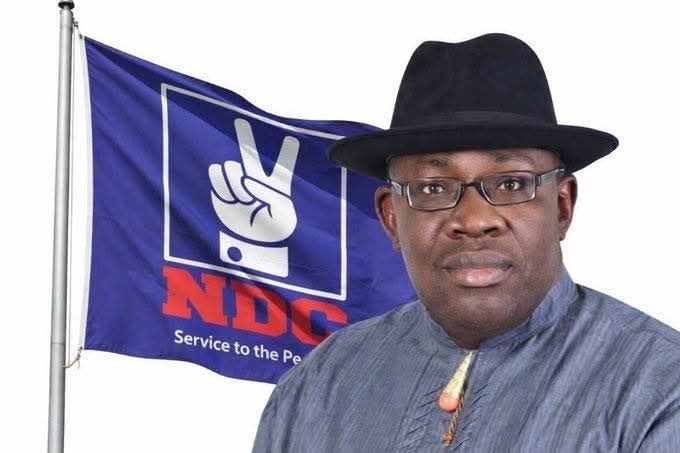
Court sets aside judgment recognising NDC as political party

0


A federal high court in Lokoja has set aside its earlier judgment which compelled the Independent National Electoral Commission (INEC) to register the Nigeria Democratic Congress (NDC) as a political party.

According to NAN, Isah Dashen, presiding judge, while delivering ruling in a suit marked FHC/LKJ/CS/49/2025, held that the December 10, 2025, judgment was reached without hearing all necessary parties, rendering the proceedings constitutionally defective.

Alakija Building Collapse: Lagos Warns Residents Against Ignoring Evacuation Notices as Death Toll Rises to Nine

0


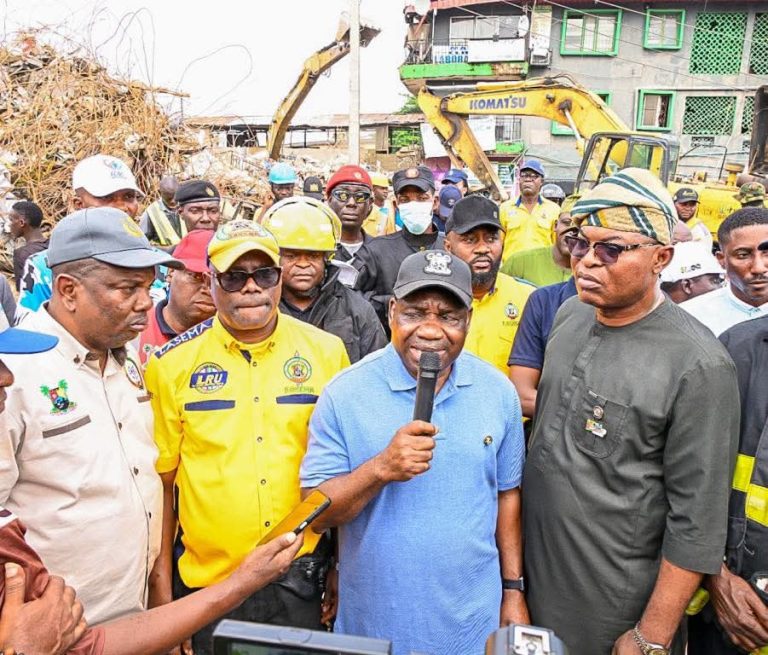
The Lagos State Government has commiserated with the families of victims of the building collapse at Alakija in the Oriade Local Council Development Area (LCDA), warning residents against ignoring evacuation notices issued on distressed buildings.

The Commissioner for Information and Strategy, Mr. Gbenga Omotoso, gave the warning on Friday while briefing journalists at the scene of the incident on behalf of Governor Babajide Sanwo-Olu.

Omotoso said emergency responders moved swiftly to the site immediately after the collapse, leading to the rescue of 27 people. He, however, disclosed that nine persons lost their lives despite intensive overnight rescue operations.

“Our first duty is to commiserate with the families who lost their loved ones in this unfortunate incident. On behalf of Governor Babajide Sanwo-Olu, we sympathise with them and pray that such a tragedy never occurs again,” he said.

“By the grace of God, we have been able to rescue 27 people. Unfortunately, we lost nine persons, and this is very sad. We share the pain of the affected families.”

The commissioner revealed that the collapsed building had previously been identified as structurally defective and marked for evacuation, with occupants directed to vacate the premises.

“As you can see, these buildings had been marked as distressed and people were asked to leave. Unfortunately, some residents returned after pretending to have moved out, leading to this tragic outcome,” he said.

Omotoso said other defective buildings within the area would be demolished to prevent similar incidents.

“All the buildings that have been identified as defective will go down. We cannot wait until another tragedy occurs before taking action. The protection of lives remains our priority,” he said.

He commended the Lagos State Emergency Management Agency (LASEMA), the Lagos State Fire and Rescue Service, the police, the military, neighbourhood safety personnel and other emergency responders for their prompt response and tireless rescue efforts.

“I must commend all our emergency responders who worked tirelessly throughout the night to save lives and bring the situation under control,” he said.

The commissioner stressed that residents must place greater value on human life than economic activities.

“The most important lesson from this incident is that nobody should prioritise livelihood over life. Once life is lost, everything is lost. No business is worth risking human lives for,” he said.

Omotoso also condemned the construction and occupation of buildings beneath high-tension power lines, describing the practice as dangerous and a clear violation of safety regulations.

“It is not done in any civilised society. Such developments show disregard for safety regulations and contempt for the law. Government will continue to clamp down on such violations,” he said.

He assured residents that a full investigation into the collapse had commenced and that anyone found culpable would be prosecuted.

“The owners of the building are under investigation. Anybody found complicit in this tragedy will face the law.

They will be prosecuted because no one is above the law,” he said.
According to him, most of the rescued victims did not suffer life-threatening injuries, while those requiring further medical attention had been taken to hospitals for treatment.
Omotoso reiterated the Lagos State Government’s commitment to enforcing building safety regulations and preventing avoidable disasters across the state.

Also present at the briefing were the Commissioner for Special Duties and Inter-Governmental Relations, Mr. Gbenga Oyerinde, and the Permanent Secretary of LASEMA, Dr. Olufemi Oke-Osanyintolu.
Earlier, LASEMA had confirmed that 26 people were rescued alive following the collapse of the three-storey shopping complex on Wednesday, while eight persons, including a baby girl, died. However, the latest official update from the state government puts the death toll at nine, with 27 persons rescued.

State police: Pressure shifts to govs, state legislators

0


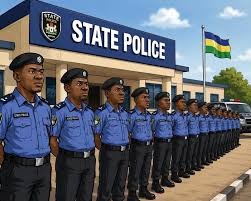
With the passage of the State Police Bill by the Senate, coming after the House of Representatives earlier similar action, pressure has now shifted to the state Houses of Assembly.

To effect a constitution amendment, which approval for state police intends, two-thirds of the state legislature must also pass the State Police Bill.

When ratified by at least 24 state Houses of Assembly and assented to by President Bola Tinubu, the bill would introduce a dual policing structure seen as one of the measures to tackle the worsening security crisis.

Legal experts, retired security chiefs, civil society leaders, regional stakeholders and political figures across the country are therefore calling on state assemblies to expedite action on the bill so that the legal instrument for state police would be secured, even as they have some fears.

The State Police Bill, which seeks to alter Section 214 of the 1999 Constitution (as amended) to formally establish a Federal Police Service alongside State Police Services, has emerged as one of the most far-reaching constitutional reforms proposals currently before the National Assembly.

The proposal was sponsored in the House of Representatives in 2024 by the Deputy Speaker, Benjamin Kalu, and 14 other lawmakers. It also seeks consequential amendments to several sections of the Constitution to accommodate the new federal and state policing structure. The bill passed second reading in the House on February 20, 2024 and was referred to the House Committee on Constitution Review, before being adopted by the National Assembly Joint Committee on Constitution Review as part of the broader constitution amendment process.

On June 11, 2026, the House of Representatives approved the bill with 289 votes, paving the way for the decentralisation of policing and empowering states to establish their own police services. The Senate has also passed the proposal. Under the bill, the President would appoint the Inspector General of Police on the advice of the National Police Council, subject to Senate confirmation, while a State Commissioner of Police would be appointed by a governor on the recommendation of the National Police Council and subject to confirmation by the relevant State House of Assembly.

The legislation also empowers the Federal Police Service to intervene in state policing operations where there is a breakdown of public order, threats to national security, abuse of police powers or serious violations of fundamental rights.

Speaking on the development regarding state police, Director of The Electoral Hub, Princess Hamman Obels, a civil society expert who has championed police reforms, said that Nigeria’s diversity demands a security response that reflects local realities rather than orders issued from Abuja.

She contends that governors, already designated chief security officers of their states, are being denied the tools to match that responsibility, and insists the scale of bloodshed across the country leaves the nation little choice but to act.

Recalling the relative calm of the 1980s, she maintains that insecurity has stalled development for over 15 years, disrupting farming, displacing families and making inter-state travel perilous. Those opposed to reform, she says, have offered no credible alternative.

The same sentiment is echoed by the Coalition of South East Youth Leaders, whose President General, Goodluck Ibem, describes the existing centralised structure as overstretched and incapable of responding to the peculiar security challenges confronting different states.

The coalition insists that police, being closer to the people and familiar with local terrain, language and intelligence networks, will possess far greater capacity to tackle insecurity proactively.

The group points to the alarming rise in kidnapping, banditry, armed robbery and cultism as evidence that reforms can no longer be delayed and must be treated as a national imperative, declaring that the cost of insecurity far outweighs the investment required to secure lives and property.

Director of the Civil Liberties Organisation, Steve Aluko, takes a similarly supportive line, noting that experiences from other countries and existing local security structures within Nigeria demonstrate that state police can significantly improve outcomes.

While careful not to promise a complete solution, he believes the new structure will drastically reduce the current carnage, and points to existing security votes already allocated to governors and local government chairmen as a readymade source of funding.

In Imo State, Goddy Uwazuruike, former president of the Igbo socio cultural organisation, Aka Ikenga and a one-time member of the 2014 National Conference, took a more conditional view, arguing that state police can only succeed under what he called an upright leader. Even so, he maintains that the project is financially feasible if governments curtail wasteful spending.

Uwazuruike suggested that funds currently lavished on private jets and other extravagances could instead be channelled into policing.

These voices, taken together, form the backbone for the case for reform. A country bleeding from kidnapping, banditry and communal violence cannot continue to wait on a single, distant police command that has manifestly struggled to keep pace with the scale and variety of the threat. The argument is not that state police is a perfect solution. It is that the current arrangement has been tested for decades and found wanting, and that a structurally diversified system, properly built, offers Nigeria’s best remaining chance of bringing security closer to the people who need it most.

Can state police actually fight crime?

The first and most pressing concern raised by stakeholders is whether state police will possess the operational capacity to tackle the very challenges it is meant to solve.

Constitutional lawyer, Chief Festus Ogwuche, cautions that the existing centralised system has not even been repositioned away from what he calls its constabulary pedigree, making it premature to expect a wholesome modern police mechanism to spring fully from a state versus federal collaboration.

Board of Trustees member of the Arewa Consultative Forum, Anthony Sani, puts the matter plainly, insisting that capacity must be built rather than wished into existence.

According to him, the Nigeria Police Force would have had sufficient capacity to secure the nation if it were adequately staffed, trained, equipped and motivated, adding that the same logic must apply to its state successors. Unless deliberate investment is made in personnel numbers, training, equipment and morale, he warns, Nigerians should not expect state police to be any kind of magic wand.

A more reassuring picture comes from retired Assistant Inspector General of Police and security sector reform expert, Austin Iwar, who argues that fears over manpower are largely misplaced.

He explains that the bulk of personnel for the new state police forces would be drawn from the existing Nigeria Police Force, as already suggested by the Inspector General, with seasoned officers forming the backbone of the new structure while freshly recruited officers train alongside them. This transitional approach, in his view, addresses the capacity question more credibly than building an entirely new workforce from scratch.

The funding question

Nowhere is anxiety more acute than over funding, both the immediate cost of standing up the architecture before the bill becomes law, and the long term burden of sustaining it afterwards. Anthony Sani warns bluntly that funding, the very issue that has long crippled the Nigeria Police Force, would most likely become the same challenge confronting its state successors, and prays that state governments will secure the resources needed to build genuine capacity.

It is here that AIG Austin Iwar offers the most detailed roadmap to emerge from the debate, proposing a tripartite funding arrangement involving the federal government, state governments and dedicated Police Trust Funds. Under his model, the federal government would contribute 60 per cent of joint funding directed specifically at hardware, including firearms, armoured vehicles and drones, items that typically require international security clearance and which foreign manufacturers in markets such as the United Kingdom and the United States would, in his estimation, prefer to supply through a federal rather than a state buyer.

The remaining forty per cent from state governments, he suggests, would cover forensic laboratories, communications infrastructure, intelligence operations, salaries, allowances, welfare, insurance and the maintenance of barracks and police stations, with individual state Police Trust Funds plugging any remaining gaps.

Policing, he concedes, remains a very expensive undertaking, while insisting that funding needs not be an insurmountable obstacle if all three funding strands are properly harnessed.

Other stakeholders offer complementary solutions. Steve Aluko points to existing security votes already in the hands of governors and local government chairmen as an underused resource.

Goddy Uwazuruike argues that curbing extravagant official spending could free up significant sums, while The Coalition of South East Youth Leaders, even though acknowledges the financing concern, insists that security can never be sacrificed on the altar of budgetary excuses. It urged the Federal Government and National Assembly to design a transitional funding mechanism and security support package to carry states through the early years before constitutional and legal frameworks are fully in place.

Other News
State police won’t end insecurity without jobs, poverty relief — Falana
State police: Ex-DIG calls for stronger constitutional provisions
Governors who misuse state police will face federal intervention – Senator
The coalition notes that many states already commit considerable resources to vigilance groups operations and security logistics, resources that could, with proper planning, be redirected into a more structured and accountable state police framework.

Managing insecurity in the interim

A related and equally urgent question is how Nigeria copes with insecurity in the period between the bill’s passage and the actual operational readiness of state police structures, a gap that legal and administrative processes suggest could run into years.

Anthony Sani urges government to use the interim to double their efforts at strengthening existing security personnel, including a renewed push on forest guards capable of taking the fight to bandits and terrorists hiding in Nigeria’s vast woodlands.

The Coalition of South East Youth Leaders makes a similar appeal, calling for intensified support for existing agencies through improved intelligence gathering, community policing, technological surveillance and closer collaboration with recognised local security outfits, pending the full rollout of state police.

Bayelsa-based Civil Liberties Organisation chairman, David West, raised a related structural worry, cautioning that state police should not be confined to state capitals and urban centre, while neglecting rural communities. He said that this would defeat the entire purpose of bringing policing closer to the people.

Governors and the fear of abuse

If there is one anxiety that recurs in almost every discussion, it is the fear that state governors could turn state police force into a personal or political weapon. Chief Festus Ogwuche, drawing on the bitter experience of Nigeria’s First Republic, when a native police system became entangled in political suppression and helped accelerate the deterioration of security in parts of the country, warns that allowing state forces to run parallel to the federal police risks tempting state officials to pursue political ends and inflict vendettas on opponents.

Speaking from Port Harcourt, he offers a pointed illustration, suggesting that the political rivalry between Governor Siminalayi Fubara and his predecessor Nyesom Wike could have turned considerably more dangerous had a Rivers State police force already existed on the ground.

Anthony Sani was equally direct, stating without equivocation that state governors will almost certainly abuse state police to the detriment of the very citizens who elected them.

He likened this risk to the manner in which governors have already taken over state electoral commissions and undermining multiparty democracy at the local government level. He warned that state police personnel could, in ethnically diverse and conflict prone states, take sides in local disputes and become part of the problem rather than the solution.

Public affairs analyst, Austin Onuoha, speaking from Benue State, shares this scepticism, arguing that placing a new police apparatus in the hands of governors invites abuse, particularly around elections, and warns Nigerians to be prepared for the consequences should that happen.

Former Theatre Commander of the Multi National Joint Taskforce in the North East, General Jonathan Temlong, dismissed the entire project as an exercise in futility and cautioning that state police are not the army and offers no silver bullet against banditry.

Niger State APC chieftain and former state commissioner for Information, Culture and Tourism, Hon Jonathan Vatsa, voices perhaps the bluntest dissent of all, insisting that recruiting the same Nigerians and entrusting them to the same state level leadership will simply reproduce the corruption and dysfunction already afflicting the federal force, predicting that conditions under state police could end up worse than the present arrangement.

Goddy Uwazuruike, while admitting the fear that governors and the President might simply appoint loyalists to police leadership positions, insists that with an upright leader, the system willwork.

Steve Aluko maintains that a properly framed State Police Act, supported by an active citizenry, the Human Rights Commission and other oversight bodies, can provide sufficient checks and balances.

The Coalition of South East Youth Leaders is the most emphatic on this point, refusing to accept that the risk of abuse should be used to deny Nigerians the security they desperately need. The coalition instead proposes a detailed legal architecture: a robust framework with strict oversight mechanisms, independent and legislatively supervised recruitment processes, severe penalties for political interference, and an outright ban on absorbing political appointees, party loyalists, thugs or enforcers into the new state formations.

Recruitment, it insists, must be strictly merit based, transparent, professional and subject to independent scrutiny.

Port Harcourt based security expert, Jackson Ojo, offers perhaps the most structurally detailed answer to the abuse question, proposing that each state police force be overseen by a State Police Commission composed jointly of appointees from the governor, the state legislature, the judiciary and civil society.

Under his proposal, recruitment, promotions and disciplinary actions would run through this Commission rather than the governor’s office, while funding would flow from a dedicated account in the state budget audited annually by the Auditor General and State Assembly, removing the governor’s ability to starve or weaponise the budget at will.

He further recommends a State Policing Act defining jurisdiction, banning political deployments and granting citizens the right to sue for abuse, alongside a Federal State Policing Council comprising the Inspector General, state commissioners and human rights representatives to handle cross state crimes and review complaints. Body cameras, public complaint boards and mandatory reporting of arrests or use of force, he argues, would keep the entire system transparent.

AIG Austin Iwar adds a further layer of reassurance, noting that legal safeguards can be built directly into the enabling law to prevent governors from hijacking the system, and calling for structures that insulate state police from political interference from the outset rather than as an afterthought.

Anthony Sani, despite his blunt warnings, concedes that since state governments themselves have clamoured loudest for state police, it falls on them to source the necessary finances and manage the institution for genuine performance, rather than treating it as another patronage vehicle.

Can states afford to run their own police?

Closely tied to the funding question is whether individual states possess the financial muscle to sustain a police force over the long term, particularly poorer states with thin internally generated revenue. Public affairs analyst, Austin Onuoha, argues that many state governments have not demonstrated sufficient capacity even in core sectors such as education, infrastructure and local government administration, casting doubt on their readiness to manage something as demanding as policing.

Hon Jonathan Vatsa makes a similar point with characteristic bluntness, observing that some governors cannot even adequately equip and manage local vigilante groups, let alone a full fledged state police force, and predicting that ill-equipped state units could end up worse off than federal officers he describes as still carrying wooden batons on duty.

The Coalition of South East Youth Leaders rejects this pessimism outright, insisting that many states already generate substantial revenue and possess the administrative structures needed to manage a modern police service, provided there is proper planning, accountability and investment.

Anthony Sani strikes a more measured note, arguing simply that having long demanded state police, state governments bear the responsibility of finding the resources to fund and manage it properly.

The final concern raised consistently by stakeholders is whether state police, even once established, would be equipped to meet the technical and operational demands of modern policing, from forensics and intelligence gathering to communications and rapid response capability.

The Coalition of South East Youth Leaders argues that with proper planning, accountability, training, technological investment, forensic capability, intelligence systems and modern operational equipment, state police can indeed meet contemporary law enforcement standards.

AIG Austin Iwar’s funding model speaks directly to this concern, recommendinf channelling federal resources towards heavy hardware such as armoured vehicles and drones, while state resources cover forensic laboratories and communications infrastructure, a division of labour designed specifically to ensure modern policing tools are not left out of the equation.

David West strikes a note of caution on this point, observing that the framework for funding modern policing infrastructure remains insufficiently spelled out. He notes that since the assumption of office by President Tinubu, governors have largely stopped complaining about poor federal allocation, but warns that the addition of an entire new police wage bill makes it essential that a proper financing framework be established from the outset to equip the new force with modern facilities.

The bottom line

Taken together, the testimony gathered from legal experts, retired security chiefs, civil society leaders and political figures across Nigeria’s regions does not amount to a rejection of state police. It amounts to a demand that the project be built properly. Every genuine concern raised, capacity, funding, the interim security gap, the risk of gubernatorial abuse, state level financial capacity and technical readiness for modern policing, has been met with a concrete proposal on how it might be addressed.

From Jackson Ojo’s independently governed State Police Commission to Austin Iwar’s tripartite funding model to the Coalition of South East Youth Leaders’ insistence on merit based recruitment and a transitional funding package, everybody is agreed that state police would help in ensuring security in the country.

Sun
NECO releases 2026 BECE results for over 186,000 candidates

0

The National Examinations Council (NECO) has released the results of the 2026 Basic Education Certificate Examination (BECE), with a total of 186,291 candidates participating in the exercise across Nigeria and five foreign countries.

According to a statement issued on Thursday by NECO’s Acting Director of Information and Public Relations, Azeez Sani, candidates sat for examinations in 12 subjects during the exercise, which was conducted between 20 April and 30 April 2026.

The Council said the results were approved and released following the successful conclusion of the 2026 BECE Award Committee Meeting held at its headquarters in Minna, Niger State.

At the meeting, the Chairperson of the Award Committee, Dr Folake Olatunji-David, the Director of Basic Education at the Federal Ministry of Education, who represented the Minister of Education, Dr Tunji Alausa, expressed satisfaction with the processes leading to the release of the results.

The meeting was attended by NECO management officials and selected secondary school principals from across the country.

Meanwhile, the Award Committee approved 22 and 23 July 2026 for the conduct of the BECE Re-sit Examination in Mathematics and English Studies.

NECO explained that the re-sit examination was specifically designed for candidates with conditional deficiencies in either Mathematics, English Studies or both.

The Council noted that the exercise provided affected candidates with an opportunity to remedy the deficiencies and obtain the certification required for admission and placement into Senior Secondary School One (SSS1), without the need to repeat an academic year.

Sun

Wike taunts David Mark as FG fixes Akwanga–Makurdi road

0


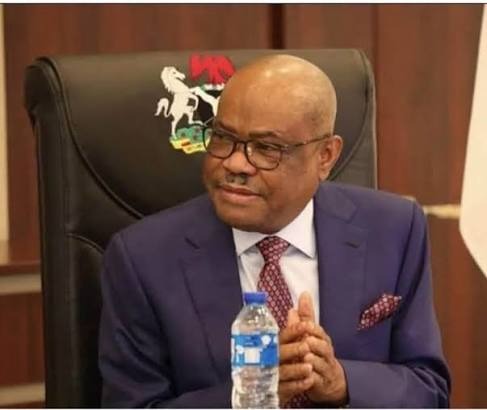
Minister of the Federal Capital Territory, Nyesom Wike, yesterday used the commissioning of the Jahi–Gwarimpa interchange to say President Bola Tinubu has achieved in three years what former Senate president, David Mark, failed to deliver during his eight years in office — notably the rehabilitation of the Akwanga–Makurdi road.

Speaking at the inauguration of the Arterial Road N16–Ring Road II interchange, where President Tinubu was represented by Senate President Godswill Akpabio, Wike framed the administration’s road programme as transformational and people-centred.

“ADC has conceded that in terms of road infrastructure, Mr. President has done very, very well,” he said. “Without roads, you cannot go to hospital, you cannot go to school, and you cannot go to farm. Roads are the bedrock of development in any society.”

Wike singled out David Mark, whom he described as chairman of a faction of the African Democratic Congress (ADC), and criticised the former Senate President’s record on infrastructure delivery. He said the Akwanga–Makurdi road — awarded while Mark held high office — remained in poor condition and constrained movement for ordinary people.

“The poor people could not afford to travel to Makurdi because there was no road. But David Mark, as Senate president then, was flying helicopters,” Wike said. “Today, because of the intervention of this administration, people can drive freely to Makurdi and Otukpo. The same David Mark, who once relied on helicopters can now travel by road too.”

Wike used the example to underline what he described as the Tinubu administration’s political will and commitment to continuity. He said the Jahi–Gwarimpa interchange itself had been awarded before the current government took office but stalled until the present administration provided mobilisation and follow-through.

“One of the problems of development in Nigeria is that new administrations often abandon projects initiated by their predecessors. But President Tinubu has shown that government is a continuum. What matters is completing projects for the benefit of the people, regardless of who awarded them,” he said.

Describing the interchange as a milestone for residents who had doubted the project’s completion, Wike also rejected suggestions that the government’s focus was limited to roadworks. He highlighted investments in water infrastructure across satellite towns and referenced a recently commissioned project in Karu, while announcing a major water project in Bwari set for inauguration on July 14.

“It is not correct to say we are only doing roads,” he said. “In Karu, we commissioned water supply infrastructure, and by July 14 we will commission another major water project in Bwari. These are projects designed to improve the lives of ordinary people.”

Wike challenged critics to point to similar investments in satellite towns under previous administrations, insisting that the Renewed Hope Agenda was delivering tangible benefits across the Federal Capital Territory.

Sun

Alleged defamation: Obi files writ of summons against ex-spokesman, Okonkwo, at Anambra court

0

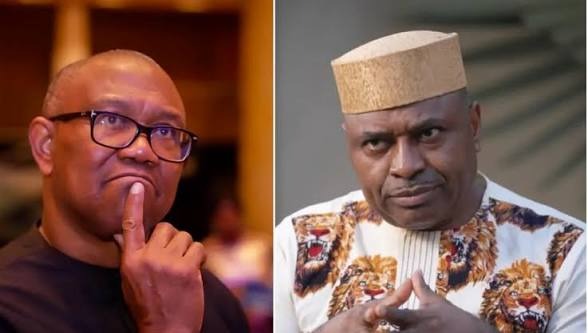
Presidential candidate of the Nigeria Democratic Congress (NDC), Mr. Peter Obi, has taken his dispute with his former campaign spokesman, Kenneth Okonkwo, to court, filing a writ of summons against him at the High Court of Anambra State, Onitsha Judicial Division.

The suit with reference number O/229/26, names Obi as plaintiff and Okonkwo as defendant which stems from allegations Okonkwo made against the former Anambra governor during an appearance on Channels Television’s Sunrise Daily programme on June 8, 2026, where he claimed Obi demanded money from NDC aspirants to clinch tickets, an accusation which Obi’s legal team has described as false, malicious, baseless and defamatory.

The writ, issued by Alex Ejesieme of Alex Ejesieme SAN & Co. (Madiba Chambers), commands Okonkwo to enter an appearance in court within 42 days of being served, failing which judgment may be entered against him in his absence. It was dated June 25, 2026, and is to be served on Okonkwo at his address in Ofuluonu, Nsukka, Enugu State.

A writ of summons is a court document used in civil litigation to formally kick off a lawsuit. It commands the defendant to appear in court and notifies them of the plaintiff’s claims and the specific remedies damages being sought.
Among the reliefs sought, Obi is asking the court for an order compelling Okonkwo to keep any retraction and apology permanently and prominently displayed on his social media accounts, including pinning it where platforms allow, without deletion or restriction for as long as the account remains active. He is also seeking an order directing Okonkwo to delete every post, interview, video, caption or comment containing the disputed remarks from all platforms under his control, alongside a perpetual injunction barring him from repeating allegations of bribery, fraud, scam, theft, extortion or criminal conduct against Obi. The suit further asks for costs and post-judgment interest of 10 per cent per annum on any monetary award until full payment.

Okonkwo served as one of Obi’s presidential campaign spokespersons in 2023 but their relationship deteriorated after the 2023 elections, with Okonkwo repeatedly criticising Obi’s political decisions, leadership style and direction, and the rift widened further this year.

Obi’s lawyers had earlier, in a letter dated June 9, accused Okonkwo of claiming on air that Obi and NDC leaders in the South-East had demanded a N10 million payment from House of Representatives aspirants after they had already paid the party’s official expression-of-interest fees, and of alleging that Obi personally compiled candidate lists from a hotel room and collected money from people abroad. That letter had demanded a retraction, public apology and N5 billion in damages within seven days.

Okonkwo rejected the allegations in a response issued through his lawyers on June 16, insisting his comments were based on information supplied by an aggrieved NDC aspirant and accusing Obi of attempting to “distract and cow” him from exposing alleged wrongdoing in the party’s primaries.

Sun

Minimum wage: FG signals fresh review of N70,000

0


The Federal Government has indicated that it is preparing to reassess the current N70,000 national minimum wage, saying the amount may no longer be adequate in view of the country’s changing economic conditions.

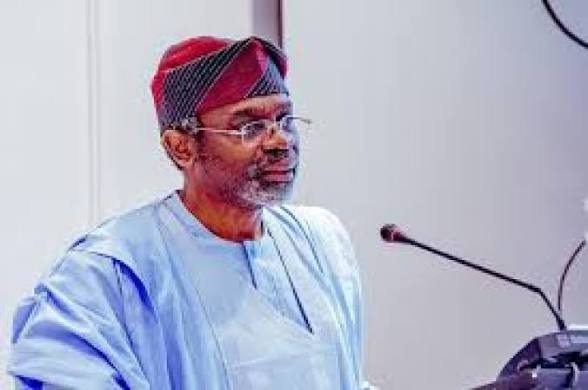
Chief of Staff to the President, Femi Gbajabiamila, made the disclosure on Thursday while speaking at the Good Governance Summit 2026 organised by Working People United (WoPU) in Abuja.

He said the Tinubu administration remains committed to ensuring that workers’ wages reflect prevailing economic realities, noting that the cost of living continues to evolve.

Gbajabiamila recalled that President Bola Tinubu approved the N70,000 minimum wage in July 2024, more than doubling the previous N30,000 benchmark. He also noted that the administration shortened the wage review cycle from five years to three years to allow salaries to be adjusted more frequently.

According to him, the government recognises that the wage approved in 2024 should be reviewed when the time comes.

“This administration has delivered a new national minimum wage. In July 2024 President Bola Tinubu signed into law a minimum wage of N70,000 naira, with more than double the N30,000 naira that workers had endured for years,” he said.

Gbajabiamila added that the administration would engage labour as a partner rather than an opponent during the review process.

“The N70,000 wage, which was a milestone in 2024, must be honestly reassessed against today’s realities, and I can confirm to you that when the time comes to begin the process of reviewing the national minimum wage, this administration will approach that endeavour not as an adversary of labour, but as a partner,” he stated.

He urged organised labour to continue engaging the government through dialogue, saying cooperation would produce better outcomes for both workers and the economy than confrontation.

Also speaking at the summit, Minister of Labour and Employment Muhammad Dingyadi said the effectiveness of any government should be measured by how its policies improve the lives of citizens.

According to him, governance goes beyond policy announcements and should result in decent jobs, higher productivity, stronger social protection and expanded economic opportunities for Nigerians.

“Governance is not merely about policies written in documents or programmes announced from government offices; the true measure of governance is the extent to which policies translate into improved livelihoods, decent work, increased productivity, social protection, economic opportunities, and dignity for the working people,” the minister said.

Earlier, National Coordinator of Working People United, Williams Akporeha, described Nigerian workers as the foundation of the country’s economy, stressing that sustainable national development depends on their welfare and productivity.

He said the summit brought together workers from different sectors to promote collaboration and develop ideas aimed at strengthening economic growth and improving the wellbeing of Nigerians.

Sun

Ekiti Court Sentences Two Men To Death By Hanging For Kidnap Of NYSC Staff

0


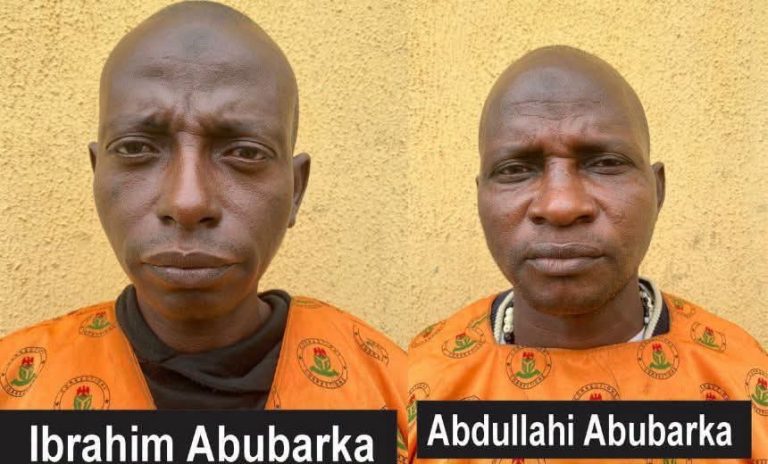
Two men arrested by the Department of State Services, DSS, have been sentenced to death by an Ekiti State High Court following their conviction for the kidnap of a staff member of the National Youth Service Corps, NYSC.

The convicts, Ibrahim Abubakar and Abdullahi Abubakar, were convicted by the Ekiti State High Court I, Fajuyi, Ado-Ekiti, in suit number HAD/124C/2022, and are to die by hanging.

A third defendant, Usman Abubakar, was however discharged after the Court held that there was insufficient evidence linking him to the crime.

The case stemmed from the abduction of Omoboade Adesina, a female staff member of the National Youth Service Corps in Ekiti State, on 22nd April 2022.

Following the abduction, the two convicts were arrested by operatives of the Department of State Services and subsequently prosecuted.

Delivering judgment, the Chief Judge of Ekiti State, Justice Lekan Ogunmoye, found Ibrahim Abubakar and Abdullahi Abubakar guilty of kidnapping and sentenced both men to death by hanging.

The Court, however, discharged and acquitted the third defendant, Usman Abubakar.

Justice Ogunmoye commended the diligence and professionalism of the DSS prosecutors for successfully proving the case beyond reasonable doubt.

He specifically highlighted the identification parade conducted by the Service, as well as the analysis of Call Data Records during investigation, as critical pieces of evidence that strengthened the prosecution’s case and ultimately secured the conviction.

The judgment marks another major courtroom success for the Department of State Services in its sustained efforts to combat violent crimes across the country.

The conviction comes on the heels of a death sentence recently handed down by a Sokoto State High Court against three men convicted of terrorism and cross-border arms proliferation.

It also follows the successful conviction of a kidnap suspect in Kogi State earlier secured by the Service, among other prosecutions.

The secret Police notes that the string of successful prosecutions underscores the increasing reliance on intelligence-led investigations in tackling kidnapping, terrorism, and other violent crimes.

It also reinforces the commitment of the Department of State Services to ensuring that perpetrators of kidnapping, terrorism, and related criminal offences are brought to justice and made to face the full weight of the law.

8 Confirmed Dead In Lagos Building Collapse, 26 Rescued

0


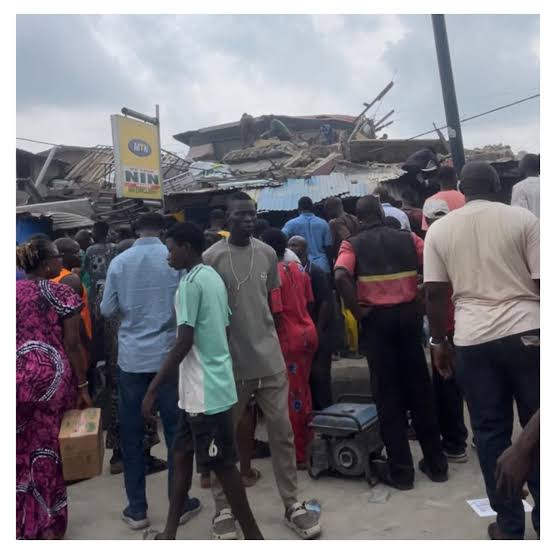
At least eight people have died, and 26 others have been rescued after a three-storey building collapsed in the Alakija area of Lagos State on Thursday.

The Lagos State Emergency Management Agency (LASEMA) confirmed the latest casualty figures in a statement issued by its Permanent Secretary, Dr. Olufemi Oke-Osanyintolu.

According to him, the building, located on Old Ojo Road by Alakija Bus Stop, off the Lagos-Badagry Expressway in Satellite Town, collapsed at about 11:37 a.m., prompting a large-scale emergency response involving multiple agencies.

Providing an update on the rescue operation, Oke-Osanyintolu said, “As of 4:20 p.m., a total of 26 persons have been rescued alive, while eight fatalities have been recorded, including a baby girl.”

He added, “Search and rescue operations remain ongoing. Further updates will be provided as more information becomes available.”

The LASEMA boss had earlier announced the activation of the agency’s emergency response following the incident.

“LASEMA has activated its emergency response following the collapse of a three-storey shopping complex at Alakija, Ori-Ade LCDA.

“A multi-agency rescue operation is ongoing, with responders working systematically to search for and extricate anyone trapped beneath the rubble,” he said.

Oke-Osanyintolu disclosed that two victims were initially rescued alive through the efforts of emergency responders.

“Two victims have been rescued alive through the joint efforts of LASEMA, LASBCA and CRCC Construction Company,” he said.

The LASEMA boss added that a deceased adult male was also recovered during the early stages of the operation.

“One deceased adult male has been located. Recovery efforts are ongoing.”

The permanent secretary further stated that reports from the scene indicated that additional persons, including shop owners and occupants, could still be trapped beneath the debris.

“There are reports that additional persons, including shop owners who had resumed business, may still be trapped. Search and rescue operations remain active,” he said.

He also revealed that heavy-duty equipment had been deployed to support rescue efforts.

“Heavy-duty equipment, including an excavator, is being deployed to support rescue efforts,” Oke-Osanyintolu stated.

Appealing to members of the public to stay away from the area, he said, “Members of the public are advised to remain calm, avoid the incident scene, and allow emergency responders unrestricted access to carry out life-saving operations.”

The agencies participating in the coordinated rescue operation include LASEMA, the Lagos State Fire and Rescue Service, the Federal Fire Service, the Nigeria Police Force, the Nigerian Navy, the Lagos Neighbourhood Safety Corps and the Nigerian Red Cross Society.

Rescue operations still ongoing.

Ex- Airline Pilot Jailed for raping 12-year old girl

0


A former airline pilot has been jailed for raping a 12-year-old girl after meeting and grooming her on Instagram.

Kwame Yeboah, 30, of Drake Way, Reading, first made contact with the child online in late 2025.

Their conversations began ordinarily, however, the nature of later messages and her appearance when they met in person would have made it clear to him that she was significantly younger and could not consent to any sexual activity with him.

Yeboah sent the child intimate images of himself and the conversations became increasingly sexual.

He called her around twice a week, making her believe she was important to him and that he cared about her.

In February 2026, Yeboah travelled from Reading to Merseyside to meet the child late in the evening. He drove her around before taking her to an isolated location, where he raped her three times.

The child later told police she struggled to process what was happening and felt nervous and confused.

Afterwards, Yeboah dropped her off near where he had picked her up and drove away.

A few days later, a friend of the victim told her mother what had happened. The matter was reported to police and Yeboah was identified using the details he had given the child.

Yeboah was arrested and interviewed, but answered “no comment” to all questions.

He was charged with three counts of rape, based on the fact that a child under 13 does not have the legal capacity to consent to any form of sexual activity, and one count of sexual assault.

At Liverpool Crown Court on 22 April 2026, Yeboah pleaded guilty to all charges and on 24 June 2026, he was sentenced to 9 years and 4 months imprisonment.