Home Blog Page 295

Ooni of Ife Mourns Elder Brother, Prince Adetunji Ogunwusi

0


The Ooni of Ife, Oba Adeyeye Enitan Ogunwusi, has lost his immediate elder brother, Prince Adetunji Ogunwusi.

Prince Adetunji’s death has thrown the Ogunwusi family, friends, associates and admirers into mourning.
Until his passing, Prince Adetunji was the Chairman of Primewaterview Limited, where he was widely regarded for his leadership, integrity and commitment to excellence in business.
Beyond his professional accomplishments, he was described as a man of humility, resilience, generosity and purposeful service whose life positively impacted many people within and outside the business community.

His death is considered a significant loss to the Ogunwusi family, Nigeria’s business community and the country’s traditional institution.
Condolences have continued to pour in for the Ooni of Ife and members of the Ogunwusi family, with prayers for strength and comfort during this difficult period.

Prince Adetunji is remembered for his contributions to commerce, leadership and community development, as well as for the values of kindness, integrity and service that defined his life.

He is survived by family members, friends, colleagues and associates, who continue to celebrate his enduring legacy and the positive impact he made during his lifetime.

Dangote Granite Mines Awards Annual Bursaries to 60 Ogun Students

0


BY TAIWO OGUNMOLA -OMILANI


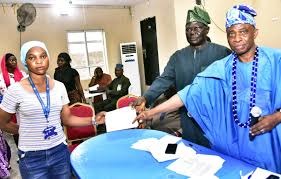
Dangote Granite Mines, a subsidiary of Dangote Industries Limited (DIL), has reaffirmed its commitment to education and sustainable community development by presenting annual bursary awards to 60 students from its host communities in Ijebu-Igbo, Ogun State.

The beneficiaries comprise 40 tertiary institution students and 20 secondary school students selected from the four host communities of Ayebandele, Olorunmodu, Saliu Babarisi and Idi Omo under the company’s annual education support programme.

The bursary presentation ceremony attracted traditional rulers, community leaders, parents, students and management representatives of Dangote Granite Mines, highlighting the company’s long-standing partnership with its host communities spanning more than a decade.

Speaking at the event, the General Manager, Community Relations, Dangote Granite Mines, Mr. Joseph Alabi, described the bursary scheme as one of the company’s most impactful investments in the future of its host communities.

According to him, education remains a vital catalyst for individual and societal development, making it important for corporate organisations to support students in achieving their academic aspirations.

“Every year, we are delighted to support brilliant and deserving students from our host communities because we recognise that education is the foundation of sustainable development.

These beneficiaries represent the next generation of leaders, professionals and change-makers who will contribute meaningfully to society,” Alabi said.

He explained that the bursary programme is part of the company’s broader Corporate Social Responsibility (CSR) strategy aimed at addressing critical community needs and improving the quality of life of residents.

Alabi highlighted several interventions carried out by the company over the years, including classroom rehabilitation, donation of school furniture, healthcare support initiatives and the provision of potable water through solar-powered boreholes.

“Our commitment extends beyond annual bursaries. We have consistently implemented projects that improve access to education, healthcare and other essential services. Our goal is to ensure that our operations create lasting value and tangible benefits for our host communities,” he said.

He added that the strong relationship between Dangote Granite Mines and its host communities has been built on mutual trust, continuous engagement and a shared commitment to sustainable development.

Alabi also disclosed that the company is planning additional community-focused projects to expand opportunities and improve livelihoods across the beneficiary communities.
Commending the initiative, the Sopinlukale of Oke-Sopin, Ijebu-Igbo, Oba Mufutau Adesesan Yusuf, praised Dangote Granite Mines for its sustained commitment to community development and educational empowerment.

“For more than a decade, Dangote Granite Mines has consistently fulfilled its commitments to our communities through meaningful and impactful interventions.

The annual bursary programme has become a source of hope and encouragement for many families, enabling students to pursue their educational ambitions,” the monarch said.

He noted that the company’s CSR initiatives extend beyond education to include investments in healthcare, learning infrastructure and other community development projects.

“The impact of Dangote’s interventions is evident across our communities. From classroom rehabilitation and furniture donations to healthcare and other development projects, the company has continued to demonstrate genuine concern for the wellbeing of our people,” he added.

Oba Adesesan attributed the cordial relationship between the company and its host communities to its responsiveness to community needs and inclusive stakeholder engagement.

“Our relationship with Dangote Granite Mines has remained peaceful and productive because the company consistently engages with the communities and honours its commitments. Today, we see Dangote not merely as a business operating within our environment, but as a trusted development partner and a member of our extended family,” he said.

The annual bursary programme has become one of Dangote Granite Mines’ flagship community development initiatives, reflecting the company’s belief that sustainable development begins with investing in people.

Through continued investments in education and community development, the company aims to strengthen its partnership with the people of Ayebandele, Olorunmodu, Saliu Babarisi and Idi Omo while creating opportunities for future growth and prosperity.
Some of the student beneficiaries expressed appreciation to Dangote Granite Mines for the annual support, promising to justify the gesture through outstanding academic performance.

Gullies, gridlocks, grief

0


• Residents of Ogun/Lagos border communities lament pain of navigating deplorable roads
• Communities deserted as landlords, tenants abandon homes

These are perhaps the most fitting descriptions of the state of roads in many communities in Ogun State, especially those bordering Lagos.

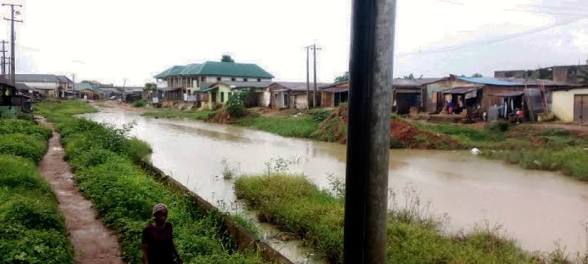
For many Nigerians, the rainy season offers a welcome relief from the blistering heat of the dry months. In many parts of Ogun State, however, every rainfall signals the beginning of another round of hardship, as dilapidated roads become waterlogged, riddled with potholes and craters, and in some cases, completely impassable.


From Ifo to Ado-Odo/Ota, Abeokuta North to Obafemi-Owode and other major Ogun communities bordering Lagos, residents say years of neglected road infrastructure have combined with the heavy rains to isolate communities, disrupt businesses and inflate transportation costs.

Residents claim that the poor condition of major roads in the state has become more than an inconvenience. According to them, the troubling state of the roads now poses a serious threat to economic activities, access to healthcare and education, and the daily livelihoods of thousands of residents. Across the state, roads scarred by deep potholes, erosion and flooding have left motorists stranded, damaged vehicles and forced commuters to spend hours navigating alternative routes. In some areas, Sunday Sun gathered that commercial transport operators have abandoned several roads altogether, leaving residents with few transportation options.


Tale of abandoned road project

Among the worst affected are communities in Ifo Local Government Area, where residents of Agbado, Abule Ijoko, Itoki, Opeilu and Oke Aro continue to lament the collapse of the 13-kilometre Agbado-Ijoko Road, which they claimed has remained largely impassable for years. The situation is hardly different in Akute, Lambe and Alagbole along the Ogun-Lagos border, where deteriorating roads have significantly hampered the movement of people and goods.


Residents said living in these communities has become a daily struggle. The poor state of the roads has made commuting both difficult and dangerous for motorists, commercial motorcyclists and pedestrians, while many commercial bus operators have abandoned the routes altogether.

For most residents, commercial motorcycles remain the only dependable means of transportation. A resident, Pastor David Akinfenwa, said leaving or returning home after heavy rainfall has become a daunting task because transport operators often avoid the area.

“Leaving or returning home whenever it rains, especially after a heavy downpour, is always a nightmare because commercial bus and motorcycle operators simply abandon the route due to the risks involved. The few who are willing to operate charge exorbitant fares, leaving many intending passengers stranded and at the mercy of inclement weather,” he said.

Communities cut off

In Ado-Odo/Ota Local Government Area, the Sango-Ota corridor, Ayetoro-Itele (via Mopol Junction) and Ajegunle-Agbede (via Ita-Oluwo) rank among the worst affected roads, with residents calling for urgent government intervention.

Despite repeated assurances by Governor Dapo Abiodun to rehabilitate roads in the axis, residents and motorists said there has been little noticeable improvement. During a visit to the area last week, Sunday Sun observed that some of the roads had virtually been abandoned by motorists, many of whom now make lengthy detours through adjoining streets to reach their destinations.

For instance, the Obasanjo-Ijagba-Lafenwa Road has become impassable following the persistent rainfall. A commercial motorcycle operator said many riders had stopped using the road because of its deteriorating condition.

“The road is no longer passable. People now have to pass through inner streets before connecting to Ijagba and other parts of Lafenwa. Even commuters coming from Atan now prefer to go through Osi instead of using the Obasanjo route,” he said.

A community leader, Yunusa Akerele, said access to several communities within the area has become increasingly difficult because of the poor road network. He appealed to the state government to fulfil its promise to rehabilitate the affected roads.

Governor Abiodun had explained in November last year that road projects within the corridor had been divided into four phases: the Itele-Ayobo Link Road to Lagos, the Ayobo Mopol-Lafenwa Junction Boundary Road, the Koro Otun phase and the Itele-Lafenwa Junction section.

Akerele, however, said the promises have yet to translate into meaningful action.

“We have seen some rehabilitation work going on, but the pace is extremely slow. Imagine rehabilitation work covering less than 100 metres taking more than three months. In another three or four months, election campaigns will begin and attention will shift completely to politics while development takes a back seat. Frankly, I don’t see any significant progress on these roads before then,” he lamented.

Decade of neglect

The situation is no different in Obafemi-Owode Local Government Area, where residents along the Arigbawo Road corridor said they have endured years of neglect. They maintained that comprehensive reconstruction of the road has become imperative to restore accessibility, stimulate economic activities and improve their quality of life.

Residents and commuters in the Mowe-Ofada axis are equally lamenting the deplorable state of the road project initiated but not completed during the administration of former Governor Ibikunle Amosun.

Speaking with Sunday Sun, residents said the eight-kilometre road, which links nearly 20 communities to the Lagos-Ibadan Expressway, has remained neglected for more than a decade. According to them, the road should ordinarily serve as a major catalyst for economic development, considering Mowe’s strategic proximity to Lagos and the RCCG Redemption City.

A resident, Ajibola Idowu, recalled that Governor Abiodun promised to rehabilitate the road while campaigning for a second term in 2023. He, however, said little has been done to fulfil that pledge.
“The governor has less than a year left in office, yet nothing significant has been done. The only intervention so far was a patchwork rehabilitation that failed almost immediately. With the rainy season, the road has become even more difficult to use,” he said.

Idowu urged the governor to ensure that every part of Ogun State enjoys the dividends of democracy, particularly through the provision of quality road infrastructure.

“I read a report where the governor said he had completed 26 road projects in Ijebu-Ode and had several others ongoing in Ogun East. My appeal is that he should not focus solely on Ogun East because of his senatorial ambition. He remains the governor of the entire state and should ensure balanced development across all zones,” he said.

Businesses count losses

Residents and business owners in most areas plagued by deplorable roads including the notorious Sango–Ijoko–Agbado–Akute–Yakoyo Road have continued to decry the deteriorating condition of the roads, saying the development has crippled businesses, increased transportation costs and subjected them to untold hardship.

A business owner, Mrs Joke Odufua of Joklab Venture, said the deplorable state of the Agbado axis of the road has had severe consequences for commercial activities in the area.

According to her, many suppliers are reluctant to deliver goods because of the difficulty of accessing the area, while those who agree to make the trip often charge significantly higher transportation fees.

She recalled a recent incident in which a delivery vehicle conveying goods to her shop was forced to take a lengthy detour through neighbouring communities after heavy rains rendered the main road impassable.

“Just last week, a vehicle bringing goods to my shop had to take a long detour because the rains made access to this area almost impossible. The vehicle eventually broke down on the way, and the supplier sent a mechanic to repair it. However, some hoodlums in the area prevented the mechanic from working and demanded N500,000 before allowing the repairs to proceed. It took the intervention of the Community Development Association leadership before they agreed to reduce the demand to N50,000,” she said.

Odufua, who said she has operated her business in the area for 15 years, blamed the situation on the government’s failure to rehabilitate the road, which she noted has remained in a deplorable condition for nearly a decade. She added that beyond discouraging suppliers, the poor road has also driven away customers, many of whom often complain about the high transportation costs associated with accessing the area. “Most of my customers have stopped patronising me because transporters are unwilling to come here. Those who do charge exorbitant fares. Imagine paying N10,000 to transport goods worth N30,000. That alone raises the cost by more than 30 per cent. How much profit can anyone make after spending such an amount on transportation?” she asked.

Burden on vehicle owners

Another business owner and resident of the Opeilu community, Mr Oladotun Olugbenga, traced the plight of residents to the failure of the administration of former Ogun State Governor, Ibikunle Amosun, to complete the road project before leaving office.

He expressed disappointment that the administration that succeeded Amosun had failed to complete the project, noting that the road has deteriorated significantly over the past eight years.

Although he acknowledged reports that reconstruction had commenced from the Akute end of the road, Olugbenga said the Agbado–Ijoko section remains virtually impassable. “Once you descend from the bridge, there is a massive crater large enough to swallow a bus. That is where movement practically stops. Vehicles cannot go beyond that point unless they divert through inner streets and adjoining communities,” he said.

He added that the situation becomes worse during the rainy season as many internal roads become flooded and impassable.

“Most residents cannot use their vehicles whenever it rains. Even if they drive out in the morning, there is no guarantee they can return home because the roads become impassable. People are often forced to park their vehicles outside their communities. It is frustrating. Many residents have sold their vehicles because of the constant damage caused by the bad roads or because they can no longer use them,” he said.

He appealed to the Ogun State Government to expedite work on the road to ease the suffering of residents and motorists.

Commuters’ declining options

A commercial minibus driver, who identified himself simply as Jamiu, also lamented the impact of the road on transport operators.

According to him, most commercial bus operators on the Agbado Junction–Rafco route have abandoned the corridor because of the damage the road inflicts on their vehicles.

“A few years ago, about 28 minibuses operated on this route. Today, only three remain. Most operators have moved to other routes because maintaining vehicles on this road is no longer sustainable. Vehicles can only move in first or second gear, which puts enormous strain on the engine. The constant potholes and deep craters also damage the suspension, tyres, wheels, alignment and exhaust system,” he said.

The decline in the number of commercial vehicles, residents noted, has triggered a sharp increase in transportation costs.

Commuters complained that commercial motorcycle operators now charge an average of N700 for the roughly two-kilometre journey between Agbado Junction and Rafco, while commercial buses charge about N500 for the same distance. The rising transport fares, they claimed, have placed an additional financial burden on residents already grappling with the challenges posed by the road’s deplorable condition.

Landlords’ headache

Meanwhile, the worsening road infrastructure has begun to reshape the social and economic landscape of many Ogun border communities. What were once thriving residential areas attracting workers seeking affordable accommodation outside Lagos are gradually losing their appeal as residents abandon their homes in search of locations with better access.

Findings by Sunday Sun revealed that several communities plagued by dilapidated roads are witnessing an increasing exodus of tenants, with some landlords also relocating after years of frustration. The daily ordeal of navigating impassable roads, especially during the rainy season, has become unbearable for many residents, forcing them to move back into Lagos despite the higher cost of accommodation. To stem the growing vacancies, some landlords have reportedly reduced rents, while others have been unable to secure new tenants for months.

Among the communities said to be worst affected are Opeilu, Agbado, Gas Line and Ijoko-Abule, where empty apartments are becoming an increasingly common sight. Residents say the deteriorating road network has eroded the main attraction of these communities—their proximity to Lagos—and turned what should have been affordable suburban alternatives into places many prospective tenants now avoid.

For Abraham Shosan, a resident of Itoki, the situation reflects years of neglect. He explained that communities along the abandoned 13-kilometre Akute-Agbado-Ijoko road, including Ijoko-Ogba Ayo and neighbouring settlements, have become some of the least attractive destinations for people seeking cheaper accommodation outside Lagos.

According to him, closeness to Lagos has done little to boost the local property market because poor road access has overshadowed every other advantage.

“The proximity of these communities to Lagos has not translated into higher demand for housing because access remains a major challenge,” he said. “What we keep witnessing is people moving out without others willing to replace them. I know of a house in this neighbourhood with two vacant apartments that have remained empty for almost a year. One of the former occupants was a member of my church. He relocated because he could no longer cope with the daily struggle of getting in and out of the community. Up till today, the apartment is still vacant.”

His account underscores a growing reality across many Ogun border communities, where bad roads are no longer just an infrastructure challenge but a factor driving population movement, weakening the rental market and threatening the economic viability of entire neighbourhoods.

Sun

Atiku to Tinubu: You can’t build prosperity on deception

0


• Alleges N210 bn duplicated allocations in 2026 budget

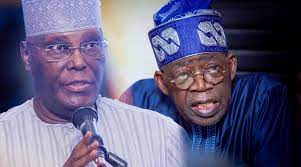
Former Vice President, Atiku Abubakar, has raised alarm over alleged N210billion duplicated allocations in the 2026 budget, saying that the President Bola Tinubu administration cannot build prosperity on alleged deception.

Atiku, in a statement by his Senior Special Assistant on Public Communication, Phrank Shaibu, accused the Federal Government of fiscal indiscipline, noting that the consequences are evident in the country’s declining prosperity rankings.

The former Vice President noted that recently the country has witnessed cases of Budgetary allocations outside the statutory mandates of agencies, as well as alleged insertions of billions of naira and expenditures that have no bearing on the needs of the people.

Atiku, who is also the African Democratic Congress ( ADC) 2027 presidential candidate, stated that instead of responding to the issues with transparency, the government has” often resorted to denial before reluctantly acknowledging problems when confronted with overwhelming evidence.”

He stated that “For more than three years, Nigerians have been subjected to relentless hardship. They were told that fuel subsidy removal, exchange rate unification, higher taxes and rising tariffs were bitter pills that would eventually restore economic stability. Yet today, the same government cannot explain how more than ₦210 billion found its way into duplicated and overlapping budget provisions.

“When a government asks its people to sacrifice, it must first demonstrate discipline. Instead, what Nigerians have seen is a budget riddled with duplication, questionable insertions, overlapping projects and expenditures that offend both common sense and fiscal responsibility.”

The former Vice President added that “nothing illustrates the bankruptcy of this administration’s so-called reforms more than the fuel subsidy deception. Nigerians were told in 2023 that subsidy was gone and were compelled to endure unprecedented hardship—skyrocketing fuel prices, crushing transportation costs, runaway inflation and a collapsing standard of living—in the name of economic reform.

“ Yet NNPC Limited’s own audited 2024 financial statements now reveal that a staggering ₦7.13 trillion was still expended on what it calls ‘Energy Security Expenses,’ a category the company itself identifies as petrol subsidy, otherwise known as under-recovery. This means Nigerians were never told the whole truth. The subsidy was not eliminated; it was merely repackaged, renamed and quietly charged against the Federation.

“A government that conceals ₦7.13 trillion behind a convenient euphemism while demanding sacrifice from millions of struggling citizens cannot claim the moral authority to preach reform, prudence or fiscal discipline. Nigerians deserve to know who authorised this expenditure, who benefited from it, and why the administration chose to market deception as economic reform.”

Atiku called on the National Assembly to immediately conduct a comprehensive forensic review of the 2026 Appropriation Act, publish every duplicated allocation, identify every official responsible for inserting or approving such provisions and ensure that all improperly appropriated funds are recovered.

Furthermore, he charged the Auditor-General of the Federation, anti-corruption agencies and civil society organisations to carry out independent scrutiny of the budget and make their findings available to the Nigerian people.

“The national budget is the single most important economic policy document of any government. It should reflect national priorities, inspire investor confidence and assure citizens that every naira borrowed or earned will be spent wisely. When that document itself becomes contaminated by duplication and overlapping allocations, confidence in the entire machinery of government is undermined.

“The days when budget manipulation could be dismissed as mere clerical errors must come to an end. Every duplicated allocation represents a classroom not built, a hospital not equipped, a road left abandoned and a community denied development,” Atiku stated.


Akwa Ibom: Eno visits flood-hit communities, promises new drainage master plan

0


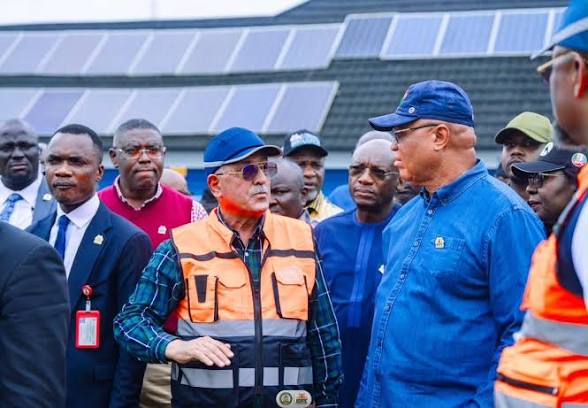
Eno during inspection of flooding areas in Uyo

Akwa Ibom State Governor Pastor Umo Eno has inspected communities ravaged by flooding and promised to develop a new drainage master plan to tackle the flood menace in the state.

The Uyo metropolis was submerged by flooding a few days ago following torrential rainfall that hit the city, rendering families homeless and making several streets impassable.

Eno, during his inspection of the worst-hit areas, expressed sympathy for residents affected by the flooding and reaffirmed his administration’s commitment to implementing lasting flood control measures.

Eno interacting with contractor handling desilting of gutters in Uyo
During the inspection, Eno visited drainage systems and flood-prone locations where he had earlier directed contractors to commence immediate desilting and channel-clearance operations to restore the free flow of stormwater.

Speaking with journalists, Eno described the flooding as a natural occurrence but noted that human activities had worsened the situation.

“This is not entirely a man-made disaster, but we have complicated the situation ourselves by blocking natural waterways and drainage channels.”

Eno during inspection of flooding areas in Uyo
He urged residents to desist from indiscriminate waste disposal and encroachment on water-flow channels.

Eno had earlier inspected the underground drainage system along Ikot Ekpene Road at the Itam Junction axis, where he received briefings from government officials and contractors handling the emergency flood intervention exercise.

He also inspected the Nkemba drainage channel, which was intended to evacuate floodwater from Port Harcourt Street, Uwa Street, and adjoining neighbourhoods.

The inspection continued to the Akpan Essien–Akpan Udosen axis, where desilting operations are ongoing to improve water flow.

At Asung Ama Housing Estate Extension, one of the communities affected by the flooding, Eno sympathised with residents and assured them of immediate government intervention, as well as permanent engineering solutions to the recurring flooding.

He disclosed that the government would review the state’s Drainage Master Plan to align it with current realities and guide future flood-mitigation projects.

“The essence of this inspection is to see things for myself so that our discussions on the Drainage Master Plan will be based on the realities on the ground.

“There are places where buildings have encroached on waterways, making existing drainage channels inadequate.

“We must all learn to keep our waterways clear. Some buildings have been badly affected because they are located on natural water channels. I have directed that discussions be held with the owners.

“Where necessary, the government will revoke the Certificates of Occupancy, pay appropriate compensation, and demolish the affected structures to create adequate drainage corridors.”

Eno commended the Emergency Flood Response Committee, led by the deputy governor, Senator Akon Eyakenyi, alongside contractors who have mobilised to clear blocked drains and restore normalcy in affected communities.

He appealed to residents to support government efforts by keeping drainage channels free of refuse, adding that flood prevention requires collective responsibility.

“We will continue to play our part as government, but our people must also do theirs by protecting our drainage channels and maintaining a clean environment.”

Speaking during the inspection, Deputy Governor Senator Akon Eyakenyi appreciated the governor for responding swiftly to the plight of flood victims and for appointing her to chair the emergency response committee.

Eyakenyi explained that following the devastating rainfall of July 9, the committee immediately commenced intervention efforts the following day, adding that emergency measures had already been implemented, while permanent solutions involving reconstruction, demolition, and drainage expansion now await final consideration.

She disclosed that the National Emergency Management Agency (NEMA) and the State Emergency Management Agency (SEMA) were in the process of identifying displaced families with a view to providing temporary shelter and other humanitarian assistance.

A resident of the flooded area, Mr Francis Etim, commended Eno for personally assessing the situation and described the visit as a demonstration of compassionate and responsive leadership.

He also appreciated the chairman of the Environmental Task Force, Prince Ikim, for promptly alerting the governor and closely monitoring developments.

Sun

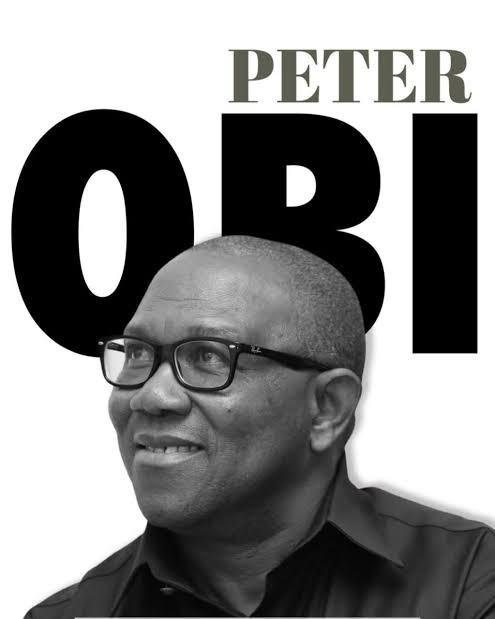
65th birthday exclusive: Peter Obi opens up

0

Today, Mr Peter Obi, the presidential candidate of the Nigeria Democratic Congress (NDC), clocks 65 years. For him, age is just a number as his strength is unbelievable.

On Thursday, The Sun team had an exclusive interview with Obi on his arrival from abroad, where he visited five different cities in six days.

It was indeed a vantage Mr Peter Obi as he spoke on his quest to become Nigeria’s president, 2027 elections, his party’s travails, the Tinubu administration, security challenge in the country, the state of the country and his source of strength, among others.

Your birthday is three days away from today. How do you feel at 65? How has life treated you?

God has been very gracious to me as a person. Whatever I am today is a result of God’s grace. I strive as much as possible not to abuse this grace. Wherever I find myself, I offer the best for humanity. I would have wished that people of my age had done better for the society and for the coming generation, which is what we are now striving to achieve.

Many still don’t know how you get the kind of energy you have at 65 years. A Peter Obi could be here today, in America tomorrow, and may go to Iran from there the next day. Do you take energy boost drinks, or what? How and when do you rest?

Well, whatever I do is by His grace. Whatever energy I receive is by His grace. Because I believe that whatever I do, I do it for humanity, I put all necessary energy and effort. I left Lagos on Thursday for the United States. I arrived in one city on Friday for a short meeting in Houston. I left thereafter for Washington D.C., again, for one day. From there I travelled to New York, again for one day. From New York, I left for Berlin for one day. And then to the U.K. And back again. So, within five, six days, I was able to go to five different cities in three countries and then back in Nigeria. Tomorrow (Friday), I have to be in Enugu, Lagos and Abuja for different functions. It is just by God’s grace that I function like that.

So where is the energy coming from?

My energy comes from God and I’m grateful to the Almighty.

How do you rest?

Well, like every other person, I get about a few hours of sleep in a day. Medically, one should be resting for at least eight hours per day. I’ve never in my life slept for eight hours. Maybe I will do that in the future.

What is the maximum time you sleep?

Usually, I get about three hours, four hours sleep. For example, I’m here now, I’m going to have a 6:00a.m. flight tomorrow. That means I have to get up by 4:00 a.m. to be able to be at the airport. And if I finish my meetings tomorrow, it’ll be about 12:00-1:00p.m.

The 2027 presidential election is just about six months away from now. At some point, you promised that you must be on the ballot. Going by what is happening to your party now, the NDC, are you still very optimistic that you are going to be on the ballot?

I said so, yes. But remember, whatever I say, again, it’s by His grace. For me, I have a wish that I want to be on the ballot. And I still believe today that I’m going to be on the ballot. But the rest is left for God. NDC has done its own primary election. I’ve been chosen. It’s been uploaded to INEC. But you know, today in Nigeria, it’s not the same thing because the government has chosen to do things wrongly.

Why do you say so? What have they done wrongly?

You can ask Nigerians what is happening. What did they do wrong? When the leader of the country said he’s happy that other parties are in trouble. That should worry everybody. It should worry you too. It should worry everybody.

Some people are saying that you probably didn’t do your due diligence before joining the NDC. Could that be true?

I believe there is nothing wrong with the NDC. The problem is with Nigeria itself. Political parties can exist, choose their candidates, present them for the voters to decide their fates. The job of the regulator, the referee, is to conduct fair and credible elections and not what they are doing today. These are things I want to challenge.

We thought the concern was with your party’s logo?

Don’t worry about that. It’s not an issue. The issues are the people in power. They don’t want to do the right thing. We all see it. When someone like me get an opportunity of serving, you’ll see the difference; you will see how opposition parties are built to be contributors to developments. The government ought to encourage the opposition, not the other way around. All of you should join to ensure that happens. Opposition is an ingredient and what it takes to build a democratic setting. Everybody should encourage them.

How about ADC? When you first joined ADC, the tempo was very high. What did you see that made you to leave?

The same thing we were complaining about. The same thing. Look at what ADC is also going through. That shouldn’t be in a democratic society. It shouldn’t be. The rascality is too much. You know, the rascality is too much. ADC was properly negotiated, articulated, handed over to the people I consider very decent. You cannot compare anybody in terms of taking charge of a party than David Mark. And the people who are there, look at the rascality. These are things that shouldn’t be in our politics today.

Do you think you are being victimised as an individual or as an opposition leader?

No, I am not being victimised. Society is being victimised. Not me. It has nothing to do with me. It is just that Nigerians are complacent and thinking that it is about Peter Obi. It has nothing to do with me. I just want a better society. I want a society that will be better for everybody, not just as a person.

Don’t you think that these things are happening because our political parties are not organised in terms of having ideological differences?

Nigerian leader should organise them. That is why he is a leader. That is what I am going to offer when I assume that office. I will organise them. Leadership goes beyond just doing things the way they are being done today. It is wrong. We should organise the opposition to contribute to national development. Ideological differences do not fall from heaven. It is human beings that can make them happen. The leader should lead by being at the forefront of making sure that things work in every aspect of society because we want to bring unity, peace, and progress.

You recently raised the alarm that your life was being threatened or at risk. And some people within the political circle are saying that you are crying wolf. What did you see that made you to cry out?

I have tried to go to about three states, but the governors would say that I shouldn’t come. What else do you need to hear? You guys have seen enough threats. Tell me what that means. Everybody can see it. Everybody can feel it.

The question is: don’t we have freedom of movement in Nigeria? Why would anybody tell me not to come to a state? I have been told that if I come, my life is in danger. What else do you want me to say? What I am saying is there for everybody to see.

When you said they warned you, we heard about Edo State where the governor said you should tell him in advance before coming so that he can provide security. And Benue State too…

He didn’t say that. Maybe that is your word.

So, why do you think they don’t want you to be in their states?

That is what I am saying; the rascality has to change. We need to have a country.

In 2023 elections, we saw what looked like a revolution. The rise of the Obidient Movement that gave you massive support. And three to four years down the line, do you think that support is still there?

It is even more now. Nigerians are determined that we cannot continue at this pace. The way the country is heading, we will all be destroyed, including you.

Specifically, what are the things that you have seen that this government has done wrongly that need to be corrected?

I don’t need to say anything. I just want to ask people how they felt before the people in office came and how they feel today. What do I have to tell you? Even you, ask yourself this: Is this how a country should be? It is time to change and see things from a better perspective. If you think things are better today than they were before, judge yourself. People are feeling the heat. They know things are worse. All indicators have shown that things are worse. We had 87 million people living in poverty. Today, there are 140 million people in poverty. So, what else do you want me to tell you?

So, who do we blame: the politicians or the system?

We blame the leadership. It has nothing to do with the system.

You made a choice of Rabiu Kwankwaso as vice presidential candidate. What informed your decision to pick him?

It is a very simple thing. Kwankwaso has the philosophy of pulling people out of poverty. I have the same philosophy. Kwankwaso believes in education. You cannot change the society without education. If you look at my X (formerly Twitter), I made it clear that I will emphasise on education. Education is going to change the society. Nigeria must be seen to form its innermost human capital, which we need to develop. Kwankwaso believes in this. I do. We have a synergy.

You and Kwankwaso had the opportunity of forming this alliance in 2023. What happened that it didn’t work out?

Those who think about yesterday and today will miss tomorrow. The past is gone. We are talking about the present.

Is everything going on well right now between the two of you?

I don’t know why people talk about differences between people who are working together. Have you ever seen us quarrelling? You see, people quarrel even in offices because of transactional governance. The country is in a mess because of transactional governance. I am not into transactional government. I am into transformational governance. We want to change the society and make it better. We want to pull people out of poverty, not the other way around.The two of you have large followers. How are you managing them? The Kwankwasiyya and the Obidient Movement?
We do not just have large followers alone. People are gravitating to what is right. How are we going to manage them? We have no problem whatsoever. We want to change the society. Our followers want a changed and better society.

Two major and key members of the Obidient Movement, Randy Peter and Mama Pee, were recently quizzed by the EFCC. What information do you have about the issue?

Like I said before, the system is against whatever I do or try to do. The country has more difficult things to manage, but they will leave it and begin to chase people around. We have seen people creating fake budgets, fake agencies, fake ministries. Nothing happens to them. We have more serious issues than just looking for people who are trying to help Nigeria have a better society through their advocacy.

In 2023, the major presidential candidates, including you, promised to remove fuel subsidy. When President Tinubu was eventually declared the winner of that election, the first thing he did was to remove subsidy. And now he’s being criticised heavily for subsidy removal. Why?

Nobody has criticised him for removing subsidy. The problem is not the removal of subsidy, but where the savings invested in is. As you can see, the money is going to fake ministries, fake agencies, fake this and fake that. That’s what we need to deal with.

I will remove subsidy. I say it at any opportunity I have, that I will end subsidy. The reason being that within the subsidy regime, there is corruption components. We need to eliminate that so that we can know the actual subsidy and gradually deal with it. And also show where the savings which you preached were invested. We can’t continue to borrow money to be paying subsidy. Subsidy removal will lead us to a lot of savings. And actually, after some months, we have saved trillions. The question is: Where are the trillions saved invested? If I say I’m removing subsidy it is because we want to invest it in critical areas of development, which is, maybe education, health, and pulling people out of poverty. Have you seen it? But we’ve actually borrowed more. This government has borrowed more than all the previous governments put together. Today, we are owing those who have enabled the generation companies when it comes to power, which they promised to solve. We’re still owing them. We’re owing contractors and nobody can see anything. Lives of people have not improved. So, that’s the problem.

But some of these funds are going to the states, and some of them are actually feeling the impact of it…

I don’t doubt that, but are you feeling the impact? We are seeing poverty instead. It’s a very simple thing. The poverty level is increasing. People are hungry. All indices of measurement show this. We are one of the hungriest countries. So, where are you feeling the impact? I’ll follow you to your village. Let’s go there so I can see the impact you have felt. Since some of you say you feel the impact, I need to follow you so that you show me where the impact is being felt.

But some of the states are doing well in the area of road infrastructure.

No, no, no. My brother, I said let me follow you so you show me where people are feeling it. Let me tell you: the most critical contribution to development is human capital development, human infrastructure.

How many roads have you passed in the past one year? I travel every day across Nigeria. So, I don’t know what you’re talking about.

The country is still facing very serious challenges in the area of security and energy supply – electricity. Tell us what you would do differently if you become president?

We’re not investing our resources in critical areas. Security is a critical area. Security of life and property is critical. You deal with it. The same thing with power. And I’ve explained it in various outings. That we’re going to be committed and go ahead and tackle the issue of insecurity. Which, as long as I’m concerned, you need all the political will. You need all the commitment to deal with it decisively. And show Nigeria that you’re doing so aggressively.

On power, I’ve said what I’m going to deliver. That I’ll make sure that within four years, we will generate, transmit, and distribute at least 10,000 megawatts. If you look at what is happening in Aba, for example, with the Integrated Power Plant, that can be replicated in different places. Embedded power. There are so many things you can do. Other nations have done it. And I’ve been going around, studying what other people have done. From Egypt to Indonesia. Everything they’ve done is in the open. It’s not rocket science.

When issues of corruption are being discussed in this country, whether at the state or federal level, people tend to exonerate you as someone who served as governor and yet, there’s no issue of corruption around you. Tell us, what was the secret? How did you do it?

There’s no secret to it. There’s no secret. There are a lot of people who challenge me. And say, oh, it’s not true. It’s not this. But what I tell them is that I’m not a saint. But what I could steal, I left. No thief, no corrupt person can see what he can steal or appropriate for himself and leave it. Nobody ever sat down and said to me, Peter, save money. But then I left office and was not owing salary, gratuity, pension or any contractor who had delivered or executed his job. Or supply which had been delivered. I was not owing any. I even kept money for the salary of that month I left office. And other deals that I did for that month. I left N36 billion and $150 million. Some have challenged me, saying that I’m being paid interest on dollars component. I’ve said, go and verify about the dollars and bonds, to know whether the interest is being paid to me.

Still on the issue of insecurity, particularly the activities of IPOB in the South-East which has affected businesses. Many businesses and businessmen have had to relocate to other places because of issues like this. What would you do differently?

I condemned it… And I stand on that. I stand on it. It is wrong to assault people’s businesses. And like you said, it affected businesses which has made many to relocate.

What would you do differently if you became president to ensure security?

Well, I was governor. We had some of those agitations, but we managed it. I don’t want to blame anyone, but we managed it during our time.

You have a very strong youth followership in this current dispensation. And if you become president, what programmes do you have for the youths?

Well, it’s not a question of having youth followership. It is that our youths have been neglected. They should be our engine of growth. Our youths in their productive age are not given the support that is required. This is the age they are going to be entrepreneurs. This is our energy. This is our human capital that would have been unleashed to the world.

Nigeria’s immense human resource, that is if we articulate it very well, educate them very well, show them they have the right skills, support them in their development, they will be able to compete globally. And that’s what we’re going to do for them.

Some people have described President Tinubu as a man of courage. And when they say this, they point out the fact that he removed subsidy; they say he has reformed the tax system, and now he’s talking about state police. Do you agree with those who hold such view?

Well, let me tell you, everything he is doing now, we all agreed to do it. The truth is that President Tinubu is tired. He doesn’t have the capacity to govern this country today. Those who are pushing him are those benefiting from the confusion. It is time we allow him to go home and rest.

The Tinubu that was governor of Lagos State is not Tinubu the President. They are two different persons in terms of strength. We are human beings. I won’t be doing what I’m doing today in the next couple of years. In the future, everything comes with age.

It appears that every political party you join suddenly develops one problem or the other. We have talked about this before, from ADC to NDC, starting with Labour Party. What is actually the problem? Is it you or the parties?

The cause of the problems is usually the power itself. They can’t stop it.

The election is fast approaching. How prepared are you in terms of mobilisation and everything that has to be done?

When campaign begins, it is left for the people to listen? All of us who will campaign are on that issue.

At some point, you were criticised. Some people said you didn’t have strong political structure. That you didn’t have the strength that is required to win presidential elections in this country. How do you respond to that?

Remember what I said in 2023. The structure I have now is the structure of the future. The structure of people who knew me well. I didn’t build my own structures. I am within a party, the NDC. And I’m working with partners who believe in a common ideology for a better country.

In your mantra in 2023, you promised to move Nigeria from consumption to production. Are you still maintaining this?

It remains so… If you look at my tweets on the 1st of July and my tweets today (Thursday), they are consistent with that. Yes, I want to drive it down to the specifics. What particular thing? Go and read what I said. I’m investigating what drives development. Education. Human capital. That’s what drives everything you can talk about in development. It’s within the space I’ve said. Education. Health. And pulling people out of poverty. That’s it.

You promised to cut down on costs of governance. So, if you become president, will you reduce the number of ministries?

It has nothing to do with the number of ministries. That’s not cutting costs of governance. There are so many things we can do to cut costs of governance. I’ve done these things at the state level. I didn’t reduce the ministries. In fact, I increased it, I brought in Ministry of Planning, yet, we had a reduction in costs of governance. There are too much wastes that we can cut down. And you fight corruption. That is a waste. I can do that at any time. It’s very easy to do.

Currently, the bill to create state police has passed through the National Assembly, what’s your take?

There’s nothing wrong with state police; even community police. We need it. When I was governor, I supported all community security systems. I even bought them vehicles and equipment. Every community under me had a vehicle from government, even all necessary equipment. And I paid their salaries. And it worked. So, it’s not even just state. It has to go down to the communities and local government because that’s how you can find security. There’s no problem in that.

As a presidential candidate of a major political party, we understand that you’re entitled to security from the state. How much of that do you enjoy?

You said so. I don’t know if I’m entitled. Maybe I’m yet to be provided with one. Let’s see.

It’s common to have wives of presidents embarking on pet projects. What would Nigeria expect from your wife in this regard if you become president?

Well, I’m not president yet. When I’m president, we’ll do it differently. We have more critical issues. Critical issues are like how does a child of nobody in this country become somebody without knowing anybody? We have more critical problems. We all came from various backgrounds that are humble. We want to keep it at that. So, that’s it.

We are marching very closely to January 16, 2027. What would you expect from INEC and security agencies?

Well, INEC and security agents are part of Nigeria. Those who were in INEC yesterday are no longer there today. So, it’s better for them to be part of building a better society. Because whatever they are, whatever they do, they will come back to live in the same society. You see, people must know this. I live in Onitsha today. When I was governor if I didn’t see Onitsha as important to place it where it is today, I won’t be able to live there today.

If you are given 60 seconds to talk to Nigerians about the coming election, what would you tell them?

I would tell them to go out and register for voting. And be committed that we will now, in 2027, insist on free, fair, and credible elections. As Nigerians, in our polling stations, we should unite in saying this nonsense will not continue.

Countries have said no to their leaders, saying we cannot continue on this trajectory, we cannot continue this way. We have our children, we have the young ones coming. Let’s do the right things.

I urge every Nigerian to go out, register, and be determined. Election in 2027 is not among the candidates. It’s between Nigerians and politicians. We now want the society to work.

Sun
We were released by terrorists before soldiers came for us – Rescued Oyo teacher

0

Rescued Oyo Schoolchildren
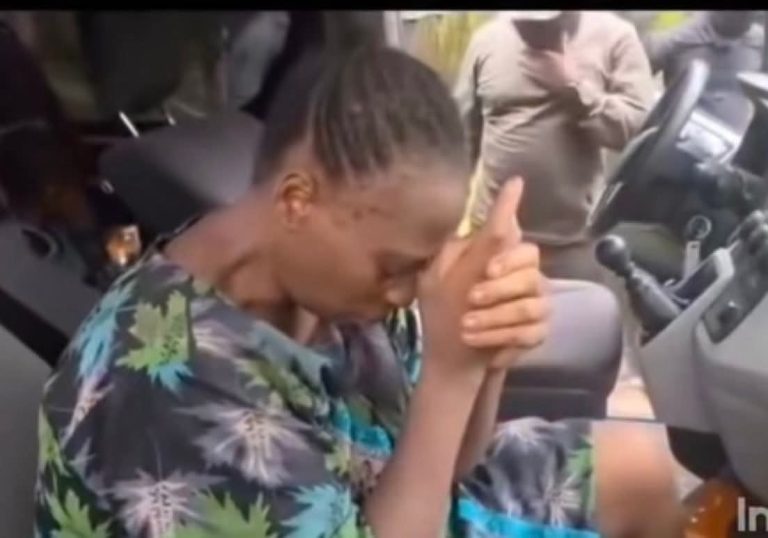
One of the teachers rescued after spending 56 days in captivity following the mass abduction of pupils and staff in Oriire Local Government Area of Oyo State has claimed that the kidnappers released the victims before security operatives eventually escorted them to safety.

Zacchaeus Olatunde, who was among the teachers abducted alongside pupils from three schools in May, made the revelation during a telephone interview with Nigeria Info FM on Friday.

His account offers one of the most detailed firsthand descriptions yet of the ordeal endured by the captives before they regained their freedom.

According to Olatunde, the victims remained blindfolded throughout their captivity, leaving them completely unaware of their location.

He said they could not determine whether they were still within Nigeria or had been moved across the country’s borders.

“When we were there, we were blindfolded, not an ordinary blindfold. We didn’t even know if we were in Nigeria or another country. We were just there.

“We were saying maybe the government had even forgotten us,” he said.

The teacher disclosed that their abductors spoke Hausa, Nupe, English and Yoruba, insisting they identified themselves as members of the Islamic State West Africa Province (ISWAP) rather than Boko Haram.

“They said they are not Boko Haram. They said they are ISWAP. I was the last person who was captured in the school, and I was the last person that was released,” Olatunde said.

Despite the uncertainty surrounding their fate, he said the captives never abandoned hope, attributing their eventual freedom to the prayers offered on their behalf by family members, religious groups and well-wishers.

Olatunde also described the living conditions in captivity, stating that although the abductors provided food twice daily, they imposed strict controls on the victims’ religious activities.

According to him, the meals consisted mainly of rice, beans, onions, margarine and salt, with pepper never included throughout the 56-day ordeal.

“We were fed twice a day, morning and evening. We ate only rice, little beans, onions, margarine and salt. Throughout our stay there, we did not taste pepper,” he said.

He added that the kidnappers initially prohibited the captives from praying before later relaxing the restriction after about a month.

“They allowed us to pray, but they warned us not to mention the name of Jesus and not to pray aloud,” he recalled.

The teacher said the captives’ release came unexpectedly when the kidnappers’ commander informed them they were free to leave.

He disclosed that he was the last to depart because a broken handcuff delayed his release, adding that one of the kidnappers even suggested amputating his hand before another proposed removing the restraint with a rope.

Olatunde further shared that after leaving the camp, the freed victims trekked for nearly an hour before the kidnappers arranged motorcycles that transported them close to a nearby village.

They then continued on foot until they eventually encountered security personnel.

“We trekked for about 40 minutes to one hour before they provided motorcycles that took us close to the nearest village.

“They later stopped and told us they could not go further, so we trekked for another one and a half hours before we got to where the government people who came to rescue us were,” he said.

He disclosed that the victims were initially sceptical of the security personnel because they were communicating in Hausa and arrived in buses without number plates, forcing the former captives to demand proof of identity before agreeing to follow them.

Olatunde further recounted helping younger pupils navigate rivers during the long journey out of the forest, carrying one young girl on his shoulders while using a stick to test the depth of the water before assisting other children and adults across safely.

The teacher also revealed how arthritis in his left leg prevented him from escaping during the initial attack on the schools, leading to his capture.

Surprisingly, he claimed medication provided by the kidnappers significantly eased the condition after years of unsuccessful treatment.

Despite surviving the ordeal, Olatunde said he had yet to receive any financial assistance, stressing that the immediate priority should be rebuilding and supporting the affected school community.

The pupils and teachers were abducted in May after heavily armed men invaded schools in Oriire Local Government Area.

They regained their freedom after 56 days in captivity, with Oyo State Governor Seyi Makinde announcing their release and directing that the victims receive medical care and psychosocial support.

The governor also called for a United Nations-backed investigation into the circumstances surrounding the abduction, while the Presidency maintained that Nigeria’s security agencies had already provided a full account of the rescue operation.


Sanwo-Olu Celebrates Folorunso Alakija at 75

0


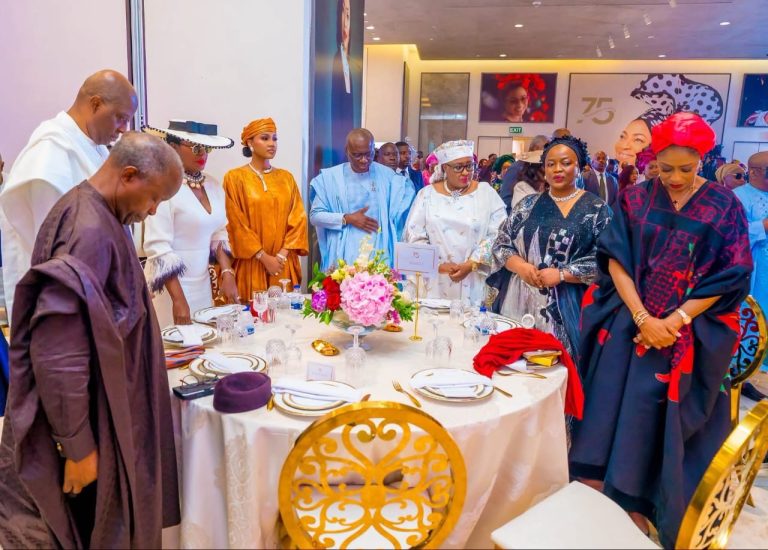
Lagos State Governor, Babajide Sanwo-Olu, has joined family, friends and well-wishers in celebrating the 75th birthday of renowned businesswoman and philanthropist, Apostle Folorunso Alakija.

Sanwo-Olu described Alakija as a true icon of leadership and philanthropy, noting that she has remained a pillar of strength and a source of inspiration to many in Lagos and across Nigeria.


“Over the decades, she has been a pillar of strength and a deep source of inspiration for so many in Lagos and across the nation. Her dedication to lifting others up remains remarkable,” the governor said.

He prayed that the new chapter of her life would bring her greater joy, good health and the grace to continue her impactful work.

Sanwo-Olu Celebrates Folorunso Alakija at 75

0


Lagos State Governor, Babajide Sanwo-Olu, has joined family, friends and well-wishers in celebrating the 75th birthday of renowned businesswoman and philanthropist, Apostle Folorunso Alakija.

Sanwo-Olu described Alakija as a true icon of leadership and philanthropy, noting that she has remained a pillar of strength and a source of inspiration to many in Lagos and across Nigeria.

“Over the decades, she has been a pillar of strength and a deep source of inspiration for so many in Lagos and across the nation. Her dedication to lifting others up remains remarkable,” the governor said.

He prayed that the new chapter of her life would bring her greater joy, good health and the grace to continue her impactful work.

US issues travel warnings for 23 countries [FULL LIST]

0


The United States Department of State has placed 23 countries under its highest travel advisory, Level 4, warning Americans not to travel to those destinations under any circumstances.

In an updated advisory seen on Saturday on the department’s TravelGov X account, the State Department explained that Level 4 warnings are issued for countries where security conditions are considered extremely dangerous or where the US government has limited capacity to provide assistance to its citizens.

“We issue Travel Advisories with Levels 1–4. Level 4 means DO NOT TRAVEL. We assign Level 4 based on local conditions and/or our limited ability to help Americans there,” the department said in the notice posted on Thursday.

It added, “These places are dangerous. Do not go for ANY reason.”

The 11 African countries on the Level 4 list are Burkina Faso, Central African Republic, Chad, Democratic Republic of the Congo, Libya, Mali, Niger, Somalia, South Sudan, Sudan and Uganda.

Full list of countries under US Level 4: Do Not Travel advisory
Afghanistan
Belarus
Burkina Faso
Burma (Myanmar)
Central African Republic
Chad
Democratic Republic of the Congo
Haiti
Iran
Iraq
Lebanon
Libya
Mali
Niger
North Korea
Russia
Somalia
South Sudan
Sudan
Syria
Uganda
Ukraine
Yemen

The latest advisory comes months after the State Department retained Nigeria at Level 3: Reconsider Travel, while designating several Nigerian states as Level 4: Do Not Travel due to security concerns.

Level 4 states that U.S. citizens are urged to avoid include, in the North, Borno, Jigawa, Kogi, Kwara, Niger, Plateau, Taraba, Yobe, and northern Adamawa states.

In South-South and South-East are Abia, Anambra, Bayelsa, Delta, Enugu, Imo, and Rivers states (excluding Port Harcourt).

According to the advisory, Americans are urged to reconsider travel to Nigeria because of crime, terrorism, kidnapping, civil unrest and inconsistent healthcare services, while travel to designated Level 4 states is strongly discouraged.

Reacting to the tags, the Nigerian government described the US decision as a “routine precaution guided by internal protocols” which does not reflect the country’s situation.

Minister of information, Mohammed Idris, said while there are “isolated security challenges” in Nigeria, there is no breakdown of law and order, noting that the country remains stable.

Sun