Home Blog Page 285

Troops Clears Nigerien Camel Herder of Terrorism Allegations

0


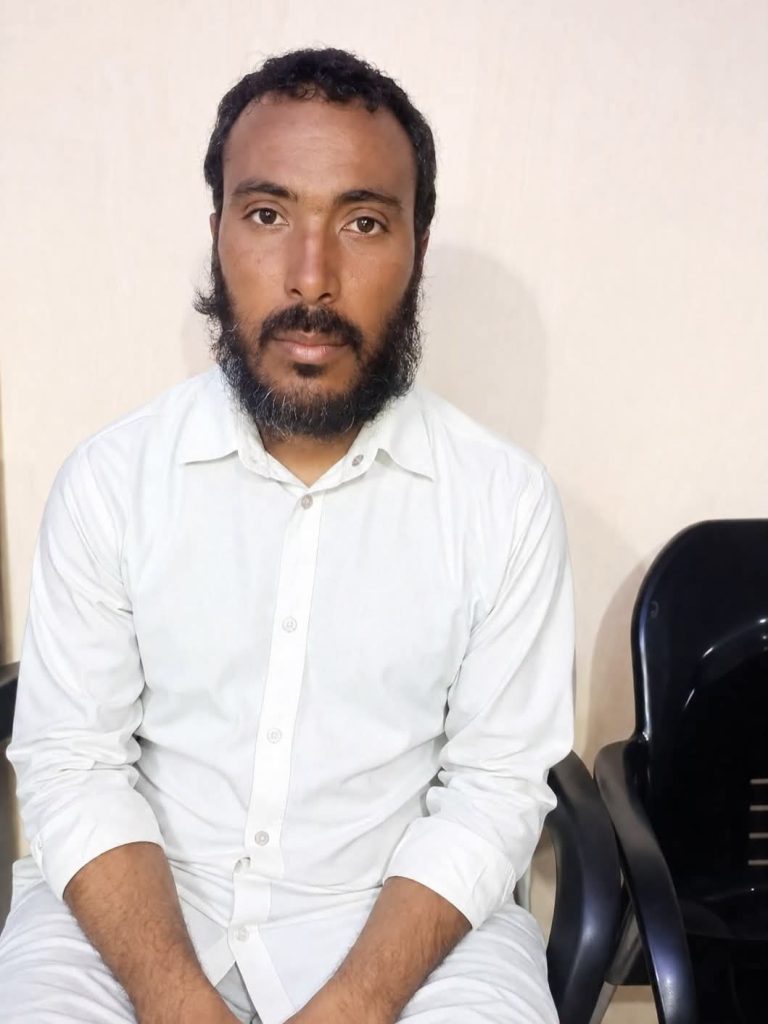
Operation HADIN KAI (OPHK) has clarified reports published by some media outlets on July 14, 2026, regarding an individual intercepted by troops of the 68 Battalion during an exploitation operation following the attack at Cross Kauwa.

The clarification was contained in a statement signed by Captain Mohammed Goni, Acting Military Information Officer, Headquarters Joint Task Force (North East), Operation HADIN KAI, Maiduguri.

The military identified the individual as Aboubakar Muhammad Zein-Nur, also known as Houdairi, explaining that he was taken into custody in line with established operational procedures due to the prevailing security situation and the use of border corridors by terrorist elements for movement and logistics.

According to OPHK, comprehensive intelligence assessments and other investigative processes found no evidence linking Zein-Nur to any known terrorist group.

The investigation further established that he is a resident of Shattu Anguba Village in Bosso, Republic of Niger, and is engaged in camel rearing across the River Komadougou.

Operation HADIN KAI said the individual has been cleared of any terrorist affiliation, stressing that all persons intercepted under suspicious circumstances during military operations are subjected to due process and appropriate security screening to distinguish innocent civilians from terrorist elements.

The Theatre Command reaffirmed its commitment to denying terrorists freedom of action while upholding professionalism, respect for human rights, and the rule of law.

EFCC Secures Conviction of Two Individuals, Company for Illegal Mining

0


The Ilorin Zonal Directorate of the Economic and Financial Crimes Commission (EFCC) has secured the conviction of two individuals and a company for engaging in illegal mining activities in contravention of the Nigerian Minerals and Mining Act, 2007.

Samuel Sunday, who was arraigned on a one-count charge, and Saheed Lawal Akanji alongside his company, Saaskrona Nigeria Limited, who were separately arraigned on a two-count charge, were prosecuted before Justice Abimbola Awogboro of the Federal High Court sitting in Ilorin.

Lagos Assembly Approves FAAC Financing Programme, ₦200bn Bond Request for Infrastructure Development

0


BY TAIWO OGUNMOLA -OMILANI


The Lagos State House of Assembly has adopted the report of its Joint Committee on Economic Planning and Budget and Finance, approving the state government’s request to participate in the Federation Account Allocation Committee (FAAC) Receivables Discounting Programme and endorsing the proposed issuance of a ₦200 billion bond under the state’s ₦1 trillion Debt and Hybrid Instruments Issuance Programme.

The report was presented during plenary by the Chairman of the Joint Committee, Hon. Sa’ad Olumoh, who explained that the committee was mandated to examine the executive’s requests and determine their suitability for legislative approval.

According to Olumoh, the Commissioner for Finance, Mr. Abayomi Oluyomi, informed the committee that the Federal Government, following a proposal by the Nigeria Governors’ Forum, had introduced the FAAC Receivables Discounting Programme to enable states access funding for critical infrastructure projects.

He explained that under the arrangement, participating States would execute an Irrevocable Standing Payment Order (ISPO), authorising the Accountant-General of the Federation to deduct agreed amounts from their monthly FAAC allocations over an 11-month period.

The deductions would be paid into a sinking fund managed by the Debt Management Office and domiciled with the Central Bank of Nigeria.

Olumoh said the programme would provide Lagos State with immediate liquidity to finance priority infrastructure and capital projects, including legislative quarters and other strategic developments, adding that the committee found the proposal beneficial to the state’s development objectives.

The committee also considered the request for the issuance of a Conventional Bond under Programme 4, Series 5, increasing the proposed borrowing to up to ₦200 billion as part of the state’s existing ₦1 trillion Debt and Hybrid Instruments Issuance Programme.

During deliberations, the Chairman of the House Committee on Waterfront Infrastructure, Hon. Gbolahan Yishawu, described the initiative as an advanced payment under the Irrevocable Standing Payment Order (ISPO) arrangement that would enhance the state’s revenue profile. He noted that the facility attracts no interest and stressed the need for the government to clearly outline the projects to be funded with the proceeds. According to him, the programme is a significant support mechanism for States across the federation and deserves commendation from the Federal Government.

He stressed the need for transparency to ensure the borrowing represented a restructuring of financing instruments rather than an increase in the State’s overall budget.

Speaker of the House, Rt. Hon. Mudashiru Obasa, supported the borrowing initiative, noting that responsible borrowing for capital projects remained necessary for infrastructure development. He explained that the adjustment to ₦200 billion reflected the inclusion of additional funding requirements and not an error in computation.

The Speaker also emphasised that the utilisation of the borrowed funds would remain subject to legislative oversight and approval by the House to ensure accountability and prudent financial management.

Following the debate, lawmakers unanimously adopted the committee’s report with amendments, thereby granting the Lagos State Government approval to participate in the FAAC Receivables Discounting Programme and proceed with the proposed ₦200 billion bond issuance for infrastructure financing.

The approvals followed the Assembly’s earlier decision to refer the executive’s requests to the Joint Committee after the Commissioner for Finance had sought legislative backing to enable the state access funding for major infrastructure projects, including the New Massey Children’s Hospital, Lagos Rail Mass Transit Line, Lagos Island General Hospital, Omu Creek Bridge and other strategic developments across the State.

Lagos Assembly Approves Mechanised Sweeping on Coastal Highway, Seeks Protection of Manual Sweepers’ Jobs

0


BY TAIWO OGUNMOLA -OMILANI

The Lagos State House of Assembly has approved the use of mechanised sweeping operations on Section 1 of the Lagos–Calabar Coastal Highway but insisted that the introduction of modern cleaning equipment should not replace manual sweepers in order to protect jobs and sustain economic opportunities for residents.

The resolution followed the consideration and adoption of the report of the House Ad Hoc Committee chaired by Hon. Olumoh S. L. (Ajeromi-Ifelodun) on the request for an Irrevocable Standing Payment Order (ISPO) in favour of BlueCap Technology Limited for the mechanised sweeping project.

During the debate, lawmakers expressed support for the mechanised sweeping initiative, describing it as a modern approach to improving environmental sanitation and road safety.

However, members stressed the need to ensure that existing manual sweepers are not displaced by the new system.

Speaker of the House, Rt. Hon. Mudashiru Obasa, said while mechanised sweeping represents global best practice, the Assembly must also consider the social and economic implications of eliminating manual sweeping jobs.

According to the Speaker, many of the women engaged in road sweeping rely on the work as their primary source of livelihood, and government must strike a balance between embracing technology and preserving employment opportunities.

He noted that the Assembly was not opposed to mechanisation but insisted that the welfare of workers should remain a priority.

“The essence of engaging people on our roads is to create economic opportunities for them. While we support mechanised sweeping, we must also ensure that those currently earning a living through manual sweeping are not left without jobs,” Obasa said.

The House also sought clarification on the repayment structure and recovery process of the proposed ISPO, urging the executive to provide adequate safeguards to ensure that the state is not exposed to unnecessary financial risks.

Presenting the committee’s report, Hon. Olumoh explained that officials of the Lagos Waste Management Authority (LAWMA) informed the committee that mechanised street sweeping has become necessary to improve efficiency, reduce accidents involving manual sweepers and align Lagos with international best practices.

The committee was informed that BlueCap Technology Limited is one of LAWMA’s long-standing partners and currently provides mechanised cleaning services on several major roads across the state, including the airport corridor, the Third Mainland Bridge and other strategic routes.

LAWMA Managing Director, Dr. Muyiwa Gbadegesin, also told the committee that manual sweeping alone is no longer sufficient to manage waste on major highways due to increasing traffic and the volume of refuse generated.

According to the agency, the project will deploy nine modern street-sweeping machines to maintain the 47.4-kilometre stretch of Section 1 of the Lagos–Calabar Coastal Highway, with cleaning to be carried out on both sides of the road to address illegal waste dumping.

The committee recommended approval of the ISPO to facilitate the mechanised sweeping project, while advising the Ministry of Economic Planning and Budget to make the necessary budgetary provisions for the outstanding financial commitments in subsequent fiscal years.

Following deliberations, the House adopted the committee’s report with amendments, approving the mechanised sweeping project while directing that manual sweeping operations should continue alongside the new system to safeguard jobs and support the livelihoods of affected workers.

Just in: Lagos Assembly Steps Down Confirmation of Two Sanwo-Olu Nominees, Approves Three Others

0


BY TAIWO OGUNMOLA -OMILANI


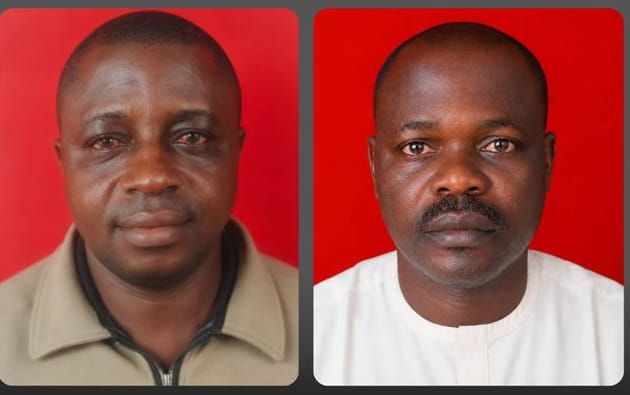
The Lagos State House of Assembly on Thursday stepped down the confirmation of two nominees forwarded by Governor Babajide Sanwo-Olu as members of Local Government Service Commission for further legislative scrutiny, while confirming three others.

The two nominees whose confirmations were deferred are Mr. Durosimi Yinka and Mr. Seriki Ahmed. Those confirmed by the House are Mr. Hakeem Bamgbola, Mr. Olaleye Samsudeen, and Mrs. Olabanji Folashade.

Presenting the report of the 12-member Ad Hoc Committee on Screening of Nominees during plenary, the committee chairman, Hon. Mojeed Fatai Adebola (Ibeju-Lekki I), said all the nominees appeared before the panel for screening.

He explained that the committee assessed the nominees in line with the provisions of Sections 106 and 192 of the Constitution of the Federal Republic of Nigeria and other relevant laws.

According to him, the screening focused on the nominees’ credentials, experience, performance, character, presentation, and responses to questions raised by committee members.

Hon. Mojeed stated that after reviewing the nominees and their documents, the committee recommended the confirmation of three nominees while advising that the appointments of Mr. Durosimi Yinka and Mr. Seriki Bamu be stepped down to allow for further scrutiny.

Following the presentation of the report, Speaker of the House, Rt. Hon. Mudashiru Obasa, put the committee’s recommendations to a voice vote.

The lawmakers subsequently adopted the report, confirming the appointments of Mr. Hakeem Bamgbala, Mr. Oleleye Samsudeen and Mrs. Olabanji Folashade, while deferring the confirmation of Mr. Durosimi Yinka and Mr. Seriki Bamu pending further consideration.
The House later adjourned plenary sine die.

Media workers accuse Cubana Millennium City Group of encroaching on cooperative estate in Delta

0

The Media Workers Multipurpose Cooperative Society (MPCS) has accused the Cubana Millennium City Group of attempting to unlawfully take over its 28-acre estate at Iyada Family Land, Iyada Quarters, Issele-Azagba, in Aniocha North Local Government Area of Delta State.

The group made the allegations during a media briefing held at the Nigeria Union of Journalists (NUJ) Press Centre in Asaba, the Delta State capital.
Millions of Nigerians waste fortunes on eye symptoms. See the real root cause here.
Check it out
Addressing journalists, the President of the Media Workers Multipurpose Cooperative Society (MPCS), Mr Vincent Maduka, disclosed that the disputed land, equivalent to about 224 plots, was purchased more than 11 years ago from Surveyor Titus Ayuba.

While narrating their ordeal, Mr Vincent Maduka said, “When we bought the land, there was no issue of any kind regarding its ownership and possession until about 3 years ago, when the Ogbeozoma quarters of Okpanam, Oshimili North Local Government Area, had a border dispute with the Issele-Azagba people in Aniocha North Local Government Area of Delta State.”

“At the height of that disagreement, the state government intervened, and the matter was resolved amicably to the extent that both communities reverted to their old common boundaries before the dispute.”

He revealed that “in January this year, they went to the site to re-grade road networks within the Media Workers MPCS estate.”

“But in the month of May 2026, we were surprised to hear that the Cubana Group invaded the site with their operational machines. To ascertain and authenticate the veracity of this information and as well establish the true position of things regarding the land, some of our members went to the site to find out what was actually going on.”

“Surprisingly, the people they met at the site (that is, the machine operators working at the estate) confirmed to the team that they were working for Obi Cubana, Mr Obinna Iyiegbu, the Managing Director of the Cubana Millennium City Group.”

“Following this claim, and in order to reach out to Cubana, a letter requesting a peaceful, negotiated settlement was forwarded to his company and was submitted on 29 June 2026 with a 14-day time frame within which he could reach us, and we are yet to hear from him.”

“We’re surprised that neither he nor his agents or proxies has either replied to our letter of notice or called us for dialogue on the subject.”

“In demonstration of our preference for dialogue in handling the matter, we submitted a reminder, giving him an additional 7 (seven) days’ notice within which to reach out to us on the subject matter.”

“That letter was submitted on July 15th, 2026, and as of now, we are still waiting for their reply.”

“Why we called for this press briefing is to tell the world, especially Nigerians, what is happening regarding the parcel of land which we validly acquired from its legitimate owner(s) more than 10 years before Obi Cubana came into the picture.”

“That the Cubana Millennium City Group is attempting to illegally dispossess members of the Media Workers MPCS of the land they duly and legitimately acquired from Surveyor Titus Ayuba is anachronistic, unfair, laughable and ABSOLUTELY UNACCEPTABLE.”

“The land in question was sold to the members of the Media Workers MPCS, who paid instalmentally for over 4 years from their hard-earned money to make sure that they owned land and inheritance they can pass over to their children in the event that they are unable to build.”

“Secondly, we are making it clear to Obi Cubana to vacate the land, come forward for meaningful talks, strike a mutually beneficial deal with us and pay commensurate damages for the damage his actions have caused landowners, some of whom are retired civil and public servants, who sacrificed much to raise the funds with which they paid for their parts of the land in question.”

“It is sad that Cubana and his agents illegally destroyed and uprooted our signposts planted in strategic places to signify ownership, destroyed economic trees, beacons, fences and other landmark infrastructure with impunity.”

“We are letting the world know that it is possible for this usurper to live peacefully with ordinary people without coveting their properties by following the due process of the law and natural justice.”

“Cubana Millennium City has seriously breached and trampled on our fundamental human rights concerning a land that was legitimately acquired with a valid title and ownership. We are calling on the state government to call him to order. We are also notifying the Nigeria Police Force [NPF], the Department of State Services [DSS], and the Judiciary to take note.”

“We reaffirm our position that we are open to discussions on our own terms and conditions.”

When contacted, the Cubana Millennium City office in Asaba, the Secretary, Vivian Chikelu, confirmed that a letter had been received but said the Chairman is currently out of the country. She appealed for patience pending his return.

Sun

Fubara betrayed Rivers people, not just political supporters — Ewo

0


Former Acting Chairman of the Peoples Democratic Party (PDP) in Rivers State, Robinson Ewor, has accused suspended Rivers State Governor Siminalayi Fubara of betraying not only his political supporters but also the people of the state, saying many residents were misled into supporting a cause whose objectives were never clearly explained.

Speaking during an interview on Channels Television, Ewor said Rivers people rallied behind Fubara because they believed he was defending the state’s interests in the political crisis involving the Minister of the Federal Capital Territory (FCT), Nyesom Wike.

According to him, many prominent figures, including women who organised prayer walks and public demonstrations, supported the governor because they believed he was acting in the best interest of the state.
“It is not just a betrayal of political supporters. We are talking about the people of Rivers State,” Ewor said.

“It is Fubara himself that has indeed betrayed Rivers people.”

Ewor said he was among those who openly criticised Wike at the height of the political crisis, believing the former Rivers governor was preventing Fubara from governing effectively.

However, he said he later realised that the situation was different from what many supporters had been led to believe.

“I said several unpretentious words against the FCT minister, believing that the FCT minister was stopping Fubara from doing his work. At the end of the day, we discovered that it wasn’t so,” he said.

The former PDP acting chairman accused Fubara of failing to communicate openly with Rivers people, arguing that greater transparency would have prevented many residents from taking political risks on his behalf.

“If Fubara was open and transparent, and communicated with Rivers people, I don’t think the women would have gone to the streets. I don’t think our leaders would have given him the level of support they gave, including myself,” he stated.

Ewor further argued that Fubara failed to define the purpose of the political struggle, leaving supporters uncertain about the governor’s true objectives.

“You can’t be fighting a war when the man leading that war is not on the same page with you. Rivers people wanted their state, but Fubara was on a different page.

“He didn’t define the objectives of the war. He didn’t tell Rivers people, ‘This is why I’m leading you into this fight and this is where we are going,’” he added.

Responding to questions about his apparent change of position, Ewor insisted his loyalty had always been to Rivers State rather than to any individual politician.

“My conviction was Rivers State. I believe governance should take place in Rivers State. That was my conviction, and Fubara was at the saddle,” he said.

The comments come amid ongoing political realignments in Rivers State following months of crisis between Fubara and his predecessor, Nyesom Wike, which has continued to reshape the state’s political landscape.

Sun

My past criticisms of Tinubu weren’t lies – Bwala

0

Presidential spokesman Daniel Bwala has defended his previous criticisms of President Bola Tinubu, saying they should no longer dominate public discourse because they are now “baseless” in light of current realities, while insisting they were never false.

Bwala, the Special Adviser to the President on Media and Policy Communication, made the remarks on Wednesday during an appearance on Channels Television’s ‘Politics Today’, where he responded to questions about comments he made against Tinubu before joining the administration.

Questioning the continued focus on his past statements, Bwala said Nigerians were more concerned about issues affecting their daily lives than political exchanges from the past.

“The first person that started asking me this question was you, and you have done that more than five times. Are you not tired? They are completely inconsequential to what is happening,” he told the programme’s anchor, Seun Okinbaloye.

He argued that discussions should instead focus on governance, including the economy, education, security and recent developments in Nigeria’s relations with the United States.

“We have taken almost 10 minutes on this. Nigerian people want to hear tonight what is happening to their lives. They want to know what is happening with their economy, with their education, and most importantly, with security,” Bwala said.

The presidential aide maintained that the Tinubu administration had recorded measurable progress, particularly in strengthening collaboration among Nigeria’s security agencies.

“We have made substantial progress. It is the first time in Nigeria’s history that the leadership of President Bola Tinubu has brought about very strong collaboration,” he said.

When asked whether describing his previous comments as “baseless” meant they were lies, Bwala rejected the suggestion.

“They are not lies. They are baseless. Not important for conversation,” he stated.

Bwala also accused the presenter of amplifying opposition narratives while paying less attention to similar issues involving opposition politicians.

“I’m trying my best not to be aggressive about it, but you’re riding on the opposition’s back horse,” he said.

Citing Labour Party leader Peter Obi, Bwala argued that political figures often change positions and affiliations, questioning why similar scrutiny was not applied elsewhere.

“Peter Obi has since changed parties four times. How many times have you asked their people?” he asked.

He concluded that continued debates over his past criticisms of Tinubu had become irrelevant, urging greater attention to the administration’s policies and issues directly affecting Nigerians.

Sun

INSIDE LAGOS’ TECH REVOLUTION

0


Tayo Ogunbiyi

Lagos, Nigeria’s commercial nerve centre, is rapidly positioning itself as one of the most dynamic startup ecosystems on the planet, drawing comparisons with global innovation hubs from Bangalore to São Paulo and even Silicon Valley. Lagos is no longer competing only within Africa. It is now measured against global startup capitals.

The city has moved beyond regional startup ambition to become one of the most intensely watched innovation ecosystems in the world, driven by a rare mix of demographic scale, infrastructural pressure, and relentless entrepreneurial adaptation.

As of October 2024, more than 2,000 startups are based in Lagos, which accounts for 80–90% of Nigeria’s entire startup landscape.

From fintech platforms solving payment bottlenecks in a largely cash-dependent economy, to logistics startups navigating near-impossible delivery routes across the city, what sets Lagos apart is not just the number of startups, but the urgency behind them.

In the global race for technological dominance, where cities compete not just on size but on speed of innovation, Lagos is emerging as one of the most disruptive entrants on the world stage.

What was once viewed as a difficult business environment is now being reframed by investors, founders, and policymakers as something more powerful: a high-pressure innovation lab producing some of the fastest-scaling startups outside Asia.

From fintech giants reshaping African payments to logistics startups navigating one of the world’s most complex urban environments, Lagos is no longer asking for recognition—it is demanding recalibration of how global startup success is defined.

Startups that scale in Lagos tend to share one trait: extreme operational efficiency. Waste is not an option. Speed is not a strategy—it is a necessity.

38% of Lagos residents shop online weekly, internet penetration stands at 72%, and mobile ownership reaches 94%. Innovations such as the integrated transport payment card, developed by engineers in their 20s, now serve over 6.5 million Lagosians across rail, waterways, buses, and taxis.

Lagos’s crowning as the world’s fastest-growing tech ecosystem in 2025 marks more than a statistical achievement. It represents a fundamental shift in where innovation happens, who builds it, and what problems matter.

At the heart of this transformation lies Yaba, now widely dubbed “Yabacon Valley”—a dense cluster of startups, developers, and venture capital interest that has become symbolic of Lagos’ tech awakening.
Within a few square kilometres, co-working spaces, accelerators, and startup hubs sit alongside universities and creative studios. It is here that some of Africa’s most prominent technology companies were either born or nurtured.

Unsurprisingly, global venture capital has taken notice. Over the past decade, Lagos has attracted billions in startup funding across various sectors, with fintech leading the charge. However, the investment landscape remains highly selective.

The Lagos State Government has increasingly recognised the economic potential of the startup economy, introducing policies aimed at digital inclusion, innovation support, and infrastructure upgrades.

Reacting to the city’s rising start-up profile, Lagos State Governor, Mr. Babajide Sanwo-Olu, noted that “Lagos is not just Nigeria’s economic nerve centre; it is Africa’s innovation capital in motion.”
He said his administration’s goal is to make Lagos Africa’s leading digital economy hub.

“The talent is already here. Now we are strengthening the infrastructure to sustain the growth”, he said.

“That is why we are deliberately building the infrastructure for a 21st-century digital economy—fibre, talent pipelines, and innovation funding are central to this vision”, he added.

Sanwo-Olu further revealed that his government has intensified efforts to formalise the innovation economy through digital policy reforms, infrastructure upgrades, and startup-friendly initiatives.

As a result of this, Sanwo-Olu said that the city has produced five unicorns – Interswitch, Flutterwave, Jumia, OPay, and Moniepoint – with unicorn creation tripling since 2019.

“Between 2019 and 2024, Lagos attracted over $6 billion in direct foreign tech investment, accounting for more than 70% of Nigeria’s total tech inflows”, the governor noted.

Global venture capital continues to flow into Lagos, although investors describe the ecosystem as highly selective and performance-driven.

The city now accounts for a dominant share of Nigeria’s tech funding inflows, with fintech leading the charge due to its scalability and market demand.

Lagos’ transformation from a regional business hub into a globally recognised innovation ecosystem did not happen overnight. It has been driven by a combination of youthful creativity, technological adoption, investment inflows, government reforms, private sector partnerships and the sheer necessity of solving Africa’s unique challenges.

Today, Lagos stands alongside emerging technology centres such as Nairobi, Cape Town, Dubai and Bangalore as a city where ideas are rapidly becoming companies, and where local solutions are attracting global attention.

The rise of Lagos as a start-up capital is closely linked to the city’s population, diversity and entrepreneurial culture. With more than 20 million residents in its metropolitan area, Lagos represents one of the largest consumer markets in Africa.

The city has always been a place where people create opportunities from challenges. From informal traders building successful businesses to corporate giants dominating regional markets, entrepreneurship has long been part of Lagos’ DNA.

However, the digital revolution transformed this entrepreneurial spirit into a technology-driven movement.,

The expansion of internet access, increased smartphone adoption and a growing community of young technology professionals created the foundation for a new generation of businesses.

Young Nigerians began developing solutions to address everyday challenges — how people pay for goods, access financial services, receive medical care, move around cities, learn new skills and connect with businesses.

The result was the emergence of a vibrant start-up ecosystem capable of producing companies with international relevance.

A major factor behind Lagos’ start-up rise is the increasing flow of venture capital into Nigerian technology companies.

International investors have recognised that Lagos-based start-ups are not only serving Nigeria’s huge market but are developing solutions applicable across Africa and other emerging economies.

Over the past decade, Nigerian start-ups have attracted billions of dollars in funding, making the country one of Africa’s leading destinations for venture investment.

Lagos has become a preferred destination for global investors because it combines market size, entrepreneurial energy and technological creativity.

The future of Lagos as a start-up capital appears increasingly promising. As Africa’s largest economy continues its digital transformation, the demand for innovative solutions will continue to grow.

The city’s entrepreneurs are already looking beyond Nigeria, expanding into other African markets and competing internationally.

With continued investment in infrastructure, education, digital skills and business-friendly policies, Lagos has the potential to become one of the world’s leading innovation centres.

· *Ogunbiyi is Director, Public Enlightenment & Community Relations, Ministry of Information & Strategy, Alausa, Ikeja.*

BUDGET THAT WORKS: THE LAGOS MODEL

0


By Tayo Ogunbiyi

The story of Lagos’ budget performance over the past year is a story of planning, resilience and strategic investment.

Behind the figures are roads improved, businesses supported, public services expanded, and infrastructure projects that continue to reshape the city.

While challenges remain, the state’s fiscal journey demonstrates how effective budgeting can become a powerful tool for economic transformation.

In Lagos, the budget is increasingly moving beyond spreadsheets and financial statements — becoming a blueprint for building a modern, competitive and sustainable megacity

It is more than a financial document; it is a declaration of priorities, a roadmap for development and a measurement of its commitment to citizens. In Lagos, the past year offered a compelling story of fiscal planning, revenue expansion and strategic investments aimed at sustaining the state’s position as Nigeria’s economic powerhouse.

With a rapidly growing population, increasing urban pressures and rising expectations from residents, Lagos has continued to deploy its annual budgets as instruments for infrastructure renewal, social investment, economic expansion and improved public services.

The 2025 fiscal year became another test of the state’s ability to transform projections into measurable outcomes, with emphasis placed on capital projects, revenue sustainability and efficient resource management.

The Lagos State Government entered the year with a clear objective: maintain fiscal discipline while accelerating development across critical sectors.

The budget framework prioritised areas such as transportation, infrastructure, health, education, environment, security and economic empowerment — sectors considered essential to improving the quality of life of millions of residents.

Unlike many sub-national governments that depend heavily on federal allocations, Lagos has consistently strengthened its internally generated revenue capacity, giving it greater flexibility in financing development programmes.

The state recorded significant revenue growth during the period, with total revenue reaching about ₦2.6 trillion in 2025, while internally generated revenue rose substantially. Tax revenue also crossed the ₦1 trillion mark, reflecting improvements in digital tax administration, compliance and revenue reforms.

One of the biggest indicators of a government’s financial credibility is its ability to implement approved budgets.

For Lagos, budget performance remained a major focus throughout the year, with continuous monitoring of Ministries, Departments and Agencies (MDAs) to ensure that allocations translated into tangible outcomes.

Available budget implementation reports showed strong performance across revenue and expenditure lines, with recurrent revenue achieving significant execution levels and expenditure patterns reflecting government priorities.

By the end of the fiscal cycle, Lagos recorded an overall budget performance of about 84 per cent for the 2025 fiscal year — a figure described by government officials as a reflection of improved fiscal discipline and stronger budget credibility.

The achievement was significant considering the economic environment, inflationary pressures and the rising cost of delivering public infrastructure.

A major feature of Lagos’ budget strategy has remained the prioritisation of capital expenditure.

The government’s approach has been that infrastructure investment is not merely about constructing roads and bridges but creating an environment that supports businesses, improves mobility and enhances productivity.

During the year, budget allocations supported major projects in transportation, road rehabilitation, drainage infrastructure, healthcare facilities, schools and public housing.

The emphasis on capital projects aligns with the state’s long-term development strategy of building a more efficient and resilient megacity.

From transportation reforms to urban renewal programmes, budget spending has increasingly focused on projects capable of delivering long-term economic benefits.

One of the strongest pillars supporting Lagos’ budget implementation has been the expansion of its revenue base. Over the years, the state has invested heavily in improving revenue collection systems, reducing leakages and encouraging voluntary compliance.

Technology-driven reforms have transformed tax administration, making it easier for residents and businesses to interact with government platforms.

The result has been a steady rise in internally generated revenue, reducing dependence on unpredictable external sources.

This fiscal independence has allowed Lagos to plan better, execute projects faster and respond more effectively to emerging challenges.

Managing a budget the size of Lagos’ requires careful balancing between ambitious development goals and financial sustainability. The government has maintained that every naira must deliver value, with emphasis on transparency, accountability and monitoring.

The Ministry of Economic Planning and Budget has continued to coordinate budget preparation, implementation monitoring and performance evaluation to ensure that government spending aligns with policy objectives.

The introduction of regular performance tracking has also helped identify areas requiring improvement while ensuring MDAs remain accountable for their allocations.

Beyond infrastructure, Lagos’ budget performance has also been measured by its impact on human development. Education, healthcare and social intervention programmes remained key components of government spending.

Investment in schools, teacher development, healthcare facilities and health insurance expansion reflected the administration’s commitment to ensuring that economic growth translates into improved living standards.

The argument has been that a successful budget must not only build physical structures but also invest in people.

As Lagos moves into another fiscal cycle, the challenge remains sustaining the momentum achieved over the past year.

The approved 2026 budget, valued at over ₦4.4 trillion, continues the emphasis on capital investment, with a significant allocation dedicated to infrastructure development.

The focus will be on ensuring that planned projects are completed, revenue growth remains sustainable, and public spending continues to produce measurable benefits.

For Africa’s largest sub-national economy, budgeting is no longer just about balancing income and expenditure; it is about managing the future of a global city.

When the government presented its annual budget, it was not merely unveiling a document containing figures and projections. It was presenting a development roadmap for a megacity facing the complex demands of rapid urbanisation, population growth and rising expectations from millions of residents.

For Lagos, budgeting has always been more than an exercise in revenue and expenditure calculations. It is about deciding where resources should go, what projects should receive priority and how government investments can translate into better living conditions for citizens.

Over the past year, the state’s budget performance has provided a glimpse into how strategic financial planning can drive transformation across critical sectors — from infrastructure and transportation to healthcare, education, environment and economic empowerment.

With a budget anchored on sustaining growth and delivering on the pillars of the THEMES+ development agenda, Lagos continued its push to consolidate its position as Nigeria’s economic engine and one of Africa’s most important urban centres.

The numbers tell part of the story. The bigger story is what those numbers have delivered.

Over the past year, Lagos demonstrated how budgeting can become a powerful tool for transformation.

Behind the figures are roads connecting communities, healthcare services reaching residents, schools supporting young minds, businesses receiving opportunities, and infrastructure projects shaping the future of the city.

The Lagos budget story is therefore not just about money spent. It is about a vision pursued.

It is the story of how a government uses financial planning to build a stronger, more competitive and more sustainable megacity.

And as Lagos continues its journey, the focus remains clear: turning every naira into value and every budget into development.

· *Ogunbiyi is Director, Public Enlightenment & Community Relations, Ministry of Information & Strategy, Alausa, Ikeja*