Home Blog Page 284

IMF to central banks: Tighten AI oversight to safeguard financial stability

0

…Warns unchecked AI could amplify market shocks, cyber risks

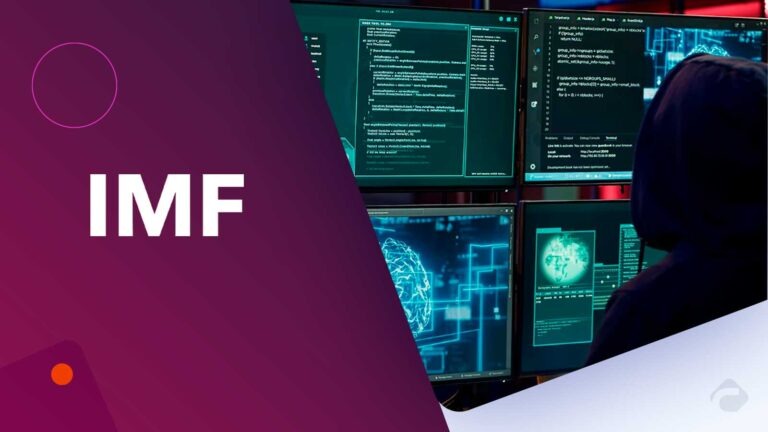
The International Monetary Fund (IMF) has urged central banks and financial regulators worldwide to strengthen oversight of artificial intelligence (AI) as its growing adoption across the financial system creates new risks that could threaten global financial stability.

In a new IMF Blog authored by the Fund’s Financial Counsellor and Director of the Monetary and Capital Markets Department, Tobias Adrian, the IMF said AI is rapidly transforming how financial institutions price risk, allocate credit, monitor markets and respond to financial shocks.
While the technology is improving efficiency, lowering costs and enhancing decision-making, the IMF warned that inadequate governance could allow AI-driven activities to amplify market volatility, cyber threats and systemic risks.

According to Adrian, AI has become deeply embedded in the decision-making architecture of modern finance, making it increasingly important for central banks and supervisors to ensure that its deployment strengthens, rather than weakens, financial stability.

He identified three immediate priorities for policymakers: strengthening oversight of AI-driven trading, lending and supervisory technology; improving visibility into AI use and concentration risks; and expanding international cooperation on cyber resilience and operational stability.

The IMF noted that AI is compressing time and distance in financial markets as trading, lending decisions and regulatory analysis increasingly occur in real time. While this enhances market efficiency during normal conditions, it could also accelerate the spread of financial shocks during periods of stress.

According to the Fund, AI-powered trading systems are now widely used by investment banks, hedge funds and asset managers to analyse earnings reports, regulatory filings and economic data within seconds.

Although AI has so far improved market liquidity, reduced transaction costs and accelerated price discovery, the IMF warned that the widespread use of similar machine-learning models could intensify market swings if many firms react simultaneously to the same signals.

The Fund’s analysis showed that some AI-driven investment funds rebalance their portfolios much faster than conventional funds, increasing the possibility of synchronized trading that could worsen market volatility.

It cautioned that future flash crashes may no longer result mainly from programming errors but from numerous AI systems responding simultaneously to identical market information.

The IMF also highlighted the challenge of transparency, noting that even sophisticated financial institutions often struggle to explain how AI models make decisions during periods of market stress.

To address these concerns, the Fund said regulators should strengthen monitoring of AI-based trading strategies, improve data collection on AI adoption and model dependencies, and incorporate AI-related scenarios into financial stress tests.

Beyond financial markets, the IMF said AI is transforming the operational backbone of banks, payment systems, stock exchanges and clearing houses by automating risk management and system monitoring.
However, it warned that the growing dependence on a small number of cloud computing, data and AI model providers creates significant concentration risks.

According to the IMF, a disruption affecting one major technology provider—whether caused by technical failures, cyberattacks or geopolitical developments—could simultaneously affect numerous financial institutions.

The Fund noted that authorities such as the European Central Bank and the Bank of England have already expanded operational resilience frameworks to include AI and cloud service providers, urging other jurisdictions to adopt similar safeguards.

The IMF further observed that AI is reshaping financial supervision itself through Supervisory Technology (SupTech), enabling regulators to analyse large volumes of market data, detect anomalies and identify emerging risks more efficiently.

Several central banks, including those of France, Germany, Portugal and Japan, already deploy machine-learning tools in market surveillance, while the US Federal Reserve, European Central Bank and Bank of Canada use natural-language processing to analyse supervisory reports and consumer complaints.

Despite these advances, Adrian stressed that AI should complement—not replace—human judgment.

He warned that over-reliance on automated systems without adequate expertise and governance could create new supervisory blind spots, particularly during financial crises.

The IMF also identified AI-enhanced cyber threats as another growing concern.

It said generative AI is making phishing attacks more convincing, enabling fraud schemes to evolve in real time and shortening the time between the discovery and exploitation of software vulnerabilities.

The Fund therefore called on central banks to strengthen cyber resilience, conduct AI-focused stress exercises and invest in defensive AI technologies capable of countering increasingly sophisticated attacks.

According to Adrian, AI has become a financial stability issue that cuts across markets, financial institutions, infrastructure and regulation.

He said early policy action, stronger international collaboration and robust governance frameworks would enable countries to harness AI’s benefits while reducing systemic risks.

“If policymakers act early and collectively, AI can reinforce global financial resilience. If they do not, future instability may be faster, more correlated, and harder to manage than past episodes,” Adrian said.

Sun
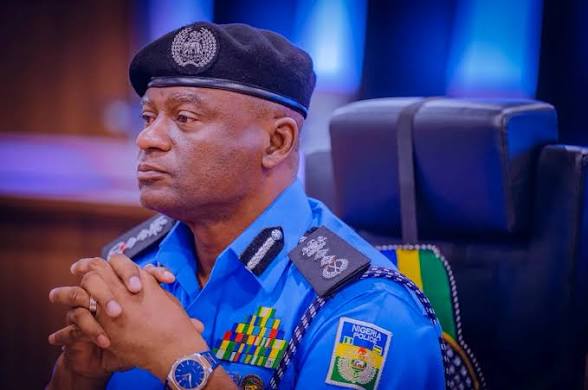
IGP unveils 14-day operation against criminals in Benue

0


The Inspector-General of Police (IGP), Olatunji Disu, yesterday announced a special 14-day security operation to flush out criminal elements from identified flashpoints across Benue.

Disu made the declaration during a town hall meeting on security in Makurdi, attended by Governor Hyacinth Alia, the Tor Tiv, Prof. James Ayatse, religious leaders, traditional rulers, security chiefs and other stakeholders.

The IGP described the security situation in Benue as a source of “sleepless nights” for both residents and security agencies.
He decried that the state, once renowned for peace and hospitality, had become engulfed by violence.

According to him, the crisis has evolved beyond farmer-herder clashes, with kidnappers, armed gangs and political interests aggravating the insecurity.

Disu urged youths not to allow themselves to be recruited by influential individuals to perpetrate violence, particularly during elections.

“The youth are usually not the ones who start wars, but they are the ones who fight them. Parents must caution their children against being used as cannon fodder,” he said.

IGP condemned the cycle of attacks and reprisals across the state, saying it must come to an end.

He conveyed President Bola Tinubu’s directive that insecurity in Benue would no longer be tolerated and warned that only authorised security personnel were permitted to bear arms.

The police chief vowed to intensify efforts to recover illegal firearms and said officers had been directed to act decisively in line with Force Order 237 whenever confronted by armed criminals.

He acknowledged concerns over police misconduct, admitting the force was not perfect but assuring residents that every complaint against officers would be investigated and appropriate action taken.

Disu directed the Benue Commissioner of Police to publicly display his contact details to encourage residents to report crimes and police misconduct, stressing that policing could only succeed through community partnership.

“The Nigerian police belong to the people. We are here to serve you, not to be your masters,” he said.

The Deputy Inspector-General (DIG) of police in charge of mobile police, Francis Iduh, disclosed that the force had identified 14 major security flashpoints across Benue for targeted operations.

He listed the vulnerable areas to include Gbajimba, Agasha, Kwande, Agatu, Naka, Otukpo, Makurdi, Apa and other communities mapped for intensive surveillance.

Iduh said the planned 14-day operation would involve stability and clearance patrols aimed at reclaiming forests, farmlands and criminal hideouts.

Other News
Insecurity in Benue will no longer be tolerated – Tinubu
Insecurity: IGP orders officers to intensify surveillance
Nigerian-American commends IGP, seeks urgent police action over threat to life
He explained that the exercise would target armed herders, bandits and other criminal elements without victimising innocent residents.

“If communities partner with us and provide credible intelligence, we will deal with criminals without criminalising law-abiding citizens,” he said.

Governor Hyacinth Alia welcomed the IGP’s visit, describing it as timely and a demonstration of the Federal Government’s commitment to addressing insecurity in Benue.

He noted that attacks on farming communities had claimed lives, displaced residents and threatened food security in Benue and across Nigeria.

The governor said his administration had continued to support security agencies with operational vehicles, motorcycles, communication equipment and other logistics, while pledging full backing for the proposed security operation.

Alia reiterated his support for state police, arguing that officers familiar with the local terrain and communities would be better equipped to tackle insecurity.

“It is no longer a question of whether we need state police. The issue now is how it should operate because we urgently need it,” he said.

The Tor Tiv, Prof. James Ayatse, welcomed the IGP’s intervention, saying Benue’s security challenges had become more complex than in the past.

He identified armed criminal herders allegedly operating from neighbouring Nasarawa State, indigenous armed gangs involved in kidnappings and robberies, communal disputes and urban cult groups as the major threats confronting the state.

Ayatse said many communities had been displaced while numerous victims were living outside formal Internally Displaced Persons (IDP) camps.

The Chairman of Jama’atu Nasril Islam (JNI) in Benue, Alhaji Garba Baba, said Muslims in the state had no conflict with any group and pledged support for Alia’s peace initiatives.

Similarly, the Chairman of the Christian Association of Nigeria (CAN) in Benue, Rev. Jonathan Terwase Ugbede, commended President Tinubu, the First Lady and the IGP for responding to the state’s security concerns.

He urged the police to respond promptly to threats circulated on social media before attacks occur and recommended regular engagement with traditional rulers, youths, religious leaders and community groups to improve intelligence gathering.

Stakeholders at the meeting agreed that insecurity in Benue had become multifaceted, involving armed herders, kidnappers, cultists, criminal gangs and alleged political interests.

They stressed that security agencies alone could not resolve the crisis without sustained community cooperation and pledged to work collectively towards restoring lasting peace across the state.

Sun

US imposes 12.5% tariff on Nigerian imports over forced labour concerns

0


The United States has imposed a 12.5 per cent tariff on imports from Nigeria under a new trade policy targeting countries Washington says have failed to prohibit the importation of goods produced with forced labour.

The measure, announced by the Office of the United States Trade Representative on Thursday, affects imports from 60 economies that the U.S. said have not “imposed and effectively enforced a prohibition on the importation of goods produced with forced labour.”

Nigeria is among the countries subject to the 12.5 per cent tariff, while India, Indonesia, Malaysia, Mexico and the United Kingdom will face a lower 10 per cent tariff after adopting or committing to implement bans on imports linked to forced labour.
The decision follows investigations launched by the USTR in May 2026 into 60 of the United States’ largest trading partners under Section 301 of the Trade Act.

The agency said it received more than 1,600 written submissions, heard testimony from over 100 witnesses and consulted more than 45 governments before announcing the measures.

According to the USTR, countries that have already implemented, or committed to implementing, forced labour import prohibitions would attract a 10 per cent tariff.

“10 per cent is the appropriate rate of Section 301 duties for investigated economies that (i) impose a forced labour import prohibition; (ii) have committed to impose and enforce such a prohibition through an Agreement on Reciprocal Trade; or (iii) have imposed a partial regime with the effect of preventing the importation of certain forced labour goods,” the agency said.

In a Federal Register notice, the USTR stated that Nigeria would be subject to a 12.5 per cent tariff on its exports to the United States, except for products covered by specified exemptions.

It stated, “Based on the findings in the investigation of Nigeria, considering the public comments, testimony, and the advice of the Section 301 Committee, as well as the advice of advisory committees, and in accordance with the specific direction of the President, the Trade Representative has determined to impose 12.5 percent tariffs on products of Nigeria, except as provided in Annex I and Annex II, Part A, of this Notice.”

“The Trade Representative has determined, in accordance with the specific direction of the President, that the tariff rate to be applied, and the scope of tariffs and exemptions, are appropriate to obtain the elimination of the acts, policies, and practices determined to be actionable in the investigation.”

The latest action comes after President Donald Trump invoked Section 122 of the Trade Act of 1974 to impose a temporary universal tariff on imports following a U.S. Supreme Court ruling that blocked his administration’s broader tariff plan under the International Emergency Economic Powers Act.

U.S. Trade Representative Jamieson Greer said the new tariffs were intended to encourage trading partners to strengthen measures against forced labour.

“President Trump recognises that decades of moral suasion have not eradicated forced labour from global supply chains,” Greer said.

“The United States has had a forced labour import ban for nearly a century. It’s well past time for our trading partners to do the same.”

The USTR said the tariffs would not apply to certain exempted products, including raw materials that could create domestic supply shortages, goods capable of causing wider economic disruptions, products unavailable in sufficient quantities in the United States or from alternative suppliers, and selected imports from countries that have adopted or pledged to implement forced labour import bans.

It added that additional exemptions were granted where the tariffs were considered unlikely to eliminate the trade practices under investigation.

Sun

Bodejo’s N2b Bail: Judge Declines Ruling on Application for Bail Condition Variation

0


Justice Inyang Edem Ekwo of the Federal High Court, Maitama, Abuja, on Thursday, July 23, 2026 declined to deliver ruling on the application for bail condition variation filed by Miyetti Allah Kautal Hore leader, Bello Bodejo.

The Economic and Financial Crimes Commission EFCC on July 9, 2026 arraigned Bodejo on a 12-count charge bordering on money laundering to the tune of $2.33million.
On Monday, July 20, 2026, the court granted him bail in the sum of ₦2 billion with two sureties in like sum and held that the two sureties must be responsible citizens of which one must be an owner of landed property within the Abuja Municipal Area Council, AMAC.

The court further directed that one of the sureties must present tax clearance certificates, covering 2023 to 2025. In addition, the court ordered the defendant to deposit his passport with the court and directed the  Court Registrar to notify the Nigeria Immigration Service of the passport seizure. It also barred the defendant from travelling outside the country or outside the jurisdiction of the court without the prior permission of the court and adjourned till October 5, 6 and 7, 2026, for commencement of trial.
Unable to meet the bail conditions, Bodejo through his counsel, M. E Sheriff, on July 21, 2026, made an application to the court, praying the court to lessen the bail conditions.

At the hearing on Thursday, the defence counsel asked the court to scale down the bail bond from N2 billion to N300 million, with one surety in like sum, while the prosecution counsel, Fatai Erewuimi informed the court of his counter-affidavit, filed on July 22, 2026, wherein he urged the court to discountenance the application and maintain the status quo ante in the interest of justice.
Justice Ekwo in his response disclosed that the annual vacation of the courts which begins on August 3, 2026 makes it impossible for him to see to the conclusion of arguments on the application and deliver ruling.

“There is no way I can take this application and rule before we proceed on vacation. I am of the opinion that you approach a vacation judge to attend to the matter and take the ruling, after which the file should be returned for trial for this court to proceed.

The adjourned dates for the trial of this case are maintained,” he said.

Mike Bamiloye Criticises Proposed Move Against Bus Preaching, Urges Focus on Corruption, Insecurity

0


Filmmaker, Evangelist
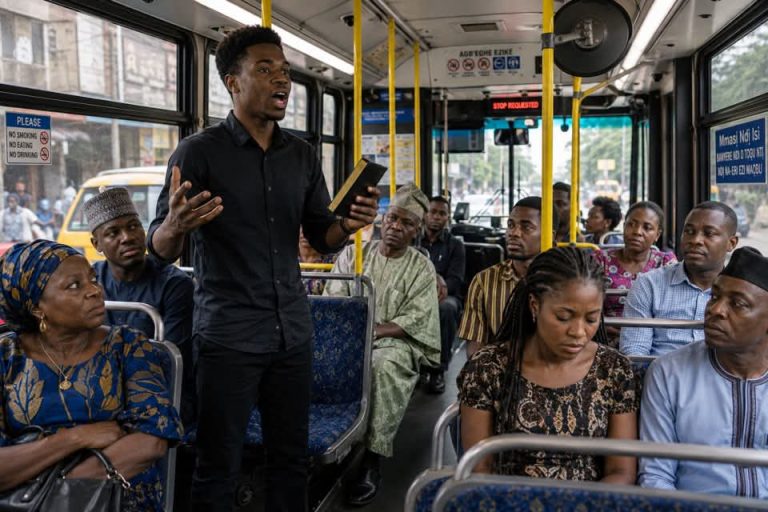
Mike Bamiloye and founder of Mount Zion ministry has criticised reported moves to prohibit preaching in commercial buses, arguing that Nigeria’s lawmakers should instead focus on addressing more pressing national challenges such as corruption, insecurity, unemployment and poverty.

In a statement shared on his social media platforms, Bamiloye questioned why legislators would consider restricting evangelism in public transport while the country continues to grapple with allegations of corruption, embezzlement of public funds, terrorism and widespread insecurity.

He lamented the nation’s persistent power supply challenges, the activities of criminal groups, and what he described as the growing moral decline in society, insisting that these issues deserve greater legislative attention.

According to him, preaching the gospel encourages people to abandon crime, drug abuse, immorality and other social vices, adding that such efforts contribute to building a more peaceful and morally upright society.
Bamiloye argued that rather than discouraging religious preaching in buses, lawmakers should support initiatives that promote godliness and positive values among citizens.

He maintained that preaching in buses is not Nigeria’s major problem, stressing that corruption, insecurity, unemployment, poverty, terrorism, kidnapping and the country’s declining moral condition remain the nation’s most urgent concerns.

Tinubu Approves Expansion of Nigerian Army to 12 Divisions, Recruitment of 28,000 Personnel

0


President Bola Tinubu has approved the expansion of the Nigerian Army from eight to 12 divisions as part of efforts to strengthen Nigeria’s security architecture and enhance the operational effectiveness of the Army.

The approval was disclosed in a statement on Thursday by the President’s Special Adviser on Information and Strategy, Bayo Onanuga.

According to the statement, the expansion reflects the President’s commitment to equipping the Armed Forces to effectively tackle the country’s evolving security challenges and further strengthen national defence.

The approval also builds on the administration’s sustained investments in the military, including the recruitment of an additional 28,000 personnel, the acquisition of critical military platforms and equipment, improved troop welfare, and continued support for operational readiness and force modernisation.

Under the new structure, the Nigerian Army will operate 12 divisions strategically located across the country. They include the 1 Division Headquarters in Kaduna, covering Kaduna, Kano, Katsina and Jigawa states; the 2 Division Headquarters in Ibadan, covering Oyo, Osun, Ekiti and Ondo states; the 3 Division Headquarters in Jos, covering Plateau, Bauchi and Gombe states; the 5 Division Headquarters in Makurdi, covering Benue, Nasarawa and Kogi states; the 6 Division Headquarters in Port Harcourt, covering Rivers, Akwa Ibom and Cross River states; the 7 Division Headquarters in Maiduguri, covering Borno and Yobe states; the 8 Division Headquarters in Sokoto, covering Sokoto, Kebbi and Zamfara states; the 9 Division Headquarters in Ilorin, covering Kwara and Niger states; the 10 Division Headquarters in Jalingo, covering Taraba and Adamawa states; the 81 Division Headquarters in Lagos, covering Lagos and Ogun states; the 82 Division Headquarters in Enugu, covering Enugu, Anambra, Abia, Ebonyi and Imo states; and the 83 Division Headquarters in Benin City, covering Edo, Delta and Bayelsa States.

The statement noted that the establishment of the new divisions in Makurdi, Ilorin, Jalingo and Benin City would improve command and control, decentralise operational decision-making, strengthen border security, enhance the protection of critical national infrastructure, improve counter-insurgency and internal security operations, and ensure quicker military response to emerging threats across the country.
Implementation of the new force structure will be carried out in two phases.

The first phase, covering the establishment of the 5, 9 and 10 Divisions as well as the reorganisation of existing formations, is expected to be completed by September 2026.

The second phase, involving the establishment of the 83 Division and further reorganisation, is scheduled for completion by December 2026.

President Tinubu commended the Chief of Army Staff, Lieutenant General Waidi Ibrahim Shuaibu, and officers and soldiers of the Nigerian Army for their dedication, professionalism and commitment to defending Nigeria’s sovereignty and territorial integrity.

He also reaffirmed his administration’s commitment to sustained investment in the Armed Forces to ensure they remain adequately equipped, highly motivated and capable of protecting the nation and safeguarding the lives and property of Nigerians.

Court jails three for life over Oyo school abduction

0


The Federal High Court sitting in Abuja has sentenced three men to life imprisonment after finding them complicit in the abduction of students and teachers from a school in Orire Local Government Area of Oyo State.

Justice Salim Ibrahim delivered the sentences after Abdulrazak Umar (also known as Abu Khalifa or Abu Khalid), Yunusa Musa (alias Yunusa bin Musa), and Shamsu Adamu Sani (alias Abu Itisar) pleaded guilty to some counts in the Federal Government’s 10-count charge against them.

The trio had been arraigned on Thursday to face charges spanning terrorism, kidnapping, concealment, incitement, and illegal mining. During the arraignment, they admitted withholding information about those who masterminded the school attack and confessed to belonging to Darul Salam, a group identified as an affiliate of Ansaru (Jamaatu Asarul Muslima Fi Bilandis Sudan), an organisation banned in Nigeria as a terrorist entity.

All three entered guilty pleas to counts four and six. Umar alone additionally pleaded guilty to counts seven through 10, which accused him of training and instructing terrorist recruits through a WhatsApp group called “The Oneness of Allah is the Foundation of Peace.”

The defendants denied wrongdoing on every other count.

Following the guilty pleas, the Director of Public Prosecution of the Federation, Rotimi Oyedepo, SAN, who headed the prosecution team, urged the court to proceed with sentencing on the admitted counts.

According to the charges, the three men, all residents of Suleja Local Government Area in Niger State, conspired with Muhammad Sani, Jibril Mohammed, and Ibrahim Khabab between January and May 2026 to kidnap schoolchildren and teachers in Oyo State, an offence under Section 26(1) of the Terrorism (Prevention and Prohibition) Act, 2022.

Prosecutors further alleged that the defendants assisted in carrying out the abduction and concealed information about the masterminds’ identities and activities despite being aware of the plot, in violation of Sections 26(2) and 16(1) of the Act, respectively.

The Federal Government also alleged that, around 2 June 2026, the defendants admitted membership of the banned group, an act that breached Section 25(1) of the same Act.

Sun

Digital firm emerges winner at 10th Hackathon anniversary in clean energy

0


Digital firm emerges winner at 10th Hackathon anniversary in clean energy
Current Creators, a digital firm, has emerged as the winner of the just-concluded All On 10th Anniversary Hackathon with its “ColdLink” concept, outperforming other contestants.

Speaking in Uyo, the Akwa Ibom State capital, the Chief Executive Officer of All On, Caroline Eboumbou, said the winning team comprised students from the University of Lagos (UNILAG), Lagos State University (LASU) and Yaba College of Technology (YABATECH).

She said entries for the competition were evaluated by a distinguished panel of judges comprising Bolanle Adesan, Senior Consultant at SFM Limited; Dr James Ogunleye, Project Developer at Carbon Limits Nigeria; Henry Bassey, Chief Executive Officer and Founder of Green Hub Africa; and Babajide Sokeye, Monitoring, Evaluation and Learning Associate at All On.

The Chief Executive Officer, who described the competition as keenly contested, said the panel of judges assessed each solution based on innovation, technical feasibility, commercial viability, scalability and potential for social impact.

Eboumbou explained that the “ColdLink” initiative is an integrated digital platform designed to improve the efficiency of renewable-powered cold-chain logistics.

She disclosed that the concept combines real-time monitoring, predictive analytics, fleet management and energy performance tracking.

“The solution demonstrated how digital innovation can strengthen cold-chain operations, reduce post-harvest losses, and improve the long-term sustainability of clean energy-powered infrastructure.”

She noted that the firm has been intentional in giving young innovators the opportunity to develop practical solutions that will help drive Nigeria’s clean energy future.

“For the past ten years, All On has invested in people, businesses, and partnerships that are expanding access to clean energy across Nigeria.

“The All On @10 Hackathon builds on that commitment, giving young innovators the opportunity to develop practical solutions that will help shape the future of our energy sector.”

Eboumbou further disclosed that the participants were organised into six multidisciplinary teams, combining diverse skills and perspectives to design and pitch innovative clean energy solutions addressing challenges across healthcare, education, agriculture, fisheries, cold-chain logistics and the productive use of energy.

She said the participants were challenged to develop solutions that were not only technically sound, but also commercially viable, financially sustainable, digitally enabled and capable of delivering meaningful social impact.

Giving insight into the activities of the firm, the Chief Executive Officer said All On was seeded by Shell to catalyse the growth of Nigeria’s off-grid energy market by providing affordable, reliable and sustainable energy for low-income households and small businesses.

“All On provides debt and equity funding, as well as non-financial support, to Nigerian energy companies that align with its mission of closing Nigeria’s access-to-energy gap through renewable energy solutions.”

Sun

Otu breaks UNICROSS ASUU two-month strike with 90-day truce

0


Cross River State Governor Bassey Otu has ended the two-month industrial action by the Academic Staff Union of Universities (ASUU), University of Cross River State (UNICROSS) branch, after the union suspended its strike for 90 days with effect from Tuesday, 21 July 2026.

The suspension followed an agreement signed with the university management and Governing Council on 20 July 2026. It came after weeks of engagement and the constitution of a seven-member Technical Committee by the Governor on 16 June 2026 to review UNICROSS’ working environment.

In Bulletin No. 5, Branch Chairperson Comrade Patrick Ushie commended members for their “steadfastness” and directed them to resume teaching, research and community service immediately.

He said the decision was based on “the trust we have for the Visitor and agreements signed,” but warned that the suspension depended on the full implementation of the 20 July agreement.

The Technical Committee, announced by the Secretary to the State Government, Prof. Anthony Owan Enoh, was mandated to assess staff welfare, academic productivity and governance.

It was also tasked with reviewing the relationship between the Consolidated Academic Tools Allowance (CATA), recently approved by the Federal Government, and the Earned Academic Allowance (EAA), as well as exploring alternative funding sources and recommending measures to meet the National Universities Commission (NUC) 3:1 academic-to-non-academic staff ratio, among other responsibilities.

ASUU-UNICROSS commenced a total and indefinite strike on 19 May 2026 over 11 demands, including the implementation of the 2023 Federal Government-ASUU salary structure, payment of arrears, earned academic allowances, promotion arrears dating back to 2011, and the remittance of more than ₦83 million in deductions.

Sun

Nigeria and the new demands of regional leadership

0


By Ademola Oshodi

The international environment is placing a heavier responsibility on Nigeria. Regional security cooperation has weakened, competition for energy finance and technology has intensified, and humanitarian funding is contracting even as domestic needs increase. Three developments this week show why Nigeria must combine leadership with discipline, strengthening its capacity to act without assuming obligations it cannot sustain.

On 14 July, the United Nations Security Council reviewed the political and security situation in West Africa and the Sahel. The following day, Nigeria’s Permanent Representation to the UN convened a discussion on energy access and just transitions during the UN High-Level Political Forum in New York. In Abuja, the Federal Government and the United Nations also began a transition towards stronger Nigerian leadership of humanitarian planning and coordination. These events occurred in different policy areas, but they point to the same reality: Nigeria is being required to carry greater responsibility as external support becomes less predictable.

The Security Council discussion exposed the urgency of the regional security challenge. Terrorist and criminal networks are becoming more sophisticated and increasingly able to operate across borders, even as dialogue slowly resumes between ECOWAS member states and the Alliance of Sahel States after a prolonged period of strained relations. Nigeria is directly exposed to both trends. The threat is particularly acute in the Central Sahel and northern Nigeria, where armed groups are using drones, encrypted communications and cryptocurrencies while strengthening links with transnational organised crime. No national security strategy can contain a threat that crosses borders, exploits poorly governed spaces and benefits from fractured regional cooperation.

The reopening of the Kamba border crossing between Nigeria and Niger on 9 February was cited at the Security Council as evidence that renewed dialogue is producing practical results. The crossing restores an important commercial route, but its significance goes beyond trade. The political rupture between both governments could not erase the geographic, commercial and security ties between their people. Nigeria and Niger share border communities, trade routes and exposure to armed groups, making practical cooperation unavoidable even while political differences remain unresolved.
The administration’s effort to reopen channels with Niger reflects the balance Nigeria must maintain across the region. We must defend constitutional government without allowing political disagreements to disable the security and commercial cooperation demanded by geography. Cutting off practical engagement with the Sahel states would weaken border security and disrupt legitimate trade. Abandoning democratic principles in the name of security would equally damage the regional order Nigeria has spent decades helping to sustain.
The credible course is structured engagement. Reopened borders must be supported by stronger intelligence sharing, coordinated patrols, customs cooperation and joint action against arms trafficking and terrorist financing. Nigeria’s leadership will depend on whether it can restore functional cooperation while remaining clear about the political divisions that continue to shape the region.

The second development placed energy firmly within foreign policy. At the UN High-Level Political Forum, Nigeria’s Permanent Representation, working with the UNDP Independent Evaluation Office and Germany’s Institute for Development Evaluation, convened a discussion on energy access and just transitions in Africa. The session addressed off-grid energy, affordability, infrastructure, investment, industrial decarbonisation and green jobs, all of which place the energy transition firmly within foreign policy. Transition is now a contest over finance, technology, critical minerals, supply chains and where future industries and jobs will be located. Countries that control investment and processing capacity will capture most of the value, while those that continue to export raw materials and import finished technologies risk reproducing the same dependency under a greener label.
Nigeria should reject any climate framework that treats electricity access and industrialisation as secondary concerns. Our participation in the energy transition must produce affordable finance, technology transfer, domestic processing and reliable power. A transition that lowers global emissions while African factories remain without dependable electricity, developing countries accumulate expensive debt, and manufacturing and employment remain concentrated elsewhere cannot be considered just.

The New York discussion was useful because it placed these concerns before international institutions and development partners. Its significance, however, will depend on what follows. Nigeria needs bankable projects, stronger transmission and distribution systems, decentralised energy solutions and partnerships that can power farms, workshops, hospitals and factories. Diplomatic access creates an opportunity, but national institutions must be prepared to convert that access into investment and infrastructure.

The third development concerns humanitarian responsibility. At a Nigeria-UN joint workshop in Abuja, discussions began on transferring greater responsibility for humanitarian planning, coordination and financing to Nigerian institutions. Nigeria also intends to lead the preparation of its 2027 humanitarian plan with technical support from the UN system.
This transition is taking place as donor funding contracts while humanitarian needs rise. The United Nations has warned that nearly 35 million Nigerians could face hunger in 2026, even as humanitarian agencies are being forced to respond with fewer resources. Nigeria should assume greater leadership of its humanitarian response, but that transition must be phased, financed and tied to clear institutional benchmarks.

National ownership cannot become a diplomatic expression for the withdrawal of international assistance before domestic systems are ready. Nigeria can only take effective control of humanitarian response through predictable funding, reliable data, efficient procurement, stronger coordination between federal and state authorities, and clear accountability for delivering assistance to affected communities. International partners should not transfer responsibilities faster than national institutions can absorb them.

Taken together, these developments show that external partnerships remain necessary, but they cannot substitute indefinitely for Nigerian and African capacity. Nigeria also cannot finance every regional security need, development project or humanitarian obligation alone. Its foreign policy must therefore build coalitions that share costs, preserve cooperation across political divides and ensure that international partnerships strengthen domestic institutions rather than replace them.
Nigeria cannot depend indefinitely on external actors to secure its neighbourhood, finance its development or respond to emergencies within its borders. neither can it absorb these responsibilities alone. The goal is to organise effective regional cooperation, negotiate partnerships that expand national capability and ensure that greater responsibility is matched by adequate resources.
In the present international environment, Nigeria’s leadership will depend on whether it can build coalitions that protect its interests, strengthen its institutions and deliver results without exhausting its capacity.

-Oshodi is Senior Special Assistant to President Tinubu on Foreign Relations and Protocol