Home Blog Page 280

FG denies planned electricity tariff hike, says subsidies remain

0

The Federal Government has dismissed reports suggesting that it plans to increase electricity tariffs, insisting that there is no proposal to raise charges for any category of consumers connected to the national grid.

The clarification was made in a statement released on Saturday by the Special Adviser to the President on Power Infrastructure in the Office of the Vice President, Sadiq Wanka, following media reports that interpreted his recent remarks as signalling an imminent tariff review.

According to Wanka, the reports misrepresented comments he made during a presentation at the Asharami Square 3.0 event held in Lagos on July 22, 2026.

“There is no planned tariff hike for any grid consumer across any service band. The government remains committed to protecting vulnerable households through continued tariff support,” he said.

He explained that his presentation focused on investment opportunities in Nigeria’s electricity sector and the Federal Government’s ongoing power sector reforms aimed at attracting private capital across the electricity value chain.

Wanka noted that he merely reiterated the tariff policy outlined in the National Integrated Electricity Policy, which was finalised in December 2024 and approved by the Federal Executive Council in May 2025.

He explained that the policy provides for a gradual transition to cost-reflective electricity tariffs, a framework that has already been implemented for Band A customers, while maintaining government support for consumers in other service bands.

“For all other consumer bands, there is no plan to remove subsidies. Rather, the Government is exploring how to deliver value and support more efficiently,” the statement added.

The presidential aide also highlighted the proposed Power Consumer Assistance Fund (PCAF), established under the Electricity Act 2023, as the government’s preferred mechanism for delivering targeted subsidies directly to vulnerable electricity users.

According to him, the initiative is designed to channel financial support through consumers’ electricity accounts or other verified identity-linked platforms, improving transparency in subsidy administration while boosting investor confidence in the sector.

Wanka further commended the media for its role in informing the public but urged journalists to ensure accurate reporting of government policies to avoid creating unnecessary concern among electricity consumers.

He added that the administration of President Bola Tinubu remains committed to implementing reforms that strengthen the power sector while protecting vulnerable households through sustained subsidy support.

Sun

Ex-IG, Mike Okiro’s bombshell: How FG’s error birthed Boko Haram

0

•Insurgency came after govt scrapped my anti-terror squad in 2009
•How I saved Abacha’s son from OPC mob

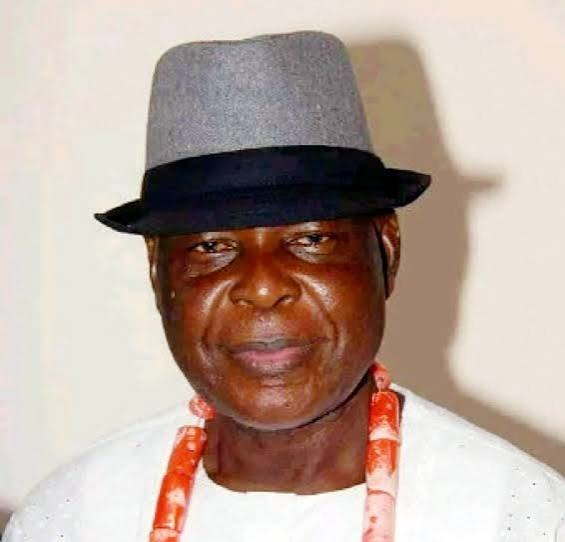
Former Inspector-General of Police (IGP), Sir Mike Mbama Okiro, who served between June 1, 2007 and July 24, 2009, has noted that the activities of the Boko Haram insurgency could have been nipped in the bud if the federal authorities had not taken action against some of the policies he emplaced while he served as police boss in the country.

The former IGP who turned 77 on July 24, 2026 was also Chairman of the Police Service Commission (PSC) between May 2013 and April 12, 2018.

In this interview with Sunday Sun, the former IGP, a lawyer, said the anti-terrorism squad he put in place while serving as IGP was disbanded as soon as he retired in 2009. He singled out that “error” as contributing to the emergence of the Boko Haram insurgency, a group that has spread terrorism since 2009.

He also spoke on other issues including the raging insecurity in the country, the 2027 election, the police among others.

He narrated how he joined the police and how he prevented an attack on the son of the late maximum ruler, General Sani Abacha, by an angry mob led by the Oodua People’s Congress while he served as Commissioner of Police in Lagos.

How does it feel to be 77?

Well, I have clocked 77 for the first time. It is the greatest age. The Bible gives three scores and 10, that is, 70. I thank God for giving me the grace and strength to go beyond 70 and go to 77. By the grace of God I will add many more years. I thank God for that.

At 77, former IGP, former Chairman, Police Service Commission, what would you describe as your most defining achievements?

As a police officer, I handled a lot of assignments; from ASP till I became IG, I can say that everything I did in the police was remarkable. But looking back, there are most striking ones. I was posted to Benue State as Commissioner of Police from June 7 to August 2 1999 and was transferred to Lagos. I arrived Lagos August 2nd and I tried to study the state, because by the time I arrived Lagos, crime was at its peak in the state. That was why the IG at that time sent me there.

He singled you out?

Yes. I remember he called me one night. I was just a month and half as Commissioner of Police in Benue. He called and told me told me he was sending me to Lagos. I said yes sir. But on a second thought I asked him what for, because I thought it was for a special duty or something. But he said Commissioner of Police Lagos. As Commissioner of Police Lagos? He said yes. I asked again, as Commissioner of Police Lagos? I asked the third time and he shouted at me, what’s wrong with you, Okiro! I said I was told special people are sent to Lagos, I don’t know what is taking me to Lagos. And secondly, in Benue, I had not secured my quarters yet but I had been able to secure school admission for my children in Markudi. I was only waiting to secure residential quarters so that I could bring them along. To move to Lagos now, I have no residence in Lagos, so where would I stay in Lagos with my family? Also, to get schools in Lagos was difficult. How do I get schools for my children in Lagos? The IG said, Okiro, you have to go. I said, yes sir and left for Lagos. In Lagos, there was real confusion because crime was at its peak in the state at that time -car snatching, robbery, people were being killed every day in Lagos. I took that as a challenge. One day, in the evening, I saw on television, I think early September, I saw people at Igbosere, Oodua People’s Congress (OPC) people with cutlasses, sticks, broken bottles, sticks and Jerry cans of petrol. They said Abacha’s son was being brought to Lagos and that they wanted to kill him. I laughed and said, look at these people. Who told you Abacha’s son is coming to Lagos. I’m the Commissioner of Police in Lagos, if such a thing is going to happen, I should know. I told someone who called me that what I saw on the television was not correct, I didn’t know where they got the information from. So, I dismissed it.

But about 8pm, the IG called me from Abuja and said Okiro, they are bringing Abacha’s son with an Air Force plane to Lagos for trial tomorrow, provide security. And I said yes sir. As I dropped the phone, my head went haywire. At 9pm? I didn’t have enough men in Lagos, not enough vehicles, arms were not enough, I don’t have tear gas. What I saw at Igbosere was correct. The nearest place I could have got support or backup was Abeokuta, Ogun State or Ibadan, Oyo State but in the circumstances I found myself that night, the two locations were very far. At 9pm!

And the trial was the next day?

Yes, the next day. I didn’t know what to do. I knelt down and prayed to God. I talked to God as if I was talking to my biological father physically, I said, God, I didn’t want to join the police – I will talk about that one later on because I hated the police – but God, you guided me to join the police. Is this how I will end up? Is this how my career will end? How many people do I kill? How many people do I shoot with the crowd at Igbosere? If I dare shoot one person, the whole Lagos will go up in flames. The whole police stations in Lagos will be attacked and I had nothing to protect police stations.

Are you saying that at that time, the Lagos State Police Command lacked arms and men?

Yes. We didn’t have men. We didn’t have vehicles. Nothing! How do I confront or control that crowd at Igbosere? After saying amen to my prayer, I got solution immediately. From nowhere, solution came. The first thing that came to my mind was to change the venue of the trial, from the court at the Igbosere to another court in Lagos because it is the same Lagos Judicial District. Badagry is in Lagos, Epe is in Lagos, Ikeja is in Lagos, Igbosere is in Lagos. So, I called the IG and I told him I wanted to change the venue of the trial. He said I should contact the Chief Judge of Lagos. I sent the DPO of Ikoyi, Garba who is now retired. He retired as DIG – that time there was no mobile phone, it was landline and walkie-talkie that we were using. So I sent him to the house of the Chief Judge and he called me back to report that the Chief Judge was on leave. I called back the IG to feed him back and he instructed I should see the Registrar. I sent the DPO to the Registrar. I got the Registrar and I told him my intention to change the trial venue from Igbosere to Ikeja. He said Ok, I should see the Chief Registrar of Ikeja. And the Chief Registrar of Ikeja was living at Badagry. So, I called the DPO of Badagry.

That same night?

That same night! So I called the DPO Badagry. I had a walkie-talkie and patrol vehicle, Badagry was far so I had to use the walkie-talkie as communication and patrol vehicle to Badagry. I got the man at 2.30am and told him I wanted the case to be tried at 6.30am but he objected on the ground that court starts by 9 am and anything outside 9am is creating room for an appeal. The plane carrying Abacha’s son and the other suspects arrived at about 5.30am. I got a Black Maria and transferred him there and instructed the driver to drive to Airport Police Station and remain there. I told the driver that anytime I called him, he should proceed to Ikeja Magistrate Court. I deployed men to the court to provide security. I got somebody in the court with walkie-talkie and instructed him to call me once the court opened by 9 o’clock to tell me that the stage was set. I then deployed some men to Igbosere with an order that anyone entering Igbosere must be thoroughly searched. I also put policemen on the Third Mainland Bridge and Eko Bridge with an order that anyone approaching must be thoroughly searched. This was to give the impression that something was happening at Igbosere while the trial was actually taking place at Ikeja.

It was a decoy. So everybody was happy, they were rushing to Igbosere. When it was 9 o’clock, the man I put at the Magistrate Court, Ikeja, communicated to me through walkie-talkie and reported that the stage was set. I now called the Black Maria and ordered him to proceed to the court. It was a murder trial. Guilty or not guilty and they pleaded not guilty and were remanded at Ikoyi prison. With the walkie-talkie, the Black Maria was calling me. When they got to Ikoyi, he called me that they had arrived. I was so happy. I now called the policemen at Igbosere and other places and instructed them to stand down, the trial was over. Ahhh! Lagos was in confusion. Before I forget, the IG called me also…

Who was the IGP at that time?

Musiliu Smith. The IG called me and instructed that I should make sure that the press covered the trial. When the trial was about to commence, I called top editors to proceed to my office for some breaking news and they all rushed to my office. I offered them breakfast but they were insistent on the breaking news. I assured them that the news would soon come. When it was 9 o’clock and I was informed by my men at the court that the trial was about to start, I now broke the news to the pressmen: Go to Ikeja and cover the trial of Abacha’s son and others! At that moment, they all rushed out, in fact, one of them, a lady, left behind her handbag.

That was how the trial went peacefully. There was no loss of life, nothing and I thank God for that. During the subsequent trials, tension had gone down. I consider the episode my greatest achievement because if it was not well handled that day, if not for the wisdom God gave me that day, many people would have died because OPC was ready. They were vowing they were going to kill him. They were dancing at Igbosere, waiting for him to come.

In reality, if Abacha’s son had been brought to Igbosere, I mean, would OPC have harmed him?

Definitely! There are many other significant achievements I recorded during my career but the Abacha son’s episode was very, very unique.

Having served at the highest level of policing, how would you assess Nigeria’s current security situation? Are we making progress, or are the threats becoming more complex?

Well, we are not making progress. The situation had been bad right from time. We are all Nigerians, let us face facts. The situation has been like this, likewise the economic situation. I give you an example. I came to Lagos; I was basically drafted to Lagos as Commissioner of Police. Before I came to Lagos, Group Captain Tony Ikhazabor, a brilliant Air Force officer was killed. That same month, a white man was killed at Adeniran Ogunsanya; he was shot in a restaurant. Ogunbanjo, one popular lawyer, was shot too. Seriki was killed, Eze Ndigbo in Badiya was shot. The Limousine of Ooni of Ife was snatched. In fact, people were running away from Lagos. OPC took over because the police had failed. OPC took over.

So, the OPC was in charge by the time you arrived Lagos to assume duty?

OPC was in charge! So that was how I was drafted to Lagos because the IG told me, Okiro, I have problem in Lagos. I’m told you are the only one who can handle it for me. I was saying in mind, what problem does the IG have that me, small me will handle for him? It was when he said within my one and half month in Benue I had a wonderful record; it was when he said if you know those officers who are making you shine, who were making you succeed in Benue, give me their names, that I now said oh! My record in Benue was the reason he drafted me to Lagos. So, you can see that this issue of insecurity didn’t start today. It has been with us all along. If you listen to Fela, the music he played in the 70s and 80s, he talked about security and the economic situation in Nigeria. Eedris Abdulkareem, who was singing Nigeria jagajaga, Nigeria suffer-suffer, was also alluding to the same problem. But the issue is that we should try, let it be a challenge to every one of us to see what we can do to make the situation better. Boko Haram started August 2009 and it keeps spreading.

Would you say that Boko Haram gave birth to other terrorist and insurgent groups troubling the peace of Nigeria today?

One thing leads to the other. You see, Boko Haram couldn’t have really happened if government hadn’t stopped what I started.

Is that the Police Anti-Terrorist Squad (ATS)?

Yes. I remember when I was appointed IG June 2007, by November I had already stabilised and created the Police Anti-Terrorist Squad (ATS). I got them trained in Israel, Egypt, Sudan and South Africa. These are countries at that time that had a known history of terrorism. I got the ATS trained in those countries to understudy how they confronted terrorism there. Unfortunately, in Nigeria, one of the problems we have which is a hindrance to national growth and progress is tribalism, religious affiliations, nepotism and all that. Some people came up and alleged that Okiro has created the anti-terrorist squad to gather members of a particular religion and shoot them as terrorists. Two newspapers wrote editorials on that, claiming there is no terrorism in Nigeria, that I created ATS to give Nigeria a bad name to the outside world. So, because of that I now had to call a press conference to defend myself and my integrity. I explained that what I created was for all Nigerians and not for a particular religion or ethnic group because if a bomb is thrown anywhere, anyone within the killing radius of that bomb – whether he’s a Christian, Muslim, Igbo, Hausa, Yoruba- will be killed. So, the ATS was not to guide or protect any particular people but for all Nigerians. I looked at all the countries bordering Nigeria and discovered that they were in confusion. So what I did was create a squad from the Nigerian Police Force to be ready for proactive action against terrorism in Nigeria. However, because of the hue and cry against it, all that I put in the budget to equip the squad- communication, vehicle etc, government did not approve them but I still deployed the squad. I sent a unit to Lagos, a unit to Port Harcourt, a unit to Kano, a unit to Maiduguri. Some governors called me to withdraw the men from their states. I withdraw them. I retired July 24, 2009. By August to September, Boko Haram had struck in Maiduguri. Since then Nigeria has known no peace. If government had insisted on the ATS and equipped it, the story would have been different today. Even Muhammed Yusuf, the Boko Haram leader, I was monitoring him. I monitored him from Yobe to Maidugiri. I was monitoring him. I arrested him a couple of times. If government had taken action then, the story would have been different. It is late now. They have spread all over Nigeria.

You believe strongly that if the ATS was equipped and sustained we wouldn’t be having the problem of insecurity today?

Yes. It would have been well equipped to confront the insurgents. I looked at it and saw the need for it. Training and equipping the ATS was a bit deep in our budget, so I created the Police Anti- Terrorist Squad Training School located in Rivers State and brought experts from outside to come and teach them. They were trained operationally. That reduced the cost of training them abroad. I think the school no longer exists. It is very unfortunate.

What, in your view, are the biggest weaknesses in Nigeria’s security architecture today?

Well, I talk about my constituency, the police. The police is the lead agency in internal security in Nigeria but the police cannot perform magic. It cannot perform without the required equipment. As the two of us are here now, whatever is happening in Obalende, we will not know. We need communication equipment to know. There is an equipment that can be set up here now and we will see whatever is happening in Obalende but you and I don’t have it here. So, the point I’m trying to make is that the agencies should be well funded, have manpower, have equipment. The world is so advanced now that you can send drones to fight crime and insecurity, it’s no longer physical security like we have in those days. You see what America is doing. Are they angels? Are they from heaven? They are of the earth. They are human beings like us but they are performing wonders because of the equipment they have. We can do the same thing. It is just a matter of funding, manpower, training and equipment. Nigerians are very intelligent. If they are given what they require they will excel.

As a young man, what first attracted you to policing at a time the profession was not considered particularly prestigious or inspiring?

I was never attracted to the police. Never! I hated the police. As a student union leader at the University of Ibadan, the police to us that time as students were people we regarded as useless. We as students would demonstrate against government policies we considered bad and police would tear-gas us, so we hated the police. I looked down on them as people of low intelligence. But then, when I served in Maidugiri during my youth service in 1977… At that time, there was no road to Maiduguri. From Maidugiri to Port-Harcourt was a four-day journey and from Port-Harcourt to Maidugiri was also a four-day journey. So, during my youth service, I was given five days pass to travel home to see my people but I didn’t go because, with travelling to and fro taking eight days alone, I would have overstayed my pass. So, for one full year I didn’t see my people and that was the first time I would be staying that long without seeing them. So, it was while in Maidugiri that it was advertised in the paper – Daily Times – that the police were recruiting young graduates. I was not interested but a fellow corps member said in the previous year, his brother applied in Kano and they had to fly him in a Nigerian Airways flight from Kano to Lagos for the interview. And I exclaimed, is that so? Nigerian Airways? He said yes and I said me too will apply this year. I said I will fly to Lagos, and then get to Port Harcourt from there to see my people. Thirty of us applied but only four were selected for interview.

But this time around there was no plane taking us to Lagos because Maidugiri had only an airstrip. So, they conveyed us in a station wagon. By the time we got to Ibadan to continue our journey to Lagos, it was already late and the driver said there was no provision for us to stay in a hotel. And I suggested we go to UI- the University of Ibadan to pass the night. When we got there and students saw me with police vehicle, they shouted, Okiro, what are you doing with the police? I said we were going for interview. We were given a place to stay for the night and the next day we continued to Lagos. After the interview, out of the four of us, I was the only one taken. I now told the driver that I wanted to go to Port Harcourt, but he refused. Even when I said I would pay my fare, he still refused and insisted the instructions given to him was to take me to Lagos and bring me back to Maiduguri. I was very angry because my primary purpose of going for the interview was to use the opportunity to travel to Port Harcourt to see my family. I was sad. So, I returned to Maiduguri. I had six job offers: Customs, Rivers State Civil Service, Tide Newspaper, University of Port Harcourt, Police; I also had offer to do my Masters in UI.

When I was done with my NYSC, I moved from Maidugiri to Jos to spend the night so that I could continue my journey to Port Harcourt the next day. A colleague of mine, my schoolmate, Alhaji Bello- he wasn’t Alhaji then – was in Jos. I asked myself, why should I sleep at the motor park when I have a friend in Jos? I went straight to his house. Unfortunately, I over slept for the next day’s journey because I was tired. The bus was to leave by 6am but I woke up by 9 am. By the time I went to the park, the bus had already left. So I rebooked another bus for the next day. When I returned to Bello’s house, he had left for work and I was bored – you know I’m restless, sort of. So I took a taxi to the Police Staff College, Jos, venue of the training – a very beautiful place. Immediately I got there, some UI graduates who were on course 5 there started hailing and congratulating me, and I asked what happened? Did I win a raffle? They said they saw my name among those selected for Course 6. But I told them I wouldn’t come for the training and they were surprised. They asked why, but I didn’t tell them I hated the police. I merely told them that the I needed three days to travel to Port Harcourt and three days to return to Jos and that the training would have commenced before I would return. They took me to the course officer and the course officer took me to the Commandant. The Commandant asked, what is your problem? And I said I cannot come because of the time. He asked me when I would like to report and I said 9th of August. Inside me I was laughing because I knew I wasn’t coming. The next day, I left for Port Harcourt. I was actually eyeing Tide Newspaper owned by the Rivers State government to become Features Editor, because I wanted where I could be writing. But my father wanted me to join the Rivers State Civil Service as Assistant Secretary as it was called at that time with the aim of becoming a Permanent Secretary in future. But I said sir, I have a different thing in mind. One day, a friend of mine came and we were discussing and he said, Mike, which job offers you get sef? I mentioned them, I mentioned police last, and he shouted, Police! How manage? You get long leg? Na who carry you go police? He said his brother applied three times and himself applied too but never got it. How manage? Who introduced you to the IG? Police is very good, congratulations! When he left, I got up, wrote the six job offers in different pieces of paper, folded them and closed my eyes, shuffled them and prayed, God give me the best. Then I picked one of the folded papers. Lo and behold, it was police I picked! I dressed up, told my mother I was going to Jos. I didn’t tell my father because I didn’t want a conflict or challenge between my father and God. Luckily also for me that morning, when I came out, my father was with some friends. I merely told him I was going to Jos and he didn’t ask me what I was going to do there. He simply said okay. And he inquired when I would be coming back. I said I didn’t know yet. He said okay too. I reported at the Police Staff College August 19, 10 days late from the 9th I was given.

You were 10 days late?

Yes. I said to myself if they send me back for reporting late, I will pack my bags and go home and tell God it’s not my fault again. But surprisingly, they accepted me! Second week into the training I got a telegram. The course officer sent for me. When I got to him he asked, is your father still alive? I said yes. Is your mother still alive? I said yes. How many siblings do you have? I said excuse me sir, all these questions you are asking me I filled in the form, do you think I told you lies?. He now opened the drawer and brought out a telegram which read: “Father seriously sick, proceed immediately.” In my place, if your mother or father is dead and you are not at home, the message to you will not explicitly tell you that you are bereaved, it will be coated, so when I saw the telegram, I knew my father was dead.

But was he sick when you left Port Harcourt?

No. But there was confusion in me. The telegram was signed by him – Chief Samuel Okiro. I said to myself, if my father was dead, how come he sent a telegram to me? I was confused. The course officer said I should apply for casual leave. That my friend, Bello said he was going to accompany me to Port Harcourt the next day. When we arrived Port Harcourt, I saw my father drinking beer and talking with friends! I greeted him and went to the kitchen to see my mother. My mother shouted, you joined the police without telling your father? Your father is not happy with you, that is why he sent for you! I got the message. At night, my father knocked on my door and shouted, get up here! I got up and sat down. You joined the police? I said yes sir. He was furious. Is that what we discussed? I kept quite and he continued. He said if you knew you were going to join the police, why did you allow me to waste my time and money to train you up to the university? You should have joined since so that I can disown you, so that I will know I have no son again. I said sir, the police officers now, some of them are graduates, we are Course 6 set of officers who are graduates. And secondly sir, I’m your son, I respect you but there are two things you will concede to me in life. He asked, what are they? I said, one, the woman I will marry because she is going to live with me all my life. You can advise me, but I will take the decision myself and not you. The second one is the job that I do. You can advise me but I will decide. He kept quiet and went back to bed. Next morning at about 5am or so, he knocked at my door again and I opened. He said he had considered what I told him the previous night and agreed that I was mature enough to face the world, that if it is the police I want to join, he wished me the best and that I should kneel down for him to pray for me. He prayed for me and after praying for me, I said Bello let’s go let’s go before he changes his mind. I packed immediately and went back to Jos. That was how I found myself in the police.

Your tenure as Chairman of the Police Service Commission was widely regarded as eventful. What would you describe as the most significant reforms and innovations you introduced, and how have they impacted the commission?

A lot of them. You see, the act establishing the commission is very clear on certain issues. It said the Police Service Commission can formulate and implement policies. It is an umbrella authority for the police, which they didn’t use. But I used it. The act says the commission can recruit, promote, discipline, deploy all police officers apart from the IG, which means the commission has the right to recruit. I started it. The IG then had a problem with that and we went to the Attorney- General of the Federation and Minister for Justice and the act was read, very clear. The sticking point became the words, “appoint” and “recruit” and we had to go back again to the Attorney-General and it was agreed that appointment and recruitment were the same thing, so the Police Service Commission took it up from there. In promotion also, I felt that it was not enough or proper for the IG to promote certain officers without us seeing them. So, the IG sends the list of officers to be promoted to us. We invite them for interview. In the process, some were rejected because they couldn’t make good officers.

Is there a forum where former IGPs meet to deliberate on Nigeria’s security challenges and offer strategic advice to the government or the incumbent Inspector-General?

Yes, there is. One of the innovations I introduced as IGP was that I felt there should be a forum for retired IGPs in the sense that they have seen it all, they are not afraid of anybody. They can say things as they are or as they should be. So, I put up a former IGs forum. I wrote to the President, Yar’ Adua and he approved it. He was to inaugurate it but unfortunately the day he was to do so, he had an official engagement that took his time.. I think he was hosting foreign Ambassadors that day so, he sent the Vice President Jonathan to represent him. The oldest among us was MD Yusuf. At a later date, the President invited us. It was there he talked about police reforms. He made MD Yusuf Chairman of the Police Reforms Committee but right there, MD Yusuf said, no, I will not do it. He rejected the appointment. His reason was that government will set up a committee but will not implement the recommendations of such committee. He said he would only accept the appointment if President Yar’Adua promised him that government would implement whatever was recommended. The president said Ok, whatever recommendations you make, we shall implement.

Does the former IG forum still meet?

Yes. We met two or three weeks ago. We met about state police.

As Nigeria approaches the 2027 general election, what measures should security agencies adopt to guarantee peaceful, credible, and violence-free polls?

They must not be partisan. Their job is to provide security for the venue, the polling units, electoral officers and electoral materials. They are not to get involved in other things not related to security and maintenance of law and order.

Sun

Dead on arrival: 301 bills gather dust in Aso Rock

0

• Nigerians chide lawmakers, Executive, cite lack of oversight, executive alignment
• No big deal; it’s part of checks and balances – Reps

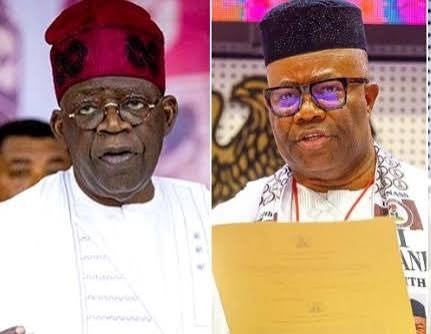
The scorecard of the 10th National Assembly, recently presented by Speaker Tajudeen Abbas, lays bare the stark reality of how laws are made and how they die between the legislative chambers and Aso Rock.

Of the 373 bills passed by the legislature, only 72 have been signed into law by the President, leaving the remaining 301 stuck in legislative limbo. The polarised reactions to this gap highlight a political landscape where objective truth is often secondary to narrative. While some interpret the ratio as a sign of unprecedented harmony and selective quality control, others view it as clear evidence of deep structural friction. Either way, the numbers are forcing a critical national conversation about legislative ambition versus executive scrutiny.


Driven by intense pressure from their constituencies to show tangible results, lawmakers often rush to pass bills that are ultimately dead on arrival due to a fundamental lack of rigorous oversight and executive alignment. This bottleneck points to a deeper systemic issue within Nigeria’s democratic architecture: the triumph of political theatre over policy pragmatism. For many legislators, the mere sponsorship and passage of a bill serves as valuable political currency to secure re-election, regardless of whether the proposed law is financially viable or constitutionally sound.

A former senator, who asked not to be named, captured this frustration in a telephone interview with Sunday Sun: “Churning out such a large number of bills that have little or nothing to do with the overall interest of the nation is not the way to show that you are working. Of what use are large numbers of bills that the President has denied assent to the people? That is not how to show that you are representing the people.” By churning out a high volume of populist bills, lawmakers can claim they are actively fighting for their constituents, effectively shifting the burden of rejection onto the presidency.

Consequently, the executive branch is forced to act as the ultimate gatekeeper, discarding hundreds of poorly drafted or redundant bills that fail to align with national priorities or fiscal realities. However, this high rejection rate also raises troubling questions about the level of collaboration between the two arms of government. A functional democracy relies on robust, early-stage consultations to ensure that major legislative drafts have executive buy-in before they ever reach the President’s desk. The fact that over 80 per cent of passed bills remain unsigned suggests a profound disconnect, characterised by a lack of joint committee work and pre-legislative lobbying.

Former Deputy Governor of Ogun State, Senator Gbenga Kaka, however, urged caution against reading friction into the numbers. Speaking in a telephone conversation with Sunday Sun, he said: “In the normal legislative process, if things are working well internally, whatever potential differences exist must have been ironed out before getting to the floor of the National Assembly so that the bill can have easy passage. And now that we have the majority of the ruling party in the National Assembly, I don’t think the gap between the bills passed and the ones not assented to suggests any form of friction.”

Until both arms of government establish a more synchronised workflow, the National Assembly risks remaining an expensive bill mill, producing a mountain of paperwork that yields very little actual governance for the Nigerian people.

Delivering his keynote address at the 2026 Open Week, where the House leadership unveiled its Third Legislative Year Scorecard, Speaker Abbas disclosed that the House had received a staggering 2,747 bills between 2023 and the present. He expressed great pride that 72 of these bills have already received presidential assent, stating: “These are not lines upon a page; they are measurable and lasting change. These figures represent the highest output for any Assembly since 1999.”

He described the feat as “the highest such volume recorded since the return of democratic rule in 1999. Behind each of those bills stands a Nigerian who believed that the law could better their condition.”

While these numbers are genuinely impressive, do they actually translate into functioning laws? The short answer is: not quite. Despite the Speaker’s celebration, the vast majority of these bills remain stuck in limbo, with the presidency citing a long list of reasons for withholding assent.

Senator Kaka also questioned the obsession with quantity: “It’s not the number that matters. It is the quality and what those bills stand to achieve in the overall interest of the people. We have cases where an individual will churn out up to 50 bills, and not a single one will go through the final stages, talk less of getting the assent of the President. In my assessment, that would be a failure.”

When legislative chambers focus on sheer volume rather than depth, it raises a fundamental question: what is the point of introducing thousands of bills if they cannot pass basic executive or constitutional scrutiny? In practical reality, a massive influx of poorly vetted bills yields very little positive benefit for the country, but it does serve several political and systemic functions, both good and bad. For individual lawmakers, bills are the currency of visibility. In most instances, legislators are judged by their constituents on how many bills they sponsor. Introducing a bill, even one that is poorly drafted or has zero chance of passing, allows a lawmaker to go back to his constituency and say, “I am working for you; look at the bills I proposed.” For the institution as a whole, high numbers allow leadership to claim high productivity.

That explains why it is easier for Abbas to print a scorecard boasting about 2,747 bills than it is to explain why only 72 of them actually became viable laws.

Reasons for withholding Presidential Assent

Under Section 58 (4) of the 1999 Constitution, if the President decides to withhold assent, he is required to communicate his decision and his specific objections to the National Assembly within 30 days. If 30 days pass without the President signing or formally vetoing it, that amounts to a silent rejection. This pocket veto is heavily used for constituency-driven establishment bills, such as bills to create new federal universities, specialised hospitals, or agricultural research centres. If the executive does not have the funds to build them, the bills are quietly left to gather dust at the Presidential Villa.

President Bola Tinubu has actively used this constitutional mechanism, sending formal letters to the Senate and House of Representatives outlining precisely why certain bills were returned. His reasons generally fall into three categories: drafting defects, statutory overreach and fiscal constraint.

Chief Henry Ajomale, a close associate of President Tinubu, defended the process in a telephone chat with Sunday Sun: “The normal thing is to have such bills returned to the National Assembly with reasons why the President is not signing them. Some of them have been returned for certain reasons and some reviewed by the executive. So, there must be reasons why those bills were not signed into law.”

Historically, these letters cite very specific, granular objections. The executive’s legal team frequently catches cross-referencing errors, contradictory clauses, or incoherent language. For instance, Tinubu rejected the Raw Materials Research Bill because its long title did not align with its core policy, calling the structure incoherent and disjointed.

A similar reason was given for returning the NIMC Repeal and Re-enactment Bill to the House due to structural inconsistencies and drafting errors. In other instances, the executive frequently rejects bills when lawmakers try to grant agencies powers they should not legally have. An example is the Chartered Institute of Purchasing and Supply Management Bill. Tinubu declined assent because the bill attempted to force private, independent corporate entities to notify the institute within a month of hiring procurement heads. The President rightly noted that the institute is not a statutory regulator of private corporations and cannot legally compel them to do so.

For dozens of other bills, especially those seeking to establish new federal universities, research institutes, or medical centres in lawmakers’ home constituencies, the President often executes a pocket veto by simply letting them sit unsigned. There is a strong argument that many lawmakers treat the passage of a bill as a public relations victory rather than a practical exercise in governance. For a significant portion of the National Assembly, the primary goal of sponsoring a bill is political signalling, not actual implementation. This is because lawmakers are usually under immense pressure to show achievements to their constituencies back home. Such bills are more often technically flawed due to a lack of proper scrutiny.
CISLAC urges NASS to focus on reforms, not early 2027 politics
Available reports show that the vast majority of bills introduced in the 10th National Assembly are Private Member Bills rather than Executive Bills. Many of these private bills are establishment bills, such as those seeking to create new federal universities, polytechnics, or agencies in a lawmaker’s constituency. The executive frequently shelves these because the country simply does not have the fiscal capacity to fund them. This suggests that denying assent is often a matter of economic reality, not political warfare.

According to the Spokesman of the House of Representatives, Akin Rotimi, many individual bills are consolidated into single, comprehensive pieces of legislation before final assent. Therefore, the final count of signed laws will naturally be lower than the tally of individual bills processed.

Conversely, from a structural and constitutional standpoint, this wide gap points to policy misalignment. A bill only reaches the President’s desk after passing through both chambers. When a bill is passed but sits without assent, it indicates a breakdown in communication. Many analysts criticise the legislature for spending valuable committee time and public funds debating, holding public hearings, and passing bills that the executive branch has no intention of implementing.

Under Section 58 of the 1999 Constitution, if the President withholds assent, the National Assembly has the power to override the veto with a two-thirds majority. Kaka referenced this provision to argue that the system still works: “If the National Assembly considers a bill essential, there is provision for them to veto the President.” The fact that the 10th Assembly has not actively sought to override vetoes on these outstanding bills suggests an unwillingness to challenge executive authority.

To critics, this points to a lopsided balance of power rather than true harmony. While private members struggle to get their bills signed, executive bills such as the Tax Reform Bills, the National Minimum Wage Act, and key appropriations have been fast-tracked and signed with minimal resistance. This scenario, they argue, creates a two-tiered legislative system where only executive-sanctioned ideas consistently cross the finish line.

Chief Ajomale dismissed suggestions of a rift, pointing instead to cordiality: “As far as I am concerned, the record of the current National Assembly has not been matched by any of the previous legislatures. I think they have done well. Even the 70-something bills that the President has signed into law is quite significant. No president has signed such a number into law in any legislative period of four years. There is a very cordial relationship between the legislature and the executive this time. So I don’t see any sign of friction because of the bills that have not been signed.”

Compared with the past administration, there is virtually no open warfare between the presidency and the 10th Assembly leadership, unlike the stormy relationships seen during the 8th Assembly. However, the sheer volume of dead bills waiting at the presidential villa represents a massive waste of legislative energy, proving that while the two arms of government are speaking cordially, their policy pipelines remain deeply out of sync, critics argue.

By treating the gavel drop as the finish line, the National Assembly shifts the burden of quality control entirely onto the presidency. If the National Assembly truly believed in the laws it passed, it has a powerful constitutional weapon. Under Section 58(5), if the President vetoes a bill, the National Assembly can override it and make it law without the President’s signature by passing it again with a two-thirds majority in both chambers. Yet, it almost never does so. The last time a major presidential veto was successfully overridden by the National Assembly was in 2000, when the 1st Assembly of the Fourth Republic overrode President Olusegun Obasanjo to establish the Niger Delta Development Commission (NDDC) Act. Since then, the legislature has consistently backed down when the executive says no.

To many public affairs commentators, this reluctance to fight suggests that the National Assembly is often content to let its bills die quietly once it has extracted the political and media value of passing them in the first place. The legislative process does not end when a bill passes; it ends when it is successfully implemented. Because the National Assembly frequently prioritises the quantity of bills passed for political optics over the quality and feasibility of those bills, the President is forced to act as the ultimate gatekeeper, resulting in the massive graveyard of unassented bills at the presidency today.

To political insiders and the leadership of the National Assembly itself, the wide gap between the bills passed and those assented to by the President does not represent a clash. Instead, they reflect a highly cooperative and some would argue, subordinate relationship.

The Senate President, Godswill Akpabio, has repeatedly described the 10th Assembly as the most peaceful in Nigeria’s democratic history, explicitly attributing its success to “collaboration with the executive”.

From this perspective, the low assent rate is not due to executive hostility, but rather a deliberate filtering process. But not everyone agrees. A former senator from one of the states in the South-West offered a stark assessment in her telephone interview: “This 10th National Assembly is not a vibrant one at all. It’s been a very dull moment. It is a complete contrast to the past. Between me and you, that is not how the legislature works. For the President to sign 72 bills into law out of over 300 bills shows complacency. And it all boils down to the weakness of the leadership.”

While the executive is carefully weeding out unviable bills, and the legislature is cooperative enough not to start a fight over it, what opposition critics see is a rubber-stamp

parliament that is subservient to the presidency, wasting taxpayers’ money on bills that are dead on arrival because it lacks the political courage to challenge the President’s veto.

Kaka, however, struck a more conciliatory note to close: “I want to believe that the two arms of government have mutual understanding. Out of the 373 bills that were not assented to, many of them may not have been in the overall interest of the populace. In any event, we still have about 10 months to go. The bills that need to be assented to could still be assented to. So let us not rush to judge them. Let’s wait till the end of their tenure before we know the actual number that has been assented to and why others were not.”

No big deal; it’s part of checks and balances – Reps

The House of Representatives, meanwhile, has said that the rumpus being generated in the media by the decline of presidential assent to 301 bills passed by the 10th House is much ado over nothing, noting that such decline is in line with constitutional checks and balance.

The Speaker, Abbas Tajudeen, while speaking at the National Assembly Open Week, disclosed that the Green chamber passed 373 bills, out of which 72 were assented to by President Bola Tinubu.

The chairman, House Committee on Media and Publicity, Akin Rotimi, told Sunday Sun that there is nothing unusual about the decision of the President to veto most of the proposed legislations.

Rotimi said: “First, the scorecard reflects work in progress in the life of this assembly, and we cannot conclude that bills currently before the President will ultimately not be approved.

“Second, the fact that some bills passed by the House have not received Presidential assent does not mean they are bad, that the legislative process has failed, or that there are issues between the Legislature and Executive.

“It is part of the constitutional checks and balances and may reflect broader government policy and prevailing national exigencies.

“As you know, many of these are establishment bills for new health and educational institutions, and their non-assent must also be understood in the context of the Federal Government’s moratorium on establishing new higher institutions as it focuses on strengthening existing ones.”

Sun

World Cup anthem: Why I picked Burna Boy – Shakira

0

Global music icon Shakira has revealed that Nigerian Afrobeats superstar Burna Boy was her first choice for the official song of the 2026 FIFA World Cup, saying his powerful voice and distinctive musical style made him the ideal collaborator for the tournament’s anthem, Dai Dai.

Speaking during an interview aired on Capital Evening Show with Jimmy Hill on July 8, the Colombian singer explained that she deliberately wanted a strong male vocalist whose sound would complement the Afrobeat foundation of the song while reflecting the energy associated with the FIFA World Cup.

According to Shakira, the tournament naturally carries a strong masculine identity, making Burna Boy the perfect fit for the collaboration.

“Once I had the song, I felt that I really needed a male vocal, a male voice in the song. The World Cup carries a big male energy, and I wanted someone who could bring that powerful masculine voice into an Afrobeat setting,” she said.

The Grammy-winning singer disclosed that although Dai Dai blends Afrobeat with Caribbean influences and elements of R&B, Afrobeats remains the song’s dominant musical identity. She added that Burna Boy’s artistry perfectly aligned with the creative direction she envisioned.

“This song is very Afrobeat-inspired, although it also has some Caribbean sounds and a little bit of R&B. But it’s mostly Afrobeat,” she explained.

Shakira also admitted she had admired Burna Boy’s music for years and had long hoped to work with the Nigerian singer on a major international project. She said she contacted him personally after completing the song and was delighted when he accepted the invitation.

Despite waiting almost three weeks for Burna Boy to submit his verse, Shakira said she remained hopeful the collaboration would materialise.

“It took about 20 days before he sent anything. At one point, I thought maybe it wasn’t going to happen. But when he finally sent his part, it was pure magic. It was absolutely perfect,” she recalled.

The singer praised Burna Boy’s vocal performance, saying his contribution elevated the record beyond her expectations.

“His voice works so well on this song. I honestly can’t imagine anybody else on it. I was obsessed with having Burna on this track, and I’m so glad I got him,” she added.

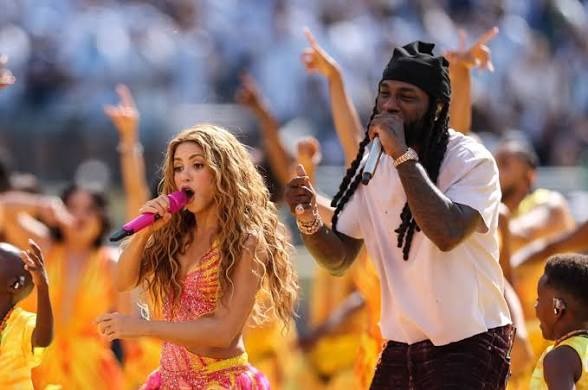
Dai Dai served as the official anthem of the 2026 FIFA World Cup, with Shakira and Burna Boy delivering its debut performance during the tournament’s opening ceremony at the Estadio Azteca in Mexico City on June 11, 2026.

The pair reunited for another performance during the inaugural FIFA World Cup final halftime show at the MetLife Stadium in New Jersey on July 19, joined by Uganda’s renowned Ghetto Kids dance troupe in a colourful performance watched by millions across the globe.

The collaboration marked another successful World Cup project for Shakira, whose Waka Waka (This Time for Africa) became one of football’s most iconic tournament songs after the 2010 FIFA World Cup. For Burna Boy, the collaboration further cemented Afrobeats’ growing influence on the global stage, with Dai Dai emerging as one of the standout musical successes of the 2026 tournament.

Sun

How President Tinubu is redrawing the South-east political map

0


By Tunde Rahman

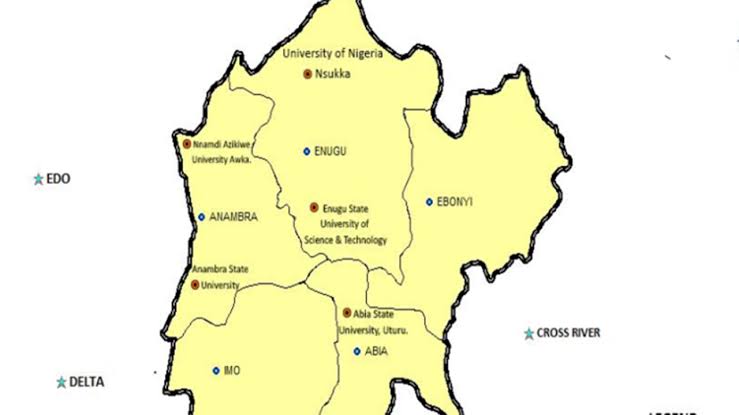
When the 2023 presidential election results were announced, many analysts and commentators gave a largely unanimous verdict regarding the voting pattern in the South-east. The region had voted almost entirely along the ethnic line. The figures told part of the story: Mr Peter Obi of the Labour Party swept the zone with over 1.8 million votes. In comparison, Asiwaju Bola Tinubu of the All Progressives Congress recorded just about 127,000 votes across the five South-east states.

Three years into the President Tinubu administration, that electoral map is already being redrawn – not by rhetoric, but by landmark projects, appointments in strategic positions and deliberate political engagement. The South-east has historically complained of federal neglect, specifically in relation to federal presence. President Tinubu has moved to close that gap with visible infrastructure projects.

The federal projects, completed or ongoing in the zone, are now too numerous and one could easily lose count. They include the renewed federal push on the Enugu-Onitsha Expressway, Calabar-Ebonyi-Benue Trans-Saharan Superhighway, Enugu-Port Harcourt Road, and the Second Niger Bridge access roads.

For a region whose economy runs on trade, fixing these arteries will directly impact businesses in Onitsha, Aba, Nnewi, and other commercial hubs in the region. I saw some of these iconic roads and the high quality of work being done during a recent National Media inspection tour of the federal and state government projects in the South-east organised by the Renewed Hope Ambassadors in collaboration with the Presidential Media Team.

President Tinubu has also committed to the Eastern Rail Corridor from Port Harcourt to Maiduguri, under which the South-east segment is prioritised. This revives a transport mode that collapsed decades ago. The import becomes even more significant when some facts are considered. Some of the projects now being brought to life under President Tinubu, according to the Minister of Works, Engineer Dave Umahi, were conceived during the colonial era but left unrealised for decades.

Such renaissance is not limited to road infrastructure. On energy, the inclusion of South-east states in the Siemens Power project and renewed attention to gas infrastructure to power industrial clusters in Aba and Nnewi is important. During the inspection tour, we visited the ANOH gas project (Assa North-Ohaji South Gas project), one of Nigeria’s largest natural gas development projects and a cornerstone of the Federal Government’s decade-long gas initiative. The processing plant, operated by ANOH Gas Company as a 50-50 joint venture between Seplat Energy Plc and Nigerian Gas Infrastructure Company, a subsidiary of NNPC Limited, was inaugurated by President Tinubu on May 15, 2024. It is already supplying processed gas to offtakers like Indorama Petrochemical Company.

The road and rail projects that crisscross the South-east landscape are not campaign promises. They are budget lines with contractors on site.

In politics, delivery takes slogans for lunch. Inclusion in government and important appointments for South-easterners also matter. The 2023 figures showed APC’s vote deficit. However, the 2023-2026 appointments show a deliberate effort to correct the representation deficit.

Key South-Easterners now hold strategic positions in foreign affairs, defence, works, science & tech, and security agencies. The Minister of Foreign Affairs, Mrs Bianca Odumegwu-Ojukwu, from Anambra State (although Enugu-born), for instance, is today the biggest female political appointee in the Federal Executive Council.

Beyond the titles, the message is clear: the South-East is being brought to the centre of decision-making, not kept at the margins. This has started shifting the conversation from “exclusion” to “what more can we get done together.”

The President’s economic reforms, such as unification of foreign exchange rates, removal of fuel subsidy, and recalibration of tax, may be tough. Still, the South-East is positioned to benefit most from the pivot to production and exports.

Aba’s Made-in-Nigeria campaign, Onitsha’s trading network, and Nnewi’s manufacturing base are being linked directly to federal grants, CBN intervention funds, and export support. And with the recent formal handover of the Akanu Ibiam International Airport, Enugu, to the concessionaire, the region’s logistics and commercial hub dream has received a massive boost.
The Tinubu administration is treating the South-east not just as a voting bloc, but as Nigeria’s industrial engine.

In terms of political realignment, the numbers are also moving up. Elections are about addition. In 2023, APC polled 127,370 votes in the South-east. The goal of the Tinubu administration for 2027 is not to win every state on day one, but to grow that base state by state, LGA by LGA.

That growth is already visible: from not a single state in 2019, two states in 2023, APC has now moved to three. The other two states in the zone are not opposed to President Tinubu. Anambra State Governor Chukwuma Soludo of the All Progressives Grand Alliance and his Abia State counterpart, Governor Alex Otti of the Labour Party, are strong supporters of President Tinubu, his reforms and reelection plans.
All the governors, not only South-East governors, acknowledge and say President Tinubu’s reforms have freed resources to the subnationals, which have, in turn, enabled them to engage in infrastructure projects.

Governor Hope Uzodimma, who is also the Chairman of the Progressive Governors, has remained vocal in his support for the President and loud campaign for his second term. Uzodimma is the Director-General of the Renewed Hope Ambassadors, the main campaign group for Tinubu’s reelection.

Speaking at a state dinner for the National Media Team comprising over 50 journalists, editors and members of the Presidential Communications Team in Owerri, Imo State capital, two weeks ago, Uzodimma described President Tinubu as the Lee Kuan Yew of Nigeria.
“In President Tinubu, I have seen another Lee Kuan Yew,” he said, praising the President’s bold economic reforms and expressing confidence that his performance would secure him a second term in 2027. “The old order is gone and there is now a new order. President Tinubu knew exactly what he came to do. He started implementing the reforms immediately because he understood the task before him,” he said.

Importantly, governors and stakeholders in the South-east zone are now in regular dialogue with the Presidency. Federal projects are being inaugurated with bipartisan presence. Youth and business groups who sat out in 2023 are now engaging with APC structures because they see tangible projects in their communities.

Politics in the South-East has always been pragmatic. Where federal presence is felt, political alignment follows. The 2023 electoral map showed where President Tinubu and APC were. Now, President Tinubu’s governance story in the South-East is showing where things are headed.

By linking infrastructure delivery with political inclusion and economic empowerment, the administration is redrawing the South-East political map from one defined only by election-day figures, to one defined by roads constructed, factories powered, and people included in governance.

The South-East deserves to be at the centre of Nigeria’s growth story. Under President Tinubu, I dare say that repositioning has begun.

*Rahman is Senior Special Assistant to the President on Media & Special Duties.

Kafayat Oyetola mobilises 10,000 canvassers for APC guber candidate AMBO in Osun

0


Kafayat Oyetola mobilises 10,000 canvassers for APC guber candidate AMBO in Osun
The wife of the Minister of Marine and Blue Economy, Mrs Kafayat Oyetola, has mobilised a local canvassers’ group, Akobi Obinrin, with a target strength of 10,000 women to support the APC governorship candidate, Bola Munirudeen Oyebamiji (AMBO), ahead of the August 15 election in Osun State.

The canvassers, led by Mrs Oyetola, the wives of AMBO and his deputy, Alhaja Sekinat Oyebamiji and Princess Adebukola Adereti, Chairperson of the Federal Character Commission, Hon. Ayo Omidiran, House of Representatives candidate, Hon. Taiwo Oluga, among others, converged at Nelson Mandela Freedom Park, Osogbo, on Saturday.

They marched 4.5 kilometres, moving through MDS, Station Road, Fagbewesa, Ola-Iya and Aregbe, before ending at the Tinubu/Shettima campaign office in Ogo-Oluwa, Osogbo. The walk was joined by AMBO, his deputy, Kayode Adereti, Engr Olalekan Badmus, former commissioner Adebayo Adeleke, and other supporters.

Mrs Oyetola explained that Akobi Obinrin was originally created for President Bola Tinubu’s re-election effort, but that the solidarity walk was organised to mobilise grassroots support for AMBO.

She said the group has 62 local government coordinators and assistant coordinators across 3,763 polling units, women opinion leaders at the grassroots, and a total of 10,000 canvassers working for AMBO.

According to her, the canvassers will focus on voter education, particularly on how to vote for the APC without voiding or wasting votes.

Alhaja Sekinat said the initiative would encourage women to vote for AMBO in 2026 while carrying the same momentum into Tinubu’s 2027 re-election campaign.

AMBO praised the women and described the solidarity march as “Walk to win.” He urged women to come out en masse to vote, arguing that it would restore what he described as the state’s “lost glory”, especially in sectors he said have decayed under the current administration.

Sun

First lady thanks Sultan for guidance, says RHI has touched millions

0


First lady thanks Sultan for guidance, says RHI has touched millions
First Lady of Nigeria, Oluremi Tinubu, on Saturday visited the Sultan of Sokoto, His Eminence Muhammadu Sa’ad Abubakar, to thank him for his sustained counsel and support for the administration of President Bola Tinubu.

In a statement issued by her media aide, Busola Kukoyi, Mrs Tinubu, speaking at the palace, described the long-standing relationship between their families and praised the Sultan for “always pointing the administration in the right direction.” She said the visit was primarily “to thank the Sultan,” noting his continued guidance since the current administration’s inception.

In his remarks, the Sultan stressed the need for spiritual intervention in the nation’s fight against criminality and moral decay. “As leaders, there is a need to keep seeking divine intervention, especially for those groups of people who have been perpetrating evil in the land,” he said, adding, “My prayer is that those people would come to true repentance and live appropriately.”

The Sultan also commended the First Lady’s Renewed Hope Initiative (RHI), saying its programmes “have touched the lives of millions of Nigerians.”

Sokoto State Governor Ahmad Aliyu Sokoto, who joined the visit, echoed the Sultan’s praise. He thanked Senator Oluremi Tinubu for her trip to the palace and described the RHI interventions as “people-centred, aimed at improving the lives of women, youth, children, and families in general.”

At the close of the meeting, the Sultan asked the Ulama to lead prayers for the nation, the President, the First Lady, the state governor, himself, and Sokoto State as a whole.

Sun

Diri, Matawalle, Irabor, Dickson confirm attendance for First Daily national security dialogue

0

Preparations have been concluded for the maiden edition of the First Daily National Dialogue on Security, with several prominent political leaders, military chiefs, security experts and public affairs analysts confirming their participation in the event.

The dialogue is scheduled to hold on Tuesday, July 28, 2026, by 10:00am at the Shehu Musa Yar’Adua Centre in Abuja.

Bayelsa State Governor, Senator Douye Diri, will serve as the Special Guest of Honour and present a paper titled, “Governors as Chief Security Officers in Nigeria: The Bayelsa Example.”

The event will be co-chaired by former Chief of Defence Staff and Chief of Army Staff, General Martin Luther Agwai (Rtd.), alongside Senator Henry Seriake Dickson.

Also expected at the dialogue are the Minister of State for Defence, Dr. Bello Matawalle, while the keynote address will be delivered by former Chief of Defense Staff, General Lucky Irabor (Rtd).

Speaking ahead of the event, Publisher of First Daily, Dr. Daniel Iworiso-Markson, described the dialogue as a timely intervention aimed at addressing Nigeria’s persistent security challenges.
According to him, “The security of our nation cannot be left to the government alone. It requires the collective wisdom, commitment and collaboration of political leaders, security institutions, traditional rulers, civil society, the private sector and citizens.

First Daily believes that the time has come for meaningful engagement that transcends political divides and places the security, unity and wellbeing of Nigerians above every other consideration. This dialogue is intended to provide that platform.”
Iworiso-Markson said invitations had been extended to top government officials, including the Minister of Defence, Minister of State for Defence, Minister of Interior, National Security Adviser, Inspector-General of Police, Director-General of the Department of State Services, Chief of Defence Staff and other service chiefs.

He added that leading political figures across party lines, including Atiku Abubakar, Peter Obi, Rabiu Musa Kwankwaso, Rotimi Amaechi and other national leaders, had also been invited to participate.

According to him, representatives of major socio-cultural organisations such as Ohanaeze Ndigbo, Afenifere, the Arewa Consultative Forum, PANDEF and the Ijaw National Congress have equally been invited to contribute to discussions.

The publisher said the dialogue would bring together policymakers, security professionals, diplomats, traditional rulers, civil society groups, academics, youth representatives and media practitioners to examine the root causes of insecurity and recommend practical solutions to strengthen Nigeria’s security architecture.

He expressed confidence that recommendations from the dialogue would support ongoing efforts to promote peace, national stability and sustainable development, adding that all logistics and security arrangements had been concluded for a successful event.

Sun

Ex-DSS director: Pantami’s ministerial appointment exposed flaws in Nigeria’s security vetting process

0


Dennis Amachree, a retired assistant director of the Department of State Services (DSS), says the appointment of Isa Pantami as minister of communications and digital economy by former President Mohammadu Buhari raised national security concerns and exposed weaknesses in Nigeria’s security vetting process.

Amachree made the assertion in ‘DSS @40: My Journey Behind the Shield’, a memoir chronicling his four decades in Nigeria’s intelligence service.

thecable

IG didn’t issue ‘shoot-on-sight’ order in Makurdi – Police

0


The Nigeria Police Force has stated that the Inspector-General of Police, IGP Olatunji Disu, did not issue a “shoot-on-sight” order during a recent engagement in Makurdi, Benue State.

The clarification was made in a Saturday statement signed by Force Public Relations Officer (FPRO), CSP Ani Iniedu.

At a stakeholders’ meeting in Makurdi, the IGP was reported to have directed police officers across the country to shoot on sight anyone found carrying illegal firearms, as part of intensified efforts to curb insecurity.

But in Saturday’s statement, the force spokesman maintained that the IGP did not issue any “shoot-on-sight” order as widely misreported.

A video of the IGP’s remark at the event posted on Facebook also did not show the police boss giving such order.

Iniedu said, “The Nigeria Police Force has noticed a misleading report claiming that the Inspector-General of Police, IGP Olatunji Rilwan Disu, psc (+), NPM, ordered police officers to “shoot anyone with illegal firearms.” This claim is false and does not reflect what the Inspector-General said.

“During the stakeholders’ meeting held in Makurdi, Benue State, the Inspector-General did not give any “shoot-on-sight” order. His comments have been taken out of context and wrongly presented to the public.

“In his address, the IGP reminded officers that only security personnel who are legally authorised are allowed to carry firearms. He also spoke about the growing problem of illegal weapons, which are often used by criminals to carry out kidnapping, armed robbery, banditry, cult violence, and other serious crimes.

“The Inspector-General further reminded police officers that the use of firearms is guided by Force Order 237, which clearly states when an officer may lawfully use a firearm while carrying out official duties. He stressed that officers must always act within the law and follow the approved rules for the use of force. At no time did he instruct officers to shoot anyone simply because they were found with an illegal firearm.”

Sun