Home Blog Page 269

MAN AGM: Ogun Manufacturers Seek Tax Harmonisation, Better Infrastructure as FG Unveils Fiscal Reforms

0
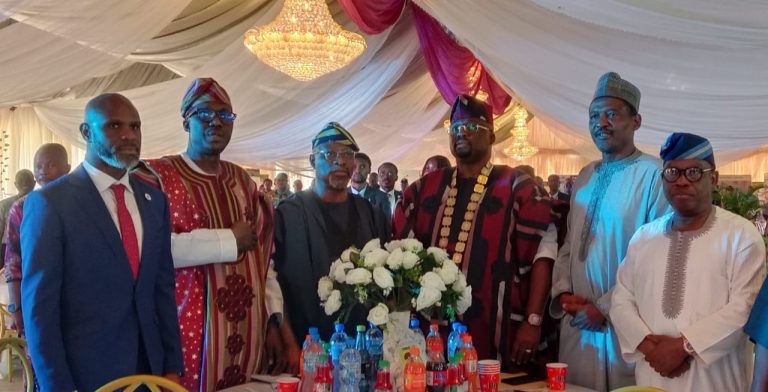
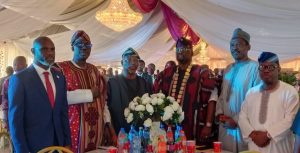
L-R DG MAN, Mr. Segun Ajayi- Kadir, Commissioner for industry Trade Adebola Sofela representing Governor Dapo Abiodun, Director, Technical services, Mr. Basheer Abdulkadir, MD Coleman Technical Industries limited, Mr. George Onafowokan, MD Harvestfield industries, Mr. Matins Awofisayo and Rite foods MD, Mr. Salim Adegunwa at the 41st MAN AGM held in Abeokuta Ogun State on Thursday

*Ogun Govt. Promises Action on Taxes, Levies, Regulation


The Manufacturers Association of Nigeria (MAN), Ogun State Branch, has called for urgent reforms in taxation, regulation, infrastructure and energy supply to ease the operating environment for manufacturers and strengthen the state’s position as Nigeria’s leading industrial hub.

The call was made on Thursday, July 30, 2026, at the 41st Annual General Meeting (AGM) of MAN Ogun State Branch, held at the Olusegun Obasanjo Presidential Library (OOPL), Abeokuta, Ogun State.

The AGM, themed “Building a Resilient Manufacturing Sector: Surmounting the Challenges of Fiscal and Regulatory Policies and Tariffs,” brought together government officials, industry leaders, manufacturers, development partners and other stakeholders to deliberate on the challenges confronting the sector.

In his welcome address, the outgoing Chairman of MAN Ogun State Branch, Mr. George Onafowokan, said manufacturers had endured a difficult operating environment characterised by exchange rate volatility, high inflation, rising energy costs, high interest rates, multiple taxation and increasing regulatory pressures.

Onafowokan said the challenges had resulted in declining consumer purchasing power, reduced demand, shrinking profit margins and deferred investments in plant expansion and technology.
He noted that unreliable electricity supply and rising tariffs had forced many manufacturers to depend heavily on self-generated power, substantially increasing production costs and reducing the competitiveness of Nigerian products.

According to him, access to foreign exchange also remained a major concern, as manufacturers continued to experience difficulties obtaining forex to import raw materials, machinery and other essential industrial inputs.

The outgoing chairman, however, commended the Ogun State Government for its investments in infrastructure, security and initiatives aimed at improving the ease of doing business, saying the efforts had helped sustain the state’s position as a preferred destination for industrial investments.

He nevertheless identified multiple regulatory demands, rising logistics costs, infrastructure deficiencies and numerous statutory and non-statutory charges as persistent challenges facing manufacturers in the State.

Onafowokan particularly called for stronger coordination among government agencies to eliminate overlapping responsibilities, reduce compliance costs and create a more predictable business environment.
He appealed to Governor Dapo Abiodun to direct ministries, departments and agencies, as well as the Ogun State House of Assembly, to institutionalise consultations with MAN and other private-sector organisations before introducing policies, taxes, levies, regulations or legislation affecting businesses.

He also urged the state government to revive the quarterly interactive forum between MAN and relevant government ministries, departments, agencies and parastatals, describing the platform as an effective mechanism for resolving operational challenges and improving communication between government and industry.

Onafowokan further raised concerns over demand notices issued by the Ministry of Environment, Ogun State Waste Management Authority (OGWAMA) and Ogun State Environmental Protection Agency (OGEPA) over water extraction fees, recycling licence fees, air pollution compliance monitoring devices and other charges whose legal basis and application, he said, remained unclear to many businesses.

He said threats of closure or actual shutdowns of manufacturing facilities over alleged non-compliance disrupted production, endangered jobs and weakened investor confidence.
The MAN chairman called for greater coordination among the relevant agencies, stressing that regulation should promote environmental sustainability while also encouraging investment and protecting existing industries.

Despite the challenges, Onafowokan said manufacturers had demonstrated resilience through increased local sourcing, technology adoption, backward integration, alternative energy investments and production optimisation.

He stressed, however, that resilience alone could not sustain industrial growth without deliberate policy support, affordable long-term financing, reliable energy, improved infrastructure, efficient transportation networks, access to foreign exchange and a business-friendly regulatory environment.

Also speaking, the President of MAN, Otunba Francis Meshioye, said manufacturers had been significantly affected by government reforms introduced over the past three years.

While acknowledging that the reforms were aimed at restoring economic stability, Meshioye said they had also escalated production costs and created significant headwinds for businesses across sectors.
He said resilience in manufacturing should mean the ability to absorb economic shocks, adapt to policy changes, remain cost-competitive and continue investing, producing and creating jobs.

According to him, the current challenges had contributed to lower capacity utilisation, deferred investments and pressure on employment and profit margins.

Meshioye identified three major requirements for strengthening the sector: predictable fiscal policies, smart regulation and a competitive operating environment.
He said taxes, levies and tariffs must be predictable and supportive of competitiveness, while government regulations should enable businesses rather than serve primarily as instruments of revenue extraction.

He also called for affordable and reliable energy, better infrastructure and logistics, access to single-digit interest loans and protection against unfair imports.


Responding to the concerns raised by MAN, the Ogun State Governor, Prince Dapo Abiodun, represented by the Commissioner for Industry, Trade and Investment, Adebola Sofela, said the administration’s industrial achievements were the result of deliberate policies and strategic partnership with the private sector.

Sofela said government recognised that the private sector remained central to economic development and that sustainable industrial growth required a strong partnership between government and organised private-sector stakeholders.

He said the state had pursued an agenda focused on infrastructure, youth development, agriculture and food security, youth empowerment and the creation of an enabling environment capable of attracting new investments and supporting existing businesses.

According to him, the government established the Business and Energy Environment Council to coordinate inter-agency activities, address bureaucratic bottlenecks and improve the business environment.

Responding specifically to complaints about multiple taxes and levies, Sofela acknowledged that the government was aware of the challenges and was working to address them.
He said the administration understood the implications of multiple taxes, levies and unpredictable policies, noting that he also had experience in the organised private sector.

He promised that the harmonisation of taxes and levies at the sub-national level would be addressed before the end of the administration.
Sofela explained that some of the difficulties were linked to Nigeria’s fiscal federalism, under which local governments exercise constitutionally recognised responsibilities.

He said the state government was continuously engaging local governments to ensure that their activities did not create unnecessary burdens for businesses.
“There cannot be multiple taxes,” he said, stressing that government would examine situations where similar charges were given different descriptions but ultimately imposed the same financial burden on businesses.

He disclosed that a committee would be established to address the issue of sub-national taxes and levies.
On environmental regulation, Sofela said the concerns raised by manufacturers were valid, particularly regarding fees, enforcement and adequate notice before compliance actions were taken.
He, however, stressed that businesses also had responsibilities to comply with environmental standards and ensure proper waste disposal.

According to him, regulation was not intended to constrain businesses but to ensure that companies operated in accordance with best practices.
He said the state government would review the concerns raised by MAN regarding environmental charges and enforcement, while also improving inter-agency coordination.

Finance Ministry Highlights Fiscal Incentives

Delivering the keynote address, the Director of Technical Services, Federal Ministry of Finance, Basheer Abdulkadir, said the Federal Government recognised manufacturing as central to the economic transformation agenda.

Abdulkadir, who represented the Minister of Finance and Coordinating Minister of the Economy, commended MAN for its longstanding partnership with government and its role as the collective voice of manufacturers.

He said the manufacturing sector remained resilient despite exchange rate fluctuations, rising production costs, infrastructure constraints, supply chain disruptions, tariff adjustments, fiscal reforms and global economic pressures.

According to him, manufacturing accounted for about eight per cent of Nigeria’s real GDP and recorded a real growth rate of 3.29 per cent in the first quarter of 2026.
He said government had introduced several fiscal, trade and business facilitation measures to improve the investment environment and strengthen industrial competitiveness.

Among the measures, Abdulkadir listed the Import Duty Exemption Certificate (IDEC), which provides zero per cent import duty on eligible machinery, equipment and industrial spare parts used for establishing or expanding factories.

He also highlighted the National List under Chapter 99 of the Common External Tariff, which provides concessionary duties or waivers on critical raw materials and industrial inputs that are not sufficiently available locally.

He said the government was also implementing the Nigeria Tax Act, 2025, aimed at simplifying the tax system, reducing multiple taxation, improving tax administration, lowering compliance costs and providing greater certainty for businesses.

Another major reform, he said, was the National Single Window Project, which is designed to digitally integrate Customs, ports, regulatory agencies and border institutions to reduce cargo clearance times, eliminate duplication and lower trade transaction costs.

FG Defends Tariff Protection for Local Manufacturers

Abdulkadir also explained that the government was balancing trade openness with measures aimed at protecting strategic domestic industries.
He identified the Import Adjustment Tax (IAT) as one of the mechanisms used to provide temporary protection to strategic sectors, noting that about 192 tariff lines covering industries such as iron and steel, pharmaceuticals, food and beverages, cement, packaging, textiles, lubricants, motor vehicles and power-generating equipment benefit from the measure.
He also highlighted the three per cent exclusion list under AfCFTA, explaining that the measure was designed to protect products considered critical to Nigeria’s economic interests.

According to him, Nigeria is working with MAN to harmonise its AfCFTA exclusion list with the ECOWAS Import Adjustment Tax list.
He said government also maintained an Import Prohibition List covering selected products where sufficient domestic production capacity exists, while a Green Tax Surcharge had been introduced for certain imported vehicles to encourage cleaner transportation and support local vehicle assembly.

FG Urges Manufacturers to Prepare for AfCFTA

Abdulkadir urged Nigerian manufacturers to take advantage of the African Continental Free Trade Area rather than rely solely on protection from imports.
He said AfCFTA had moved beyond the negotiation stage into implementation and would provide Nigerian businesses access to a continental market of more than 1.4 billion people.

He advised manufacturers to understand Rules of Origin, tariff schedules, customs documentation, product standards, quality certification and logistics requirements.
He warned that competition would intensify as African markets became more integrated, stressing that long-term success would depend on quality, competitive pricing, innovation and reliable delivery.

The Finance Ministry official also encouraged manufacturers to strengthen local value chains, diversify suppliers, invest in technology, develop their workforce and institutionalise risk-management systems.
He said greater patronage of Made-in-Nigeria products would help strengthen domestic industries, create jobs, conserve foreign exchange and deepen local value chains.

While acknowledging progress recorded through engagement with the Ogun State Government, MAN President Meshioye said more needed to be done.
He disclosed that the association had secured a 10 per cent concession on reviewed safety audit fees, facilitated consultations on borehole metering and water abstraction charges, and obtained interventions on environmental impact assessment compliance and telecom mast registration fees.

However, he said manufacturers still faced multiple taxation, regulatory duplication, high compliance costs, environmental levies and poor industrial road infrastructure, particularly in Agbara, Ota and other industrial corridors.

He called for the institutionalisation of a quarterly MAN-government dialogue, law-based regulation, harmonisation of federal and state regulatory requirements, non-adversarial enforcement and urgent rehabilitation of industrial roads in Agbara, Ota, Sagamu and other industrial areas.
He also urged the state government to further review safety audit fees and adopt a more investment-friendly approach to water abstraction and environmental charges.

At the national level, Meshioye said MAN would continue engaging the Presidency, National Assembly and other institutions on policies affecting manufacturers.
He commended the Nigeria Industrial Policy 2025, which he said MAN helped shape, and urged government to prioritise access to finance, lower input costs, enforcement of local content requirements and resolution of energy challenges.

He also raised concerns over proposed increases in pension contributions, arguing that government should conduct an impact assessment and engage stakeholders before increasing the cost of employment.
On the 2025 tax laws, he said there were conflicting interpretations regarding whether the new laws would apply retroactively to 2025 profits.
He said MAN opposed retroactive application and called for urgent harmonisation to protect legal certainty and ease compliance.

Meshioye also urged the Central Bank of Nigeria to clear outstanding foreign exchange forward obligations owed to manufacturers, saying doing so would restore confidence in Nigeria’s commitment to contractual obligations.
MAN Announces 54th National AGM
2026 budget: Atiku tackles Tinubu over N15.13bn vote for SUVs

0


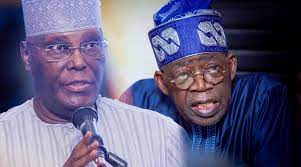
Former vice president, Atiku Abubakar, has lambasted President Bola Tinubu for allocating N15.13 billion for the purchase of 39 Sport Utility Vehicles (SUVs) in the 2026 Appropriation Act.

Atiku said the analysis by Tracka revealing that the government had appropriated N15.13 billion for 39 SUVs, which translates to N387 million per vehicle, raised serious questions.

The former vice president, in a statement by his Senior Special Assistant on Public Communication, Phrank Shaibu, said the issue raised a more fundamental question about leadership and accountability.

“Tracka’s analysis shows that N15.13 billion was budgeted for the procurement of 39 SUVs. That translates to an astonishing N387 million per vehicle.

“If those vehicles have already been procured, the government should immediately publish the make, model, year of manufacture, supplier, contract details and the Vehicle Identification Number (VIN), popularly known as the chassis number of each of the 39 vehicles. If the procurement is still ongoing, Nigerians deserve to know why, nearly eight months into the fiscal year, such an expensive purchase has not been concluded,” he stated.

Atiku, presidential candidate of the African Democratic Congress (ADC), noted that at N387 million per SUV, “Nigerians are entitled to ask whether the government purchased Rolls-Royce Cullinans, Bentley Bentaygas, Lamborghini Urus, Ferrari Purosangues, Mercedes-Maybach GLS 600s, Aston Martin DBXs, Range Rover SUVs, Brabus G-Class SUVs, Cadillac Escalade Vs or Lexus LX 700hs.

“If none of these ultra-luxury vehicles was purchased, then what exactly justifies such an extraordinary price tag?

“What manner of a president signs a budget with figures like these into law without demanding rigorous scrutiny?

“Was the President asleep at the wheel while the budget was being prepared or did he knowingly approve allocations that now require public explanation? Either possibility should worry every Nigerian.

“A president cannot proudly sign a budget into law and then pretend to have no responsibility when glaring questions arise. The buck stops on his desk.”

He added that the same Tracka analysis identified N947.70 billion for 2,579 empowerment projects, noting that Nigerians equally deserve to know where those projects were located, who the beneficiaries were, how contractors were selected, and how implementation would be monitored.

“This is a government that has consistently preached sacrifice to Nigerians, removing fuel subsidy, increasing electricity tariffs, imposing higher taxes and asking citizens to endure unprecedented hardship. It cannot, in the same breath, expect Nigerians to remain silent over expenditures that raise legitimate questions about value for money.

“The easiest way to silence suspicion is transparency. Publish the procurement documents. Publish the invoices. Publish the suppliers. Publish the chassis numbers. If the figures are genuine, the documents will speak for themselves.

“If they are not, Nigerians deserve to know who turned the procurement of 39 SUVs into a N15.13 billion scandal. Public money belongs to the Nigerian people. Every kobo must be accounted for.”

Sun

Insurers face licence loss as NAICOM recapitalisation deadline expires today

0

…Regulator rules out extension, mum on recapitalised firms

Nigerian insurers that have failed to meet the new recapitalisation requirements face possible licence loss as the July 31, 2026 deadline set by the National Insurance Commission (NAICOM) expires today.

The Commissioner for Insurance/Chief Executive Officer of the Commission, Mr. Olusegun Omosehin, has ruled out any further extension of the deadline, leaving operators that have not met the prescribed minimum capital requirements with limited options.

To further clarify the rationale behind the exercise, the NAICOM chief said the new minimum capital requirement is aimed at enhancing insurers’ claims-paying capacity, strengthening their balance sheets, increasing domestic risk retention and preparing the industry for the transition to a risk-based capital regime.

Under the Nigerian Insurance Industry Reform Act (NIIRA) 2025, life insurers are required to have at least N10 billion, non-life insurers N15 billion, composite insurers N25 billion, while reinsurers must maintain N35 billion.

NAICOM has warned that companies unable to meet the requirements could face regulatory action, including liquidation, merger or other resolution measures deemed appropriate by the commission. Despite concerns overnight the number of operators that may still be below the threshold, NAICOM has yet to publicly disclose the latest number of companies that have successfully completed the recapitalisation process.

This is fuelling uncertainty across the industry as the deadline takes effect.

However, there are growing calls from industry operators for NAICOM to grant an extension as they argue that many insurance firms are struggling to raise the funds needed to meet the new capital requirements.

According to stakeholders, raising funds at the capital market has been very challenging for the insurers because their recapitalisation happened after the banks did theirs and have ‘mopped up funds’.

Nonetheless, Daily Sun learned eight insurance companies have approached the capital market to raise fresh funds, while several others are negotiating mergers and acquisitions to avoid losing their operating licences.

Industry estimates show insurers need over N1 trillion in fresh capital to comply with the new rules.

The recapitalisation exercise comes amid high interest rates, foreign exchange volatility and tight liquidity, making it difficult for many firms to attract investors.

Many operators, it was further gathered, are looking outside Nigeria to cement partnerships that will bail them out.

Experts who confided in Daily Sun noted that merger talks are still on the table across boardrooms with a view to meeting the deadline and ultimately avoiding losing their operational licenses.

“We commend operators that have made significant progress in raising capital, engaging investors, strengthening governance and submitting for the Commission’s verification process.

“However, the deadline is not symbolic; it is regulatory and the industry must treat it with the urgency it deserves,” he said.

Emphasising accountability, the Commissioner assured stakeholders that the Commission would conduct the exercise in a transparent, fair and firm manner, stressing that every operator must demonstrate financial soundness, regulatory compliance and operational readiness to move the industry forward”, the NAICOM chief said recently.

Sun

INEC rejects military deployments for elections

0


• Says constitution makes police lead agency in poll security

The Independent National Electoral Commission (INEC) has reiterated that the deployment of the Armed Forces during elections should remain an exceptional measure, stressing that the Nigeria Police Force is there constitutionally designated lead agency for election security under the Inter-Agency Consultative Committee on Election Security (ICCES).

INEC Chairman, Prof. Joash Amupitan, stated this while delivering a keynote address at a seminar organised by the Army War College Nigeria in Abuja. The seminar focused on election security, civil-military relations and the legal framework guiding the conduct of democratic elections in Nigeria.

Represented by the Commission’s Director of Legal Services, Al-Hassan Umar, Amupitan commended the Armed Forces for their patriotism and commitment to protecting Nigeria’s territorial integrity, but maintained that their role during elections should be supportive, protective and strictly within constitutional limits.

“As both a teacher and practitioner of law, permit me to begin by reaffirming the constitutional framework governing election security in Nigeria,” he said.

“The Constitution of the Federal Republic of Nigeria clearly delineates the responsibilities of institutions involved in the electoral process. INEC is constitutionally mandated to organise, undertake and supervise elections, while the Nigeria Police Force remains the lead agency for election security under the framework of the Inter-Agency Consultative Committee on Election Security.”

According to him, military involvement in election security is not intended to be routine but is only justified where prevailing security conditions require military assistance to civil authorities.

“The role of the Armed Forces is exceptional rather than routine. Their deployment arises only where prevailing security conditions require military support in aid of the civil authorities and strictly in accordance with the Constitution and other applicable laws.

“Accordingly, the Armed Forces perform a supportive rather than supervisory role, protective rather than political, and one firmly anchored in constitutional responsibility.”

Amupitan reaffirmed INEC’s commitment to conducting elections that are transparent, inclusive, technologically driven, professionally administered and fully compliant with the Constitution and the Electoral Act.

He said the Commission would continue to prioritise inclusivity by making adequate provisions for persons with disabilities, the elderly, pregnant women and other vulnerable groups.

“In this regard, we look forward to the continued support of the Armed Forces and other security agencies in ensuring that election-day security is discharged with professionalism, restraint and respect for the dignity and fundamental rights of every citizen.

“Security personnel must inspire confidence, protect voters, safeguard election officials and preserve the integrity of the electoral process.

“Our shared objective is not merely the conduct of peaceful elections, but elections in which every Nigerian can freely exercise the constitutional right to vote without fear, intimidation or unlawful interference.”

Also speaking, the Chief of Defence Staff (CDS), General Olufemi Oluyede, charged members of the Armed Forces to maintain strict neutrality, professionalism and adherence to international human rights standards in the discharge of election-related duties.

Represented by Rear Admiral Abolade Ogunleye, the CDS said the success of Operation SAFE CONDUCT 2027 would not only be measured by the absence of violence or disruption but also by respect for the rule of law and human rights.

The seminar, titled “The Role of the Armed Forces of Nigeria in Conducting Free, Fair and Credible Elections: Nigeria’s 2027 General Elections in Perspective,” was attended by field commanders and staff officers from the Armed Forces, the Nigeria Police Force, other security agencies and INEC.

Oluyede noted that previous elections had tested the Armed Forces’ operational readiness, inter-agency coordination and civil-military relations through the activities of unscrupulous elements, but said the military had consistently demonstrated professionalism and commitment to protecting Nigeria’s democracy.

“As we approach the electioneering period, with increasing political activities across the country, it is imperative that Armed Forces personnel are constantly reminded of their roles to ensure the maintenance of strict neutrality, professionalism and adherence to international human rights provisions,” he said.

He added that the seminar was designed to equip commanders and staff officers with the knowledge required to operate in a rapidly evolving security environment while remaining faithful to the Armed Forces’ constitutional mandate.

“The Armed Forces of Nigeria, as provided in the 1999 Constitution, has a clear mandate to suppress insurrection and provide aid to civil authorities when called upon. We have consistently acted within the confines of this constitutional provision, demonstrating professionalism and operational readiness in all our engagements.”

The CDS commended officers and soldiers for their professionalism during recent off-cycle and by-elections in Ekiti, Kano, Kebbi, Rivers, Nasarawa, Enugu and Ondo states.

“The professional conduct of Armed Forces personnel contributed to the seamless and incident-free elections witnessed in these states.

“I expect that the lessons from these elections will be applied to strengthen inter-agency cooperation, enhance rapid response capabilities and ensure the protection of law-abiding citizens while maintaining political neutrality.”

He described the seminar as timely and critical to reinforcing the Armed Forces’ commitment to impartiality, neutrality and respect for human rights.

“I must state unequivocally that the success of Operation SAFE CONDUCT 2027 will not only be measured by the absence of violence or disruption of the electoral process but also by adherence to basic democratic principles and respect for human rights.

“I therefore urge commanders, staff officers and all participants to leave this seminar equipped with the knowledge and skills required to operate effectively in a rapidly changing and high-threat environment in the interest of national stability.”

Sun

Why Africans must seize AI opportunity for growth –Adeola Eka

0


For Nigerian digital technology strategist, SEO guru and Artificial Intelligence consultant, Adeola Eka aka AI Wonderwoman, seeing millions of young people waiting for opportunity to change their lives, and the world at large, gave birth to her organisation, AI4Africa.

A pan-African initiative, AI4Africa is aimed at equipping individuals, businesses, institutions and communities with practical Artificial Intelligence (AI) skills and tools.

While AI4Africa is dedicated to expedite the continent’s participation in the global digital economy, the initiative is poised to create sustainable pathways for growth, opportunity and prosperity.
A retired specialist exposes the true mechanical plumbing problem in your veins
Check it out
Speaking at a media parley in Lagos during the week, Eka said Artificial Intelligence is one of the greatest opportunities Africa has been given. According to her, Africans must decide whether to grab the opportunity or let it go to waste.

“Throughout history, every industrial revolution has transformed civilization. The steam engine transformed manufacturing. Electricity transformed industry The Internet transformed communication. Today, Artificial Intelligence is transforming everything. This revolution will not wait for Africa. It is already here. And we must decide whether we will simply consume the future or help create it,” Eka said.

Right now, the mission of AI4Africa is to introduce AI education directly into schools across Nigeria and, ultimately, across the continent. This is coming through its ‘100 Kids in 10,000 Schools’ programme.

“I’m proud to say we have already started. Because the best time to prepare children for the future is before the future arrives. If we wait until university before introducing our children to AI, we are already lagging behind.

“Across Africa, countries such as Kenya are making meaningful investments in digital skills and AI readiness. Nigeria has the talent. Nigeria has the population. Nigeria has the creativity. Nigeria should also help set the pace. Let’s make AI education accessible to every child,” she avered.

Eka, however, allayed the fear of people who think AI will take their jobs. She said rather than contribute to job lose, AI will change the workforce completely.
Exploiting young Africans under the guise of education and employment
Africans do not travel within Africa
“We hear people talking about AI taking jobs. The reality is more nuanced. As AI changes the workforce, millions of existing roles will evolve, while millions of new opportunities are expected to emerge. The message is simple. The future belongs to those who prepare for it. That is why we cannot afford to wait.

“That is why AI4Africa exists. Because we don’t want African children to merely use AI. We want them to build AI. We don’t want African youths to search endlessly for opportunities. We want them to create opportunities. We don’t want African businesses to struggle to compete globally.

We want them to scale with AI.

“We don’t want African women left behind. We want them leading innovation. And to everyone over 40 who believes technology has passed them by, I want you to know it is not too late. This movement belongs to you too,” she stressed.

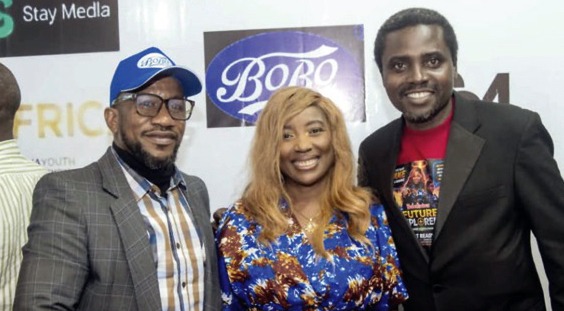
Organised in partnership with Boboliscious, the continent for 120 days will witness Artificial Intelligence in action as careers are repositioned, businesses are transformed, communities are empowered, and AI-powered solutions are built across major social media platforms.

“We are grateful to Boboliscious for believing that investing in children today is investing in Africa tomorrow. This movement is also leading us toward an ambitious milestone. Our planned attempt at a Guinness World Records title is not about chasing fame. It is about sending a message – a message that Africa is ready,” Eka concluded.

Sun

NBMA: Celebrating broadcasting legacy with Ambassador Segun Olusola lecture

0

It was a landmark event that brought together broadcasting legends, media professionals, academics, students and industry stakeholders for a day of reflection, knowledge exchange, mentorship and celebration of Nigeria’s rich broadcasting heritage.

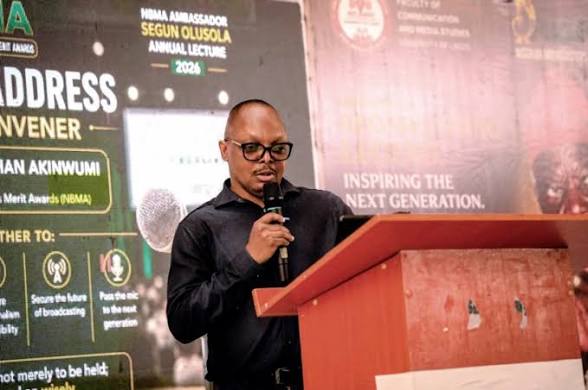
With the theme: ‘Passing the Mic: Bridging Generations, Restoring Professionalism, and Securing the Future of Broadcasting’, the Ambassador Segun Olusola Annual Lecture organised by the Nigerian Broadcasters Merit Awards (NBMA), in collaboration with Faculty of Communication and Media Studies, University of Lagos (UNILAG), successfully held on Tuesday, July 21.

The lecture commenced with a captivating broadcast heritage video showcase, taking participants on a nostalgic journey through the personalities, milestones, and defining moments that have shaped Nigeria’s broadcasting landscape.
In his welcome address, Convener of NBMA, Omogbolahan Akinwumi, reaffirmed the organisation’s commitment to preserving professional values, promoting mentorship and creating platforms that empower the next generation of media practitioners.

“The essence of ‘Passing the Mic’ could not be more timely. At a time when everyone with a smartphone is a ‘media house,’ a ring light is sometimes mistaken for a broadcasting licence and going viral occasionally competes with being credible, this conversation has become more important than ever,” he said.

Delivering his welcome remarks tagged, ‘The State of Broadcasting in Nigeria: Yesterday, Today and Tomorrow’, Dean, Faculty of Communication and Media Studies, University of Lagos, Prof. Sunday Oloruntola, highlighted the evolution of the industry, current realities, and the opportunities ahead for emerging professionals.

The intellectual conversations began with the first keynote session delivered by Victor Ogwezzy, who represented Dr. Tijjani Ramalan, chairman, Independent Broadcasting Association of Nigeria (IBAN).

Speaking on ‘Restoring Professionalism in an Era of Virality and Instant Fame’, he examined the urgent need for credibility, ethics and responsibility in a rapidly changing media environment.

The first panel session titled, ‘Bridging Generations: Experience Meets Innovation’, featured industry voices like Gbemileke Oscar Oyinsan, Moses Humphrey (Mozmotion), Abigail Isaiah Gogo-Ogute, Cordelia Okpei and Wilson Victory.

The engaging discussion explored the changing identity of broadcasters, emerging opportunities, industry challenges, and the importance of collaboration between experienced professionals and young talents. The microphones certainly earned their keeps as ideas and perspectives flowed freely.

The collaboration between NBMA and UNILAG’s Faculty of Communication and Media Studies, underscored a shared commitment to strengthening professional development, mentorship and innovation within Nigeria’s media ecosystem.
The event’s intermission came alive with a spectacular cultural performance by Artxellency Arts Company, showcasing the power of creativity and reminding guests that communication extends beyond spoken words.

A major highlight of the event was the keynote address by veteran broadcaster, Sonny Irabor, who spoke on ‘The Responsibility of Veterans in Nurturing the Next Generation of Broadcasters’. Drawing from decades of experience, he charged industry veterans to actively mentor, guide and support young media professionals.

The second panel session, themed, ‘Professionalism, AI Technology and the Future of Broadcasting’, which featured Cordelia Okpei, MC Icewater and Shine Begho examined the impact of Artificial Intelligence, digital transformation and innovation on the evolving media profession.

Beyond the conversations and knowledge sharing, the event celebrated the best of broadcasting through the presentation of Certificates of Excellence to panelists, including Certificates of Distinguished Leadership to keynote speakers, recognising their contributions to industry growth and capacity development.

The defining moment of the lecture was the symbolic ‘Passing the Mic’ ceremony, where seasoned broadcasters handed over the microphone to students from University of Lagos and Yaba College of Technology, representing the next generation entrusted with carrying forward the broadcasting legacy.

The emotional ceremony was elevated by the introduction and sharing of “Future Broadcaster’s Pledge,” as students committed themselves to upholding professionalism, integrity, ethical storytelling, creativity and responsibility as the next custodians of the broadcasting profession.

The pledge transformed the ceremony from a symbolic handover into a commitment to responsible storytelling, reminding the next generation that receiving the microphone is not only about having a voice, but accepting the responsibility that comes with shaping narratives and informing society.

With engaging delivery, humour and professionalism, the moderator, Zdon Paporella ensured a seamless blend of insightful discussions and memorable moments.

The Ambassador Segun Olusola Annual Lecture was more than a gathering; it was a celebration of where broadcasting has been, a conversation about where it stands today, and a commitment to where it is headed.

As the microphone moved from one generation to another, one message resonated clearly: the mic has been passed and the pledge made, signifying the fact that the future of broadcasting is in capable hands.

Sun

Entertainment Week Africa stages comeback with 5th anniversary show

0

From November 17–22, Entertainment Week Africa (EWA) will stage a comeback to Lagos for its anniversary edition, celebrating five years of building one of Africa’s leading creative economy platforms.

Wit the theme: ‘Five Years of Closing the Gap’, this year’s programme will place a renewed focus on strengthening Africa’s music ecosystem by connecting artistes, producers, songwriters, publishers, labels, distributors and investors through practical opportunities that drive business growth and international market access.

As African music continues its unprecedented global rise, EWA 2026 is evolving beyond conversations to become a marketplace where music professionals can access funding, partnerships, distribution opportunities and cross-border collaborations.
The expanded programme will welcome delegates from 18+ African countries, creating a pan-African platform where talent meets capital, ideas become enterprise and music businesses are positioned for sustainable growth.

Over the past five years, Entertainment Week Africa has grown into a continental institution, welcoming more than 67,800 attendees across its first four editions. The 2025 edition attracted 28,683 pass holders, featured 20 music showcases, and generated over 800 million digital impressions, demonstrating the growing influence of African music and the demand for platforms that connect creators with commercial opportunities. Through the EWA Music Market, Deal Room, Capital Desk and Creative Connect, this year’s edition will provide artistes and music entrepreneurs with direct access to labels, publishers, distributors, investors, brands and global platforms.

Speaking, Deola Art Alade, Convener of Entertainment Week Africa and Group CEO of Livespot360, said: “As we celebrate five years of Entertainment Week Africa, our vision remains clear: to create stronger systems that help African creativity become long-term economic value. Music has become one of Africa’s most influential global exports, and EWA exists to ensure the talent behind that success has greater access to capital, partnerships, knowledge and international markets.”

Darey Art Alade, Co-Founder and Chief Creative Officer of Livespot360, added: “The future of African music extends beyond hit records. It is about building sustainable careers, strengthening the business behind the art and creating opportunities for creators to collaborate across borders. EWA continues to serve as the meeting point where creativity connects with enterprise and global opportunity.”

Meanwhile, registration and speaker submissions for the event are now open at www.ewafrica.com.

Sun

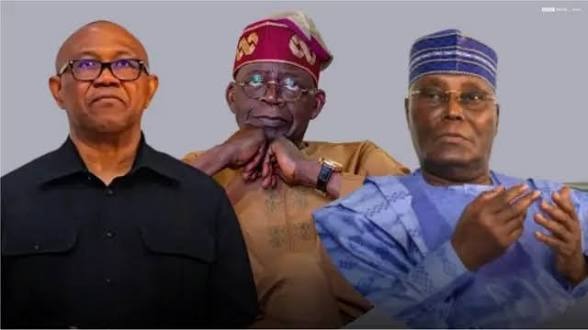
2027: Atiku, Obi push Tinubu’s men to defence

0

Nigeria’s opposition has grown more vocal in recent months. Atiku Abubakar of the African Democratic Congress (ADC) and Peter Obi of the Nigeria Democratic Congress (NDC) have sharpened their criticism of President Bola Ahmed Tinubu’s economic and security record. However, the new vigor from the opposition calls for scrutiny.

President Tinubu moved quickly after taking office in May 2023. He ended the fuel subsidy and floated the naira within weeks of his inauguration. Both measures had long been recommended by economists and avoided by the previous administration of late President Muhammadu Buhari. Unlike Tinubu, Buhari considered the political cost of reform. For him, the consequences were too high to bear. Tinubu accepted that cost. The country absorbed the consequences in full.
Inflation was at 22.41 per cent when Tinubu took office. It climbed past 34 per cent by December 2024. Food inflation touched almost 40 per cent, its highest level in 18 years. The naira fell from around N460 to the dollar to past N1,500 before recovering some ground. Petrol prices more than quadrupled, from roughly N185 a litre to well above N800 in some parts of the country. Today, it hovers around N1,300. Transport costs rose in step, feeding into the price of almost everything else moved by road, from foodstuffs to construction materials.

Through that period, the opposition’s public presence was limited. Atiku spent much of it contesting the outcome of the 2023 election through the courts, a process that ran well into 2024 and absorbed a significant share of his political attention and resources. He also spent time managing disputes within his own camp, as factions within the old Peoples Democratic Party (PDP) structure argued over direction following his defeat.

Obi, for his part, watched the Labour Party, which had carried him to national prominence in 2023 on the strength of a youth-driven movement that became known as the Obidient Movement, fractured internally. Disputes over the party’s leadership and direction dragged on for more than a year, a process that eventually led to his move to the newly formed NDC in search of a more stable platform.

Neither figure mounted sustained public pressure on government policy while its effects on households were most severe. Party gatherings during this period tended to focus on internal positioning rather than coordinated criticism of the administration’s economic programme. Analysts who track opposition politics in Abuja say this was, in part, a function of resources. Sustained public criticism requires organisation, funding and message discipline, all of which were in short supply while both men were consumed by disputes closer to home.

That gap has shaped how the current criticism is being received.

Government loyalists argue that opposition figures who stayed largely silent through the hardest years of adjustment have limited standing to now speak for suffering Nigerians. They point out that the worst of the inflationary shock, in 2023 and 2024, passed with comparatively little organised opposition pressure, and ask why the criticism has intensified only as the 2027 campaign approaches.

Opposition figures reject the framing. They say internal party disputes, not indifference to public hardship, kept them occupied, and that their present focus reflects the scale of a record that has become clearer with time, as multi-year data on poverty, debt and unemployment has accumulated.

The government’s record on the numbers is mixed, and both sides can point to figures that support their case. Growth has risen from 2.74 per cent in 2023 to an estimated 3.89 per cent in early 2026, according to official data, with some projections placing full-year growth higher still. External reserves have grown to close to $50 billion, from a much lower and heavily encumbered position when Tinubu took office. Headline inflation has eased to around 15 per cent, a decline the government attributes partly to tighter monetary policy and partly to a rebasing of the consumer price index carried out by the National Bureau of Statistics, a change opposition figures have questioned as flattering to the government’s record.

The Central Bank of Nigeria (CBN) cut its benchmark interest rate in 2026 for the first time in five years, a move officials describe as evidence that inflationary pressure has genuinely eased rather than merely been recalculated. Nigeria was also readmitted to a major frontier market index during the period, a development reported to have added over N1 trillion in market value within 22 hours of the announcement. Tax revenue rose 49 per cent in the first half of 2026 compared with the same period the previous year, according to the Finance Ministry, a figure officials cite as evidence of a widening tax base rather than simply higher rates on the same narrow pool of payers.

Debt has become a particular flashpoint in the exchanges between government and opposition. Opposition figures have circulated estimates of between N75 trillion and N80 trillion in new borrowing since 2023, figures drawn from the Debt Management Office data and used to argue that the administration has mortgaged the country’s future to fund short-term stability.

Finance Minister Taiwo Oyedele disputes this characterisation. He argues that much of the apparent increase reflects currency devaluation, which mechanically inflates the naira value of dollar-denominated debt without any new borrowing having taken place, alongside the reclassification of inherited CBN liabilities that were not previously captured in headline debt figures, and the refinancing of existing obligations on new terms. Neither side has resolved the dispute to the other’s satisfaction, and the argument has become a recurring feature of opposition messaging, repeated in slightly different form at almost every public appearance by Atiku or Obi in recent months.

Independent data gives a clearer picture of the human cost of the adjustment, one less contested by either side. The World Bank estimates that Nigeria’s poverty rate rose from around 46 per cent in 2023, roughly 104 million people, to an estimated 139 million by 2025. That is an increase of some 35 million people crossing into poverty within two years, concentrated disproportionately in rural areas and among households dependent on transport-intensive trade. Youth unemployment remains above 40 per cent in a country with a median age of 18, meaning the burden of joblessness falls heaviest on the section of the population least equipped, politically or economically, to absorb it.

The government does not contest these figures directly, choosing instead to argue that the macroeconomic indicators moving in the opposite direction, growth, reserves, tax revenue, represent the foundation on which future improvement in living standards will eventually be built.

On insecurity, the record is also uneven, and here the opposition’s criticism draws support from beyond its usual base. Government officials point to the rescue of kidnapped school children in Oyo State and subsequent prosecutions as evidence of progress against banditry and kidnapping for ransom, offences that have plagued large parts of the North West and North Central regions for years.

These successes have been publicised by the government as proof that its security architecture, including reforms to the police and expanded military deployments in affected states, is beginning to produce results.

Attacks on schools, churches, farms and rural communities have nonetheless continued across large parts of the country, from the North East, where insurgent activity persists in Borno and Yobe states, to the North West and parts of the Middle Belt, where farmer-herder clashes and banditry remain frequent.

The Catholic Bishops’ Conference of Nigeria, in a recent address to the president, described a country in which armed criminality operates with little restraint, language close to that now used by opposition politicians in their own public statements. The bishops raised their concerns independently of any electoral calculation, a point opposition figures have been quick to highlight as evidence that their own criticism reflects a genuine and widely shared assessment rather than campaign positioning.

Analysts tracking the government’s response say it has changed in one respect since the opposition sharpened its attacks. Officials, including the Finance Minister, have engaged more directly with criticism of the debt figures than was typical in the administration’s earlier years, when such claims were more often left unanswered or dismissed in general terms rather than addressed with specific counter-figures.

Whether this reflects a lasting change in how the government communicates with the public, or a response specific to the current political moment ahead of 2027, is not yet clear. Some officials within the ruling party privately concede that the sharper opposition criticism has forced a more disciplined communications approach across several ministries, not only finance, though none would be drawn on the record.

The opposition’s own cohesion remains an open question, and this has shaped how seriously its criticism is being taken within political circles in Abuja. Atiku and Obi are competing for an overlapping pool of voters, particularly among Nigerians dissatisfied with the ruling party but divided along regional and religious lines that have long structured Nigerian politics. The coalition that briefly united both men, along with several smaller parties and factions, under the ADC banner has since split, producing rival conventions and competing claims to party leadership.

A court ruling affirming David Mark’s leadership of the party did not fully settle the underlying tensions, and factions loyal to different camps within the coalition continue to dispute its direction.

Obi’s move to the NDC removed any near-term prospect of a joint opposition ticket for 2027, a development that political analysts describe as significantly complicating the arithmetic facing anyone hoping to unseat Tinubu. Nigeria’s electoral system rewards whichever candidate can consolidate the largest single bloc of votes across the country’s diverse regions, rather than whoever can claim the loudest criticism of the incumbent. A divided opposition, however energetic its individual components, risks splitting the anti-incumbent vote in a manner that has favoured sitting governments in previous election cycles.

A member of the House of Representatives, defending the ruling party’s position, said the APC remains far more organised than its rivals and asked what concrete steps either opposition figure had taken beyond public criticism to build the kind of grassroots structure needed to contest a national election. Opposition figures reject the comment as self-serving, coming as it does from a lawmaker with an obvious stake in the outcome.

It nonetheless points to a real structural question about the opposition’s readiness, one that has been raised by independent analysts as well as by government loyalists.

Voter turnout has declined across successive election cycles in Nigeria, a trend that predates the current administration but has continued under it. Concerns about the independence and funding of the Independent National Electoral Commission (INEC) have been raised by civic and religious groups as well as by opposition politicians, focusing in particular on the commission’s capacity to conduct a credible and adequately resourced election in 2027 given the scale of the country’s electorate and the logistical challenges of previous cycles. Officials at the commission have said preparations for 2027 are underway, though critics argue that funding commitments from the National Assembly have not matched the scale of the task.

Whether sharper opposition criticism leads to higher turnout, or to a single credible challenge to the ruling party, remains to be tested in the coming months. Much will depend on whether Atiku and Obi, or the parties around them, can translate public criticism of government policy into the kind of sustained organisational work, registering voters, building structures in states beyond their traditional strongholds, securing funding, that has often been the more decisive factor in Nigerian elections than the sharpness of any individual politician’s rhetoric.

There is also a regional dimension to the contest that will shape its outcome as much as any economic statistic. Atiku draws much of his political strength from the north, a region with a large share of the national electorate and a long history of determining the outcome of presidential contests. Obi’s support is concentrated more heavily in the South East and among younger, urban voters across several regions, a coalition that proved potent in 2023 but has not yet been tested at the same scale in a contest where he faces Atiku as a rival rather than an ally.

Zoning conventions within Nigerian politics, informal but influential, continue to shape which candidates different constituencies feel entitled to support, a factor that will interact with, and in some cases override, the substance of either man’s criticism of the government.

For the government, the calculation is different but no less significant. Officials close to the presidency say Tinubu’s team is aware that a divided opposition has, until now, allowed it to avoid the kind of sustained public accounting that a more unified challenge would have forced. Whether the sharper criticism now coming from Atiku and Obi changes that calculus, pushing the government toward more frequent and direct engagement with the concerns of citizens affected by its reforms, or whether it is absorbed and managed in much the way earlier criticism was, will only become clear as the 2027 campaign develops in earnest.

Nigeria’s opposition, after a prolonged period of internal preoccupation, is now engaging more directly with the government’s record on debt, poverty, unemployment and insecurity. Whether that engagement holds through the campaign, and whether it produces a coherent alternative rather than a divided challenge split along personal and regional lines, will shape how the 2027 contest unfolds, and how Nigerians ultimately judge both the government they have lived under for the past three years and the opposition that took most of that time to organise a response to it.

Sun

Ohanaeze Ndigbo suspends election of principal officers in Lagos

0

The apex Igbo socio-cultural organisation, Ohanaeze Ndigbo Worldwide, has suspended the election of its principal officers in Lagos, pending the resolution of ongoing legal disputes.

In a statement made available to journalists by the Coordinator, Ohanaeze Ndigbo Southwest Zone, Chief Everest Ozonweke, the organisation directed that all election-related activities not conducted in collaboration with the Ohanaeze Ndigbo Worldwide Headquarters be suspended until all pending litigations are resolved.

In the statement issued yesterday, all Ohanaeze Ndigbo stakeholders in the Southwest Zone, including state chapters, local government branches, and community executives, are to strictly comply with the directive to ensure a smooth and lawful transition of leadership.
Chief Ozonweke explained that the directive followed a letter from the President-General of Ohanaeze Ndigbo Worldwide, John Azuta-Mbata, addressing the leadership situation in Ohanaeze Ndigbo Lagos.

He announced the following decisions for immediate compliance across the Southwest Zone:

“Suspension of Elections: No elections, inaugurations or leadership transition processes shall be conducted in Ohanaeze Ndigbo Lagos or any chapter in the Southwest without the express written concurrence and participation of the Ohanaeze Ndigbo Worldwide Headquarters. The directive from the National Secretariat remains in force.

“Respect for the Rule of Law: All court processes, orders, and matters involving Ohanaeze Ndigbo Worldwide Headquarters must be respected. Consequently, the General Assembly’s resolution directing the Headquarters to conduct elections in Lagos has been placed on hold, pending further directives from the courts and the National Headquarters.

“Non-Recognition of Unauthorised Processes: Any elections, meetings or appointments conducted in violation of subsisting court orders or without the approval and participation of the Ohanaeze Ndigbo Worldwide Headquarters will not be recognised or accorded legitimacy by the Southwest Zonal Office”.

According to the organisation, the office of the President of Ohanaeze Ndigbo Lagos remains vacant.

“Adherence to Zoning: The zoning principle governing elective offices within Ohanaeze Ndigbo Worldwide remains binding and must be observed by all chapters across the Southwest.

“Call for Peaceful Resolution: All parties were urged to embrace dialogue and pursue an amicable resolution of the dispute”.

Chief Ozonweke said the Southwest Zonal Office remains available to facilitate mediation and support any out-of-court settlement in line with the directives of the President-General.

He further appealed to leaders, elders, women, and youth across Lagos and the Southwest to remain calm, law-abiding, and united.

“Our strength as Ndigbo lies in our unity under one leadership,” he stated.


EXPANSION OF ARMY DIVISIONS WILL CURTAIL INSECURITY; THERE WILL BE ADEQUATE GUARDRAILS TO FORESTALL ABUSE OF STATE POLICE

0

President Bola Ahmed Tinubu has stated that the creation of four additional divisions of the Nigerian Army to complement the existing eight was to ensure that the military responded swiftly to acts of insecurity wherever they happened. He added that the 12 divisions are now better motivated to tackle the insecurity in the country that has festered for long.

The President stated this while receiving traditional rulers under the auspices of the Oyo State Council of Obas, led by the Olubadan of Ibadan, His Imperial Majesty, Oba Rashidi Adewolu Ladoja, Arusa 1 in the State House on Thursday.

According to the President, the gallantry of the security personnel, coupled with the support and prayers of the traditional rulers in Oyo State and Nigerians as a whole aided the resolution of the abduction saga.

“Congratulations on the Oriire rescue that succeeded. I think we succeeded with your support, prayers, and I agree with you that we should commend the men and women of the armed forces for their excellent performance. On behalf of them, I accept your message, and I will forward the same message on.

“We refused to negotiate. These criminals wanted us to review the release from detention, members of their criminal gangs that were already arrested. That was one of their conditions, aside from the money they’re looking for. And I said, ‘no deal,’ we are not going to negotiate with criminals. They committed murder.

“Some of them are non-Nigerians, you know, you see the problem of insecurity in Mali, Burkina Faso, Niger Republic is adding more fuel to our challenges,” President Tinubu said.

The President also used the opportunity to allay fears on the introduction of State Police, assuring that checks and balances would be emplaced to safeguard the system.

“There will be state police. That state police will have guardrails from abuses. We’ll protect it from abuses, and you traditional rulers too will have roles to play.

“We are equally enhancing the capacity and capability of the forest guards; they are not just to chase antelopes and animals. We are going to have them chase the criminals and deal with them in various forests,” President Tinubu assured.

Stressing the importance of intelligence and vigilance in solving security challenges, President Tinubu called on Nigerians to be extra vigilant and be well aware of their neighbours and communities so as to report strange people and occurrences.
Speaking on the economy, President Tinubu said the situation had greatly improved as governors were collecting good money now unlike what obtained when “we were governors,” adding that no governor borrows money to pay salaries anymore.

He called on the traditional rulers to encourage their Governors to concentrate more on quality infrastructure like “building roads and arteries network to really enhance the quality of life and accessibility of the security agencies to penetrate those areas as opposed to building flyovers where there is no numeric traffic.”

In his remarks, Olubadan of Ibadanland, His Imperial Majesty, Oba Rashidi Ladoja, expressed gratitude to the President for the Oriire rescue and the successes recorded so far in his administration.

Oba Ladoja also emphasized true federalism as the way to go so that development in each zone will be more rapid. He added that the creation of Regional Commissions will fast track development in the various regions.

The Royal Father declared support for the Renewed Hope Agenda, “We believe in your Renewed Hope Agenda. It is clear you are Renewing our Hope in infrastructure and fixing our abandoned roads. We traditional rulers must ensure this administration completes its tenure. We know it’s a difficult job, and we are ready at any point in time to give you our own opinion, our own advice, and also our own prayers.

“We continue to pray for you, Mr. President, so that by the time you do your bit , and I look at it that you are, now, and that has been shown in the Oriire issue,” Oba Ladoja said.

The Olubadan equally seized the occasion to request recognition for traditional rulers across the country by allotting them roles in the constitution.

On the delegation of the traditional rulers were His Royal Majesties: the Aare Ago of Ogbomoso, High Chief S. Otolorin; the Osi Olubadan, Oba Abiodun Kola-Daisi; the Balogun of Ibadanland, Oba Tajudeen Ajibola; the Onigbeti of Igbeti, Oba Abioye Basiru Olalekan; the Alajawa of Ajawa, Oba Adeyeye Oyetunji; the Olugbon of Orile-Igbon, Oba Francis Alao; Aseyin of Iseyin, Oba Sefiu Olawale Oyebola Adeyeri III and Mogaji Wole Arisekola.

Also at the meeting were the President’s Chief of Staff, Femi Gbajabiamila, Minister of Power, Joseph Tegbe, Chairman of Nigerian Revenue Service, Zacch Adedeji, and the Special Adviser to the President on Media and Public Communication, Sunday Dare.

Sunday Dare
Special Adviser to the President
(Media and Public Communication)
July 30, 2026

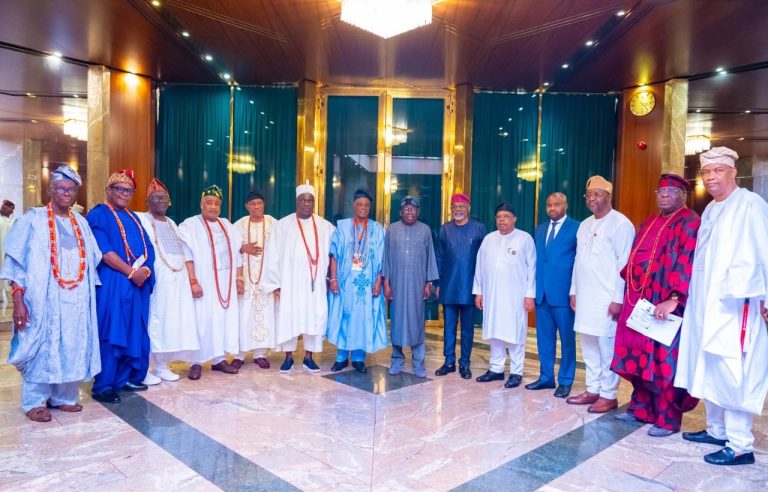
President Bola Ahmed Tinubu receives traditional rulers from Oyo State led by Olubadan of Ibadanland, Oba Rashidi Adewolu Ladoja, in the State House. Thursday, July 30, 2026

L-R: the Aare Ago of Ogbomoso, High Chief S. Otolorin; the Osi Olubadan, Oba Abiodun Kola-Daisi; the Balogun of Ibadanland, Oba Tajudeen Ajibola; the Onigbeti of Igbeti, Oba Abioye Basiru Olalekan; the Alajawa of Ajawa, Oba Adeyeye Oyetunji; the Olugbon of Orile-Igbon, Oba Francis Alao; Olubadan of Ibadanland, Oba Rashidi Adewolu Ladoja; President Bola Ahmed Tinubu; Chief of Staff to the President, Femi Gbajabiamila; Minister of Power, Joseph Tegbe; Chairman of Nigerian Revenue Service, Zacch Adedeji; Special Adviser to the President on Media & Public Communication, Sunday Dare; Aseyin of Iseyin, Oba Sefiu Olawale Oyebola Adeyeri III and Mogaji Wole Arisekola.