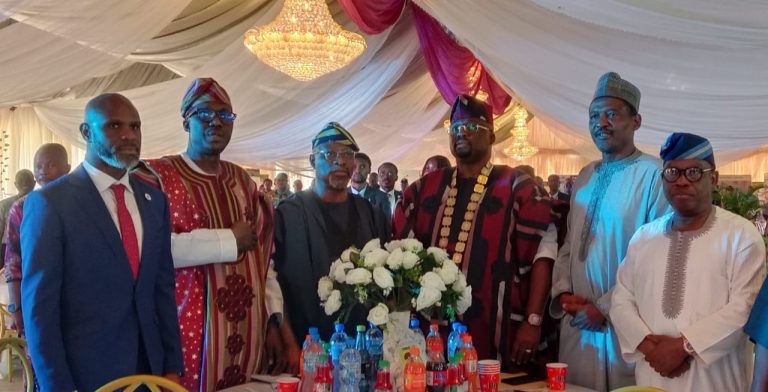

*Ogun Govt. Promises Action on Taxes, Levies, Regulation
The Manufacturers Association of Nigeria (MAN), Ogun State Branch, has called for urgent reforms in taxation, regulation, infrastructure and energy supply to ease the operating environment for manufacturers and strengthen the state’s position as Nigeria’s leading industrial hub.
The call was made on Thursday, July 30, 2026, at the 41st Annual General Meeting (AGM) of MAN Ogun State Branch, held at the Olusegun Obasanjo Presidential Library (OOPL), Abeokuta, Ogun State.
The AGM, themed “Building a Resilient Manufacturing Sector: Surmounting the Challenges of Fiscal and Regulatory Policies and Tariffs,” brought together government officials, industry leaders, manufacturers, development partners and other stakeholders to deliberate on the challenges confronting the sector.
In his welcome address, the outgoing Chairman of MAN Ogun State Branch, Mr. George Onafowokan, said manufacturers had endured a difficult operating environment characterised by exchange rate volatility, high inflation, rising energy costs, high interest rates, multiple taxation and increasing regulatory pressures.
Onafowokan said the challenges had resulted in declining consumer purchasing power, reduced demand, shrinking profit margins and deferred investments in plant expansion and technology.
He noted that unreliable electricity supply and rising tariffs had forced many manufacturers to depend heavily on self-generated power, substantially increasing production costs and reducing the competitiveness of Nigerian products.
According to him, access to foreign exchange also remained a major concern, as manufacturers continued to experience difficulties obtaining forex to import raw materials, machinery and other essential industrial inputs.
The outgoing chairman, however, commended the Ogun State Government for its investments in infrastructure, security and initiatives aimed at improving the ease of doing business, saying the efforts had helped sustain the state’s position as a preferred destination for industrial investments.
He nevertheless identified multiple regulatory demands, rising logistics costs, infrastructure deficiencies and numerous statutory and non-statutory charges as persistent challenges facing manufacturers in the State.
Onafowokan particularly called for stronger coordination among government agencies to eliminate overlapping responsibilities, reduce compliance costs and create a more predictable business environment.
He appealed to Governor Dapo Abiodun to direct ministries, departments and agencies, as well as the Ogun State House of Assembly, to institutionalise consultations with MAN and other private-sector organisations before introducing policies, taxes, levies, regulations or legislation affecting businesses.
He also urged the state government to revive the quarterly interactive forum between MAN and relevant government ministries, departments, agencies and parastatals, describing the platform as an effective mechanism for resolving operational challenges and improving communication between government and industry.
Onafowokan further raised concerns over demand notices issued by the Ministry of Environment, Ogun State Waste Management Authority (OGWAMA) and Ogun State Environmental Protection Agency (OGEPA) over water extraction fees, recycling licence fees, air pollution compliance monitoring devices and other charges whose legal basis and application, he said, remained unclear to many businesses.
He said threats of closure or actual shutdowns of manufacturing facilities over alleged non-compliance disrupted production, endangered jobs and weakened investor confidence.
The MAN chairman called for greater coordination among the relevant agencies, stressing that regulation should promote environmental sustainability while also encouraging investment and protecting existing industries.
Despite the challenges, Onafowokan said manufacturers had demonstrated resilience through increased local sourcing, technology adoption, backward integration, alternative energy investments and production optimisation.
He stressed, however, that resilience alone could not sustain industrial growth without deliberate policy support, affordable long-term financing, reliable energy, improved infrastructure, efficient transportation networks, access to foreign exchange and a business-friendly regulatory environment.
Also speaking, the President of MAN, Otunba Francis Meshioye, said manufacturers had been significantly affected by government reforms introduced over the past three years.
While acknowledging that the reforms were aimed at restoring economic stability, Meshioye said they had also escalated production costs and created significant headwinds for businesses across sectors.
He said resilience in manufacturing should mean the ability to absorb economic shocks, adapt to policy changes, remain cost-competitive and continue investing, producing and creating jobs.
According to him, the current challenges had contributed to lower capacity utilisation, deferred investments and pressure on employment and profit margins.
Meshioye identified three major requirements for strengthening the sector: predictable fiscal policies, smart regulation and a competitive operating environment.
He said taxes, levies and tariffs must be predictable and supportive of competitiveness, while government regulations should enable businesses rather than serve primarily as instruments of revenue extraction.
He also called for affordable and reliable energy, better infrastructure and logistics, access to single-digit interest loans and protection against unfair imports.
Responding to the concerns raised by MAN, the Ogun State Governor, Prince Dapo Abiodun, represented by the Commissioner for Industry, Trade and Investment, Adebola Sofela, said the administration’s industrial achievements were the result of deliberate policies and strategic partnership with the private sector.
Sofela said government recognised that the private sector remained central to economic development and that sustainable industrial growth required a strong partnership between government and organised private-sector stakeholders.
He said the state had pursued an agenda focused on infrastructure, youth development, agriculture and food security, youth empowerment and the creation of an enabling environment capable of attracting new investments and supporting existing businesses.
According to him, the government established the Business and Energy Environment Council to coordinate inter-agency activities, address bureaucratic bottlenecks and improve the business environment.
Responding specifically to complaints about multiple taxes and levies, Sofela acknowledged that the government was aware of the challenges and was working to address them.
He said the administration understood the implications of multiple taxes, levies and unpredictable policies, noting that he also had experience in the organised private sector.
He promised that the harmonisation of taxes and levies at the sub-national level would be addressed before the end of the administration.
Sofela explained that some of the difficulties were linked to Nigeria’s fiscal federalism, under which local governments exercise constitutionally recognised responsibilities.
He said the state government was continuously engaging local governments to ensure that their activities did not create unnecessary burdens for businesses.
“There cannot be multiple taxes,” he said, stressing that government would examine situations where similar charges were given different descriptions but ultimately imposed the same financial burden on businesses.
He disclosed that a committee would be established to address the issue of sub-national taxes and levies.
On environmental regulation, Sofela said the concerns raised by manufacturers were valid, particularly regarding fees, enforcement and adequate notice before compliance actions were taken.
He, however, stressed that businesses also had responsibilities to comply with environmental standards and ensure proper waste disposal.
According to him, regulation was not intended to constrain businesses but to ensure that companies operated in accordance with best practices.
He said the state government would review the concerns raised by MAN regarding environmental charges and enforcement, while also improving inter-agency coordination.
Finance Ministry Highlights Fiscal Incentives
Delivering the keynote address, the Director of Technical Services, Federal Ministry of Finance, Basheer Abdulkadir, said the Federal Government recognised manufacturing as central to the economic transformation agenda.
Abdulkadir, who represented the Minister of Finance and Coordinating Minister of the Economy, commended MAN for its longstanding partnership with government and its role as the collective voice of manufacturers.
He said the manufacturing sector remained resilient despite exchange rate fluctuations, rising production costs, infrastructure constraints, supply chain disruptions, tariff adjustments, fiscal reforms and global economic pressures.
According to him, manufacturing accounted for about eight per cent of Nigeria’s real GDP and recorded a real growth rate of 3.29 per cent in the first quarter of 2026.
He said government had introduced several fiscal, trade and business facilitation measures to improve the investment environment and strengthen industrial competitiveness.
Among the measures, Abdulkadir listed the Import Duty Exemption Certificate (IDEC), which provides zero per cent import duty on eligible machinery, equipment and industrial spare parts used for establishing or expanding factories.
He also highlighted the National List under Chapter 99 of the Common External Tariff, which provides concessionary duties or waivers on critical raw materials and industrial inputs that are not sufficiently available locally.
He said the government was also implementing the Nigeria Tax Act, 2025, aimed at simplifying the tax system, reducing multiple taxation, improving tax administration, lowering compliance costs and providing greater certainty for businesses.
Another major reform, he said, was the National Single Window Project, which is designed to digitally integrate Customs, ports, regulatory agencies and border institutions to reduce cargo clearance times, eliminate duplication and lower trade transaction costs.
FG Defends Tariff Protection for Local Manufacturers
Abdulkadir also explained that the government was balancing trade openness with measures aimed at protecting strategic domestic industries.
He identified the Import Adjustment Tax (IAT) as one of the mechanisms used to provide temporary protection to strategic sectors, noting that about 192 tariff lines covering industries such as iron and steel, pharmaceuticals, food and beverages, cement, packaging, textiles, lubricants, motor vehicles and power-generating equipment benefit from the measure.
He also highlighted the three per cent exclusion list under AfCFTA, explaining that the measure was designed to protect products considered critical to Nigeria’s economic interests.
According to him, Nigeria is working with MAN to harmonise its AfCFTA exclusion list with the ECOWAS Import Adjustment Tax list.
He said government also maintained an Import Prohibition List covering selected products where sufficient domestic production capacity exists, while a Green Tax Surcharge had been introduced for certain imported vehicles to encourage cleaner transportation and support local vehicle assembly.
FG Urges Manufacturers to Prepare for AfCFTA
Abdulkadir urged Nigerian manufacturers to take advantage of the African Continental Free Trade Area rather than rely solely on protection from imports.
He said AfCFTA had moved beyond the negotiation stage into implementation and would provide Nigerian businesses access to a continental market of more than 1.4 billion people.
He advised manufacturers to understand Rules of Origin, tariff schedules, customs documentation, product standards, quality certification and logistics requirements.
He warned that competition would intensify as African markets became more integrated, stressing that long-term success would depend on quality, competitive pricing, innovation and reliable delivery.
The Finance Ministry official also encouraged manufacturers to strengthen local value chains, diversify suppliers, invest in technology, develop their workforce and institutionalise risk-management systems.
He said greater patronage of Made-in-Nigeria products would help strengthen domestic industries, create jobs, conserve foreign exchange and deepen local value chains.
While acknowledging progress recorded through engagement with the Ogun State Government, MAN President Meshioye said more needed to be done.
He disclosed that the association had secured a 10 per cent concession on reviewed safety audit fees, facilitated consultations on borehole metering and water abstraction charges, and obtained interventions on environmental impact assessment compliance and telecom mast registration fees.
However, he said manufacturers still faced multiple taxation, regulatory duplication, high compliance costs, environmental levies and poor industrial road infrastructure, particularly in Agbara, Ota and other industrial corridors.
He called for the institutionalisation of a quarterly MAN-government dialogue, law-based regulation, harmonisation of federal and state regulatory requirements, non-adversarial enforcement and urgent rehabilitation of industrial roads in Agbara, Ota, Sagamu and other industrial areas.
He also urged the state government to further review safety audit fees and adopt a more investment-friendly approach to water abstraction and environmental charges.
At the national level, Meshioye said MAN would continue engaging the Presidency, National Assembly and other institutions on policies affecting manufacturers.
He commended the Nigeria Industrial Policy 2025, which he said MAN helped shape, and urged government to prioritise access to finance, lower input costs, enforcement of local content requirements and resolution of energy challenges.
He also raised concerns over proposed increases in pension contributions, arguing that government should conduct an impact assessment and engage stakeholders before increasing the cost of employment.
On the 2025 tax laws, he said there were conflicting interpretations regarding whether the new laws would apply retroactively to 2025 profits.
He said MAN opposed retroactive application and called for urgent harmonisation to protect legal certainty and ease compliance.
Meshioye also urged the Central Bank of Nigeria to clear outstanding foreign exchange forward obligations owed to manufacturers, saying doing so would restore confidence in Nigeria’s commitment to contractual obligations.
MAN Announces 54th National AGM