Home Blog Page 251

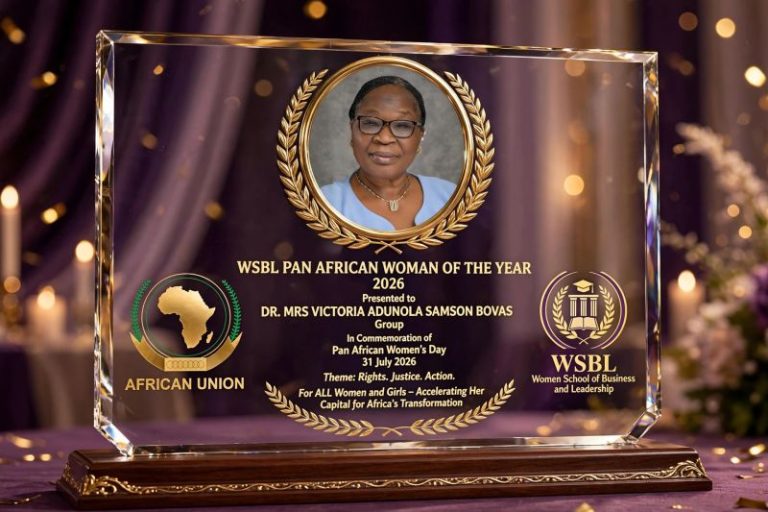
BOVAS Founder, Victoria Samson, named 2026 Pan-African Woman of the Year

0

The founder and Group Managing Director of BOVAS Group, Dr. Victoria Samson, has been named the 2026 Pan-African Woman of the Year by the Women’s School of Business and Leadership (WSBL) in recognition of her contributions to entrepreneurship, indigenous business development and women’s economic empowerment.

The award, announced on July 31, aligns with the African Union’s Pan-African Women’s Day theme, “Accelerating Gender Equality Through Women’s Leadership and Enterprise,” celebrating women whose businesses are driving economic transformation across Africa.

WSBL said the recognition reflects Dr. Samson’s four-decade journey of transforming BOVAS Group from a single filling station into one of Nigeria’s leading indigenous downstream oil and gas companies, with more than 200 retail outlets nationwide and over 2,000 direct employees as of December 2025.

The institution noted that her success demonstrates how resilience, integrity and strategic leadership can build sustainable African enterprises while creating jobs and expanding opportunities for women. Dr. Samson began her career in petroleum marketing in 1980 as a Texaco dealer alongside her husband, Architect Samson. In 1990, she became the first Nigerian to win the Texaco Latin America and West Africa (LAWA) Best Dealer Award after recording the highest sales performance across both regions.

The achievement paved the way for the expansion of BOVAS Group, which has since diversified into gas and lubricants, strengthening its position in Nigeria’s downstream petroleum sector.

According to WSBL, the company’s growth has been driven by a commitment to product integrity, customer satisfaction and a people-focused business culture.

The institution highlighted BOVAS’ “One Liter is One Liter” campaign as a major initiative that has reinforced consumer confidence by promoting accurate fuel dispensing and transparency across its retail outlets.

Beyond business, Dr. Samson has remained active in education and industry leadership. In May 2026, she was appointed Chancellor of Osun State University for a five-year term. She also serves as Matron of the Independent Petroleum Marketers Association of Nigeria (IPMAN) at strategic depots and is a board member of the Depot and Petroleum Products Marketing Association (DAPPMA) and Women in Energy, Oil and Gas Nigeria (WEOG).

WSBL also acknowledged her philanthropic efforts through the BOVAS Charitable Foundation, which has committed more than ₦400 million to healthcare, education, COVID-19 response and humanitarian initiatives.

The institution further noted that BOVAS maintained petrol sales at official pump prices in parts of Southwest Nigeria during periods of fuel scarcity, helping to reduce the burden on consumers.

WSBL disclosed that 95 per cent of its faculty voted to adopt Dr. Samson’s entrepreneurial journey as a leadership and entrepreneurship case study, describing her as “a living case study” whose life demonstrates that resilience, integrity and purpose can build enduring African institutions.

According to the institution, her rise from working as a house help at the age of six to leading a major indigenous energy company offers valuable lessons in enterprise development, ethical leadership and inclusive economic growth.

The award comes as Africa seeks to accelerate the goals of the African Union’s Agenda 2063, with women-led businesses increasingly recognised for their role in promoting industrialisation, job creation and sustainable economic development across the continent.

Sun

Nigeria eyes $50bn from 22 offshore oil, gas projects

0


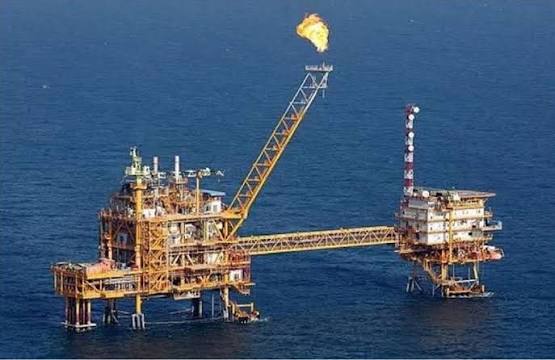
Nigeria is positioning itself for a fresh wave of upstream investment, with 22 major offshore oil and gas projects expected to attract between $30 billion and $50 billion in investments over the next five years, the Nigerian Upstream Petroleum Regulatory Commission (NUPRC) has disclosed.

Commission Chief Executive, NUPRC, Mrs. Oritsemeyiwa Eyesan, stated this at the Society of Petroleum Engineers Nigeria Annual International Conference and Exhibition (NAICE 2026) in Lagos on Wednesday.

She said the projects, scheduled for execution between 2026 and 2030, are expected to significantly boost crude oil production, create thousands of jobs, expand critical infrastructure and reinforce the country’s energy security. Eyesan, added that, the investment pipeline reflects growing confidence in Nigeria’s upstream petroleum sector.

Represented by the Executive Commissioner, Development and Production, Mr. Enorense Amadasu, Eyesan revealed that the Commission had approved more than $57 billion worth of Field Development Plans (FDPs) since 2024, with several of the projects already progressing to Final Investment Decision (FID).

“Since 2024, the NUPRC has approved over $57 billion in Field Development Plans, some of which have translated into Final Investment Decisions.

Twenty-two major offshore projects are expected between 2026 and 2030 with an estimated investment potential of between $30 billion and $50 billion.

“Beyond increasing production, these investments will create jobs, expand infrastructure, strengthen energy security and reinforce Nigeria’s position as a leading global upstream investment destination,” she said.
Eyesan said the Commission is also laying the foundation for sustained long-term growth by maintaining a robust exploration portfolio and opening up new investment opportunities.

According to her, successive licensing rounds conducted since 2022 have unlocked access to some of Nigeria’s most prospective oil and gas acreages, helping to restore investor confidence.

She cited the recently concluded 2025 Licensing Round, in which 31 companies emerged successful bidders for 37 oil and gas blocks following what she described as a transparent, technology-driven and data-led evaluation process.

With preparations already underway for the 2026 Licensing Round, Eyesan said Nigeria is demonstrating that regulatory certainty is becoming a defining feature of its upstream investment landscape.

“Investment certainty is no longer an aspiration; it is becoming an enduring feature of our regulatory framework,” she said.

The NUPRC boss acknowledged that inadequate infrastructure remains one of the biggest constraints to Africa’s energy development but said Nigeria is aggressively addressing the challenge.

She said the Commission is expanding gas gathering systems, processing facilities, pipelines and export infrastructure while promoting shared facilities, third-party access, open-access infrastructure and field tie-backs to reduce project costs, accelerate development timelines and unlock stranded hydrocarbon resources.

Eyesan added that improved collaboration among government agencies, security institutions, operators, host communities and private investors, supported by the Host Community Development Trust framework, has strengthened the protection of critical oil and gas infrastructure, making Nigeria’s upstream industry more resilient and attractive to investors.

SuN

Dangote, Canada’s Prime Minister Discuss Investment Partnerships

0

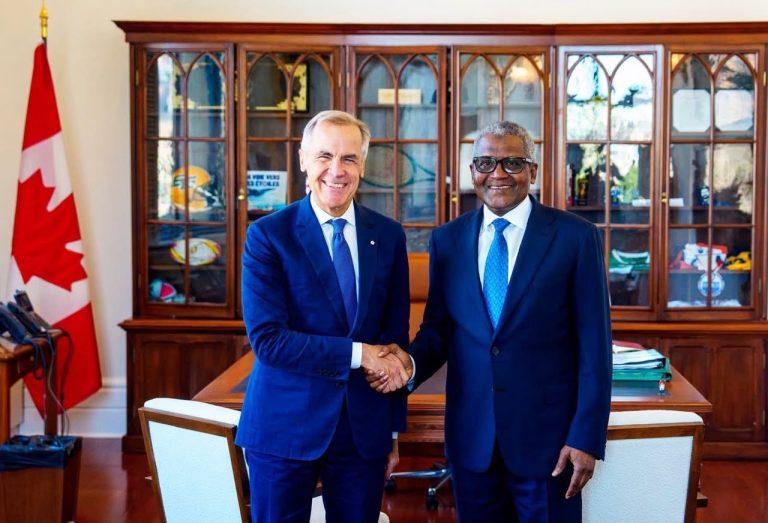
President and Chief Executive of Dangote Industries Limited, Aliko Dangote, has held discussions with Canada’s Prime Minister, Mark Carney, on opportunities to strengthen investment partnerships and deepen economic cooperation between Canada and Africa.

The meeting focused on expanding investment opportunities in Canada and exploring how the Dangote Group, alongside other African investors, can contribute to Canada’s economic growth. Both leaders also exchanged views on Canada’s Africa Strategy and the importance of promoting stronger two-way trade and investment flows between Canada and African countries.

Dangote emphasised the growing potential for collaboration between African and Canadian businesses, noting that closer economic ties would unlock new opportunities for job creation, innovation, industrial development, and long-term prosperity.

“Strategic partnerships between Africa and Canada have immense potential to drive sustainable growth and create value for both regions. There is a strong case for increasing investment, fostering innovation, and building mutually beneficial commercial relationships,” Dangote said.

As part of his visit, Dangote also met with Ahmed Hussen, Member of Parliament and Chair of Canada’s Foreign Affairs Committee. Their discussions reinforced the need to advance Canada-Africa economic relations through enhanced trade, investment, and long-term strategic cooperation.

The engagements underscore a shared commitment to strengthening economic ties between Canada and Africa and fostering partnerships that support inclusive growth and sustainable development.

RCCG Convention Records 35 Births as Adeboye Gives Update

0


The General Overseer of the Redeemed Christian Church of God (RCCG), Enoch Adeboye, has announced that 35 babies have been delivered so far during the church’s 2026 Annual Convention.

Adeboye made the announcement on Wednesday, revealing that the births comprise 19 boys and 16 girls.
The RCCG 2026 Annual Convention is themed “Mountain Movers” and has drawn thousands of worshippers from Nigeria and across the world for several days of worship, prayers, teachings, and other spiritual activities.

Infantino loses moral authority to lead FIFA

0

By Ehi Braimah

​There are moments in the life of every institution when the issue is no longer whether a leader can survive, but whether he still possesses the moral authority to lead. FIFA President Gianni Infantino has reached that moment.

The controversy surrounding his now-shelved proposal to open FIFA’s commercial rights – including the World Cup – to private investment is more than another governance dispute. It has become a referendum on his leadership, judgment, and vision for world football. The backlash has been swift, unprecedented, and global.

UEFA openly threatened to boycott FIFA competitions if the proposal proceeded, arguing that the World Cup is not a commercial asset to be sold to private investors. It was not an empty threat. The private investment plan has since been withdrawn, but the damage to Infantino’s credibility remains.

Today, Infantino finds himself in crisis-management mode. His emergency meeting with senior FIFA executives in Rabat, Morocco, is a tacit admission that football’s governing body faces one of its gravest internal crises in years. It is an attempt to buy time, manage the scandal, reassure allies, and prevent a full-scale revolt before FIFA’s presidential election in March 2027.

The larger question, however, is whether time can repair a broken relationship between the FIFA President and a significant section of the football world. Leadership is built on trust, and once that trust evaporates, authority quickly follows.

Infantino’s proposal crossed a line because it appeared to commercialise the very soul of football. The FIFA World Cup is not merely another sporting event – it is football’s greatest global institution, built over generations by players, supporters, coaches, national associations, and volunteers. It is part of the sport’s collective heritage. The perception that even a minority stake in its commercial future could be placed in private hands triggered fears that financial interests were beginning to outweigh football’s values.

Even more troubling was the manner in which the proposal emerged. Critics complained about the lack of consultation, transparency, and due process. Football is governed through consensus, not presidential decree. That principle appeared to have been ignored by Infantino and his supporters. The criticism is no longer confined to administrators; some of football’s most respected voices have openly questioned Infantino’s leadership.

Luis Figo, one of the game’s greatest players and a former supporter of Infantino, has called on him to resign, describing his conduct in extraordinarily harsh terms. When respected football figures begin speaking in those terms, the issue is no longer public relations – it becomes a crisis of legitimacy.

The controversy also revives concerns that have been accumulating over several years. Do we really need a World Cup with 64 teams? Do we need tournaments spread across multiple continents, stretching logistics, increasing costs, and diluting the uniqueness of the competition? Must every commercial opportunity be exploited simply because it exists?

The answer to each question is no. Football’s greatness has never depended on becoming larger every four years. It has depended on excellence, simplicity, competitive integrity, and emotional connection with supporters.

Equally controversial has been Infantino’s increasingly close relationship with United States President Donald Trump. During and after the 2026 World Cup, the FIFA President appeared eager to associate himself with the American president, culminating in the presentation of FIFA’s inaugural Peace Prize to Trump – a decision that prompted accusations that FIFA had compromised its political neutrality.

Whether one supports or opposes Donald Trump is beside the point. The FIFA President should not appear politically aligned with any serving world leader. FIFA governs 211 national associations with diverse political systems and ideologies. Its president must remain visibly impartial. Perception matters almost as much as reality.

Infantino’s defenders will argue that Africa, Asia, and several other confederations continue to support him. That is true. Much of Africa has backed his initiatives because expanded tournaments and increased FIFA funding create more opportunities for emerging football nations. Those are understandable considerations.

But leadership should never be reduced to arithmetic, and winning votes is not the same as winning confidence. Football’s greatest institutions have survived because they were protected by leaders who understood that some values are simply not negotiable.

This explains why the current crisis feels different from previous controversies. It is not merely about a failed investment proposal; it reflects growing unease about the direction of FIFA under Infantino’s leadership.

The organisation increasingly appears driven by expansion, commercialisation, and presidential ambition rather than careful stewardship of football’s traditions. The Morocco meeting may calm immediate tensions, or persuade enough member associations to remain loyal until next March.

It may even preserve Infantino’s chances of seeking another term, but none of those outcomes would necessarily restore his moral authority. In politics, business, and sport, there comes a point when staying in office no longer serves the institution.

Great leaders recognise that moment, and they understand that legacy is determined not only by how long they remain in power but also by knowing when it is time to step aside. Gianni Infantino now faces that choice.

He can spend the next several months fighting for survival, deepening divisions within world football and hoping that electoral mathematics rescue his presidency. Or he can read the room, recognise that confidence in his leadership has been profoundly damaged, and leave voluntarily before the FIFA Congress decides his future.

History remembers leaders who strengthened institutions – not those who mistook the institution for themselves. The World Cup belongs to football, it belongs to the fans, and it belongs to generations yet unborn. No FIFA President, however successful or influential, should ever allow the world to believe otherwise.

Previously, Infantino announced his intention to seek re-election in 2027. However, the current controversy has significantly weakened his position, whether he wants to believe it or not. If he were to resign, FIFA would most likely appoint an interim president until an extraordinary FIFA Congress, or the scheduled March 2027 election.

The real contest would be among a handful of influential football administrators. The likely contenders are: Aleksander Caferin, president of UEFA since 2016, widely credited for leading the opposition that forced Infantino to abandon the private investment proposal; Victor Montagliani, president of CONCACAF and FIFA vice president, and Sheikh Salman bin Ibrahim Al Khalifa, president of the Asian Football Confederation.

Others are Mattias Grafstrom who already runs FIFA’s day-to-day administration, and Nasser Al-Khelaifi, one of football’s most influential executives, and chair, European Club Association. However, his ownership of Paris Saint-Germain (PSG) could raise governance and conflict-of-interest questions.

So, what’s next for FIFA and Infantino?

Braimah is a PR specialist, marketing strategist, and publisher/editor-in-chief of Naija Times (www.ntm.ng) and Lagos Post (www.lagospost.ng). He is a strong advocate for an “integrated, prosperous, and peaceful Africa,” and can be reached through: ehi.braimah@neomedia.com.ng
Why EFCC Froze Osun State Government Account

0


The Economic and Financial Crimes Commission, EFCC, is compelled to publicly address issues pertaining to its preventive moves in freezing the bank account of the Osun State government, without prejudice to the imminent governorship election in the state.

The Commission has been busy investigating the Osun state government since March, 2026, regarding alleged fraudulent handling of Ecology Funds, Intervention Funds and Federal Account Allocation Committee, FAAC account to the tune of N11, 000,000, 000(Eleven Billion Naira only). To this end, some officials of the state government, especially the Accountant General of the State, have had interview sessions with investigators of the EFCC.

These ongoing investigations of the state government would not have warranted any placement of Post No Debit order on its account but for the precipitate and unwarranted movement of funds from the accounts to different suspicious accounts since August 2, 2026. The Commission noticed huge transfers of funds into different corporate entities and had to swiftly halt the trend by freezing the accounts from which such heavy funds are being moved.

The EFCC’s preventive mandate is a public-inclined framework of safeguarding public funds, assets and resources. The Commission cannot watch idly while a state government’s account is being pillaged. While the Commission is fully aware of the impending governorship election in Osun State, it has a responsibility to act in defence of the sanctity of the funds of the state. It will be uncharitable for the Commission to allow an excuse of an upcoming election to fold its arms to perform its legally-assigned functions.

It is equally needful to state that the Commission is keeping watch over the finances of other states like Osun State. Many of these states are on the investigative radar of the Commission to ensure accountability and probity. The Commission has always pointed out that it is non-partisan and non-sectarian but always working in the overall interests of Nigerians. The Osun State government account was frozen to save public funds from being looted.

The public is enjoined to ignore false narratives and deliberate demonization of the works of the EFCC. The interests of all Nigerians are greater and will always be protected by the Commission.

Dele Oyewale

Head, Media & Publicity

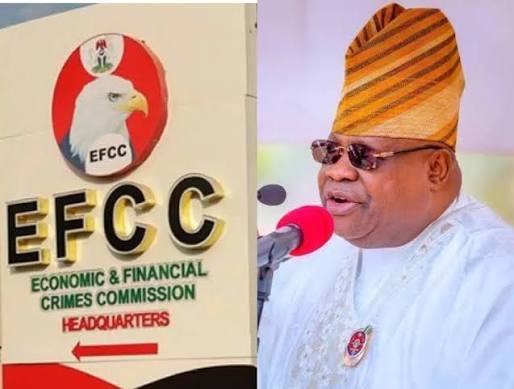
EFCC freezes Osun government account 10 days to election

0


The Economic and Financial Crimes Commission (EFCC) has reportedly frozen an Osun State Government account domiciled with First Bank, ten days to governorship election slated for August 15.

Vanguard reports that the account, reportedly used for the payment of workers’ salaries, was placed on “Post No Debit” status by the anti-graft agency.

The development came hours after Governor Ademola Adeleke alleged that the EFCC was planning to freeze the state’s accounts and those of top government officials.

In a statement issued on Wednesday by the Commissioner for Information and Public Enlightenment, Kolapo Alimi, the governor described the reported move as an attempt to cripple government activities ahead of the August 15 governorship election.

Adeleke maintained that there was no legal basis for freezing the accounts of the state government, arguing that the EFCC lacked the statutory powers to take such action.

“I can confirm that the state government account has been frozen by the EFCC. It is no longer an allegation. The governor will address the press shortly to update the public on the situation,”a source in the state government was quoted as saying

The EFCC is yet to comment on this development.

Femi Adebayo Mourns Actress Temitope, Pays Tribute to Her Strength, Resilience

0


Nollywood actor and filmmaker Femi Adebayo has expressed grief over the death of actress Temitope, describing her as a gifted performer whose strength, grace and dedication to her craft left a lasting impression.

In a heartfelt tribute shared on social media, Adebayo said the late actress remained committed to her profession despite the challenges she faced in life, noting that her courage and quiet resilience would never be forgotten.

“We mourn the passing of a cherished colleague and gifted actress,” he wrote.

He added that Temitope carried herself with remarkable strength and grace, even during difficult periods, and continued to inspire those around her through her determination and professionalism.

Adebayo extended his condolences to the deceased’s family, friends and everyone whose lives she touched, praying for God’s comfort during the period of mourning.

“Our heartfelt condolences go to her family, and everyone whose life she touched. We pray that God grants them comfort in this difficult time and grants Temitope eternal rest,” he said.

He concluded his tribute by bidding the late actress farewell, saying, “Rest well, Temitope. Your memory will live on.”

EFCC Declares Cynthia Kalu Wanted Over Alleged Fraud

0


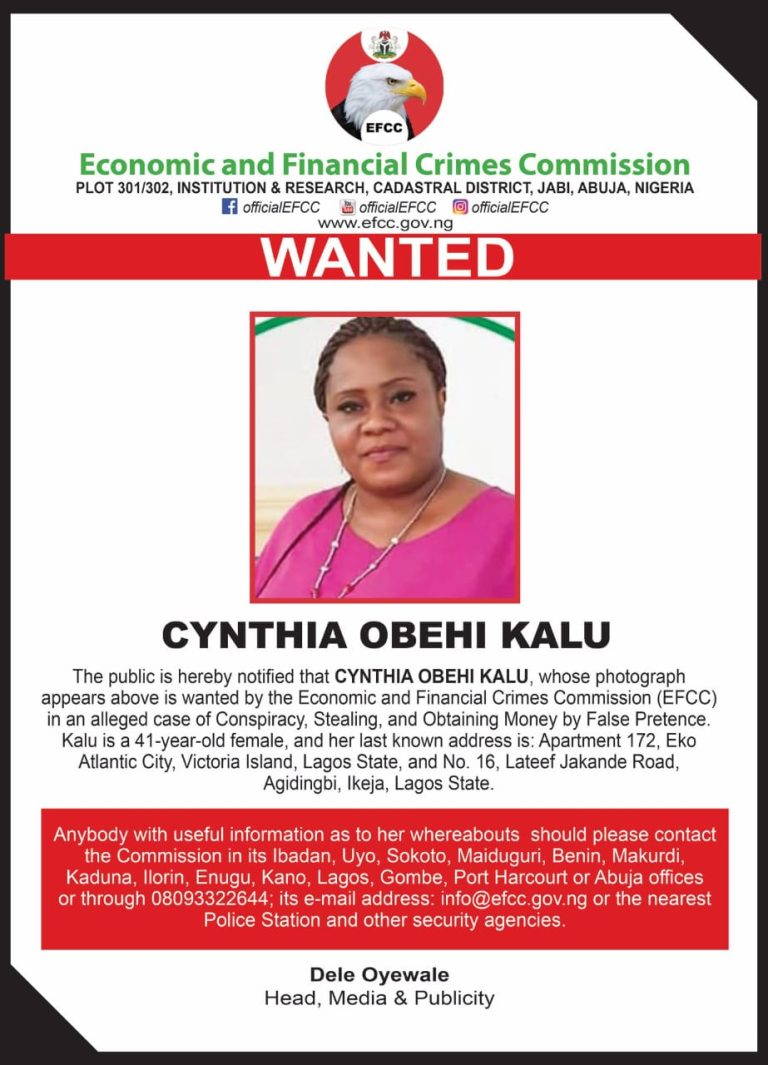
The Economic and Financial Crimes Commission (EFCC) has declared Cynthia Obehi Kalu wanted over her alleged involvement in conspiracy, stealing and obtaining money by false pretence.

The wanted notice was signed by the EFCC’s Head of Media and Publicity, Dele Oyewale.

In a wanted notice issued by the anti-graft agency, the EFCC said Kalu, 41, is being sought in connection with an ongoing investigation into the alleged offences.
According to the Commission, Kalu’s last known addresses are Apartment 172, Eko Atlantic City, Victoria Island, Lagos State, and No. 16, Lateef Jakande Road, Agidingbi, Ikeja, Lagos State.

The EFCC appealed to members of the public with useful information on her whereabouts to contact the Commission through any of its offices in Ibadan, Uyo, Sokoto, Maiduguri, Benin, Makurdi, Kaduna, Ilorin, Enugu, Kano, Lagos, Gombe, Port Harcourt or Abuja.

The Commission also urged anyone with relevant information to report to the nearest police station or other security agencies.

The agency provided its contact telephone number, 08093322644, and email address, info@efcc.gov.ng, for members of the public wishing to provide information.

Troops Intensify Offensive as 17 JAS Family Members Surrender in Borno

0


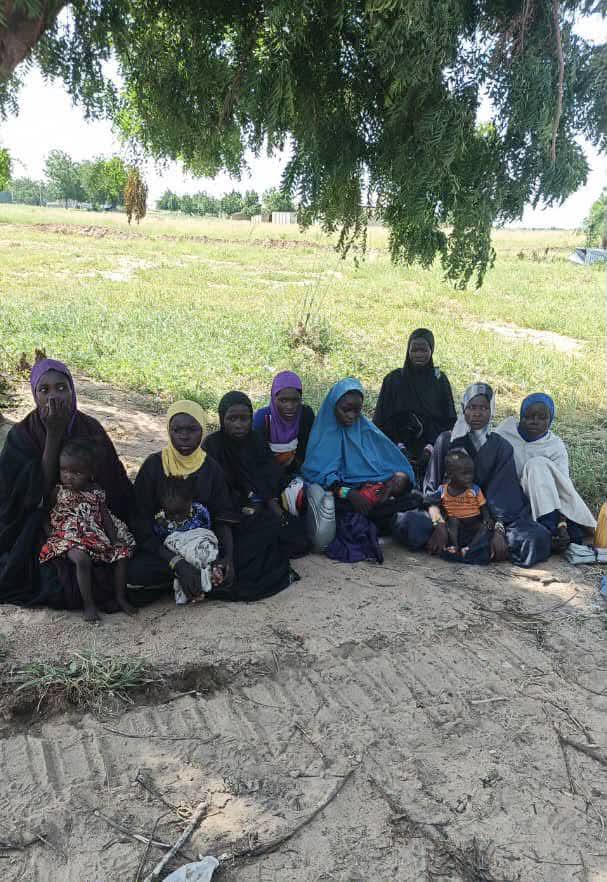
Sustained offensive operations by troops of Operation HADIN KAI (OPHK) have continued to pile pressure on terrorist elements in the North-East, leading to the voluntary surrender of 17 family members of Jama’atu Ahlis Sunna Lidda’awati wal-Jihad (JAS) in separate incidents in Borno State.
According to the Headquarters Joint Task Force (North East), the first incident occurred at about 9:15 a.m. on August 4, 2026, when 16 JAS family members comprising 10 women and six children voluntarily surrendered to troops of the 222 Battalion during a domination patrol along the Gezuwa axis in Konduga Local Government Area.

During preliminary debriefing, the surrendered individuals said the sustained military offensive against terrorist enclaves influenced their decision to surrender. Troops also recovered a total of ₦92,000 from the group.
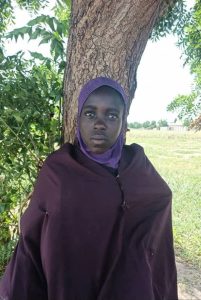
In a related development, at about 12:04 p.m. on the same day, an 11-year-old JAS family member voluntarily surrendered to troops of the 202 Battalion under Sector 1 in Bama Local Government Area.

The minor reportedly told troops during preliminary debriefing that the sustained operational pressure mounted by the military against terrorist elements prompted the decision to surrender.

The military said all the surrendered individuals are currently in custody undergoing preliminary profiling and debriefing. They will subsequently be handed over to the appropriate authorities for further profiling, detailed debriefing, rehabilitation where applicable, and other administrative procedures in line with established guidelines.
Operation HADIN KAI described the latest surrender as a direct outcome of its ongoing operations aimed at dismantling terrorist enclaves, disrupting their communication and logistics networks, and denying them freedom of movement across the theatre.

The Joint Task Force reiterated its commitment to sustaining aggressive operations against terrorist groups in the North-East, noting that troops will continue to dominate key operational areas, maintain pressure on terrorist hideouts, and create conditions that encourage the safe and voluntary surrender of those willing to renounce terrorism in accordance with established procedures.

The statement was signed by the Acting Military Information Officer, Headquarters Joint Task Force (North East), Operation HADIN KAI, Captain Mohammed Goni.