Home Blog Page 24

UNESCO, Bayelsa govt begin digital education, AI training for teachers

0

The United Nations Educational, Scientific and Cultural Organisation (UNESCO), in partnership with the Bayelsa State Minister of Education and technical support from the Federal Ministry of Education and the Universal Basic Education, has commenced a three-day master training of master trainers programme to build the capacity of ICT lecturers selected across higher institutions in the state on digital pedagogy and artificial intelligence.

The training is part of the Expand, Integrate and Strengthen Systems (EISS) to Build Teachers’ Capacity and Resilience (EISS) project, funded by the European Union and implemented by UNESCO, is intended for the 40 master trainers and the 1,445 teachers with practical skills to integrate digital technologies and AI-supported approaches into classroom teaching and learning.

Esther Ikenye, UNESCO’s Programme Assistant, said the EISS project was designed to contribute to human development in Nigeria by strengthening the education system through better governance and teaching and learning.

According to her, the project rests on the principle that teachers are the most important in-school factor in learning.

She added that the EISS project recognises that digital tools and artificial intelligence are already part of contemporary teaching, and it intends to support their use for the overall benefit of society.

‘’The project works on three fronts. It supports policies that address teacher shortages and working conditions. It strengthens the skills of in-service and pre-service teachers, with a focus on resilience. And it builds connections between teachers, their colleagues and their learners. Bayelsa is one of six project focal states, and this training is one of the clearest examples of the second front in action.

‘’Digital tools and
artificial intelligence are already part of the world our learners live in.
Used well, they can help a teacher plan a lesson faster, reach a learner who is
falling behind, assess progress, and spend more time on teaching. Used without
care, they can mislead and widen gaps. That is why this training teaches the
skills together with the judgement: checking accuracy, recognising bias,
keeping learners safe online, and using AI responsibly.’’

Ikenye, while acknowledging the presence of representatives of the European Union, TRCN, NUT and the SUBEB Teachers’ Professional Development Directorate, charged the 40 Master Trainers to participate fully in the training programme because the success of the programme in Bayelsa State depends on them.

‘’You are 40 Master Trainers, and what you learn this week does not end in this room. From 16 November, you will lead the training of 1,445 teachers at three centres in Yenagoa, Kolokuma/Opokuma and Sagbama. These teachers will then continue learning online at their own pace, with your support. In practical terms, the success of this programme in Bayelsa State is in your hands.

At the end of the three-day training, the 40 Master Trainers are expected to be able to navigate the digital pedagogy platform as a learner: register, track progress, complete quick checks and earn a certificate.

In addition, they should be able to demonstrate the
core skills in each of the 13 modules on their own devices as well as deliver a
short teach-back of any module to a peer group, using the module content and
walkthrough videos.

The master trainers would also be able to support teachers through the 26-question final assessment (70% pass mark) and the module ratings required for certification while producing a state cascade plan with targets, timelines and support arrangements
ADC Revokes Caretaker Committee Appointments in Eight States, Including Jigawa

0

The African Democratic Congress (ADC) has revoked caretaker committee appointments in eight states, including Jigawa State, amid controversies surrounding the party’s leadership arrangements at the state level.

The decision followed disagreements over the appointment of caretaker committee chairmen by the party’s National Secretary, Ogbeni Rauf Aregbesola.

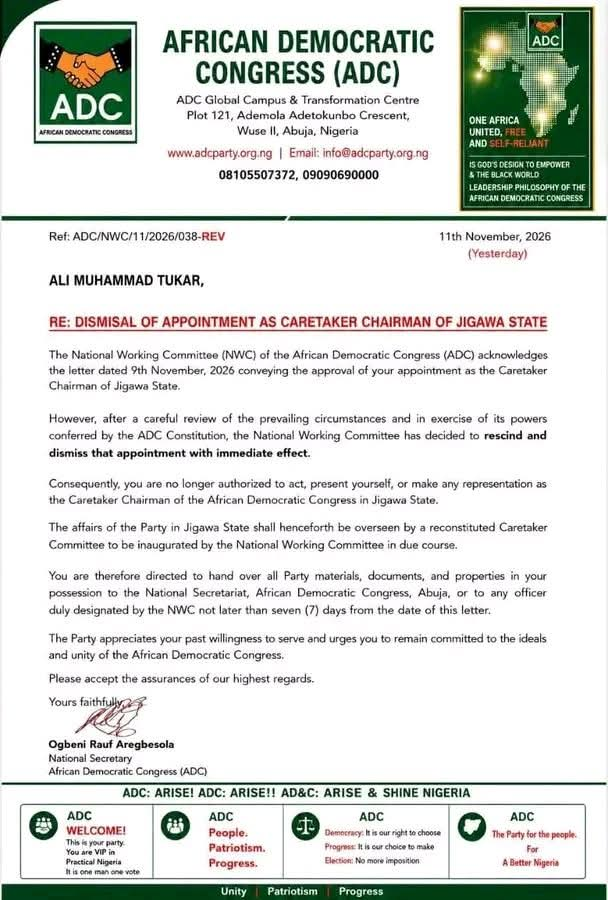
In Jigawa State, the party has withdrawn the appointment of Ali Muhammad Tukar as caretaker committee chairman.

The decision was conveyed in a letter dated November 11, 2026, and signed by Aregbesola.
According to the letter, the National Working Committee (NWC) rescinded the appointment, which was initially approved on November 9, following a review of prevailing circumstances.
The committee said the decision was taken in the exercise of its constitutional powers.

The development comes amid internal disagreements and concerns over the party’s leadership structure in several States.

Ghana Employers Urge Nigeria to Align Labour Export With Skills Needs, Lament Manpower Shortages, Say Cost of Living Is Cheaper in Nigeria

0

BY TAIWO OGUNMOLA -OMILANI

Nigeria has been urged to strengthen its labour migration governance framework, promote fair recruitment practices and align labour export programmes with domestic skills requirements to prevent shortages in critical sectors.

Kingsley Laar, an economist and researcher speaking on behalf of the Ghana Employers’ Association, made the recommendations during a presentation on labour migration governance, fair recruitment and lessons for employers at a two-day programme organised by the International Labour Organisation (ILO) and the Nigeria Employers’ Consultative Association (NECA) in Lagos.

The programme was tagged, “From Policy to Practice: Strengthening Employers’ Capacity to Effectively Engage on Labour Migration Governance.”

Laar highlighted Ghana’s efforts to promote fair recruitment, including the adoption of an employer-pay principle, under which recruitment costs are borne by destination employers, and an Agency Code of Conduct introduced in June 2026 to prohibit deductions from workers’ salaries.

He also listed contract attestation by the Labour Department before departure, pre-departure orientation and the establishment of Migrant Resource Centres as measures introduced by Ghana to improve labour migration governance.

However, he identified gaps in implementation, including the absence of a recruitment fee ban in Ghana’s three bilateral labour migration agreements, limited access to remedies for workers in their home countries and inadequate regulation of informal and online recruiters.

According to him, proposed insurance bonds for recruitment agencies were yet to be implemented, while Ghana had not ratified the International Labour Organisation Convention 181.

Laar attributed the challenges to fragmented coordination, an expired policy, inadequate funding, outdated laws, weak data systems and unintended consequences of recruitment bans.

For Nigeria, he recommended maintaining a unified coordination platform with active employer participation, strengthening fair recruitment commitments in bilateral agreements and ensuring that migrant workers have access to effective remedies.
He also called for adequate funding of labour migration plans, realistic mandates for stakeholders, transparent financial arrangements and the inclusion of employers in policy negotiations.

Laar urged Nigeria to align its labour export programmes with employers’ skills requirements, warning against exporting workers from sectors already experiencing manpower shortages in the country.
He further advocated the harmonisation of labour migration policies and processes between Nigeria and Ghana to facilitate cross-border employment, with the framework subsequently extended to the Economic Community of West African States (ECOWAS).

Speaking further, the Managing Director of L’AINE HR, James Laar, lamented that a steel manufacturing factory in Ghana had been shut down due to a shortage of manpower willing to work.
“We don’t have people to work, and our people are running away from the country. Europeans don’t have workers, and this is already constituting challenges. Nigeria and Ghana need to harmonise labour migration policy,” he said.

He urged Nigerians not to fear that Ghanaians would take their jobs, noting that Nigeria offered more economic opportunities than Ghana.
According to him, Nigeria’s market is about 13 times larger than Ghana’s, while salaries in Nigeria are also higher.

Laar said the difference in the purchasing power of the Ghanaian cedi was largely attributable to its redenomination, during which four zeros were removed.
Comparing the cost of living in both countries, he argued that Nigeria was cheaper than Ghana, citing the affordability of basic commodities such as bottled water.

He also called on Nigerian and Ghanaian employers and labour organisations to harmonise their policies and processes to enable citizens of both countries to work across borders.

“Then the larger ECOWAS can adapt it. I think that is better for us. That is the way to get harmonisation to the larger ECOWAS. We must have it,” he said.

Laar added that the movement of people between Nigeria and Ghana was already established, stressing that a harmonised framework between the two countries could serve as a model for the wider ECOWAS region.

He said such an arrangement would make it easier for the regional bloc to adopt a common labour migration framework.

BREAKING: Thugs attack NDC supporters during town hall meeting in Lagos

0

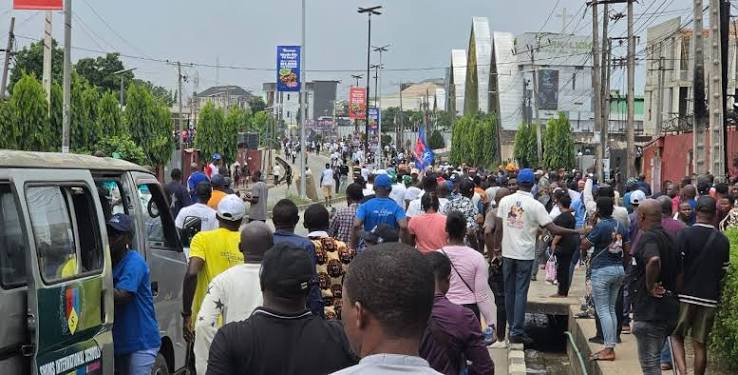
Thugs on Thursday attacked supporters of the Nigeria Democratic Congress (NDC) during a town hall meeting in the Oregun area of Lagos state.

The hoodlums, armed with cutlasses, cudgels and stones, invaded the venue of the event, disrupted proceedings and sent participants scampering for safety.

thecable

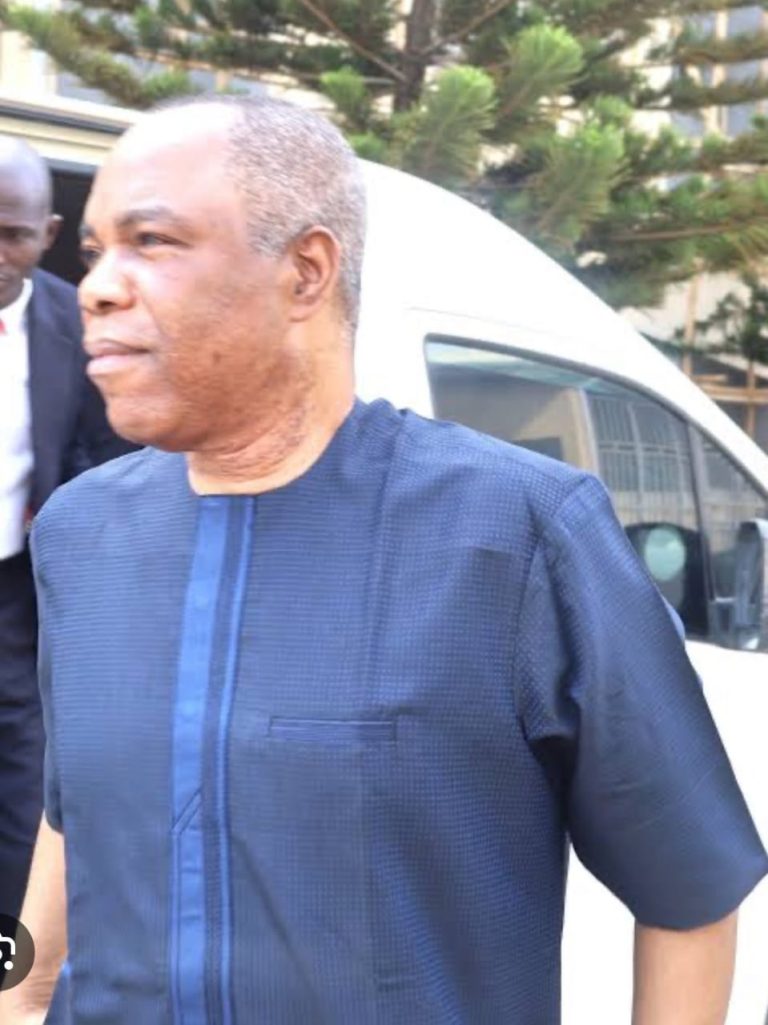
Alleged N15.3bn Fraud: EFCC Re-Arraigns Ayeni , Trial Commences Jan. 19

0

The Economic and Financial Crimes Commission, EFCC, on Wednesday, November 11, 2026, re-arraigned, a former Chairman of defunct Skye Bank, Tunde Ayeni before Justice H. Mu’azu of the Federal Capital Territory, FCT, High Court, Maitama, for an alleged N15,391,093,665.00 (Fifteen Billion, Three Hundred and Ninety-One Million, Ninety-Three Thousand, and Six Hundred and Sixty-Five Naira) fraud.Ayeni was re- arraigned on an existing 18-count charge.

The EFCC is prosecuting him on 18-count charges bordering on criminal breach of trust, misappropriation, and diversion of funds to the tune of N15.3 billion.
The re-arraignment before Justice Mu’azu followed the transfer of the case from Justice Jude Onwuegbuzie of the FCT High Court, Apo, before whom Ayeni had previously been arraigned.

Count eight reads: “That you Tunde Ayeni, whilst being the Chairman, Board of Directors of the defunct Skye Bank Plc (now Polaris Bank Limited) on or about the 20th November, 2014 at Abuja within the jurisdiction of this Honourable court and having dominion over depositors’ funds domiciled in the defunct Skye Bank Plc’s Suspense Account, committed criminal breach of trust when you dishonestly misappropriated the aggregate sum of Three Billion One Hundred and Thirteen Million Five Hundred and Forty Three Thousand Six Hundred and Sixty Five Naira Forty Two Kobo (N3,113,543,665.42) by directing the transfer of same to Misa Limited’s account No:1011295717, domiciled with Zenith Bank in violation of your contract with the defunct Skye Bank Plc and thereby committed an offence contrary to section 311 of the Penal Code and punishable under section 312 of same Act.”

Count nine reads: “That you Tunde Ayeni, whilst being the Chairman, Board of Directors of the defunct Skye Bank Plc (now Polaris Bank Limited) on or about the 2nd of December, 2014 at Abuja within the jurisdiction of this Honourable Court and having dominion over depositors’ funds domiciled in the defunct Skye Bank Plc’s Suspense Account, committed criminal breach of trust when you dishonestly misappropriated the sum of Five Billion, Seventy Eight Million, Five Hundred and Fifty Thousand Naira (N5,078,550,000) by directing the transfer of same to Greenwich Registrar’s account No:0003490559 domiciled with Union Bank in violation of your contract with the defunct Skye Bank Plc and thereby committed an offence contrary to section 311 of the Penal Code and punishable under section 312 of same Act.”.

The defendant pleaded “not guilty” when the charges were read to him. Following his plea, prosecution counsel, Abba Muhammed, SAN, requested a trial date. However, defence counsel, E. Inegedu, SAN, appealed to the court to maintain the bail conditions previously granted the defendant in May, 2026.Inegedu told the court that the defendant had consistently attended proceedings and had not breached the terms of his bail, including the requirement to submit his international passport and provide sureties.

Responding, the prosecution counsel said he would leave the issue of bail to the discretion of the court.

Both parties also acknowledged that the defendant had consistently attended court without any reported breach of his bail conditions.

Justice Mu’azu subsequently adjourned the case until January 19, 2027, for commencement of trial.

NMA celebrates Dr Ugwuanyi over prestigious honour from England Royal College of Surgeons

0

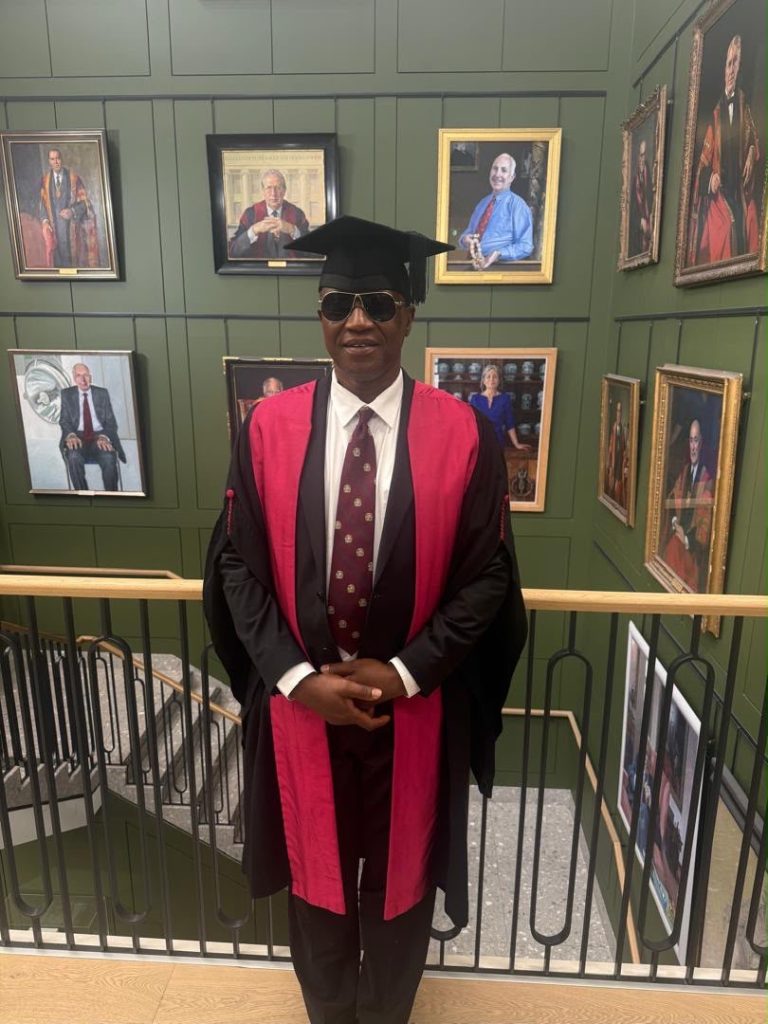
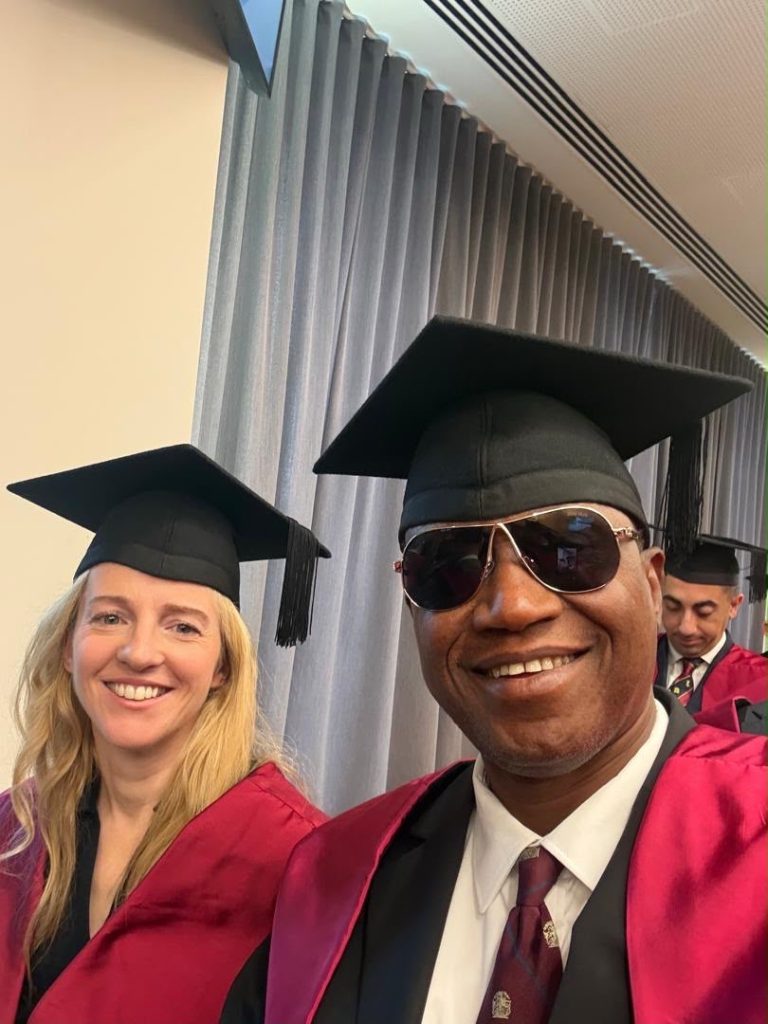
The Nigerian medical community has congratulated renowned neurosurgeon, Dr. Charles Ugochukwu Ugwuanyi, following his recognition by the President of the Royal College of Surgeons of England, Mr. Tim Lane, in London, United Kingdom.

The recognition, conferred on Ugwuanyi on November 6, 2026, has drawn commendation from the Nigerian Medical Association (NMA), Federal Capital Territory Chapter  with the association describing the honour as a significant acknowledgment of the surgeon’s professional accomplishments and contributions to humanity.

The NMA-FCT Chapter, under the leadership of Dr. George Ebong, said the recognition represented a moment of immense pride not only for Ugwuanyi but also for Nigeria’s medical community and the country as a whole.

In a congratulatory statement signed by its Public Relations Officer, Dr. Simon Ogenyi, the association described the honour as a reflection of Ugwuanyi’s exceptional professional standing, commitment to advancing neurosurgery and contributions to the development of the medical profession.

According to the association, the international recognition underscores the capacity of Nigerian medical practitioners to attain outstanding professional accomplishments and distinguish themselves on prestigious global platforms.

It noted that Ugwuanyi’s achievement demonstrated what could be accomplished through professional excellence, dedication, perseverance and an unwavering commitment to service.

The association further expressed the hope that the recognition would open the way for greater accomplishments and provide an opportunity for the renowned surgeon to expand his contributions to medicine and humanity.

“Congratulations, Dr. Ugwuanyi! You have made NMA FCT proud, you have made Nigeria proud,” the association declared.

Meanwhile, the governorship candidate of the African Democratic Congress (ADC) in Enugu State, Obodoeze Chukwuma Ocho, has joined the growing list of Nigerians celebrating the neurosurgeon, describing the recognition as a source of collective pride for the people of Enugu State, particularly the Nsukka community.

Ocho, speaking on behalf of himself, his family and the entire ADC family in the state, congratulated Ugwuanyi, who is also the party’s senatorial candidate for Enugu North District.

He described the British recognition as an international endorsement of the surgeon’s distinguished medical career, highlighting his professional experience and contributions to saving lives through complex neurosurgical procedures.

In an emotionally worded congratulatory message, the ADC governorship candidate said the honour represented England’s recognition of a Nigerian medical professional whose work had made a significant difference in the lives of patients.

He said, “This is England honouring a legend. A man who has held human brains in his hands and brought people back to life. A man who has looked death in the face in the theatre, fought it for hours, and defeated it to the Glory of God”

Ocho also drew attention to Ugwuanyi’s role in establishing Wellington Neurology and Neurosurgery Hospital in Abuja, describing the institution as an important accomplishment in his professional journey.

He said the neurosurgeon’s achievements had extended beyond his medical practice, adding that his decision to seek elective office had raised expectations among supporters who believe his experience could be brought to bear on the development of Nsukka and its surrounding communities.

According to Ocho, Ugwuanyi’s emergence as the ADC senatorial candidate represents an opportunity for the people of Enugu North to rally behind a figure whose professional accomplishments have earned him recognition beyond Nigeria.

The ADC governorship candidate also highlighted the surgeon’s ambition to secure state-capital status for Nsukka, presenting the aspiration as a central part of his political vision for the area.

He expressed confidence that the people of Nsukka would translate the recognition into political support for Ugwuanyi, declaring that the community would consolidate the honour through the ballot.

“Congratulations, our Global Neuros. Nsukka will consolidate the honour through the ballot,” Ocho added.

Nigeria, Ghana Employers Push for Stronger Collaboration on Fair Recruitment and Labour Mobility

0
Screenshot

BY TAIWO OGUNMOLA -OMILANI

​The Nigeria Employers’ Consultative Association (NECA) and the Ghana Employers’ Association have called for deeper cross-border collaboration between employers’ organisations to tackle labour migration challenges, promote fair recruitment, and safeguard the rights of migrant workers.

​The appeal was made during a two-day Nigeria–Ghana Employers’ Learning Exchange on Fair Recruitment and Responsible Labour Mobility, held under the theme, “From Policy to Practice: Strengthening Employers’ Capacity to Effectively Engage on Labour Migration Governance.”

​Speaking on behalf of NECA’s Director-General, Adewale-Smart Oyerinde, the association’s Assistant Director of Learning, Isabella Usen, highlighted the critical role of responsible labour mobility within the Economic Community of West African States (ECOWAS) framework. She noted that the forum brought together employers, recruitment agencies, and regional stakeholders from Nigeria, Ghana, and Kenya to deliberate on practical governance solutions.

​According to Oyerinde’s remarks, while labour migration addresses critical skills shortages, boosts productivity, and fosters regional economic integration, its benefits can only be fully realised when recruitment processes are transparent and properly governed.

​”Employers are central to this conversation,” the statement noted, emphasising that businesses and Private Employment Agencies share a responsibility to ensure workers are hired under conditions that comply with the law and promote decent work. Because recruitment practices and worker protection challenges transcend national borders, Oyerinde urged participants to engage openly and share both successes and challenges to develop adaptable regional solutions.

​A major expected outcome of the learning exchange is the creation of an Employer Fair Recruitment and Responsible Labour Mobility Checklist. Designed to move discussions from dialogue to practical action, the checklist will guide employers and recruiters on due diligence, risk identification, and transparency across every phase of employment—from pre-recruitment to cross-border mobility. NECA stressed that the goal is to produce a practical, usable tool rather than “another document that sits on a shelf.”

​Also speaking at the event, Belfiore Melanie, Technical Officer on Migration at the International Labour Organization (ILO) in Geneva, spotlighted the July 2026 draft fair recruitment roadmap, which emerged from a technical workshop in Abuja on bilateral labour migration agreements.

​Melanie explained that the draft roadmap focuses on four key result areas: knowledge and tools, law and enforcement, fair business practices, and workers’ empowerment. She added that the next phase will focus on refining specific activities, responsibilities, indicators, and timelines ahead of the document’s final validation.

​The two-day engagement is expected to solidify institutional ties between NECA and the Ghana Employers’ Association, strengthen partnerships with private recruitment agencies, and establish a sustained framework for regional knowledge exchange on ethical labour migration.

Lagos Targets 2,000MW Power Boost By March 2027, Engages 22 Investors

0

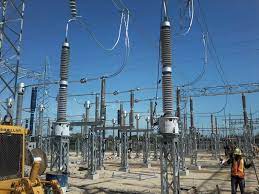
​The Lagos State Government has announced plans to add 2,000 megawatts (MW) of electricity to its power supply by March 2027, as part of ongoing regulatory reforms and private-sector partnerships aimed at ending chronic power shortages.

​Speaking at the Lagos Energy Summit 2026, themed: “Lagos Energy Evolution: Transforming the Future,” on Wednesday, Governor Babajide Sanwo-Olu, represented by the Secretary to the State Government, Barrister Abimbola Salu-Hundeyin, said reliable electricity remains critical to sustaining the state’s economic growth.

​”Manufacturers, small businesses, and households have continued to bear the burden of unreliable electricity and high energy costs.

“Our administration has been intentional about creating an enabling environment for businesses to thrive through improved power infrastructure, regulatory reforms, and increased private-sector participation,” Sanwo-Olu said.

​He noted that the state’s market restructuring is designed to establish clear frameworks for licensing, consumer protection, and accountability among electricity providers, while urging stakeholders to move beyond policy discussions to practical solutions.

​Providing further details on the state’s roadmap, the Commissioner for Energy and Mineral Resources, Biodun Ogunleye, disclosed that Lagos is currently engaging approximately 22 investors to close energy-sector transactions and is working with federal authorities to resolve outstanding Power Purchase Agreement (PPA) bottlenecks.

​Ogunleye added that the state’s strategy extends beyond generation to strengthening transmission and distribution networks, automating energy assets to curb electricity theft and vandalism, and promoting renewable alternatives such as solar, wind, and hydropower.

​Highlighting the scale of the deficit, the Permanent Secretary in the Ministry of Energy and Mineral Resources, Ibilola Kasunmu, revealed that Lagos, home to an estimated 22 million people with an electricity demand of about 6,000MW—currently receives less than 1,000MW from the national grid.

​She attributed the shortfall to inadequate generation, gas supply constraints, weak transmission infrastructure, and poor collection systems, noting that “the state is leveraging embedded generation, waste-to-energy projects, and a joint technical working committee with the federal government to bridge the gap.”

How 100,000 workers could gain permanent residency in Canada

0


Up to 100,000 migrant workers already living in Canada could obtain permanent residency in 2027 under a new government measure targeting applicants who have applied through selected immigration programmes.

The initiative will provide additional admission spaces for workers who have established themselves in Canadian communities but are still awaiting decisions on their permanent residence applications.

Announced on Tuesday by Immigration, Refugees and Citizenship Canada (IRCC), the time-limited measure is part of the country’s 2027–2029 Immigration Levels Plan.

The workers covered include applicants under selected federal immigration programmes, such as the Atlantic Immigration Program, Start-up Visa Program, Self-Employed Persons Program, Agri-Food Pilot and home care worker programmes.

Provincial and territorial governments will also be able to nominate workers who meet their regional labour requirements through increased allocations under the Provincial Nominee Program.

The initiative is intended to help eligible workers who are already contributing to Canada’s economy and communities secure permanent resident status without having to wait through existing application backlogs.

Their eligible family members are also expected to benefit from the measure.

In addition to the workers’ category, the government plans to provide permanent residency opportunities for up to 45,000 spouses, common-law partners and dependent children of Canadian citizens or permanent residents who are already living in Canada.

Another 12,600 people who have been found eligible for permanent residence on humanitarian and compassionate grounds are also expected to benefit.

Immigration Minister Lena Metlege Diab said the initiative would help the government fulfil existing commitments while making the immigration system more sustainable.

“Canada is building on its progress to return sustainability to our immigration system while honouring the commitments we made to those in need,” she said.

She added that the measure would also accelerate the processing of applications from people from Hong Kong and Ukraine who are waiting for permanent residence decisions.

“The time-limited measure announced with our levels plan will allow us to deliver faster on our promises to people from Hong Kong and Ukraine, giving them certainty as they continue to build their lives and contribute to our country,” Diab said.

The government also plans to clear outstanding applications under previously established permanent residence pathways for Hong Kong residents and Ukrainians.
For Hong Kong applicants, Canada intends to process all remaining applications under pathways that closed to new applicants on August 31, 2026. The applications are expected to result in up to 32,000 permanent resident admissions.

It also plans to conclude pending applications under the Ukraine Family Reunification Pathway, which stopped accepting new applications on October 22, 2024. The outstanding applications could account for up to 18,800 admissions.

Together, the two categories represent a potential 50,800 permanent resident admissions.

Jean Yip, Member of Parliament for Scarborough—Agincourt, welcomed the decision, describing it as the result of five years of advocacy alongside the Hong Kong community.

“After five years of advocacy alongside the Hong Kong community, I am proud that we have achieved a path forward for the individuals and families who choose to call Canada home,” she said.

Michael Ma, Member of Parliament for Markham—Unionville, said the measure would provide greater certainty for applicants who had been waiting for decisions.

He said the government’s plan to finalise the outstanding applications by the end of 2027 would help families make plans and recognise their contributions to Canadian communities.

Yvan Baker, Member of Parliament for Etobicoke Centre, said the initiative would also support businesses by ensuring access to workers already contributing to the economy.

The National President of the Ukrainian Canadian Congress, Alexandra Chyczij, also welcomed the plan to address the backlog of applications under the Ukraine Family Reunification Pathway by the end of 2027.

Similarly, physician and Hong Kong community representative Dr Henry Pang said clearing the backlog could make more healthcare workers already living in Canada available to contribute to the country’s economy and public services.

IRCC clarified that the measure would not establish new immigration programmes or reopen pathways that had stopped accepting applications.

Eligible applicants will also not need to submit additional documents or contact the immigration department to have their applications considered under the additional admission spaces.

The government said the initiative focuses on people already living, working and contributing to Canada, meaning they would not represent new arrivals.

The measure is part of Canada’s 2027–2029 Immigration Levels Plan, which aims to make the immigration system more sustainable, improve processing times and provide greater certainty for applicants.

S’West monarchs endorse Tinubu for 2nd term, back state police

0


Traditional rulers across the South West
Traditional rulers across the South West have endorsed President Bola Tinubu for a second term in office ahead of the 2027 presidential election, calling for the retention of the presidency in Southern Nigeria in the next electoral cycle.

The monarchs said their position was informed by the need to sustain political stability, promote fairness and equity and strengthen national unity.

The endorsement was announced in Ibadan, Oyo State, in a communiqué read by the Alake of Egbaland, Oba Aremu Gbadebo, at the end of a meeting held at the palace of the Olubadan of Ibadanland.

The traditional rulers also urged their counterparts across the South West to mobilise their subjects and encourage support for Tinubu’s re-election.

They expressed support for the President’s decision to remove the fuel subsidy, arguing that restoring the subsidy would not serve the country’s long-term economic interests or promote fiscal sustainability.

On security, the monarchs backed the proposed establishment of state police, describing it as a strategic measure to strengthen internal security and improve the protection of lives and property.

They also urged traditional rulers to sensitise youths in their respective communities to take advantage of employment and other service opportunities that could emerge from the proposed security arrangement.

The monarchs further argued that the principle of rotational presidency had contributed to political stability, inclusiveness and national cohesion, urging that the arrangement should be sustained.

They maintained that the presidency should remain in Southern Nigeria in the next electoral cycle in the interest of fairness, equity and national unity.

The council also pledged to strengthen engagement with traditional rulers in Northern Nigeria and other parts of the country to promote mutual understanding, peaceful coexistence and national integration.

On regional security, the monarchs commended Tinubu for establishing new military formations in Oyo State, saying the development would strengthen the security architecture of the South West and improve the protection of lives and property.

They also praised the Federal Government for the ongoing infrastructure projects and other development initiatives across the South West and the country, noting that such investments would improve connectivity, stimulate economic activities and promote development.

On the 2027 general elections, the traditional rulers called for peaceful, free and credible polls at all levels, while condemning electoral violence, intimidation, vote-buying and other forms of malpractice.

They pledged to sustain regular consultations on issues affecting the welfare, security and development of the South West and Nigeria as a whole.

The monarchs urged Nigerians to remain law-abiding, support legitimate government initiatives and work collectively towards building a peaceful, secure and prosperous country.