Home Blog Page 223

DICON-D7G: Nigeria’s armoured, anti-drone production to increase self-sufficiency

0


Nigeria is intensifying efforts to develop a self-reliant military-industrial base, with the Defence Industries Corporation of Nigeria–D7G (DICON-D7G) advancing plans to establish local production lines for armoured vehicles, anti-drone systems and other specialised military hardware.

The initiative, being implemented through a partnership between DICON-D7G and Eagles International for Defence Systems, is expected to enhance technology transfer, expand domestic manufacturing capacity and create hundreds of jobs, while reducing Nigeria’s dependence on imported defence equipment.

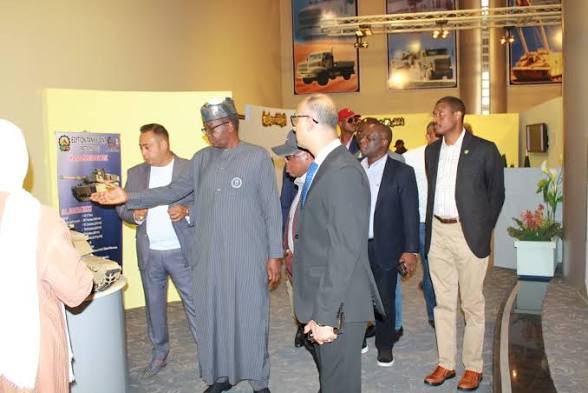
As part of the collaboration, a two-day inspection tour of factories and military production facilities in Cairo was conducted by the Minister of State for Defence, Dr Bello Mohammed Matawalle, and his delegation.

Chief Executive Officer of DICON-D7G, Mr Osman Chennar, stated that the partnership is expected to create employment for over 200 workers, in addition to providing opportunities for approximately 100 retired military personnel.

“The team assessed equipment and production systems intended to support Nigeria’s expanding defence manufacturing objectives,” he said.

He added that the arrangement would establish production lines capable of facilitating the transfer of advanced military technologies to Nigeria, positioning the country to manufacture a broader range of equipment for its armed forces and potentially supply other African markets.

The platforms targeted under the partnership include the Armoured Multi-Purpose Vehicle BR6, a modular multi-mission defence platform, an Armoured Personnel Carrier cabin, a 120mm manual mortar launcher cabin, and medical evacuation and ambulance cabins.

The portfolio also features the MRAP-Buffalo U.10 and M.12 armoured vehicles, MRAP-Buffalo F-4, Rhino Guard GXR anti-drone and RPG-protected vehicle, APC Moon PT6 and GXR Phantom light vehicle, as well as the BMP-2 Infantry Fighting Vehicle.
The planned expansion aligns with Nigeria’s broader push to strengthen indigenous defence production.

The Nigerian Army has also begun receiving locally manufactured armoured vehicles.

The initiative extends beyond vehicles and weapons systems. DICON-D7G is also developing a dedicated military jetty in Lagos to strengthen the logistics chain supporting local defence production by facilitating the movement of raw materials, components and finished military equipment.

Mr Chennar said plans were underway for the development of the facility, which is expected to serve as a strategic hub for the supply and distribution of military equipment within Nigeria and across other African countries.

“For Nigeria, the emerging defence-industrial strategy carries implications beyond military procurement.

“Increased local production could reduce reliance on foreign suppliers, retain defence expenditure within the domestic economy, develop specialised technical skills and build an industrial base capable of sustaining the armed forces during prolonged security operations.

“The DICON-D7G/Eagles partnership is therefore being positioned not merely as an equipment supply arrangement, but as part of a broader effort to build a sustainable Nigerian defence manufacturing ecosystem, one capable of designing, assembling and producing platforms required by the military while eventually serving wider African markets,” he said in a statement on Sunday.

Mr Chennar highlighted that DICON-D7G had planned the launch of its Military Jetty in Lagos, which would provide employment to over 200 retired military personnel and more than 1,000 civilians when the project takes off in the next two to three months.

Sun

Bauchi: Police arrest two suspects over stolen cattle, attempted bribery in Alkaleri

0


The Bauchi State Police Command has arrested two suspects over alleged possession of stolen cattle and attempted bribery in Alkaleri Local Government Area of the state.

The suspects, identified as 26-year-old Abdullahi Adamu and 20-year-old Muktashir Idris, both of Jarmai Village in Dangi Local Government Area of Plateau State, were arrested following the recovery of three cattle allegedly rustled from Yalo Village, Alkaleri LGA.

According to a statement issued on Saturday by the Police Public Relations Officer, SP Nafiu Habib, two complainants reported at the Alkaleri Divisional Headquarters on August 6, 2026, that 103 of their cattle had been rustled by unknown gunmen in July at Yankari Forest and taken to an unknown destination.

Acting on the report, police operatives proceeded to Mararaban Liman Katagum, where the complainants identified three of the missing cattle.

A traditional leader in the area subsequently assisted the police in arresting the two suspects, who were brought to the Alkaleri Division on August 7.

During interrogation, the police said Muktashir Idris confessed that he had been sent by his alleged master, identified as Alaba, to sell the stolen cattle.
The police said efforts were ongoing to arrest Alaba, who is currently at large.

The Command further disclosed that, during the investigation, a brother of one of the complainants informed the police that Alaba had allegedly sent N400,000 to compromise the case.

The money was reportedly recovered by the police and registered as an exhibit.

The police also said the complainant’s brother had earlier promised to assist in facilitating Alaba’s arrest but failed to do so.

The Commissioner of Police, Bauchi State Command, CP Sani-Omolori Aliyu, mni, psc (+), has directed that the case be transferred to the State Criminal Investigation Department for discreet investigation.

The suspects are expected to be charged to court upon completion of the investigation.

The Command reiterated its commitment to tackling cattle rustling and other forms of criminality in the state, while urging members of the public to report suspicious activities to the nearest police station.

Sun

Osun election: We will adopt Adeleke’s victory template for 2027 – Opposition

0


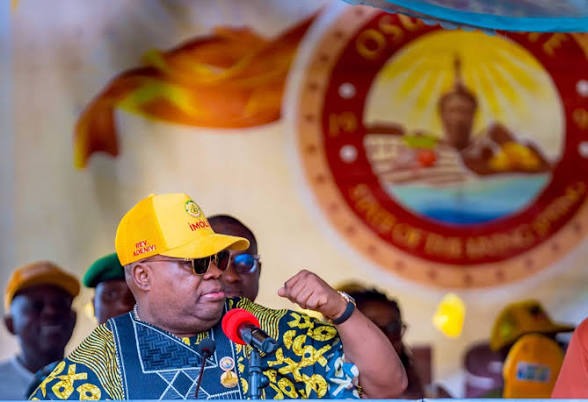
A coalition of opposition leaders and stakeholders under the aegis of G100 has described Governor Ademola Adeleke’s re-election in Osun State as a model the opposition should adopt ahead of the 2027 general elections.

In a statement issued on Sunday in Abuja and signed by Salihu Moh. Lukman, G100 congratulated Adeleke and the people of Osun State, saying their determination had prevailed at the polls.

The coalition urged opposition leaders seeking a different political direction for Nigeria in 2027 to demonstrate the courage, restraint and willingness to compromise which it said contributed to the outcome of the Osun election.

“Osun has shown the pathway. The task now is to take that spirit of cooperation to the national stage,” the group said.

G100 also commended opposition candidates and leaders who set aside their individual ambitions during the election and mobilised their structures and supporters behind Adeleke’s candidacy.

According to the coalition, their decision demonstrated that the broader democratic interest could take precedence over individual ambitions and party interests when necessary.

“The significance of what has happened in Osun goes far beyond the re-election of one governor. Osun has provided a template for 2027,” the statement read.

The group said the opposition had popular support but remained weakened by fragmentation, adding that the Osun election showed what could be achieved when opposition forces united around a common objective.

“The governorship candidates who stepped down and supported Governor Adeleke were each entitled to pursue their own ambitions. They chose instead to ask a more important question: what outcome best serves the people and strengthens the democratic cause?” G100 said.

The coalition said the national opposition must now confront the same question, stressing that Nigeria was bigger than any individual candidate, political ambition or political party.

It urged opposition leaders and stakeholders to draw lessons from the Osun experience and work towards a broad-based alliance capable of presenting Nigerians with a credible alternative in the 2027 general elections.

Sun

INEC Chairman Declares #OsunDecides2026 Situation Room Closed

0


The Chairman of the Independent National Electoral Commission (INEC), Prof. Joash Amupitan, SAN, has formally declared the #OsunDecides2026 Situation Room closed following the successful conclusion of the Osun State Governorship Election and the declaration of the election results in the early hours of Sunday, August 16, 2026.

Addressing staff at the Situation Room, Amupitan expressed appreciation for their dedication, sacrifice and professionalism throughout the electoral process.

He commended staff at the Commission’s headquarters, Osun State and local government offices, as well as personnel deployed to the field, particularly those who worked at polling units and members of the technical teams.

The INEC Chairman acknowledged the long hours put in by staff, noting that many sacrificed time with their families and worked under demanding conditions to support the successful conduct of the election and safeguard the integrity of the electoral process.

He also attributed the peaceful atmosphere that characterised the election to the grace and protection of Almighty God.

Describing the Osun election as a milestone rather than a destination, Amupitan stressed that the lessons and experiences gained must guide the Commission’s preparations for the 2027 General Election.

He urged staff to maintain a higher level of vigilance, transparency, professionalism and commitment while upholding strict neutrality in the discharge of their duties.

The Chairman further called on staff to remain committed to INEC and recognise the crucial role the Commission plays in sustaining Nigeria’s democracy.

“Let us learn from our experience, refine our strategies and approach the upcoming national task with renewed vigour and absolute neutrality. Let us remain steadfast in our duty, knowing that we are the gatekeepers of our nation’s democracy,” he said.

Amupitan thereafter formally declared the #OsunDecides2026 Situation Room closed, bringing to an end the Commission’s central monitoring and oversight operations for the Osun State Governorship Election.

President Tinubu Congratulates Adeleke on Osun Re-Election, Hails Democracy

0


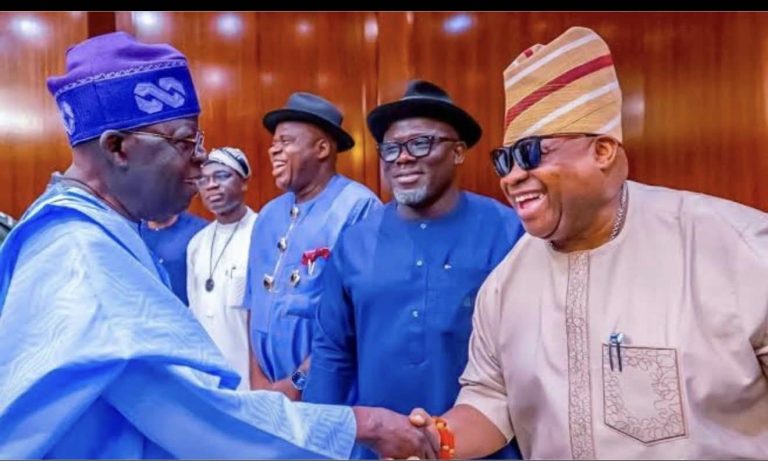
President Bola Ahmed Tinubu has congratulated Governor Ademola Adeleke on his re-election in the just-concluded Osun State governorship election, describing the victory as a fitting assurance that democracy will continue to flourish in Nigeria under the All Progressives Congress (APC) administration.

In a statement issued on Sunday, August 16, 2026, by Bayo Onanuga, Special Adviser to the President on Information and Strategy, Tinubu said he telephoned the governor
earlier in the day to offer his congratulations.

“I called Governor Ademola Adeleke earlier today to congratulate him on his election victory in Osun State. His victory once again confirmed the confidence the people of Osun State have in him,” the President said.

President Tinubu wished Adeleke success as he prepares to lead the state for another four years and urged him to prioritise unity.
“Now that he has won, Governor Adeleke must unite the people of Osun State and rally them for growth, stability, and social and economic progress, regardless of the political choices they made at the election,” he stated.

The President also saluted the courage and discipline of the other contestants, noting that their participation deepened and enriched Nigeria’s democratic culture. He said the election outcome reflected the will of the people and served as a clear assurance that democracy would continue to thrive in the country.

President Tinubu further commended the Independent National Electoral Commission (INEC) and security agencies for conducting a peaceful and transparent election that produced a clear winner.

Osun election: Peter Obi congratulates Adeleke, says ‘When the people stand, democracy wins

0


Nigeria Democratic Congress 2027 presidential candidate, Peter Obi, has congratulated Osun State Governor, Ademola Adeleke, on his re-election, describing the outcome as an important victory for democracy.

Obi also congratulated the people of Osun State, saying they had spoken with “courage and clarity” by reaffirming their power to choose their leaders.

In a statement shared on his X page, titled “Osun: When the People Stand, Democracy Wins,” Obi said Adeleke had earned the renewed confidence of the people through his commitment to their needs, compassion and achievements in office.

He particularly commended Osun youths for what he described as their courageous and peaceful defence of their democratic mandate.

“When citizens stand firmly to protect their votes, the forces of good can overcome the forces of darkness,” Obi said.
He urged Nigerians to draw lessons from the Osun election ahead of the 2027 general elections by remaining informed, participating actively in the electoral process and protecting their votes.

Obi also called on political actors to put the interests of Nigerians above partisan considerations and embrace peace, unity and the rule of law.

He said elections should be contests of ideas, competence, character and service rather than battles of violence.

Obi concluded by expressing hope that the Osun experience would strengthen Nigerians’ confidence in democracy and inspire greater commitment to building a just, secure and prosperous nation.

“A New Nigeria is POssible,” he said.

Sun

Osun election: I’m expecting your congratulations – Adeleke to Oyebamiji

0

Governor Ademola Adeleke has called on his closest challenger in the Osun State governorship election, Bola Oyebamiji of the All Progressives Congress, to congratulate him following his victory at the polls.

Adeleke made the call while speaking shortly after the Independent National Electoral Commission declared him the winner of the 2026 Osun governorship election.

The governor said he expected Oyebamiji to accept the outcome and reach out to congratulate him.

“This is no victory, no vanquish. I want them to come over. I’m expecting Oyebamiji to call me and congratulate me,” Adeleke said.

Adeleke described his victory as a win for democracy and the people of Osun State, whom he credited with supporting his administration.

“It’s a victory for democracy in Nigeria,” he said.

He said the result represented an endorsement by Osun voters of the work done by his administration, particularly in infrastructure, education and agriculture.
“It’s a victory for Osun people that have stood by me, that say, Imole, you have done a lot for us. You have given us dividends of democracy in terms of infrastructure, improving our education, agriculture, and so forth,” the governor said.

Adeleke also thanked President Bola Tinubu for congratulating him, saying the President’s action demonstrated respect for the democratic process.

“Mr. President has called me, and he has congratulated me. Thank you, Mr. President, for making sure democracy lives on because we fought for it,” he said.

The governor, who expressed confidence in his administration’s plans for the state, said his vision was to transform Osun from a civil service-dependent state into an industrial hub.

“My vision is to make sure Osun State moves from civil service state to industrial state and make sure all across Osun State development is on,” Adeleke said.

Adeleke polled 511,067 votes to defeat Oyebamiji, who secured 444,815 votes in the election conducted across the state’s 30 local government areas.

The victory secured Adeleke another term as governor of Osun State.

Sun

UPDATED: INEC declares Ademola Adeleke winner of Osun governorship election

0

The Independent National Electoral Commission (INEC) has declared the incumbent governor of Osun State, Ademola Adeleke, the winner of the governorship election.

Adeleke defeated his closest challenger, Bola Oyebamiji of the All Progressives Congress (APC), in the keenly contested election, polling 511,067 votes against Oyebamiji’s 444,815 votes.

Adeleke, the Accord Party candidate, was announced winner by the state returning officer, Prof. Joshua Ogunwole, in the early hours of Sunday after a fiercely contested poll across the state’s 30 local government areas.

Oyebamiji came second, while the African Democratic Congress (ADC) candidate, Najeem Salaam, emerged as the second runner-up.

A total of 15 political parties contested the election, with 1,906,390 permanent voter cards collected, according to the electoral umpire.

Sun

Osun election results: B-Red expresses confidence in Adeleke’s victory

0

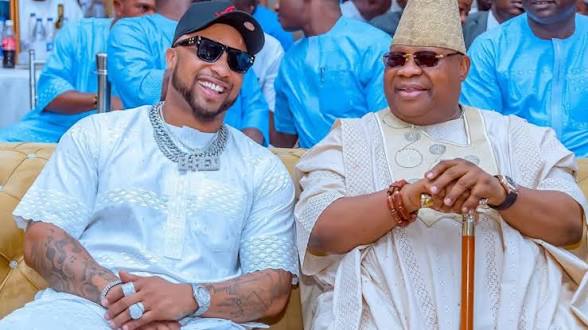
Singer and businessman B-Red has voiced confidence that his father, Osun State Governor Ademola Adeleke, will secure victory in the ongoing governorship election.

B-Red shared his optimism on Saturday evening as the Independent National Electoral Commission continued the collation of results from the state’s 30 local government areas.

In a post on X, the singer said he was with the governor and could see signs of happiness on his face as the results emerged.

“Sitting with my dad and I can see the joy and happiness on his face …. 4 + 4 = 8 OSUN,” he wrote.

Adeleke is seeking another four-year term under the Accord Party after his exit from the Peoples Democratic Party.

He is up against APC candidate Bola Oyebamiji and Najeem Salaam of the African Democratic Congress, with the election held across 3,763 polling units in the state.

While voting was generally peaceful in many areas, the exercise was marred by isolated reports of BVAS challenges, alleged vote-buying and disruptions at some polling locations.

Before the election, Adeleke had called on security agencies to ensure the safety of voters, electoral personnel and officials involved in the collation process.

He also urged residents to maintain peace and allow INEC to complete the electoral process.

Sun

Tinubu’s security reform splits stakeholders

0


• More questions over new army divisions, pay rise
• Push for state police gains momentum, but fear of abuse persists

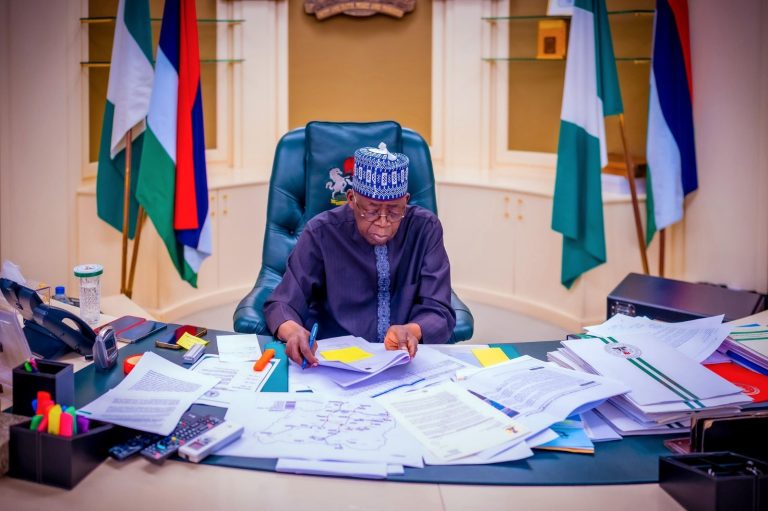
In a synchronised effort to overhaul Nigeria’s overburdened security framework, President Bola Ahmed Tinubu recently initiated a suite of structural reforms that combine military expansion and an army pay rise with a legislative push for decentralised state police.


Coming simultaneously, these three initiatives directly target the core structural vulnerabilities that security analysts, regional leaders, and military strategists have highlighted for decades: morale, response time, and local knowledge.

On one hand, approving a 30 to 80 per cent salary increase for approximately 250,000 armed forces personnel, with the largest adjustments explicitly directed toward frontline junior officers, is designed to rebuild troops morale. On the other hand, expanding the Nigerian Army from eight to 12 divisions while adding 28,000 active troops aims to shrink operational response times across multi-theatre conflict zones. Meanwhile, initiating constitutional amendments and building cross-party state consensus to establish state police forces seeks to institutionalise local knowledge within community intelligence frameworks. Conceptualised together, this three-pronged approach signals an understanding that Nigeria’s security breakdown is systemic rather than merely tactical.

However, transforming high-level policy announcements into tangible security on the ground requires navigating complex fiscal realities, historical political suspicions, and systemic implementation bottlenecks.

Morale and welfare

The first pillar of the administration’s strategy focuses directly on human capital and troops welfare. For over a decade, Nigeria’s military personnel have been deployed across nearly all 36 states, fighting a continuous multi-front campaign against Boko Haram and ISWAP insurgents in the North-East, armed banditry and kidnapping cartels in the North-West, violent secessionist groups in the South-East, and widespread oil theft in the Niger Delta. This prolonged operational tempo has resulted in severe combat fatigue, high attrition rates, and degraded discipline.

A substantial salary increase addresses a long-standing grievance within the ranks. The decision to skew the highest percentage increases toward junior officers and rank-and-file soldiers is strategically targeted. Frontline tactical units bear the brunt of asymmetrical warfare, often operating in remote hinterlands under extreme physical and psychological strain. From the point of view of analysts, the logic is straightforward: an underpaid, financially stressed soldier stationed at a highway checkpoint is far more susceptible to petty corruption, extortion, and desertion than one who receives competitive compensation. Higher pay enhances recruitment appeal, improves unit discipline, and reinforces organisational loyalty.Applauding this intervention, politician and elder statesman, Chief Chekwas Okorie, noted that the policy directly confronts long-simmering institutional deficits.

“Our military personnel, across the Army, Navy, and Air Force, have sacrificed immensely while quietly bearing their burdens. In fact, it is mostly retired personnel who have found the courage to speak out about the critical deficits in equipment, training, and morale that have long impaired operational effectiveness. The President’s policy directly addresses these issues.”

Yet, serious fiscal and operational questions complicate this welfare package, particularly regarding macroeconomic inflation, fiscal sustainability, and inter-agency parity. Security expert Jackson Olalekan-Ojo cautions that nominal wage increases risks being rapidly neutralised by broader economic headwinds. In his assessment, raising military remuneration offers little structural benefit when severe currency devaluation erodes real purchasing power: “In my view, salary increments matter less than what that money can actually buy in the market. There is no point in increasing soldiers’ salaries if their children cannot attend good schools or access proper medical care. Likewise, raising their pay means little if they are still deployed with archaic equipment. Ultimately, this pay increase is merely a temporary relief for personnel on the battlefield. Within two months, the effect will wear off completely. What we truly need are long-term welfare packages—decent housing, reliable water and electricity, quality healthcare within the barracks, and access to good schools.”Furthermore, with debt servicing obligations consuming a major share of federal revenues and macroeconomic pressures squeezing the national budget, maintaining an expanded defence payroll beyond the current electoral cycle poses a significant challenge.

Retired General Ishola Williams raises additional concerns regarding broader fiscal equity and pension liabilities: “Nobody is talking about the financial implications of expanding military divisions, which must compete for funding with health, education, and other vital sectors. Nobody is talking about pensions for military retirees, either. If you increase the salaries of serving soldiers and officers, what happens to military pensioners?”

Besides, boosting military compensation in isolation risks creating deep resentment among partner security agencies. The Nigeria Police Force (NPF), the Department of State Services (DSS), and the Nigeria Security and Civil Defence Corps (NSCDC) operate alongside troops in joint task forces. Excluding these civil security arms from equivalent wage reviews could undermine inter-agency collaboration and joint intelligence operations.

Chief Okorie emphasises that extending wage parity to non-military security arms is an urgent imperative.

“This pay rise must extend beyond the military to include the Nigeria Police Force, the Department of State Services (DSS), and the Nigeria Security and Civil Defence Corps (NSCDC). Waiting for public agitation before acting would be a grave error. The DSS, in particular, may not require the numerical strength of the military or police, but it demands heavy investment in technology and advanced training as the primary intelligence gathering agency.

“Ultimately, a salary increase is a compensation adjustment, not an operational multiplier. High morale cannot substitute for armoured personnel carriers, air-reconnaissance assets, secure communications gear, or basic combat logistics. If frontline troops receive higher pay but remain outgunned by well-funded criminal networks, operational outcomes will remain unchanged.

Structure and manpower

The second pillar targets the structural architecture of the armed forces. Expanding the Nigerian Army from eight to 12 divisions and injecting 28,000 new recruits represents one of the largest structural expansions of the nation’s land forces in recent history. Under the existing configuration, military commands have been stretched far beyond their intended capacity, forcing tactical decisions through centralised chains of command in Abuja. Supporters argue that creating additional divisional headquarters and localised operational theatres will shorten command-and-control loops.

Jackson Olalekan-Ojo acknowledges the necessity of closer military presence.

“Expanding the military command aims to spread personnel across the country so that troops can be closer to the citizens. Therefore, it is well-deserving of applause. However, policy formulation is not our main challenge in Nigeria—policy implementation is. I hope the people who are recruited will not include members of Boko Haram or other criminal elements. If recruitment, promotion, and all other processes are conducted properly, this reform will pose a real threat to terrorists, bandits, and kidnappers.”

Chief Okorie similarly welcomes the expansion, arguing that increased numerical strength is crucial to eliminate ungoverned spaces where criminal cartels thrive. However, he sharply criticises how military personnel are currently deployed for routine civil policing.

“Our soldiers are primarily trained to defend the nation’s territorial integrity; their heavy involvement in internal security is largely a consequence of widespread insurgency. However, I strongly oppose deploying soldiers to man highway checkpoints—which have effectively turned into illegal tollgates. In the South East, where the density of checkpoints is higher than anywhere else in the country, residents view these deployments as an army of occupation. It creates a siege mentality and alienates the public.”

Contrasting sharply with these views, Gen. Ishola Williams (rtd) offers a fundamental critique of the expansion, arguing that deploying army divisions for internal security represents a complete failure of strategic and tactical thinking that misdiagnoses Nigeria’s true threat profile: “What is happening now is not a national security structure; it completely lacks strategic and tactical thinking. The job of the military is not to chase kidnappers, criminals, and bandits. What the government is trying to do is take Nigeria back to the old days when the British created the Constabulary. Not increasing military commands from eight to 12—for what? Who is fighting Nigeria apart from Boko Haram? Who is the enemy of Nigeria, and where are they coming from?”

Gen. Williams asserts that instead of expanding army divisions, the government should restructure civil law enforcement by unbundling the Police Mobile Force (MOPOL).

His words: “If they want to restructure properly, they should remove MOPOL from the Nigeria Police Force and establish it as an independent paramilitary force to handle these criminal activities. By doing so, the army could concentrate on Boko Haram, working with Chad, Niger, and Cameroon in collaboration with the Multinational Joint Task Force. They simply need to upgrade MOPOL’s training system to relieve the army of the duty of handling crimes like banditry and kidnapping.”

These conflicting expert perspectives underscore three primary structural risks inherent in the expansion. First, deploying regular army divisions to manage civil disturbances, farmer-herder disputes, and rural banditry risks the over-militarisation of internal security. Conventional army units are trained for power projection and territorial defence, not civilian policing or criminal investigation. Second, establishing new divisions requires substantial capital expenditure for headquarters infrastructure, logistics depots, staff transport, and administrative personnel, risking that allocated funds will be absorbed by top-heavy bureaucratic overhead rather than reaching field-level operational budgets. Third, increased federal military footprints within states can create federal-state jurisdictional friction with state governors who, despite being designated constitutional Chief Security Officers, exercise no operational control over federal military commanders.

Decentralisation and state policing

The third, and arguably most contentious pillar, is the executive push to establish state police forces. For decades, Nigeria’s highly centralised police structure, where a single Inspector-General of Police in Abuja directs operations across a nation of over 200 million people, has proved incapable of maintaining law and order in rural and border communities. The primary argument for state policing rests on the necessity of local intelligence, geographic familiarity, and community-embedded security operations. Gen. Williams (rtd) strongly endorses the principle of decentralised, bottom-up security structures: “Policing is bottom-up, not top-down; security of the state, however, is top-down. You need a crime intelligence and criminal investigation agency at the federal level to support state agencies in handling criminals, including bandits and kidnappers. Therefore, you do not need a centralised federal police force. A paramilitary mobile unit could then back up state police forces. The push for state police is entirely justified.

“However, moving state police from a political proposal to an operational reality presents formidable legal, political, and financial hurdles.

Constitutional and political obstacles

Altering Nigeria’s security architecture requires amending Section 214 of the 1999 Constitution (as amended), demanding a two-thirds supermajority vote in both houses of the National Assembly followed by formal ratification from at least 24 of the 36 State Houses of Assembly. Beyond legislative mechanics lies the historical memory of pre-1966 regional and Native Authority police forces, which regional political elites frequently weaponised to suppress opposition voices and intimidate voters.

Jackson Olalekan-Ojo highlights these deep political anxieties regarding partisan abuse.

“As many as 30 or 31 states in the federation are currently controlled by the ruling party. How will they avoid abusing state police, especially now that the President is pushing for it and the National Assembly is driving it forward? Will they not use state police to intimidate the opposition or tamper with election logistics? Nonetheless, if personnel are thoroughly vetted and state police officers are properly paid, I believe it could be the right move.”

Fiscal capacity and revenue restructuring

The most formidable practical challenge lies in state-level solvency. Given that more than 20 state governments regularly rely on federal bailouts to cover basic public sector payrolls, funding, arming, training, and maintaining modern police forces poses an existential financial risk. Unpaid or underfunded state police officers armed with deadly weapons represent a direct recipe for systemic corruption and extortion.

To overcome this fiscal bottleneck, Chief Chekwas Okorie argues that state policing mandates an immediate overhaul of national revenue allocation and security funding mechanisms: “Establishing state police mandates a review of the national revenue allocation formula. The Federal Government cannot devolve its security responsibilities to the states without simultaneously transferring the corresponding federal revenues needed to execute them. A revised allocation formula must reflect these added state responsibilities.”

Okorie further outlines two pragmatic funding streams to ensure fiscal sustainability.

“Regarding police financing, the Federal Government must revisit the Police Trust Fund mechanism. With transparency and serious commitment, a small tax levied on corporate organisations can generate substantial resources to equip the police. Another viable funding stream is the reform of security votes. Governors currently receive massive, unbudgeted sums under the guise of security votes without any accountability. These funds should be officially audited and appropriated directly toward sustaining state police forces.”

Political timelines and election dynamics

It is impossible to isolate these security reforms from Nigeria’s broader political timeline. Initiating major welfare hikes, military command expansions, and constitutional devolution projects simultaneously carries significant political implications ahead of the 2027 general elections.

A major salary increase secures institutional goodwill across military ranks, reducing internal disaffection. The creation of new divisional commands demonstrates executive decisiveness to regional electorates severely affected by insecurity. Meanwhile, championing state policing grants the administration substantial political leverage with state governors—across both ruling and opposition parties—who have long advocated for regional security control.

However, framing these structural changes around political timelines creates the danger of prioritising public announcements over sustainable implementation. High-profile policy unveilings can generate temporary political goodwill, but long-term security stability relies entirely on funding consistency, institutional accountability, and rigorous execution. As Gen. Williams (rtd) bluntly assesses, there is widespread concern that elements of these policies function as “merely electioneering to appease people who have been complaining about various security issues.”

Implementation concerns and the road ahead

President Tinubu’s three-pronged strategy represents a coherent, structurally aligned diagnosis of Nigeria’s insecurity challenge. By simultaneously addressing troop morale through compensation, operational capacity through military expansion, and intelligence gathering through police decentralization, the administration has targeted the primary structural weaknesses of the national security state.

Nevertheless, structural concepts do not automatically produce public safety. As Jackson Olalekan-Ojo observes, the ultimate test lies entirely in execution: “Policy formulation is not our main challenge in Nigeria—policy implementation is.”

Echoing this sentiment, Chief Okorie emphasises that “sustainability is not the obstacle; political will and proper fiscal restructuring are.”

The ultimate success of these initiatives will not be measured by constitutional amendment bills, military command inaugurations, or pay raise announcements. The true benchmark rests on tangible outcomes: whether farmers in Benue, Niger, and Kaduna states can return to their fields without fear of attack; whether economic transit along northern highways can proceed without ambush or illegal extortion; and whether citizens across all regions experience a measurable, sustained reduction in violence.

Until these conditions are met on the ground, high-level structural reforms remain incomplete. In the final assessment, public safety is delivered through sustained operational execution—and no amount of policy architecture can substitute for security delivered in practice.”

Sun