Home Blog Page 222

War against ‘organised murder’ Fake medicines being destroyed

0


…Inside NAFDAC, Customs’ battle against drug trade
“Trade in counterfeit medicines is organised murder. The importers and manufacturers are worse than armed robbers because they kill citizens silently through poison disguised as healing”.

That was how the late Prof. Dora Akunyili, former Director-General, National Agency for Food and Drug Administration and Control (NAFDAC), justified her fierce battle against the merchants of death who traded poison for profit.


According to her, there was no need to soften the grip on unscrupulous importers and manufacturers who, driven by greed, were ready to wipe out millions of Nigerians to pocket billions of dollars.

Today, Nigeria still battles a growing poisoning crisis as fake drugs and foods continue to flood various markets. The worrisome situation, aside from putting unsuspecting citizens at risk, is still killing many.

An official of the National Agency for Food and Drug Administration and Control (NAFDAC), Dr. Martins Iluyomade, stated that fake drugs have killed more Nigerians than Boko Haram insurgents.


Fake medicines
Iluyomade, Director of Investigation and Enforcement at NAFDAC, made the claim in August 2025 after the agency’s five-day enforcement operation at the Lagos Trade Fair Market, where more than 10,000 cartons of unregistered tomato paste and cosmetic products were seized.

“I can say authoritatively that deaths from substandard medicines, cosmetics and unsafe foods exceed the number of people killed by Boko Haram.

“This is why the agency remains committed to ensuring Nigerians use only products that have passed regulatory processes, assuring safety and effectiveness”, he told journalists.

Social scientists point to an entrenched network within the medicine importation chain, allegedly involving wealthy and well-connected players, as key drivers of the illicit trade.

Worse, many insist there is not sufficient deterrence on ground to discourage the blood-stained business.

Those caught somehow get off the hook and return to the nefarious trade soon after.

The social media is awash with calls from consumers to tighten the noose on all culprits, including life sentences.

According to the Director-General of NAFDAC, Prof. Mojisola Adeyeye, the battle against fake drugs is a relentless one.

She has repeatedly stressed that medicines should be obtained from authorised and licensed suppliers, while suspected falsified products should be reported to NAFDAC.

In June this year, NAFDAC launched an improved Med Safety App specifically to strengthen reporting of substandard and falsified medical products and adverse drug reactions.

The war against fake drugs starts from the borders.

A container arrives at a Nigerian port, declared as something innocent. On examination, however, Customs officers discover that its contents are not what the paperwork says.

Instead of legitimate goods, they find cartons of unregistered medicines, expired pharmaceuticals, products bearing questionable registration numbers and other substances that should never find their way into the Nigerian medicine market.

That is where Nigeria’s long-running battle against fake and substandard drugs begins.

For the National Agency for Food and Drug Administration and Control and the Nigeria Customs Service (NCS), the fight has moved beyond simply confiscating suspicious medicines. It now involves intelligence gathering, surveillance, raids, arrests, laboratory analysis, seizures, destruction of products and, in some cases, prosecution.

But the size of the seizures also reveals the scale of the challenge.

In July 2026, Customs handed over nine containers containing narcotics, fake medicines and unregistered pharmaceutical products to NAFDAC and the National Drug Law Enforcement Agency (NDLEA).

The seized consignments had a combined duty paid value of N53.39 billion. They included 339,800 bottles of codeine syrup, expired pharmaceutical products and fake or unregistered medicines.

Days earlier, Customs in Port Harcourt handed over expired medicines with a cost, insurance and freight value of more than N59 million to NAFDAC. The agency said the intervention prevented the products from reaching unsuspecting Nigerians.

These are not isolated incidents.

In February 2026, NAFDAC raided locations in Lagos and seized about N3 billion worth of suspected fake malaria medicines and cosmetics. Eight truckloads of products were removed during the operation, while four people were arrested. Investigations were launched into the activities of those allegedly connected with the products.

The operations illustrate the different roles played by the two agencies.

Customs is positioned at Nigeria’s ports, airports and borders, where it can intercept illicit pharmaceutical consignments before they enter the domestic market.

NAFDAC, on the other hand, is responsible for determining whether medicines are registered and compliant with regulatory requirements and for pursuing enforcement action against manufacturers, importers, distributors and sellers of offending products.

The relationship becomes particularly important when Customs discovers pharmaceutical products.

In July 2025, for example, the Apapa Area Command of Nigeria Customs handed over 25 containers containing counterfeit medications, unregistered pharmaceutical products and prohibited substances to NAFDAC. The consignments had a combined duty-paid value of N9.2 billion.

The seizure included unregistered medicines, codeine-containing cough syrups, antibiotic injections and tablets bearing fake NAFDAC registration numbers. Customs described the operation as exposing a sophisticated network attempting to circumvent Nigeria’s import regulations.

Another Customs operation in Port Harcourt exposed the lengths to which smugglers can go to bring illegal pharmaceuticals into Nigeria.

A 40-foot container declared as motorcycle spare parts was examined and found to contain 2,455 cartons of unregistered pharmaceutical products.

The discovery showed that the battle against fake drugs is also a battle against deliberate concealment and false declarations.

On July 2, 2026 during the handover of N53.39bn worth of seized narcotics, counterfeit medicines and expired pharmaceuticals to NAFDAC and NDLEA.

The Nigeria Customs Service Comptroller General, Adewale Adeniyi said the seizures resulted from intelligence gathering, non-intrusive inspection, physical examination and inter-agency collaboration.

International connections.

“These seizures represent far more than monetary value. They represent lives protected, families preserved, communities secured and countless young Nigerians shielded from the devastating consequences of drug abuse and unsafe medicines”, he said.

NAFDAC documented an intelligence-led investigation involving 31 containers of unregistered pharmaceutical products, including high-dose tramadol, allegedly shipped from India to Nigeria. The containers were reportedly disguised as building materials and intended for bonded terminals. NAFDAC tracked the containers across sea routes in cooperation with the Nigeria Customs Service. 21 were eventually intercepted at Apapa Port.

NAFDAC also issued an alert on falsified ZACEF-TZ injection identified in Nigeria. The product claimed to have been manufactured for JioPharm International in India, while the Nigerian marketer was identified as JAC Pharmaceuticals. NAFDAC said the registration number printed on the product was fake and did not exist in its database.

Fake drugs war hits markets

The ports are only the first line of defence.

Once illicit medicines enter the country, they can move through wholesalers, warehouses, open drug markets, pharmacies, patent medicine shops and informal distribution networks.

That explains why NAFDAC has increasingly taken enforcement operations directly into major drug markets.

In 2025, the agency conducted extensive raids across some of Nigeria’s biggest pharmaceutical trading centres, including Idumota in Lagos, Bridge Head Market in Onitsha and Eziukwu Market in Aba.

The operations resulted in the closure of thousands of premises and the evacuation of truckloads of suspected counterfeit, expired, unregistered and improperly stored medicines.

An analysis of NAFDAC enforcement records shows that the agency’s seizures and enforcement activities involved products valued at more than N1.1 trillion during the period examined.

At Idumota alone, more than 3,000 shops, warehouses and packing stores were screened and sealed during the operation.

The message from the agency was that fake drugs are not simply imported through ports; they are also stored, distributed and sold through domestic networks.

Arrests follow seizures

In 2025, NAFDAC arrested about 114 suspects during major enforcement raids, according to analysis of agency records.

However, only 16 cases proceeded to prosecution.

That gap between arrests and prosecution raises an important question of what happens after the cameras leave and the seized products are taken away?

The answer is crucial because seizure alone does not dismantle the business.

The people moving counterfeit medicines through Nigeria’s supply chain are not necessarily the same people whose names appear on shipping documents. Some may be distributors, warehouse owners or retailers, while the financiers and organisers operate further up the chain.

Consequently, investigators need to establish who imported the products, who financed the transaction, where the medicines were headed and who was responsible for distributing them.

That process can be lengthy and legally complicated.

Prosecution, the weak link?

The most difficult part of the battle may therefore not be discovering fake drugs but securing convictions.

Examination of NAFDAC enforcement records showed that the agency conducted 1,724 investigations and 19,204 surveillance operations in 2024. Yet, only 20 court cases were filed and six convictions were secured that year.

The previous year, NAFDAC conducted 3,486 investigations and 26,453 surveillance operations, while four court cases were filed.

The figures point to a disparity between enforcement activity and judicial outcomes.

Thousands of inspections and investigations can produce mountains of seized medicines, but if relatively few cases reach court or end in convictions, the deterrent effect may remain limited.

NAFDAC’s own enforcement records, however, show that prosecution is possible.

The agency has documented cases involving suspects accused of distributing counterfeit medicines, including cases involving Tramadol and other prescription medicines. Some suspects have been prosecuted at the Federal High Court in Lagos.

The challenge is to ensure that such cases do not remain isolated successes.

Why the trade persists

According to NAFDAC, the counterfeit-drug business survives because there is money to be made.

Fake medicines can be produced or acquired at much lower cost than genuine products and then sold through legitimate-looking channels.

For consumers struggling with the rising cost of living, the cheaper product can appear attractive.

That creates an especially dangerous environment: the consumer may not know that the medicine is fake, while the seller may deliberately exploit the buyer’s ignorance.

There is also the problem of sophisticated packaging.

Some counterfeit products carry registration numbers, brand names and packaging designed to resemble genuine medicines. In some cases, counterfeiters have even attempted to use fake NAFDAC registration numbers.

This makes enforcement and consumer awareness equally important.

NAFDAC has consequently continued to issue public alerts on falsified and substandard medicines and to warn Nigerians against purchasing medicines from unapproved sources.

Battle cannot end at the warehouse

According to experts, the partnership between Customs and NAFDAC is very important.

Customs can stop suspicious consignments at the border, while NAFDAC can authenticate medicines and pursue regulatory action. When necessary, other agencies become involved in investigation and prosecution.

They also believe the success of the war should not be measured only by the number of containers seized or trucks evacuated.

The real test should be whether the enforcement chain can move from detection to arrest, from arrest to prosecution and from prosecution to conviction.

A N53 billion seizure makes headlines. So does the seizure of N3 billion worth of fake medicines.

But the long-term victory will come when those who finance and organise the trade begin to regard it as a business with a high probability of detection and serious legal consequences.

Until then, the cycle can continue where a container is intercepted, a warehouse is raided, suspects are arrested, products are destroyed and another shipment begins its journey.

For NAFDAC and Customs, therefore, the war against fake drugs is no longer simply about finding the medicines.

It is about finding the people behind them.

And, more importantly, ensuring that the journey from seizure to courtroom to conviction is completed.

Sun
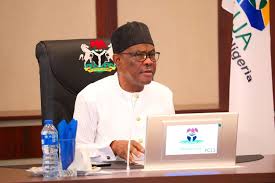
Wike slashes C-of-O waiting time as FCT processes 26,272 titles

0


Federal Capital Territory (FCT) Administration has reduced the waiting period for landowners to obtain Certificates of Occupancy (C-of-O) to two weeks, as part of reforms aimed at removing bottlenecks in property documentation and improving the ease of doing business.

The reform comes as the administration, under FCT Minister Nyesom Wike, records 26,272 Certificates of Occupancy signed since President Bola Tinubu assumed office.

The figure represents a significant increase over the 8,697 C-of-Os produced and signed between 2010 and 2023, with the current administration processing 17,575 more certificates than were signed during the preceding 13-year period.

Senior Special Assistant to the FCT Minister on Public Communications and Social Media, Lere Olayinka, disclosed this in a statement on Sunday.

Olayinka said the new process allows land allottees who have completed the required payments to obtain their Certificates of Occupancy within two weeks.

“The moment necessary payments are made, land allottees can now get their C-of-O within two weeks,” he said.

He added that the administration had introduced an automated notification system to alert allottees when their documents were ready for collection, further reducing the need for repeated visits to government offices.

The development is expected to have a direct impact on property owners and businesses that rely on land titles to access financing.
A valid Certificate of Occupancy serves as an important instrument for securing commercial loans, mortgages and capital for business expansion. Delays in obtaining the document can therefore prevent property owners, particularly small and medium-sized businesses, from converting their assets into productive capital.

The FCT Administration said many of the beneficiaries of the 26,272 C-of-Os processed under Wike had received their land allocations more than 10 years ago but were yet to obtain the necessary title documents.

Olayinka attributed the delays experienced under previous administrations to inefficiencies in the process, saying the bottlenecks discouraged some landowners from completing payments on their allocations.

A breakdown of the figures showed that 5,500 Certificates of Occupancy were produced and signed during the five-and-a-half-year administration of former President Goodluck Jonathan, while 3,197 were processed during the eight-year administration of former President Muhammadu Buhari.

The FCT Administration also recorded an increase in property-related approvals under the current administration.

In the last three years, it granted 2,521 Consents to Assign and 177 Consents to Mortgage. This compares with 753 Consents to Assign and 180 Consents to Mortgage granted under Jonathan, and 684 Consents to Assign and 164 Consents to Mortgage under Buhari.

A Consent to Assign is required for the legal transfer of property, while a Consent to Mortgage is required before a property can be used as collateral for a loan.

The FCT Administration said the reforms were designed to make land documentation faster and more efficient, while unlocking the financial value of property and supporting the Federal Government’s broader ease-of-doing-business agenda.

Sun

Osun: APC weighs options as Tinubu, Obi, NGF, Duke, Hashim, others hail Adeleke

0


President urges gov to unite state, deliver growth •Adeleke extends olive branch, backs Tinubu for 2027

President Bola Tinubu yesterday congratulated Osun State Governor, Ademola Adeleke, on his re-election, as the All Progressives Congress (APC) said it was studying the outcome of Saturday’s governorship election and would consult its lawyers before deciding its next step.

The Independent National Electoral Commission (INEC) declared Adeleke, candidate of the Accord Party, winner after he polled 511,067 votes to defeat the APC candidate, Bola Oyebamiji, who scored 445,815 votes.

Adeleke won in 19 of the state’s 30 local government areas, while Oyebamiji secured victory in 11.

The result gives Adeleke a second term in office, following his victory over the then incumbent governor, Gboyega Oyetola of the APC, in the 2022 election.

Reacting to the result, Tinubu said he had personally called Adeleke to congratulate him and urged the governor to use his renewed mandate to unite the people of Osun State and pursue development irrespective of their political affiliations.

In a statement issued by his Special Adviser on Information and Strategy, Bayo Onanuga, the President said Adeleke’s victory confirmed the confidence of the people of Osun in his leadership.

“I called Governor Ademola Adeleke earlier today to congratulate him on his election victory in Osun State. His victory once again confirmed the confidence the people of Osun State have in him,” Tinubu said.

He urged Adeleke to “unite the people of Osun State and rally them for growth, stability, and social and economic progress, regardless of the political choices they made at the election.”

Tinubu also commended the other contestants for what he described as the courage and discipline they displayed during the election.

“The outcome of the election reflects the will of the people and is a fitting assurance that democracy will continue to flourish in our land,” he said.

The President commended INEC and the security agencies for conducting what he described as a peaceful and transparent election that produced a clear winner.

•NGF hails Adeleke

The Nigeria Governors’ Forum (NGF) also congratulated Adeleke, describing his victory as evidence of the confidence reposed in his leadership by Osun voters.

In a statement by its Chairman and Kwara State Governor, AbdulRahman AbdulRazaq, the forum said Adeleke’s achievements and personal qualities contributed to his victory.

The NGF commended the people of Osun for their turnout and said the interest generated by the off-cycle election demonstrated the resilience of Nigeria’s democracy.

It also commended the security agencies for creating an environment that allowed the election to take place with minimal incidents.

The forum expressed confidence that Adeleke would build on the achievements of his first term in the interest of the people of Osun State.

•PDP, opposition groups hail result

The Peoples Democratic Party (PDP), under the National Working Committee led by Abdulraham Mohammed, described Adeleke’s victory as well-deserved.

In a statement by its National Publicity Secretary, Jungudo Mohammed, the party said the result reflected the confidence Osun residents had in Adeleke, despite his having contested the election on the Accord Party platform.

A rival PDP faction led by Tanimu Turaki described the result as a possible preview of the 2027 general election.

The faction alleged that the APC deployed intimidation and pressure in its bid to take control of the state but was resisted by voters.

It also criticised alleged partiality by security agencies and raised concerns over the freezing of state government accounts by the Economic and Financial Crimes Commission (EFCC) during the electoral period.

The faction further questioned the delay in uploading results from some polling units, saying such developments could undermine confidence in the electoral process.

The African Democratic Congress (ADC) also congratulated Adeleke, describing the outcome as a victory for democracy and opposition cooperation.

The party, however, demanded an explanation from INEC over what it described as a prolonged halt in the uploading of results to the commission’s result-viewing portal.

The ADC said INEC should provide an account of the development to strengthen confidence in the electoral process.

•APC studies result, weighs legal options

The APC said it was studying the result of the election and would determine its next course of action after consulting its legal team.

In a statement by the APC Director of Media and Information in Osun, Kola Olabisi, the party said INEC’s declaration did not foreclose constitutional avenues available to an aggrieved candidate or political party.

According to the party, the electoral process extends from voter registration and party primaries through the election proper and, where necessary, to the tribunal, Court of Appeal and Supreme Court.

It said it would explore provisions of the Electoral Act 2026, as amended, to challenge any anomalies it believed occurred during the election.

“An election cannot be said to have been concluded without exploring all constitutionally allowed legal opportunities to correct anomalies observed in the process,” the party said.

The APC urged its supporters to remain calm and avoid provocative actions while consultations with its lawyers continued.

It also appealed to the police to protect its members and supporters against alleged harassment by members of the ruling party in the state.

The party said its commitment to the rule of law, fairness and justice would guide whatever decision it eventually takes.

•Obi urges Nigerians to protect votes

Former Anambra State governor and presidential candidate Peter Obi described the Osun result as a victory for democracy and urged Nigerians to draw lessons from the election ahead of the 2027 general election.

Obi said Osun voters had demonstrated courage by exercising their constitutional right to choose their leaders and commended youths for what he described as their peaceful defence of their votes.

“The electorate has once again demonstrated that political power ultimately belongs to the people and that citizens have the constitutional right to determine who governs them.”

Obi urged Nigerians facing economic hardship, insecurity and deprivation to recognise the power of the ballot in demanding accountable leadership.

“This is also a clarion call as we approach 2027. Nigerians must remain informed, participate actively, vote, and protect their votes,” he said.

Obi also appealed to political actors to place national interest above partisan considerations and said elections should be contests of ideas, competence, character and service rather than violence.

•Duke: Poll litmus test

Former Cross River State governor and presidential candidate of the Peoples Redemption Party (PRP), Donald Duke, described the Osun election as a litmus test for the 2027 general election.

Duke, in a congratulatory statement signed by his Personal Assistant, Emeka Okparagu, said the result demonstrated that voters could determine their political leadership through the ballot.

“The people of Osun spoke with their vote and Nigerians heard them loud and clear. The people rewarded Governor Adeleke for his commitment to serving his people,” he said.

Duke called on opposition politicians to set aside their differences and work together ahead of the 2027 election.

He urged opposition leaders to build a broad-based political alliance anchored on a common purpose and the national interest.

Duke also congratulated INEC for conducting what he described as a free and fair election and urged the commission to sustain public confidence in the electoral process.

•Hashim, Natasha hail voters

Presidential candidate of the Accord Party, Gbenga Olawepo-Hashim, congratulated Adeleke and described his re-election as a victory for democracy and the people of Osun State.

Hashim commended Osun voters for participating in the electoral process and said the result demonstrated the power of citizens to determine who governs them.

“This victory is, above all, a testament to the power of the people and the enduring strength of democracy,” he said. He urged Adeleke to regard his re-election as a renewed mandate to serve all residents of the state irrespective of political affiliation.

“Elections end, but governance continues. The real responsibility now is to build an Osun where every citizen has a sense of belonging, where development reaches every community, young people have meaningful opportunities, and peace, justice and prosperity remain shared aspirations,” Hashim said.

Senator Natasha Akpoti-Uduaghan also congratulated Adeleke, saying the election demonstrated that political power belonged to the electorate. She commended Osun voters for participating despite concerns over security and political pressure and praised INEC for its conduct of the election.

Akpoti-Uduaghan also acknowledged the role of music star David Adeleke, popularly known as Davido, in campaigning for his uncle’s re-election.

•Adeleke extends olive branch

Adeleke, speaking at his country home in Ede yesterday, appealed for peace and unity in the state following the election.

He urged his supporters not to attack opposition members and called on community leaders and traditional institutions to promote peace-building initiatives.

The governor observed a minute’s silence for victims of pre-election violence and dedicated his victory to the people of Osun State.

“As you have trusted me with a second term in office, I will reinforce my strong points and correct my errors,” he said.

Adeleke promised to accelerate development under his renewed five-point agenda and said his administration would work for all residents irrespective of political affiliation.

“In this race, there is no victor, no vanquished. I extend an olive branch to my co-contestants. I am the governor of all Osun people,” he said.

He also commended Tinubu for what he described as support for a free and fair election and reaffirmed his endorsement of the President for a second term in 2027.

Adeleke said his victory had deepened his faith in democracy and thanked the media, supporters and others who supported his campaign.

•Atiku: 2027 defeat of APC inevitable

Former Vice President and 2027 presidential candidate of the African Democratic Congress (ADC), Atiku Abubakar, has declared the outcome of the Osun State governorship election a clear indication that the APC will be defeated in the 2027 general election.

Atiku, in a statement issued by his media office yesterday, congratulated Governor Ademola Adeleke and the people of Osun State on the election, saying the result reflected the wishes of the electorate.

He said the poll demonstrated that voters could protect their ballots against rigging, vote-buying and other electoral irregularities when they remained determined to defend their votes.

“The outcome of last Saturday’s gubernatorial election in Osun State is an expression of the wishes of the people, which has earned Governor Adeleke his re-election,” he said.

Atiku urged Nigerians to replicate the level of participation witnessed in Osun during the 2027 general election.

“The lesson from the election is that the voters in Osun State have set a good example of how we must come out in large numbers in the general elections next year,” he said.

He added that the election showed that the collective resolve of voters to protect their ballots remained the strongest defence against electoral malpractice.

Atiku alleged that the deployment of armed personnel was intended to intimidate voters but said the outcome nevertheless demonstrated what he described as the declining popularity of the APC under President Bola Tinubu.

“Nigerians have roundly rejected the APC. The election in Osun State is just a telling indication that the APC will be defeated in the general election in January 2027. Indeed, it is a forerunner of the 2027 General Elections,” he said.

He commended Adeleke for mobilising voters and urged him to consolidate his administration’s achievements during his second term. “I specifically thank Governor Adeleke for mobilizing the people of Osun State to stand firm in the face of state-sponsored intimidation and for leading the country into the path of the total defeat of the APC,” Atiku said.

He also urged the governor to sustain what he described as good governance and make the state a model of development.

•APM: Nigerians have rejected APC

The Allied Peoples Movement (APM), in a separate reaction, also described the Osun result as evidence of growing rejection of the APC ahead of the 2027 presidential election, while projecting its presidential candidate, Seyi Makinde, as the alternative to Tinubu.

The party, in a statement by its National Publicity Secretary, Yusuf Abubakar, said the outcome demonstrated that political establishments could be defeated when voters resolved to change their leaders.

The APM said the result had exposed what it described as widespread dissatisfaction with the Tinubu administration, citing economic hardship, inflation, unemployment, insecurity and infrastructural decay.

It said the victory recorded by Adeleke was not only a setback for the APC in Osun but also a warning ahead of the 2027 presidential election.

“The triumph of the people over the All Progressives Congress (APC) in Saturday’s governorship election in Osun not only foretastes the defeat that awaits President Tinubu in 2027 but also firmly established Makinde’s people-driven position that every political establishment seems unbeatable until the people decide otherwise,” the party said.

The APM also cited reported booing of APC leaders during the election period as evidence, in its view, of growing public dissatisfaction with the ruling party.

It accused the Tinubu administration of worsening insecurity and economic hardship and said Nigerians were seeking what it described as honest, transparent and people-oriented leadership.

The party said Makinde’s record as governor of Oyo State had positioned him as a credible candidate for the presidency in 2027.

It urged the APC to abandon any plan to rig the 2027 election, warning that attempts to subvert the will of voters would be resisted.

The APM congratulated Osun voters on what it described as the triumph of their democratic will and said it would work towards defeating the APC in the 2027 presidential election.

•IPAC, APM urge respect for mandate

The Inter-Party Advisory Council (IPAC) and the Allied Peoples Movement (APM) called on the APC and other contestants to respect the outcome of the election.

IPAC National Chairman, Yusuf Dantalle, described Adeleke’s victory as a victory for democracy and the rule of law.

He commended INEC, security agencies, civil society organisations, observers and other stakeholders involved in the election.

Dantalle, however, raised concerns over alleged harassment, intimidation, arrests and violence before the poll and urged stakeholders to prevent a recurrence.

•TMG cautions against subverting result

The Transition Monitoring Group (TMG) urged politicians not to use electoral litigation to overturn what it described as the mandate of Osun voters.

In a statement signed by its Chairman and Executive Director of the Civil Society Legislative Advocacy Centre (CISLAC), Auwal Musa Rafsanjani, the group urged the judiciary to ensure that electoral disputes strengthened rather than weakened the sanctity of the ballot.

It called on candidates and political parties with legitimate grievances to pursue them through lawful electoral and judicial channels.

TMG also commended INEC for what it described as the relatively seamless conduct of the poll and the deployment of technology for results transmission.

It, however, said vote-buying, intimidation, thuggery and voter suppression should not be attributed entirely to the electoral commission, arguing that political actors and their supporters also played roles in such practices.

Sun

Adeleke: It Is Not in My Agenda to Join APC – Governor Adeleke

0


Osun State Governor, Ademola Adeleke, has said it is not in his agenda to join the All Progressives Congress (APC).

“My victory belongs to God. People laughed at me when I praised my God, but I don’t mind. I will continue to praise Him,” Governor Adeleke, aka Imole the Bulldozer, said.

#Osun
#Adeleke
#Davido

Osun Election: Tinubu May Not Know Every Action Taken by Govt Agencies says Governor Adeleke

0


Newly re-elected Osun State Governor, Ademola Adeleke, has said President Bola Tinubu may not be aware of every action taken by government agencies, including the Economic and Financial Crimes Commission (EFCC).

Adeleke made the remarks in an interview with Channelstv after his victory in the Osun governorship election, noting that the President has numerous national and international responsibilities to handle.

“Most of the time, the President doesn’t know. The President has a lot of foreign work and responsibilities to handle,” he said.

The governor said he had nothing to hide regarding the EFCC investigations and had directed his associates and lawyers to honour invitations from the anti-graft agency and respond to its questions.

“When the EFCC started inviting us, they didn’t let us rest. They kept inviting us, questioning this and questioning that. And I told my people, ‘Go there. We’ve got nothing to hide,’” Adeleke said.

He also expressed concern that repeated references to the President’s name in connection with the investigations could create the impression that Tinubu was directly involved in matters he might not have been aware of.

“This is just a distraction. All of this is causing problems for the President. It’s dragging the President’s name into it. A lot of them have dropped the President’s name,” he said.

Adeleke further questioned the rationale behind inviting a school president to the EFCC, asking whether such an individual was a finance minister or an accountant.

The governor also dismissed criticism of his public dancing, describing it as a hobby that had never affected his responsibilities as governor.

“My hobby is dancing. I love dancing, right from when I was little. So, that doesn’t disturb me from doing my job. My job speaks for itself,” he said.
Adeleke attributed his re-election to the confidence voters developed in his administration after he fulfilled promises made during the 2022 election.

He said his major focus in his second term would be to transform Osun from what he described as a predominantly civil service state into an industrial hub capable of attracting investors.

“I’m tired of hearing people describe Osun as a civil service state. I want to make sure I move it into an industrial state where investors will come in,” he said.
According to Adeleke, the state’s free trade zone and industrialisation plans are already attracting interest from Chinese and European investors.

He also promised to complete and expand the state airport, saying improved infrastructure would support efforts to attract investment and drive economic development.

The governor said he wanted to be remembered for transforming Osun into a reference point for good governance.
“I would like to be remembered as Governor Ademola Adeleke, a governor who left a legacy of making Osun State a reference point that other states can look up to,” he said.

On political tensions following the election, Adeleke urged his supporters not to retaliate against opponents, stressing the need to maintain peace in the state.
“I told my people that they should not retaliate. I told my people not to touch their people. Just leave them alone,” he said.

Adeleke also attributed his victory to God, saying he would continue to publicly praise God despite criticism.

“For this victory, I thank Almighty God. I keep saying I have a God who never fails. I praise Him all the time,” he said.
He described his re-election as another demonstration of God’s faithfulness, recalling his victory in the 2022 governorship election.

The governor also embraced the nickname “Bulldozer,” saying it reflected his ability to overcome political obstacles and emerge victorious despite opposition.

“You don’t know me. I’m a Bulldozer,” Adeleke said.
Adeleke’s comments came after he secured re-election in the Osun governorship election, extending his tenure for another four years.

Political Parties Choose Candidates, the People Choose Governments: Lessons from the 2026 Osun Election

0


By Akeem Bello, PhD


The All Progressives Congress (APC) lost the Osun governorship election long before the first ballot was cast. In my assessment, it lost the election substantially on the day it decided how its candidate would emerge. This is not to suggest that the mode of candidate selection mechanically determines the outcome of a general election. Elections are far more complicated than that. My argument, based on my experience as a teacher of politics and my continuing engagement with electoral politics, political parties and democratic governance, is that the manner in which APC produced its candidate created an avoidable structural weakness which the party struggled to overcome until election day. The Osun election should therefore be understood not merely as a contest between Ademola Adeleke and Bola Oyebamiji, but as an important political lesson about intra-party democracy, elite bargaining, candidate legitimacy, electoral accountability and the growing independence of the Nigerian voter.

To understand the outcome, one must return to the APC’s candidate selection process. There were initially nine aspirants in the race: Bola Oyebamiji, Mulikat Abiola Jimoh, Senator Iyiola Omisore, former Deputy Governor Benedict Olugboyega Alabi, Dotun Babayemi, Dr Akinade Akanmu Ogunbiyi, Senator Babajide Omoworare, Kunle Adegoke, SAN, and Babatunde Haketer Oralusi. The screening committee subsequently cleared only Oyebamiji and Mulikat Jimoh, while Omisore, Alabi, Babayemi, Ogunbiyi, Omoworare, Adegoke and Oralusi were disqualified over the party’s nomination requirements. The process generated controversy, and the disqualified aspirants questioned aspects of the screening exercise.

Eventually, seven of the aspirants, Benedict Alabi, Dotun Babayemi, Akin Ogunbiyi, Babajide Omoworare, Kunle Adegoke, Babatunde Haketer Oralusi and Mulikat Abiola Jimoh, stepped down and agreed to support Oyebamiji after meeting President Bola Tinubu in Abuja. Senator Iyiola Omisore was notably absent from that meeting and had previously rejected the circumstances surrounding his disqualification. The APC subsequently affirmed Oyebamiji through a voice vote rather than a competitive primary in which members or delegates chose between competing candidates. President Tinubu congratulated Oyebamiji and described the process in terms of unity and reconciliation.

There is nothing inherently wrong with consensus in political parties. Consensus can prevent destructive competition, protect party unity and create opportunities for reconciliation. The problem begins when consensus among political elites is assumed to be equivalent to consent among the wider membership. Those are not necessarily the same thing. A political aspirant can personally agree to support a consensus candidate while thousands of people who built their political expectations around that aspirant remain unconvinced. An elite settlement may therefore end a quarrel among leaders without necessarily healing the political grievances that exist among their supporters. That distinction, in my view, is central to understanding the APC’s experience in Osun.

The Problem With Party Supremacy

Political science has long established that candidate selection is not merely an internal administrative exercise. Hazan and Rahat (2010), in their influential work Democracy within Parties, demonstrate that the method through which candidates are selected determines who exercises political power within a party. Their concept of the “selectorate” is particularly useful. A selectorate can be narrow and elite controlled or broad and inclusive. The narrower the selectorate, the greater the capacity of a small political group to determine who emerges as a candidate.

This is why the Nigerian expression “party supremacy” requires careful examination. In a genuine democratic party, party supremacy should mean the supremacy of the party constitution, its rules and legitimate institutional decisions. It should not become a convenient expression for the supremacy of a handful of leaders over ordinary party members. Political parties need leaders, but leaders do not constitute the entire party. The ward member, the local government organiser, the grassroots mobiliser and the ordinary party supporter are also part of the political organisation. When they are repeatedly excluded from meaningful participation in decisions that determine who represents them, a party may remain organisationally intact while gradually losing democratic ownership.

Robert Michels’ famous analysis of political organisations is relevant here. In Political Parties, Michels (1911) formulated what later became known as the iron law of oligarchy and famously observed that “who says organisation, says oligarchy”. His argument was that organisations naturally tend towards concentration of power in the hands of a relatively small leadership group.  Michels was not writing about Nigeria, and his argument should not be mechanically transplanted into the APC experience. But his broader insight remains valuable: once political organisations become dominated by a small group that controls information, structures and decision-making, the organisation can gradually become more responsive to its leadership than to its wider membership. That is the danger Nigerian political parties must confront.

Political parties should be strong. They should have rules. Their members should respect legitimate decisions. But party supremacy cannot mean that a small number of leaders make decisions and then invoke party loyalty to prevent members from questioning those decisions.

Hazan and Rahat (2010) remind us that the question of who selects candidates is ultimately a question of who exercises power within the political organisation. The more inclusive the selection process, the broader the distribution of political influence. The more exclusive it becomes, the more power migrates towards the political elite.

This is the lesson APC and every other Nigerian political party should take seriously. Party leaders are custodians of political organisations. They are not owners of the electorate. The electorate remains sovereign.

Oyebamiji and the Burden of a Difficult Beginning

I do not believe it is intellectually fair to blame Oyebamiji personally for the APC’s defeat. He was a serious candidate who obtained 444,815 votes and won 11 of Osun’s 30 local government areas. Adeleke won 511,067 votes and 19 local government areas, giving him a margin of 66,252 votes. This was therefore a competitive election, not a political humiliation of the APC candidate.

My argument is about the circumstances surrounding Oyebamiji’s emergence as earlier referenced. He inherited a party that had already experienced significant internal disagreements, factional competition and disputes over candidate selection. He became the consensus candidate after a process in which several aspirants withdrew, while another major aspirant, Omisore, remained outside the reconciliation meeting that produced the consensus. It would therefore be reasonable to describe Oyebamiji, politically speaking, as a product of a conflict ridden process, although that should never be interpreted as a judgement on his character or competence.

A candidate can be personally strong and still inherit the weaknesses of the process that produced him. This is one of the reasons candidate selection matters. The political baggage of a primary can follow a candidate into the general election. When reconciliation continues almost to election day, it suggests that the nomination process did not completely resolve the underlying conflict. A party that should be spending its final days consolidating its campaign, mobilising voters and communicating its message may instead find itself repairing internal fractures. That is not a recipe for electoral strength.

The Nigerian Voter Is Becoming More Sophisticated

The more profound lesson of Osun, however, lies beyond the APC. It lies with the voter. For too long, Nigerian political discourse has sometimes treated voters as extensions of political parties. Once a party chose its candidate, the assumption was that party supporters would simply follow. But the Nigerian electorate is becoming more sophisticated, and the Osun election provides another example of this development.

Adeleke himself offers a fascinating illustration. He openly endorsed President Bola Tinubu for a second term in 2027, even while contesting against the President’s party in the Osun governorship election. That means a voter could support Tinubu for President and Adeleke for governor without necessarily seeing any contradiction between the two choices. This is increasingly important in understanding Nigerian electoral behaviour. Voters can distinguish between national and subnational contests, between individual politicians and political parties, and between policy performance and partisan identity.

This argument resonates strongly with our own recent research. In The Ballots Without the Voters, Bello and Olaniyan (2026) argue that electoral participation in Nigeria cannot be adequately understood simply through voter registration. They demonstrate that voter education and political awareness interact with institutional conditions, including public trust, electoral credibility, administrative effectiveness and electoral security, to shape citizens’ engagement with the democratic process.

The relevance to Osun is obvious. A politically conscious voter is not necessarily a voter who follows the instruction of a party leader. Political consciousness may actually produce the opposite behaviour: the capacity to examine competing candidates, evaluate performance and make an independent electoral choice. In that sense, the growing sophistication of Nigerian voters may eventually become one of the strongest constraints on elite political manipulation.

Elections Are Not About Party Loyalty Alone

Anthony Downs (1957) provides another useful theoretical lens. His rational choice approach to political behaviour treats voters as actors who make choices based on their assessment of alternatives and perceived interests. While no rational choice model can fully capture the emotional, ethnic, religious, historical and social dimensions of Nigerian voting behaviour, Downs’ central insight remains useful: voters possess agency.They are not simply waiting for politicians to tell them what to do.

Electoral accountability provides another important perspective. Elections give citizens an opportunity to reward or punish governments. An incumbent governor therefore enters an election carrying both the advantages and burdens of incumbency. Adeleke was not asking voters to choose an unknown candidate. He was asking them to assess his record in office.

That means the APC’s defeat cannot be explained solely by its primary election. Adeleke’s incumbency, campaign organisation, personal popularity, political networks, policy record and relationship with the electorate must also be considered. The more convincing explanation is therefore an interaction of factors: APC’s internal weaknesses created an opportunity, while Adeleke’s political strengths enabled him to exploit that opportunity.

The People Won, but the Claim Must Be Carefully Made

I agree that “the people won”, but as a scholar I would qualify the statement. No serious assessment of an election should ignore the irregularities that may have occurred during the process. Reports around the Osun election raised concerns about vote buying, political inducement, violence and other electoral problems. These should not be dismissed simply because the final result was decisive.

At the same time, the existence of electoral imperfections does not automatically invalidate an election. The relevant question is whether the electorate was sufficiently able to exercise meaningful choice for the outcome to reflect the prevailing preference of voters. In Osun, the declared figures show a substantial difference between the two principal candidates. Adeleke received 511,067 votes, compared with Oyebamiji’s 444,815, producing a margin of 66,252 votes. He won 19 local government areas, while Oyebamiji won 11.

This is important because electoral legitimacy is not produced by the absence of every irregularity. It is produced by the combination of credible institutions, meaningful competition, voter choice and an outcome that can reasonably be connected to the ballots cast. Our recent work on electoral integrity, Bello, Akinlade and Olaniyan (2026), similarly places emphasis on the relationship between electoral institutions, security agencies and the integrity of the electoral process. The work is appropriately titled Guardians or Gatekeepers? Security Agencies and Nigeria’s Electoral Integrity.

The lesson is that Nigeria must continue to improve its electoral institutions while simultaneously recognising moments when the electorate succeeds in asserting its preference.

Tinubu and the Question of Political Neutrality

I also believe Nigerians should commend President Bola Tinubu for the manner in which the Osun election ultimately unfolded, but this argument must be made with intellectual caution. There is no verifiable evidence from which one can conclusively state that President Tinubu personally decided that Adeleke should win or deliberately instructed anyone to deliver the election to the incumbent governor. Such a claim would go beyond the available evidence.

There is, however, a legitimate political question about the extent to which the federal government chose not to use its enormous political influence to force an APC victory. President Tinubu had intervened directly in the APC’s internal process, bringing aspirants together and encouraging reconciliation around Oyebamiji. Yet, after the primary, the President did not publicly suggest that the APC’s nomination gave it an entitlement to win the general election. His public posture emphasised reconciliation and electoral process rather than an openly declared federal campaign to impose the APC candidate.

This creates an interesting political hypothesis. A smart politician does not necessarily seek to win every contest. Sometimes, the rational political strategy is to avoid fighting an election in which the cost of imposing an outcome may be greater than the benefit of winning it. If available intelligence suggested that the incumbent governor retained substantial support among the electorate, an attempt to overturn that preference through federal Influence could have produced considerable political damage.

There is another important consideration. Adeleke had already publicly endorsed President Tinubu for a second term in 2027. Thus, from a strategic perspective, an Adeleke victory in Osun did not necessarily amount to a political defeat for Tinubu. This does not prove the President made that calculation. It merely makes the hypothesis politically plausible. That distinction between evidence and inference is important.

Tinubu and the Anambra Strategy

The political developments around Anambra also provide a useful comparative reference, although the two elections should not be treated as identical. The broader lesson is that a President may sometimes benefit more from appearing above partisan electoral manipulation than from aggressively deploying federal influence to secure every state election for his party.

The strategic calculation is simple. A President’s principal electoral objective is national. Winning every governorship election is not necessarily essential to securing national political survival. In some circumstances, allowing an electorate to make its preferred choice may preserve the President’s broader legitimacy and political alliances.

This is why the Osun election may ultimately prove more complicated than a straightforward APC defeat. It could also represent a demonstration of strategic restraint by the federal political leadership. Again, that is an interpretation, not an established fact.

Nigerians Are Taking Back Their Political Power

This is what I mean when I say that Nigerians will increasingly “take over governance”. I am not predicting that President Tinubu will be defeated in 2027. I am not even suggesting that the Osun result should be interpreted as a national rejection of the President. In my assessment, none of the alternatives currently visible on the national political landscape has yet presented a sufficiently compelling proposition to make Tinubu’s re-election an obvious impossibility.

At the same time, supporting the President does not require one to support every action of his administration. His reforms may be directionally necessary in important respects, but they still require improvement, particularly in the way their costs and benefits are distributed across society. A mature political position should be able to support reform while demanding better implementation. It should be possible to support a President and simultaneously insist that elections must remain credible.

This is the political meaning of “taking back governance”. Nigerians are beginning to understand that politicians need their votes more than citizens need individual politicians. They are gradually recognising that political parties are vehicles for political competition, not owners of the electorate. They are beginning to understand that a party can nominate a candidate, but it cannot compel a citizen to vote for that candidate.

Our argument in Bello and Olaniyan (2026) about political awareness and civic competence is relevant here. Electoral participation becomes meaningful when citizens possess the capacity to understand the electoral process and exercise informed political choices, while institutions must provide an environment in which those choices can actually count.

APC Must Learn the Right Lesson

If APC responds to Osun merely by establishing another reconciliation committee, it will have missed the larger lesson. Reconciliation is necessary, but reconciliation without institutional reform is temporary. The party needs to examine why so many aspirants became aggrieved, whether its screening procedures are trusted by its members, whether its internal appeal mechanisms are credible and whether ordinary members genuinely believe they have a meaningful voice in choosing candidates.

The party must also understand that elite consensus and grassroots consensus are not the same thing. A political meeting in Abuja may produce harmony among senior politicians, but that harmony must eventually travel down to the ward and polling unit. A candidate cannot be politically owned by a party simply because the party leadership has issued a communiqué endorsing him.

Consensus works best when participants genuinely believe they had a fair opportunity to win. Otherwise, consensus can become little more than political theatre.

Oyebamiji Should Accept the Result

I believe Oyebamiji should concede and accept the result. This is not because he did not fight hard or because he was an unworthy candidate. The figures demonstrate that he remains a serious political actor. More than 444,000 Osun voters chose him, and he carried 11 local government areas.

But political careers are longer than individual elections. If Oyebamiji accepts the result with dignity, congratulates Adeleke and continues to participate constructively in democratic politics, he could actually strengthen his political profile. Concession is not necessarily weakness. In mature democracies, the ability to lose with dignity can be as important as the ability to win.

He should therefore resist the temptation to become permanently defined by the circumstances of his defeat. He has demonstrated that he has a substantial political constituency. The next task is to convert that constituency into a durable political career.

The Voter Is the Final Selectorate

The greatest lesson of Osun is therefore not simply that Adeleke won or that Oyebamiji lost. It is that Nigerian voters are becoming increasingly conscious of the power they possess.

Political parties choose candidates. Political leaders negotiate.Elites build coalitions. But voters choose governments. That distinction is the foundation upon which Nigeria’s democratic future must be built.

The old model of Nigerian politics assumed that the political elite would decide, political parties would organise, political godfathers would mobilise and voters would follow. That model has not disappeared, but it is weakening. Money still matters. Political structures still matter. Party machinery still matters. Incumbency still matters. Political networks still matter. Yet the voter is becoming increasingly difficult to treat as an obedient political instrument.

The Osun election therefore represents something larger than an electoral victory for Ademola Adeleke. It is another demonstration that the Nigerian voter can separate party from candidate, federal politics from state politics and elite preference from personal political judgement. This is what I mean by Nigerians gradually taking over governance. I do not mean that citizens will replace elected institutions. I mean that they are gradually reclaiming the political power that democracy already gives them.

As a teacher of politics, this is the lesson I find most compelling in Osun. Political parties may control their primaries, but they do not control the general election. Political leaders may determine who carries the party’s flag, but they cannot determine who carries the people’s mandate. A party may insist that its decision is supreme, but the voter has the final decision. The APC should therefore look beyond the immediate defeat and ask a more fundamental question: did Osun reject Oyebamiji, or did Osun reject a political method? The answer may well be both.But the larger message is unmistakable:

Political parties may select candidates, but only the people can select governments.

Dr Akeem Bello is a University Teacher

Akeembello0870@gmail.com

Political Parties Choose Candidates, the People Choose Governments: Lessons from the 2026 Osun Election

0


By Akeem Bello, PhD

The All Progressives Congress (APC) lost the Osun governorship election long before the first ballot was cast. In my assessment, it lost the election substantially on the day it decided how its candidate would emerge. This is not to suggest that the mode of candidate selection mechanically determines the outcome of a general election. Elections are far more complicated than that. My argument, based on my experience as a teacher of politics and my continuing engagement with electoral politics, political parties and democratic governance, is that the manner in which APC produced its candidate created an avoidable structural weakness which the party struggled to overcome until election day. The Osun election should therefore be understood not merely as a contest between Ademola Adeleke and Bola Oyebamiji, but as an important political lesson about intra-party democracy, elite bargaining, candidate legitimacy, electoral accountability and the growing independence of the Nigerian voter.
To understand the outcome, one must return to the APC’s candidate selection process. There were initially nine aspirants in the race: Bola Oyebamiji, Mulikat Abiola Jimoh, Senator Iyiola Omisore, former Deputy Governor Benedict Olugboyega Alabi, Dotun Babayemi, Dr Akinade Akanmu Ogunbiyi, Senator Babajide Omoworare, Kunle Adegoke, SAN, and Babatunde Haketer Oralusi. The screening committee subsequently cleared only Oyebamiji and Mulikat Jimoh, while Omisore, Alabi, Babayemi, Ogunbiyi, Omoworare, Adegoke and Oralusi were disqualified over the party’s nomination requirements. The process generated controversy, and the disqualified aspirants questioned aspects of the screening exercise.
Eventually, seven of the aspirants, Benedict Alabi, Dotun Babayemi, Akin Ogunbiyi, Babajide Omoworare, Kunle Adegoke, Babatunde Haketer Oralusi and Mulikat Abiola Jimoh, stepped down and agreed to support Oyebamiji after meeting President Bola Tinubu in Abuja. Senator Iyiola Omisore was notably absent from that meeting and had previously rejected the circumstances surrounding his disqualification. The APC subsequently affirmed Oyebamiji through a voice vote rather than a competitive primary in which members or delegates chose between competing candidates. President Tinubu congratulated Oyebamiji and described the process in terms of unity and reconciliation.
There is nothing inherently wrong with consensus in political parties. Consensus can prevent destructive competition, protect party unity and create opportunities for reconciliation. The problem begins when consensus among political elites is assumed to be equivalent to consent among the wider membership. Those are not necessarily the same thing. A political aspirant can personally agree to support a consensus candidate while thousands of people who built their political expectations around that aspirant remain unconvinced. An elite settlement may therefore end a quarrel among leaders without necessarily healing the political grievances that exist among their supporters. That distinction, in my view, is central to understanding the APC’s experience in Osun.
The Problem With Party Supremacy
Political science has long established that candidate selection is not merely an internal administrative exercise. Hazan and Rahat (2010), in their influential work Democracy within Parties, demonstrate that the method through which candidates are selected determines who exercises political power within a party. Their concept of the “selectorate” is particularly useful. A selectorate can be narrow and elite controlled or broad and inclusive. The narrower the selectorate, the greater the capacity of a small political group to determine who emerges as a candidate.
This is why the Nigerian expression “party supremacy” requires careful examination. In a genuine democratic party, party supremacy should mean the supremacy of the party constitution, its rules and legitimate institutional decisions. It should not become a convenient expression for the supremacy of a handful of leaders over ordinary party members. Political parties need leaders, but leaders do not constitute the entire party. The ward member, the local government organiser, the grassroots mobiliser and the ordinary party supporter are also part of the political organisation. When they are repeatedly excluded from meaningful participation in decisions that determine who represents them, a party may remain organisationally intact while gradually losing democratic ownership.
Robert Michels’ famous analysis of political organisations is relevant here. In Political Parties, Michels (1911) formulated what later became known as the iron law of oligarchy and famously observed that “who says organisation, says oligarchy”. His argument was that organisations naturally tend towards concentration of power in the hands of a relatively small leadership group. Michels was not writing about Nigeria, and his argument should not be mechanically transplanted into the APC experience. But his broader insight remains valuable: once political organisations become dominated by a small group that controls information, structures and decision-making, the organisation can gradually become more responsive to its leadership than to its wider membership. That is the danger Nigerian political parties must confront.
Political parties should be strong. They should have rules. Their members should respect legitimate decisions. But party supremacy cannot mean that a small number of leaders make decisions and then invoke party loyalty to prevent members from questioning those decisions.
Hazan and Rahat (2010) remind us that the question of who selects candidates is ultimately a question of who exercises power within the political organisation. The more inclusive the selection process, the broader the distribution of political influence. The more exclusive it becomes, the more power migrates towards the political elite.
This is the lesson APC and every other Nigerian political party should take seriously. Party leaders are custodians of political organisations. They are not owners of the electorate. The electorate remains sovereign.
Oyebamiji and the Burden of a Difficult Beginning
I do not believe it is intellectually fair to blame Oyebamiji personally for the APC’s defeat. He was a serious candidate who obtained 444,815 votes and won 11 of Osun’s 30 local government areas. Adeleke won 511,067 votes and 19 local government areas, giving him a margin of 66,252 votes. This was therefore a competitive election, not a political humiliation of the APC candidate.
My argument is about the circumstances surrounding Oyebamiji’s emergence as earlier referenced. He inherited a party that had already experienced significant internal disagreements, factional competition and disputes over candidate selection. He became the consensus candidate after a process in which several aspirants withdrew, while another major aspirant, Omisore, remained outside the reconciliation meeting that produced the consensus. It would therefore be reasonable to describe Oyebamiji, politically speaking, as a product of a conflict ridden process, although that should never be interpreted as a judgement on his character or competence.
A candidate can be personally strong and still inherit the weaknesses of the process that produced him. This is one of the reasons candidate selection matters. The political baggage of a primary can follow a candidate into the general election. When reconciliation continues almost to election day, it suggests that the nomination process did not completely resolve the underlying conflict. A party that should be spending its final days consolidating its campaign, mobilising voters and communicating its message may instead find itself repairing internal fractures. That is not a recipe for electoral strength.
The Nigerian Voter Is Becoming More Sophisticated
The more profound lesson of Osun, however, lies beyond the APC. It lies with the voter. For too long, Nigerian political discourse has sometimes treated voters as extensions of political parties. Once a party chose its candidate, the assumption was that party supporters would simply follow. But the Nigerian electorate is becoming more sophisticated, and the Osun election provides another example of this development.
Adeleke himself offers a fascinating illustration. He openly endorsed President Bola Tinubu for a second term in 2027, even while contesting against the President’s party in the Osun governorship election. That means a voter could support Tinubu for President and Adeleke for governor without necessarily seeing any contradiction between the two choices. This is increasingly important in understanding Nigerian electoral behaviour. Voters can distinguish between national and subnational contests, between individual politicians and political parties, and between policy performance and partisan identity.
This argument resonates strongly with our own recent research. In The Ballots Without the Voters, Bello and Olaniyan (2026) argue that electoral participation in Nigeria cannot be adequately understood simply through voter registration. They demonstrate that voter education and political awareness interact with institutional conditions, including public trust, electoral credibility, administrative effectiveness and electoral security, to shape citizens’ engagement with the democratic process.
The relevance to Osun is obvious. A politically conscious voter is not necessarily a voter who follows the instruction of a party leader. Political consciousness may actually produce the opposite behaviour: the capacity to examine competing candidates, evaluate performance and make an independent electoral choice. In that sense, the growing sophistication of Nigerian voters may eventually become one of the strongest constraints on elite political manipulation.
Elections Are Not About Party Loyalty Alone
Anthony Downs (1957) provides another useful theoretical lens. His rational choice approach to political behaviour treats voters as actors who make choices based on their assessment of alternatives and perceived interests. While no rational choice model can fully capture the emotional, ethnic, religious, historical and social dimensions of Nigerian voting behaviour, Downs’ central insight remains useful: voters possess agency. They are not simply waiting for politicians to tell them what to do.
Electoral accountability provides another important perspective. Elections give citizens an opportunity to reward or punish governments. An incumbent governor therefore enters an election carrying both the advantages and burdens of incumbency. Adeleke was not asking voters to choose an unknown candidate. He was asking them to assess his record in office.
That means the APC’s defeat cannot be explained solely by its primary election. Adeleke’s incumbency, campaign organisation, personal popularity, political networks, policy record and relationship with the electorate must also be considered. The more convincing explanation is therefore an interaction of factors: APC’s internal weaknesses created an opportunity, while Adeleke’s political strengths enabled him to exploit that opportunity.
The People Won, but the Claim Must Be Carefully Made
I agree that “the people won”, but as a scholar I would qualify the statement. No serious assessment of an election should ignore the irregularities that may have occurred during the process. Reports around the Osun election raised concerns about vote buying, political inducement, violence and other electoral problems. These should not be dismissed simply because the final result was decisive.
At the same time, the existence of electoral imperfections does not automatically invalidate an election. The relevant question is whether the electorate was sufficiently able to exercise meaningful choice for the outcome to reflect the prevailing preference of voters. In Osun, the declared figures show a substantial difference between the two principal candidates. Adeleke received 511,067 votes, compared with Oyebamiji’s 444,815, producing a margin of 66,252 votes. He won 19 local government areas, while Oyebamiji won 11.
This is important because electoral legitimacy is not produced by the absence of every irregularity. It is produced by the combination of credible institutions, meaningful competition, voter choice and an outcome that can reasonably be connected to the ballots cast. Our recent work on electoral integrity, Bello, Akinlade and Olaniyan (2026), similarly places emphasis on the relationship between electoral institutions, security agencies and the integrity of the electoral process. The work is appropriately titled Guardians or Gatekeepers? Security Agencies and Nigeria’s Electoral Integrity.
The lesson is that Nigeria must continue to improve its electoral institutions while simultaneously recognising moments when the electorate succeeds in asserting its preference.
Tinubu and the Question of Political Neutrality
I also believe Nigerians should commend President Bola Tinubu for the manner in which the Osun election ultimately unfolded, but this argument must be made with intellectual caution. There is no verifiable evidence from which one can conclusively state that President Tinubu personally decided that Adeleke should win or deliberately instructed anyone to deliver the election to the incumbent governor. Such a claim would go beyond the available evidence.
There is, however, a legitimate political question about the extent to which the federal government chose not to use its enormous political influence to force an APC victory. President Tinubu had intervened directly in the APC’s internal process, bringing aspirants together and encouraging reconciliation around Oyebamiji. Yet, after the primary, the President did not publicly suggest that the APC’s nomination gave it an entitlement to win the general election. His public posture emphasised reconciliation and electoral process rather than an openly declared federal campaign to impose the APC candidate.
This creates an interesting political hypothesis. A smart politician does not necessarily seek to win every contest. Sometimes, the rational political strategy is to avoid fighting an election in which the cost of imposing an outcome may be greater than the benefit of winning it. If available intelligence suggested that the incumbent governor retained substantial support among the electorate, an attempt to overturn that preference through federal Influence could have produced considerable political damage.
There is another important consideration. Adeleke had already publicly endorsed President Tinubu for a second term in 2027. Thus, from a strategic perspective, an Adeleke victory in Osun did not necessarily amount to a political defeat for Tinubu. This does not prove the President made that calculation. It merely makes the hypothesis politically plausible. That distinction between evidence and inference is important.
Tinubu and the Anambra Strategy
The political developments around Anambra also provide a useful comparative reference, although the two elections should not be treated as identical. The broader lesson is that a President may sometimes benefit more from appearing above partisan electoral manipulation than from aggressively deploying federal influence to secure every state election for his party.
The strategic calculation is simple. A President’s principal electoral objective is national. Winning every governorship election is not necessarily essential to securing national political survival. In some circumstances, allowing an electorate to make its preferred choice may preserve the President’s broader legitimacy and political alliances.
This is why the Osun election may ultimately prove more complicated than a straightforward APC defeat. It could also represent a demonstration of strategic restraint by the federal political leadership. Again, that is an interpretation, not an established fact.
Nigerians Are Taking Back Their Political Power
This is what I mean when I say that Nigerians will increasingly “take over governance”. I am not predicting that President Tinubu will be defeated in 2027. I am not even suggesting that the Osun result should be interpreted as a national rejection of the President. In my assessment, none of the alternatives currently visible on the national political landscape has yet presented a sufficiently compelling proposition to make Tinubu’s re-election an obvious impossibility.
At the same time, supporting the President does not require one to support every action of his administration. His reforms may be directionally necessary in important respects, but they still require improvement, particularly in the way their costs and benefits are distributed across society. A mature political position should be able to support reform while demanding better implementation. It should be possible to support a President and simultaneously insist that elections must remain credible.
This is the political meaning of “taking back governance”. Nigerians are beginning to understand that politicians need their votes more than citizens need individual politicians. They are gradually recognising that political parties are vehicles for political competition, not owners of the electorate. They are beginning to understand that a party can nominate a candidate, but it cannot compel a citizen to vote for that candidate.
Our argument in Bello and Olaniyan (2026) about political awareness and civic competence is relevant here. Electoral participation becomes meaningful when citizens possess the capacity to understand the electoral process and exercise informed political choices, while institutions must provide an environment in which those choices can actually count.
APC Must Learn the Right Lesson
If APC responds to Osun merely by establishing another reconciliation committee, it will have missed the larger lesson. Reconciliation is necessary, but reconciliation without institutional reform is temporary. The party needs to examine why so many aspirants became aggrieved, whether its screening procedures are trusted by its members, whether its internal appeal mechanisms are credible and whether ordinary members genuinely believe they have a meaningful voice in choosing candidates.
The party must also understand that elite consensus and grassroots consensus are not the same thing. A political meeting in Abuja may produce harmony among senior politicians, but that harmony must eventually travel down to the ward and polling unit. A candidate cannot be politically owned by a party simply because the party leadership has issued a communiqué endorsing him.
Consensus works best when participants genuinely believe they had a fair opportunity to win. Otherwise, consensus can become little more than political theatre.
Oyebamiji Should Accept the Result
I believe Oyebamiji should concede and accept the result. This is not because he did not fight hard or because he was an unworthy candidate. The figures demonstrate that he remains a serious political actor. More than 444,000 Osun voters chose him, and he carried 11 local government areas.
But political careers are longer than individual elections. If Oyebamiji accepts the result with dignity, congratulates Adeleke and continues to participate constructively in democratic politics, he could actually strengthen his political profile. Concession is not necessarily weakness. In mature democracies, the ability to lose with dignity can be as important as the ability to win.
He should therefore resist the temptation to become permanently defined by the circumstances of his defeat. He has demonstrated that he has a substantial political constituency. The next task is to convert that constituency into a durable political career.
The Voter Is the Final Selectorate
The greatest lesson of Osun is therefore not simply that Adeleke won or that Oyebamiji lost. It is that Nigerian voters are becoming increasingly conscious of the power they possess.
Political parties choose candidates. Political leaders negotiate. Elites build coalitions. But voters choose governments. That distinction is the foundation upon which Nigeria’s democratic future must be built.
The old model of Nigerian politics assumed that the political elite would decide, political parties would organise, political godfathers would mobilise and voters would follow. That model has not disappeared, but it is weakening. Money still matters. Political structures still matter. Party machinery still matters. Incumbency still matters. Political networks still matter. Yet the voter is becoming increasingly difficult to treat as an obedient political instrument.
The Osun election therefore represents something larger than an electoral victory for Ademola Adeleke. It is another demonstration that the Nigerian voter can separate party from candidate, federal politics from state politics and elite preference from personal political judgement. This is what I mean by Nigerians gradually taking over governance. I do not mean that citizens will replace elected institutions. I mean that they are gradually reclaiming the political power that democracy already gives them.
As a teacher of politics, this is the lesson I find most compelling in Osun. Political parties may control their primaries, but they do not control the general election. Political leaders may determine who carries the party’s flag, but they cannot determine who carries the people’s mandate. A party may insist that its decision is supreme, but the voter has the final decision. The APC should therefore look beyond the immediate defeat and ask a more fundamental question: did Osun reject Oyebamiji, or did Osun reject a political method? The answer may well be both. But the larger message is unmistakable:
Political parties may select candidates, but only the people can select governments.

Dr Akeem Bello is a University Teacher
Akeembello0870@gmail.com

NDLEA Arrests India-Bound Businessman With Cocaine, Recovers N3.6bn Worth of Colos, Codeine in Lagos

0


The National Drug Law Enforcement Agency (NDLEA) has arrested a 48-year-old businessman, Nwankwo Innocent Onyebuchi, at the Murtala Muhammed International Airport (MMIA), Lagos, while attempting to travel to New Delhi, India, with 1.550kg of cocaine concealed in the walls and railings of his travel bag.

Onyebuchi, a marble dealer in Lagos, was arrested at the departure hall of Terminal II while attempting to board a Qatar Airways flight to New Delhi.

A search of his check-in bag revealed 1.550kg of cocaine factory-fitted into the side walls and railings of the luggage.
In his confession, the suspect reportedly said he had sold his marble business and other assets to raise N23 million to purchase the consignment, hoping to sell it in India for as much as N100 million.

The NDLEA said his arrest had effectively ended his attempt to make quick money through illicit drug trafficking.

In a separate operation, NDLEA operatives, acting on credible intelligence, raided a warehouse located within a residential compound at 20 Hakeem Dosumu Street, Ago Palace area of Okota, Lagos.

The operation, conducted between Friday, August 7 and Saturday, August 8, 2026, led to the recovery of 3,776 cartons containing 377,600 bottles of codeine-based syrup valued at more than N2.6 billion.

Similarly, operatives raided the residence of a 55-year-old alleged drug kingpin, Shoremi Kayode, at 37 Ogundare Street, Ipaja Estate, Lagos, on August 14.

The raid resulted in the seizure of 324kg of Colorado, a synthetic strain of cannabis, valued at N972 million. Two vehicles, a Mercedes-Benz and a Toyota Corolla, were also recovered.

In Kwara State, NDLEA operatives arrested two suspects, Abubakar Adamu, 50, and Bilyaminu Nuhu, 30, at Kam Wire area of Ilorin on August 13. A total of 55.96kg of skunk was recovered from a truck marked DKA 350 XL.
Meanwhile, a 70-year-old man, Abdulfatai Oyelaran, and Abdulrauf Ajadi, 50, were arrested by NDLEA officers on patrol along the Lagos-Ibadan Expressway in Ibadan, Oyo State, on August 12.

The suspects were allegedly found in possession of 52,000 ampoules of pentazocine injection and 6,000 ampoules of tramadol injection concealed in their Toyota Sienna vehicle marked FFA-115KA.

In another operation along the Onitsha-Asaba Expressway on August 13, NDLEA operatives arrested Osaro Ikpoba, 43, and Samuel Godbless, 18, recovering 124,100 pills of tramadol, 786 bottles of codeine syrup, 2,598 tablets of Rohypnol, 4,800 tablets of diazepam, 470 ampoules of pentazocine injection and 200 ampoules of tramadol injection.

Another suspect, Emeka Tony, 50, was arrested along the Kwale-Ozoro Expressway on August 12 with 1,244 pieces of cartridges and N8 million in cash.

In Plateau State, NDLEA operatives intercepted a Toyota Corolla with registration number MKD 341 EA along the Riyom-Jos Road, recovering 239,490 capsules of Tramaforce, a brand of tramadol. A suspect, Kasum Sherif, was arrested in connection with the seizure.

In Kano State, six suspects were arrested on August 10 during a patrol along the Zaria-Kano Road. They are Okodili Ibeabuchi, 60; Onyeka Vincent, 47; Nwanko Wisdom, 36; Success Chigozie, 30; Emmanuel Jude, 27; and Chinedu Peter, 39.

The operatives recovered 728,958 pills of tramadol, Rohypnol and other opioids, as well as 360g of cocaine, 99.8g of methamphetamine, 50 bottles of codeine syrup and 2.7kg of Loud, a synthetic strain of cannabis.

Also in Kano, NDLEA operatives raided Zawaciki Gida Dubu in Kumbotso Local Government Area on August 14, recovering 171 blocks of skunk weighing 106.8kg.
Two suspects, Mustapha Iliya, 30, and Abdulwahab Abdulrashid, 24, were arrested in connection with the seizure.

In Edo State, NDLEA operatives destroyed 4,628.9775kg of skunk found on two cannabis farms covering 1.851591 hectares in the Ugboku/Igbanke forest, Orhionmwon Local Government Area.
A suspect, Agholor Elebojie, 40, was arrested on one of the farms during the raid conducted on August 12.

Another suspect, Kingsley Anigala, 28, was arrested during a raid on drug joints in the Oluku area of Benin City on August 14. Operatives recovered 25.857kg of Loud and 93g of methamphetamine from him.

The NDLEA also said its War Against Drug Abuse (WADA) social advocacy activities continued across the country during the week.

The activities included sensitisation lectures for students and staff of Madarasatu Sheikh Muhammad Rabi’u Arabic School in Kano and Olomu Junior Secondary School in Ajah, Lagos State, among others.

Commending the officers and personnel of the MMIA Lagos, Kano, Kwara, Edo, Plateau, Oyo and Delta Commands for the arrests and seizures, NDLEA Chairman and Chief Executive Officer, Brig. Gen. Mohamed Buba Marwa (retd.), also praised personnel across the country for maintaining a balance between drug supply reduction and drug demand reduction efforts.

FCT: Tinubu’s Govt Signs 26,272 Certificates of Occupancy To Aid Businesses, 17,575 More Than Those Signed in 13 Years

0


To aid the ease of doing business in the Federal Capital Territory (FCT), and in line with President Bola Ahmed Tinubu’s Renewed Hope Agenda, a total of 26,272 Certificates of Occupancy (C-of-O) have been signed by the FCT Minister, Nyesom Wike, since the President assumed office.

This was disclosed in a statement signed by Lere Olayinka
Senior Special Assistant
Public Communications and Social Media on Sunday.

This is against a total of 8,697 produced and signed between 2010 and 2023.

During the five and half years administration of President Goodluck Jonathan, a total 5,500 Certificates of Occupancy were produced and signed while 3,197 were produced and signed during the eight years administration of President Muhammadu Buhari.

Many of the allottees who are beneciaries of the 26,272 Certificates of Occupancy produced and signed by the FCT Administration under Wike, got their allocations more than 10 years ago.

Certificate of Occupancy functions as trusted collateral for commercial loans, mortgages, or business expansion capital.

Inability of property owners to get Certificates of Occupancy when needed is one of the challenges facing small and medium businesses, as it restricts access to funding.

Senior Special Assistant to the FCT Minister on Public Communications and Social Media, Lere Olayinka, said in a statement on Sunday, that the FCT Administration under the present Government of President Tinubu, has streamlined the process to enable land allottees receive their documents within two weeks of completing payments.

“The moment necessary payments are made, land allottees can now get their C-of-O within two weeks.

“Also, an automated notifications has been introduced to ensure that land allottees are informed when their documents are ready for collection,” Olayinka said.

He attributed the delays under previous administrations to inefficiencies that discouraged landowners from completing payments.

Apart from producing and signing 26,272 Certificates of Occupancy, a total of 2,521 Consents to assign was granted while 177 Consents to Mortgage were granted in the last three years of President Tinubu’s administration, by the FCT Administration under Nyesom Wike.

This is against 753 Consents to assign and 180 Consents to Mortgage granted by the administration of President Jonathan as well as 684 Consents to assign and 164 Consents to Mortgage granted during the eight years government of President Buhari.

A consent to assign is a legal document required when selling a property, or shifting loan agreements while consent to mortgage is an official approval required before a property can be used as collateral for a loan.

Adeleke’s Victory: APC Serious, ADC Not, Shehu Sani Says

0


Former Kaduna Central Senator, Shehu Sani, has reacted to Governor Ademola Adeleke’s victory in the Osun State governorship election, saying the outcome showed the difference between political parties that are serious about elections and those that are not.

Sani, in a statement, noted that top leaders of the All Progressives Congress (APC) travelled to Osun State, stood firmly behind their candidate and ultimately lost the election.

He, however, criticised the African Democratic Congress (ADC) for allegedly failing to give adequate support to its candidate, despite having prominent political figures in the State.

According to him, the ADC left its National Secretary and a former two-term governor of Osun State to struggle alone, resulting in the party finishing a distant third in the election.

Sani said the ADC had demonstrated a similar pattern in previous elections in Edo, Anambra, Ondo and Ekiti states, adding that the party had not won any by-election since its emergence.

“The ADC wants to latch on to Adeleke’s victory and doesn’t want to talk about their candidate in Osun,” Sani said.

He added that political observers could easily identify parties and politicians who were genuinely committed to electoral contests.

“If you are in politics, you will not have problems knowing who are serious and who are not,” he stated.