Home Blog Page 207

Dollar to Naira exchange rate today, August 21, 2026

0

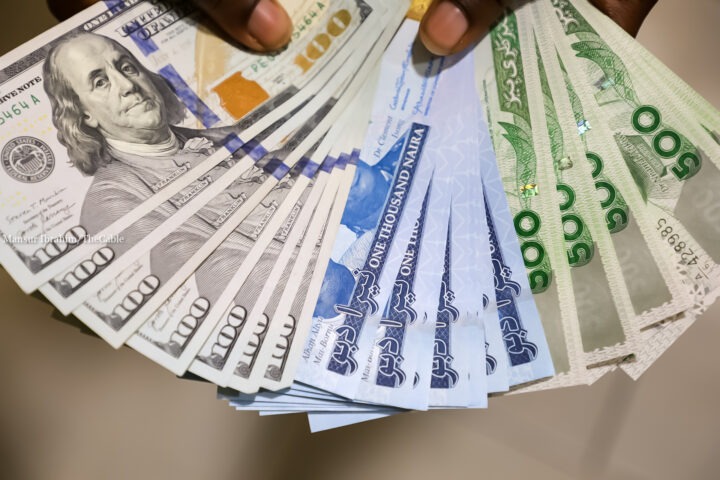
The Nigerian naira is trading around ₦1,349.06 to the US dollar on Friday, August 21, 2026, according to the latest available live USD/NGN indication.

At the Nigerian Foreign Exchange Market (NFEM), the dollar was recently quoted at about ₦1,344.45, based on the latest available official-market indication from Thursday. The Central Bank of Nigeria (CBN) says the NFEM rate is derived using a volume-weighted average of transactions and serves as the official exchange rate for the day.

The latest live USD/NGN rate puts the dollar at approximately ₦1,349.06 as of the early hours of Friday, indicating that the naira remains within the ₦1,300 range against the greenback.

In the parallel market, the dollar is selling for about ₦1,405 on Friday, according to the latest Aboki Forex indication. The platform’s August 21 quote puts the black-market selling rate at ₦1,405 per dollar.

The parallel-market rate is therefore about ₦56 above the latest ₦1,349.06 live official-market indication. Using the latest confirmed NFEM figure of ₦1,344.45, the gap between the official and parallel markets is about ₦60 per dollar.

Recent trading has shown relative strength for the naira in the official market. The currency rose to ₦1,343.32 per dollar on August 18, with market reports attributing the improvement partly to stronger dollar liquidity.

The naira’s performance has also remained relatively stable in the parallel market, where the dollar moved from around ₦1,410 on August 19 to about ₦1,404 on August 20 before the latest ₦1,405 indication for Friday.

For Nigerians needing dollars for international travel, school fees, imports, subscriptions, remittances and other foreign-currency transactions, the actual rate available may differ depending on the bank, Bureau de Change operator, location and transaction size.

The dollar-to-naira exchange rate can change during the day as demand, supply and liquidity conditions shift across both the official and parallel markets.


Families protest in Nigeria over children abducted nearly 100 days ago

0

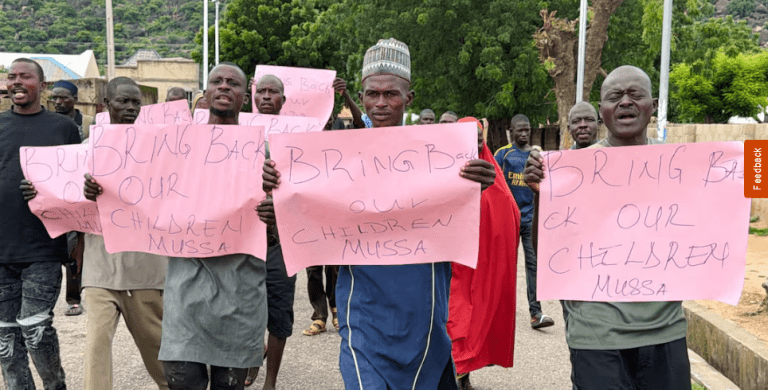
Parents ‌of children abducted from Nigeria’s northeastern Borno state protested in Uba town on Thursday, demanding the federal government secure their release nearly 100 days after they were taken.
The children were seized from their ​classrooms on May 15 in Mussa, a community on the fringes of ​the Sambisa Forest, a long-time stronghold of Islamist militants.

The protest underscored ⁠families’ frustration as kidnappings persist despite years of military operations against Boko Haram and ​its Islamic State West Africa Province (ISWAP) offshoot in northeastern Nigeria. While the insurgency has ​weakened since its peak, both groups continue to stage attacks on civilians, schools and security forces across Borno and neighbouring states.

The abduction was followed by another attack in nearby Lassa on June 29, where 36 ​students and a teacher also remain captive. Last month, authorities secured the release of ​schoolchildren abducted by gunmen from schools in southwest Oyo state after nearly two months in captivity.

‘WE WORRY EVERY ‌DAY’
A ⁠police spokesperson said the military is “on top of the situation” but declined further comment, directing enquiries to the military. A spokesperson for the military did not respond to requests for comment.

“We still have not seen them,” said Chinda Buba, whose child was ​among those abducted. “We do ​not know where ⁠our children are. We don’t know whether they are healthy or going through difficult conditions.”
Peace Nicolos, whose two children, aged 3-1/2 ​and 8-1/2, are among the missing, said families lived in constant ​anxiety.
“We worry ⁠every day and struggle to eat,” she said. “We are pleading with the government to rescue them.”

Orbet Lawan Yakubu, representing the traditional ruler of Mussa, said around 45 children remained ⁠unaccounted ​for.
“There is nothing more painful than separating very young ​children from their parents,” he said. “The entire community is affected because almost every family is connected to ​those who were taken.”

I earn ₦503,000 monthly salary, less than permanent secretaries – Governor Oborevwori

0

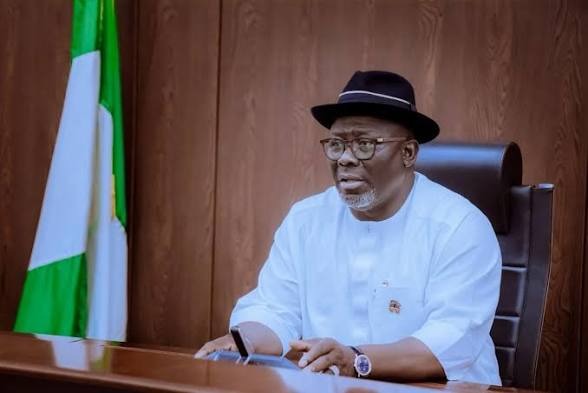
Delta State Governor, Sheriff Oborevwori, has disclosed that he earns a monthly salary of ₦503,000, while Permanent Secretaries in the state receive ₦900,000.

Oborevwori made the disclosure on Thursday during the inauguration of 12 four-bedroom terraced duplexes and the presentation of 12 official vehicles to newly appointed Permanent Secretaries in Asaba.

The governor said the salaries of Permanent Secretaries were increased after they complained that some directors were earning almost the same amount as them.

“When the Permanent Secretaries said most of the Directors are receiving almost the same thing with them, we increased their money. Today, Permanent Secretaries… Your salary is 900, my salary is 503,000, Governor’s salary.

“Head of Service is one million. It’s clear. So, you know some of them don’t want their husbands to know how much they are receiving,” he said.

Oborevwori said his administration had prioritised the welfare of civil servants, noting that official vehicles had been provided to serving Permanent Secretaries to improve their mobility and efficiency.

“To enhance their mobility and operational efficiency, we provided official vehicles to serving Permanent Secretaries. And today, it is my pleasure to present another 12 vehicles to the Permanent Secretaries that were recently sworn in,” he said.

He added that 302 public officers had benefited from the Public Officers’ Vehicle Loan Scheme, while 119 others had received support under the Public Officers’ Housing Loan Scheme.

The governor also said civil servants interested in agriculture had been provided with farm inputs to create additional income streams and contribute to food security.

He said 450 senior management staff had also received support to participate in a seven-weekend training programme through collaborations with the Administrative Staff College of Nigeria.

Oborevwori said the appointment of 12 Permanent Secretaries in May ensured that every local government area in Delta had a Permanent Secretary in the state civil service, adding that the appointments were based on merit.

The governor further disclosed that Delta had approved the payment of a 13th-month salary to civil servants from December, with an executive bill being prepared to give the policy legal backing.

He urged civil servants and political appointees to shun absenteeism, nepotism, waste, inefficiency, bribery and corruption, while promising continued investment in infrastructure and measures to improve service delivery.

Sun

Osun election: I beat you guys — Davido brags in playful exchange with Wike

0

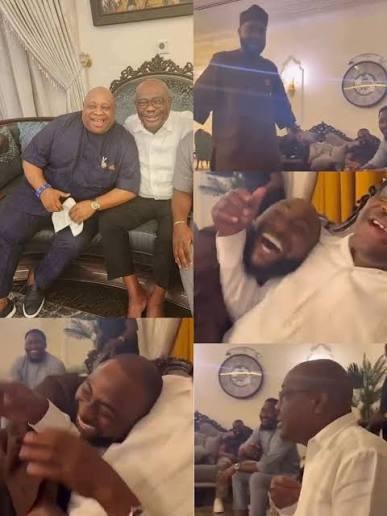
Afrobeats star, David Adeleke, popularly known as Davido, engaged in a playful exchange with the Minister of the Federal Capital Territory, Nyesom Wike, during a recent meeting.

Davido jokingly declared that he had defeated Wike’s side, prompting a light-hearted back-and-forth between the singer and the minister.

The moment was captured in a video shared on Instagram by @OfficialPrinceNwauzor on Friday, following a visit by Osun State Governor, Ademola Adeleke, to Wike on Thursday.

In the viral clip, Davido, dressed in brown traditional attire, could be heard repeatedly telling Wike, “I won. I beat you guys,” as the minister challenged his claim.

Wike, seated in a white shirt, responded with a smile, saying, “No, no.”

Davido insisted, “I won! I beat you.”

“You beat us?” Wike asked.

“I beat you,” Davido repeated.

Background voices interjected with “I beg o” amid rising laughter.

The banter ended as Davido prostrated before Wike and moved in to hug him, prompting cheers, clapping and more laughter from others in the room.

Sun

Police intensify bush clearance, dislodge criminals from Kogi forests

0


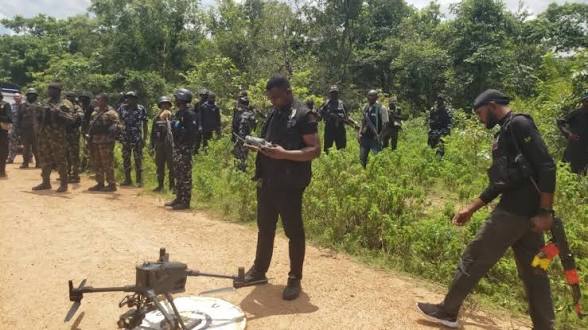
The Kogi State Police Command has said that it has intensified bush clearance operations across identified forest locations linking Kabba/Bunu, Obajana and Lokoja axis in Kogi State.

A statement issued on Thursday by the command’s spokesperson, ASP Salisu Afusat, stated that the operation conducted on August 20, 2026, at about 7 am was carried out in compliance with the directives of the state Commissioner of Police, CP Naziru Kankarofi.

According to her, the aim was to maintain pressure on criminal elements hibernating in remote forest locations in continuation of its sustained efforts to deny criminal elements access to hideouts and forests.

“The team moved through the Daji 2 Forest Zone, a strategic forest corridor linking Kabba/Bunu, Obajana and Lokoja, demonstrating strong coordination and determination among all participating units.” She noted.

She said that during the exercise, an abandoned settlement within the forest, previously suspected to have been used as a hideout and staging point for criminal activities, was identified and cleared to prevent further exploitation of the location.

“The joint team also advanced to Amos Camp, another abandoned hideout located in a difficult terrain characterised by creeks and mountainous areas.

“Despite the challenging environment, the security team successfully navigated the area and carried out a thorough clearance of the camp and surrounding forest paths.

“Signs of recent movement were observed along routes leading towards the Oyo Forest axis of Obajana, indicating that criminal elements had vacated the area ahead of the advancing security presence.

“The operation has significantly strengthened the confidence of farmers and residents within the affected communities, with many already returning to their farmlands and daily activities, encouraged by the visible presence and sustained efforts of the security forces,” the statement added.

Afusat said that the Kabba Area Command and other security formations in the area continue to maintain a calm and stable security atmosphere, while patrols, intelligence gathering and bush clearance operations are being sustained across other identified areas.


Champions Arsenal embrace being ‘hunted’ as Premier League returns

0


Champions Arsenal embrace being ‘hunted’ as Premier League returns
Arsenal’s Spanish coach Mikel Arteta speaks during a press conference on the eve of the UEFA Champions League semi final first leg football match against Club Atletico de Madrid at the Metropolitano stadium in Madrid on April 28, 2026. (Photo by Javier SORIANO / AFP)

Agency Report
Kindly share this story:

Mikel Arteta said Arsenal will embrace being “hunted” by their title rivals as the new Premier League season kicks off with the champions facing Coventry on Friday.

Just 34 days after a captivating World Cup came to an end, the Premier League returns with Arsenal aiming to cement their position as English football’s preeminent force.

The Gunners have the honour of playing the opening game of the season at the Emirates Stadium, before a packed slate of top-flight matches across Saturday, Sunday and Monday.

Arteta’s side won the Premier League for the first time in 22 years last season, finally getting their hands on the trophy after finishing as runners-up for the previous three years.

Installed as the bookmakers’ title favourites this term, Arsenal look well placed to reign supreme again, especially given the questions surrounding their title challengers.

They routed Manchester City 3-0 in the Community Shield last weekend to send a statement of intent to the chasing pack.

Bolstered by new signings Bruno Guimaraes and Christos Tzolis, with Ezri Konsa set to join from Aston Villa, Arteta has no doubts Arsenal can cope with the pressure of being the team everyone wants to beat.

“We start from scratch, from zero, and we’re going to have to prove we are at the level to go back to that position again,” he said.

“We need to show that desire, and the ambition to be better than what we were last season, a month ago, a week ago.

“If you give me the choice, I want to be first, I want to be hunted, and I want to be in control of our future, rather than depending on somebody else.”

Winning the Premier League was a cathartic moment for the north London club after so many near-misses raised doubts about their character.

‘A long marathon’
Arteta believes surviving that test of their resolve will stand them in good stead in their bid to win Arsenal’s first back-to-back titles since the 1930s.

“We need to breathe because it’s going to be a long marathon,” he said.

“We have the ability to improve, to evolve, and that’s what I sense and I feel around the club, especially around the players.
Coventry are back in the Premier League for the first time in 25 years after winning promotion from the Championship.
After a spell in the fourth tier in 2017-18 and twice being force to ground-share with other clubs after financial issues involving their own stadium, Coventry’s return to the elite is a feel-good story.

But even Sky Blues manager Frank Lampard acknowledges the uplifting tale might not have a happy ending.

“We will go through tougher times this year for sure because of the competition we’re up against now,” Lampard said.

“It’s just a reality that we need to be ready for.”

Manchester City, runners-up last season, start life without Pep Guardiola at home to Bournemouth on Sunday.

Guardiola stepped down at the end of last season after winning 20 trophies in a glorious decade at the Etihad Stadium.

Former Chelsea manager Enzo Maresca has accepted the daunting task of emulating the Spaniard’s success.

Liverpool’s new manager Andoni Iraola will take charge of his first game in Sunday’s trip to Newcastle.

Ex-Bournemouth boss Iraola was hired by Liverpool to replace Arne Slot, who was sacked following the Reds’ disappointing fifth-place finish last season.

Xabi Alonso begins his reign as Chelsea boss with a west London derby at Fulham on Monday.

Manchester United start on Saturday at promoted Hull, who are back in the top tier for the first time since 2017.

Big-spending Tottenham, who narrowly avoided relegation last season, travel to Brentford on Saturday.

Europa League winners Aston Villa, ravaged by a host of star departures since last season, head to Brighton on Sunday.

AFP

Imo set to make history with first robotic surgery in South East

0


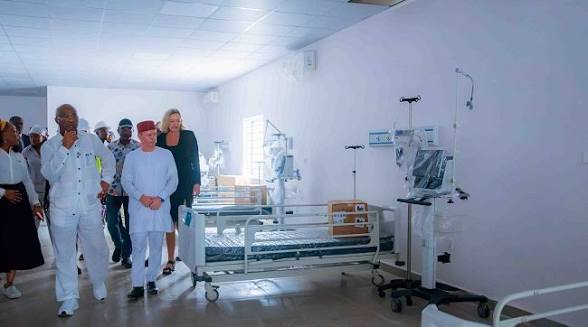
Imo State is set to make history tomorrow as it becomes the first state in the Southeast to perform a robotic-assisted surgical procedure.

Medical experts from the United Kingdom, Europe and the United States of America have arrived in the state for the commencement of the procedure at the newly established Imo Robotics and Oncology Centre, located within the revamped Imo Specialist Hospital, Umuguma, Owerri.

Governor Hope Uzodimma, who announced the development yesterday during a pre-procedure briefing at the Government House, Owerri, described the milestone as a product of strategic investments by his administration aimed at transforming healthcare delivery in the state.

According to him, the landmark procedure will be led by a UK-based consultant robotic and laparoscopic surgeon, Professor Kingsley Ekwueme, an indigene of Imo State.

Uzodimma said the state-of-the-art facility was established not only to provide advanced medical care but also to serve as a centre for continuous training and skills transfer to local healthcare professionals.

“Our plan has never been to acquire sophisticated medical equipment and leave it idle. Equipment must be matched with competence, and technology must be matched with training,” the governor said.

He explained that robotic-assisted surgery offers greater precision, minimally invasive procedures, reduced blood loss and faster recovery for patients.

The governor said the Robotics and Oncology Centre was part of a broader upgrade of the Imo Specialist Hospital Complex, which now has expanded Intensive Care Units (ICUs), advanced diagnostic facilities, modern surgical theatres, neonatal care and specialised oncology departments.

He said the investments were aimed at reducing the need for residents to travel outside the state or country in search of specialised medical treatment.

To ensure that more residents can benefit from the advanced services, Uzodimma reaffirmed his administration’s commitment to expanding healthcare coverage through the Imo Health Insurance Scheme.

“The real measure of success will be in the patients treated, the skills transferred, the specialists developed, the lives improved, and the confidence that our people build in our local healthcare system,” he said.

The governor described the planned procedure as only the beginning of the state’s ambition to position Imo as a leading destination for specialised medical care.

The initiative, he added, would combine advanced technology with local expertise while creating opportunities for healthcare professionals in the state to acquire skills in emerging surgical techniques.

Sun

Duke-Abiola’s UN Secretary General bid gains cross regional momentum as nations rally behind her candidature

0


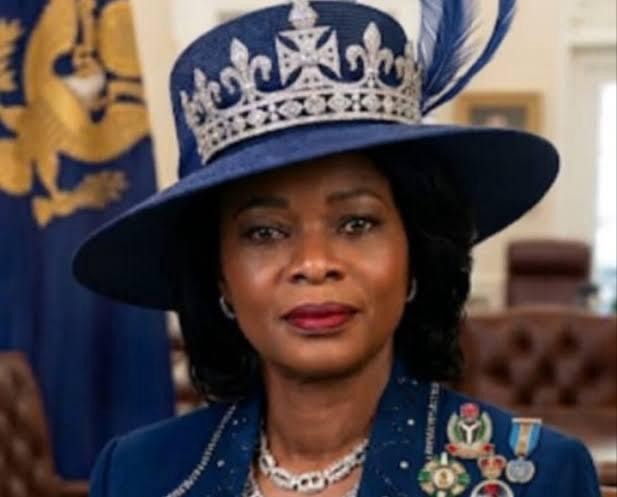
International support is gathering around the candidature of Akasoba Zainab Duke-Abiola, mni, as networks across Africa, the Caribbean and Latin America increasingly identify her as a compelling choice for the next Secretary-General of the United Nations (UN).

The Chief of Global Outreach for Akasoba’s United Nations Secretary General Campaign (UNSGC), Dr Jenny Clarence, stated this in a statement made available on Thursday

Mrs Duke-Abiola is the wife of the late Chief MKO Abiola, the acclaimed winner of the historic June 12, 1993 presidential election
just as Duke-Abiola is emerging as a candidate with an intercontinental foundation, expanding international support and a distinctly global mission.

It is instructive to note that her candidature has received significant momentum through the African Policy and Research Consortium (APRC), a pan-African policy and research network operating across more than 20 African countries and connecting scholars, policy leaders, research institutions, development practitioners and international partners across Africa and beyond.

Among the nations publicly associated with the wider support constituency surrounding her candidature are: South Africa — Strategic African Support; Rwanda — Reform Leadership Support; Egypt — Diplomatic African Support; Barbados — Caribbean Regional Support; Chile — Latin American Support; and the Kenya – Diplomatic African Support.

The wider APRC network also spans Nigeria, Ghana, the Democratic Republic of the Congo, Libya, South Africa and other African countries, with institutional links extending into the Caribbean, United Kingdom, United States and Canada.

Duke-Abiola’s growing international appeal rests on her ability to bridge regions and interests. A British-trained lawyer, jurist, human-rights advocate, cyber-security strategist, migration and border expert, and Distinguished Member of the National Institute, she brings a multidisciplinary record suited to the demands of contemporary global leadership.

Her platform places peace, preventive diplomacy, sustainable development, the rule of law, human dignity and stronger Global North–Global South cooperation at the centre of the United Nations agenda.

For supporting nations, Duke-Abiola’s candidature represents more than the advancement of one region. It offers an opportunity to strengthen African representation, women’s leadership, multilateralism and a more inclusive international order.

It is important to note that Chile’s support for her candidacy is crested on the fact that they rejected and withdrew support for their own national and two terms President- Ms. Michelle Bachelet.

The development is strategically relevant to Duke-Abiola’s positioning, because it shows that a candidate does not necessarily need support from her own country. Interestingly , couple of days ago, Ecuador’s Ms. Ivonne Abaki, a Lebanese was nominated by Tonga. Ditto for Burundi that nominated Senegal’s male candidate .

For the record, five women and three men are so far in the race to succeed outgoing UN Secretary General, Antonio Guterres of Portugal, who will complete his second five-year term on December 31, 2026 while nominations for the prestigious international position are still open, raising the prospect of further late entrants.

Why Ohafia Is Better Off With Senator Orji Uzor Kalu in the Senate

0


By Eni Kalu, PhD

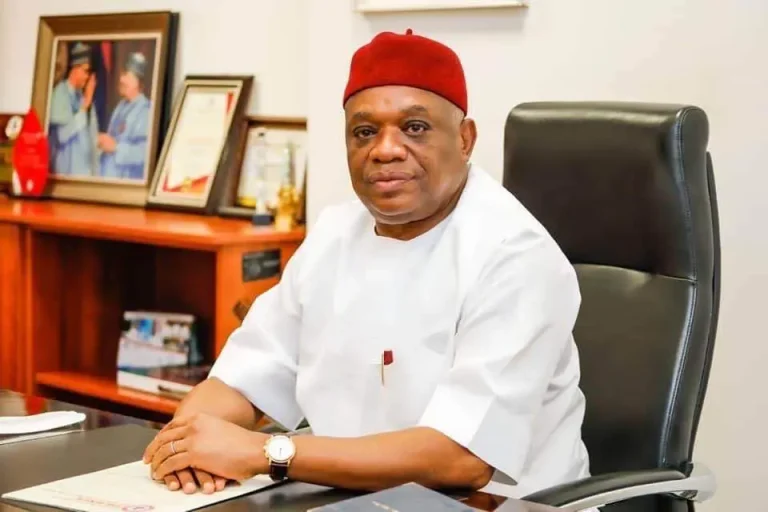
There is an old lesson in politics which the people of Ohafia understand very well: when a relationship has produced results, you do not throw it away simply because another election has arrived. In 2027, Ohafia will have choices to make. There will be speeches, promises, posters and new political alliances. Some will tell us that it is time to try something new. But elections are too important to be reduced to experimentation. Before we abandon what we know for what we have not tested, we must ask ourselves a simple question: has Ohafia benefited from having Senator Orji Uzor Kalu in the Senate? For me, the answer is an emphatic yes.

The relationship between Senator Orji Uzor Kalu and Ohafia did not begin in 2019 when he was first elected to the Senate. It did not begin because another election was approaching. It is a relationship that has been built over decades, across generations of Ohafia leadership, through friendship, politics, community engagement and mutual respect. Indeed, Senator Orji Uzor Kalu is not a stranger to Ohafia. He holds the revered traditional title of Ikenga of Ohafia, a recognition that speaks to a relationship much deeper than contemporary electoral politics. Those who know our recent history should remember his relationship with virtually all our prominent sons and leaders over the years. Chief Awa Kalu, SAN; Chief Umeh Kalu, SAN; Bishop Michael Kalu Ukpong, the late Victor Anya Udo; late Chief K. K. Owen; the late Chief Okwara Osonwa; the late Chief Ukpai Agwu Ukpai, Rev. Dr. Ukpai Ukpai.

Others include Dr. Kalu Idika Kalu, the current Deputy Governor, Engr. Ikechukwu Emetu who was doing water drilling business for him alongside Anaga; late Dr. Kalu Uke Kalu, Emeritus Prelate NN Eke, Late Ojo Maduekwe, Dr. Chidia Maduekwe, Engr. Ogbugo Ukoha, Dr. Ori Obasi, Barr. Udo Udoma, Barr Emeka Kalu, late Udumaeze of Ohafia, Ujurueze Ebem, Umu Ejima, and a host of other respected Ohafia leaders all belong to different generations and backgrounds, yet Orji Uzor Kalu maintained relationships across these circles with mutual respect. That tells a story.

Look around the political class in Ohafia today. Which serious political actor can truthfully say that he has never enjoyed a good relationship with Orji Uzor Kalu at one point or another? That is the kind of person he is. Is it with the dominant Presbyterian Church of Nigeria or the Catholic Church? Yes, OUK was very instrumental to the building of the All Saints Cathedral Elu Ohafia, a project another Igbere man in Late Most Rev. Dr. James Ukaegbu pleaded with him to support. You see, Ohafia is better off with an Igbere alliance instead of those that would constantly remind us of how richer they are. It is going to be a dangerous gamble trusting those that hate us with the senatorial seat of Abia North. It is a position they seek to humiliate Ohafia Udumaeze. Senator Orji Uzor Kalu’s friendships have never been restricted to one political tendency in Ohafia. He has interacted with our people across parties, communities, age groups and political interests. He belongs to an Age Grade in Ohafia. Political disagreements may arise, as they inevitably do in a democracy, but it would be difficult for anyone familiar with Ohafia’s political history to argue convincingly that Orji Uzor Kalu does not have genuine affection for Ohafia and its people.

A few political actors may have attempted at different times to weaken that relationship or create the impression that a gulf exists between him and Ohafia. That is politics. Elections naturally create disagreements, ambitions and temporary alignments. But those who know the history of this relationship understand that political differences should not be confused with the deeper bond between a man and a people who have known each other for decades. The record matters more than political rhetoric. Anyone travelling through parts of Ohafia today can identify federal interventions facilitated during Orji Uzor Kalu’s representation. Roads including Abia Road, Akanu Ukwu Road, Isiugwu Road, Ndi Orieke Road, have featured among projects associated with his representation.

Consider Ndi Orieke. For years, the road cried for attention. Political seasons came and went. People complained and waited. Eventually, construction commenced through a federal intervention facilitated by Orji Uzor Kalu. Someone outside Ohafia may see another road project. The people who actually live there understand its significance differently. The farmer thinks about moving produce. The trader thinks about getting to the market. The elderly person thinks about easier movement. The young person sees his community becoming more accessible. Development becomes meaningful when it enters people’s everyday lives. Education tells a similar story. Community Primary School, Amaekpu Ohafia; Ndi Uduma Awoke Primary School; Isiugwu Community School, Amuma, Ndi Ibe, Akanu and other schools have benefited from educational interventions associated with Senator Orji Uzor Kalu’s representation. Pupils have benefited from educational materials and other forms of support. Our youths are enjoying different international scholarships through him. These things may not dominate national television, but the child sitting inside an improved classroom understands their importance.

This is why 2027 should be a comparison of records rather than a competition in promises. Put Senator Orji Uzor Kalu’s record on one side of the table and put the alternatives on the other. On one side is a man whose relationship with Ohafia predates his Senate ambition; a traditional title holder in our community; a politician who has interacted with generations of our leaders; a senator who understands the National Assembly; a former Senate Chief Whip; an experienced federal legislator with established national relationships; and, most importantly, somebody whose constituency projects can be physically identified. On the other side could be a newcomer asking Ohafia to abandon all of that and start afresh. There is nothing wrong with being a newcomer. Every experienced politician was once new. But a senatorial seat is not where a constituency should casually conduct political experiments.

A newcomer must learn the institution. He must build relationships. He must understand the budget process. He must develop influence. He must learn how to navigate the competing interests of the National Assembly. He must establish the networks necessary to translate representation into results. Orji Uzor Kalu has already crossed those bridges. Why should Ohafia voluntarily return to the starting line? The Latin expression res ipsa loquitur means “the thing speaks for itself.” In this case, the record speaks. We can disagree about politics and personalities, but a completed road does not belong to an argument. A rehabilitated classroom cannot be wished away because another election has arrived. Democracy should also involve a form of quid pro quo, not in any improper sense, but in the basic understanding that political support should produce responsible representation and representation should produce value for the people.

Ohafia has supported Senator Orji Uzor Kalu over the years. He, in turn, has not treated Ohafia as politically disposable. That relationship should not be taken for granted. Before anybody asks Ohafia to abandon Orji Uzor Kalu in 2027, that person should answer some questions. Who knew our communities before needing our votes? Who maintained relationships with our leaders when there was no election? Who respected Ohafia when political circumstances changed? Who has something already completed to show the people rather than another catalogue of promises? And who among today’s political actors can genuinely claim that Orji Uzor Kalu has never extended a hand of friendship to him? These questions matter because election-season affection is cheap. Genuine political friendship is tested over time.

Imagine a farmer who has spent years cultivating a tree. The tree has taken root and is producing fruit. Someone suddenly arrives carrying a new seed and tells the farmer: uproot your tree and plant mine because one day it may produce something better. A wise farmer will ask questions. How long will the new seed take to mature? What evidence do I have that it will produce better fruit? Will it survive? And, most importantly, why must I destroy a productive tree before discovering whether an untested seed can grow? That, in many respects, is the choice before Ohafia. Senator Orji Uzor Kalu is no longer asking Ohafia to believe merely in what he might do. There is a record to examine. A new entrant will largely be asking us to believe in what he intends to do. There is a considerable difference between the two.

Ohafia should also understand the value of legislative ranking. Across successful democracies, constituencies often retain effective legislators because experience creates institutional influence. Nigeria’s National Assembly is no exception. Seniority, relationships, committee experience and understanding of the federal budget process can strengthen a legislator’s capacity to advance the interests of his constituency. Senator Orji Uzor Kalu has served in the Senate since 2019. Throwing away that accumulated experience without a compelling reason would mean asking Abia North to begin building political capital again from the ground up. What exactly would Ohafia gain from that? This does not mean that Senator Orji Uzor Kalu has solved every problem confronting us. Certainly not. Ohafia needs more roads, jobs, healthcare facilities, electricity, water, educational investment, economic opportunities and greater federal presence. Indeed, that is precisely why continuity deserves consideration. If a foundation has already been laid, wisdom suggests building upon it rather than demolishing it because somebody else wants to become the builder.

Ad maiora — towards greater things. That should be our thinking. If Ohafia has benefited from his first two terms, we should be discussing what more can be extracted from the experience, ranking and national reach of another term. When 2027 arrives, many things will happen. Convoys will enter Ohafia. Politicians will suddenly remember village roads they have not travelled in years. Hands will be shaken. Meetings will be held. Promises will multiply. Some who have shown little regard for our people outside election periods may suddenly become the greatest lovers of Ohafia. Our people should listen to everyone. That is democracy. But we should also remember. Remember the history. Remember the friendships.

Remember Chief Umeh Kalu, SAN, Chief Awa Kalu, SAN, the late Chief K. K. Owen, the late Chief Okwara Osonwa, the late Chief Ukpai Agwu Ukpai and the many Ohafia leaders whose relationships with Orji Uzor Kalu demonstrate how far back this bond stretches. Remember that political disagreement today cannot erase decades of association yesterday. Remember the roads. Remember the schools. Remember the interventions. And remember that the Ikenga of Ohafia did not discover Ohafia because he needed another four years in Abuja. There will always be politics. There will always be those who attempt to create cracks where political advantage can be gained. But temporary political battles should not be allowed to rewrite history. None can reasonably argue that Orji Uzor Kalu is not a lover of Ohafia and its people.

For me, the choice is therefore not complicated. Ohafia is better served by strengthening a relationship that has produced tangible benefits than gambling its political capital on an untested alternative. We are better off demanding more from a ranking senator who already knows our people, understands our communities and has demonstrated his capacity to attract projects than beginning from zero with someone still trying to understand the road. In politics, as in life, the grass is not always greener on the other side. Sometimes wisdom is simply recognising what you already have, protecting it and demanding that it produces even more. For Ohafia, Orji Uzor Kalu represents that opportunity. And when the time comes in 2027, I believe our people will remember.

Eni Kalu, PhD, writes from Maryland, USA.
Restoring Petrol Subsidy: Atiku’s Volte-Face and Desperation for Power

0


Former Vice President and presidential aspirant, Alhaji Atiku Abubakar, has unveiled his economic position ahead of the 2027 general election, proposing the restoration of petrol subsidy if elected President.

The proposal represents a major departure from Atiku’s earlier position that the petrol subsidy regime should be removed. During the build-up to the 2023 presidential election, he had advocated the elimination of the subsidy as part of his economic agenda.

His latest position has therefore raised questions about the economic rationale and feasibility of returning to a policy that has been widely criticised for imposing a heavy burden on public finances.

Atiku is constitutionally entitled to propose alternative policies and seek the support of Nigerians. However, any proposal to restore petrol subsidy should be subjected to careful scrutiny, particularly in view of the legal, fiscal and structural changes that have taken place in Nigeria’s petroleum sector since 2023.

The subsidy regime that Nigerians operated under before May 2023 was dismantled as part of broader petroleum-sector reforms. The Petroleum Industry Act (PIA) provided a new framework for the downstream petroleum market and scheduled the end of the subsidy regime by June 2023. President Bola Tinubu subsequently accelerated its removal.
Restoring the old arrangement would therefore require more than a presidential announcement.

It would require a clear legal, fiscal and administrative framework, including identifying the source of funding and determining how subsidy payments would be implemented under the current petroleum-market structure.

There is also a need to clarify what is meant by petrol subsidy. It is not simply money sitting in government coffers waiting to be distributed to consumers. Under the previous arrangement, government effectively absorbed the difference between the cost of supplying petrol and the regulated pump price, creating substantial financial obligations and under-recovery costs.
Claims about trillions of naira allegedly saved through subsidy removal must also be subjected to proper fiscal analysis. Nigerians deserve clear figures showing the actual cost of subsidy, the outstanding obligations and the savings accruing to the government since its removal.

More importantly, Nigeria’s petroleum industry has changed significantly since 2023. The country has moved from a heavy dependence on imported petrol towards increased domestic refining, with the Dangote Refinery becoming a major source of locally refined petroleum products.
This emerging refining capacity has the potential to strengthen energy security, conserve foreign exchange, create jobs and develop Nigeria’s industrial base.
The current market-driven environment has also created opportunities for Nigeria to participate more actively in the export of refined petroleum products, rather than relying predominantly on imported refined products.
Returning to the old subsidy regime could therefore introduce distortions into a sector that is gradually adjusting to domestic refining and market-based pricing. It could also create uncertainty for emerging local refineries and discourage further private investment in refining capacity.
For many years, Nigeria spent billions of dollars importing refined petroleum products despite being a major crude oil producer. The country’s petroleum economy was characterised by a dependence on imported petrol and a subsidy system that placed substantial pressure on government finances.
At various times, the subsidy burden was financed through borrowing and other public-sector arrangements. The result was an accumulation of obligations that placed additional pressure on the Nigerian National Petroleum Company Limited and the wider public finances.
The central question for any proposal to restore subsidy is therefore straightforward: Who will pay for it?
If petrol is sold below its economic cost, government must absorb the difference. That would ultimately affect public finances through reduced resources for infrastructure and social services, lower allocations to states and local governments, increased borrowing, higher public debt or a combination of these consequences.
There is no doubt that the removal of subsidy has increased the cost of living and placed significant pressure on households and businesses. Higher petrol prices have contributed to increased transportation and production costs.
However, sustainable relief for Nigerians should not necessarily mean recreating a fiscal arrangement that previously placed enormous pressure on government finances.
The Federal Government has instead promoted alternative energy sources, including Compressed Natural Gas (CNG), as a cheaper option for motorists and commercial transport operators. CNG, which is significantly cheaper than petrol in many applications, has increasingly been adopted by businesses and transport operators.
The challenge now is to ensure that the savings from cheaper energy sources translate into lower transportation and distribution costs for ordinary Nigerians.
The subsidy debate must therefore be based on the realities of Nigeria’s current petroleum market rather than the conditions that existed several years ago.
Political promises must also be backed by clear fiscal arithmetic.
If Atiku Abubakar proposes to restore petrol subsidy, Nigerians deserve answers to critical questions: How much will the programme cost annually? What revenue source will finance it? Will the government borrow to fund it? Will existing petroleum-sector legislation have to be amended? How will subsidy payments be monitored and protected from fraud and abuse?
And with Nigeria’s domestic refining capacity expanding, what exactly would the proposed subsidy finance—the cost of local production, transportation, distribution or another component of the petroleum value chain?
Nigeria cannot afford to return to policies whose costs are hidden from citizens only to reappear later as debt, reduced public spending and pressure on the national currency.
The country should welcome robust debate on the cost of living and alternative economic policies. However, such debate must be anchored in Nigeria’s present economic and petroleum realities.
Political actors, including Atiku Abubakar, should therefore provide Nigerians with the full fiscal, legal and economic implications of any proposal to restore petrol subsidy before asking citizens to support it.
Bayo Onanuga
Special Adviser to the President
(Information and Strategy)