Home Blog Page 195

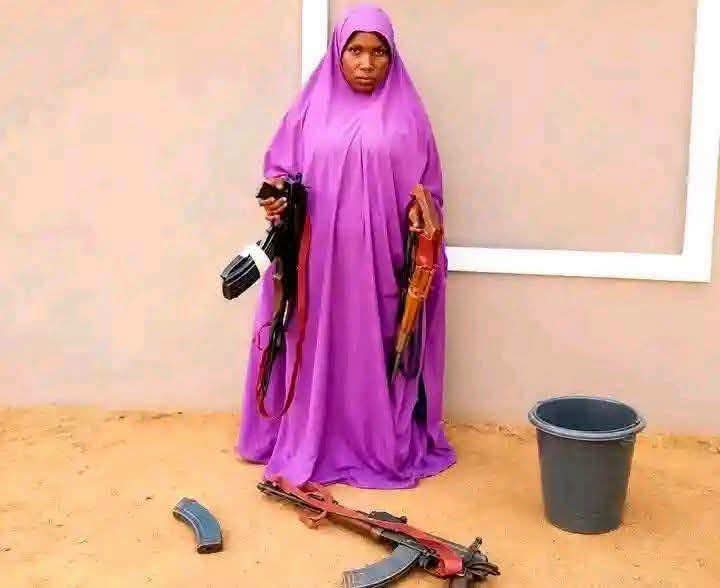
The Nigerian Army has arrested a 30 year old woman identified as Halima Ibrahim for allegedly supplying firearms to bandits

0


The soldiers reportedly carried out an operation in a forest hideout used by kidnappers in Kisayi, Bassa Local Government Area of Plateau State.

where they arrested Halima as she was allegedly attempting to flee, She was reportedly found with an AK-47 rifle.

The soldiers took Halima into town and proceeded to her residence to conduct a search. During the search, they reportedly discovered another AK-47 rifle hidden in her room.

Not everyone who dresses like a Muslim is necessarily a true Muslim. Where is the Qur’an in all of this? Some of the so-called Northern Muslims need to go back to the teachings of the Qur’an and reflect on their actions.

I can say that many of them in the northern part of Nigeria don’t practice what the Qur’an teaches, and many may not even perform the five daily prayers (Salah) and five daily prayers (Salah) are one of the clearest distinctions between a practicing Muslim and a non-Muslim.

Pro-Tinubu Northern Group Congratulates Matawalle on Nomination into APC Campaign Council

0

***Vows to Mobilise 20 Million Votes for President

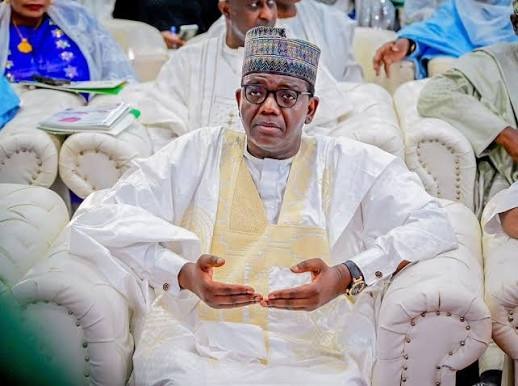
The Northern Vanguard for Asiwaju (NOVA) has warmly congratulated Minister of State, Defence, Bello Matawalle, on his appointment as Deputy Director, Security and Intelligence I of the 2027 APC Presidential Campaign Council.

The group described the nomination as a recognition of Matawalle’s proven capacity, loyalty, and strategic contributions to the progress of the APC and the administration of President Bola Ahmed Tinubu.

In a statement co-signed by Danladi Haruna and Adamu Jaco, its President and Secretary, NOVA noted that Matawalle commands a formidable followership in Zamfara State and across the North West geopolitical zone.

The organisation said this widespread support base will serve as a major asset in mobilising voters and consolidating the APC’s strength in the region ahead of the 2027 general elections.

“We heartily congratulate our amiable leader, Hon. Bello Matawalle, on his well-deserved nomination as Deputy Director, Security and Intelligence I of the 2027 APC Presidential Campaign Council,” the statement read.

“This appointment attests to his competence, diligence, and dedication to the ideals of the All Progressives Congress and the leadership of Asiwaju Bola Ahmed Tinubu.

“As a progressive organisation deeply rooted in the North, NOVA sees this development as a strategic boost that will enhance the effectiveness of the campaign structure.

“Matawalle’s strong followership in Zamfara and across the North West positions him to deliver significant political value to the party’s presidential project.”

NOVA observed that Matawalle’s influence in Zamfara and the wider North West has been built over years of grassroots engagement, inclusive leadership, and consistent advocacy for the interests of the people.

The group expressed confidence that this network of supporters will be effectively harnessed to drive voter turnout and ensure a decisive victory for President Tinubu.

According to the statement, the appointment further strengthens the security and intelligence architecture of the campaign and positions the party for a decisive victory in the 2027 general elections.

The organisation further pledged to intensify grassroots mobilisation across the 19 northern states and the Federal Capital Territory.

It said its network of coordinators, youth leaders, women leaders, and community influencers is already being activated to amplify the campaign message of continuity, stability, and inclusive development.

“We hereby declare our firm resolve to mobilise no fewer than 20 million votes for President Bola Ahmed Tinubu in the 2027 presidential election,” the statement continued.

“This target is realistic, achievable, and non-negotiable. With leaders like Matawalle who enjoy massive followership in Zamfara and the North West, the task becomes even more attainable.

“Our structures on the ground are ready. From the wards to the local governments and up to the state levels, we shall leave no stone unturned in ensuring that the good people of the North reward President Tinubu’s leadership with a resounding mandate.”

NOVA also used the opportunity to call on other progressive groups, traditional institutions, religious leaders, and well-meaning northerners to close ranks and support the re-election of President Tinubu.

The group maintained that the North has benefitted significantly from the current administration’s policies in infrastructure, agriculture, security interventions, and economic reforms, and that continuity remains the best option for sustained progress.

The organisation emphasised that its mobilisation drive will be peaceful, issue-based, and firmly rooted in democratic principles. It urged supporters to reject any form of violence, misinformation, or divisive rhetoric as the campaign season approaches.

“We urge all our members and supporters to remain focused, disciplined, and united.

“The task before us is clear: to secure a massive victory for Asiwaju Bola Ahmed Tinubu and the All Progressives Congress in 2027,” the statement added.

“Together with Matawalle’s extensive followership in Zamfara and across the North West, we shall deliver the region and contribute decisively to the national mandate.

“NOVA stands solidly behind Hon. Bello Matawalle in this new assignment and behind President Tinubu in the larger national project. Victory is certain when progressive forces work in harmony.”

The Northern Vanguard for Asiwaju reiterated its loyalty to the leadership of the APC and its determination to play a leading role in the success of the 2027 presidential campaign.

At 2026 Thrive-In-Tech, experts challenge upcoming talents to build solutions that work for Africa

0


At 2026 Thrive-In-Tech, experts challenge upcoming talents to build solutions that work for Africa
Africa’s leading engineers, product leaders, and innovators gathered in Lagos last weekend for the sixth edition of Thrive-In-Tech, an annual technology and innovation event with the theme “Build for Impact.”

Convened by Olufemi Ayilara, this year’s summit brought together technology professionals, aspiring tech talents, and ecosystem stakeholders for two days of learning, collaboration, and solution-building aimed at addressing Africa’s most pressing challenges.

The main summit held on Saturday followed a hackathon the previous day, where participants worked intensively to prototype technology solutions. The event featured panel sessions focused on how innovators can build products that create meaningful and lasting impacts across Africa and beyond.

Speaking on the theme, the keynote speaker, Oyedayo Otokiti, noted that the focus of the summit was to move beyond inspiration and drive practical outcomes.

At 2026 Thrive-In-Tech, experts challenge upcoming talents to build solutions that work for Africa
He said: “The goal is not just to talk about technology, but to build solutions that work in African realities. When we are looking into the future, we need to look at the past first if you want to see a bit about the future.

“There are developers, cybersecurity experts, engineers, and social media managers. There are different careers that have spun out from using computers well.

“I think that AI will also follow suit. The AI we are adopting today will get to a point where we need some form of discipline to combat it in terms of security and privacy. Look at the past and see that everything good has a negative to it and that negative areas of AI will come within the next few years.

“Also, people should not just use AI for asking questions, coding, and getting answers. AI, as it is now, might not reflect every cultural relevance. But in the future, we are going to see adaptation and cultural localisation.

“We are going to see specialisation very relevant in agriculture, something portable, something farmers in the South-East can use in pest control. So definitely, tons of careers will come out from AI as we see it right now. Let’s be sure that we will adopt it properly.”

There were panel sessions where participants had opportunities to gain practical knowledge, connect directly with industry leaders, showcase their ideas, and collaborate on technology projects.

The summit also created space for networking and relationship-building within the African technology ecosystem.

Attendees included engineers, product managers, startup founders, students, and professionals from across Nigeria and other parts of Africa, reflecting Thrive-In-Tech’s push for broader representation beyond traditional tech hubs.

One of the panellists, Oluwaseun Oluboyo, Director, IT and Operations, Lagos Business School, said some of the skills people want to develop are skills that are distinctly human and will take a while for AI to catch up with creativity, collaboration, and communication.

He noted: “There are some things that are actually human capabilities that a computational engine can not do yet or will never do. There’s a human relationship that is going on there. So cultivate creativity, collaboration, and communication.

“Talking about the technical skills. People should learn how to use AI. People who use AI will displace the people who are not using AI. Let computers and the typing go. Just learn how to use AI and learn how to use it well.

“As to what we’ll be doing with AI, we honestly don’t know. Let’s not lie to you. Ten years ago, nobody knew there would be a role called social media manager, where you wake up in the morning, and you basically sit on the internet, tweeting, re-sharing, and get paid at the end of the month.

“People should look at those competencies that are distinctly human that will augment the brute force that AI will bring to the table. AI will be the muscle; while humans will be the brains. There are some things that it takes a human being to decipher.

“We are talking about security, sustainability, and reliability. You can build AI skills for some of those things, but you ultimately want human eyes and human intelligence to come to bear because when real money is at risk, an advanced AI will hack the financial system. So please, let’s take note of these things by leveraging AI itself as a tool, right, and incorporating engineering judgment in everything we do.”

Another panellist, Akolade Ayeni, Software Engineering Manager, GreenAfrica Airways, warned against solving a problem with AI from start to finish.

He stressed: “You start solving the problem by yourself as a human. A lot of people want to build or use AI to solve a problem or to create a task, but the first thing you need to understand is identifying your real problem.

“Then you ask how to get a better solution for the problem you are solving. For every task you do, even as an engineer, a developer, or whatever you do, there’s a part of your task that you don’t really need AI to get it done. Don’t depend solely on AI.

“Let’s not have this mindset that we can use AI to solve all problems. Start from the problem to profer solution, then identify the parts where AI can assist you. Don’t use AI from start to finish, and then it will become obvious that AI solves your problems.”

One of the sponsors, Esigie Aguele, CEO, Verifyme Nigeria, explained his reason for choosing to support the summit.

He said: “It is always good to support hackathons because they are the bedrock for innovation. When you want to find talent and great ideas in our community and our society, find people that you can help and push forward so that they can grow their ideas. It’s one of the best ways that we can support growing tech experts and brands.

“In our company, we regularly hire mostly youngsters who are tech savy. We have good internship programmes for talented people who want to join us and work, particularly out of school youths.”

With six editions completed, Thrive-In-Tech assured continuity in positioning itself as a platform for equipping African tech talent with the skills, connections, and platforms needed to scale solutions that matter.

Sun
Petrol subsidy: Tinubu’s policy favours oil firms, hurts Nigerians – Atiku

0


Former Vice-President Atiku Abubakar has accused the Federal Government of favouring petroleum investors with fiscal incentives while Nigerians continue to bear the impact of high petrol prices and rising living costs.

Atiku, the presidential candidate of the African Democratic Congress (ADC), made the allegation in a statement issued on Sunday by his Senior Special Assistant on Public Communication, Phrank Shaibu.

He criticised President Bola Tinubu’s declaration that petrol subsidy had been removed, arguing that the administration had continued to provide tax credits, concessions and other incentives to operators in the petroleum sector.

“Nigerians were told there was no alternative and that enduring this pain was the necessary price of economic reform. But when major oil investors knock on Tinubu’s door, the sermon changes.

“Suddenly, government intervention is good economics; tax credits are necessary; fiscal concessions are strategic; and private investment must be ‘de-risked.’ Apparently, subsidy is only evil when poor Nigerians benefit from it,” Atiku said.

The former vice-president cited the Federal Government’s deep offshore oil and gas projects incentives framework, which allows eligible petroleum projects to receive production tax credits of between $3 and $4.50 per barrel, with additional incentives potentially taking the total benefit to $11.50 per barrel under certain conditions.

“So, what exactly is Tinubu’s objection: government intervention itself, or government intervention for Nigerians?” he asked.

Atiku also questioned the government’s claim that petrol subsidy had been completely eliminated, citing NNPC Limited’s audited accounts, which he said recorded about N4.84 trillion in energy-security expenses and related shortfalls in 2023 and N7.13 trillion in 2024.

According to him, NNPC attributed part of the expense to the difference between the exchange rate used to determine the regulated PMS ex-coastal price and the prevailing exchange rate when import obligations were settled.

“So, where exactly did the subsidy go? If Nigerians were paying market prices because ‘subsidy is gone’, why was the Federation still carrying trillions of naira in under-recovery and energy-security costs?” Atiku asked.

He added, “Nigerians do not eat semantics. Whether the government calls it subsidy, under-recovery, shortfall or energy security, public resources were being used to bridge a gap between economic cost and the price at which petrol was sold.”

‘We’re not proposing old subsidy regime’

Atiku said his proposal to restore petrol subsidy if elected president in 2027 would not amount to a return to the former open-ended and opaque system.

He said his economic recovery plan would introduce a targeted, capped, transparently budgeted and independently audited intervention tied to domestic production, while expanding refining capacity, improving competition and restoring household purchasing power.

“You cannot subsidise capital and criminalise relief for citizens. You cannot offer cushions upstairs and call suffering downstairs reform,” Atiku said.

The former vice-president also demanded greater transparency over petroleum-sector tax credits, remissions and other incentives, including the beneficiaries, the value of revenue forgone by the government and the investments delivered in return.

He said Nigerian investors should have equal and transparent access to comparable incentives, stressing that economic reforms should ultimately be judged by improvements in citizens’ living standards.

Atiku’s latest criticism follows his announcement last week that he would restore petrol subsidy if elected in 2027. President Tinubu subsequently criticised the proposal, describing Atiku as “ignorant of governance and the economy”.

Sun

PRESIDENT TINUBU MOURNS VETERAN ACTOR TAIWO HASSAN (OGOGO)

0


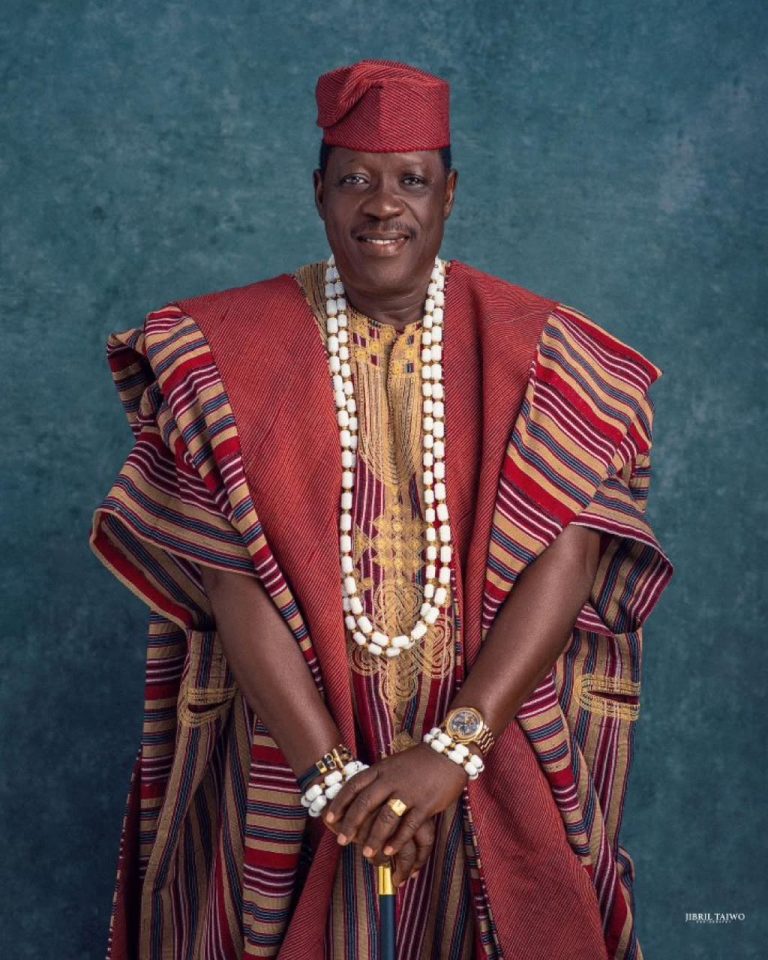
President Bola Tinubu has expressed condolences to the family, friends, and colleagues of Taiwo Hassan, the veteran Nollywood actor, filmmaker, and screenwriter, following his demise.

The president described Hassan, popularly known as Ogogo, as a distinguished artiste whose career spanned several decades and made remarkable contributions that helped shape the growth of Yoruba-language theatre and Nigerian cinema.

He noted that through his distinctive acting style, powerful screen presence and dedication to his craft, Ogogo entertained generations of Nigerians while promoting the richness of Yoruba culture and Nigeria’s diverse cultural heritage.

The president said Ogogo’s body of work would remain an important part of Nigeria’s cultural history, adding that his mentorship and influence on younger artistes further underscored his enduring legacy in the creative industry.

“Alhaji Taiwo Hassan was a gifted artiste who used his talent to tell Nigerian stories, preserve our cultural heritage and entertain audiences at home and abroad.

“His passing is a great loss to his family, the Yoruba film industry, Nollywood and the entire Nigerian creative community.

“On behalf of the Federal Government, I extend my heartfelt condolences to his family, colleagues, friends and millions of admirers. I pray that Almighty Allah will grant him eternal rest and give his loved ones the strength to bear this irreparable loss,” the president said.

He urged members of the creative industry and Nigerians to honour Ogogo’s memory by preserving and building on the cultural values and artistic traditions to which he devoted his life.

The president prayed for the peaceful repose of the late actor’s soul.

Before finding fame, Ogogo worked as a mechanic at the Ogun State Water Corporation for about 13 years. He began acting in 1981, combining the profession with his mechanic job before leaving it in 1994 to pursue acting full-time.

Bayo Onanuga

Special Adviser to the President

(Information & Strategy)

August 24, 2026

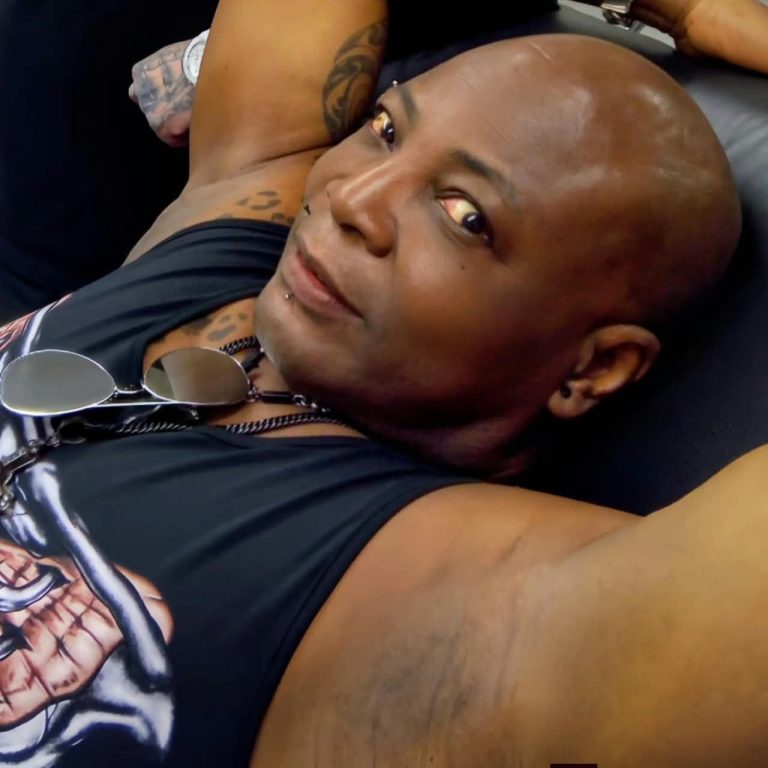
If you have peace of mind, You have achieved Plenty things in Life says Charlie Boy aka Area Father

0


Everybody dey chase money.

Everybody wan blow.
Big house.
Big car.
Big name.

And no be bad thing.

But make I ask you one question
After you don get everything, wetin you really get?

Because peace too na achievement.
To wake up without fear.
To sleep without your mind fighting you.
To look around and see people wey love you without agenda.
To eat your food and your body no dey calculate who you offend.
To enter your house and feel at home.

No be a popular person happy.

No be every man wey dey smile dey okay.
As you dey hustle for the big things
Abeg, no lose the small things wey money no fit buy.

A peaceful mind.
A free heart.
A good sleep.

If you get these things

My brother, my sister
You don achieve something wey plenty people never fit buy.
Peace no be small thing.
Peace na wealth.

Centre expresses confidence in President Tinubu’s national defence plan committee

0


***says accelerated funding for defence key to homeland security

The Centre for Justice and Human Rights in Africa (CJHA) has expressed strong confidence in the high-level committee constituted by President Bola Ahmed Tinubu to prepare a comprehensive National Threat Assessment and a rolling five-year Strategic Defence Operations Plan.

The group described the initiative as a timely and strategic step toward strengthening coordination across Nigeria’s defence, intelligence and security agencies.

In a statement signed by its Executive Director, Dr. Ifure Ifure, the Centre noted that the 90-day timeline given to the committee reflects the urgency of addressing evolving security threats and establishing a coherent national framework for operational priorities.

“We welcome President Tinubu’s directive and place full confidence in the expertise and patriotism of the distinguished members of this committee,” Dr. Ifure stated.

“The inclusion of the National Security Adviser, the Minister of Defence, the service chiefs and the heads of key intelligence agencies ensures that the process will be thorough, professional and grounded in operational realities.

“A clear National Threat Assessment and a well-structured five-year Strategic Defence Operations Plan will provide the common understanding and prioritisation that our security architecture has long needed.

“This is the kind of institutional clarity required for effective homeland security.”

The Centre observed that the committee, coordinated by the Special Adviser on Homeland Security, Major General Adeyinka Famadewa, has been tasked with identifying principal threats, ranking their urgency, defining operational objectives, and translating these into concrete force requirements, capability gaps and implementation timelines.

Once approved, the plan is expected to guide multi-year defence spending and procurement.

According to the group, Famadewa’s professionalism, strategic insight and quiet competence is critical in this national assignment, adding that his deep operational experience and commitment will also strengthen the country’s security architecture.

CJHA stressed that the success of the framework will depend significantly on sustained and accelerated funding for the defence and security sector.

“Accelerated and predictable funding for defence remains the single most critical enabler of homeland security,” Dr. Ifure said.

“Equipment modernisation, intelligence capabilities, personnel welfare and joint operations all require consistent budgetary support if the new doctrine is to deliver results on the ground.

“We therefore urge the National Assembly and relevant agencies to align fiscal priorities with the operational needs that will emerge from this five-year plan.

“Security spending must not only be adequate but also results-oriented and transparently applied.”

The Centre further noted that President Tinubu’s administration has already demonstrated commitment by making defence and security the largest sectoral allocation in recent budgets, including the 2026 Appropriation.

It said the new planning process offers an opportunity to ensure that these resources are directed according to clear national priorities rather than fragmented agency requests.

CJHA linked the committee’s work to the broader reset of Nigeria’s security architecture, including the new counter-terrorism doctrine that treats all armed non-state actors and their enablers as terrorists.

“This defence plan committee represents a serious institutional effort to move from reactive responses to a proactive, intelligence-driven and coordinated strategy,” the statement continued.

“We are confident that its recommendations, when implemented with the necessary funding and political will, will strengthen the capacity of the Armed Forces and other security agencies to protect lives and territory.”

The Centre for Justice and Human Rights in Africa called on all stakeholders — military leadership, civilian authorities, the legislature and the Nigerian public — to support the work of the committee and the subsequent implementation of its recommendations.

It described the exercise as a patriotic national assignment whose success will benefit every Nigerian.

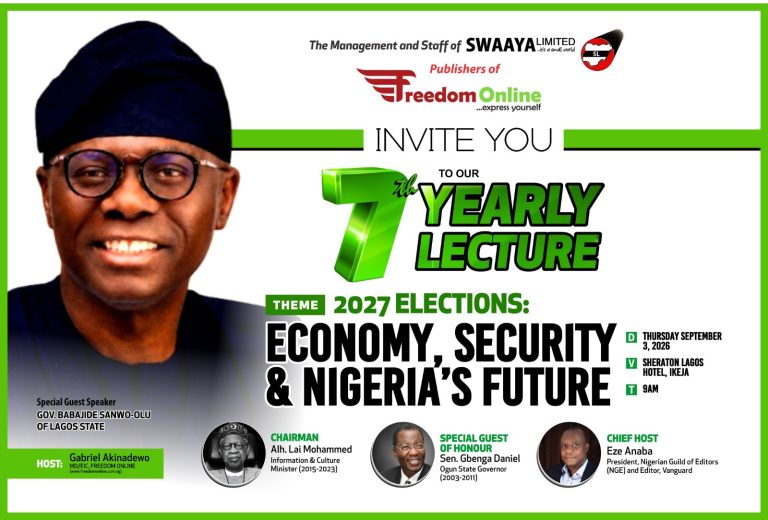
Sanwo-Olu, Lai Mohammed, Gbenga Daniel to discuss 2027 elections, insecurity at 7th Freedom Online lecture

0


Challenges facing the economy and insecurity, especially associated with elections in a developing economy like Nigeria, will be the focus of discussion at the seventh yearly lecture of Freedom Online (www.freedomonline.com.ng) on September 3 in Lagos.

Freedom Online, according to a statement by its Managing Director/Editor-in-Chief, Gabriel Akinadewo, is focusing on how to tackle insecurity during the lecture “because it has become a monster, threatening to consume the nation-state called Nigeria.

“What does the future hold for Nigeria after the 2027 general elections? How will the election be conducted in a way that will be acceptable to all? Will the outcome lay a solid foundation for the future of the country?

“We believe that actions of politicians, security agents and INEC officials, before, during and after the election will, one way or the other, decide the fate of the more than 200 million Nigerians in this geographical space. Obviously, insecurity, part of which is thuggery during elections, leads to poverty, underdevelopment and other social vices. Nigeria’s political, economic and social fabric is disintegrating because of this time bomb and the outcome of the election will go a long way to decide Nigeria’s future in global affairs”.

Akinadewo said Governor Babajide Sanwo-Olu of Lagos State is the Special Guest Speaker while former Information & Culture Minister, Alhaji Lai Mohammed and former Ogun State Governor, Senator Gbenga Daniel, are the Chairman and Special Guest of Honour respectively.

The President of the Nigerian Guild of Editors (NGE) and Editor of Vanguard, Eze Anaba, is the Chief Host.

Sanwo-Olu Mourns Veteran Actor Taiwo Hassan, aka ‘Ogogo’

0


Lagos State Governor, Babajide Sanwo-Olu, has expressed condolences to the family, friends, colleagues and fans of veteran actor Alhaji Taiwo Hassan, popularly known as Ogogo, following his death.

Sanwo-Olu described the death of the renowned actor as painful and a significant loss to Nigeria’s creative industry.

The governor said Ogogo was a gifted actor who used his talent to entertain Nigerians and tell stories that reflected the realities of society.
“Through his remarkable career, he earned the love and respect of Nigerians,” Sanwo-Olu said.

He prayed that Almighty God would grant the late actor eternal rest in Al-Jannah Firdaus and give his family, friends and colleagues the strength to bear the loss.

The governor also prayed that Ogogo’s memory would continue to live on through the many lives he touched during his lifetime.

Shehu Sani dismisses Atiku’s promise to restore fuel subsidy as ‘Trojan horse’

0

Senator Shehu Sani has described the promise by the African Democratic Congress (ADC) presidential candidate, Atiku Abubakar, to restore the fuel subsidy as a “Trojan horse” and an impracticable campaign strategy to win votes ahead of the 2027 general election.

Sani, who represented Kaduna Central in the eighth Senate, made the remarks while speaking to journalists in Abuja.

The former lawmaker said he was surprised that Atiku, a former Vice-President and veteran politician, would promise to reverse the subsidy removal despite his long-standing support for economic policies associated with the World Bank and the International Monetary Fund (IMF).

He described the pledge as “outright deception of Nigerians”, arguing that Atiku had consistently supported subsidy removal throughout his political career and previous campaigns.

“What he is saying is outright deception of Nigerians,” Sani said.

He added, “As someone who has always subscribed to Bretton Woods Institution neoliberal economic policies, someone who believes in World Bank and IMF prescriptions, devaluation of currency, privatisation of public enterprises and all sorts of capitalist bourgeoisie economic policies, and someone who has, throughout his political history and campaigns, stood for the removal of subsidy, for someone now to make a reversal simply because he needs votes, there is a need for Nigerians to seriously not take what he has said at face value.”

Sani argued that returning to fuel subsidy would be impracticable, recalling that the country had spent trillions of naira subsidising petroleum products, while neighbouring countries allegedly benefited from the arrangement through fuel smuggling.

“For a number of reasons, what he said is virtually impracticable,” he said.

The former senator also alleged that the subsidy regime created opportunities for fraud, with some beneficiaries accused of diverting hundreds of billions of naira under the guise of importing petroleum products.

“We have also seen how beneficiaries of subsidies use this mantra of subsidy to defraud our country. Many of them have cases in court where hundreds of billions of naira were looted and diverted from the national treasury in the name of importing petroleum products under the subsidy regime,” he said.

According to him, removing the subsidy has freed resources for state and local governments to fund development projects.

“Now, the removal of subsidy has also been able to provide resources for sub-nationals, for state governments and local governments, for them to be able to build roads, schools and hospitals,” Sani said.

He questioned the sustainability of returning to subsidy at a time when a significant portion of the nation’s revenue is being deployed to service debt.

Rather than promising to subsidise imported petroleum products, Sani urged politicians to focus on reviving Nigeria’s refineries and ensuring that the country refines its crude oil domestically.

“If any politician makes pledges to revamp our refineries so we can refine our own crude oil, then he is making sense,” he said.

Sani also rejected the argument that restoring the fuel subsidy would automatically bring down the cost of living.

“And let us not deceive ourselves. The return of the subsidy will not bring down commodity prices. It will simply distort the economic stability of our country,” he said.

The former senator further cautioned political parties and candidates against inflammatory rhetoric, ethnic mobilisation and appeals to religious sentiment ahead of the 2027 elections.

He urged politicians to campaign on issues, programmes and facts, warning that Nigeria had already experienced the devastating consequences of ethnic and religious conflicts.

“Nigeria has gone into war and crisis, and we also have that experience as a nation in the ’70s, and we have passed through all those spaces, and ought to have overcome all those things now,” he said.

“The use of ethnic groups and religions to undermine, destroy, damage and attack parties and candidates is not universal.”

Sani also criticised the opposition for allegedly seeking external validation in its quest to defeat President Bola Ahmed Tinubu, particularly through appeals to United States President Donald Trump and the European Union.

He described the approach as an attempt to “decolonise” Nigerian politics and to take domestic political contests outside the country.

“The idea of seeking an easy route to power by striving to secure validation from President Donald Trump and the EU is not helpful to our democracy,” Sani said.

He urged opposition parties to focus on convincing Nigerian voters rather than seeking external intervention to disqualify the President or frustrate his political ambition.

“Opposition should concentrate on issues and make themselves available and appeal to the electorate rather than trying to criminalise the President or his political ambition or seek President Trump or the EU to disqualify him,” he said.

Sani argued that attempts to involve foreign powers in Nigeria’s political affairs could damage the country’s image and undermine its status as an independent African nation.