Home Blog Page 193

Ogun police bust baby factory in Mowe, rescue two pregnant women, four children

0

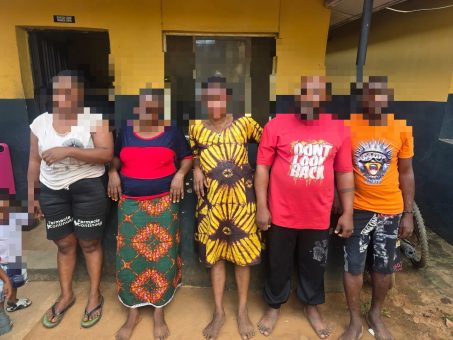
Operatives of the Ogun State Police Command have dismantled an alleged baby factory at Abaren Village, Mowe, rescuing two pregnant women and four children while arresting six suspects.

The operation, conducted at about 8:00 a.m. on August 24, followed sustained intelligence on suspected human trafficking and illegal adoption activities at a hideout on Toluwalase Street, Abaren Village, via Gbarinmole.

ASP Oluborode Opeyemi, Deputy Police Public Relations Officer, Ogun State Command, disclosed this in a statement on Tuesday, said the two rescued pregnant women were identified as Ilesanmi Foluke, 23, who is seven months pregnant, and Ejekwa Melody, 20, who is eight months pregnant.

Four children—two boys and two girls—were also recovered from the premises.

Six suspects were arrested in connection with the operation. They are Florence Glory Ogbona, 58; Magdalene Julius, 63; Chidike Egwuonwu, 40; Onyechu Chidike, 35; Stephen Ogbona, 39; and a nurse, Oseni Kusamotu Idaya.

In a follow-up operation, police investigators traced another victim, Blessing Bright Effiong, 26, to a hospital in the Mowe area. She had reportedly given birth to a baby boy on August 20.

According to the command’s deputy spokesperson, Effiong was receiving medical treatment at the hospital, but the whereabouts of her newborn could not be established. The attending nurse was subsequently arrested as efforts continued to locate the missing baby.

The case has been transferred to the State Criminal Investigation Department (SCID), Eleweran, Abeokuta, for further investigation. Police said the probe would determine the full extent of the alleged syndicate’s activities, locate the missing newborn and bring all culpable persons to justice.

In his remarks, the Commissioner of Police, Ogun State Command, CP Bode Ojajuni, commended the Mowe Division operatives for their prompt response and operational efficiency.

He reiterated the command’s commitment to combating human trafficking, child trading and other violent crimes across the state, while urging residents to remain vigilant and provide credible information on suspicious activities.

He urged members of the public to report suspicious persons or activities through the Gateway Shield toll-free line: 0800 000 9111, or the emergency lines 09164859299 and 09154293464.
NDLEA dismantles drug black spots across Ogun

0

The National Drug Law Enforcement Agency (NDLEA), Ogun State Command, has intensified its crackdown on illicit drug activities across the state through targeted operations under Operation Restore Order, in furtherance ofa nationwide initiative aimed at dismantling identified drug black spots.

The operation, launched by the NDLEA Chairman and Chief Executive Officer, Brig. Gen. Mohamed Buba Marwa, has resulted in coordinated raids on several identified drug black spots in Abeokuta.

The Public Relations Officer, NDLEA Ogun State Command, ASN Haris A. Musa, in a statement disclosed that the locations targeted included Mayas, Maiami in Panseke, Onion Market in Eleweran, MKO Stadium Kuto Park, and WAPCO in Lafenwa.

Musa said that the operations were designed to disrupt illicit drug activities, dismantle drug networks and reclaim public spaces allegedly being used for drug trafficking and abuse.

According to him, the Command remains committed to its statutory responsibility of protecting communities and preventing illicit drug activities from gaining a foothold across Ogun State.

The agency spokesperson in the state urged residents to support the command’s efforts by providing credible information that could assist in identifying and disrupting drug-related activities in their communities.


ASUU declares indefinite strike in Edo Varsity

0

The Academic Staff Union of Universities (ASUU), Ambrose Alli University (AAU), Ekpoma, has declared an indefinite strike action over the state government’s failure to implement the 2025 FGN/ASUU Agreement in the University.

It declared the strike after its Congress session on Monday.

A statement signed after the congress by its branch Chairman, Dr Cyril Oziegbe Onogbosele and Secretary, Dr William Odion, said there was no response from the university management or the Edo State Government after it issued a 14-day ultimatum.

According to the statement, “Congress decried the failure by the University authorities and Edo State Government to meet the demands of the Union on the Agreement, namely implementation of the 2025 FGN/ASUU Agreement, and payment of the accrued arrears of allowances in the Agreement from January 2026 to date.

“Having failed to implement the Agreement within the 14-day ultimatum, in addition to unsuccessful efforts by the Branch to make the University authorities and Edo State Government to implement the Agreement. Congress received and directed members to embark on a total, comprehensive and indefinite strike with effect from Tuesday, 25th August, 2026 at 12.01 am.

“For the avoidance of doubt, the strike covers withdrawal of statutory services by members, including teaching/lecturing, conduct and invigilation of all forms of examination (undergraduate, postgraduate, oral, CBE and paper-based examinations); statutory meetings, including Departmental, Faculty, Senate and Committee meetings; and students’ research project and Industrial Training (IT)/Teaching Practice supervision.”


Yobe residents slam Buni’s N300m donation, govt denies using state funds

0

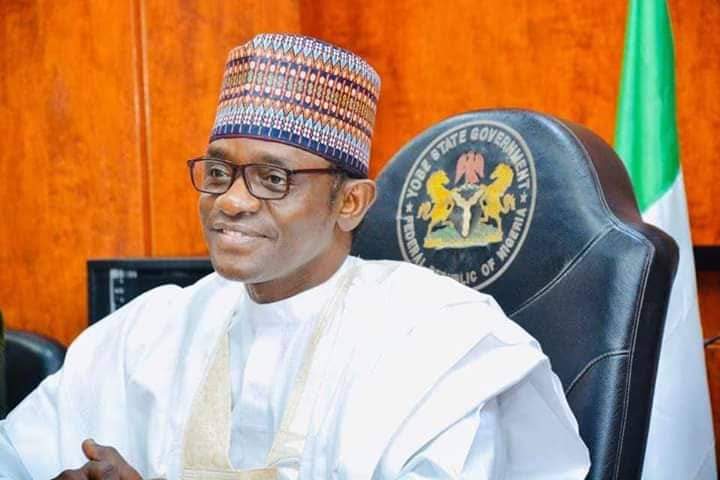
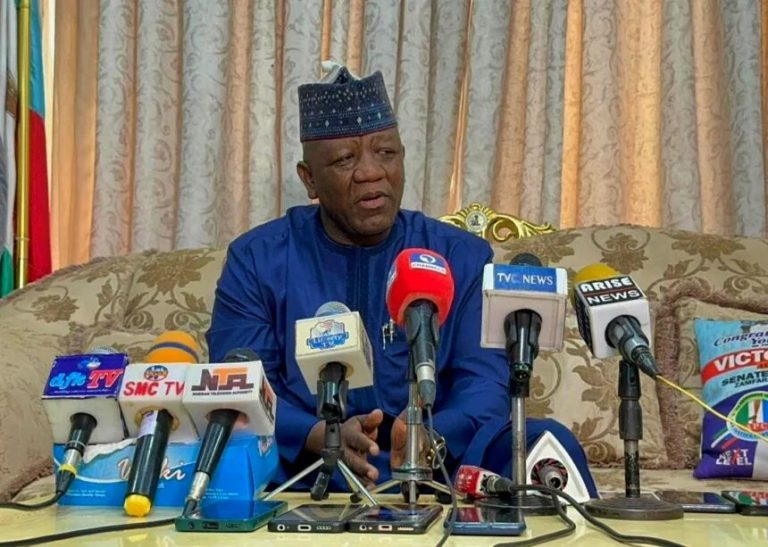
Residents and activists in Yobe State have criticised Governor Mai Mala Buni over his donation of N300 million to the Jama’atu Izalatil Bid’ah Wa Iqamatis Sunnah, popularly known as Izala, amid concerns over the condition of education and healthcare facilities in the state.

Buni announced the donation on Sunday in Jos, Plateau State, during a one-day National Symposium on “Enhanced Political Participation and Social Justice as a Panacea for Unity and Development in Nigeria,” organised by the JIBWIS.

The governor said the N300 million was donated towards the proposed religious university the organisation plans to establish.

The donation, however, generated reactions from some residents of Yobe State, who questioned the priority given to the project amid what they described as pressing challenges in education, healthcare and other sectors.

A member of the Peoples Democratic Party in the state, Umar Yobe, criticised the donation, alleging that public funds were used without consultation.

Umar said, “N300 million was carelessly donated to Sheikh Jingir’s project from the public purse without anyone’s consent. He can’t afford a fraction of said amount outside power. This is how some people abuse power.”

He added, “Nigeria is a joke of a country, and states like Yobe are where the real drama unfolds. Haba!”

The criticism also extended to the healthcare sector, with an activist, KY Tebo, alleging that residents suffering from kidney-related ailments in some parts of the state were facing difficulties accessing treatment.

Tebo said, “Kidney disease is killing residents in Bade and Jakusko Local Government Areas of the state, while the governor failed to build a dialysis centre.”

The activist questioned the decision to commit N300 million to the proposed university when, according to him, residents were in need of basic medical facilities.

He said, “When you look at the amount of N300 million, you begin to ask what could have been done with that money in our hospitals.”

Tebo added that the controversy was about government priorities rather than opposition to the proposed university.

“It is not because they are against religion or against the proposed university. The question is about priority,” he said.

Concerns were also raised about the education sector, with an activist, Adamu Bello Jana, accusing the state government of failing to adequately address challenges confronting schools and children.

Jana, who spoke exclusively to PUNCH Online, said the education sector was among those requiring urgent intervention, particularly because of the number of out-of-school children and the condition of some public schools.

He said, “The education sector is among the worst in the state, and this is an area that should receive serious attention from the government.”

Jana further said many schools were in poor condition and required urgent rehabilitation.

He added, “We have many out-of-school children in Yobe, and instead of seeing serious investment in education, we continue to see schools that are dilapidated.”

According to him, the N300 million could have been used to address some of the challenges in the sector.

“The money should be channelled to the education sector, as many schools in the state are dilapidated,” Jana said.

Several residents had taken to social media to criticise the governor over the donation, with some describing it as a misplaced priority.

The reactions have largely centred on the argument that government resources should first be directed towards essential services that directly affect residents.

Some residents argued that the money could have been used to rehabilitate schools, provide healthcare facilities and address other infrastructure deficits across the state.

The controversy has also raised questions about the source of the funds used for the donation.

While Umar alleged that the N300 million was from the public purse, the Yobe State Government has yet to publicly clarify the source of the funds or respond to the criticism.

The development has continued to generate reactions on social media, with critics calling for greater attention to education, healthcare and other basic needs across Yobe State.

However, in a statement released on Tuesday, the Director-General, Press and Media Affairs to the Governor, Mamman Mohammed, said the N300 million pledge was a personal donation by Governor Mai Mala Buni and was not made on behalf of the Yobe State Government.

Mohammed said the governor attended a seminar organised by the Jama’atu Izalatil Bid’ah Wa Iqamatis Sunnah (JIBWIS) in Jos on Sunday, alongside the governors of Kano, Sokoto and Jigawa states, among other dignitaries.

According to him, the event began with a courtesy visit to the Plateau State Governor, Caleb Mutfwang, before the participants proceeded to the venue of the seminar.

Mohammed said the Special Adviser to the President on Political Affairs, Kabiru Masari, was the last speaker to deliver a goodwill message at the event and announced a personal donation of N300 million, as well as an additional N300 million pledge on behalf of Governor Buni, towards the construction of the JIBWIS University.

He stressed that the pledge was a personal donation and not on behalf of the Yobe State Government.

“The donations made by Hon. Kabiru Masari on behalf of his humble self, and Governor Buni, were very personal and not on behalf of Yobe State Government,” Mohammed said.

He added that Masari could not make any pledge or take any decision for or on behalf of the Yobe State Government.

Mohammed therefore described reports suggesting that the N300 million pledge was made on behalf of the Yobe State Government and would be paid from state government resources as “totally false, inaccurate, misleading and a distortion of facts.”

The clarification provides the state government’s position on the controversy, while concerns raised by residents and activists remain focused on the prioritisation of education, healthcare and other basic services in Yobe State.


FULL LIST: Nigeria, other African countries dominate world’s 60 poorest by GDP-PPP per capita

0

Nigeria and several other African countries feature prominently among the world’s 60 poorest countries in a 2026 ranking by Global Finance magazine, based on GDP per capita at purchasing power parity.

Burundi ranked as the country with the lowest GDP per capita in the ranking, at $994.23, followed by the Central African Republic with $1,437.72 and South Sudan with $1,467.19.

The figures are based on GDP per capita at purchasing power parity, a measure that adjusts for differences in the cost of living and inflation across countries.

Nine of the 10 countries at the bottom of the ranking are in Africa, with Yemen the only non-African country among them.

The 10 lowest-ranked countries were Burundi, the Central African Republic, South Sudan, Yemen, Mozambique, Malawi, Somalia, Liberia, Madagascar and the Democratic Republic of the Congo.

Nigeria ranked 56th, with a GDP per capita of $9,532.92, compared with 44th position in the 2025 ranking.

Niger ranked 11th with $2,108.46, followed by Sudan at 13th with $2,427.43 and Burkina Faso at 16th with $3,060.34.

Lesotho ranked 17th with $3,211.83, while Chad and Guinea-Bissau occupied the 18th and 19th positions with $3,284.18 and $3,304.84 respectively.

Mali ranked 20th with $3,480.41, followed by Togo at 21st with $3,563.31, The Gambia at 22nd with $3,664.60 and Sierra Leone at 23rd with $3,709.84.

Uganda ranked 26th with $3,923.83, while Vanuatu, Comoros, Rwanda and Tanzania occupied the 27th, 28th, 29th and 30th positions respectively.

Zambia came 31st with $4,380.77, followed by Ethiopia at 32nd with $4,498.55, Guinea at 33rd with $4,746.77 and Benin at 34th with $4,758.22.

Senegal ranked 37th with $5,440.63, while Cameroon came 38th with $5,782.69.

Kenya was ranked 44th with a GDP per capita of $7,590.60, while Zimbabwe came 46th with $7,985.23.

Côte d’Ivoire ranked 48th with $8,165.34, Ghana came 51st with $8,613.25, Mauritania 52nd with $8,831.81 and Djibouti 55th with $9,435.70.

Angola occupied the 59th position with $10,274.90, while Laos ranked 60th with $10,379.98.

The ranking showed that African countries accounted for the majority of those at the bottom of the GDP-per-capita ranking, highlighting the economic challenges facing several countries on the continent.

Outside Africa, countries featured among the 60 included Yemen, Afghanistan, Solomon Islands, Haiti, Papua New Guinea, Myanmar, Timor-Leste, Tajikistan, Nepal, Pakistan, Honduras, Tonga, Cambodia, Samoa, Venezuela, Kyrgyz Republic, Nicaragua, Bangladesh and Laos.

The figures also showed notable changes compared with the 2025 ranking. Burundi moved from second to first, while South Sudan dropped from first to third.

The Democratic Republic of the Congo moved from seventh to 10th, while Nigeria dropped from 44th to 56th.

Full list
Burundi — $994.23
Central African Republic — $1,437.72
South Sudan — $1,467.19
Yemen — $1,590.19
Mozambique — $1,688.91
Malawi — $1,758.03
Somalia — $1,905.21
Liberia — $1,979.42
Madagascar — $2,030.36
Democratic Republic of the Congo — $2,032.68
Niger — $2,108.46
Afghanistan — $2,304.07
Sudan — $2,427.43
Solomon Islands — $2,595.87
Haiti — $2,999.44
Burkina Faso — $3,060.34
Lesotho — $3,211.83
Chad — $3,284.18
Guinea-Bissau — $3,304.84
Mali — $3,480.41
Togo — $3,563.31
The Gambia — $3,664.60
Sierra Leone — $3,709.84
Kiribati — $3,755.66
Papua New Guinea — $3,813.37
Uganda — $3,923.83
Vanuatu — $3,938.10
Comoros — $4,031.17
Rwanda — $4,190.43
Tanzania — $4,354.57
Zambia — $4,380.77
Ethiopia — $4,498.55
Guinea — $4,746.77
Benin — $4,758.22
Myanmar — $5,047.32
Timor-Leste — $5,060.22
Senegal — $5,440.63
Cameroon — $5,782.69
Tajikistan — $6,167.47
Nepal — $6,181.13
São Tomé and Príncipe — $6,434.97
Republic of Congo — $6,522.84
Pakistan — $7,014.24
Kenya — $7,590.60
Honduras — $7,863.96
Zimbabwe — $7,985.23
Tonga — $8,044.12
Côte d’Ivoire — $8,165.34
Cambodia — $8,403.27
Samoa — $8,427.34
Ghana — $8,613.25
Mauritania — $8,831.81
Venezuela — $8,910.60
Kyrgyz Republic — $9,371.04
Djibouti — $9,435.70
Nigeria — $9,532.92
Nicaragua — $9,765.25
Bangladesh — $10,271.28
Angola — $10,274.90
Laos — $10,379.98

Police rescue three kidnap victims, recover stolen car, firearms in Enugu

0

The Enugu State Police Command has disclosed that its operatives attached to the Anti-Cultism Sub-Unit of the Violent Crime Response Unit have rescued three abducted victims and recovered their Lexus RX350, two locally-made firearms, ammunition and other exhibits.

It noted that the rescue was achieved with support from the Neighbourhood Watch corps and community members.

According to a release on Tuesday by the command’s spokesperson, Daniel Ndukwe, via his X handle, the command received an intelligence report on carjacking and abduction on August 18, 2026, at midnight.

He added that the operatives immediately swung into action.

Ndukwe said, “The operation followed credible intelligence received at about 1:30 a.m. on August 18, 2026, while the operatives were on crime-prevention patrol along the Port Harcourt Expressway, Enugu, concerning the carjacking and abduction of occupants of a Lexus RX350 within Independence Layout by armed hoodlums.

“Acting swiftly, the operatives commenced a hot pursuit of the suspects, which continued to Hillview Road, Independence Layout. On reaching the area, the suspects abandoned the vehicle and their firearms before fleeing the scene. The three victims were subsequently rescued unharmed, with support from members of the Neighbourhood Watch Group and law-abiding citizens, and taken to safety.”

The command’s spokesperson revealed that the operatives were able to recover the victim’s vehicle, a pistol, mobile phone, among others.

He added that investigations are currently ongoing to apprehend the suspects, as he urged the public to remain vigilant and provide the police with credible information.

“Recovered from the scene were the said victim’s vehicle, one locally fabricated Beretta-like pistol loaded with five rounds of 9mm live ammunition, one locally made cut-to-size firearm, one live cartridge, a pair of hand gloves, one skimmask and one mobile phone, all abandoned by the fleeing suspects. Investigation has been intensified, with a manhunt launched to identify and arrest the fleeing suspects, recover further exhibits and establish their involvement in the crime.

“The Commissioner of Police, CP Mamman Bitrus Giwa, psc, mspsp, smicm, commended the operatives, members of the Neighbourhood Watch Group and vigilant citizens for their swift and coordinated response. He reiterated the command’s commitment to sustaining intelligence-led and community-supported operations against kidnapping, armed robbery, car snatching and other violent crimes, while urging members of the public to remain vigilant and provide timely and credible information to the police,” the statement concluded.


Fresh crisis rocks Ogun APC as NWC disowns Hunye as guber candidate

0

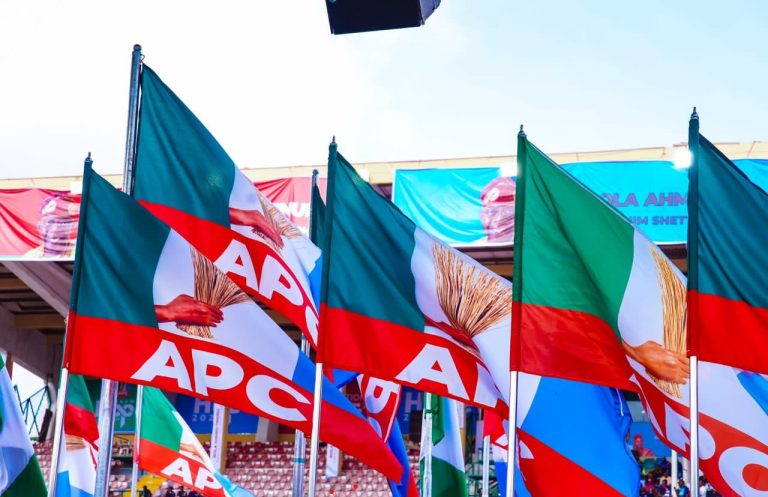
The crisis within the Ogun State chapter of the All Progressives Congress (APC) deepened on Monday as the party’s National Working Committee (NWC) disowned Abayomi Hunye as its governorship candidate for the 2027 election, describing his claim to the ticket as false and unauthorised.

In a disclaimer signed by the APC National Secretary, Ajibola Basiru, the party said Hunye, who it claimed had been suspended since April, was not a member in good standing and therefore lacked the authority to present himself as its candidate.

The NWC described Hunye’s purported self-declaration as “completely false, unauthorised, and a mischievous act aimed at misleading the public.”

The party said: “APC hereby informs the general public, stakeholders, the APC Ogun chapter and the good people of the State that Mr. Abayomi Hunye is an impostor who is currently on suspension as a member of the APC.

“His recent self-declaration as the governorship candidate of our great party for the 2027 election is completely false, unauthorised, and a mischievous act aimed at misleading the public.”

According to the NWC, Hunye was suspended on April 7, 2026, following a petition from his ward, Tube Ward, in Ipokia Local Government Area.

It said the suspension was initiated by the ward executives, ratified by the Ipokia Local Government Area and subsequently approved by the Ogun State Working Committee before being communicated to the national headquarters.

The party said the allegations leading to the suspension included “nefarious dealings,” activities allegedly injurious to the image of the party, anti-party activities and actions purportedly aimed at causing disaffection and division among members.

The NWC consequently declared that Hunye had no “legal and moral standing” to represent the APC in any capacity.

It reaffirmed Senator Adeola Solomon Olamilekan as the party’s governorship candidate for Ogun State, with Balogun Kudirat Abiodun as his running mate.

The party further claimed that the names and particulars of Olamilekan and Abiodun had been uploaded to the Independent National Electoral Commission (INEC) portal and that the commission had issued acknowledgement slips recognising them as the APC’s candidates for the January 2027 governorship election.

The NWC warned individuals, groups and organisations against conducting political business with Hunye under the name of the APC.

“Any person, group, or organisation that associates, collaborates, or transacts any political business with Mr. Abayomi Hunye under the guise of the APC does so at their own risk,” it warned.

The party added that it would not be responsible for any financial losses, legal disputes or criminal liability arising from such dealings.

The NWC also disclosed that it had directed its legal team to commence contempt proceedings and lodge a formal complaint with relevant security agencies over what it described as misrepresentation and impersonation.

It warned media organisations and the public to disregard publications, interviews or documents emanating from Hunye concerning the APC.

The development adds a new dimension to the political contest in Ogun State ahead of the 2027 election, with the APC leadership moving to publicly establish its preferred candidate and distance itself from Hunye’s claim.

The party urged its members and supporters to remain calm and law-abiding, directing stakeholders seeking clarification on the governorship race to contact the APC national secretariat.

Return to fuel subsidy’ll reverse Nigeria’s economic gains –Minister

0

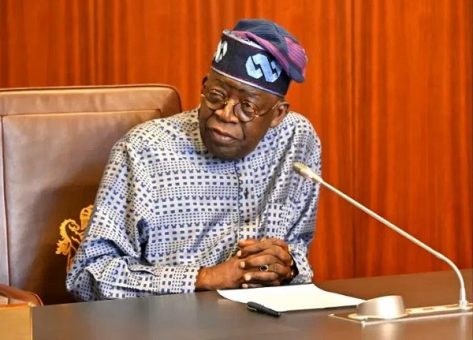
Minister of Information and National Orientation, Mohammed Idris, has warned against calls to restore the petrol subsidy, saying a return to the old regime would undermine Nigeria’s improving fiscal position, weaken investor confidence and reverse gains from the economic reforms of President Bola Ahmed Tinubu’s administration.

Idris, in an Op-Ed titled “Restoring Fuel Subsidy Will Reverse Nigeria’s Economic Gains,” issued in Abuja by his Special Assistant on Media, Rabiu Ibrahim, outlined the fiscal benefits of subsidy removal and the economic risks he said Nigeria would face if petrol subsidy were reintroduced.

“Restoring subsidy would almost instantly return Nigeria to the economic conditions of 2022, recreating the same fiscal pressures, distortions, scarcity and incentives for arbitrage that made the old system unsustainable,” Idris said.

The minister said proponents of subsidy restoration must confront its opportunity costs, asking whether the country should restore petrol subsidy at the expense of funding student loans and consumer credit for young Nigerians, maintaining higher allocations to states and local governments, or continuing investments in roads, rail, power and security.

He also questioned whether Nigeria could afford to divert resources from healthcare, education and social protection for vulnerable citizens in order to subsidise petrol.

Idris recalled that in 2022, amid declining oil production and weak revenues, Nigeria spent about $10 billion on fuel subsidies, while the World Bank warned that the subsidy was consuming resources that could otherwise have supported education, healthcare, infrastructure and social protection.

Citing the Federal Government’s recently presented Nigeria’s Reform Scorecard: The Benefits, Costs and Harms Prevented, Idris said the Minister of Finance and Coordinating Minister of the Economy, Dr Taiwo Oyedele, disclosed that subsidy savings had mobilised ₦15.8 trillion in resources for the Federation between June 2023 and December 2025.

He explained that approximately N5.43 trillion accrued to the Federal Government, N6.52 trillion to states and N3.88 trillion to local governments.

Idris, however, clarified that the ₦15.8 trillion was not a separate pool of cash but resources released within the Federation’s wider fiscal system.

According to him, the increased fiscal space has strengthened the capacity of states and local governments to meet salary and pension obligations and invest in essential services, while supporting major federal investments in infrastructure, security, agriculture and human capital.

He said the Reform Scorecard recorded approximately N6.47 trillion in additional expenditure on strategic infrastructure, alongside more than N400 billion committed to major social investment initiatives, including the Nigerian Education Loan Fund (NELFUND), the MOFI Real Estate Investment Fund (MREIF) and CREDICORP.

Idris also said social transfers had reached more than 10 million Nigerian households.

The minister noted that Nigeria was already carrying an electricity subsidy estimated at N3.14 trillion between June 2023 and December 2025, warning that restoring petrol subsidy would place an additional burden on public finances.

He said the Organised Private Sector and the wider economic community had also cautioned against reversing the reform.

“Nigeria cannot build tomorrow’s economy by returning to yesterday’s unsustainable subsidy regime. We have moved beyond that model,” Idris said.

He urged Nigerians to assess the reforms within the context of the country’s long-term economic stability and the need to build a stronger and more productive economy.

US intensifies military training for Nigerian troops in Bauchi

0

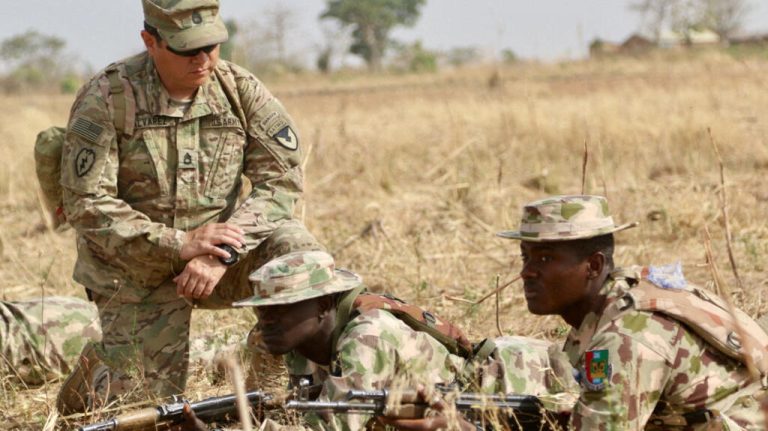
US troops in Nigeria
The United States has intensified military training for Nigerian troops in Bauchi State, with a focus on unmanned aircraft systems, combat casualty care and other battlefield skills.

The training, conducted at an operating location in Bauchi, forms part of broader US-Nigeria security cooperation aimed at improving military capability, operational readiness and the long-term capacity of Nigerian forces.

According to a report released by the United States Africa Command on Monday, the exercises covered Combat Lifesaver and Tactical Combat Casualty Care, weapons familiarisation, camouflage, water treatment and testing, explosive ordnance disposal, small-unit tactics and unmanned aircraft systems.

“U.S. and Nigerian forces are conducting a series of training events at Operating Location Bauchi, Nigeria, aimed at sharing military expertise, strengthening partner capacity and building relationships between service members from both nations.

“Training conducted between U.S. and Nigerian forces at Bauchi has included Combat Lifesaver and Tactical Combat Casualty Care instruction, weapons familiarisation, camouflage, water treatment and testing, explosive ordnance disposal, small-unit tactics and unmanned aircraft system training,” the report said.

Capt Gabriel Feingold, a logistics officer assigned to the US Army Southern European Task Force, Africa and operations officer at OL Bauchi, said Nigerian personnel were allowed to identify the training areas they considered most beneficial.

“We bring them a list of several different training topics, and they select what they think would be most beneficial for them,” Feingold said.

The report said unmanned aircraft systems attracted particular interest from the Nigerian forces. Sgt Mark Murphy, an intelligence analyst assigned to the 13th Combat Sustainment Support Battalion, led about 10 members of the Nigerian Air Force Special Forces Regiment through the training.

The Nigerian personnel first received about 45 minutes of instruction before taking part in hands-on exercises involving the operation of the aircraft and the use of information gathered by the systems in military operations.

“They were really excited with being able to get hands-on time with it,” Murphy said, adding that the Nigerian personnel were interested in receiving further training.

The US Africa Command said the exercises were also designed to strengthen relationships and improve interoperability between American and Nigerian personnel, particularly at lower levels of the two forces.

“It helps build relationships between Soldiers and the partner force, especially at the lower levels,” Feingold said.

The development comes after AFRICOM disclosed in July that the US had withdrawn most of its troops deployed to Nigeria for a specific counterterrorism operation, while retaining intelligence-sharing and security cooperation with the country.

AFRICOM said further training opportunities were being developed at the Bauchi operating location as both countries continued to identify areas for sharing expertise and improving military capabilities.

APC’ll remain in power beyond 2031, Yari boasts

0

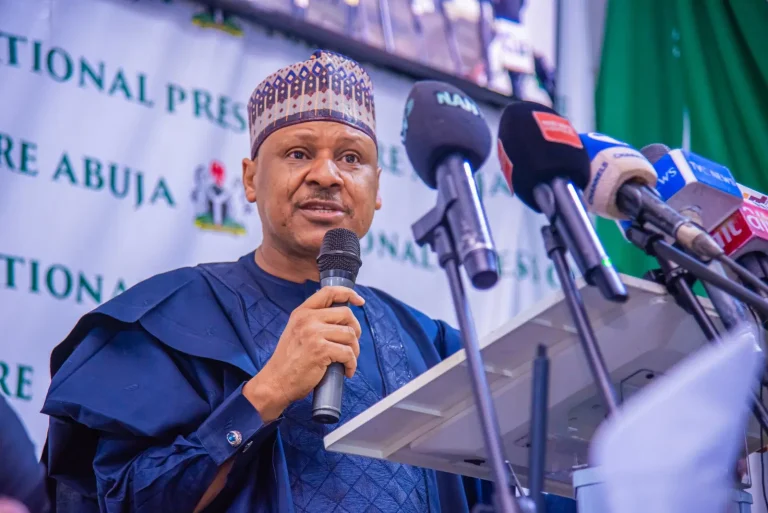
Director-General of the All Progressives Congress (APC) Presidential Campaign Council, Senator Abdul’Aziz Yari

• Says Atiku, Obi, others can’t stop Tinubu •Campaign council reveals northern dominance, South-South, South-West governors’ limited roles.

Director-General of the All Progressives Congress (APC) Presidential Campaign Council, Senator Abdul’Aziz Yari, has boasted that the ruling party will remain in power beyond 2031, declaring that former Vice-President Atiku Abubakar of the African Democratic Congress (ADC), former Anambra State Governor, Peter Obi of the Nigeria Democratic Congress (NDC) and other opposition figures cannot stop President Bola Tinubu’s re-election in 2027.

Yari, former Zamfara State governor, spoke in Abuja on his return from an overseas trip, where he was received by party supporters at the Nnamdi Azikiwe International Airport.

His declaration came against the backdrop of renewed opposition efforts to build a coalition capable of unseating the APC in 2027 and barely 24 hours after the Presidency unveiled the ruling party’s Presidential Campaign Council for the election.

“Today, we have seen him [Bola Ahmed Tinubu] as president today, and by God’s grace, he shall be the president come 2027,” Yari said.

He also expressed confidence that the APC would remain in government after Tinubu’s second term.

“We pray that our party will continue to be the party to lead the country after President Tinubu’s second term,” he said.

Yari assured Nigerians that the APC would fulfil the promises it made during the 2023 presidential campaign, saying the party’s continued support among Nigerians would depend on its ability to deliver on its commitments.

“I want to assure Nigerians that whatever promise we made during the campaign, we shall keep to our promises. Our party is synonymous with keeping to our words,” he said.

The former governor also prayed for divine wisdom for Tinubu as the ruling party begins its mobilisation for the 2027 election.

The confidence expressed by Yari comes as the APC’s campaign structure reveals a strong concentration of key operational positions among northern politicians and long-standing allies of the President.

Meanwhile, an independent review of the newly released membership list shows that several serving governors from the South-South and South-West are either absent from the council or occupy positions that are less prominent than those assigned to their northern counterparts.

Of the six APC governors now in the South-South following the wave of defections into the ruling party in 2025, only Cross River State Governor Bassey Otu and Delta State Governor Sheriff Oborevwori feature on the campaign council.

Otu is listed as South-South Zonal Campaign Coordinator, while Oborevwori is Director of Finance and Treasurer.

Governors of Bayelsa, Douye Diri; Rivers, Siminalayi Fubara; Akwa Ibom, Umo Eno; and Edo, Monday Okpebholo, are absent from the published list.

A similar pattern is evident in the South-West, where Lagos State Governor Babajide Sanwo-Olu is listed as Zonal Campaign Coordinator, while Ogun State Governor Dapo Abiodun is Director of Fundraising.
Ekiti Governor Biodun Oyebanji and Ondo Governor Lucky Aiyedatiwa, however, do not appear on the list.

At the top of the campaign structure, the Director-General, Deputy Directors-General and heads of major directorates, including finance, security, legal and media, are largely occupied by northern politicians and individuals regarded as long-standing allies of Tinubu.

Yari himself heads the council as Director-General, while Senate President Godswill Akpabio and Yobe State Governor Mai Mala Buni are among the Deputy Directors-General.

Sarki Yaki heads the security and intelligence directorate.

Imo State Governor Hope Uzodimma is the major exception from the South-East, emerging as secretary of the council, the fourth-ranking position after Tinubu, Vice-President Kashim Shettima and APC National Chairman, Prof Nentawe Yilwatda.

The composition effectively gives the campaign council a strong northern imprint, although several southern politicians have also been assigned positions with direct responsibility for mobilisation and campaign financing.

Governors Otu, Oborevwori, Sanwo-Olu and Abiodun, for instance, hold functional positions linked to zonal mobilisation, campaign finance and fundraising. Several senior southern politicians and National Assembly leaders also feature prominently, including Akpabio and Senate Leader Bamidele Opeyemi. However, the absence of many serving governors and some senators elected in recent off-season and rerun elections has provided an early indication of how the APC is balancing loyalty, political influence and campaign responsibilities ahead of the election.

Party sources who spoke on condition of anonymity attributed the composition partly to concerns within the presidency over the loyalty of politicians who entered the APC through recent defections.

One source said some politicians moved into the ruling party when it became politically convenient, suggesting that the presidency was not prepared to immediately reward such defections with command positions.

But another party source rejected the interpretation, arguing that the roles given to Otu, Oborevwori, Sanwo-Olu and Abiodun were not ceremonial and placed them in positions with significant influence over grassroots mobilisation and campaign resources. The composition has also generated questions over the inclusion of some serving public officials and individuals whose records have attracted controversy.

The appointment of Nigeria Revenue Service Chairman Zacch Adedeji as Deputy Director of Fundraising, for instance, has attracted criticism, with former Kogi West Senator Dino Melaye threatening legal action over an alleged conflict of interest.

Former Humanitarian Affairs Minister, Betta Edu, and former NSITF board chair, Ngozi Olejeme, have also faced scrutiny over unresolved allegations, while former presidential adviser Babafemi Ojudu has questioned aspects of the council’s composition. Despite the criticism, the APC leadership has maintained its focus on the 2027 contest.

The party’s preparations are taking place against a rapidly shifting opposition landscape, with Atiku, now aligned with the African Democratic Congress (ADC), Peter Obi and Rabiu Kwankwaso among the major opposition figures whose political movements could shape the contest.

The opposition has been exploring possible alliances and a common platform to prevent the APC from securing another presidential mandate, although disagreements over leadership, zoning and the choice of a presidential candidate have complicated efforts to forge a unified challenge.

Yari, however, appeared dismissive of the threat posed by the opposition figures, insisting that the APC was confident of retaining the presidency.

The campaign council is expected to oversee the ruling party’s nationwide mobilisation as it seeks to consolidate Tinubu’s position ahead of the 2027 election and lay the groundwork for continued APC control beyond his second term.

Sun