Home Blog Page 179

Lagos to deploy 220 trucks for waste evacuation — Hamzat

0

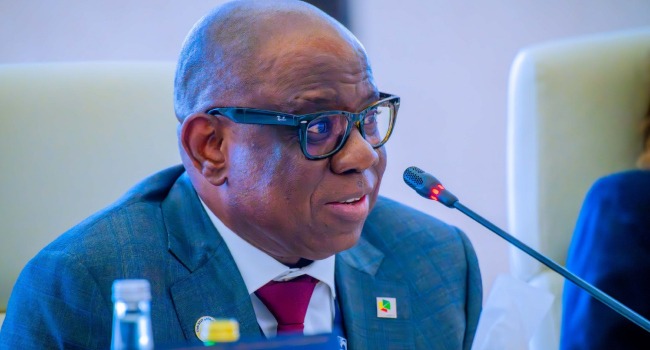
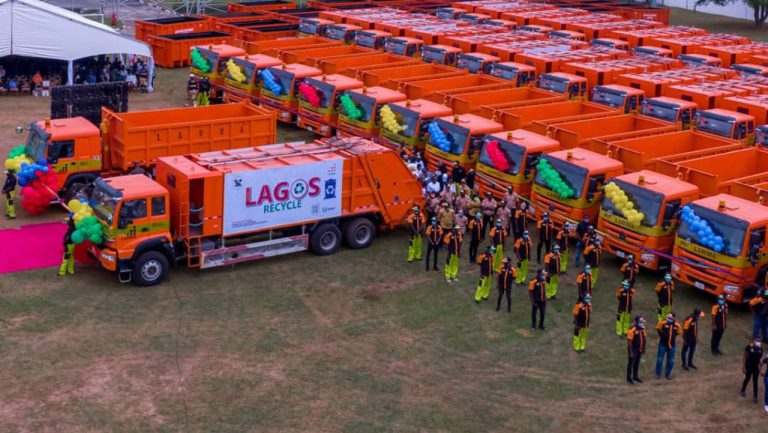
The Lagos State Deputy Governor, Obafemi Hamzat, said the state would increase its waste evacuation capacity with an additional 220 trucks.

This comes barely two months after Governor Babajide Sanwo-Olu announced that the state would soon take delivery of 150 compactor trucks to tackle waste evacuation.

Hamzat said this while addressing journalists during the monthly environmental sanitation exercise held in Festac, Amuwo-Odofin Local Government Area of the state, on Saturday.

He noted that the new trucks would supplement the existing Private Sector Participation waste collection system.

He said the trucks would help the government respond to the growing volume of waste generated across the state as a result of population growth.

“The state government will be bringing in another 220 trucks to make sure that we supplement our PSP. What we need our people to also do is to make sure that they patronise their PSP, not the cart pushers, because they are not organised. You don’t know where the waste is ending up,” he said.

Reacting to a question on the waste situation in Lagos, Hamzat said the increasing number of people living and working in the state meant more waste was generated daily, making residents’ cooperation essential to effective waste management.

“A lot of people are coming to Lagos, and therefore they generate waste. So part of what you can see that we are doing is that we are getting many more trucks to actually go and evacuate,” he said.

He said residents had a responsibility to ensure that waste was properly disposed of, stressing that refuse dumped in canals could obstruct water flow and worsen flooding.

The deputy governor said the state government was encouraging communities across Lagos to organise regular environmental sanitation exercises, with the target of having residents clean their surroundings at least once a month.

“We cannot be a people without a healthy environment. It doesn’t matter what we do, a cleaner environment is what makes a city or a state sustainable,” he said.

Hamzat also urged residents to take personal responsibility for maintaining clean surroundings and use approved waste collection channels.

He said the government’s community engagement was aimed at encouraging residents to develop a culture of maintaining clean surroundings and creating a healthier environment for children and other residents.

Addressing environmental management in the Festac area, Hamzat noted that the Federal Housing Authority had responsibilities in the district but said residents and property managers were still required to comply with Lagos State environmental regulations.

He, however, stressed that the state government remained committed to ensuring that the environment was sustainable and conducive for residents.

Hamzat commended the local government chairman and residents for their participation in the sanitation exercise, saying community involvement was essential to sustaining environmental cleanliness across Lagos.

Also speaking, the Lagos State Commissioner for the Environment and Water Resources, Tokunbo Wahab, said waste management in the state was improving, attributing the progress to the deployment of 24-hour emergency response teams and measures to address challenges at landfills and dumpsites.

Wahab said the state government had also intensified engagement with PSP operators to improve waste collection across the state, noting that the government had intervened in areas where the Lagos State Waste Management Authority would ordinarily not operate.

He said the government had assured PSP operators of its support to enable them to improve waste collection, adding that residents were expected to pay for services rendered in line with the polluter-pays principle.

The commissioner said the arrangement would ensure that PSP operators were adequately supported while residents received the services for which they paid.

According to him, the government was also transitioning from the traditional linear waste management system, where waste is collected and dumped, to a circular system in which waste is recovered and converted into useful resources.

Wahab said the transition had led to the development of material recovery facilities in Badagry and Epe, as well as transfer stations at Soluyi and Olusosun.

On the activities of cart pushers, the commissioner said the government was engaging them but would not adopt measures that could create greater environmental and security challenges in the future.

He said investigations had shown that waste collected by some cart pushers was often dumped in drainage channels and road medians, contributing to environmental problems and flooding.

Wahab also expressed concern over reports linking some cart pushers to criminal activities, including the cutting and theft of metals, saying the government could not adopt a policy that would worsen security challenges in the state.

The Subsidy Trap: What Nigeria Would Be Reversing

0

The pain of reform is real, but reversing an unsustainable system may cost more than sustaining it

By

Akeem Bello, PhD

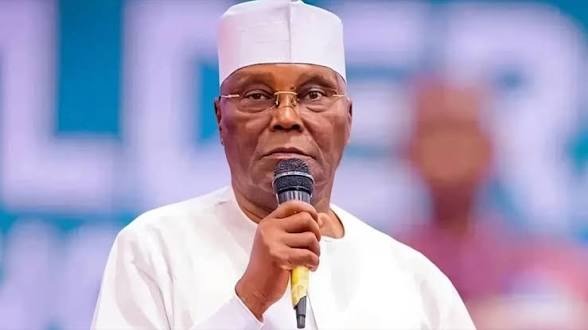
Countries often learn an old economic lesson only after considerable pain: you cannot reconstruct an economy without disturbing the arrangements that held the old one together. Serious reforms frequently impose immediate costs before their benefits become visible. The difficulty is that the pain is immediate and personal, while the benefits are often delayed and difficult to attribute. Nigeria’s renewed debate over petrol subsidy, following former Vice President Atiku Abubakar’s declaration that he would restore subsidy if elected president in 2027, therefore deserves to be treated as an economic question rather than another partisan quarrel. Indeed, the emergence of a serious policy debate this early around a forthcoming presidential election may itself be one of the encouraging signs that Nigeria’s democracy is gradually developing, as voters increasingly encounter competing ideas about how the economy should be managed rather than only competing personalities.

The Pain Is Real, But So Is the Economics of Reform

The hardship Nigerians have experienced since subsidy removal is real and should not be minimised. Transport costs increased, production costs rose, food prices absorbed higher logistics expenses, and household purchasing power weakened. Scholarly research confirms these effects. Okorie and Wesseh (2024), in their research titled Fossil Fuel Subsidy Removal, Economic Welfare, and Environmental Quality under Alternative Policy Schemes, used a computable general equilibrium model of Nigeria and found that subsidy removal increased prices and reduced economic welfare under their baseline scenario. Shittu et al. (2024), in their study titled Assessing the Compensation and Reinvestment Plans for Fuel Subsidy Rationalization in Nigeria: A Dynamic Computable General Equilibrium Approach, similarly found that a complete and immediate removal produced severe economic headwinds and significant welfare losses, although compensation and reinvestment substantially improved the outcome.

That evidence is important because a serious defence of reform cannot begin by denying the pain it caused. The more important question is whether short term welfare loss is sufficient evidence that the reform itself was economically wrong. It is not. Economic reform must be evaluated over time because its costs and benefits occur at different points. The proper comparison is therefore not simply between petrol prices before and after 2023, but between the economic trajectory created by reform and the trajectory Nigeria would have followed had the old system remained.

Reform Is Often Painful Before It Becomes Productive

Structural reform frequently reallocates resources from an existing arrangement towards a potentially more productive one. That process creates adjustment costs because businesses, households, labour and institutions cannot instantly change their behaviour. A price that has been artificially suppressed for years cannot suddenly become market-determined without consequences.

This is not an argument for inflicting hardship in the name of economics. It is an argument for distinguishing between the cost of changing an inefficient system and the cost of preserving it. Alesina and Ardagna (2010), in their study titled Large Changes in Fiscal Policy: Taxes Versus Spending, examined major fiscal adjustments and found that the composition of adjustment matters for its effects on debt, deficits and economic activity. Their work reinforces the broader principle that fiscal reform should be assessed beyond its immediate contractionary consequences.

The international development experience offers similar lessons. India’s 1991 reforms occurred during a severe balance of payments crisis and involved dismantling important elements of a highly regulated economic structure. Ahluwalia (2002), in his Journal of Economic Perspectives article titled Economic Reforms in India Since 1991: Has Gradualism Worked?, found that India’s reform process contributed to improved economic performance, while emphasising that implementation was critical. Vietnam’s Đổi Mới reforms and China’s long transition from central planning towards a more market oriented economy likewise involved substantial adjustment, but ultimately supported remarkable increases in productivity, investment and living standards. The World Bank estimates that China lifted almost 800 million people out of extreme poverty during its reform and development process.

These examples should not romanticise hardship. Their lesson is more precise. Reform induced hardship can be justified economically only when the reform corrects a genuine distortion, and the state uses the transition to create higher productivity, investment, and welfare. If citizens suffer while the resulting fiscal space is wasted, the social contract behind reform begins to collapse.

Fuel Subsidy, Social Protection or Expensive Distortion?

Fuel subsidies are complicated because they can serve a legitimate social function while also creating serious economic distortions. Government may subsidise energy because transport and energy costs affect almost every household and business. The difficulty begins when a universal price subsidy becomes the principal instrument of social protection.

Rentschler (2016), in his research titled Incidence and Impact: The Regional Variation of Poverty Effects Due to Fossil Fuel Subsidy Reform, demonstrated that subsidy removal can produce substantial poverty effects and that compensation must be carefully designed according to regional differences. His modelling of Nigeria found that uncompensated removal could increase the national poverty rate by about 3 to 4 percent, while a uniform compensation scheme could still fail to protect households adequately in many states.

Yet Rentschler’s work also points towards the solution. The problem is not necessarily the removal of an inefficient subsidy; it is whether government replaces it with effective and targeted protection.

The World Bank has similarly found Nigeria’s petrol subsidy to have been costly and poorly targeted, with substantial benefits accruing to relatively better off consumers. Between 2019 and 2022, the subsidy cost Nigeria more than ₦8.6 trillion. The policy therefore consumed resources that could have been deployed elsewhere while encouraging consumption, smuggling and arbitrage.

The relevant question is consequently not whether poor Nigerians deserve protection. They do. The question is whether spending enormous public resources to make every litre of petrol cheaper is the most efficient way of protecting them. The evidence suggests that it is not.

The Economic Audacity of the 2023 Decision

President Bola Tinubu’s decision on 29 May 2023 was economically consequential because it confronted a problem that successive administrations had repeatedly postponed. The World Bank and IMF have consistently supported the removal of costly and poorly targeted energy subsidies as part of Nigeria’s broader stabilisation effort. The IMF’s 2025 Article IV assessment noted the continued importance of eliminating costly, untargeted energy subsidies while strengthening targeted transfers to vulnerable households.

Acknowledging this economic rationale does not mean every aspect of the implementation was optimal. The reform imposed severe adjustment costs, and government could reasonably have been expected to cushion vulnerable households more quickly and effectively. As earlier cited, Shittu et al. (2024) further found that compensation and reinvestment could substantially reduce the welfare losses associated with removal.

That finding changes the character of the debate. It is not simply subsidy or no subsidy. It is also about what replaces subsidy as a social protection mechanism.

The Hardship Must Not Be Romanticised

Defending structural reform should never mean asking citizens to celebrate hardship. The evidence is clear: adjustment costs are real, but they must be recognised, managed and fairly shared. As earlier cited, Shittu et al. (2024) found that compensation and reinvestment can substantially reduce welfare losses, while Rentschler (2016) showed that effective support must be targeted to the differing needs of households and regions.

The Federal Government did not leave the transition entirely unaddressed. Its response included conditional cash transfers, wage and minimum wage measures, grain and fertiliser support, the CNG transport programme, assistance for small businesses, housing initiatives and student financing through NELFUND. By March 2025, the IMF reported that about 5.5 million vulnerable households had received up to three monthly cash transfer payments.

The more persuasive criticism, therefore, is not that nothing was done, but that the interventions have not been sufficiently rapid, extensive or effectively targeted to offset the hardship many Nigerians continue to experience. That remains a legitimate policy challenge.

The broader lesson is that temporary palliatives cannot substitute for structural solutions. The social protection role once performed by a universal petrol subsidy should be replaced with fiscally sustainable, well targeted support, while the fiscal space created by reform is invested in productive sectors, domestic refining, infrastructure and public services. Reform is justified not by the pain it creates, but by its ability to transform that sacrifice into higher productivity, stronger purchasing power and lasting improvements in citizens’ welfare.

The Other Half of the Federation

There is another part of the Nigerian story that deserves considerably more attention, the role of state and local governments.

Nigeria is a federation. Many services that determine whether citizens actually experience an improvement in their welfare, including primary healthcare, basic education, local roads, markets, water, agricultural support and social assistance, depend heavily on subnational governments. The World Bank’s work on state and local governance has repeatedly identified state capacity, public financial management and local government functionality as critical to effective service delivery. It has also observed the general inability of many local governments to deliver effectively on their mandates.

The fiscal implications of subsidy removal are equally federal. According to the Federal Ministry of Finance’s current account, the estimated ₦15.8 trillion in subsidy savings between June 2023 and December 2025 was distributed across the federation, with ₦5.43 trillion attributed to the Federal Government, ₦6.52 trillion to states and ₦3.88 trillion to local governments.

This is important. It is misleading to ask what the Federal Government did with ₦15.8 trillion as though the entire amount belonged to Abuja. More than ₦10 trillion went to states and local governments.

This raises a legitimate accountability question for governors. Responses to the hardship of subsidy removal have varied considerably across states, with evidence of uneven provision of palliatives and social interventions. This should not be turned into a collective accusation of corruption, because allegations require evidence. But it is reasonable to ask whether states have used the additional resources available to them.

The issue matters because the success of the national reform depends partly on the performance of subnational governments. A Federal Government may stabilise public finances, but if states do not translate increased allocations into better health, education, transport, agriculture and social services, citizens will understandably feel that reform has produced little benefit.

Local Government Autonomy and the Transmission Problem

The local government question makes this even more complicated. The World Bank’s State and Local Governance Reform Project identified the limited functionality of local governments and the need for greater devolution of authority as major governance issues. The Supreme Court’s 2024 decision on local government financial autonomy subsequently brought the question of direct access to local government funds into sharper national focus.

This matters because fiscal reform is ultimately about transmission. If additional resources are generated at the federal level, distributed through the Federation Account and then become trapped in institutional bottlenecks before reaching communities, citizens may conclude that reform produced nothing even when the national fiscal position has improved.

Successful reform therefore requires functional federalism. States must spend responsibly, local governments must become genuinely functional, and citizens must be able to see how public resources are being used.

What If Subsidy Had Not Been Removed?

This is perhaps the most important counterfactual in the debate.

It is easy to compare yesterday’s petrol price with today’s and conclude that Nigeria was better off before reform. But serious economic analysis cannot compare only the price at the pump. It must compare the entire fiscal and macroeconomic trajectory.

The World Bank’s counterfactual analysis indicated that retaining subsidy would have produced substantially larger fiscal deficits than the reform scenario. The old system was already consuming extraordinary public resources, while NNPCL was carrying a substantial financial burden through foregone revenues and accumulated obligations.

Had subsidy remained, Nigeria would still have had to finance the difference between the economic cost of petrol and the politically determined pump price. It could have done so through lower public expenditure elsewhere, increased borrowing, reduced oil revenues available for other purposes, monetary financing or a combination of these measures.

None would have been costless. Borrowing has to be serviced. Monetary financing can intensify inflation. Foregone public investment carries opportunity costs. Reduced revenues weaken the capacity of the Federation to invest in infrastructure and human capital.

As earlier noted, the counterfactual was therefore not subsidy versus hardship. It was visible hardship now versus the possibility of a deeper and less manageable fiscal adjustment later. Borrowing and other measures used to preserve an unsustainable subsidy would only postpone the adjustment while increasing the eventual burden.

Where Did the ₦15.8 Trillion Go?

The controversy over subsidy savings has also suffered from a basic misunderstanding of Nigeria’s federal structure.

The Federal Ministry of Finance’s current account as earlier quoted shows that the estimated ₦15.8 trillion was shared across the three tiers, ₦5.43 trillion for the Federal Government, ₦6.52 trillion for states and ₦3.88 trillion for local governments. The Federal Government also distinguishes its subsidy savings from other incremental revenues and borrowing.

The Federal Government’s figures show ₦20.4 trillion in incremental resources, comprising its ₦5.43 trillion subsidy related share, ₦3.12 trillion in other incremental revenues and ₦11.85 trillion in incremental borrowing. Against this were approximately ₦30.64 trillion in additional expenditure pressures, including wage adjustments and the increased naira cost of servicing existing foreign currency debt.

The intellectually honest conclusion is therefore that subsidy removal generated fiscal relief for the federation. It did not create a single ₦15.8 trillion cash balance sitting exclusively with the Federal Government.

That does not remove the accountability question. It makes the question more precise: what did each tier of government do with the additional resources it received, and what measurable public value did those resources create?

The Reform Dividend Is Beginning to Appear

There are signs that the broader reform environment is producing changes that would have been difficult under the old fiscal structure, although it would be wrong to attribute every improvement exclusively to subsidy removal.

NELFUND is one example. Its expansion has created a national mechanism for financing higher education on a scale previously unavailable. The programme illustrates the kind of human capital investment that becomes easier to sustain when government is no longer carrying an enormous recurring petrol subsidy obligation.

Infrastructure provides another example. Proposed federal road allocations have increased substantially. Yet appropriation is not execution. A budgetary provision becomes an economic gain only when a road is actually constructed, a hospital equipped or a productive asset completed.

External reserves provide another useful indicator. Nigeria’s external position has improved considerably within the broader reform period. But, as with other indicators, subsidy removal alone cannot claim responsibility for every improvement. Oil receipts, foreign exchange reform, capital inflows, remittances and monetary policy have also contributed.

The appropriate conclusion is therefore measured: the subsidy and foreign exchange reforms have formed part of a broader stabilisation programme that has materially improved Nigeria’s macroeconomic position, though the benefits will gradually manifest if the reform is adequately sustained and properly implemented.

Atiku’s Proposal and the Burden of Proof

Atiku’s concern about declining purchasing power is economically legitimate. Higher petrol prices transmit through transportation, production and distribution into the wider price structure. The question is whether restoring subsidy is the most efficient answer.

Atiku has presented his proposal as a restoration of subsidy, while his subsequent explanation has also emphasised domestic refining and production. The distinction matters. Temporary and transparent support for domestic refining, tied to measurable production outcomes, can be considered an industrial policy. A universal and open ended petrol subsidy is a different proposition.

If government sells crude to refiners below its economic opportunity cost, the intervention remains a subsidy. If government subsidises petrol consumption directly, it remains a consumption subsidy. If government guarantees an artificially low pump price indefinitely, the fiscal liability returns.

The burden of proof should therefore rest on the proposed policy. How much will it cost? Who will benefit? How will it be financed and audited? What increase in domestic refining will it produce? How will smuggling and arbitrage be controlled? What happens when crude prices rise? What is the exit mechanism?

Without convincing answers, restoration risks recreating the fiscal problem Nigeria has spent years trying to escape.

From Subsidising Consumption to Financing Production

The more important strategic question is therefore whether Nigeria should subsidise consumption or support the transition towards competitive domestic production.

A consumption subsidy makes petrol artificially cheap regardless of how efficiently it is produced. A production oriented intervention seeks to reduce the cost of producing petrol by improving domestic refining, crude supply, logistics, infrastructure and competition.

Nigeria should be moving towards the second.

The emergence of large scale domestic refining makes this particularly important. Nigeria now has the opportunity to reduce dependence on imported petroleum products and develop a stronger downstream industry. The policy objective should therefore be cheaper petroleum through greater efficiency, not permanently cheaper petroleum through government expenditure.

The Reform Has Created a Window

The removal of subsidy was not the end of Nigeria’s economic reform programme. It was the beginning. The World Bank and IMF have consistently linked subsidy removal and foreign exchange reform to the rebuilding of fiscal space and macroeconomic stability, while also stressing the importance of sustained implementation and social protection.

The administration should therefore be judged neither by unconditional praise nor by retrospective condemnation. The economic case for the direction of reform is strongest where evidence shows that the old arrangement was fiscally unsustainable and poorly targeted. Its continuing challenge is to ensure that the benefits of reform reach households.

The Federal Government must strengthen social protection, convert fiscal space into productive investment, support domestic refining, rebuild external buffers and improve the purchasing power of citizens. But the same accountability must extend to state governments. They have received substantially larger allocations and cannot reasonably expect Abuja to carry the entire burden of cushioning citizens.

Nigeria’s federal structure means that successful reform requires coordination across all three tiers. A Federal Government that reforms the macroeconomy while states fail to deliver services and local governments remain institutionally constrained will struggle to convert fiscal reform into human development.

The Real Choice Before Nigeria

The choice before Nigerians is therefore not simply between cheap petrol and expensive petrol. It is between two economic models.

One preserves a price distortion because removing it is painful. The other corrects the distortion while investing in people, production and institutions so that the adjustment does not become permanent impoverishment.

The second model is more demanding. It requires government to resist politically convenient subsidies and use the resulting fiscal space productively. It also requires citizens to demand accountability from every level of government, not only Abuja.

Nigeria should not pretend that subsidy removal has already delivered prosperity. It has not. Nigerians continue to face serious cost of living pressures, and government must do considerably more to ensure that macroeconomic stabilisation translates into household welfare.

But neither should Nigeria pretend that the old subsidy regime was costless or sustainable. It was not.

Had subsidy remained, government would still have needed to finance the growing gap between regulated petrol prices and the economic cost of supplying the product. Borrowing, foregone public investment, monetary financing and other temporary devices could have delayed the consequences, but none would have made the underlying fiscal imbalance sustainable.

The central question is therefore not whether reform has caused pain. It unquestionably has. The central question is whether Nigeria will use that pain to build a more productive economy.

The Reform Must Deliver Its Dividend

The estimated ₦15.8 trillion should not become an empty political slogan. The Federal Government’s share, the states’ share and the local governments’ share must all be subjected to measurable accountability. Infrastructure allocations must become completed infrastructure. Social interventions must reach those for whom they were designed. NELFUND must strengthen human capital. Domestic refining must become more efficient and competitive. Stronger reserves must provide greater resilience. States must demonstrate that increased revenues are translating into services. Local governments must be allowed and required to function.

If these things happen, history may eventually judge the 2023 subsidy decision differently from the way it is experienced today. Nigerians may look back and conclude that the immediate sacrifice was the price of moving away from an unsustainable system towards a more productive one.

If they do not happen, the reform will remain vulnerable to reversal.

The most important responsibility now rests not with those defending subsidy removal and not with those proposing its restoration. It rTests with the institutions must demonstrate that reform produces results.

The pain of reform is not proof that reform was wrong. But failure to convert that pain into development would be a failure of reform.

Nigeria should therefore protect vulnerable people, support strategic production, strengthen social protection, demand accountability from every tier of government and invest relentlessly in productivity.

Nigeria should be careful not to return to an economic arrangement whose fiscal unsustainability it has already experienced.

The country has already paid the price of reform.

The task now is to make sure it does not pay that price for nothing.

Akeem Bello writes from BOUESTI and lives in Ado-Ekiti, Ekiti State.
From Lagos to Germany: How Rotary Youth Exchange Transformed Arnold Faranpojo

0

At 16, Arnold Faranpojo had already completed his secondary education, earned impressive examination results and begun charting a path towards an international future. But his participation in the Rotary Youth Exchange Programme, facilitated by Rotary International District 9111 during the tenure of then District Governor Henry Akinyele, would take his education beyond the classroom, giving him an experience that would reshape his outlook on life, culture, independence and the world.

Born in Lagos on 28 July 2009, Arnold is the second of three boys in the Faranpojo family. Although his roots are in Ile-Ife, Osun State, he grew up in Lagos, where he completed his secondary education at Nigerian Navy Secondary School, Abeokuta.

He graduated in 2025 with his WAEC and NECO certificates and recorded an impressive 319 in the Joint Admissions and Matriculation Board examination the same year.

Rather than immediately proceeding into university, however, Arnold embarked on an 11-month Rotary Youth Exchange experience in Germany, an opportunity he describes as one of the most memorable chapters of his young life.

A Family’s Leap of Faith

News of Arnold’s selection was met with excitement in the Faranpojo household, although it also came with understandable concerns.

For his parents, sending their son away for almost a year was a major decision. For his two brothers, the prospect of having the middle child away from home was initially unsettling.

“Knowing that the middle man of the three boys was going to be away for a year was at first unsettling with uncertainties,” the family recalled. “But with some clarification and explanation, the news was later greeted with faith and hopes for better things.”

For Arnold himself, the selection brought a mixture of gratitude, excitement and pride.

“It was a very exciting and memorable moment for me,” he said. “I felt extremely grateful, excited and proud because it was an opportunity to experience a completely different country and culture.”

His parents shared his excitement and were proud of the opportunity, even as they recognised that their son was about to take a significant step towards independence.

Arnold is the son of Rev. Alexander Faranpojo mni, a business consultant, clergyman and member of the National Institute. He is the founding pastor of Virtues Christian Centre in Lagos and London and president of Virtues Life Foundation, an organisation focused on humanities, societies and governance.

His mother, Pastor Mrs Funmilola Faranpojo, is also a business consultant with interests in educational advancement and international agency services. She serves alongside her husband in ministry and has close to two decades of experience spanning banking and human capital development. She holds a postgraduate qualification in Human Resources from the University of Winnipeg.

Together, they have supported Arnold and his brothers while encouraging their educational and personal development.

Eleven Months That Changed Everything

Arnold spent approximately 11 months in Germany, living and studying in Wuppertal and attending Wilhelm Dörpfeld Gymnasium.

The experience exposed him to an education system different from the one he had known in Nigeria, while also placing him in an environment where communication, adaptation and independence became part of everyday life.

“Everything was different — the language, culture, school system, food and daily lifestyle,” Arnold recalled of his initial experience.

The early days were challenging. Adjusting to a new country, learning to communicate in another language and understanding unfamiliar social and educational systems required patience.

But gradually, the unfamiliar became familiar.

Arnold improved his German language skills, became more comfortable communicating with people and learnt to navigate daily life with increasing independence.

Beyond Wuppertal, the exchange opened the door to travel and cultural discovery. He visited Düsseldorf, Cologne, Dortmund, Hamburg, Berlin and Munich, as well as Paris in France.

Each journey offered a different perspective, allowing him to experience new cities, cultures and ways of life.

Yet, for Arnold, the exchange was about much more than travelling.

He spent considerable time at school, participated in Rotary activities, built friendships with Germans and young people from other countries and learned how to interact with individuals from different backgrounds.

“Overall, the exchange helped me become more independent, adaptable, confident and open-minded,” he said.

More Than a Language

One of the most significant outcomes of Arnold’s exchange year was the development of his confidence.

Living away from his family required him to take greater responsibility for himself. Communicating in a foreign language pushed him outside his comfort zone, while interacting with people from different cultures broadened his understanding of the world.

By the end of the programme, Germany no longer felt like the completely unfamiliar environment he encountered when he first arrived.

“I had developed a strong appreciation for the country and its culture,” he said.

The experience also gave him something that cannot easily be measured by academic certificates: an international perspective.

For Arnold, learning German became part of a much larger lesson about communication, tolerance and adaptability.

“My exchange year taught me much more than just a new language,” he said. “It taught me how to adapt, communicate with different people, become independent, and appreciate different cultures.”

The strongest placement is immediately after the “More Than a Language” section and before “Building Towards the Future”. It creates a natural bridge from Arnold’s return to Nigeria into what comes next.

Here is the revised passage:

A Special Homecoming

Arnold’s return from Germany brought another memorable Rotary moment.

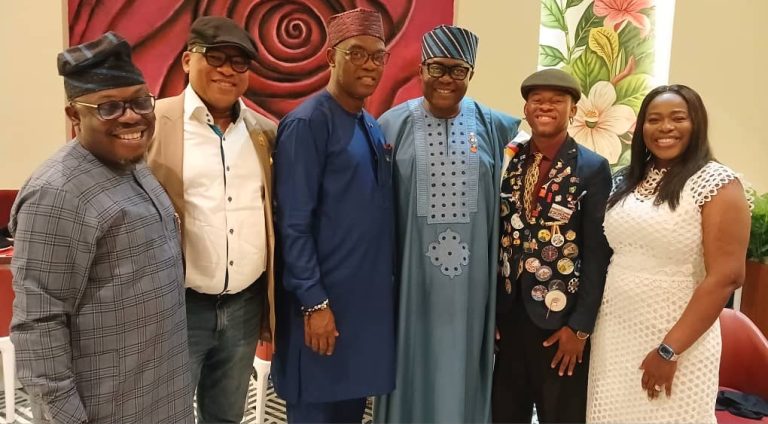
On 18 August 2026, he had the rare privilege of joining Rotary International President Olayinka Hakeem Babalola and other Rotary leaders at a special reception in Lagos held in Babalola’s honour.

The reception, jointly organised by Rotary International Districts 9111 and 9112 under District Governors Bukola Bakare and Layi Abidoye respectively, brought together Rotarians and other guests to celebrate Babalola’s historic leadership of the global service organisation.

Arnold did not attend the reception alone. His parents, Rev. Alexander Faranpojo mni and Pastor Mrs Funmilola Faranpojo, accompanied him, giving the family an opportunity to share another significant Rotary experience together following his return from Germany.

Babalola was full of praise for Arnold and the journey he had undertaken through the Rotary Youth Exchange Programme.

He noted that about 7,000 young people around the world are offered the opportunity to participate in Rotary Youth Exchange each year, placing Arnold’s experience within a global programme that enables young people to live in another country, experience different cultures and develop a broader understanding of the world.

For Arnold, meeting the Rotary International President so soon after returning from an 11-month exchange provided a fitting connection between the opportunity Rotary had given him abroad and the organisation’s leadership at home.

Babalola’s emergence as the first Nigerian and second African to serve as President of Rotary International also carried particular significance. For a young Nigerian whose worldview had been broadened through a Rotary programme, his leadership offered another powerful example of how service, opportunity and exposure can transcend geographical boundaries.

Building Towards the Future

With his exchange year behind him, Arnold is now focused on the next stage of his journey.

He is continuing to improve his German language skills as he prepares for university, with plans to study Business Informatics (Wirtschaftsinformatik) in Germany.

The field sits at the intersection of business and technology, an area that aligns with Arnold’s growing interests and his ambitions for the future.

But his aspirations extend beyond technology and business.

He hopes to combine his interests in business, technology and fashion to create something that contributes positively to humanity.

His Rotary experience, he believes, will remain an important foundation as he pursues these ambitions.

Looking back on the opportunity, Arnold is clear about what the experience has given him: greater confidence, independence, adaptability and a broader understanding of the world.

It has also taught him not to be afraid of unfamiliar territory.

“I am very grateful for the opportunity and believe the experience will continue to influence my education, career, and personal development,” he said.

And when asked what he would ultimately attribute the journey to, Arnold offered a simple but deeply personal conclusion:

“Everything was by the grace of God! I also thank Rotary for the life-changing opportunity.”

Troops overrun terrorist enclaves linked to Kachalla Muhammadu Filani

0

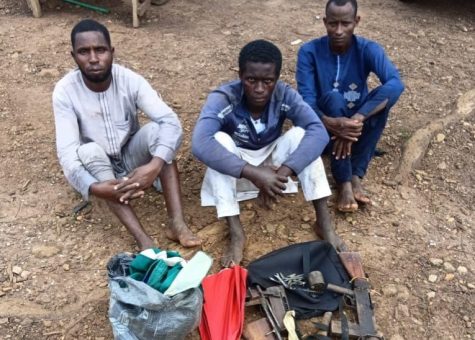
Troops of the Joint Task Force North West, Operation FANSAN YAMMA, have arrested three suspected terrorist collaborators and destroyed several terrorist enclaves during separate operations in Kaduna and Katsina states.

The operations, conducted on August 27 and 28, 2026, also led to the interception of weapons and ammunition and the recovery of a RPG-7 tube, motorcycle, mobile phones and other items.

In Kaduna State, troops of Sector 1 acted on intelligence that led to the apprehension of a suspected terrorist collaborator.

The suspect was found carrying two locally fabricated guns and 13 rounds of ammunition concealed in a bag.

According to the military, a preliminary investigation revealed that the suspect had been assigned to deliver the weapons and ammunition to another person.

Following the information provided by the suspect, troops immediately launched a follow-up operation, leading to the arrest of two additional suspects allegedly linked to the movement of the weapons.

The three suspects and the recovered items have been handed over for further investigation.

In Katsina State, troops of Sector 2, working with other security agencies, conducted a clearance operation on August 28 around Maharba and Karaduwa in Matazu Local Government Area.

The operation targeted identified terrorist enclaves and structures believed to have been used to facilitate criminal activities.

The troops cleared and destroyed the enclaves, including one allegedly linked to notorious terrorist leader, Kachalla Muhammadu Filani.

The military said Filani’s group had been terrorising residents of Matazu and Musawa local government areas.

Filani, however, reportedly escaped as troops advanced towards his enclave.

Further exploitation of the area led to the recovery of an RPG-7 tube, a motorcycle, mobile phones and other items.

The troops subsequently conducted fighting patrols within the area to consolidate the gains and prevent the terrorists from regrouping or regaining freedom of movement.

The Joint Task Force said the operations formed part of its sustained campaign to dismantle terrorist networks, disrupt the movement of arms and logistics and deny terrorists access to hideouts across the Joint Operations Area.

It added that Operation FANSAN YAMMA would continue to conduct coordinated and intelligence-driven operations aimed at degrading terrorist capabilities and restoring peace and security to affected communities.

FG hands over 188 housing units to Taraba under National Housing Programme

0

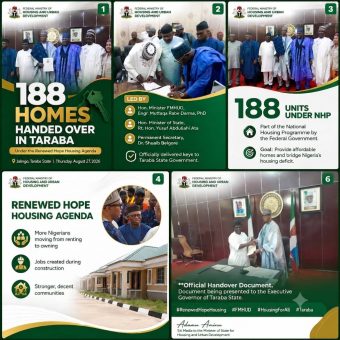
The Federal Government, officially handed over 188 housing units to the Taraba State Government in Jalingo, as part of it’s renewed commitment to providing access, increasing affordability and bridging the housing deficit in the country.

The houses were built under the Federal Government’s National Housing Programme (NHP), initiatives in all the states of the federation.

Minister of Housing and Urban Development, Engr. Muttaqa Rabe Darma, PhD performed the hand-over of the houses to the Taraba State Governor, Dr Agbu Kefas at a colourful ceremony held at the Government House in Jalingo. He was supported by the Hon. Minister of State, Rt. Hon. Yusuf Abdullahi Ata, and the Permanent Secretary, Dr. Shuaib Belgore.

Speaking at the ceremony, Minister Darma described housing as a basic human need and said the project reflects the Federal Government’s commitment to closing Nigeria’s housing gap.

“Housing is one of the most essential needs of any human being. The Federal Ministry of Housing and Urban Development is building these houses across the country. They must be functional, and they must be occupied,” Darma said.

Darma said the fastest way to get the houses to Nigerians is for state governments to acquire them and allocate them to citizens, including civil servants, members of the security forces, and the general public.

“Taraba State has taken this giant step under the National Housing Programme,” he said. “By acquiring the units directly, the state can now allocate them quickly and ensure that working families benefit without delay.”

The 188 units are part of the Federal Government’s Renewed Hope Housing Agenda, an initiative aimed at providing affordable and decent housing and reducing the country’s housing deficit. The programme also seeks to stimulate job creation through construction and support the development of sustainable communities.

In his remarks, the Governor of Taraba State, Dr Agbu Kefas, thanked the Federal Government for the intervention and credited the Ministry for driving the process.

“We appreciate the proactive leadership of the Federal Ministry of Housing and Urban Development,” the Governor said. “This handover is clear testimony of President Bola Ahmed Tinubu’s commitment to providing affordable housing for all Nigerians under the Renewed Hope Agenda.”

The Governor added that the state government will put in place a transparent allocation process to ensure that the homes reach those who need them most.

With the Taraba handover completed, the Ministry said it expects more states to join the acquisition model as part of efforts to move houses from government inventory to citizens faster.

The Renewed Hope Housing Agenda includes the delivery of Renewed Hope Cities and Estates in all states of the federation, with a focus on affordability, quality, and access.


Police rescue two Colombian women held captive in Lagos

0

Operatives of the Nigeria Police Force attached to the National Central Bureau of INTERPOL, Lagos Annex, have rescued two Colombian nationals allegedly lured to Nigeria and held captive by a human trafficking syndicate.

The victims, identified as Maria Camila Rodas Ortiz and Yuliet Fernanda Rios Mesa, were rescued following actionable intelligence received from INTERPOL-NCB, Bogotá, on Wednesday, August 26, 2026.

The Force Public Relations Officer, CSP Ani Iniedu, disclosed this in a statement released on Saturday.

According to the statement, the two women were “fraudulently lured to Nigeria, held against their will, and had their travel documents confiscated” by some Chinese nationals, who are currently at large.

The statement said the police launched a covert tracking operation immediately after receiving the intelligence.

It added that the operatives located the hideout in Lagos and rescued the victims “on the same day.”

The statement read in part, “Upon receipt of the intelligence, police operatives promptly launched a covert tracking operation, locating the hideout in Lagos where both victims were safely rescued on the same day.”

According to the police, the suspects fled the location when they noticed the approaching operatives.

“The fleeing suspects abandoned the location upon sighting the approaching team, and efforts have been intensified to track down and arrest all members of the syndicate,” the statement said.

The police said the rescued Colombian nationals were currently in safe custody and receiving necessary support.

“The rescued victims are currently in safe custody and receiving necessary support,” the statement added.

The statement further disclosed that the Colombian Embassy in Accra was collaborating with the National Central Bureau to facilitate the victims’ return to their country.

“The Colombian Embassy in Accra is working in close collaboration with the Bureau to secure hotel accommodations for the victims and arrange emergency travel documents to ensure their safe return to Bogotá,” it said.

The Inspector-General of Police, Olatunji Disu, reaffirmed the commitment of the police to protecting residents and strengthening international cooperation against transnational crimes.

The statement said Disu “reaffirms the unwavering commitment of the Nigeria Police Force to safeguarding the lives and property of all residents within the country, while deepening collaboration with international law enforcement partners to combat cross-border crimes.”

The police said efforts had been intensified to arrest the fleeing suspects and dismantle the trafficking network.

FG activates emergency task force over diphtheria outbreak in Kano, others

0

…deploys 500,000 vaccines, expands treatment centres, emergency referral support

The Federal Government has activated an emergency task force to contain the outbreak of diphtheria among children in parts of Katsina and Kano states, with immediate measures being deployed to strengthen surveillance, close immunisation gaps and improve access to treatment.

The directive was issued by the Coordinating Minister of Health and Social Welfare, Prof. Muhammad Ali Pate, as part of efforts to protect Nigerian children and strengthen the country’s capacity to respond to disease outbreaks.

The Federal Ministry of Health and Social Welfare, in collaboration with the Nigeria Centre for Disease Control and Prevention (NCDC), National Primary Health Care Development Agency (NPHCDA), affected state governments and international health partners, has constituted the multi-agency task force to coordinate the emergency response.

The task force will be co-chaired by the Director-General of the NCDC and the Director of Public Health, with members drawn from the NPHCDA; commissioners for health in Katsina, Kano, Zamfara and Sokoto states; the World Health Organisation (WHO); UNICEF; and the National Tuberculosis and Leprosy Control Programme in Katsina State. The Ministry’s Chief Epidemiologist will serve as secretary of the task force.

As part of immediate containment measures, the NPHCDA has deployed 500,000 doses of vaccines to Katsina and Kano states to support intensified immunisation of unvaccinated children in affected and high-risk communities.

The task force has also been directed to conduct outbreak investigations, strengthen disease surveillance and intensify community sensitisation to address population immunity gaps.

Under the treatment component of the response, the Federal Government said it would work with the Katsina State Government to establish treatment annexes in hospitals across the state’s three senatorial districts — Katsina, Daura and Funtua.

The move, according to the government, is aimed at bringing treatment closer to affected communities and ensuring early intervention for patients.

The emergency task force has further been mandated to mobilise urgent support for the Federal Teaching Hospital, Katsina, which serves as the principal referral centre for the state and parts of neighbouring states.

The support will include Diphtheria Antitoxin (DAT), intravenous antibiotics, additional clinical personnel and personal protective equipment for healthcare workers.

The government said the task force would provide weekly updates to the Coordinating Minister on progress made, emerging challenges and additional requirements, while identified bottlenecks would be escalated for immediate resolution.

Reaffirming its commitment to protecting Nigerian children from vaccine-preventable diseases, the Federal Government said it remained determined to deploy a swift, coordinated and evidence-based response to bring the outbreak under control.

Media must fight for women, children’s health rights — NOUN Don

0

…demands local-language broadcasts, stronger health reporting, accountability


A Professor of Mass Communication at the National Open University of Nigeria (NOUN), Henrietta Chidinma Onwubere, has charged the media to play a more strategic role in promoting and protecting the health rights of women and children across the country.

Prof. Onwubere made the call on Thursday while delivering the university’s 42nd Inaugural Lecture, titled, “Bridging the Airwaves and Lifelines: Broadcasting, Healthcare Journalism and the Struggle for Maternal and Child Health Rights in Nigeria,” at the NOUN headquarters in Abuja.

She said the media must move beyond entertainment and routine news reporting to become a powerful instrument for public education, advocacy and accountability, particularly on issues affecting maternal and child health.

She said access to healthcare goes beyond the availability of hospitals, medical facilities and health workers, stressing that citizens must also have access to accurate, timely and easily understandable information about their health and healthcare rights.

The professor said effective health communication could empower citizens, particularly women and vulnerable groups, to understand their rights and demand accountability from relevant authorities.

She advocated increased broadcasting in local languages to ensure that critical health information reaches people who may not understand English, while also calling for stronger collaboration between media organisations and health institutions.

Onwubere further urged journalists to adopt more empathetic and people-centred approaches to health reporting, saying the media had a responsibility to ensure that the voices and experiences of women and children were reflected in discussions around healthcare.

She also raised concern over the growing spread of misinformation on digital platforms, urging journalists and communication students to strengthen their fact-checking and verification skills.

She warned that inaccurate health information could undermine public understanding of healthcare interventions and frustrate efforts to improve maternal and child health outcomes.

The don called on government and other stakeholders to invest in media capacity-building and provide greater support for specialised healthcare journalism, thus urging policymakers to place the interests of women and children at the centre of communication strategies and policy interventions.

Onwubere further appealed to NOUN management to strengthen practical training facilities for mass communication students, stressing that hands-on experience was essential to quality professional education and compliance with standards prescribed by the National Universities Commission (NUC).

She said students needed adequate practical exposure to broadcasting and journalism to prepare them for the demands of the profession and enable them to contribute effectively to national development.

Vice-Chancellor of NOUN, Prof. Uduma Oji Uduma, represented by the Deputy Vice-Chancellor (Administration), Prof. Shehu Usman Adamu, described inaugural lectures as important platforms through which scholars share research findings and propose solutions to societal challenges.

He commended Onwubere for drawing on her multidisciplinary background in nursing, education, law and mass communication to examine the critical issue of maternal and child health.

The Dean of the School of Postgraduate Studies, Prof. Sonnie Oniye, who delivered the closing remarks, praised the lecture for connecting academic scholarship with practical societal concerns.

He said the lecture had deepened public understanding of the role of communication in national development and highlighted the importance of the media in addressing critical health challenges.

Rig count rises, as Ojulari, NNPC Limited GMD, drives Nigeria’s upstream revival

0

•73 rigs recorded in March as Bonga South-West/Aparo edges closer to a final investment decision
Nigeria’s upstream petroleum sector is recording a combination of increased rig deployment and major project advancement that could reshape the outlook for oil and gas investment in the country.

The latest developments are unfolding under NNPC Limited Group Chief Executive Officer Bayo Ojulari, who has made investment discipline, operational efficiency, production growth and faster development of commercially viable assets key priorities since assuming office in April 2025.

According to the Nigerian Upstream Petroleum Regulatory Commission, Nigeria’s total rig count rose to 73 in March 2026. The figure was higher than the 72 rigs recorded in January and February.

Land-based operations accounted for 52 rigs, confirming their dominance in the national rig profile. Offshore rigs increased from 11 to 12, while swamp operations remained unchanged at nine.

The 73-rig total represented a 22.6 per cent increase compared with the corresponding period of 2025. The rise points to sustained investment and expanding exploration and production activity across the upstream sector.

However, the figures also provide a reminder that rig count does not automatically translate into simultaneous drilling activity. NUPRC recorded 31 active rigs in March, while the others were on standby, stacked or undergoing mobilisation.

The distinction is important for assessing actual operational output, but the broader increase remains significant because rig availability is an essential component of upstream development.

At the project level, one of the biggest developments is the renewed progress on the Bonga South-West/Aparo deepwater project in OML 118.

NNPC Ltd and its partners have executed key agreements aimed at advancing the project towards a Final Investment Decision. The companies involved include Shell Nigeria Exploration and Production Company Limited, Esso Exploration and Production Nigeria Deepwater Limited and Nigerian Agip Exploration Limited.

The proposed development could attract between $15 billion and $21 billion in investment over its lifespan, making it one of the most consequential deepwater projects in Nigeria’s petroleum industry.

At peak production, Bonga South-West/Aparo is projected to produce about 175,000 barrels of oil per day and 140 million standard cubic feet of gas daily.

The partners have already completed the Pre-Front-End Engineering Design phase and selected a preferred contractor for the project’s Floating Production Storage and Offloading facility. The project remains subject to regulatory and commercial approvals.

The advancement comes against the backdrop of broader investment claims by Ojulari. Earlier in August, he disclosed that petroleum-sector reforms had generated more than $34 billion in new investment commitments.

He also said the new Deep Offshore Oil and Gas Projects Incentives Order had the potential to unlock more than $50 billion in additional investments across Bonga South-West, Zabazaba and Owowo.

Those figures highlight the scale of the investment opportunity that could emerge if major Nigerian upstream projects reach execution.

The developments also carry potential benefits for the wider economy. Increased oil and gas production could improve government revenues and foreign-exchange earnings, while large projects can support employment, contracting opportunities and indigenous participation.

For NNPC Ltd, the simultaneous movement in rig deployment and project development strengthens the argument that Nigeria’s upstream industry is regaining momentum.

For the Federal Government, successful delivery of major projects will be crucial to achieving its ambition of raising crude oil production to three million barrels per day by 2030.

The latest developments therefore represent more than isolated industry statistics. They suggest that Nigeria is beginning to see increased activity across both drilling operations and major project development, creating the possibility of a broader upstream recovery.

Presidency tackles Atiku over ‘open borders’ pledge, says Nigeria’s borders already open

0

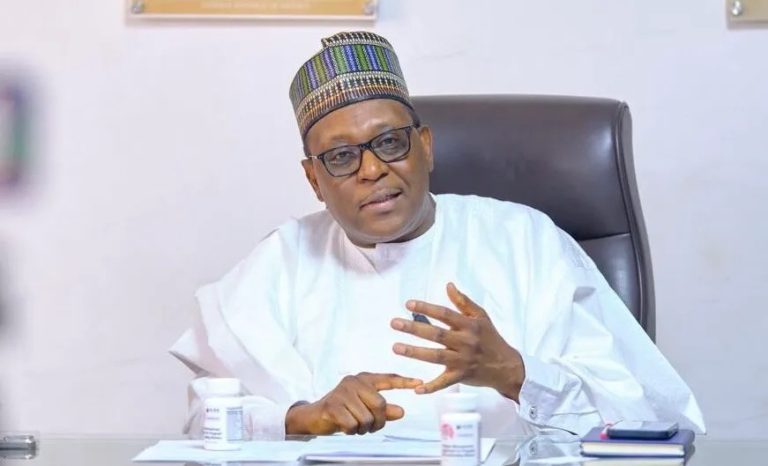
The Presidency has challenged former Vice President and African Democratic Congress (ADC) presidential candidate, Atiku Abubakar, to explain his promise to “open the borders,” insisting that Nigeria’s land borders are already open and that the real policy question is how to keep them secure while facilitating legitimate trade and movement.

The Presidency, in a strongly worded statement on Friday, said Atiku’s declaration risked reducing a complex national security and economic issue to a campaign slogan.

It said the Federal Government reopened most of Nigeria’s land borders on March 14, 2024, and had not reversed the decision.

The statement, signed by the President’s Special Adviser on Media and Public Communication, Sunday Dare, also recalled that President Bola Tinubu opened the Kamba border in Kebbi State on February 14, 2026, describing the development as having generated economic and diplomatic gains.

The Presidency therefore asked Atiku to clarify which borders he intends to “open” if elected and, if his proposal is to relax existing controls, specify the measures he would remove and the safeguards he would put in place to prevent terrorism, arms trafficking, smuggling, human trafficking and other transnational crimes.

“An open border is not an uncontrolled border,” the Presidency said, stressing that modern border management seeks to facilitate legitimate movement and commerce while preventing criminals and terrorist groups from exploiting international crossings.

It said effective border governance required immigration controls, customs administration, intelligence-sharing, surveillance, technology and coordinated security operations.

The Presidency linked the issue to Nigeria’s wider security environment, particularly developments in the Sahel and Lake Chad Basin, noting that the country shares international borders with Niger, Chad and Cameroon.

It argued that the continuing threat of terrorism, violent extremism and transnational organised crime made effective border management an indispensable component of national security.

Citing the Global Terrorism Index 2026, the statement said approximately 41 per cent of terrorist attacks occur within 50 kilometres of an international border, while about 64 per cent occur within 100 kilometres.
According to the Presidency, Nigeria’s concentration of security operations around parts of the Northeast and Northwest should therefore not be interpreted as evidence that the country’s borders are closed.

Rather, it said, the deployment of the Armed Forces and other security agencies in those corridors reflects the need for stronger border security.

“The former Vice President, as an experienced politician who has previously occupied the second-highest office in the country, should know this distinction,” the statement said.

The Presidency said political competition was legitimate in a democracy but insisted that pronouncements on national security and the economy should be based on facts, institutional understanding and clearly articulated policy alternatives.

It challenged presidential aspirants to provide Nigerians with detailed plans for strengthening border surveillance, improving intelligence-sharing with neighbouring countries, modernising customs and immigration operations, deploying technology, protecting border communities and deepening regional security cooperation.

The Presidency maintained that the Tinubu administration remained open to scrutiny and should be judged on measurable outcomes in security, economic recovery, border management and citizens’ welfare.

It, however, insisted that such scrutiny must be grounded in facts.

According to the statement, Nigeria’s borders should remain open to legitimate commerce and movement while being secured against terrorists and criminal networks.

It said border management should be technology-driven, intelligence-led and integrated into the country’s broader national security and economic strategy.

“That is the policy conversation Nigerians deserve,” the Presidency said.

It further questioned what it described as Atiku’s apparent focus on reversing or renaming policies and initiatives already being implemented by the Tinubu administration, arguing that the former Vice President should instead present a coherent alternative policy agenda to Nigerians.

Sun