Home Blog Page 172

Governor Yusuf celebrates Kano people at Takutaha Maulud

0

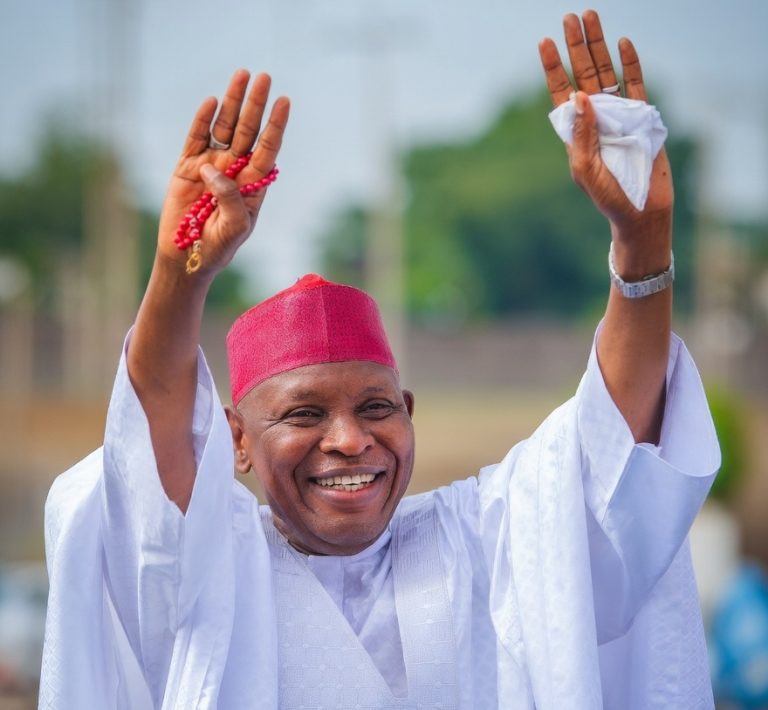
Kano State Governor, Abba Kabir Yusuf, has congratulated the people of Kano State as they celebrate the traditional Takutaha event, held annually to commemorate the birth of the Noble Prophet Muhammad (SAW).

This was contained in a statement issued by the governor’s spokesman, Sunusi Bature Dawakin Tofa, on Tuesday.

Governor Yusuf described Takutaha as a significant religious and cultural tradition that has continued to unite the people of Kano in expressing their love for the Prophet Muhammad (SAW) and reflecting on his exemplary life and teachings.

He said the event represents an important part of Kano’s rich Islamic heritage, noting that the people of the state have for centuries remained committed to preserving religious and cultural practices associated with the celebration of Maulud.

The Governor urged Muslims across the state to use the occasion to renew their commitment to the teachings of the Prophet Muhammad (SAW), particularly his messages of peace, compassion, tolerance, justice and peaceful coexistence.

He further called on the people of Kano to sustain the spirit of unity and brotherhood demonstrated during the Takutaha celebration, stressing that peace and mutual understanding are essential for the continued development of the state.

Governor Yusuf also commended traditional rulers, religious scholars, community leaders and organisers of the event for their efforts in preserving Kano’s cultural and religious heritage.

He assured that his administration would continue to support initiatives that promote the state’s rich history, culture and religious values, while encouraging younger generations to appreciate and preserve the heritage of their forefathers.

The Governor wished the people of Kano a peaceful and successful Takutaha celebration, praying Allah to continue to bless Kano State with peace, stability and prosperity.

Dangote Refinery Stops Petrol Sales to Matrix, A.A. Rano, Four Other Licensed Importers

0

Dangote Petroleum Refinery has reportedly decided to stop selling Premium Motor Spirit (PMS) to major petroleum marketers that hold valid petrol import licences, industry sources have said.
The decision is targeted at marketers that continue to import petrol despite increasing domestic refining capacity, particularly Dangote Refinery’s growing contribution to local supply.

According to figures cited by the refinery, imported PMS accounted for about 43 per cent of total petrol supply in July. Dangote is said to be concerned that the continued inflow of imported products is reducing the market available to locally refined petrol.

Under the new arrangement, the refinery will reportedly prioritise marketers that do not hold petrol import licences. Companies that continue to import PMS under the Federal Government-approved regime may therefore no longer be supplied by Dangote.

The six companies licensed by the Nigerian Midstream and Downstream Petroleum Regulatory Authority (NMDPRA) to import PMS are Matrix Energy, A.A. Rano, AYM Shafa, NIPCO, Pinnacle Oil and Gas, and Bono Energy.
The licences, issued in May, cover a combined 720,000 metric tonnes of PMS, with individual allocations ranging from 60,000 to 150,000 tonnes.

Dangote’s concerns are also linked to product quality. Sources said there are concerns that imported petrol of uncertain quality could be blended with locally refined PMS before reaching filling stations, making it difficult for consumers and regulators to distinguish between the products.

The refinery is also reportedly questioning whether NMDPRA has sufficient laboratory capacity to adequately test imported petrol and ensure compliance with required standards.

The latest move represents a further escalation of Dangote Refinery’s longstanding position that continued petrol imports could undermine Nigeria’s investment in domestic refining. The refinery has previously warned that sustained imports could force it to export more of its refined products rather than incur the high cost of storing unsold PMS.

The development could lead to a two-track supply system, with Dangote Refinery supplying mainly non-importing marketers while licensed importers depend increasingly on foreign cargoes.

This could affect depot availability, import volumes and petrol prices across different parts of the country.
The Federal Government had approved the import licences as part of efforts to safeguard fuel supply and promote competition. Dangote’s position, however, is that continued imports undermine the growth and viability of local refining capacity.

Atiku Says He Will Direct Local Government Funds Straight to Councils if Elected

0

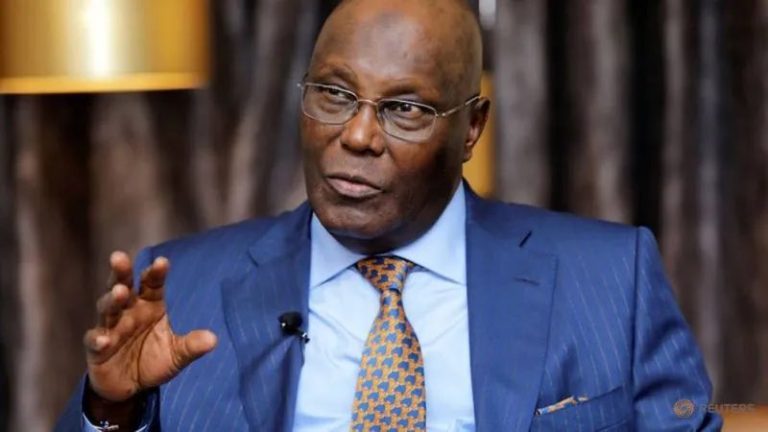
Former Vice President Atiku Abubakar has said that, if elected president, he will immediately begin paying local government allocations directly to the councils.

In a statement issued on 1 September 2026 by his spokesperson, Kenneth Okonkwo, Atiku said Nigeria should be governed by the rule of law and that each tier of government should have the constitutional independence provided for it.

He referred to the Supreme Court judgment of July 2024, which directed that local government funds be paid directly to the councils. Atiku said the current administration has not implemented the ruling.

He pledged that his government would obey court judgments, protect local government autonomy, and send public funds to the level of government for which they are intended.

Messi legacy will live forever, says Beckham

0

David Beckham said Lionel Messi’s “legacy will live forever” after the Argentina legend announced his retirement from international football.

Messi on Monday revealed he had called time on his remarkable career with Argentina after 207 caps and 125 goals.

The 39-year-old won the 2022 World Cup in Qatar and his last game for his country was Argentina’s World Cup final defeat against Spain in July.

Messi’s brilliance for Argentina and Barcelona made him one of the world’s greatest ever players.

Former England captain Beckham has had a close-up view of Messi’s career as an opponent and now as co-owner of the forward’s current side Inter Miami.

“This is the moment we get to look back on and realise how grateful we were to witness the greatness of a young kid with a dream,” Beckham wrote on Instagram on Tuesday.

“Leo, you have been a credit to yourself, your family, your friends and your country. Leading by example and creating inspiration for millions of children not just in Argentina but around the whole world.

“Leo, you delivered the greatest gift to your country and, for that, your legacy will live forever. Congratulations on all you achieved for Argentina.”

AFP

AFUSTA Governing Council appoints Prof.Gwanii as Acting VC

0

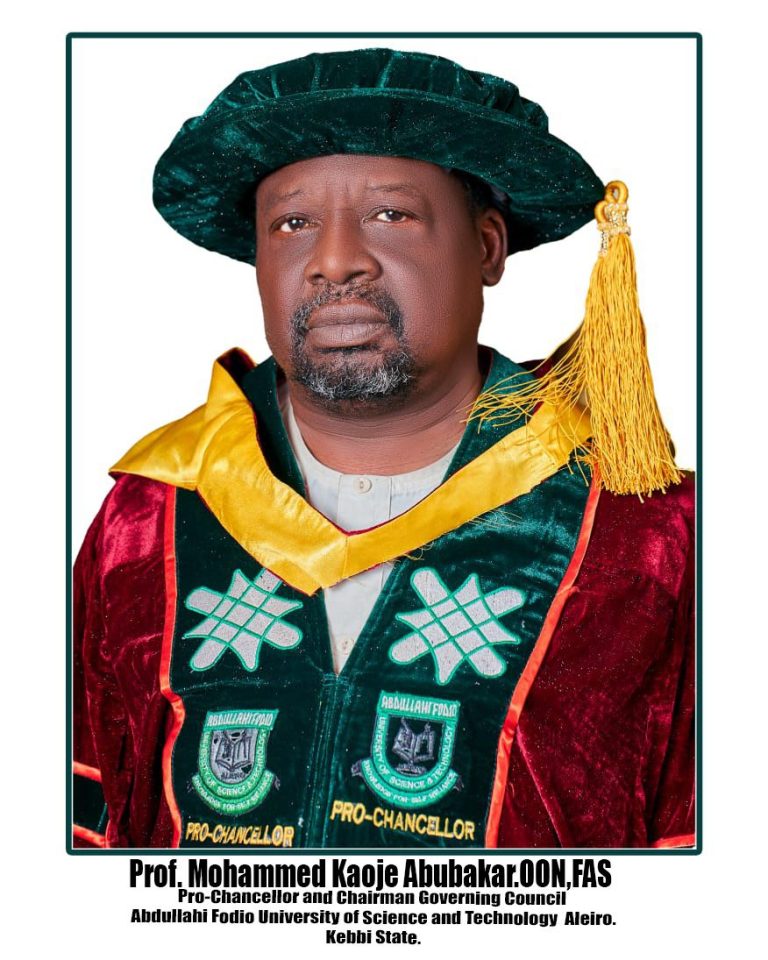
The Governing Council of Abdullahi Fodio University of Science and Technology Aliero (AFUSTA) have appointed Prof.Muhammed Gwanii,the Deputy Vice -Chancellor of the. University as the Acting Vice-Chancellor.

Public Relations Officer (PRO) of the institution,Mustapha Mansur Ango confirmed this in a statement made available to newsmen in Birnin Kebbi.

According to him,”following the voluntary resignation of the former Acting Vice- Chancellor, Prof. Ismaila Arzika Mungadi, the Senate of Abdullahi Fodio University of Science and Technology, Aliero has met today deliberated and recommended the appointment of Professor Muhammed Gwani the Deputy Vice Chancellor (Academics).

“The recommendation was ratified and approved by the University Governing Council with effect from Monday 31st August,2026.

The entire university Community rejoice with the appointment and congratulate Prof. Muhammad Gwani for a successful, fruitful and hitch free tenure.

MELVIN PONSAK DAJI TO UNVEIL “BLUEPRINT FOR FINANCIAL FREEDOM” ON SEPTEMBER 4

0

New book offers practical guidance for moving from financial survival to stability, wealth creation and lasting prosperity.

Nigerian maritime lawyer, entrepreneur and author Melvin Ponsak Daji will officially release his new book, Blueprint for Financial Freedom, to the public on Friday, September 4, 2026.

The book presents a practical roadmap for individuals seeking to move beyond earning an income to building financial stability, productive assets and long-term security.

Against a backdrop of rising living costs, economic pressure and uncertainty about the future, Blueprint for Financial Freedom addresses one of today’s most urgent personal finance questions: how can individuals turn income into stability, wealth and lasting prosperity?

Daji argues that financial freedom is not determined by income alone, but by discipline, planning, spending habits, savings, debt management, investment decisions and the ability to create sustainable sources of income.

The book opens with what the author describes as the “financial survival trap” — a cycle in which people work, earn and spend without a deliberate plan for building wealth.

It then guides readers through key areas of personal financial development, including budgeting, saving, debt management, investing, income growth and wealth creation.

One of the book’s distinguishing strengths is its focus on action. Daji introduces practical frameworks such as the Rule of Ten, the 90-Day Financial Rebuild, the 24 Month Debt- Free Roadmap, and the Income Transformation Model to help readers move from financial awareness to measurable progress.

The author also speaks directly to professionals and income earners who have worked for years but have yet to achieve the financial security they expected.

According to Daji, the real test is not only whether people earn enough, but whether they have a system that helps them preserve income, build assets, grow earning capacity and prepare for the future.

“Financial freedom does not happen by accident. It requires knowledge, discipline, a deliberate strategy and consistent action.”
— Melvin Ponsak Daji

Drawing from his experience in law, business and enterprise development, Daji combines financial principles with practical lessons on entrepreneurship, income diversification and long-term planning.

The book challenges the assumption that a salary or single source of income is enough to secure an individual’s financial future. Instead, it encourages readers to build a broader strategy anchored on savings, investments, productive assets and additional income opportunities.

Blueprint for Financial Freedom is written for professionals, entrepreneurs, business owners, families, young adults and anyone seeking a structured approach to improving their financial position.

For Daji, the aim is not simply to encourage people to make more money, but to help them manage, multiply and preserve what they earn.

The official public release of Blueprint for Financial Freedom is scheduled for September 4, 2026.

The book is expected to add to ongoing conversations on financial literacy, responsible money management, entrepreneurship and sustainable wealth creation in Nigeria and beyond.

ABOUT THE AUTHOR

Melvin Ponsak Daji is a Nigerian maritime lawyer, supply chain specialist, entrepreneur, humanitarian ambassador, financial strategist and author whose work spans law, commerce, enterprise development, financial education and community impact.

His professional and entrepreneurial experience has shaped his commitment to helping individuals take a more deliberate approach to personal finance, wealth creation and long-term financial security.

Blueprint for Financial Freedom reflects his contribution to the growing need for practical financial education and intentional wealth-building.

Stakeholders urge African governments to act as witchcraft accusations fuel violence, social exclusion

0

African governments have been urged to criminalise harmful witchcraft accusations and protect people targeted by them, as scholars warn that unverified supernatural claims can fuel violence, displacement, family breakdown and social exclusion.

The call came during the Toyin Falola Interview on Sunday, August 30, where scholars examined “Witchcraft in Africa.”

The panel, chaired by Professor Toyin Falola, featured Professor Godwin Sogolo, Rev. Prof. Grace Sintim Adasi, Professor David Frankfurter, Dr Claire Ayelotan and Professor John Azumah.

Professor John Azumah said the law should distinguish between freedom of belief and actions that cause harm.

“It is not about legislating against the belief in witchcraft. It is about legislating against the accusations, holding people responsible and accountable,” he said.

He identified the legal position of accused persons as a particular concern, noting that those labelled witches are often expected to prove their innocence.

“When you are accused as a witch, it lies on you to prove your innocence,” Azumah observed, arguing that legislation should instead “reverse the burden onto the accusers.”

He said the consequences of accusations make them more than matters of private belief.

“As for me, beliefs have consequences and African traditional belief should be respected,” he said.

“But when they cross certain lines, you can believe whatever you want to believe, but when you use that belief to harm people, to ostracize people, their livelihoods are destroyed, families are broken.”

Azumah pointed to witch camps, particularly in Northern Ghana, as an illustration of how accusations can result in the removal of people from their communities.

Dr Claire Ayelotan focused on how accusations develop into violence, arguing that the process often provides warning signs long before physical attacks occur.

“I believe the intervention should begin before the machete. Before the fire, before the crowd,” she said.

She cited cases in which “a child is repeatedly blamed for family’s misfortunes” or “an older woman is pushed out after a death” as situations that should raise concern.

Ayelotan also drew attention to the role of religious leaders in determining whether suspicion becomes persecution. Pastors, imams, healers and traditional leaders, she said, can respond to spiritual concerns without creating identifiable targets.

“A responsible pastor can pray without naming a child or a woman,” she said.
She maintained that confronting harmful accusations should not be confused with hostility towards religion.

“None of this is a war on religion,” she said. “It is a line between belief and harm.”
“Believing is not the same as accusing a person,” she added.

Professor Godwin Sogolo highlighted the most serious consequence of unchecked accusations: the targeting of innocent people.
He referred to “the accusation and killing of innocent persons” and called for “necessary reforms and innovations” in the perception and interpretation of witchcraft.

Such reforms, he said, should ensure that “no one is persecuted, tortured, or killed by an unverified supernatural claim.”

Rev. Prof. Grace Sintim Adasi approached the issue from the standpoint of African spirituality, justice and human dignity. Rather than dismissing indigenous beliefs, she argued for a more critical understanding of their contemporary consequences.

Her central question was how Africa can “take African spiritual worldviews seriously without allowing accusations of witchcraft to become instruments of fear, gender discrimination, violence, or social exclusion.”

Adasi urged greater attention to “what these beliefs mean, why they persist, how they are changing, and what consequences they have for African societies.”

Professor David Frankfurter placed the African experience within a wider history of how societies turn individuals into embodiments of evil.

A scholar of comparative religions, Frankfurter said his research examines “the ways that communities experience evil in their midst” and identify people they blame for misfortune.

He urged attention to the process through which a witchcraft label becomes attached to an individual, particularly the influence of people who claim special authority to identify evil.

“I think it is important not to talk immediately about witches in general, in the abstract, but about the charisma and the claims of the so-called experts who identify them as evil beings,” he said.

According to Frankfurter, such accusations can transform ordinary community members into perceived threats. “He or she is no longer the individual person everybody knew in the community, but truly a monstrous opponent of society,” he said.

He also suggested that the witch provides a human explanation for anxieties that may otherwise be difficult to locate.

“The idea of the witch localizes misfortune or success that creates anxiety in the community,” he said.

Kidnappers planned to kill us after one month – Rescued NYSC Member

0

A rescued National Youth Service Corps (NYSC) member, David Ayodele, has recounted the terrifying ordeal he and 20 other abductees endured after they were kidnapped and taken into a forest in Ofu Local Government Area of Kogi State.

Ayodele said the kidnappers threatened to keep the victims in captivity for one month before killing them, while warning that anyone who moved without their permission would be shot.

The corps member was among 15 NYSC members and six other Nigerians rescued from the kidnappers’ den by security operatives in Kogi State.
According to him, the victims were abducted while travelling from Bayelsa State to Abuja after completing their NYSC orientation programme and being relocated to their respective places of primary assignment.

Recalling the abduction, Ayodele said the driver of their vehicle attempted to escape when the kidnappers emerged, but the occupants were eventually forced out at gunpoint.

“Driver tried to escape, but he said, Who’s the driver? Who’s the driver? And I held the driver, then they opened the door, and they started leading us to the bush while they were shooting, you know, rounds of bullets in the air,” he said.

He said the victims were beaten, kicked and verbally abused as they were forced deeper into the forest.

“Then we made our way to the bush with flogging and kicking and shouting and stuff,” Ayodele said.

He said the kidnappers eventually told the abductees they would remain in the forest for a month before being killed.

“We reached one kind of bushy area; they asked us to sit down, they asked us who would drink water, that we would be here for one month, so they would kill all of us,” he recounted.

Ayodele said the threat prevented the victims from attempting to escape, as the kidnappers warned that anyone who moved without permission would be shot.

“They warned us that if anybody moved without permission that they will shoot the person, so none of us really attempted to move because of fear and stuff,” he said.

The victims were later forced to trek for a long distance through the forest before security operatives reached them.

“So we moved a lot, a lot, a lot, a lot and then thank God the Nigerian Army came to meet us,” Ayodele said.

He commended the security agencies involved in the operation, including the Nigerian Army, police, Department of State Services and local hunters, for securing their release.

Ayodele said he had completed his NYSC orientation programme in Bayelsa State before his relocation to Abuja. He explained that corps members were transported in organised vehicles to different parts of the country after completing their orientation.

“So, on our way from Bayelsa, because we did relocation back to Abuja, so we were going to Abuja from Bayelsa camp. There were organised vehicles going to different states, so luckily we saw an Abuja vehicle,” he said.

The rescue brought an end to the ordeal of the 21 victims who had been held captive in the Ofu area of Kogi State.

EFCC recovers N1.233trn, 10,000 convictions in 3 years

0

Says govs, ministers top civil servants investigated

Chairman of the Economic and Financial Crimes Commission (EFCC), Ola Olukoyede on Monday said the commission recovered N1.233 trillion between October 2023 and June 2026 as part of its sustained campaign against economic and financial crimes.

Olukoyede also disclosed that it recovered $684.48 million, £373,905.78 and €9.34 million, in addition to funds recovered in other currencies, during the period.

The EFCC Boss disclosed this at the Commission’s headquarters, Jabi, Abuja, while presenting his three-year stewardship report to journalists.

Olukoyede, who assumed office in October 2023, said the recoveries were part of a broader enforcement, prosecution, asset recovery, institutional reform and international collaboration effort undertaken under his leadership.

According to him, about N397.26 billion, representing 33 per cent of the naira recoveries, constituted direct recoveries for the Federal Government, while N836.34 billion, or 67 per cent, represented indirect recoveries made on behalf of ministries, departments and agencies, state revenue services, companies, individuals and foreign victims.

“Two out of every three naira recovered were on behalf of beneficiaries other than the Federal Government,” he clarified.

The EFCC chairman said the Commission had also released N661.32 billion and $492.37 million to beneficiaries during the period, stressing that recovery was meaningful only when recovered assets were returned to the public interest and rightful beneficiaries.

He further explained that, the naira releases included N325.35 billion paid directly to individuals and corporate bodies, while N335.97 billion was released to various MDAs, the Nigerian Revenue Service, state internal revenue services and other public institutions, companies and individuals.

“Federal and state tax recoveries amounted to approximately N288.1 billion, comprising N173.2 billion in federal tax recoveries and N114.9 billion attributed to states’ internal revenue services.

“Another N257.2 billion in recoveries was recorded for federal ministries, departments and agencies,” he stated.

The EFCC boss said the anti-graft war had also produced social and economic benefits, citing the allocation of N50 billion each from recovered proceeds to the Nigerian Education Loan Fund (NELFUND) and Nigerian Consumer Credit Corporation in 2024, with further N50 billion allocations to each institution approved in 2026.

For example he said, a recovered property, NOK University, had been converted into the Federal University of Applied Sciences, Kachia, Kaduna State, where 1,909 students matriculated in December 2025.

On enforcement, Olukoyede said the Commission received 49,673 petitions, investigated 39,615 cases, filed 14,476 cases in court and secured 10,872 convictions between October 2023 and July 2026.

He said the figures represented a conviction-to-filing ratio of 75.1 per cent, adding that 1,370 convictions were secured from 1,889 filings in the first half of 2026 alone.

According to him, data from 2024 to 2026 year-to-date showed 46,288 offences across nine major financial crime typologies, with advance fee fraud and cybercrime accounting for nearly two-thirds of recorded offences.

He noted that recorded offences increased by 24.1 per cent between 2024 and 2025, with notable rises in procurement fraud, bank fraud, cybercrime and economic governance offences.

Olukoyede said the Commission had continued to prosecute high-profile cases without regard to the status of suspects, noting that its portfolio covered former governors, ministers, public office holders, heads of agencies, financial-sector operators and corporate officials.

He listed recent convictions involving former Minister of Power, Saleh Mamman, former NEXIM Bank managing director, Robert Orya, and Chukwunyere Nwabuoku.

He said the EFCC’s specialised enforcement portfolio covering money laundering, unlicensed bureaux de change, illegal mining, virtual assets and terrorist financing recorded 920 cases, with 212 convictions.

On asset forfeiture, the EFCC chairman said 10,053 tangible assets were forfeited under interim and final court orders between October 2023 and July 2026.

The assets included 8,198 electronic items, 1,177 real-estate assets, 370 automobiles and 251 plots of land, as well as schools, factories, hotels, shops, oil rigs, barges, machinery and aircraft.

He added that 102 tonnes of solid minerals were also forfeited, while proceeds from the disposal of assets under final forfeiture orders amounted to approximately N12.07 billion and were paid to the Federal Government.

Olukoyede said the Commission’s enforcement activities had contributed to Nigeria’s removal from the Financial Action Task Force (FATF) Grey List in October 2025.

He disclosed that the EFCC recorded 234 bureaux de change cases and 73 convictions within the last three years, saying the enforcement was aimed at supporting a more formal and transparent foreign-exchange market.

On institutional reforms, he said the Commission introduced new guidelines on arrest and bail, reviewed sting operations and established the Department of Fraud Risk Assessment and Control, Security Department, Immigration and Visa Section and Cybercrime Rapid Response Centre.

He said new directorates had been commissioned in Enugu and Ilorin, while others were established in Ekiti, Anambra and Katsina states to improve citizens’ access to the Commission.

Olukoyede also disclosed that almost 60 per cent of the EFCC’s processes and operations had been digitalised, alongside investments in a new academy, a 24/7 Cybercrime Rapid Response Centre and EFCC Radio.

He said the Commission would, in the coming years, focus on prevention, faster restitution, improved investigative technology and greater professionalism in its engagement with citizens.

“We are not merely counting arrests or announcing recoveries. Our responsibility is to convert information and intelligence into prevention, petitions into investigations, investigations into prosecutions, prosecutions into convictions, recoveries into restitution, and enforcement into measurable national value,” Olukoyede said.

Sun
2027: Avoid empty promises, hate speech, Mark tells ADC guber candidates

0

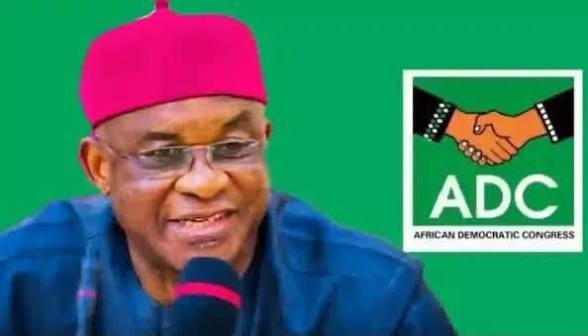
Ahead of the 2027 general election, National Chairman of the African Democratic Congress (ADC), Senator David Mark, has charged the party’s governorship candidates to avoid empty promises, hate speech and divisive campaigns.

Mark, according to a statement by the ADC National Publicity Secretary, Bolaji Abdullahi, gave the charge at a consultative meeting with the governorship candidates in Abuja, yesterday.

The former Senate President urged the candidates not to make promises they would be unable to fulfil if elected, warning that such conduct could undermine the credibility of the opposition party.

He also charged them to familiarise themselves with the ADC manifesto and the “Orange Book,” which encapsulates the party’s governance and ethical principles, and ensure that their campaigns reflect its values.

“We are ADC. Our campaign must reflect the kind of country that we would like to build. Avoid hate speech, ethnic or religious profiling. We cannot be associated with violence in whatever form.

“Unlike the ruling party and the President, ADC does not believe that all is fair in politics,” Mark said.

The governorship candidates, who took turns to speak at the meeting, expressed appreciation to the party for providing them the platform to contest the elections and pledged to conduct campaigns that would enhance its standing.

They also expressed support for the decision of the ADC and its presidential candidate, Atiku Abubakar, to anchor the party’s 2027 campaign on reducing the cost of living.

In particular, the candidates backed the party’s proposal to restore petrol subsidy as part of measures to bring down the pump price of fuel and ease the economic burden on Nigerians.

They pledged their loyalty to the ADC and promised to work for the party’s victory in their respective states.

Sun