Home Blog Page 165

Lagos Health Ministry Concludes Investigation into Randle Hospital Patient Experience Incident

0


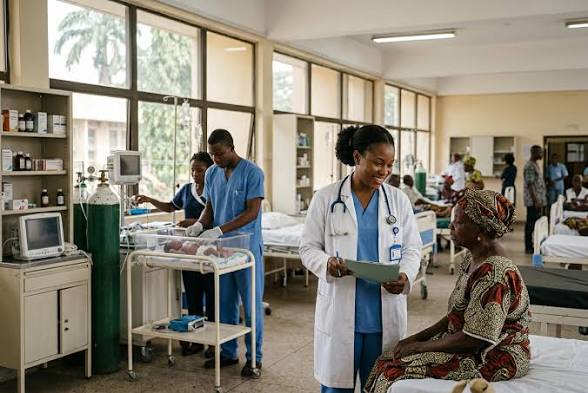
The Lagos State Ministry of Health has concluded its investigation into a patient experience incident reported on social media on August 31, 2026, by Mrs. Oshodi, involving her daughter, who was seeking care at Randle General Hospital.

The investigation established that the patient, Alimat Oshodi, is 21 years old, not 13 as indicated by her mother, and presented at the hospital’s Mother and Child Centre on August 4, 2026, as an emergency case requiring immediate medical intervention.

The ministry said she received lifesaving emergency care under the Comprehensive Emergency Obstetrics and Newborn Care (CEmONC) programme at no cost to her family and was discharged on August 11, 2026.

According to the ministry, the initial value of the emergency care provided was ₦75,950.
Following her discharge, the patient returned to the hospital on August 27, 2026, for follow-up care and investigations.

2026 WASSCE CBT Results: Private Schools Cry Foul Over Mass Failure, WAEC Promises Two-Week Review

0


BY TAIWO OGUNMOLA -OMILANI

Private school owners have expressed concern over the 2026 West African Senior School Certificate Examination (WASSCE) results released by the West African Examinations Council (WAEC), alleging irregularities and poor performance among their students.

They called on WAEC to urgently review the results, particularly those of candidates whose performances were said to be inconsistent with their previous academic records.

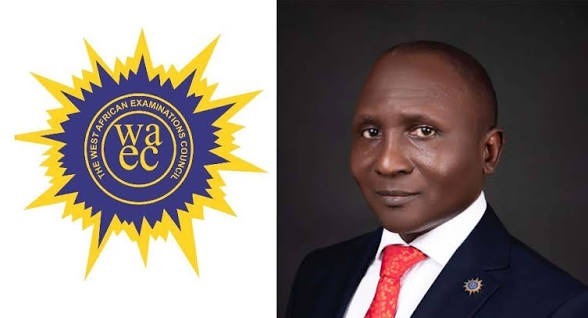
The concerns were raised on Thursday during a virtual dialogue organised by the Education Writers’ Association of Nigeria (EWAN) with the Head of the National Office (HNO) of WAEC Nigeria, Dr Amos Dangut, to discuss issues surrounding the 2026 WASSCE Computer-Based Examination (CBT) results.

The school owners said several candidates who had consistently performed well academically recorded unexpectedly poor results in the examination, raising concerns about the reliability of the CBT process.
They also complained that some of their earlier petitions to the WAEC National Office had not received responses.

Fatola Samson, Principal of Babcock School, Remo, described the 2026 results as the worst in the 31-year history of the school.

He said 190 students from the school registered for the examination, but only 27 obtained satisfactory results, with several candidates failing subjects including Mathematics, Physics and Chemistry.

Fatola questioned whether WAEC was fully prepared for the transition to CBT, noting that the results could have serious consequences for candidates seeking admission into higher institutions.
He said, “We are dealing with the destinies of people. There are people whose admission hopes have been dashed this year.”

Another school proprietor, according to the participants, said the institution, which had been operating for 17 years, also recorded its worst WASSCE results this year.

The participants further raised concerns over the yet-to-be-released results of blind candidates, the verification process and the possibility of errors arising from the computer-based examination system.
Responding to the concerns, Dangut said WAEC was willing to review results where candidates or schools formally appealed their grades through the established procedure.

He urged candidates and schools that had applied for reviews to be patient, assuring them that the council would expedite the process. “We will hasten the process for a review,” he said.

Dangut explained that complaints about examination results were not peculiar to WAEC or Nigeria, adding that examination bodies around the world routinely receive appeals from candidates and other stakeholders.

He disclosed that WAEC would soon release statistics comparing candidates’ performances in 2025 and 2026.
According to him, preliminary figures showed that candidates performed better in some critical subjects and grades in 2026 than they did in the previous year.

He cited English Language as an example, saying the proportion of candidates who obtained C6 and above stood at 59.31 per cent in 2026, compared with 64.58 per cent recorded in 2025.

Dangut also said the proportion of candidates who obtained B2 and above in English Language increased from 0.41 per cent in 2025 to 1.75 per cent in 2026.
He added that the council had subjected the results to additional scrutiny before their release, noting that the results were initially scheduled for release on Monday but were delayed until Wednesday to allow for further checks.

The HNO dismissed suggestions that WAEC had deliberately lowered candidates’ grades, insisting that the council could not arbitrarily upgrade a candidate’s result without evidence.

He said maintaining the integrity of the examination was important because candidates would eventually be required to demonstrate the knowledge reflected in their certificates.

On the cost of result reviews, Dangut said candidates were required to pay a fee, which he put at about N6,000 per script.
Participants, however, questioned whether candidates would be refunded where a paid review established that the error was caused by WAEC.

They also asked WAEC to consider the consequences of delayed corrections on candidates whose admission or other educational opportunities could be affected by erroneous results.

The dialogue also featured calls for an independent, third-party review of the 2026 CBT examination process and results, amid concerns over the transition to computer-based testing.

Dangut, however, maintained that WAEC had taken steps to ensure the integrity of the 2026 results and said the council would release further statistical information to address the concerns raised by stakeholders.

BRINGING BACK FUEL SUBSIDY AN EMPTY CAMPAIGN BUZZ, IT’S NOT FISCALLY REALISTIC’ — SANWO-OLU

0

‘

•Lagos Governor delivers 7th Freedom Online Lecture; discusses gains, prospects of Tinubu’s reforms

•Sanwo-Olu: Nigeria’s democratic, electoral systems have evolved since 1999

Lagos State Governor, Babajide Sanwo-Olu has said that those campaigning for the return of oil subsidy are only resorting to populist politics that will ultimately fail.

The Governor criticised politicians promising to restore the rescinded subsidy regime, arguing that any candidate assuring Nigerians of oil

subsidy’s return was simply building their campaign on empty promises that would end up deceiving voters.

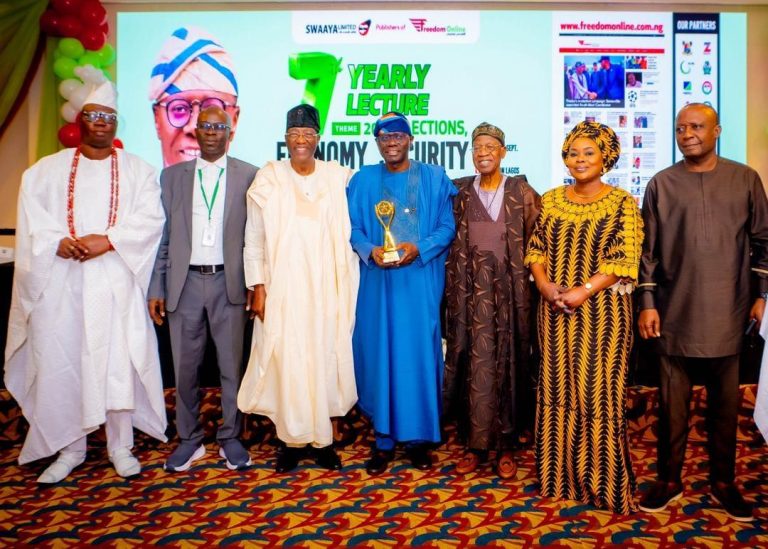
Sanwo-Olu’s comments were made on Thursday when he delivered the 7th Freedom Online Newspaper Lecture with the theme: “2027 Elections, Economy, Security and Nigeria’s Future”.

The lecture, chaired by former Minister for Information and Culture, Alhaji Lai Mohammed, was held at Sheraton Lagos Hotels, in Ikeja.

Former Ogun State Governor and Senator representing Ogun East, Sen. Gbenga Daniel, was the Special Guest of Honour.

Delivering a paper on the theme, Sanwo-Olu delved into the ongoing economic reforms, security matters and electoral reconfiguration being undertaken by the Federal Government, highlighting the gains and the prospects for future growth.

The Lagos helmsman observed that the oil subsidy policy, which was introduced to tackle the shortcomings of local oil supplies stemming from inefficiencies at state-owned refineries, was not intended as a permanent intervention.

Sanwo-Olu said that the subsidy policy had become a burden on the nation’s finances, draining the nation’s treasury and squandering funds that could have been invested in building roads, schools, hospitals and other infrastructure relevant for the wellbeing of the nation.

By taking the courage to end the corruption-ridden subsidy programme, the Governor said President Bola Ahmed Tinubu made the sacrifice that previous leaders had avoided, damning the impact the action could have on his electoral fortunes.

Sanwo-Olu said: “The oil subsidy was not removed because anybody enjoyed removing it. It was removed because it had become a hole in the national purse through which the money for roads, schools and hospitals was draining away. The intervention was never reaching the ordinary motorist it was supposed to help. In the build up to the 2023 elections, every major candidate promised to remove it. Only one of them was in a position to do it, and he did it on his first day in office.

“I will not stand here and tell you that oil subsidy removal has been painless. It has not. Lagosians particularly have felt it at the pump, at the market, and in the price of a bag of rice. Any governor who tells you otherwise has not been listening to his own people. But, the measure of a reform is not whether it hurts. It is whether it heals. And the evidence that this one is healing is now arriving, quarter by quarter.

“Under President Tinubu, the States have had it very good. Since the subsidy was removed, the monthly allocations to States and local governments have more than doubled in Naira terms. The President has done his part; the money is arriving. Barely two weeks into the season of presidential election campaign, opposition politicians have reached for the fuel subsidy as their instrument of choice. We will see more of this. We will see promises that no treasury on earth could honour.”

Sanwo-Olu said he strongly believed in the direction of the reforms initiated by the President to reset the economy and the socio-political system, pointing out that the reforms were already yielding positive outcomes across the areas where they were being implemented.

In 2026 alone, the Governor said the nation’s economy grew by 4.43 per cent from 3.89 per cent in the first quarter, against the 4.23 per cent recorded in the first quarter of 2025.

Agriculture sector, Sanwo-Olu said, grew by 4.39 per cent, up from 2.82 per cent a year earlier, adding that the growth in the service sector was up 4.6 per cent in the current year.

The Governor said: “In nominal terms, the national economy is more than 18 per cent larger than it was twelve months ago. Our external reserves stood at $53 billion last week, the highest they have been since January 2009. We are running a trade surplus. Both Fitch and Moody upgraded Nigeria’s credit rating last year. Inflation, which peaked at almost 35 per cent at the end of 2024, was 15.9 per cent last June. The Naira has held its ground against the dollar for the better part of a year.

“This week, too, the Central Bank reported that Nigerians abroad sent home $947 million through formal channels in the month of July. That is the largest monthly figure in our history, and it is within touching distance of the $1 billion-a-month target that many people laughed at when it was set two years ago. These statistics are not my numbers; they belong to the National Bureau of Statistics and the Central Bank of Nigeria, and every journalist seeking facts can check them.”

Sanwo-Olu gave a positive verdict on the nation’s democracy, noting that Nigeria’s political and electoral systems had continued to evolve in a sub-continent where democracy had been under siege, alluding to the seizure of power by soldiers in Mali, Guinea, Burkina Faso, Niger and Guinea-Bissau.

Evidence of democratic stability, he said, could be seen in the reforms introduced in the electoral process, which, the Governor noted, had been correcting past mistakes that led to the collapse of previous republics.

“Our elections have improved. Anyone who covered the elections of the 2000s knows how far we have come. Much of that distance was travelled under the All Progressives Congress’ watch. The ruling party initiated the Electoral Act of 2022 and now the Electoral Act of 2026, and the technology that verifies voters and transmits results. This is not the moment to rest on our oars. INEC must be ready in every polling unit on January 16, 2027, and again on February 6, 2027.

Each of us has a duty to help the electoral umpire be ready,” Sanwo-Olu said.

Is the nation safe under the current government? Sanwo-Olu considered the question a matter of individual perception but emphasised that President Tinubu had given the nation’s security architecture the priority it deserves like any Commander-in-Chief since 1999.

The Governor said poverty remained the primary cause of insecurity, reason President Tinubu’s interventions directly addressed the most pressing needs of the youth — the vulnerable demographic — in addition to strengthening the capacity of the security forces.

“Consider what has been done in the last three years. In July, President Tinubu approved the expansion of the Nigerian Army from eight divisions to twelve, with 28,000 additional personnel and new divisional headquarters in Makurdi, Ilorin, Jalingo and Benin City, closer to the theatres where they are needed. The Navy has a new Special Operations Command. Police training has been decentralised. Forest Guards and Mining Marshals now operate in spaces that were, for years, simply ungoverned. In May, a joint operation with our American partners led to the elimination of some of the most wanted terrorist commanders in the Lake Chad Basin.

“The President believes the most effective security policy is job creation, and the surest guarantee of a job is a country safe enough to invest in. The President’s interventions have gone straight at the poverty that feeds insecurity, and straight at the demographic with the most to gain or to lose, which is our young people. NELFUND is keeping students in school who would otherwise have dropped out. The Consumer Credit Corporation is building the credit culture without which no modern economy functions.”

“The 3-Million Technical Talent program is training the workforce of a digital economy. The recently unveiled reform of the National Youth Service Corps is turning a year of service into a year of enterprise. Behind all of these stand the Nigerian Youth Academy, the Nigeria Health Fellowship, the Student Venture Capital Grant, the Power Force programme and the Labor Employment and Empowerment Programme. It is hard to name an administration that has invested in young Nigerians on this scale,” Sanwo-Olu submitted.

Mohammed described the media lecture as an “intellectual platform” and “a staple for national reflection”, noting that the choice of Sanwo-Olu as the lecturer was fitting, given the Governor’s understanding of complex demands of governance, security, infrastructure development and economic innovation.

The former Minister said political stability depended on economic inclusion. He noted that security was a precondition for economic growth, stressing that no business would thrive in an atmosphere of uncertainty.

He said: “When young people are gainfully employed and see a clear path to self-actualisation, the political space becomes far less susceptible to manipulation and electoral violence. The 2027 election must be viewed not merely as a contest for power, but as a commitment to continuity and nation-building.

“Politics must never be allowed to override governance. The real measure of our democratic progress is whether our electoral outcomes strengthen institutions, bolster investor confidence and guarantee peace across our communities.”

While acknowledging the Federal Government’s effort is confronting “difficult challenges” in the areas of security and economic reform, Mohammed said the challenges would not be solved overnight.

“They require consistency, patience, institutional strengthening and, above all, national cooperation,” the former Information Minister said.

Convener and Freedom Online Editor-in-Chief, Mr. Gabriel Akinadewo, said the lecture came against the backdrop of renewed political activities and the need for politicians to place the nation’s development above the game of politics.

The veteran media practitioner advocated for modernisation of the nation’s laws to align with 21st-century realities and modern aspirations of the country. He emphasised the need to abolish outdated laws to create a new foundation for a system that will protect citizens’ freedom.

Obasanjo to chair book launch as Shittu SAN presents trilogy on Unexplained Wealth in Lagos

0


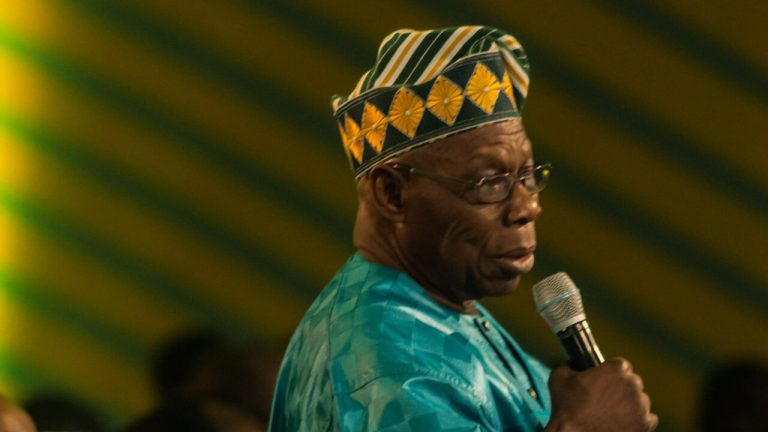
Former President Olusegun Obasanjo has confirmed his readiness to chair the public presentation of  trilogy on  “Unexplained Wealth in Nigeria”, authored by a senior lawyer, Dr. Wahab Kunle Shittu (SAN) in Lagos.

The presentation of the new three-volume book will come up in Lagos on Thursday, September 28, 2026.

Obasanjo’s acceptance to chair the books’ presentation places his voice at the centre of an event expected to draw attention to issues of transparency, the rule of law, institutional reform and the broader socio-economic questions surrounding unexplained wealth in Nigeria.

The former President has formally conveyed his acceptance in an acknowledgement letter dated August 26, 2026 and addressed to Shittu in response to the invitation to chair the book presentation.

In the letter under reference, Obasanjo said: “I write to acknowledge receipt of your letter dated August 26, 2026, in which you formally invited me to chair the upcoming occasion of public presentation of your new publication, Unexplained Wealth in Nigeria” on September 28, 2026, in Lagos State.”

Beyond accepting the invitation, Obasanjo commended Shittu for undertaking what he described as a significant scholarly project, particularly its examination of the complex issues associated with unexplained wealth in Nigeria.

He said: “I must commend you for undertaking such a monumental and highly relevant scholarly work. Documenting the complexities surrounding unexplained wealth in Nigeria in a three-volume trilogy is a reflection of your profound commitment to transparency, the rule of law, and institutional reform. Literature of this depth is critical if we are to successfully diagnose and address the systemic socio-economic and anti-corruption challenges confronting our nation.”

The former president further expressed his willingness to participate in the discussions that will accompany the presentation, signalling the importance he attaches to the themes explored in the publication.

According to him: “It gives me great pleasure to accept your invitation to serve as the Chairman of this momentous occasion and to join you and other distinguished stakeholders in discussing the vital themes highlighted in your book.”

Obasanjo also congratulated Shittu on the completion of the three-volume work and expressed his expectation that the presentation would generate meaningful discussions around the issues examined in the publication.

He concluded: “Please accept my warmest commendations on this outstanding milestone, alongside my best wishes for a highly successful book presentation and impact-driven outcomes.”

It is instructive to note that the September 28 presentation is expected to provide a platform for legal experts, scholars, policymakers and other stakeholders to examine the questions raised by “Unexplained Wealth in Nigeria”, particularly within the context of transparency, institutional accountability, the rule of law and Nigeria’s continuing efforts to strengthen its anti-corruption framework.

The publication, structured as a three-volume trilogy, seeks to contribute to the body of literature examining the complexities surrounding unexplained wealth and the institutional and socio-economic dimensions associated with the issue in Nigeria.

LAND CRISIS: NCAPF Warns Sanwo-Olu Over Encroachment On Federal Properties In Lagos

0

*Petitions Inspector-General of Police to investigate land allocations*
*Calls on President Tinubu, NASS to probe transactions*


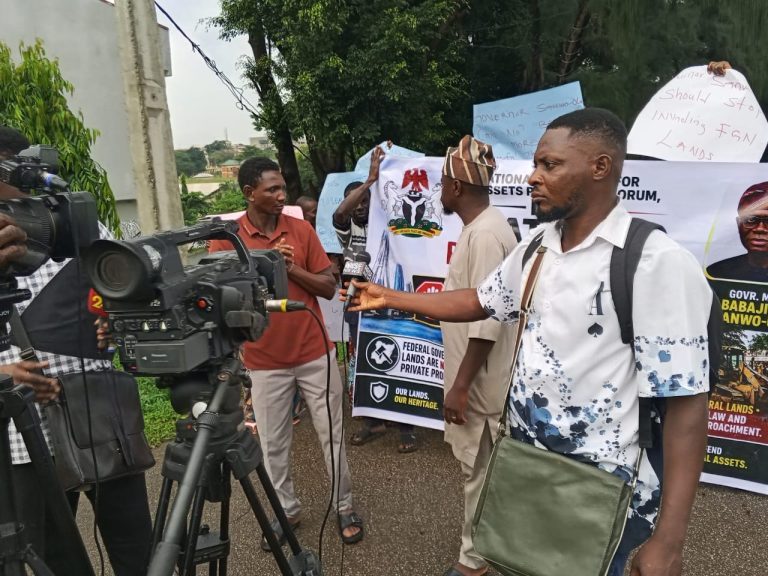
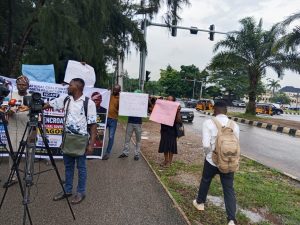
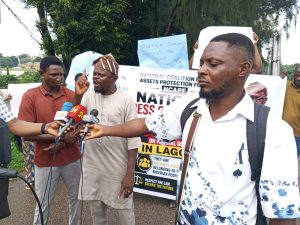
THE National Coalition for Assets Protection Forum (NCAPF) has issued a stern, unequivocal warning to the Governor of Lagos State, Mr. Babajide Olusola Sanwo-Olu, urging his administration to immediately halt any further encroachment, conversion, or unlawful interference with landed properties vested in the Federal Government across Lagos State.


In a comprehensive press statement released in Abuja on Thursday, September 3, 2026, signed by its National Coordinator, Comrade Balogun Nathaniel, the coalition declared that federal assets remain public property belonging to the entire nation and cannot be converted into “political spoils or the exclusive preserve” of any state government.

The group revealed that it has formally submitted a petition to the Office of the Inspector-General of Police (IGP) to initiate an urgent investigation into the legal status and administrative handling of disputed federal land parcels within the state.


While acknowledging the constitutional role of the Lagos State Government in urban planning, NCAPF emphasized that state planning powers do not confer administrative license to appropriate or reclassify land legally vested in the Federal Government.

“Our message to Governor Babajide Sanwo-Olu is clear: Lagos State is not above the Federal Republic of Nigeria. Federal Government land is not Lagos State Government land, and public assets must not be converted or encroached upon through administrative fiat,” he said.

The forum challenged the state government to publicly disclose the legal basis for any recent reclassification, demolition, or transfer of federal landed properties to private interests.

“The Nigerian public deserves to know: Which Federal Government lands are currently under dispute in Lagos State? Under what legal authority were such actions taken, and who are the beneficiaries of such transactions?” NCAPF queries .


Emphasizing that its intervention is driven strictly by national interest and the preservation of constitutional order, NCAPF called on President Bola Ahmed Tinubu, the National Assembly, the Federal Ministry of Works, the Federal Ministry of Housing and Urban Development, and anti-corruption agencies to conduct an immediate audit of federal land gazettes and cadastral records in Lagos.

The coalition further warned that allowing strategic federal assets—designated for infrastructure, security, housing, and maritime development—to be gradually compromised poses severe long-term risks to national security and governance.


NCAPF issued a direct caution to police officers, the Lagos State Task Force, and enforcement personnel attached to the Lagos State Building Control Agency (LASBCA).

They urged the Inspector-General of Police and the Lagos State Commissioner of Police to immediately restrain their officers from becoming instruments in land disputes.

*”No police officer or enforcement operative should allow himself or herself to be used as a tool for enforcing disputed ownership claims, intimidating citizens, harassing occupants, or facilitating unlawful evictions,”* the forum stated.


Addressing allegations surrounding state officials, the group called for an independent, transparent investigation into Dr. Babajide, Special Adviser on AGIS and Urban Development, over claims of his alleged involvement in facilitating the takeover of federal lands.

Conversely, NCAPF commended the Surveyor-General of the Federation for maintaining high professional standards, due diligence, and commitment in documenting and protecting federal land assets across Lagos State.

Reiterating its resolve to pursue all constitutional avenues to safeguard public assets, NCAPF concluded: “Public assets are not political spoils. Lagos is part of Nigeria, and federal property must be protected. Enough is enough!”

NAFDAC: Sachet, Small PET-Bottle Alcohol Now Banned in Nigeria

0


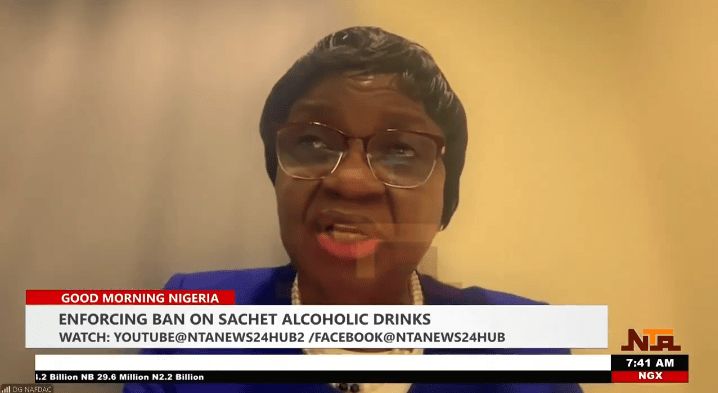
The National Agency for Food and Drug Administration and Control (NAFDAC) has reiterated that the production and sale of alcoholic beverages in sachets and PET bottles below 200ml are banned in Nigeria.

The Director-General of NAFDAC, Prof. Mojisola Adeyeye who disclosed this on NTA news network said the agency was initially scheduled to commence enforcement of the ban on February 1, 2024, following the expiration of a five-year moratorium agreed with alcoholic beverage manufacturers and relevant industry associations.

According to the DG, the enforcement faced significant resistance from manufacturers, prompting further discussions throughout 2024.

He said the Federal Government subsequently granted the manufacturers an additional one-year moratorium, which expired in December 2025.

The NAFDAC boss explained that the agency resumed enforcement after the expiration of the extension, despite renewed protests and resistance from some manufacturers.
“Effectively, alcohol in sachets and PET bottles less than 200ml is banned in Nigeria,” he said.

He added that manufacturers had signed an irrevocable undertaking not to produce alcoholic beverages in sachets or PET bottles below 200ml.

The DG said NAFDAC commenced the enforcement by visiting manufacturing facilities and evacuating banned products from January and February 2026.
However, he said the agency was shocked to discover banned products still being manufactured when enforcement activities continued in July 2026.

He described the development as a deliberate violation of the Federal Government’s directive, adding that NAFDAC shut down affected companies and secured the detention of some individuals for about three weeks.

The NAFDAC boss said the subsequent negotiations with manufacturers resulted in the signing of the irrevocable undertaking.
He disclosed that some manufacturers had already begun dismantling production lines used for sachet alcohol, while others were reconfiguring their facilities to produce other products.

He stressed that the process was being carried out under NAFDAC’s supervision, with officials deployed to various manufacturing facilities to monitor the dismantling or reconfiguration of the affected production lines.

Enugu student leaders to get free skills training

0

Student leaders across higher institutions in Enugu State are to benefit from free vocational training under a partnership between The Potter’s Wheel Foundation (TPWF) and the Council of Students Union Government (COSPEN), Enugu State chapter.

The initiative is aimed at equipping student leaders with practical skills, entrepreneurial knowledge, and leadership qualities that will help them create additional sources of income and prepare for life beyond campus.
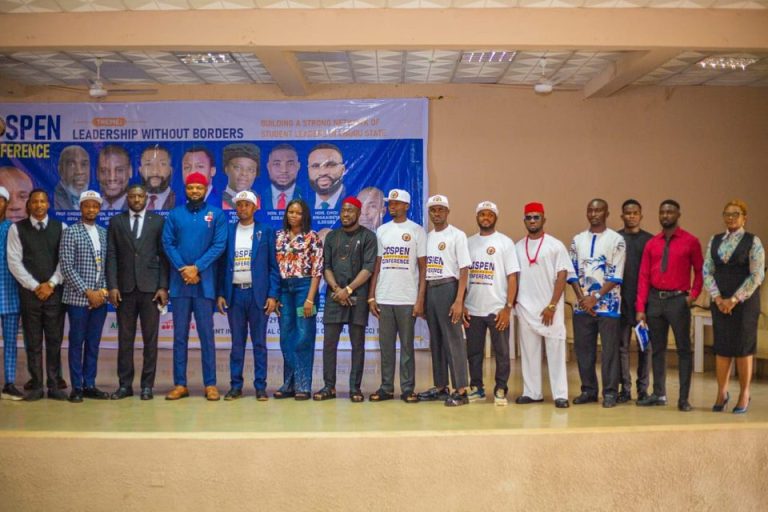
The partnership was struck at the maiden COSPEN Leadership Conference, held at the International Conference Centre, Institute of Management and Technology (IMT), Enugu.

The conference, themed, “Leadership without borders: Building a strong network of student leaders in Enugu State,” brought together past and serving Students’ Union Government (SUG) presidents, government officials, entrepreneurs, development partners, security agencies, and other stakeholders.

COSPEN Chairman, Odilichukwu Onuzulike, said the free skills-training initiative was designed to complement formal education and expose students to practical opportunities that could become sources of livelihood.

He disclosed that through the partnership with TPWF, a national youth-and-community-focused organisation known for its vocational training and empowerment programmes, practical skills would be taken directly to students across higher institutions in the state.

Onuzulike said some of the skills could be acquired within a few hours or a day, giving students an opportunity to develop additional income streams while pursuing their education. He said the initiative was also part of a broader effort to redefine student leadership and prepare young people for responsible roles beyond campus politics.

“The proposed free skills-training initiative was, therefore, designed to complement formal education by exposing students to practical opportunities that could become sources of livelihood,” he said.

“It is a call for student leaders to move beyond the traditional boundaries of campus politics into entrepreneurship, public service, community development, skills acquisition, and responsible citizenship.”

Onuzulike stressed that student leadership should not end with the expiration of SUG tenure but should serve as preparation for leadership in government, business, and community development.

The Secretary to the Enugu State Government, Prof. Chidiebere Onyia, represented by Edeani M. Edeani, urged student leaders to see themselves as future policymakers, entrepreneurs, professionals, community leaders, and nation-builders.

Member representing Ezeagu Constituency in the Enugu State House of Assembly, Chima Obieze, also emphasised responsible leadership, service, and commitment to community development.

The conference featured a panel discussion on entrepreneurship, personal development, drug abuse, and youth development, with contributions from entrepreneurs and representatives of the National Drug Law Enforcement Agency (NDLEA).

COSPEN also honoured Governor Peter Mbah, Onyia, Obi Okeke, Kelvin Okeke, Prisca Okeke Gbamilar, Mark Onuoha, and Dan Anike, among others, for their contributions to student development, youth empowerment, and community service.

2027: Anambra LG chairman drums support for Tinubu, commends Soludo

0

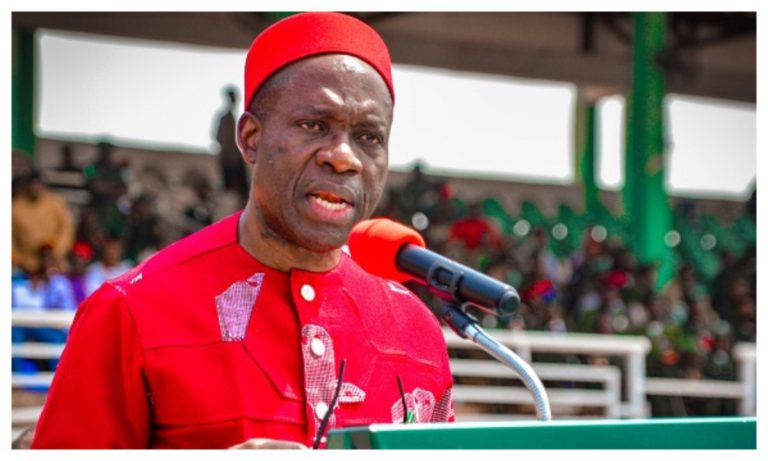
The Chairman of Orumba South Local Government Area, Hon. Shedrack Azubuike, has urged Nigerians across the 774 Local Government Areas to support the re-election of President Bola Tinubu in the 2027 general elections.

Azubuike made the call while highlighting the growing infrastructure footprint of the Federal Government in Anambra, which he described as evidence of the benefits of collaboration and constructive leadership.
He said the cordial working relationship between Tinubu and Governor Chukwuma Soludo had created opportunities for the state to attract strategic federal projects, investments and development initiatives.

The chairman listed some of the federal interventions in the state to include the Second Niger Bridge and the ongoing 17-kilometre dualised access road. Others, he said, were the approved dualisation of the 108-kilometre Otuocha-Anam-Abaji Road and the 150-kilometre Oba-Nnewi-Uga-Ihube/Okigwe Junction Road.

He also mentioned the nine-kilometre extension of the Benin-Asaba Expressway to the Second Niger Bridge and the rehabilitation of the First Niger Bridge. He explained that the rehabilitation of the First Niger Bridge includes the replacement of vandalised structural components as well as the installation of solar-powered streetlights and Closed-Circuit Television (CCTV) cameras.

Azubuike said the projects were strategic investments that would strengthen connectivity, facilitate trade, and boost economic activities in the state.

“These projects are evidence that when the state and federal governments work together, our people stand to benefit. We must continue to encourage cooperation that will bring more development, investment and opportunities to Anambra,” he said.

The chairman urged Ndi Anambra to look beyond partisan considerations and remain united behind Soludo’s development agenda while supporting Tinubu’s 2027 re-election bid. He said continuity, cooperation, and constructive engagement were critical to achieving sustainable development.

“The future we desire requires partnership, not unnecessary confrontation. Let us support development, strengthen the relationship between Anambra State and the Federal Government, and give President Bola Tinubu the opportunity to continue the work in 2027,” he said.

Azubuike expressed optimism that greater collaboration between the Federal and State Governments would accelerate infrastructure development, economic growth, security, investment, and opportunities for Nigerians.

He urged progressive forces to continue working together toward building a more connected and prosperous Nigeria.

Nwifuru has granted LG autonomy in Ebonyi, says commissioner

0

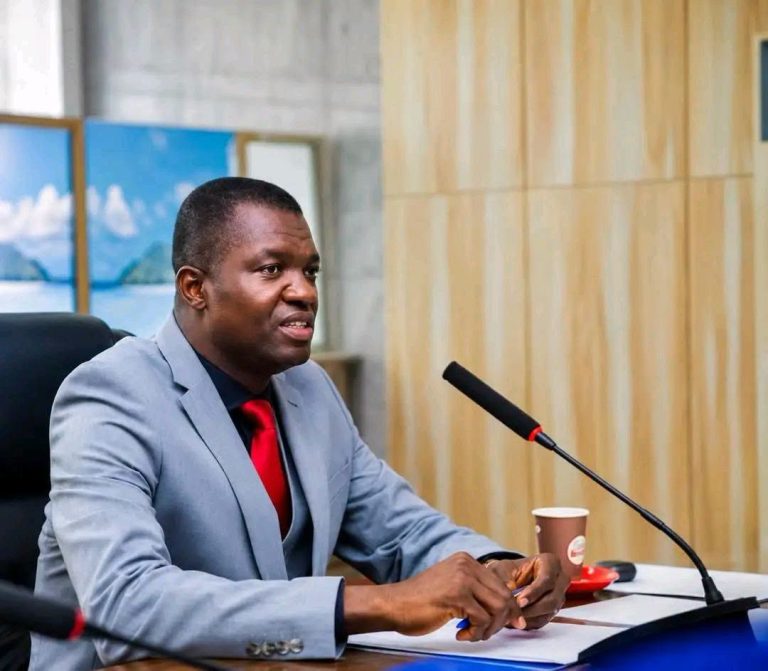
The Ebonyi State Commissioner for Local Government and Chieftaincy Matters, Uchenna Igwe, has said that governor Francis Nwifuru granted financial autonomy to the local government areas in the state over a year before the Supreme Court ruling of July 11, 2024 on local government autonomy.

He stated this in Abakaliki, the state capital, during the swearing-in of the newly elected council chairmen in the state. He said under the governor ‘s administration, all government projects and programmes are derived from the verified needs of the ordinary citizens of Ebonyi State.
His Excellency, the governor has given Ebonyi people a balanced diet of good governance with proportionate ingredients of both infrastructure and “manfrasture” or welfare and human capital development.

“Governor Nwifuru was among the first governors to release wage awards and increase workers’ salaries in Nigeria. He lifted the embargo on employment and employed thousands of teachers and health workers across the 13 LGA.

“With the payment of arrears of gratuities to Ebonyi local government staff, retirement is no longer a death sentence to Ebonyi retirees. Supported by the completely transformed rural health sector, our retirees now gracefully enjoy their full life span in the new Ebonyi State made possible by the governor.

“Through the return of overseas and local postgraduate scholarship programmes, the Francis of Ebonyi State has given ordinary Ebonyians across the 13 LGA access to premium self-development.

“Through the Ministry of Local Government and Chieftaincy Matters, Governor Nwifuru’s midas touch is at work across all the LGA in Ebonyi State.

“It is heartwarming to note that Governor Nwifuru granted financial autonomy to the local government areas in Ebonyi State for over a year before the Supreme Court ruling of July 11, 2024”, Igwe stated.

The commissioner disclosed that the current administration in the state inherited a local government system fraught with traditional stool conflicts and town union crises.

“In fact, only 67 communities representing 48% of the communities in Ebonyi State had traditional rulers in 2023. Governor Nwifuru turned the Ministry of Local Government and Chieftaincy Matters into an instrument of peace.

“The ministry has resolved all the traditional stool conflicts and community leadership disputes. Fifteen new communities have been created by the governor. This was followed by full democratisation of both the traditional stool and town union leadership recruitment processes, moving them away from imposition and crisis.

“Today, traditional rulers and town union leaders have been successfully elected and inaugurated in over 80 communities, including those of high stake Emezaka, Nkomoro, Okpoto, Obegu, Ekwashi, Amoffia Ngbo, Alioma, and Okue. These communities sit together in peace, rebuilding trust, and focusing on shared growth”, he said

Workers demand N300,000 minimum wage

0

The Federal Workers Forum has written to President Bola Tinubu and the National Assembly, demanding an immediate review of the salaries of federal civil servants and an increase in the minimum wage from N70,000 to N300,000.

The letter, dated September 2, 2026, and signed by the National Coordinator, FWF, Andrew Emelieze and General Secretary, Ogundele Ayodele, was addressed to the Senate President and Speaker of the House of Representatives through the Clerk of the National Assembly, with President Tinubu, the Chief Justice of Nigeria, and the Head of the Civil Service of the Federation also listed among the recipients.

The forum also proposed a salary of N1.5m for Level 17 officers, arguing that the current wage structure no longer reflects the economic realities confronting federal workers.

Backing its demand, the workers said in the letter, “We call for justice and immediate wage review now, adjust the federal minimum wage to N300,000 and a maximum wage of N1.5m for the Level 17 officers.”

The FWF said the demand was necessitated by what it described as the incomplete implementation of the N70,000 minimum wage approved in 2024, claiming that federal workers had yet to receive the full consequential adjustment and associated allowances.

The group stated, “It will surprise you to hear that the Federal Government has not fully implemented the new national minimum wage since July 2024. We have been in the battle for full consequential adjustment of the new minimum wage.”

According to the workers, the 2024 wage review increased the minimum wage from N30,000 to N70,000 but resulted in what they described as a flat N40,000 increase across all levels of the federal civil service.

The forum said, “Only N40,000 was added to the salaries of every federal worker across all levels.”

The latest demand comes amid continuing disagreements over the implementation of the 2024 minimum wage and related allowances.

The N70,000 minimum wage replaced the previous N30,000 benchmark after negotiations between the Federal Government and organised labour, with the new wage framework subject to review after three years.

The FWF argued that the statutory three-year review period should not prevent the government from responding immediately to what it described as an emergency deterioration in workers’ purchasing power.

The forum said, “As a matter of fact, it is suicidal for the federal workers to continue in this ugly situation. Hence, based on the current cost-of-living crisis, it can only be a matter of justice that the federal wages be immediately reviewed to meet up with the current economic realities in Nigeria.”

The workers complained that the rising cost of food, transportation, accommodation, electricity, cooking gas and other necessities had made the N70,000 minimum wage inadequate.

“Federal workers have been enduring the situation, and everything has been frustrating and nauseating. We cannot cope again. Federal workers are dying in instalments; we are suffering in silence; our salary is too poor; it is not taking us home,” the letter stated.

The FWF further alleged that some federal workers had become heavily indebted to microfinance institutions and digital loan platforms in an attempt to meet their daily needs.

“Federal workers are now heavily indebted to microfinances and, most times, federal workers resort to phone loan apps to get transportation to work,” the group said.

The forum also claimed that some workers had resorted to using firewood because they could no longer afford cooking gas.

It argued that the worsening financial situation could affect workers’ productivity and create conditions conducive to corruption.

“While the Federal Government is making more money now, the federal workers are underpaid and subjected to unprecedented sufferings and hardship,” the workers said.

The forum also linked its demand to the wider increase in government revenues and expenditure, arguing that federal workers, whom it described as the “engine room of governance,” should benefit from improved national earnings.

It said, “The federal workers are the goose that lays the golden egg, but we are alienated from our labour.”

The proposed salary structure attached to the letter provides for N300,000 for Level 1 Step 1 workers, rising progressively to N1.5m for Level 17 Step 1 officers.

Under the proposal, Level 2 workers would earn N330,000; Level 3, N360,000; Level 4, N390,000; Level 5, N420,000; Level 6, N450,000; and Level 7, N480,000.

The forum proposed N510,000 for Level 8; N550,000 for Level 9; N600,000 for Level 10; N700,000 for Level 12; N750,000 for Level 13; N800,000 for Level 14; N1m for Level 15; N1.2m for Level 16 and N1.5m for Level 17 officers.

The workers said their N300,000 minimum wage proposal was based on an estimated monthly expenditure covering feeding, transportation, accommodation, family support, electricity, cooking gas, phone and data, water and other utilities.

“Our projections here are fair, and we believe it can still be accommodated in the present budget based on the daily increased earnings and the excess crude oil sales earnings,” the forum said.

Among its other demands, the FWF called for payment of all outstanding salaries, promotion arrears and other entitlements owed federal workers.

It also demanded the immediate implementation and payment of arrears of the 40 per cent peculiar allowance, full consequential adjustment of the 2024 minimum wage, and the introduction of a permanent Cost of Living Allowance.

The workers further sought a Family Support Allowance, an end to stagnation in the civil service, declaration of vacancies for promotions, comprehensive health insurance for federal workers and pensioners, car and housing loan schemes, long-service awards and improved pension arrangements.

The forum also called for free education for the children of federal workers and pensioners in federal institutions, reduced taxation of workers’ allowances and tax relief measures.

Beyond workers’ wages, the FWF appealed to the government to introduce a comprehensive social security programme for unemployed and underemployed Nigerians, provide free medical care for children, pregnant women and elderly citizens, and establish federal intervention programmes for the treatment of cancer and other life-threatening diseases.

It also called for stronger measures to tackle insecurity, including the release of kidnapped Nigerians.

The forum demanded an investigation into reports that part of workers’ contributory pension savings was being borrowed by the executive.

“We like to bring to the notice of the National Assembly that we are hearing rumours that part of our contributory pension savings is being borrowed by the executive. We are calling for investigations and an immediate stoppage cum refund if it is true,” it stated.

The workers also called for the return of petrol subsidy, price-control measures for essential goods and services, efforts to strengthen local production and industrialisation, and measures to address the declining purchasing power of Nigerians.

The FWF urged the National Assembly to take up its demands with the President, stressing that federal workers could not afford to wait until July 2027 before their salaries were reviewed.

It said, “Federal workers have suffered enough. It has been three years of torture, torment and agony for the federal workers since the removal of fuel subsidy.”

The forum concluded by appealing to the lawmakers and other government officials to treat its letter as an emergency intervention, saying improved wages were necessary to protect workers’ welfare and enhance their ability to effectively implement government policies.

The group stated, “It is our prayers that the National Assembly, being the representative of the people, take up our plea with the utmost responsibility and act accordingly to ensure a just society.”