Home Blog Page 164

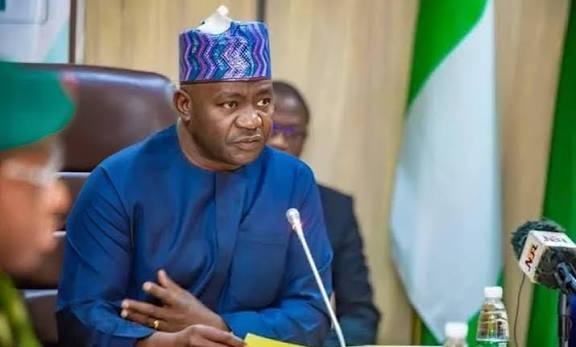
Gombe 2027: Yayari pledges support for Gwamna

0

The former National Treasurer of the Peoples Democratic Party (PDP), Hon. Ahmed Yayari, has pledged to work for the emergence of Dr Jamil Isyaku Gwamna as the next governor of Gombe State in the 2027 general election.

Yayari made the commitment in Gombe when he received a delegation of All Progressives Congress (APC) stalwarts from Tumfure, Wuro Bobbo, NTA and other parts of Akko Local Government Area who recently defected from the PDP.

The delegation appealed to Yayari to join the APC, describing him as a political asset whose experience could strengthen the party ahead of the 2027 elections.
They cited his experience as former Director-General of the campaign organisation of former Gombe State Governor, Ibrahim Hassan Dankwambo, as a valuable asset to the party.

The APC members expressed confidence that Yayari’s defection and endorsement of Gwamna could boost the party’s chances in the governorship election.

They also disclosed that the areas they represent comprise 24 polling units, saying their combined support could contribute to the party’s electoral fortunes.

Responding, Yayari expressed readiness to support Gwamna’s governorship ambition.

“I am ready to work assiduously for the victory of Jamilu Gwamna as the next governor of Gombe State,” he said.

Social Protection: Gombe targets 15% poverty reduction by 2030

0

The Gombe State Government has set a target of reducing poverty in the state by 15 per cent by 2030 under its proposed Gombe State Social policy project.

The policy is designed to establish a comprehensive, inclusive and shock-responsive social protection system aimed at reducing poverty and vulnerability, strengthening human capital and resilience, and improving access to basic services.


The target was contained in a presentation on the proposed policy delivered by Dr Ali Madina Dankumo of the Department of Economics and Development Studies, Federal University of Kashere, during a two-day validation workshop on the Gombe State Social Protection Policy, Implementation Plan and Monitoring, Evaluation, Accountability and Learning (MEAL) Plan held in Gombe.


According to the policy, its vision is to build “a healthy, peaceful and prosperous State” with poverty reduced by 15 per cent by 2030, under the mantra, “Better Life for all residents.”


The policy identifies poverty and vulnerability as major challenges facing the state, citing high multidimensional poverty, multiple deprivations among children and households, rural disadvantages, food insecurity, economic shocks, climate events and insecurity.


It also recognises women, children, youths, persons with disabilities and older persons as groups requiring targeted interventions.


Under the proposed framework, social protection interventions will adopt a life-cycle approach, covering early childhood, school age, youth, working age and older persons.


For children, the policy proposes interventions covering nutrition, healthcare, sanitation, early learning and protection, while school-age children would benefit from education, nutrition, attendance, retention and protection programmes.


For youths, the focus would include skills development, employment, entrepreneurship and access to finance, while working-age residents would be targeted through decent work, livelihood opportunities and social insurance.


The policy also proposes income security, healthcare, assistance and social inclusion measures for older persons.


Among its major social assistance measures are cash and in-kind transfers, school feeding for pupils in Classes 1–3 in public primary schools, education and healthcare fee waivers, examination-fee support, scholarships and emergency relief.


The proposed policy further seeks to strengthen health insurance coverage, expand participation in GoHealth, improve pension arrangements and develop social protection mechanisms for informal-sector workers.


It also provides for agricultural inputs and agro-credit, entrepreneurship and MSME support, public works, skills development and incentives for private-sector employment.


The policy sets out 10 strategic objectives, including reducing poverty among vulnerable people, protecting households against shocks, improving food security and nutrition, promoting sustainable livelihoods, strengthening human capital and dignity, and improving coordination among intervention agencies.


However, the document acknowledges that the previous 2021–2026 policy cycle faced significant implementation challenges, including inconsistent implementation, inadequate and delayed funding, dependence on development partners, political interference in beneficiary selection, weak coordination and reporting among government agencies, programme duplication, weak monitoring and limited community participation.


To address these challenges, the new framework proposes stronger coordination among ministries, departments and agencies, local governments, communities, traditional and religious institutions, civil society organisations, development partners, the private sector and philanthropists.


It also proposes strengthening the State Social Register and developing the Gombe State Social Protection Information Management System (GSPIMS) to improve beneficiary targeting, update information and integrate relevant registers.


On financing, the policy acknowledges that state budgetary resources alone may be insufficient. It therefore proposes mechanisms including a Social Protection Trust Fund, federal financial incentives, development-partner support, private-sector and philanthropic contributions, and special intervention funds for contingencies.


The policy’s implementation will also be subjected to annual performance reviews, mid-term and end-of-term evaluations, performance-based monitoring and budgeting, as well as beneficiary feedback and grievance mechanisms.


By 2030, the policy expects to contribute to poverty reduction and greater resilience, improved nutrition and human capital, diversified livelihoods, better protection against shocks, improved access to essential services and greater inclusion, dignity and rights.


The policy identifies adequate and timely funding, effective coordination, accurate beneficiary data, protection of vulnerable groups, transparency, grievance redress and citizen participation as critical to achieving its objectives.


The validation workshop, according to the presentation, is intended not merely to proofread or approve the policy but to determine whether it is appropriate, relevant, understandable, acceptable and implementable, particularly in terms of cost and political will.


Participants were therefore urged to identify areas requiring clarification, additions or removals, disagreements supported by evidence, and potential implementation challenges.


The proposed Gombe State Social Protection Policy 2027–2030 is ultimately intended to move the state from fragmented assistance programmes towards an integrated system that protects residents from shocks, invests in children and human capital, empowers households through livelihoods, and promotes rights, equity and inclusion.
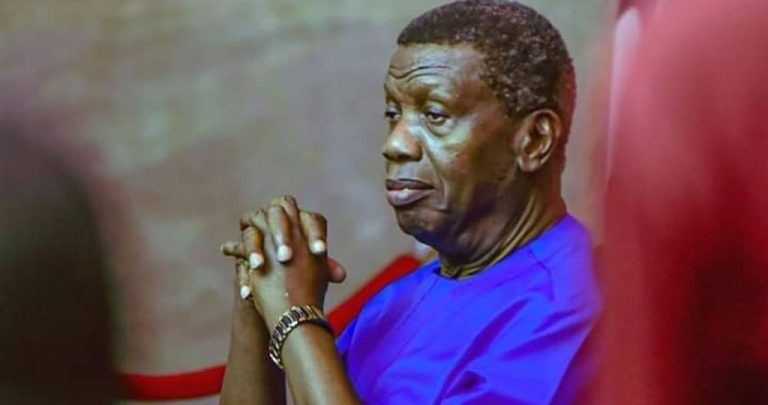
FG expresses gratitude to Redeemed Church over donation of $265,854 to evacuate Nigerians from South Africa

0

The Ministry of Foreign Affairs, has conveyed the profound gratitude of the Federal Government to the Redeemed Christian Church of God (RCCG) for its generous donation of $265,854 towards the purchase of 500 one-way tickets for the evacuation of distressed Nigerians from South Africa.

The Ministry of Foreign Affairs, in a statement issued in Abuja by its spokesperson, Oluwafemi Adeniyi, said the government regarded the donation as a significant demonstration of the RCCG led by Pastor Enoch Adejare Adeboye’s compassion, solidarity and genuine commitment to providing succour to distressed and stranded Nigerians who are faced with the scourges of Xenophobia and Afrophobia in South Africa.


“This gesture further demonstrates the impact that collaboration between faith-based organisations and public institutions can have in addressing social challenges and advancing the common good. We are grateful for this partnership and look forward to working with the church’s leadership in South Africa, as the generous donation is applied to the evacuation of 500 distressed Nigerians,” Adeniyi said.

The Spokesperson recalled that the Federal Government commenced the ongoing evacuation of distressed Nigerians from South Africa on June 10, 2026, following a new wave of Xenophobic and Afrophobic attacks on Africans and other nationals in the country.

He added that since then, a total of 1,640 Nigerian nationals have been brought back home, with the Federal Government fully sponsoring the return of 1,385 of them, while the evacuations of the remaining 255 were sponsored through philanthropic donations.

“Currently, 202 Nigerians are awaiting final screening by South Africa’s Department of Home Affairs before they are finally evacuated back to Nigeria. Our High Commission in Pretoria and Consulate General in Johannesburg remain open as they continue to reach out through Nigerian Community Associations and other established channels, to assist Nigerians who desire to return home as a result of Xenophobic and Afrophobic attacks.

“As we sustain our engagement with the South African authorities to address the irritants of Xenophobia and Afrophobia against our citizens, the Federal Government of Nigeria remains resolutely committed to promoting the welfare and well-being of Nigerians in the Diaspora, in line with the 4Ds foreign policy priorities of President Bola Ahmed Tinubu-led Administration.

“This commitment is exemplified by the sustained and concerted efforts of Mr. President on the diplomatic front, including his decisive Statement during the 21st Extraordinary Session of the Assembly of Heads of State and Government of the African Union (AU) held on 30 August 2026 in Luanda, Angola. In the Statement, Mr. President was unequivocal in expressing concern over recurring xenophobic and Afrophobic attacks in South Africa, and calling for urgent collective attention to address the situation.

“While thanking the Redeemed Christian Church of God for its contribution to the ongoing evacuation efforts again, the Ministry of Foreign Affairs wishes to state that it welcomes impactful partnerships with private organisations, philanthropists, faith-based organisations, development partners and other stakeholders whose contributions can engender meaningful and lasting positive bearing on Nigerians in the Diaspora,” he stated.

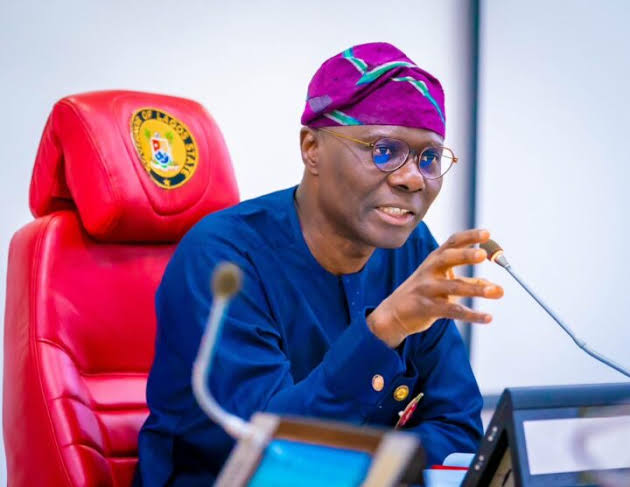
Lagos supports 733 widows with empowerment programmes

0

The Lagos State Government has provided support for 733 widows as part of efforts to improve their welfare, protect their rights and create opportunities for sustainable livelihoods.

According to a Friday statement uploaded by the state government on its official handles, the intervention was announced on Wednesday during the 2026 International Widows Day commemoration organised by the state Ministry of Women Affairs and Poverty Alleviation in Lagos.

The event, themed “Justice, Dignity and Economic Power for Widows”, focused on improving widows’ access to justice, protection and economic opportunities.

Speaking at the programme, the Commissioner for Women Affairs and Poverty Alleviation, Bolaji Dada, said government support for widows should extend beyond financial assistance.

“Support for widows must go beyond sympathy. It must include access to justice, protection from discrimination and harmful practices, as well as opportunities that enable them to become economically independent,” she said.

Dada said the ministry had continued to support women through skills acquisition, grants, enterprise support and livelihood programmes.

She listed the ministry’s tuition-free Skills Acquisition Centres across the five IBILE divisions, the Micro Enterprise Support Initiative, which provides productive equipment to entrepreneurs, and the Life Skills Economic Empowerment Programme.

“These interventions are guided by a simple principle: support should create opportunity, and opportunity should lead to greater self-reliance,” Dada said.

The commissioner urged society to look beyond the loss experienced by widows and recognise their abilities and potential.

“A widow should not be defined by her loss. She should be seen as a woman with abilities, experience, aspirations and the capacity to contribute meaningfully to her family and society,” she said.

Dada also called for stronger collaboration among government agencies, civil society organisations, communities and other stakeholders to protect widows from discrimination and harmful practices.

She urged the media to give greater attention to the resilience and achievements of widows.

“The stories of widows should not only be told from the perspective of their challenges. We must also tell stories of their strength, enterprise, achievements and contributions to their families and communities,” she said.

The commissioner encouraged widows to take advantage of the state’s empowerment programmes, saying their present circumstances should not determine their future.

“Your circumstances may have changed, but your abilities and potential remain valuable. Do not allow your present situation to define your future,” Dada added.

Speaking on behalf of the beneficiaries, Idayat Baiyewu thanked the state government and the ministry for their continued attention to the welfare of widows.

Earlier, the Permanent Secretary of the ministry, Rianat Onigbanjo, said widows deserved opportunities that would protect their rights, restore their confidence and enable them to become economically independent.

She described support for widows as a shared responsibility involving government, families, communities, civil society organisations and the media.

Onigbanjo also commended Governor Babajide Sanwo-Olu for supporting programmes targeting women and vulnerable groups across the state.


Defence Minister: Nigeria Safer Today Than in 2023, APC Will Win Kaduna

0


The Minister of Defence, Gen. Christopher Musa, has defended the Federal Government’s handling of insecurity, saying Nigeria is safer today than it was in 2023.

Musa also said the N5.41 trillion allocated to defence in the 2026 budget would be spent on military equipment and operations, stressing the high cost of modern warfare.

Speaking during an interview with Channelstv, the minister said a Tomahawk missile cost about $3.2 million, while a precision drone bomb could cost at least $100,000.

“Imagine when you fire it, if it hits somebody, or doesn’t hit something, N140 million is gone,” he said.

Musa explained that the size of Nigeria’s forests and difficult terrain made military operations challenging, particularly in areas such as Sambisa Forest.

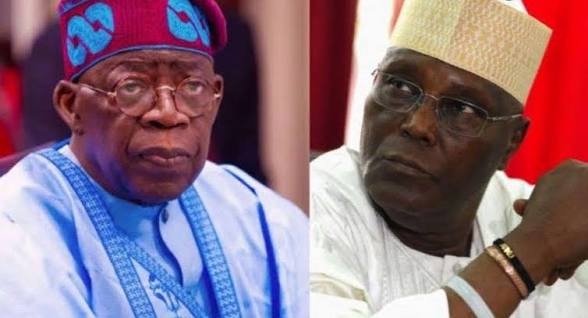
Atiku to Tinubu: Withdraw from race or face defeat

0


• Demands apology over criticism of fuel subsidy proposal

The presidential candidate of the African Democratic Congress (ADC), Atiku Abubakar, has advised President Bola Tinubu to withdraw from the 2027 presidential race or prepare to face defeat at the polls.

Atiku also asked President Tinubu to apologise to him and Nigerians for ridiculing his proposal for a production-linked fuel subsidy.
He was reacting to the call by the Independent Petroleum Marketers Association of Nigeria (IPMAN) for the Federal Government to support domestic refiners as part of efforts to reduce petrol prices.

In a statement issued by his Senior Special Assistant on Public Communication, Phrank Shaibu, Atiku said IPMAN’s intervention vindicated his proposal to make energy more affordable through targeted support for local refining.

He noted that the marketers’ position was significant because it came from industry operators who understood the impact of high petrol prices on businesses and households.

Atiku recently proposed the introduction of a production-linked fuel subsidy if elected president in 2027, arguing that it would reduce the cost of Premium Motor Spirit (PMS).

The Presidency, however, dismissed the proposal as evidence of economic ignorance, insisting that the subsidy regime abolished by Tinubu on assumption of office in 2023 should not be restored.

Atiku maintained that his plan was different from the previous import-based subsidy regime and would strengthen key objectives of the Petroleum Industry Act, including promoting domestic petroleum processing and ensuring safe and affordable access to petroleum products.

“IPMAN has come late to this conversation, but it has come to the right conclusion. The association is now saying that the government cannot simply stand aside while petrol prices punish Nigerians and that deliberate subsidy around domestic refining can help bring prices down,” he said.

“That is precisely the policy principle President Tinubu and his gang of jesters have spent weeks trying to ridicule.

“Tinubu’s argument has always depended on deliberately confusing the import-subsidy bazaar with a transparent, production-linked intervention that strengthens Nigerian refining and delivers measurable relief to Nigerian consumers.

“Let me put it to President Tinubu in simple English: the difference between the import subsidy and the policy I have put before Nigerians is the difference between a farmer who harvests cassava, sells it all cheaply and then travels elsewhere to buy expensive garri for his family, and one who builds the capacity to process his cassava at home.

“Nigeria produces crude oil. It is economic foolishness to possess the raw material, fail to maximise its processing at home and then tell Nigerians that unaffordable fuel is the price they must pay for reform.

“My principle is simple: subsidy follows the barrel. Strengthen the Nigerian barrel, strengthen Nigerian refining and ensure that the benefit follows that barrel all the way to the Nigerian consumer.”

Atiku said Tinubu’s celebration of subsidy removal as an economic achievement had become detached from the hardship confronting Nigerians.
According to him, the real test of petrol policy is not the price of a litre of fuel after conversion to dollars, but how much of a Nigerian worker’s income and labour it consumes.

He said the DailyFuels Fuel Affordability Index ranked Nigeria 91st and estimated that the average Nigerian required about 44 minutes of work to afford one litre of petrol, while a 40-litre tank represented about 29.5 hours of work.

“That is the Tinubu economy in one statistic. Petrol may appear cheap when converted into dollars and compared with richer countries, but Nigerians do not earn American or European salaries,” Atiku said.

“A teacher does not experience fuel policy through a government spreadsheet. A tomato seller experiences it when the truck bringing her produce charges more, her own transport fare rises and her customers arrive at the market with less money in their pockets.

“By the time one tomato reaches a Nigerian kitchen, Tinubu’s expensive petrol has collected its own levy several times along the journey.

“That is why my targeted intervention is fundamentally a cost-of-living policy. When energy costs rise, transportation, food, production and distribution costs rise with them.

“Making fuel affordable means restoring purchasing power to Nigerian families. You do not govern spreadsheets. You govern human beings.”

Atiku urged IPMAN to move beyond commentary and join efforts to develop a transparent system of support for domestic refining.

He said his invitation to the petroleum marketers was about building a new energy framework from 2027 and not rescuing the Tinubu administration from the consequences of its policies.

“I welcome IPMAN. Let us prepare together for 2027—marketers, refiners, regulators, consumers and independent monitors and build a system where support follows the Nigerian barrel and relief follows that support all the way to the filling station,” he said.

“That is the contract we offer Nigerians: local capacity first, transparency first, purchasing power first and affordable energy first.

“President Tinubu had the opportunity to put Nigerians first when they needed relief most. He chose hardship and called it reform.

“There are, therefore, two honourable options before him now: apologise to Atiku Abubakar and, more importantly, to the Nigerian people for ridiculing a policy principle that major petroleum-sector players are beginning to recognise, and quietly withdraw from the 2027 presidential contest; or wait to be rejected at the polls in January.

“This is not about Tinubu or Atiku. It is about Nigerians. You cannot empty their pockets, call it reform, ridicule the ideas intended to make their lives affordable and then ask them to reward you with another four years.

“Tinubu may continue defending expensive petrol. We will continue building the coalition that will make Nigeria affordable again from 2027.”

Sun

Uber’s exit: Nigeria becoming graveyard for businesses under Tinubu – ADC

0

The African Democratic Congress (ADC) has said exit of global ride-hailing brand Uber from Nigeria, alongside the closure or scaling down of some major international companies, in the country was an indication that the economic policies of President Bola Tinubu’s administration is allegedly turning the country into a “graveyard of businesses.”

The ADC, in a statement by its National Publicity Secretary, Bolaji Abdullahi, said the growing list of businesses shutting down, scaling down or leaving the country had exposed the widening gap between the government’s claims of economic progress and the reality confronting businesses and ordinary Nigerians.

The party said it was surprising to see the Federal Government celebrating a marginal 0.2 percentage points improvement in Gross Domestic Product (GDP), at a time when businesses are closing, jobs are disappearing and millions of Nigerians are sinking deeper into poverty.

It argued that while the government celebrates a marginal improvement of 0.2 percentage points, Nigeria’s poverty rate has snowballed to 63 percent, affecting an estimated 140 million Nigerians.

The ADC stated that “when the President and his party say things are getting better, we expect them to tell us what has improved in the lives of Nigerians. They should tell us how much food their GDP growth has put on the table. They should tell us which bill it has paid. If 0.2 percent is a mark of success in their books, President Tinubu and APC should tell us what they consider as failure.”

According to the opposition party, Uber’s exit after 12 years in the country, reflects the alleged increasingly hostile operating environment confronting businesses, especially the soaring cost of energy and transportation, “with the price of fuel rising by as much as 1,700 percent following the removal of fuel subsidy and devaluation of Naira.

“This is precisely why the ADC presidential candidate, Alhaji Atiku Abubakar, has proposed the restoration of a targeted fuel subsidy to bring down the cost of fuel, transportation and production.”

The ADC referenced a report by the Manufacturers Association of Nigeria (MAN), which indicated that 767 manufacturing companies, including 20 iconic global brands, had shut down or ceased operations in Nigeria, since 2023 when President Tinubu assumed office.

The party noted that listed among the companies that had shut down or scaled down operations in the country were Microsoft, Jumia and Bolt Food, Pick n Pay, Shoprite, GlaxoSmithKline (GSK), Sanofi-Aventis, Bayer AG, Procter & Gamble and Unilever and PZ Cussons, among others.

“Therefore, when the President announces that Nigeria has turned the corner, we wonder which corner he is talking about. If indeed the economy is improving or the slightest hope exists in the minds of those who run these businesses that this APC government can improve the economy, why are they closing shops and moving elsewhere?

“The painful truth is that Tinubu has turned Nigeria into a graveyard for businesses. Every business that shuts down or pulls out is a vote of no confidence in the Tinubu administration and its capacity to manage the economy. Each exit delivers a blow to the economy. But perhaps, more importantly, each one represents a massive loss of jobs and increased poverty.

“Therefore, when APC and its government celebrate even the most negligible shift in GDP numbers and flaunt that as evidence to show that things are getting better, they are immediately contradicted by the painful reality that Nigerians are getting poorer and hungrier. Those who had jobs yesterday are not sure how long it will take before their employers close shop, and those earning salaries are struggling even to transport themselves to work,” the party stated.

Sun

EPL: Arsenal vs Chelsea: Four key players ruled out of Emirates clash

0


Arsenal have suffered fresh injury concerns ahead of their Premier League clash with Chelsea at the Emirates Stadium on Sunday.

Bruno Guimaraes and Cristhian Mosquera were reportedly absent from Arsenal’s training session on Thursday.

Their absence was noticed during the open training session, raising doubts over their availability for the highly anticipated London derby.

Both have been struggling with injuries recently and may not feature in the upcoming match against Chelsea.

Guimaraes had previously dealt with a minor groin issue earlier in the summer but managed to play in the FA Community Shield victory over Manchester City.

He missed the opening match but came off the bench in the win against Aston Villa, contributing for the final 20 minutes.

Arteta addressed his concerns regarding injuries earlier in the summer, stating: “We expect that not to be weeks at all. Let’s see how he evolves this week.

“He didn’t even want to stop. He wanted to carry on. Now we start to understand the character of the player, but I don’t expect that to be a big issue.”

It is still uncertain whether Guimaraes is experiencing the same issue again or whether he was simply absent from training as part of his recovery.
Meanwhile, Mosquera has become the latest defender to sustain an injury for the Gunners.

The young defender left the field injured during the victory over Aston Villa, with Ezri Konsa stepping in as his replacement.

The Gunners are already missing William Saliba and Jurrien Timber. Although the Dutchman has returned to light training, he has not yet regained sufficient fitness to be included in the matchday squad against Chelsea.

For Chelsea, the Blues also have injury concerns, with Moises Caicedo and Marco Palestra unlikely to make the trip across London.

Both players have struggled with injuries this season and were not seen in training ahead of the Arsenal clash.

Caicedo came off the bench in the win over Brighton & Hove Albion but played just 11 minutes before going off injured again.

Xabi Alonso has revealed that it is a minor knee issue, which also kept him out of the wins over Fulham and Luton Town.

Palestra has not played a single minute since pre-season and is yet to make the matchday squad this season. He joined the Blues this summer from Atalanta, and Alonso has not revealed the nature of his injury.

Sun

FG fires back at Obi, Kwankwaso over claims of Tinubu’s chances in 2027

0

The All Progressives Congress (APC) has dismissed claims by Peter Obi and Rabiu Kwankwaso that President Bola Tinubu can be defeated in the 2027 presidential election, insisting that the ruling party remains confident of retaining power.

The Minister of Defence, Christopher Musa, said the APC would win the presidential, governorship and other elections in Kaduna State, rejecting claims of growing opposition to the party in the North.

Musa spoke on Thursday during an interview on Channels Television’s Politics Today, shortly after Obi and Kwankwaso told supporters in Port Harcourt that they were prepared to resist any attempt to manipulate the 2027 election.


Asked whether the APC could lose Kaduna, Musa said, “APC will win in Kaduna. That I know.”

Pressed on whether his prediction covered the governorship and presidential elections, he replied, “Definitely. Presidential, governorship, and all levels.”

Musa also rejected suggestions that northern voters were turning against the APC and defended Tinubu’s economic policies, saying the President had taken “very painful decisions” whose benefits would become clearer over time.

“I can tell you, APC will win,” the minister declared.

Earlier, Obi, the presidential candidate of the Nigeria Democratic Congress, told supporters that voters would not allow their ballots to be subverted at polling units, insisting that attempts to manipulate the 2027 election would face resistance.

Kwankwaso, Obi’s running mate, warned against assuming that control of state governments guaranteed victory at the presidential level, citing the defeat of former President Goodluck Jonathan in 2015 despite being the incumbent.

The APC National Secretary, Ajibola Basiru, also dismissed the opposition’s claims as “cheap talk” and “wishful thinking”, reminding Obi and Kwankwaso that Muhammadu Buhari won re-election as a sitting President in 2019.

“Presidential election is not won on empty rhetoric or wishful thinking. We are confident that Nigerians will re elect President Bola Ahmed Tinubu,” Basiru said.

Sun

Exam malpractice: How NECO questions were sold for N3,000 – Alausa

0

The Minister of Education, Dr Tunji Alausa, has revealed how candidates allegedly obtained National Examinations Council (NECO) questions for N3,000 before examinations, describing the scale of malpractice in Nigeria as “mind-boggling.”

Alausa made the disclosure on Thursday during a meeting with the National Association of Proprietors of Private Schools and other education stakeholders, where he warned against practices capable of undermining the integrity of public examinations.

The minister said examination malpractice had been tolerated for years, creating a system where students who genuinely prepared for their examinations could be disadvantaged by candidates who accessed questions before the papers were written.

He said the situation posed an even greater danger because honest students could eventually be compelled to cheat in order to compete with those benefiting from examination leakages.

“It’s sad. Before she (Minister of State for Education) and I came, the acceptance of examination malpractice, cheating and examination leakages in this country was mind-boggling, and the country accepted it. It was a nightmare,” Alausa said.

He added that the most worrying consequence was that “the good students would also become bad.”

Recounting his experience in efforts to tackle examination malpractice, Alausa alleged that examination questions had previously been obtained and sold before candidates sat for their papers.

The minister recalled an incident involving the then NECO Registrar, Ibrahim Wushishi, saying some individuals used the name “Wushishi” as a reference to a dark website where examination questions could allegedly be purchased.

“They bought his question for N3,000. That was it. Before the examination. They called him Wushishi and bought the questions for N3,000 before the examination,” he said.

Alausa also recounted what he described as a troubling experience during the 2025 examination period, when he regularly received examination questions allegedly obtained before candidates sat for their papers.

He said officials had to verify the authenticity of the questions with examination authorities, sometimes discovering that the materials being circulated were indeed the questions scheduled for that day.

“During that examination period, during the hardest time of my life, I was always worried, waking up. I would wake up to her text. She would send questions to me… She would say, ‘I just got this question,’” he said.

According to the minister, the leaked materials covered subjects including English and Chemistry, prompting him to contact examination officials for verification.

“I would send it to the HNO and ask, ‘HNO, is this correct?’ And the answer I got was, ‘Unfortunately, that’s the question we’re doing today,’” he said.

Alausa said the experience demonstrated that examination malpractice could not be treated solely as a problem caused by students, arguing that the entire education ecosystem must take responsibility for preventing cheating.

He identified parents, school proprietors, teachers, principals and invigilators among those whose actions could either strengthen or undermine examination integrity.

“You might be in that isolated school, but the school system is also involved. In fact, I don’t blame the students that much. Any child can be bad,” the minister said.

“But when we have an ecosystem where parents, schools, teachers, invigilators and principals are in full connivance, the students are the smallest players. The people who should put the deterrents in place are the ones involved.”

He said the Federal Government would intensify measures to prevent examination question leakages and other forms of malpractice, stressing that academic qualifications must reflect genuine knowledge and ability.

The minister linked the reforms to President Bola Tinubu’s broader efforts to improve standards in Nigeria’s education sector.

“This is a country with the rule of law. President Bola Ahmed Tinubu is transforming this country in a way that’s never been transformed before. This is Nigeria’s renaissance that we’re building to be sustainable into the future,” he said.

The Minister of State for Education, Prof. Suwaiba Ahmad, also urged private school proprietors to support the government’s efforts to strengthen examination controls.

Ahmad said tighter examination procedures could initially reveal gaps in students’ actual academic preparation, particularly among candidates who had become accustomed to relying on leaked questions.

She said the use of serialised examination questions would make it more difficult for candidates to depend on leaked materials and encourage them to prepare genuinely for examinations.

The minister also urged schools to complete their curricula within the required timeframe and encourage students to study consistently.

The Federal Government’s renewed campaign against malpractice comes amid persistent concerns over question-paper leakages, impersonation, collusion and unauthorised assistance during public examinations.

Alausa said the government was determined to restore confidence in Nigeria’s examination system and ensure that students who prepare and compete honestly are not disadvantaged.

Sun