Home Blog Page 144

2027: Ibadan traditional leaders reject alleged endorsement of Makinde, Adekanmbi

0


Traditional and community leaders in Ibadanland have distanced themselves from a viral video purportedly showing some Mogajis endorsing the presidential ambition of Oyo State Governor and Allied Peoples Movement, APM, presidential candidate, Seyi Makinde.


The video, which has been circulating on social media, also purportedly showed some individuals identified as Mogajis declaring Makinde as their preferred presidential candidate and APM governorship candidate in Oyo State, Bimbo Adekanmbi, as their choice for governor in the 2027 general elections.


However, the leadership of the Mogajis in Ibadanland, Baales, the Central Council of Ibadan Indigenes, CCII, and other traditional bodies said the purported endorsement does not represent the position of Ibadanland.


In a joint statement signed by the President of the Ibadan Mogajis, Mogaji Asimiyu Ariori, and the Coordinator of the Ibadan Compound Peace Initiative, ICPI, Mogaji Dr. Nurudeen Akinade, the purported endorsement was described as unauthorized.


The two leaders said the Association of Mogajis in Ibadanland, which they said has more than 400 members under Ariori’s leadership, was not consulted before the purported endorsement.


They described the development as “a schematic drama and theatre,” insisting that those behind the video were not recognised by the traditional hierarchy of Ibadanland.


The statement further said the Olubadan of Ibadanland, the Olubadan-in-Council, CCII and Baales across Ibadanland were not aware of or consulted on the purported endorsement.


The traditional leaders urged members of the public to disregard the individuals behind the video and warned against actions capable of undermining the peace and tranquillity of Oyo State before, during and after the 2027 elections.

Recap: Osinbajo Raises Alarm Over Chemicals Used to Ripen, Preserve Fruits

0


Former Vice President Yemi Osinbajo has raised concerns over the use of dangerous chemicals by farmers and fruit and vegetable traders to ripen and preserve food, warning that fresh-looking produce may not necessarily be safe for consumption.

Osinbajo, while sharing a personal experience involving his wife, Dolly, said she developed unexplained headaches despite maintaining what appeared to be a healthy habit of drinking freshly squeezed orange juice.

According to him, after other possible causes were ruled out, his wife sent a batch of the freshly squeezed orange juice to a laboratory for testing, only to discover that it was “not fit for human consumption.”

Osinbajo said the incident highlighted the dangers consumers face from chemicals used at different stages of the food supply chain, noting that some farmers use dangerous pesticides while traders sometimes apply chemicals to ripen or preserve fruits and vegetables.

He cited calcium carbide as one of the substances reportedly used to accelerate the ripening of bananas, mangoes, pawpaw and tomatoes, among other produce.

The former Vice President referred to studies conducted in different parts of Nigeria, including Ado-Ekiti, Uyo and Lagos, which he said revealed that some fruit and vegetable sellers admitted to using chemicals in handling their produce.

He also listed other substances allegedly used, including “gamalin 20,” phosphide, DDT and brodifacoum, describing some of them as highly toxic substances or poisons.

Osinbajo warned that the appearance of fruits and vegetables should not be taken as proof that they are safe, stressing that consumers should be cautious about what they eat and drink.

“The fact that fruit looks fresh doesn’t mean that it is safe. And the fact that a drink is natural doesn’t mean that something dangerous has not been added to it along the way, especially along the journey from the farm to the table,” he said.

He called for stronger regulation and enforcement by government authorities, as well as greater public awareness and education for farmers and traders on safer alternatives.

Osinbajo also urged consumers to ask questions, properly wash produce and report suspicious practices, stressing that individuals have an important role to play in ensuring food safety in their communities.

“Government regulation needs to be enforced. But in a country this size, we have to be active ourselves,” he said, urging citizens to report suspicious practices and work within their communities to bring about change.

Bamanga Tukur: PDP Mourns Former National Chairman

0


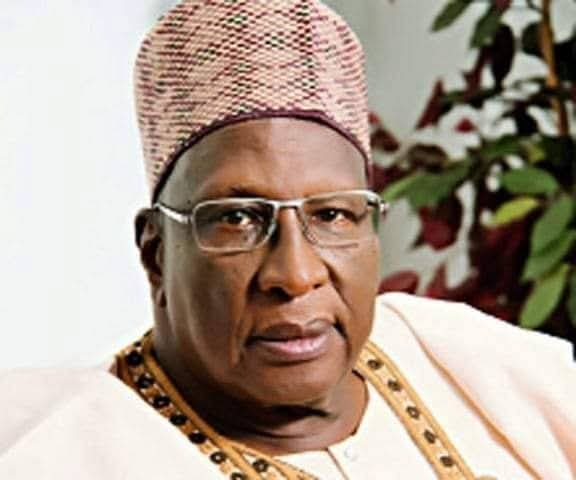
The Peoples Democratic Party (PDP) family in Nigeria and the diaspora has received with deep sadness the news of the death of its former National Chairman, Alhaji Bamanga Tukur.

During his lifetime, Alhaji Tukur played prominent roles in shaping policies and projects across various sectors of the Nigerian economy, particularly in ports administration, international trade and industry.

He was a man of many parts whose political profile was as rich as his professional record. He served as Governor of the old Gongola State and held several other high-ranking political and public offices.

His death at the age of 90, though painful to us as his political family, is viewed as a statesman’s farewell.

During our last interaction with him a few months ago, Alhaji Tukur reiterated his unflinching belief in the PDP as the truly national party capable of providing solutions to Nigeria’s challenges.
He also charged the National Chairman, Kabiru Turaki, SAN, to keep the flag of the party flying.

The PDP joins his many admirers in mourning his passing and extends its condolences to his family.

A historic Niger Delta investment summit holds in Port Harcourt

0

By Ehi Braimah

When I wrote in April about “Beyond oil: Niger Delta attracts investments for economic growth and development,” the central argument was straightforward: Niger Delta must begin to look beyond crude oil and deliberately position itself as a diversified investment destination.

At the time, the Niger Delta Economic and Investment Summit (NDEIS) was scheduled for May. The summit, with the theme, “Driving investment, innovation, and industrial growth in the Niger Delta,” was subsequently postponed, but the additional preparation time has arguably made the event even more significant.

From September 15 – 17, 2026, Port Harcourt, Rivers State, will host what promises to be a defining conversation about the economic future of Nigeria’s Niger Delta region comprising nine states: Abia, Akwa Ibom, Bayelsa, Cross River, Delta, Edo, Imo, Ondo, and Rivers.

The venue is the Obi Wali International Conference Centre, an appropriate setting for a summit that seeks to bring together government, business, investors, development institutions, financial institutions, professionals, entrepreneurs and other stakeholders around one overriding objective: transforming the enormous economic potential of the Niger Delta into sustainable investment and jobs.

This is not intended to be another talk shop. The organisers of the summit, the Niger Delta Chamber of Commerce, Industry, Trade, Mines and Agriculture (NDCCITMA), have positioned NDEIS as a structured investment marketplace designed to connect global capital with bankable projects and supportive public policy.

The summit’s stated ambition is substantial: more than 1,000 delegates, over 100 exhibitors, at least 30 bankable projects in the Deal Room and a target of up to $50 billion in investment commitments. Those are ambitious numbers, but ambition is precisely what a region as strategically important as the Niger Delta requires.

Ambassador Idaere Gogo-Ogan, NDCCITMA chairman and convener of the summit, framed the ambition plainly during a pre-summit media briefing held earlier in March. “The region is ready to deliver 500,000 new jobs, inclusive of investment drive and wealth creation,” he said, describing the summit as a platform to deliberate on “investment mobilisation, enterprise growth, industrial expansion, and regional coordination.”

A gathering of influential Nigerians and global investors

The summit is expected to attract a formidable gathering of political leaders, captains of industry, investors, development partners, regulators, financial institutions, academics, professionals and entrepreneurs.

President Bola Ahmed Tinubu is expected to declare the summit open, adding a significant federal dimension to an event whose focus is regional economic transformation. The Rivers State Governor, Siminalayi Fubara, is expected to serve as Chief Host, while the Niger Delta Development Commission (NDDC) is a key institutional partner.

The participation of the governors of the Niger Delta states is particularly important. The region’s economic future cannot be addressed successfully by any single state acting alone. The governors therefore have an opportunity to use the summit to demonstrate that the Niger Delta can move from competition among states to strategic economic collaboration.

For investors, the message should be clear: the region is open for business.

The Niger Delta has traditionally been identified overwhelmingly with oil and gas. Yet, its economic possibilities extend much further. The summit has identified seven strategic sectors: agro-industrial development and food security; blue economy and marine industries; oil, gas and energy transition; manufacturing, industrialisation and special economic zones; tourism, culture and the creative economy; digital economy, innovation and human capital; and access to finance and investment capital.

These sectors represent the bridge between the Niger Delta of yesterday and the Niger Delta of tomorrow.

A keynote speech with a powerful message

One of the major attractions of the summit will be the keynote address by Aigboje Aig-Imoukhuede, CFR, Chairman of Access Holdings Plc. Mr. Aig-Imoukhuede’s profile is particularly relevant to the investment conversation.

He is an investor, banker and philanthropist whose career has spanned banking, finance, investment, insurance, technology, real estate and energy. As former Group Managing Director of Access Bank, he played a major role in transforming the institution into one of Nigeria’s leading banks.

His keynote will therefore go beyond rhetoric. The Niger Delta region and other summit participants will be hearing directly from an expert who understands capital, risk, entrepreneurship, corporate governance and the difficult process of turning opportunities into investment propositions.

The central question should be: how does the Niger Delta move from possessing resources to creating investable assets?

That distinction is critical. Investors do not invest merely because a region has resources; they invest where there are bankable projects, credible institutions, predictable policies, infrastructure, security, competent human capital and reasonable prospects of return on investment.

From conference hall to Deal Room

Perhaps the most important feature of NDEIS is its Deal Room. This is where the summit can distinguish itself from conventional conferences with opportunities for access to markets, technology and capital. A successful summit should not be measured only by the quality of speeches delivered or the number of dignitaries who attend. Its ultimate test should be what happens after the speeches.

Did investors meet project promoters? Were projects subjected to serious investment scrutiny? How were financing conversations initiated? Were memoranda of understanding signed? Did companies commit capital? Did governments provide investment incentives?

The planned Deal Room has witnessed increased interest from participants and investors with over 30 investment-ready projects received to date, and it clearly provides an opportunity to answer those questions. If properly managed, it could become the engine room of the summit.

Exhibitions that tell the Niger Delta story

The exhibition component is equally important. With more than 100 exhibitors expected, the summit provides an opportunity for companies, states, government agencies, SMEs and entrepreneurs to showcase what the Niger Delta can produce.

The exhibition floor in an air-conditioned marquee will tell a compelling story: that beyond crude oil, there are agricultural products, manufacturing enterprises, technology companies, tourism assets, creative industries, maritime businesses, energy opportunities and innovative young entrepreneurs.

This is where the summit’s investment narrative becomes tangible. An investor should be able to walk through the exhibition arena and see opportunities rather than merely hear about them from a podium.

The intellectual architecture

The quality of the summit will also depend on its panelists, moderators and rapporteurs.

The organisers have assembled speakers from government, business, finance, academia, energy, maritime industries, technology, law, investment promotion and other sectors. The published speaker list includes senior figures such as NDDC Chairman Chiedu Ebie, NDDC Managing Director/CEO Dr. Samuel Ogbuku, SEC Director-General Emomotimi Agama, and Renaissance Africa Energy Company CEO Tony Attah.

Others include Rivers State Investment Promotion Agency Director-General Chamberlain Peterside, former NDDC Managing Director Timi Alaibe, former University of Port Harcourt Vice Chancellor Professor Joseph Ajienka, Starzs Marine & Engineering Limited Chairman Greg Ogbeifun, and several other experts.

The moderators have an equally important responsibility. A good moderator must move a panel beyond prepared speeches and polite exchanges. The hard questions must be asked: what exactly are the investment opportunities? Who will finance them? What are the risks? What incentives are available? What reforms are required? How will investors repatriate profits? What happens to host communities? How will environmental sustainability be guaranteed?

The rapporteurs, meanwhile, have the responsibility of capturing the substance of the conversations and translating them into actionable recommendations. That is how a summit becomes a roadmap.

The media must tell the story

A summit of this magnitude also deserves substantial media coverage. The media should not merely report who attended and who spoke; it should tell the larger story of an economically strategic region attempting to redefine itself. There would be sustained coverage before, during and after the summit across television, radio, newspapers, digital platforms and social media.

Interviews, special reports, investment stories, business features, photographs, short videos, social-media content and post-event analysis are also planned to ensure that the conversation does not disappear when delegates leave Port Harcourt.

Indeed, the summit presents an opportunity to change the narrative about the Niger Delta – from a region predominantly associated with oil, environmental degradation and conflict to a region increasingly associated with enterprise, investment, innovation and economic opportunity. That narrative shift is itself an investment asset.

The importance of end-to-end event management

For a summit of this scale, content and execution matter. A world-class summit requires an end-to-end event management experience: delegate registration and accreditation, protocol, airport arrivals and departures, transportation, accommodation, venue management, stage production, branding, exhibition management, audiovisual production, security, hospitality, media operations, digital engagement, networking, VIP management and post-event reporting.

Every touchpoint is crucial. The experience of a foreign investor arriving at the airport, being received, transported to the hotel, accredited at the venue, guided through the exhibition, introduced to relevant project promoters and followed up after the summit can influence his or her perception of the region.

World-class events are therefore not defined only by beautiful stages and impressive speeches, but also by a seamless execution. Official summit consultants are: Dr. Tony Epelle, CEO of Samuelson Advisory Partners & coordinating consultant; Ono Akpe, CEO of Red Sapphire; Donald Okudu, CEO of Mesh Ads, and Ehi Braimah, CEO of Neo Media & Marketing

A summit that must produce results

The Convener and organisers deserve commendation for placing investment at the centre of the conversation, but expectations must remain high. The Niger Delta has hosted numerous conferences and stakeholder meetings over the years. What the region needs now is not another declaration of intent – it needs implementation.

NDEIS provides an opportunity to create a pipeline of projects, facilitate investment partnerships, strengthen public-private collaboration and establish measurable commitments.

The summit’s ambition of attracting up to $50 billion in investment commitments is bold. But the real measure of success will be the quality of investments eventually deployed, the jobs created, businesses established, infrastructure delivered and value retained within the region.

The Niger Delta is too important to Nigeria’s economy to remain defined by its oil wealth alone. It is home to a large population, an extensive coastline and waterways, vast agricultural possibilities, significant energy resources, a vibrant culture and enormous human capital. The region’s transformation therefore has implications far beyond the nine states.

Dr. Solomon Edebiri, NDCCITMA secretary and local organising committee chairman, says the summit is a “strategic initiative designed to reposition the Niger Delta as a competitive hub for investment, enterprise development, and sustainable industrialisation.” While the world knows the Delta for oil and gas, its real legacy, he argued, rests on a “wealth of diverse and largely untapped opportunities” that the gathering aims to unlock.

As Port Harcourt prepares to welcome delegates, development partners and experts from Nigeria and beyond, the Niger Delta Economic and Investment Summit represents an opportunity to begin a new chapter. The challenge is to convert conversations into commitments, enhancing access to markets and technology, deployment of capital and achieving productive economic activities.

That is the real meaning of Beyond Oil. And it explains why the Niger Delta Economic and Investment Summit in Port Harcourt could become a historic moment – not simply because of the VIPs who attend, but because of the investment decisions and economic partnerships that emerge from it.

The Niger Delta region is ready to tell a new story.

Braimah is a PR specialist, marketing strategist, and publisher/editor-in-chief of Naija Times (www.ntm.ng) and Lagos Post (www.lagospost.ng). He can be reached at ehi.braimah@neomedia.com.ng

Tinubu Mourns Former Gongola Governor Bamanga Tukur at 90

0


President Bola Ahmed Tinubu has mourned the death of an elder statesman, renowned businessman and former Governor of the old Gongola State, Alhaji Bamanga Muhammad Tukur, who died at the age of 90.

In a condolence message, President Tinubu described the death of Tukur, the Tafidan Adamawa, as the end of a remarkable chapter in Nigeria’s political and economic history.

The President said Tukur was a towering figure whose distinguished career spanned public administration, governance, industry, politics and pan-African business leadership.
Born on September 15, 1935, Tukur rose to national prominence as General Manager of the Nigerian Ports Authority from 1975 to 1982, where he contributed to the modernisation of port operations and the development of Nigeria’s maritime sector.

President Tinubu also recalled Tukur’s political career during the Second Republic, which culminated in his election as Governor of the old Gongola State in 1983, now comprising Adamawa and Taraba States.

Tukur later distinguished himself in the private sector as Chairman of BHI Holdings and the DADDO Group of Companies, with interests in manufacturing, agriculture, logistics and trading.

He also served as Federal Minister of Industries under the administration of General Sani Abacha from 1993 to 1995.

On the continental stage, Tukur was an advocate of Africa’s economic renaissance. As Executive President of the African Business Roundtable and Chairman of the NEPAD Business Group, he championed intra-African trade, private sector-led growth and sustainable development.

He also served as National Chairman of the Peoples Democratic Party (PDP) from March 2012 to January 2014. President Tinubu acknowledged his contributions to democracy, particularly his efforts to promote party discipline and consensus-building.
President Tinubu described Tukur as “urbane, generous and deeply rooted in the values of integrity and service,” noting that he was a man of “big ideas and bold enterprise” who believed in Nigeria’s limitless potential.

“Alhaji Tukur was urbane, generous and deeply rooted in the values of integrity and service that the Adamawa Emirate and the nation hold dear.

He was a man of big ideas and bold enterprise who believed in Nigeria’s limitless potential. Nigeria will sorely miss his wise counsel and fatherly guidance,” the President said.

Tinubu extended his condolences to the Tukur family, the Fombina Emirate of Adamawa, the Government and people of Adamawa State, as well as the political and business communities in Nigeria and across Africa.

The President prayed that Almighty Allah would forgive Tukur’s shortcomings, grant him Aljannah Firdaus and comfort his family and all those mourning his death.

Senator Kalu Mourns Ex-PDP National Chairman Bamanga Tukur

0

The Senator representing Abia North Senatorial District, Senator Orji Uzor Kalu, has mourned the passing of former National Chairman of the Peoples Democratic Party (PDP), Dr Bamanga Muhammad Tukur, CON.

Kalu described the late Tukur as an accomplished businessman, seasoned public administrator and elder statesman whose contributions to Nigeria’s economic, political and maritime development would be remembered for generations.

In a statement he signed on Saturday, the former Governor of Abia State acknowledged Tukur’s remarkable career in public service, particularly his leadership of the Nigerian Ports Authority (NPA), his tenure as Governor of the old Gongola State and his service as Minister of Industries.

He also highlighted Tukur’s contributions to the growth of African enterprise and economic cooperation through his leadership of the African Business Roundtable and the NEPAD Business Group.

Kalu noted that the deceased belonged to a generation of Nigerian leaders who devoted significant parts of their lives to public service, institution building and the economic development of the country.

He extended his condolences to the Tukur family, the government and people of Adamawa State, the PDP and the Nigerian business community.

“The passing of Dr Bamanga Tukur is a great loss to Nigeria and the African business community. He was a distinguished elder statesman, accomplished businessman and seasoned administrator who served our country in various capacities with commitment and dedication.

“His contributions to the development of Nigeria’s maritime sector and his efforts towards promoting African businesses, investment and economic cooperation across the continent remain important aspects of his enduring legacy.

“On behalf of my family and the people of Abia North Senatorial District, I extend my heartfelt condolences to his family, the government and people of Adamawa State, and all those mourning this great Nigerian.

“May Almighty Allah forgive his shortcomings, grant him Al-Jannah Firdaus and give his family the fortitude to bear this irreparable loss.”

PDP Disowns Purported 2027 Governorship Campaign Council in Abia

0

The Peoples Democratic Party (PDP) has dissociated itself from reports that it has constituted and inaugurated its 2027 Governorship Election Campaign Council in Abia State.

The statement was signed by Ikpegbu Emeka-Yellow, PDP Caretaker Committee Chairman, Abia State.


The Abia State Chapter of the party, in a statement signed by its Caretaker Committee Chairman, Ikpegbu Emeka-Yellow, urged members, supporters and the general public to disregard the reports, describing them as misleading.

The party clarified that it has not constituted or inaugurated any governorship campaign council for the 2027 election in the state.
It also stated that its authentic opposition-driven governorship candidate, as duly submitted to the Independent National Electoral Commission (INEC) in compliance with the 1999 Constitution (as amended), the Electoral Act 2026 and the PDP Constitution, remains Dr. Anthony Iheanyichukwu Ibeabuchi.

The PDP therefore urged Nigerians, particularly its members and supporters in Abia State, to disregard any report suggesting that the party has inaugurated a governorship campaign council.

According to the party, the authentic Governorship Campaign Council would be announced in due course and would be responsible for coordinating the activities and campaigns of the PDP in the State.

Governor Dapo Abiodun Congratulates Wife who bags Masters degree in London

0

Ogun State Governor, Mr. Dapo Abiodun said, “Congratulations to my beloved wife, Bamidele for earning her Master’s degree in Public Policy and Management from SOAS University of London”.

Seed of Deborah Marks 9th Anniversary, Supports Over 800 Beneficiaries

0

….as Graduand of skill acquisitions receive N200,000 each

BY TAIWO OGUNMOLA -OMILANI

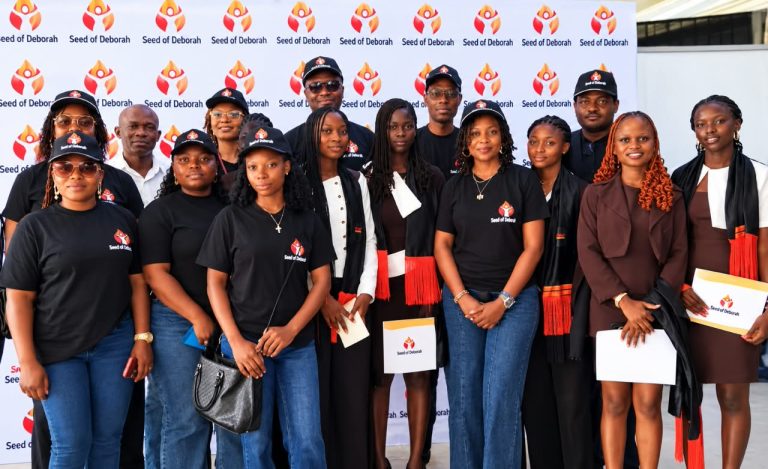
The Seed of Deborah (SoD), a non-governmental organisation committed to supporting vulnerable children, orphans and young women, has marked its ninth anniversary with its annual back-to-school programme and the graduation of the second cohort of students trained at its vocational centre, The Dorcas’ Place.

Founder and President of Seed of Deborah, Mrs. Titilayo Isimijola, said the organisation had supported between 800 and 850 beneficiaries with school fees and other educational assistance over the past nine years.

Isimijola, who described the organisation as a seed that had grown over the years, said more than one million people could have benefited when other forms of assistance provided by the programme were taken into consideration.

She disclosed that about 112 beneficiaries were registered for this year’s back-to-school programme, with the organisation targeting about 120 beneficiaries after considering some applicants who were not initially shortlisted but were found to be in need of assistance.

According to her, the number of applications received in 2026 was overwhelming, with about 300 applications for a programme initially designed to accommodate between 100 and 120 beneficiaries.

She said the large number of applicants made the selection process difficult, as many of the applicants had genuine needs and required assistance.
Speaking on the future of Seed of Deborah, Isimijola said the organisation was trusting God to establish a tuition-free school or partner with an institution where vulnerable children could receive education without having to search for assistance from different schools.

She also said the organisation was looking forward to its 10th anniversary, with plans to expand its outreach beyond its current locations and reach vulnerable people in other states across Nigeria.

On The Dorcas’ Place, Isimijola explained that the initiative was established to provide vocational training and empowerment for teenagers and young women who needed more than educational support.

She said the second cohort had been trained for six months in different vocational skills, adding that 10 students were admitted, while six successfully completed the programme after meeting the required standards.

She expressed appreciation for the progress made by beneficiaries of the first cohort, noting that some of the graduates were already doing well in their various fields.

Earlier in her address, a member of Seed of Deborah, Kemi Bamiteko described the organisation’s nine-year journey as a seed planted in faith that had grown into a source of hope and support for vulnerable children and young women.

She said the initiative began as a monthly gathering of mothers who came together to pray for their families, but had grown into a programme reaching beneficiaries across Lagos, Ekiti, Togo and other parts of West Africa.

According to her, the organisation’s back-to-school programme had become a platform for helping vulnerable children and orphans remain in school, while The Dorcas’ Place had provided a safe environment where young women could develop their creativity, acquire vocational skills and prepare for the future.

She expressed gratitude to patrons, partners, members and other supporters who had contributed to the growth of the organisation over the years.

One of the partners, Mr. Kenneth Okoro, said he had supported Seed of Deborah for over six years because of its commitment to caring for less privileged members of society.

Okoro said the programme focused on supporting orphans and single mothers who could not adequately cater for their children, with the aim of ensuring that no child was left behind in accessing education.

He said the initiative also complemented government efforts in the education sector, stressing that government could not provide everything needed by vulnerable families.

According to him, the number of beneficiaries had continued to grow over the years, from about 20 to 40, 60 and eventually over 110 students currently receiving support.

Okoro said he hoped the organisation would attract more partners, including international non-governmental organisations, to enable it to expand its programmes.

He added that while he would welcome government support, Seed of Deborah should retain its Christian-based identity and continue to build a stronger network of local and international partners.
Another partner, who spoke on the challenges facing the organisation, said fundraising remained one of its major challenges, particularly as supporters also had families and other financial responsibilities.

He, however, noted that the organisation had consistently been able to meet its targets despite the difficulties.
He said expansion was another challenge, particularly as the organisation was extending its support beyond school fees to include vocational training in areas such as photography and fashion designing.
He added that keeping young beneficiaries focused and away from negative influences in society was also a challenge, but expressed confidence in the progress recorded so far.

He said the organisation’s long-term vision was to see Seed of Deborah become a global and international organisation.
Another partner, Dr. Babatunde Adekunle, said his decision to support the initiative was influenced by his personal experience growing up in a family with limited resources and struggling to obtain education.

Adekunle urged well-meaning Nigerians to support initiatives such as Seed of Deborah, saying collective support was necessary to give vulnerable children and young people opportunities to build better futures.

A beneficiary who has now become a partner, Fatima Ukekwe, said she was grateful to God for using Seed of Deborah to assist her and cover her shame. She said she returned today to express her gratitude because God had blessed her in return.

The six ladies who graduated from The Dorcas Place after acquiring various skills were each presented with N200,000 to support them in purchasing equipment to start or expand their businesses.

Four cops, seven villagers killed in Benue community attacks

0

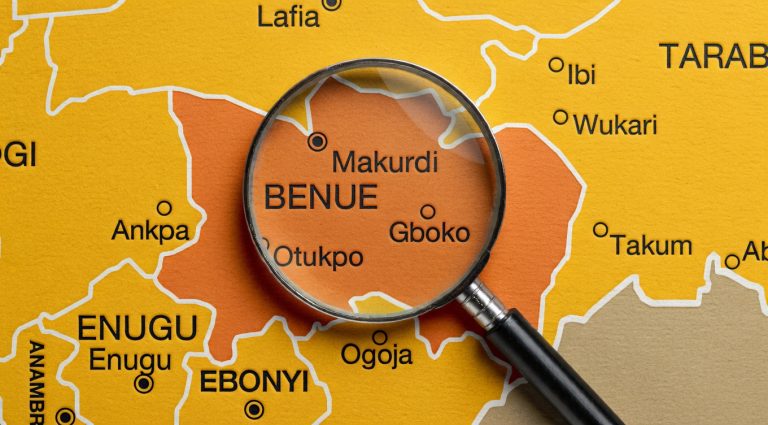
The Benue State Police Command has confirmed the killing of no fewer than 11 persons, including four mobile police officers and seven villagers, in the early hours of Friday.

The incident occurred in Ayilamo community, Tombo Ward in Logo Local Government Area of Benue State.Locals from the area said the attack on Ayilamo was unprovoked.


Ayilamo, a farming community located on Abinsi-Tyulen- Anyiin Wukari Road, has suffered severe attacks from armed bandits who attack the villagers at will.

Our correspondent also gathered that the persistent attacks on Ayilamo might not be unconnected with rumours of large mineral deposits in the community.

A resident of the community, who identified himself as Tyolumun Ugande, told newsmen that armed bandits numbering over 200 stormed Ayilamo from Amaafu Road in Taraba State and advanced towards Ayilamo shooting and burning houses.

According to him, a detachment of Mobile Policemen deployed to Ayilamo engaged the bandits who were armed with sophisticated weapons.

“The bandits invaded the community at about 2am and so, the policemen engaged them in a gun duel. After several hours of exchange of gunfire, the bandits were repelled but this morning, four lifeless bodies of Mobile Police men were found in the bush.

“We also discovered 8 bodies of residents of Ayilamo, who were killed by the bandits”, the resident said.

Another resident James Udough told newsmen on telephone in Makurdi that it was the second attack in one month that Mobile policemen deployed to Ayilamo were killed, adding that the bandits had planned to set the entire Ayilamo community ablaze.

He called on the Benue and Federal Government authorities to help secure their land and the lives of his people.

In a press statement, the Commissioner of Police in Benue State, Benue State Police Command, CP Cletus Nwadiogbu, has confirmed the attack and death of 11 persons, describing it as unfortunate.