
Home Blog Page 143

Maritime security: US govt commends Nigeria over removal of 12-year condition of entry

0

The United States Government has commended Nigeria for its sustained maritime security reforms, which culminated in the lifting of the 12-year Condition of Entry (CoE) imposed on vessels visiting the United States from Nigeria, saying the development will deliver tangible benefits to shipping operators, reduce shipping costs and strengthen trade between the two countries.

A press statement from the ministry indicated that a letter dated August 26, 2026, addressed to the Minister of Marine and Blue Economy, Adegboyega Oyetola, from the US Assistant Secretary of State for African Affairs, Frank W. Garcia Jr, formally congratulated Nigeria on the milestone, describing it as evidence of the country’s “sustained strengthening of port security and anti-terrorism compliance.”

The letter provides a fresh endorsement from Washington following the United States Coast Guard’s decision, announced in August, to lift the long-standing security restriction on vessels arriving in the United States from Nigeria.


Garcia specifically highlighted the economic significance of the decision, stating that the removal of the restriction “will reduce security-related requirements and associated costs for vessels operating between our two countries.”

According to the senior US diplomat, the change will also improve turnaround times and schedule reliability for vessels engaged in Nigeria-US trade.

The letter reads in part: “Please allow me to join you in welcoming the US Coast Guard’s decision to lift the 12-year security restriction on Nigerian-flagged vessels calling at American ports. This achievement reflects Nigeria’s sustained strengthening of port security and anti-terrorism compliance.

“We are pleased that this milestone will reduce security-related requirements and associated costs for vessels operating between our two countries. It will also improve turnaround times and schedule reliability. The United States values its maritime and economic partnerships with Nigeria and looks forward to continued collaboration promoting secure, efficient, and mutually beneficial trade between our nations.

“We appreciate the Nigerian Maritime Administration and Safety Agency’s years-long collaboration with the US Coast Guard and its continued commitment to addressing the current high threat environment. Please accept my sincere congratulations on this significant accomplishment.”

Speaking on the development, Minister Oyetola credited President Bola Ahmed Tinubu’s leadership and strategic support for the milestone, particularly the administration’s decision to prioritise the marine and blue economy as a key pillar of Nigeria’s economic transformation agenda.

The minister described the lifting of the CoE as a major achievement for Nigeria’s maritime sector and an affirmation of the progress made in strengthening maritime security and compliance.

The development also underscores the importance of the Federal Government’s sustained engagement with international maritime partners, with the Nigerian Maritime Administration and Safety Agency (NIMASA) playing a central role in the long-running collaboration with the US Coast Guard.

“With the Condition of Entry now removed, Nigerian ports are better positioned to compete for international shipping business, while shipping lines operating between Nigeria and the United States stand to benefit from lower security-related costs, fewer procedural burdens, improved turnaround times and greater schedule reliability,” Minister Oyetola added.

Archbishop Kawas: Nobody called us fake when we supported Jonathan, Obi

0

Charismatic Bishops
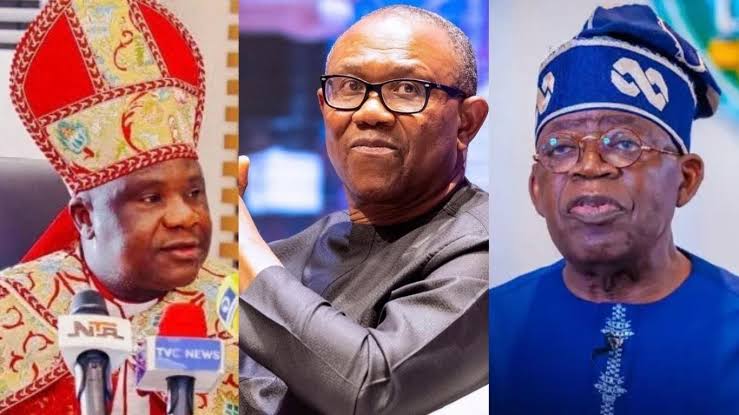
President-General of the Charismatic Bishops Conference of Nigeria (CBCN), Archbishop Leonard Bature Kawas, has defended the involvement of bishops in politics, saying he was never described as a “fake bishop” when he openly supported political leaders in the past.

Kawas spoke on ARISE News amid controversy over charismatic bishops’ decision to support President Bola Tinubu ahead of the 2027 general elections.

He said the CBCN had consistently prayed for political leaders and participated in political activities since 2010, insisting that personal interests did not drive the group’s actions.

“There is a biblical injunction that no power can exist without the approval of God Almighty. The Bible tells us to pray for the powers that be, because they’re of God,” he said.

“The Charismatic Bishops Conference have been consistent in doing that since 2010, not for any selfish interest but for the betterment of Nigeria.”

Kawas questioned why his involvement in political activities was now attracting criticism when he had engaged in similar activities during previous administrations.

He recalled how he travelled across the country to support former President Olusegun Obasanjo after some people approached him to lead prayers for the actualisation of Obasanjo’s political ambition.

“That people have come together and say that they want Obasanjo and that I should lead my group to pray for the actualization,” he said.

The cleric said he travelled through different parts of the country, sometimes at unusual hours, to campaign and mobilise support.

“I travel around this country 2 a.m. in the night, myself and others. We were around this country campaigning from church to church and nobody called me a fake bishop,” he said.

Kawas also recalled his support for another political leader who later became governor of Taraba State, saying his involvement eventually earned him an appointment as chairman of the Christian Pilgrims Welfare Board.

“I campaigned for my leader, Jolly Nyame and he became governor of my state and he appointed me chairman,” he said.

“Yes, Taraba State. He appointed me chairman, Christian Pilgrims Welfare Board and nobody called me fake then.”

He also spoke about his early support for Peter Obi’s presidential ambition, saying he accompanied the former Anambra State governor to campaign events without receiving financial assistance from him.

“I supported Peter Obi at the initial stage of his presidential ambition and went with him everywhere in Nigeria and he never gave me one dollar, one naira,” Kawas said.
He said Obi never questioned how he travelled to campaign venues or where he stayed during the trips.

“He never asked me how did I come, which hotel did I sleep, yet I did it and nobody called me fake,” he said.

Kawas added that he personally covered the transportation costs of six clergymen who accompanied him to some of Obi’s campaign events.

“He would just see me at the campaign, we would pray for him, I would pay the transportation of six clergymen, we would come there and support him,” he said.

The archbishop also cited his involvement in the political rise of former President Goodluck Jonathan.

He said he began supporting Jonathan when he was deputy governor of Bayelsa State and publicly expressed his belief that Jonathan would eventually reach the presidency.

“So during Goodluck Jonathan, I started supporting Goodluck Jonathan as deputy governor of Bayelsa State and I was one of the people that prophesied that we would see him in Abuja,” Kawas said.

According to him, Jonathan later became vice-president and subsequently president following the death of President Umaru Musa Yar’Adua and the invocation of the doctrine of necessity.

“And he came to Abuja and he became vice president and then president from the doctrine of necessity and then he won the election,” he said.

Kawas said he later served on Jonathan’s presidential campaign council, describing himself as the only bishop on the council.

“I was in his presidential campaign council. I was the only bishop in Goodluck Jonathan’s presidential campaign council and I took campaign everywhere,” he said.

“Nobody called me fake.”

Against this background, Kawas questioned why his political activities had suddenly become grounds for questioning his status as a bishop.

“Is it now because I have prayed and God has led me that it is tenable that I suddenly now become fake?” he asked.

The CBCN president-general maintained that his participation in political affairs should not be interpreted as evidence of personal gain, arguing that religious leaders have a responsibility to pray for those in authority and contribute to the country’s development.

Peter Obi is my boss – Datti Baba-Ahmed clarifies controversial remarks

0

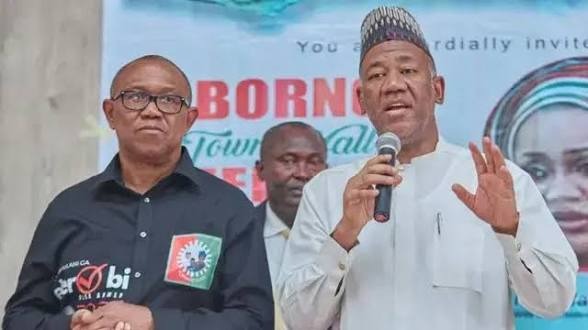
Former Labour Party vice-presidential candidate Datti Baba-Ahmed has moved to clarify his recent comments about Peter Obi, insisting that his political assessment of the former Anambra State governor does not mean their relationship has broken down.

Baba-Ahmed said Obi remains someone he respects and continues to regard as his “boss”, despite the two politicians no longer belonging to the same political party.

He made the clarification during an appearance on the Naija Unfiltered Podcast while responding to the controversy generated by his earlier comments on the 2027 presidential race.

According to Baba-Ahmed, his relationship with Obi remains cordial and he can still reach the former governor directly whenever necessary.

“In reality, if you check what is between me and Peter Obi, and coming to the clarifications now, let me tell you: first and foremost, Obi is my boss. I still call him my boss,” he said.

Baba-Ahmed said their personal connection had remained strong despite their political differences.

He noted that he could call Obi directly and expect him to answer his phone, adding that the former governor would recognise him as a brother.

“If not because I don’t like acting, I could call Peter Obi now and on the second or third ring, he will answer. Hey, my brother Datti,” Baba-Ahmed said.

He also brought up the recent confrontation involving Obi’s convoy in Benue State.

Obi had travelled to the state as part of a humanitarian visit and was reportedly prevented by thugs from proceeding to Yelwata.

Baba-Ahmed suggested that Obi could have contacted him during the situation, saying he was in a position to offer assistance.

“Sir, what happened in Benue? Why didn’t you call me in Benue?” he said, illustrating what he would have asked Obi.

He further stated that Obi was aware of his willingness and ability to assist.

“He knows I could have helped out in Benue, even where he is now. He knows I could have helped out in Benue. My relationship with Peter is solid,” he added.

The comments came after Baba-Ahmed faced criticism over an earlier interview with Seun Okinbaloye on the Mic On Podcast.

During that interview, he argued that President Bola Tinubu should leave office and expressed doubts about the ability of the major politicians seeking to succeed him in 2027 to transform the country.

Asked specifically whether his assessment also covered Obi, his former running mate in the 2023 presidential election, Baba-Ahmed answered in the affirmative.

“Yes, including Peter Obi,” he said.

The statement sparked reactions from supporters of Obi, with some questioning the former vice-presidential candidate’s criticism of a politician with whom he jointly contested the 2023 election.

Baba-Ahmed’s latest comments, however, indicate that his criticism was directed at Obi’s political capacity and should not be interpreted as a personal disagreement between the two men.

He maintained that despite their different political paths, he still considers Obi his boss and described their relationship as “solid”.

Sun

2027: INEC releases final list of presidential, NASS candidates

0


…Clears Tinubu, Obi, Atiku, 15 others to participate

The Independent National Electoral Commission (INEC) on Saturday, released the final lists of the presidential candidates, clearing President Bola Tinubu, of the All Progressives Congress (APC); Peter Obi of the Nigeria Democratic Congress (NDC) and their African Democratic Congress (ADC) counterpart, Atiku Abubakar, to participate in next year’s presidential election.

INEC, in the documents entitled: “Presidential and National Assembly Elections for January, 2027, signed by Rose Oriaran-Anthony, Secretary of the Commission, disclosed that no fewer than 18 political parties fielded presidential and vice presidential candidates for the January 16 poll.

According to the document, other presidential candidates the commission gave the nod to contest include: Rufai Adekunle of AA; Abbas-Bin Aliyu of ADP; Yusuf Kabiru of APP; Sowore Omoyele of African Action Congress (AAC); Oyo State governor, Makinde Oluseyi of APM; Adenuga Sunday of BP; Adebisi Moses Olusola of DLA; Okereke Sunday of Labour Party (LP) and Onor Sandy of the Peoples Democratic Party (PDP).

The electoral umpire equally revealed that it also cleared Duke Donald of the PRP; Adebayo Adewole Ebenezer of the SDP; Agada Peter Adakey of YPP and Nwanyanwu Daniel of the Zenith Labour Party (ZLP).

In terms of age statistics, the youngest presidential candidate, according to the INEC’s document, is Moses Olusoji Adebisi of the Democratic Labour Alliance (DLA), who is 35 years old; Nkem Esther Okereke of the National Rescue Movement (NRM), 43; Sunday Chibuzo Okereke of the LP, 43; and Abbas-Bin Aliyu of the Action Democratic Party (ADP), 44; Rufai Adekunle Omo-Aje of AA is 71, while Yusuf Kabiru of the APP is 54.

In the comprehensive list of the senatorial and House of Representatives candidates, majority of the notable names like the Principal officers of the National Assembly and other such names as Comrade Adams Oshiomhole, the incumbent governor of Imo State, Hope Uzodimma, among many others were equally cleared to participate in the legislative election.

In Kogi State, for example, the contest will be very fierce as the immediate past governor, Yahaya Bello, will be squaring it up with no fewer than 12 candidates, including the incumbent senator, Akpoti Uduaghan Natasha Hadiza of the PDP for the Kogi Central Senatorial District ticket.

Sun

Pre-election violence: Fear spreads over political actors’ utterances, actions

0

•Opposition leaders brace up for showdown

Across the country’s political space, members of the opposition are worried that that the pattern of pre-election violence and inflammatory rhetoric that has marked off-cycle polls since the 2023 general election could define the 2027 contest.

The latest flashpoint of the growing concerns came on the 8th of September, 2026, when suspected thugs blocked the convoy of Nigeria Democratic Congress (NDC) presidential candidate, Mr Peter Obi along the Gboko federal highway in Benue State. His convoy was pelted with stones and the motorcade was forced to turn back.

The Benue State Government denied any involvement and described the allegations against it as being behind the mayhem as unfounded. A faction of the state APC demanded that Governor Hyacinth Alia apologise.

Oyo State Governor Seyi Makinde accused the ruling party of resorting to intimidation, and African Action Congress (AAC) candidate Omoyele Sowore said video evidence pointed to state sponsorship.

Commentators and political pundits have argued since then that the Benue incident is not isolated. They argue that it fits a sequence that began barely nine months after the 2023 presidential election.

In the November 2023 off-cycle governorship polls in Bayelsa, Imo and Kogi, a thug was shot dead by soldiers while attempting to snatch a ballot box in Anyigba, Kogi, with a similar attempt recorded in Ajaokuta.

The Economic and Financial Crimes Commission (EFCC) arrested 14 suspected vote buyers on election day alone. Yiaga Africa’s parallel observation later confirmed 19 separate violent incidents in that single contest.

Ten months later, in the September 2024 Edo governorship election, armed men snatched a ballot box in Owan West, voting was disrupted in Ikoro community in Ovia North East, and a serving police officer was shot dead by thugs later identified by the Inspector-General of Police as loyal to the APC, according to then-governor Godwin Obaseki. Months after the result, thugs invaded the Edo State High Court during tribunal pre-hearing sessions.

In November 2024, Ondo recorded sporadic gunfire in Akure the night before voting. There were attacks on six PDP members in Idanre, and there was also ballot box snatching on election day.

The November 2025 Anambra governorship election took place against what the CLEEN Foundation described as the most violent pre-election climate the state had seen in years. A security threat assessment recorded more than 200 lives lost to politically or ideologically motivated violence in Anambra since 2022, including 14 confirmed political assassinations between 2022 and 2024, with Ihiala accounting for the largest share.

On election day, thugs in Independent National Electoral Commission (INEC) vests disrupted voting in Anaocha and injured an NYSC member and a Yiaga Africa observer in Ihiala.

The 2023 general election itself claimed about 234 lives across different phases, according to available conflict trackers, with 67 deaths before the vote – 153 during voting and collation, and 14 afterwards. Subsequent off-cycle polls have added further casualties and disruptions.

Broader violence figures show Nigeria lost thousands more lives annually to banditry, farmer-herder clashes and other conflicts, creating an environment in which political actors operate with heightened tension.

Political observers have noted that when physical attacks combine with threatening language, the cumulative effect is a climate of fear that discourages free campaigning and voter participation.

In Borno, Commissioner for Youth and Sports Development Saina Buba, speaking at a Tinubu support group event, said whoever showed them a finger would have that finger cut off or broken, and that those who followed the government would enjoy honey while those who refused would be flogged.

He later insisted that the comments were directed at internal party dissenters and were figurative, while maintaining there was effectively no opposition in Borno.

In Ebonyi, Governor Francis Nwifuru ordered newly sworn-in local government chairmen to “deal with opposition parties mercilessly” ahead of 2027, a directive that drew sharp condemnation from the PDP as reckless and inflammatory.

In the Federal Capital Territory, Kuje Area Council Chairman Samuel Danjuma Shekwolo declared that residents must support the APC or leave the council, linking the demand to development projects under President Tinubu and FCT Minister Nyesom Wike.

He later said the remarks were taken out of context and made only to party loyalists, but opposition parties and the National Human Rights Commission called for his arrest and prosecution, describing the statement as a threat of forced displacement.

In Edo, Governor Monday Okpebholo, addressing supporters, declared that there was a new sheriff in town and that Peter Obi could not enter the state without informing him first, warning that Obi’s security could not be guaranteed otherwise and that whatever happened to him would be his own responsibility.

Senior lawyers, including former Nigerian Bar Association National Publicity Secretary Kunle Edun, condemned the remarks as a breach of the governor’s oath of office.

FCT Minister Nyesom Wike has repeatedly described the opposition as crippled and depleted. He insisted that the 2027 contest would be the easiest for President Tinubu, and that if Tinubu lost he would be the first politician hunted by Atiku Abubakar and Peter Obi.

The physical incidents and the verbal escalations have produced a widespread perception that space for opposition activity is shrinking. Northern Elders Forum figures have warned of regional reckoning if grievances are not addressed, while the Coalition of United Political Parties has spoken of democracy under siege. The APC has dismissed such warnings as the product of aggrieved politicians.

Senator Seriake Dickson, National Leader of the NDC, addressed the Benue episode directly in an interview on Wednesday night. He described the blockade as criminal rascality of the highest order and said it sent a dangerous signal at a time when campaigns had officially begun.

No Nigerian, he argued, needs anyone’s permission to visit a state, least of all a presidential candidate on a humanitarian visit. Dickson warned that failure to investigate thoroughly and prosecute those responsible, including any officials found complicit, could normalise the use of armed mobs to keep opposition politicians out of entire states.

He said the Nigerian political class was committing class suicide by refusing to commit fully to free and credible elections. Arrests alone, he insisted, were not enough; the public needed to see the outcome of investigations and the prosecution of sponsors.

Observers have noted that the combination of documented violence in successive elections since 2023 and the recent wave of unguarded statements has created genuine apprehension that 2027 could follow the same pattern unless security agencies, INEC and party leaders act decisively to reverse the trend.

Sun

Suspected ‌‍alcohol poisoning: Ondo govt confirms 29 deaths, 60 cases

0

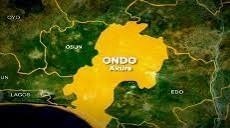
Government has confirmed the death of 29 people from suspected poisoning linked to the consumption of alcoholic substances in Odigbo Local Government Area.

The Commissioner for Health, Dr. Banji Ajaka, who disclosed this on Friday night in Akure, said that there were 60 suspected cases from the incident.

He explained that three people were currently on admission in hospitals, while 27 others remain under medical observation.

Ajaka said 95 per cent of those affected were males aged between 16 and 55, with cases recorded mainly in Orita Odigbo, Araromi-Obu, Newtown, Odole, Okele and Oniparaga communities.

Some residents of the affected communities reportedly fell ill after consuming substances suspected to be herbal alcoholic drinks.

The commissioner explained that the symptoms included headache, body pain, weakness, visual disturbance, difficulty in breathing and altered consciousness, with some patients deteriorating rapidly.

“The pattern of illness and reported history of exposure have raised strong epidemiological suspicion of exposure to a probable toxic alcoholic substance.

“However, we are yet to have laboratory evidence of the cause of the deaths,” he said.

The commissioner said 36 blood and urine samples had been collected for laboratory analysis, while samples of suspected alcoholic substances had also been submitted for toxicological investigations.

He said the investigation was being conducted in collaboration with relevant regulatory and security agencies, adding that several suspects had been taken into custody.

Ajaka said the state government had imposed a temporary ban on the production and sale of locally brewed alcoholic and alcoholic herbal beverages in the affected local government area.

He urged residents to avoid alcoholic products from unlicensed sources and immediately seek medical attention if they develop blurred vision, breathing difficulty, sudden weakness, confusion or loss of consciousness after consuming alcohol.

The commissioner also appealed to residents and community leaders to report unusual illnesses and sudden deaths promptly to health authorities.

He assured the public that government was working with national and international partners to identify the cause of the deaths and prevent further loss of lives.

Sun

Fayemi: Public office too serious for people without fear of God

0

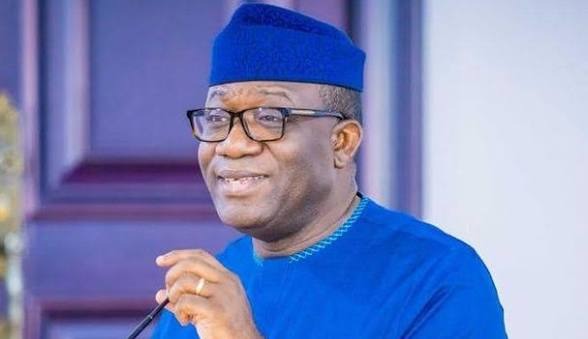
Former Ekiti State Governor, Kayode Fayemi, has urged Nigerian Catholics to become more involved in politics, warning that withdrawing from public affairs could allow individuals without strong principles to take control of government.

Fayemi made the call on Saturday while speaking at the plenary session of the Catholic Bishops Conference of Nigeria (CBCN) at Our Lady and St. Kizito Pastoral Centre, Oke-Gada, Ede, Osun State.

The former governor, who spoke on the theme, ‘Faith in Action: Empowering the Catholic Laity for Active Political Participation Ahead of the 2027 General Elections’, said Christians should not allow the perception of politics as a corrupt or “dirty” profession to keep them away from governance.


He argued that the teachings of the Catholic Church require its members to contribute to the social and political development of society.

According to Fayemi, people of faith should take their values into public service and work towards a political system that promotes justice, accountability, peace and the welfare of citizens.

“Public office is too serious to be left to people who have no fear of God. When serious Catholics committed to the ideals of social justice and the common good turn away from politics, we open the door for unprincipled opportunists to take power,” he said.

Fayemi stressed that political participation should go beyond casting ballots during elections.

He listed contesting for elective positions, joining political parties, monitoring elections, educating voters and demanding accountability from elected representatives as other ways citizens could contribute to the democratic process.

The former governor also cautioned Catholics against allowing ethnic considerations, religious sentiments, financial interests, political patronage or unquestioning allegiance to political parties to influence their decisions during the 2027 elections.

Instead, he advised voters to examine candidates and their proposed policies based on issues such as human dignity, justice, security, peace, development and the common good.

Fayemi further encouraged eligible voters to register, obtain their Permanent Voter Cards and participate actively in voter education and election monitoring.

He said citizens should also play a role in protecting democratic institutions and ensuring that electoral processes remain credible.

The former governor called on the Catholic Church to strengthen political education among its members, particularly those interested in seeking public office.

He said encouraging Catholics to participate in politics would not be enough without giving them the knowledge and skills required to serve effectively.

Fayemi proposed structured training covering areas such as Catholic social teaching, constitutional provisions, electoral regulations, democratic governance, leadership ethics, public policy, human rights, media literacy and election monitoring.

He also urged the Catholic Youth Organisation of Nigeria (CYON) to organise programmes that would equip young people with knowledge about vote buying, voter apathy and electoral violence ahead of the 2027 elections.

Sun

NDCCITMA will not succumb to cheap blackmail over its own trademark

0

– Summit opens Tuesday September 15 in Port Harcourt

The Niger Delta Chamber of Commerce, Industry, Trade Mines and Agriculture (NDCCITMA) hereby firmly reject insinuations and claims that it appropriated the idea of the “Niger Delta Economic & Investment Summit (NDEIS)” from Mr. Kunle Nwiwa Junior, describing the allegations as cheap blackmail, misleading, mischievous, provocative and a misrepresentation of the facts.

For the avoidance of doubt, NDCCITMA applied for and received a Trademark Acceptance Letter for the name “Niger Delta Economic & Investment Summit (NDEIS)” in August 2025, under File No. NG/TM/O/2025/387284, after following the appropriate regulatory process.

NDCCITMA therefore rejects any suggestion that it copied, appropriated or relied upon another party’s pending application in adopting the name and developing the Summit.

The chronology of events does not support the claims being circulated by Mr. Nwiwa Junior. While his application was reportedly still pending before the relevant authorities in September 2025, NDCCITMA had already commenced and completed its own application process and obtained its Trademark Acceptance Letter in August 2025.

Furthermore, the expression “Economic Summit” is a generic and widely used description for platforms through which governments, investors, businesses, development institutions, professionals and other stakeholders deliberate on economic policy, investment opportunities and development priorities.

The use of such terminology, in itself, does not confer exclusive ownership of the underlying concept on any individual or organisation. A concept must also be distinguished from legally protected intellectual property rights, including a duly registered trademark or other enforceable proprietary rights.

NDCCITMA is also aware of ongoing legal proceedings concerning the dispute. The matter is currently before the courts, with September 22, 2026 fixed for further hearing. In Suit No. FHC/PHC/CS/57/2026, filed by NDCCITMA at the Federal High Court, Port Harcourt, the Honourable Justice Stephen Dalyop Pam granted an interim injunction restraining the defendants, Mr. Kunle Nwiwa Junior and Keneva Consult Ltd., from further interfering with the planned Summit by NDCCITMA.

The order further directed the defendants to take down and remove statements allegedly made against the integrity, name, activities and reputation of the Plaintiff/Applicant in publications, circulars, notices, petitions, social-media publications, correspondence or directives, pending the hearing and determination of the Applicant’s Motion for Interlocutory Injunction.

There is, therefore, no court order stopping the Niger Delta Economic & Investment Summit scheduled for September 15 – 17, 2026. NDCCITMA considers any attempt to create the contrary impression through media publications or other channels to be misleading and an attempt to interfere with the lawful activities of the Chamber.

NDCCITMA further states that it has on record a previous demand attributed to Mr. Nwiwa Junior for ₦500,000,000 (Five Hundred Million Naira) as a condition for abandoning his claim. The Chamber states unequivocally that the demand was rejected.

NDCCITMA also states that, following what it regarded as repeated harassment and threats directed at its officials, it petitioned the Inspector-General of Police for appropriate intervention, including inviting Mr. Nwiwa Junior for questioning and caution.

The Chamber remains committed to allowing the courts and appropriate authorities to determine all outstanding issues while it continues to conduct its affairs. NDCCITMA remains focused on its mandate of promoting commerce, industry, trade, agriculture, investment and sustainable economic development across the Niger Delta region.

Meanwhile, the much-awaited 2026 Niger Delta Economic & Investment Summit will be declared open by His Excellency President Bola Ahemed Tinubu, GCFR on Tuesday September 15 2026 at the Obi Wali Conference Centre, Port Harcourt,Rivers State. The theme of the summit is, “Driving Investment, Innovation & Industrial Growth in the Niger Delta.”

Signed:

Management, Niger Delta Chamber of Commerce, Industry, Trade, Mines and Agriculture (NDDCITMA)

My Desk Is Enough: What Achebe’s Things Fall Apart Teaches Us About the Sundiata Post Model

0


By Max Amuchie | The Sunday Stew

There are ideas that begin in institutions.

There are ideas that begin in universities, think tanks, laboratories and conference rooms, surrounded by shelves of books and the reassuring architecture of intellectual authority.

And then there are ideas that begin at a desk.

A desk can be ordinary furniture. It can also be a place from which a person decides that the world does not have to remain exactly as it was handed to him.

In the concluding part of my treatise on the Sundiata Post Model, published through The Sunday Stew and as a working paper on scholarly platforms, I wrote: “From my desk at the Sundiata Post, Abuja, I release these ideas—the Sundiata Post Model—into the world.”

I did not mean it merely as a description of where the manuscript was written. It was a statement about origin. It was also, perhaps unintentionally, a statement about power.

For too long, the geography of knowledge production has been organised around a familiar hierarchy: some places are imagined as centres from which concepts emerge, while others are treated primarily as the periphery from where empirical material is gathered.

The centre provides the theory. The periphery provides the case study. The centre names the problem. The periphery supplies the evidence. And Africa, too often, has occupied the latter position.

But what happens when the desk in Abuja becomes a place from which ideas are not merely received or applied, but produced?

That question became especially vivid after the publication and archiving of the Three-Month Sprint and the Sundiata Post Model across leading international scholarly repositories and research platforms. What began at a desk in Abuja had entered the permanent scholarly record and, from there, the wider world. It was that movement—from desk to archive to world—that prompted this reflection.

That is also where Chinua Achebe becomes useful. Not because Achebe influenced the formation of the Sundiata Post Model. He did not. The intellectual genealogy of the SPM runs through a different philosophical triad: Sigmund Freud, Edward Said and Antonio Gramsci.

Achebe belongs to the interrogation that comes afterwards. He gives us a powerful African literary lens through which to ask what intellectual sovereignty looks like when an African writer decides that his world does not have to wait for somebody elsewhere to explain it.

The Story That Is Told About You

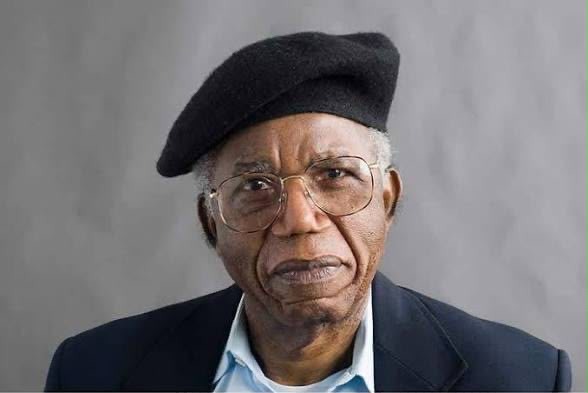
When Things Fall Apart appeared in 1958, Achebe was not simply writing another novel about Africa. He was doing something more consequential.

He was taking an African world that had frequently been represented from outside and placing that world inside its own narrative centre.

The significance is not merely that Achebe wrote about Igbo society. It is that he allowed Igbo society to speak, reason, organise, worship, trade, argue, love, fear and suffer on its own terms.

The village was no longer merely a setting. It became a world.

Its people were no longer background figures in somebody else’s story. They became subjects.

Its proverbs were not decorative curiosities. They carried a philosophy. Its institutions were not signs of an absence of civilisation. They were institutions.

Achebe therefore did something larger than tell a story. He altered the direction of the narrative gaze.

The colonial world had often looked at Africa. Achebe made Africa look back.

The District Commissioner’s Book

There is a revealing moment near the end of Things Fall Apart. The District Commissioner imagines writing a book about the people whose lives he has encountered. Even Okonkwo’s complicated existence can, in his imagination, become material for a few paragraphs in a colonial account.

The irony is profound.

A man’s entire life can be reduced to a paragraph by someone who believes he possesses the authority to describe the world.

Achebe’s novel quietly overturns that hierarchy. The District Commissioner thinks he can write the African story. Achebe writes the African world.

That distinction is important because the struggle over representation is ultimately a struggle over who possesses the authority to name reality.

And that question extends far beyond literature. It belongs to journalism, scholarship, policy and the production of knowledge itself.

The Desk as Centre

This is where my desk enters the story. Not because my desk is comparable to Achebe’s in literary consequence. That would be absurd. The point is conceptual.

Achebe demonstrated that a writer sitting in Nigeria could produce a work through which Nigeria would not merely be observed by the world; it would speak to the world.

The direction of intellectual traffic could be reversed. That is the inversion, and it is this inversion that I find useful in thinking about the Sundiata Post Model.

Too often, African realities become empirical material for theories whose conceptual centres lie elsewhere.

Africa becomes the case. Africa becomes the field site. Africa becomes the data. Africa becomes the problem.

But what if the African institution that encounters the problem also develops the concepts through which the problem can be understood?

That is how the constructs —The Insecurity Triad, Trinity of Sovereignty Decay and the Decoupling Sovereignty Index — came about, and that is the question underneath the SPM.

The desk in Abuja is no longer imagined as a peripheral desk waiting for theory. It becomes, in the SPM’s conception, a centre from which theory can be produced and released into the world.

This is not a claim about geography. It is a claim about epistemic position. The geography has not changed. The epistemic position has.

A desk becomes a centre when it becomes a point of origin for knowledge.

From the Newsroom to the Knowledge Institution

This is what distinguishes the SPM from an argument that journalism should simply become more analytical. That would not be enough.

The proposition is more institutional.

The SPM asks what happens when a newsroom deliberately integrates journalism, original research, conceptual innovation, knowledge governance, institutional memory and scholarly dissemination within one architecture.

The newsroom does not cease to be a newsroom. It becomes more than a newsroom.

The SPM therefore develops structures for doing this: the Dual Engine Architecture, with Media Operations and Knowledge Operations functioning as mutually reinforcing components; the Realm of the Long Term, built around seven pillars intended to move an institution beyond immediate survival towards stewardship; and a conception of success that moves through Operational Success, Institutional Success, Civilisational Success and, ultimately, Legacy.

There are also concepts that emerged through the research including the Money–Land–Mind dynamic, Institutional Mirage, Shadow Order, Sovereign Decoupling and the Architecture of Resurrection.

These are not isolated ornaments.

They demonstrate the central proposition:

A newsroom can produce concepts.

And when it produces concepts systematically, it begins to occupy a different position in the knowledge ecosystem.

The Newsroom That Explains Itself

Journalism has traditionally been understood principally as a transmission system.

Something happens. The journalist observes, verifies and reports. The audience receives.

That function remains indispensable. But it does not exhaust what journalism can become.

What if the newsroom also asks: What concept explains what we are observing? What framework can organise the evidence? What new vocabulary is required? What institutional memory should be preserved so that knowledge does not disappear with the journalist who produced it? How can the work move from the news cycle into the permanent knowledge ecosystem?

Those questions turn the newsroom into a site of knowledge production.

That is the institutional proposition at the heart of the SPM.

This is where the difference between information and knowledge becomes important. Information tells us what happened. Knowledge asks what it means, how it connects, what patterns it reveals, what concepts can explain those patterns, and what future inquiry might be built upon them.

The newsroom can therefore become both observer and theorist. Not theorist instead of journalist. Theorist because it remains deeply engaged with reality.

Intellectual Sovereignty

This is also why Achebe’s work offers such a useful lens.

Intellectual sovereignty does not mean intellectual isolation. It does not mean rejecting ideas produced elsewhere.

It is the ability to enter the global conversation without surrendering the authority to produce one’s own ideas.

Achebe did not need to reject the world to write Things Fall Apart. He entered the world by bringing his own world into it.

The SPM makes a related proposition.

An African newsroom does not have to choose between being locally grounded and globally relevant. It can be both. Indeed, its local grounding can become the source of its global contribution.

The strongest contribution an institution can make to global knowledge is not necessarily to imitate the intellectual centre. It may be to bring something the centre cannot see from where it stands.

The world does not need another newsroom trying to sound like every other newsroom. It needs institutions capable of seeing reality from different locations and turning those observations into durable knowledge.

From The Sunday Stew to the Archive

There is a curious journey behind the SPM. It did not begin as a conventional academic project. It emerged through journalism. Through ‘The Sunday Stew’. Through sustained observation. Through conceptual experimentation. Through the gradual discovery that individual columns were beginning to connect into larger structures.

The three constructs emerged. The Sundiata Post Intelligence Unit (SPIU) emerged.

And eventually the Sundiata Post Model itself emerged as an attempt to explain not simply what had been produced, but how an institution could deliberately produce such knowledge.

That distinction is crucial.

The SPM is therefore not merely a theory about journalism. It is also an attempt at institutional self-understanding.

The Archive, the Discovery

This is why repositories matter.

The movement of an idea from a desk into SSRN, Zenodo, Harvard Dataverse, SSOAR, Mendeley Data, Figshare and other permanent platforms is not merely administrative. It changes the temporal life of the work.

A newspaper article belongs to the news cycle. An archived research work enters a different temporal order. It can be found. It can be cited. It can be challenged. It can be extended. It can be rediscovered years after the author has moved on.

That is the archive. But there is also the discovery layer — ResearchGate, Google Scholar, Academia.edu — where the world encounters what the archive preserves. The archive ensures the work survives. The discovery layer ensures the world can find it.

Together, they complete the movement: from desk to archive to world.

The World Gets the Final Word

There is another reason the final phrase matters:

“I release these ideas – the Sundiata Post Model – into the world.”

Once released, an idea belongs to a larger intellectual environment. Scholars can question it. Journalists can test it. Practitioners can apply it. Critics can attack it.

Intellectual sovereignty does not mean intellectual immunity.

The sovereign thinker is not the thinker who cannot be challenged. It is the thinker who possesses the confidence to produce, the discipline to preserve, and the humility to submit what has been produced to the judgment of others.

The desk is the point of origin. The institution is the mechanism of endurance. The archive is the mechanism of memory. The world is the mechanism of testing.

That is why the phrase does not celebrate the individual at the expense of the institution. It begins with the individual and ends with something larger.

And perhaps that is the deeper lesson I take from Achebe. He did not need to wait for permission to make Umuofia intellectually visible. He did not need an address at the centre to produce a work that would travel across the world.

He began where he was.

But what he began did not remain there.

It entered the world.

An idea begun at a desk in a modest newsroom in Abuja can now enter the permanent architecture of global knowledge—not merely as material gathered from the periphery, but as knowledge produced there and released into the world.

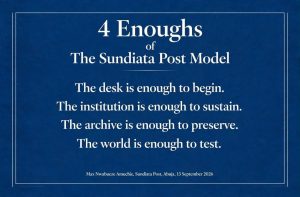
The Four Enoughs

If the Philosophical Triad of Enduring Influences explains the intellectual inheritance behind the Sundiata Post Model, the Four Enoughs express its philosophy of transmission:

The desk is enough to begin.

The institution is enough to sustain.

The archive is enough to preserve.

The world is enough to test.

The world—not Nigeria, not Africa.

That, ultimately, is what I mean when I say: My desk is enough.

Trust is sacred. Stay seasoned.

•Dr. Max Nwabueze Amuchie is Scholar-Journalist, Media CEO, Lead Researcher at Sundiata Post Intelligence Unit, and Expert Member and Peer Reviewer at ScienceOpen.

X @MaxAmuchie

Obi, Makinde and Hurdles Against Opposition Coalition

0


By Tunde Rahman

A fresh thaw in relations between National Democratic Congress presidential candidate Mr Peter Obi and Oyo State Governor Mr Seyi Makinde is fueling renewed talk of a possible opposition coalition to challenge President Bola Tinubu in 2027.

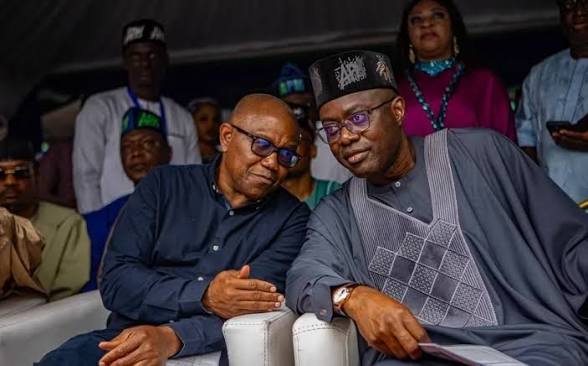
The two leaders, who were on opposite sides during the 2023 election cycle, were seen together recently at a private meeting in Ibadan, Oyo State capital, followed by joint appearances at public events including the inauguration of the Allied People’s Movement Presidential Campaign Office in Abuja last Monday. That campaign office belongs to Governor Makinde, a candidate in the race for the 2027 presidency on the APM platform.

The Obi-Makinde rapprochement comes after a plan by G-100, an amorphous group of opposition stakeholders advocating a united opposition front.
Obi’s appearance at the inauguration of Makinde’s campaign office may be seen as raising the stakes in that plan. It was the first time in recent memory that a presidential candidate would appear at the opening of a campaign office of a rival candidate. Do the two have a working alliance, or is this just make-believe? Sources close to both camps say their discussions centred on “national interest, governance, and 2027 permutations.”

In 2023, Makinde, then a PDP chieftain, was part of the influential G-5 governors who worked against the then Peoples Democratic Party’s presidential candidate, former Vice President Atiku Abubakar, while Obi led the Labour Party’s surprise third-force movement. Their paths diverged sharply on that 2023 campaign trail.

But with four months to the January 16, 2027 presidential election, are the political realities forcing a rethink?
The answer to the foregoing may only be conjectural. The big question, however, is whether opposition leaders can put ego aside and present a united front in 2027.

In recent months, Governor Makinde has taken a more independent posture, often criticising federal policies while also calling for opposition unity. Wracked by an internal crisis within his PDP, he moved to the Allied People’s Movement to contest on the platform. Obi, on his part, has continued to mobilise his key support base under the “Obidient” movement and has not ruled out another presidential run.

Can a potential Obi-Makinde alignment become the nucleus of a wider opposition front that may include aggrieved members of the PDP (not Wike’s PDP), Labour Party, NNPP, ADC, and other groups, along with NDC and APM? Can the seeming rapprochement move the opposition from fragmentation to coordination?

Both Obi and Makinde have downplayed talks of a formal alliance, calling it “consultations among patriots.” Whether that produces a tangible result would depend on whether Obi, Makinde, and other opposition leaders, including the African Democratic Congress Presidential Candidate, Alhaji Atiku Abubakar, can bridge personal, regional, and party differences before the election season heats up.

Beyond handshakes and meetings, does the opposition actually have the numbers, structure, and unity to pose a real threat to President Tinubu and the APC?
In my view, at least four factors are critical in deciding what happens.

The first is the incumbency advantage. President Tinubu controls the awesome federal machinery. That lever means a lot. He has many achievements under the Renewed Hope Agenda that will work in his favour: improving and stabilising the economy with key positive indicators; many legacy roads and infrastructure projects; strategic federal appointments; student loans; the CrediCorp programme; and the CNG initiative, among others.

The “Renewed Hope Agenda: from Reforms to Prosperity” narrative is built on the bet that reforms will start showing tangible results now that the economy has stabilised. Lower food inflation, foreign exchange stability, and completed infrastructure projects will be the campaign touchpoints.

The second and closely related point is that beating an incumbent in Nigeria is historically very hard. President Goodluck Jonathan, who was defeated by the APC coalition in 2015, is the only incumbent to have lost reelection in Nigeria’s history. And this was done by a coalition powered by late President Muhammadu Buhari and President Tinubu. Can the opposition reenact 2015 in 2027?

Third, party structure matters. The APC presently controls 31 states and has the largest grassroots party structure. Governors in the few other states not controlled by the party have declared support for President Tinubu’s reelection.These include Governors Chukwuma Soludo of Anambra State in APGA, Labour Party’s Alex Otti in Abia and Accord Party’s Ademola Adeleke of Osun State. Some in the opposition may scoff at this point, arguing that the people, not the governors, will decide. That still does not diminish the governors’ influence.

Lastly, the opposition’s new maths is confounding. According to them, Tinubu won the election with 37% of the vote. That is the opposition’s opening lines. They will then say: Atiku + Obi/Kwankwaso + Makinde will provide the theoretical numbers to defeat the incumbent.

Yes, in 2023, the opposition parties ran separately, splitting the anti-APC vote, thus losing out and handing President Tinubu victory. In 2027, they must run together if they hope to pull any surprise. This is easier said than done.

Indeed, four big hurdles remain for an opposition coalition at this point, which can be categorised as reality/ambition/ego, zoning, formidable structure, and trust deficit.
The reality is that Obi, Atiku, and now possibly Makinde all have presidential ambitions. They all have vaulting ambitions, and ego is now at stake. Who steps down for whom? Who gets the vice president’s slot?

And then, there is the matter of zoning. The South wants to complete its eight years after the late President Buhari’s eight years. The North will argue it’s their turn soon again, possibly in 2031. A Northern candidate at this time may be swimming against the tide. Yet a Northern candidate promising one term in 2027 may be seen as shortchanging the North. To succeed, a ticket must balance this critical issue, or it collapses.

Forging a cohesive, formidable structure at this late hour, which is a difficult task, comes in again. And for Obi and Makinde, there could also be a trust deficit. PDP and LP fought bitterly in 2023. Can party structures at the state level now integrate and work together in one day?
The Obi-Makinde alliance seems like a test. If they can agree on a framework and bring in more governors, the coalition becomes serious. If not, it remains mere optics.

The 2027 election will not be won on personalities alone. It will also be won on some kitchen-table issues, of which the APC needs to be wary.
The elephant in the room is the cost of living. If food, transport, and electricity are still perceived as high by Q4 2026, “we did the hard part” may not move much. The opposition will run on “Tinubu made life harder,” which is what they want people to believe.

Security is the other critical issue. The government and security agencies must maintain the present apparently favourable security situation. Any major security breakdown in the North or Middle Belt will be weaponised.

In the final analysis, the opposition can only pose a threat if three things happen. The first is one-ticket. That is, a consensus presidential candidate emerges now, not later. Second, if some governors defect or align, the opposition will need at least eight to ten governors to provide the structure and resources to make a big impact.
If those two things don’t happen, President Tinubu wins again, likely with a bigger margin than in 2023 as the APC consolidates and the opposition remains fragmented.

The Obi-Makinde rapprochement is not a coalition. It is a signal that opposition leaders know they lost in 2023 because they were divided. It signals that they are now testing the waters.
Whether that signal becomes a threat depends on whether they can do what Nigerian politicians have failed to do for 25 years: put country and strategy ahead of personal ambition.
President Tinubu is the favourite. But for the first time since 2023, APC may now have something to worry about.

*Rahman is Senior Special Assistant to President Tinubu on Media & Special Duties.*