Home Blog Page 126

International Day of Peace 2026: First Lady urges Nigerians to reject division, invest in peace

0

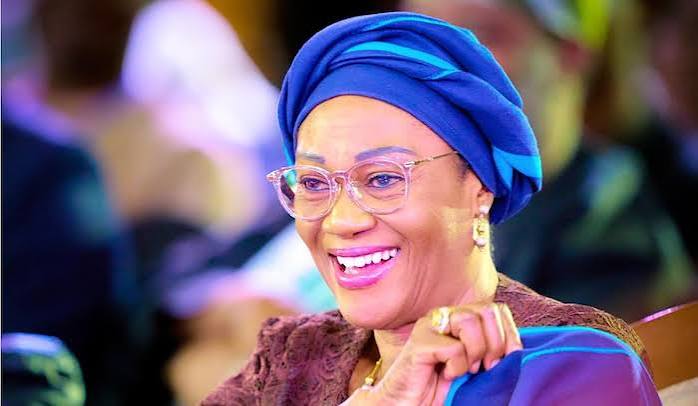
First Lady of Nigeria Oluremi Tinubu has urged citizens of the country to reject division and embrace tolerance, justice, mutual respect, and dialogue as Nigeria joins the rest of the world to mark the 2026 International Day of Peace.

Mrs Tinubu, in a message to mark the day on Monday, said lasting peace could only be achieved through the commitment and participation of everyone.

The 2026 International Day of Peace is being marked with the theme: “Invest in Peace: For Everyone, Everywhere, Every Day.”

The First Lady said peace should not be seen merely as the absence of conflict, stressing that it must be deliberately nurtured in homes, schools, workplaces and communities.

“Peace begins in our homes and extends to our schools, workplaces, and communities. It is strengthened through tolerance, patience, justice, mutual respect, and dialogue,” she said.

She called on Nigerians to shun actions and attitudes capable of deepening divisions in the country, urging citizens instead to focus on values that promote unity and peaceful coexistence.
“I encourage all Nigerians to reject division and embrace the values that unite us as one people,” she said.

According to her, Nigerians can contribute to building a peaceful society through their everyday conduct, including the words they use, the choices they make and their actions towards others.

“Let us invest in peace through our words, choices, and actions every day,” she added.

The First Lady wished Nigerians a peaceful celebration of the 2026 International Day of Peace.

Buratai thanks Tinubu, military chiefs as army book debuts

0

Buratai thanks Tinubu, military chiefs as army book debuts
Former Chief of Army Staff Lieutenant General Tukur Yusufu Buratai (retd) has expressed appreciation to President Bola Ahmed Tinubu, senior military officers, diplomats, traditional rulers, academics, and other dignitaries who supported the public presentation of a book chronicling his leadership years in the Nigerian Army.

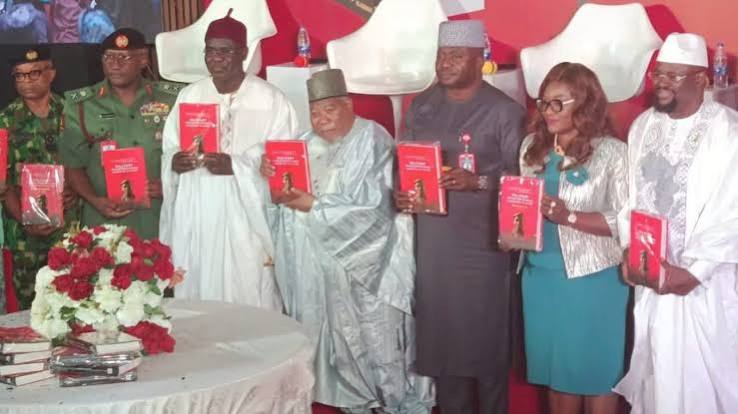
The book, Military Transformational Leadership in Action: The Buratai Era, was presented on Wednesday, 16 September 2026, at the Nigerian Army Conference Centre and Suites, Asokoro, Abuja.

Buratai, who is also a former Nigerian Ambassador to the Republic of Benin, described the event as a significant contribution to the preservation of Nigeria’s military history and institutional memory.

In a statement signed by Brigadier General Sani Kukasheka Usman (rtd), Buratai said the gathering demonstrated the importance of documenting the country’s security and military experiences for future generations.

“Their presence honoured the occasion and affirmed the importance of documenting Nigeria’s military history and institutional memory,” the statement said.

The former Army chief expressed particular gratitude to President Tinubu, who served as Special Guest of Honour, saying the President’s message, delivered by the Permanent Secretary, Political and Economic Affairs Office in the Office of the Secretary to the Government of the Federation, Mrs Bekearedebo Augusta Warrens, contributed to discussions on security, leadership and institutional memory.

He also acknowledged the support of the Secretary to the Government of the Federation, Senator George Akume, for facilitating the Federal Government’s participation.

Buratai thanked the Chairman of the occasion, Alhaji Umaru Abdul Mutallab, CON, as well as the Minister of Defence, General Christopher Gwabin Musa (rtd), OFR, who presented the book and offered what Buratai described as testimony to the leadership legacy documented in the publication.

The former Army chief also recognised the Chief of Defence Staff, General Olufemi Oluyede, and the Service Chiefs for their representation at the event.

The Service Chiefs included Lieutenant General Waidi Shaibu, Chief of Army Staff; Vice Admiral Idi Abbas, Chief of Naval Staff; and Air Marshal Sunday Kelvin Aneke, Chief of Air Staff.

According to Buratai, their participation reinforced “the continued partnership between the Armed Forces of Nigeria and the preservation of institutional memory.”

The event also featured contributions from military officers, academics, traditional rulers, diplomats and security experts.

Buratai specifically commended Major General I.D. Penap (rtd) for reviewing the book, while thanking Lieutenant General Domenico Giani (rtd), former Commander of the Vatican Gendarmerie Corps, for his address on leadership, integrity and human dignity.

He also acknowledged the Emir of Kano, His Royal Highness Muhammadu Sanusi II, for his contribution on the need for shared responsibility in national security.

Other contributors recognised included Senator Ali Ndume; Professor Phillip Dahida; Madam Amina Akano-Bello; Major General Victor Ezugwu (rtd); Major General JGK Myam (rtd), OFR, Director General of the Nigerian Army Resource Centre; and Rear Admiral Adamu Biu (rtd).

Traditional rulers, including His Royal Majesty Oba Alhaji (Dr) Hameed Oyelude Makama, Tegboosun III, the Olowu of Owu-Kuta Kingdom, Osun State, and the G12 Obas from Osun State, were also acknowledged for their presence.

The gathering equally attracted members of the diplomatic corps, including the Italian Ambassador to Nigeria, Roberto Mengoni; Sheikh Mustapha Kouyatè, President of the African Peoples Movement; General Francis A. Behanzin, Chairman and Co-Founder of the World Network of Security and Defence Professionals for the Prevention and Combating of Terrorism and former ECOWAS Commissioner for Political Affairs, Peace and Security; and Maricel Romero, Honorary Consul of Colombia to Nigeria.

Buratai praised the author of the book, Dr M.S. Abubakar, for what he described as “scholarly rigour and intellectual commitment.”

He also thanked the Institute of Security Nigeria for endorsing the publication and Nigerian academics and security researchers involved in a festschrift examining the links between defence, intelligence and statecraft.

Reflecting on the broader significance of the event, Buratai said its success could not be attributed to one individual or organisation.

“The success of the event was not the achievement of any one individual or institution. It was the result of collective effort, shared purpose, and the generosity of all who believe in the importance of preserving Nigeria’s institutional memory and learning from its history,” the statement said.

He further expressed appreciation for the goodwill, commendations and donations received before, during and after the book presentation.

According to him, the response reinforced his belief that documenting Nigeria’s institutional history remains a worthwhile national undertaking.

Buratai also commended the Buratai Legacy Presentation Committee, publishers Sprezzatura Publishing Limited and Clarivox Creative Limited, as well as journalists and other media professionals who covered the event.

He expressed hope that the lessons contained in the book would continue to contribute to the development of Nigeria and its Armed Forces.

“May the lessons documented in this work continue to guide the nation and its armed forces in the years ahead,” Buratai said.
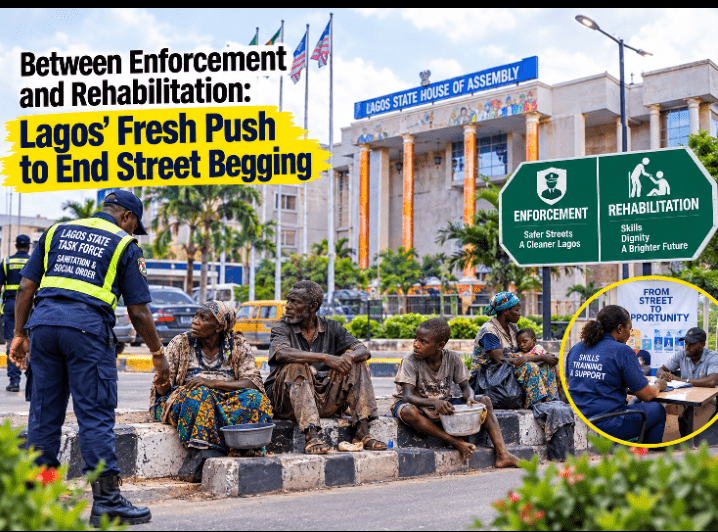
Between Enforcement and Rehabilitation: Lagos’ Fresh Push to End Street Begging

0

BY TAIWO OGUNMOLA -OMILANI

The proposed Lagos State street-begging law raises questions beyond enforcement: how the State can reclaim public spaces while protecting vulnerable people, especially children, and addressing the circumstances that push people onto the streets.


Lagos, street begging has become an increasingly familiar feature of daily life. From the Lekki-Epe corridor to Eti-Osa, Ikotun-Egbe, Abule-Egba, Mile Two and Ajegunle, beggars can be seen at roadsides, traffic intersections and road medians, often approaching motorists and pedestrians for money.

The situation formed part of the concerns raised at a recent public hearing organised by the Lagos State House of Assembly on a proposed law to prohibit street begging and street urchins in the State.

The hearing, chaired by the Chairman, House Committee on Youth, Sport and Social Development, brought together stakeholders who described the proposed legislation as long overdue. They pointed to the growing presence of beggars across different parts of the State and the challenges their activities pose to public safety, traffic and the image of Lagos as a megacity.

For many Lagosians, however, the issue is not simply about people asking for money on the streets. Stakeholders at the hearing also raised concerns about the manner in which some begging activities are carried out, particularly at night, when passers-by may allegedly be confronted or pressured to give money.

The proposed legislation seeks to establish a legal framework for addressing the problem while providing rehabilitation and welfare measures for people found begging on the streets.

Under the bill, a person or group of persons who loiter in a public or private place in a manner that obstructs traffic or causes public nuisance for the purpose of begging would commit an offence.

It also targets people who sleep, reside or establish temporary or permanent structures in public or private places for the purpose of begging, as well as groups that assemble for the purpose of begging.
But the proposed law does not stop at prohibition and punishment. A major component is the establishment of a Rehabilitation and Welfare Centre by the relevant ministry.

According to the bill, the centre would provide temporary custody for persons apprehended under the law, training and social welfare assistance. It would also offer vocational training, literacy programmes, psychological counselling and life-skills education.

This provision is significant because street begging often involves people whose circumstances may extend beyond the immediate act of asking for money. The proposed framework therefore envisages rehabilitation and reintegration alongside enforcement.

Children are given separate protection under the proposed law. Any child apprehended would be treated in accordance with the Child Rights Protection Laws and handed over to the appropriate child welfare authority in the State.

The bill also provides for collaboration with non-governmental organisations, faith-based organisations and community development structures in its implementation.

At the same time, the legislation gives enforcement officers substantial powers. The Environmental Sanitation Corps Agency would be responsible for enforcing the law, including arresting and prosecuting persons who contravene its provisions.

An authorised officer may arrest without a warrant a person found committing an offence or reasonably suspected of committing one. Items allegedly used in committing an offence may also be seized, while arrested persons are to be handed over to the police after preliminary enquiries and investigation.

The proposed penalties are graduated. A first offender would be warned and referred to the Rehabilitation and Custodial Centre. A second offender could face a fine of up to N200,000, a non-custodial sentence of up to three months, or both.

The bill, however, places safeguards around enforcement. It provides that all enforcement actions must comply with Chapter IV of the 1999 Constitution, as amended. Persons arrested must not be subjected to torture, inhuman or degrading treatment or unlawful detention.

The proposed law also provides for profiling and documentation of persons apprehended, with referrals for appropriate legal or rehabilitation processes. Both the High Court and Magistrate Court would have jurisdiction to try offences under the law.

The central question for Lagos may therefore be how effectively the proposed legislation can combine enforcement with rehabilitation.

For residents who encounter begging at busy roads and intersections, effective enforcement could mean safer and less obstructed public spaces. For vulnerable adults and children living or begging on the streets, however, the rehabilitation provisions could determine whether the law merely moves people away from the roads or actually helps them transition into more stable lives.

As the Lagos State House of Assembly considers the bill, attention will consequently extend beyond its passage to how its provisions are implemented, how enforcement officers exercise their powers, and whether the proposed rehabilitation system receives the resources required to fulfil its purpose.

For Lagosians who participated in the public hearing, the expectation is clear: a sustainable response to street begging that gives residents greater safety and breathing space while ensuring that vulnerable people, particularly children, are not simply removed from the streets without a pathway to rehabilitation and reintegration.

APC admits petrol prices hurting Nigerian families, rejects Atiku’s subsidy plan

0

* Challenges ex-VP to explain cost, legal basis of proposal

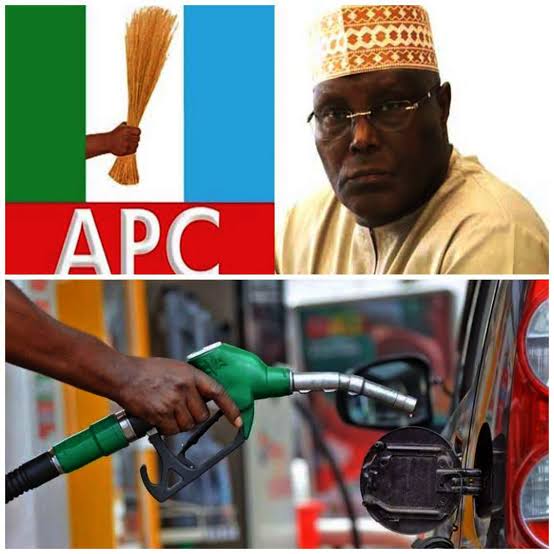
The All Progressives Congress Presidential Campaign Council (APC PCC) has admitted that rising petrol prices are hurting Nigerian families, but rejected the production subsidy proposed by African Democratic Congress (ADC) presidential candidate, Atiku Abubakar, as the solution to the mounting pressure.

The council assured Nigerians that the President Bola Tinubu administration would continue to pursue measures to ease the burden, saying petrol sold for about N830 per litre before the Middle East crisis pushed crude oil prices above $100 per barrel.

“The APC-PCC acknowledges the pressure that higher petrol prices place on Nigerian families. The Tinubu administration will continue to implement policies to support our people,” its spokesperson, Dele Alake, said in a statement.

“A de-escalation of the crisis could help reduce crude oil prices and, consequently, the pump prices of petrol and diesel, not just in Nigeria, but worldwide.”

The PCC said the Nigerian Midstream and Downstream Petroleum Regulatory Authority (NMDPRA) was working with the Federal Competition and Consumer Protection Commission (FCCPC) against alleged price gouging and with the Nigeria Customs Service to check diversion of petroleum products across the borders. It also pointed to the administration’s compressed natural gas and electric mass-transit programmes as part of efforts to provide cheaper transportation alternatives.

According to the council, more than 120,000 vehicles have been converted to CNG under the government programme, with thousands of additional conversions undertaken privately.

It said the Federal Government was working with state governments to extend the programme nationwide and recalled Tinubu’s assurance that more Nigerians should begin to see measurable reductions in transportation costs from October 1.

But even as it acknowledged the hardship caused by higher fuel prices, the APC PCC rejected Atiku’s proposed “production subsidy” for locally refined petrol, challenging him to explain how it would guarantee cheaper prices at filling stations.

Atiku has proposed government support for domestic refining as a means of reducing the cost of petrol and diesel, arguing that the intervention would differ from the previous subsidy regime built around imported petroleum products.

The APC PCC, however, said the proposal raised legal, fiscal and practical questions that Atiku needed to answer. “Atiku should therefore explain whether a refinery receiving his proposed subsidy would be required to sell petrol at a prescribed price,” Alake said.

“If the answer is yes, he should identify the legal framework under which the government would impose that price condition and explain how it would operate consistently with the Petroleum Industry Act.

“If the answer is no, he should explain how public support to refiners would guarantee lower prices at filling stations. Without an enforceable mechanism, refiners could receive the benefit while consumers continued to pay market prices.”

The council cited Section 205(1) of the Petroleum Industry Act 2021, which provides for wholesale and retail prices of petroleum products to be determined under unrestricted free-market conditions.

It also challenged Atiku to disclose how much his proposal would cost and where the money would come from.

The PCC claimed the intervention could cost between N17 trillion and N21 trillion annually, depending on the discount offered, volume covered and whether the support applied to the entire barrel or only petrol sold domestically.

It did not provide a detailed calculation in the statement establishing the estimates.

“Nigerians deserve to know: the proposed subsidy rate; the annual spending ceiling; the volume of crude or petrol to be covered; the source of funding; the mechanism guaranteeing lower pump prices; the safeguards against diversion, smuggling and fraudulent claims; and whether amendments to the Petroleum Industry Act would be required,” Alake said.

The council also questioned how Atiku’s latest proposal aligned with his previous support for downstream deregulation and removal of petrol subsidy.

It recalled that the former vice president had advocated subsidy removal during the 2023 election campaign and asked him to explain how the proposed production subsidy would avoid the alleged abuse, smuggling and fiscal losses associated with the previous system.

The APC PCC said the government would remain committed to a deregulated downstream market while pursuing alternative measures to reduce transportation costs.

It maintained that any intervention in the petroleum sector should be lawful, transparent, properly costed and capable of producing measurable benefits for consumers.

“Atiku should provide Nigerians with a detailed policy document and an independent legal and fiscal analysis of his proposal,” Alake said.

“Until he does so, his production-subsidy plan remains an uncosted promise without a clearly identified legal or operational framework.”

Obi-Kwankwaso movement fires back at NDC over 59-member campaign council

0

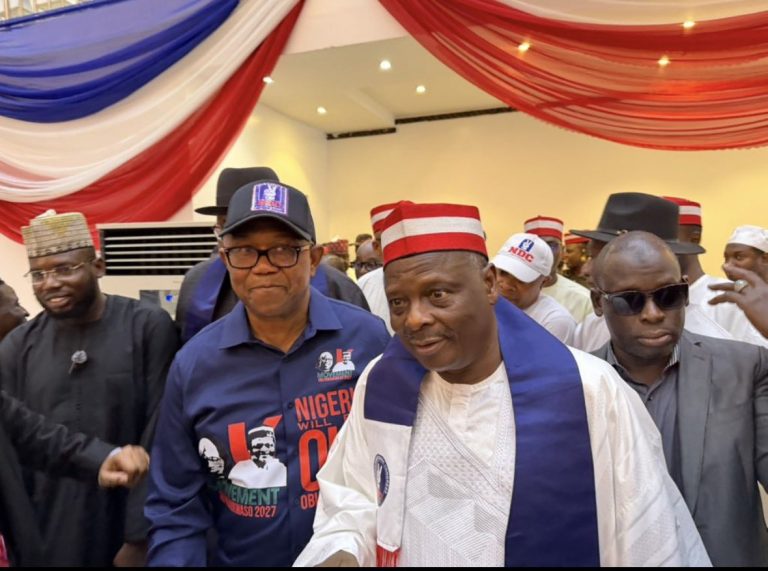
The Obi-Kwankwaso (OK) Movement has rejected the Nigeria Democratic Congress’ (NDC) position that it required the party’s approval to constitute a 59-member presidential campaign council for the 2027 election.

The movement, which supports the NDC presidential ticket of Peter Obi and Rabiu Kwankwaso, said it remained an independent organisation with its own leadership, structure and internal processes.

Its National Secretary, Saadatu Sani, made the position known in a statement on Sunday, following the NDC’s rejection of the campaign council unveiled by the group on Thursday.

The OK Movement had appointed its Director-General, John Ughulu, as Director-General of the campaign council, while Sani was named its secretary.

The 59-member structure also includes zonal and state coordinators and directors responsible for mobilisation, women’s affairs, strategy, security and legal affairs.

However, NDC National Chairman, Cleopas Moses, had dissociated the party from the council and urged the public to disregard it.

He maintained that only the party leadership could constitute and announce a presidential campaign council, while warning support groups against creating structures in the party’s name without approval from the National Working Committee.

Responding, Sani urged the NDC chairman to familiarise himself with the party’s constitution, arguing that the movement’s independence meant it did not require the personal validation or approval of any individual within the party to carry out its organisational activities.

“The OK Movement does not require the personal validation or approval of any individual before exercising its legitimate organisational functions in accordance with established processes,” she said.

Sani said the movement recognised the authority of political parties within their constitutional and statutory spheres but maintained that the OK Movement was not an organ of the NDC.

She added that it would continue to mobilise support for Obi and Kwankwaso, as well as other NDC candidates where the movement had resolved to support them.

She also said the movement was not seeking political appointments or positions within the NDC as a condition for its support, insisting that its activities were guided by its own principles and organisational objectives.

On the controversy involving Ughulu and allegations relating to the Lagos State primary, Sani said the matter required clarification and that the movement would defend its members where their integrity was questioned.

She, however, said it would not engage in personal insults or defamatory exchanges.

The OK Movement consequently demanded that Moses withdraw statements it considered defamatory and apologise to the group and Ughulu, while reaffirming that it would maintain its independence as it continues its mobilisation ahead of the 2027 election.

UNGA: Presidential aide reveals reason for Tinubu’s planned absence

0

The Senior Special Assistant to President Bola Tinubu on Foreign Affairs and Protocol, Ademola Osodi, has explained that the President’s decision to stay away from the 81st United Nations General Assembly (UNGA) is linked to his focus on domestic priorities and other international engagements.

Osodi made the clarification while appearing on Channels Television’s Sunday Politics, following the Presidency’s announcement that Vice President Kashim Shettima would represent Tinubu and lead Nigeria’s delegation to the UNGA in New York.

According to the presidential aide, Tinubu’s absence from the annual gathering should not be interpreted as a reduction in Nigeria’s diplomatic engagement or international standing.


“Nigeria has a diverse interest in all regional groups, continental groups and even groups of the South-South like the BRICS. So, the United Nations is not the only group that we are member of,” Osodi said.

He added that Tinubu was currently concentrating on issues at home, including the economy and security, while also participating in other international engagements considered important to Nigeria.

“President Tinubu is focusing on issues of domestic concerns like economy, security and even on other issues on other international forums which I believe equally is important,” he said.

Osodi maintained that Nigeria’s position and influence would not be diminished because the President would not personally attend the UNGA.

“With or without his presence there will not change Nigeria’s role as giant of Africa, the leader of the economic resurgence of Africa,” he said.

The aide also pointed out that Nigeria would have senior representation at the gathering, including the country’s Permanent Representative to the United Nations, Jimoh Ibrahim.

The Presidency had earlier announced that Shettima would head Nigeria’s delegation to the 81st UNGA, which is scheduled to hold in New York from September 22 to 28, 2026.
Osodi also rejected suggestions that Tinubu’s repeated absence from the UNGA was connected to difficulties between the Nigerian President and the United States.

He described the claim as an “old chestnut” and recalled Tinubu’s previous visits to the US.

“I was with the President when he went to the United Nations; physically I was there, you saw it on social media. He went to the stock exchange, he rang the bell, he had meetings on the side,” Osodi said.

He further recalled that Tinubu travelled through Los Angeles while on his way to Japan for an engagement with the Japanese Development Agency.

“We were in Los Angeles for few days before we flew to Yokohama, Japan. We were in America, I was there with them. So it is politics, we can talk about this every single election cycle, it is just politics,” he said.

Tinubu’s absence has nevertheless drawn criticism, with former Vice President Atiku Abubakar demanding an explanation for the President’s decision not to attend the UNGA for the third consecutive year.

Atiku, through his Senior Special Assistant on Public Communication, Phrank Shaibu, argued that although Shettima could represent Nigeria, repeated delegation could not replace the visibility and authority of the President at a major diplomatic gathering.

The former vice president also questioned reports that arrangements had been made for Tinubu to sit near US President Donald Trump during the gathering.

Osodi, however, maintained that Tinubu’s absence should not be interpreted as evidence of strained relations between Nigeria and the United States.

Adeyanju Vows to Expose Any Cover-Up in Niger Miners’ Deaths

0

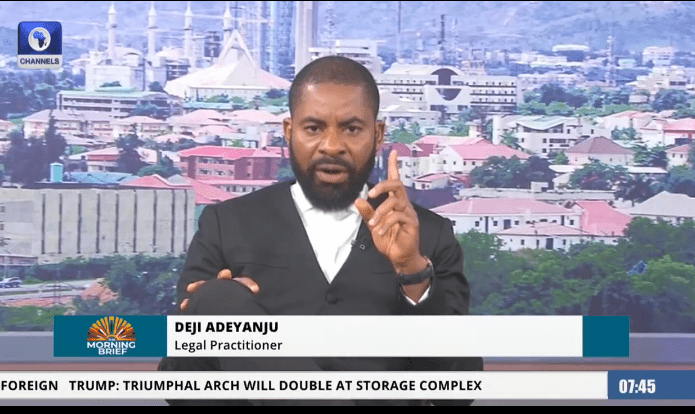
Lawyer Deji Adeyanju has vowed to expose any attempt to cover up wrongdoing in the investigation into the deaths of miners in Niger State.

Adeyanju, speaking on Channels Television on Monday morning, said he was on the committee to represent the interests of those who were brutally murdered.

“I feel that I am on that committee to serve the interests of those who have been murdered brutally and gruesomely murdered,” Adeyanju said.

“So, I am there to represent the victims, and I will make sure there is no cover-up or that nobody tries to suppress any wrongdoing; if they try to do so, I will expose them.”

LASU 10th VC, Prof. Ayodeji Badejo, Assumes Office

0

BY TAIWO OGUNMOLA -OMILANI


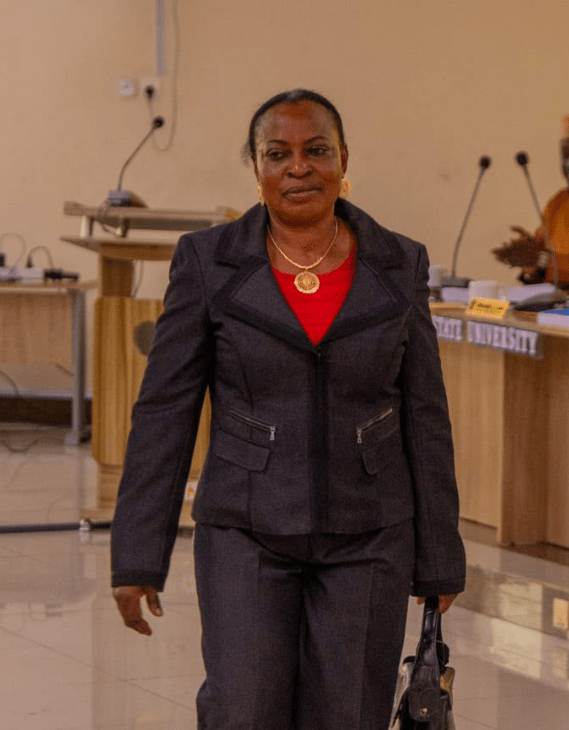
The Lagos State University (LASU) community has welcomed its 10th Substantive Vice-Chancellor, Prof. Ayodeji Badejo, as she assumes office as the Chief Executive and Academic Head of the university.

Her assumption of office marks a significant milestone in the history of the university and signals the commencement of a new administration, building on the achievements of previous administrations while charting new pathways for growth, innovation and excellence.

As Prof. Badejo takes up the mantle of leadership, the university community looks forward to her experience, vision and commitment to advancing LASU’s core mandates of teaching, research, innovation and community service.

The University Management, Senate, staff, students, alumni and other stakeholders warmly welcome the 10th Substantive Vice-Chancellor and look forward to a new chapter of purposeful leadership and continued institutional advancement.

The LASU community wished Prof. Badejo a fulfilling tenure marked by purposeful leadership, meaningful impact and remarkable accomplishments.

Tinubu Congratulates Winners of Weekend By-Elections

0

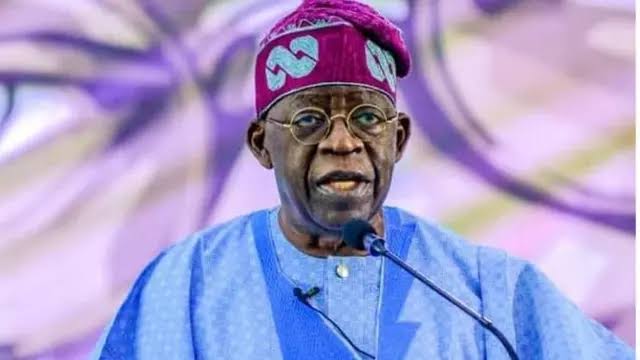
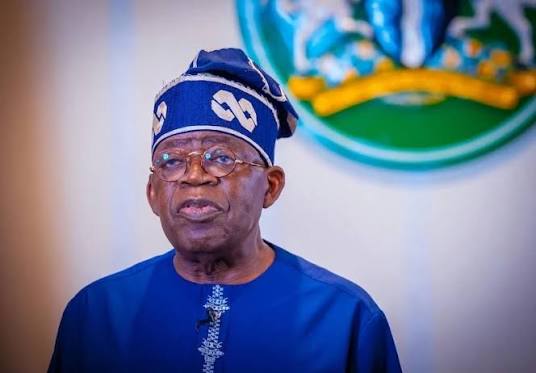
President Bola Tinubu has congratulated the winners of the by-elections held over the weekend in five constituencies across Gombe, Kano, Bauchi and Delta States.

Candidates of the All Progressives Congress (APC) won four of the five seats, while the Allied Peoples Movement (APM) secured one seat.

The APC winners are Kallamu MaiJama’a, Gombe/Kwami/Funakaye Federal Constituency in Gombe State; Husseini Datti, Dawakin Kudu State Constituency in Kano State; Okolosi Ator, Udu State Constituency in Delta State; and Yakubu Ali, Disina State Constituency in Bauchi State.

Adamu Yakubu of the APM won the Sakwa State Constituency seat in Bauchi State.

Tinubu said the victories recorded by APC candidates demonstrated the confidence Nigerians repose in the party’s capacity to govern effectively and deliver shared prosperity.

“I am encouraged by the support Nigerians at the grassroots continue to show for our party and for the difficult but necessary reforms our administration has implemented over the past three years,” he said.

The President urged Nigerians to remain steadfast and not be swayed by what he described as political opportunism, saying the benefits of the reforms would become increasingly evident as the administration enters the next phase of its programme.

Tinubu urged the winners to justify the confidence reposed in them by their constituents through diligent and effective representation, while encouraging other candidates to accept the results in good faith and continue contributing to the democratic process.

He also commended voters and security agencies for maintaining peace and order during the elections, and applauded the Independent National Electoral Commission (INEC) for successfully conducting the polls following the August 15 Osun State governorship election.

The President urged INEC to build on the progress recorded in the by-elections and address any shortcomings ahead of future polls, particularly the general elections scheduled for January and February.

Tinubu Celebrates Wife Oluremi at 66, Says ‘I Would Choose the Same Road That Led Me to You’

0


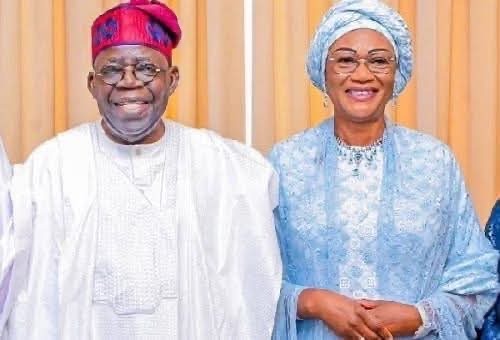
President Bola Tinubu has celebrated his wife, First Lady Oluremi Tinubu, on her 66th birthday, describing her as his “truest friend and confidante.”

In a birthday message issued on Monday, September 21, Tinubu praised Oluremi for standing by him with “patience, grace and uncommon courage” throughout their years together.

The President said his wife had supported him through difficult periods, noting that she remained calm and prayed with him whenever the future appeared uncertain.

He described Oluremi as a woman who understands him deeply and often knows when he needs counsel before he asks for it.

Tinubu also commended her honesty, saying she speaks the truth plainly, including on occasions when he may not want to hear it.

He acknowledged her role in raising their children and grandchildren, saying they had grown under the influence of her prayers, faith and values of kindness.

The President further praised Oluremi’s humanitarian activities, referencing her work through the New Era Foundation and the Renewed Hope Initiative, which he said had touched the lives of young people, widows, elderly citizens and women farmers.

He also highlighted her advocacy for people affected by tuberculosis and other diseases, describing her compassion as extending beyond tribal, regional and religious boundaries.

Reflecting on their marriage, Tinubu said their journey had been marked by difficult decisions, sacrifices, laughter and prayer.

“If life returned me to the beginning, I would choose the same road that led me to you,” the President said.

Tinubu wished his wife a happy 66th birthday and prayed that God would grant her many more years in good health and joy.