Home Blog Page 103

Olu Jacobs: Joke Silva, sons, dignitaries pay tributes at funeral

0


The funeral Mass for veteran Nollywood actor, Olu Jacobs, is underway in Lagos, with his widow, actress Joke Silva, their sons and several dignitaries gathered to honour the late screen icon.

The service is being held today, Friday, at This Present House, Freedom Way, Lekki Phase I, Lagos, as family, friends and colleagues bid farewell to the acclaimed actor.

Silva and her sons, Olusoji and Olugbenga Jacobs, were present at the service, dressed in blue, as Jacobs’ casket was placed in front of the church and adorned with flowers.


Among the dignitaries attending are Lagos State First Lady, Dr Ibijoke Sanwo-Olu; Deputy Governor, Dr Obafemi Hamzat, and his wife, Oluremi Hamzat.

Former Ogun State Governor, Senator Ibikunle Amosun, and former Ekiti State First Lady, Bisi Adeleye-Fayemi, were also announced among guests at the funeral.

Jacobs, whose full name was Oludotun Baiyewun Jacobs, died on September 16, 2026, at the age of 84.

The funeral comes two days after a Night of Tributes held in his honour at Glover Memorial Hall, Marina, Lagos Island, on Wednesday.

Guests attending Friday’s service were asked to dress in shades of green as part of the funeral arrangements.

A private burial is expected to take place after the funeral Mass, in accordance with the family’s plans.

Jacobs was one of Nigeria’s most recognised screen actors, with a career spanning several decades across Nigerian theatre, television and film.

Friday’s ceremony brings together family members, public figures and others to honour the actor and mark his final farewell in Lagos.

Sun

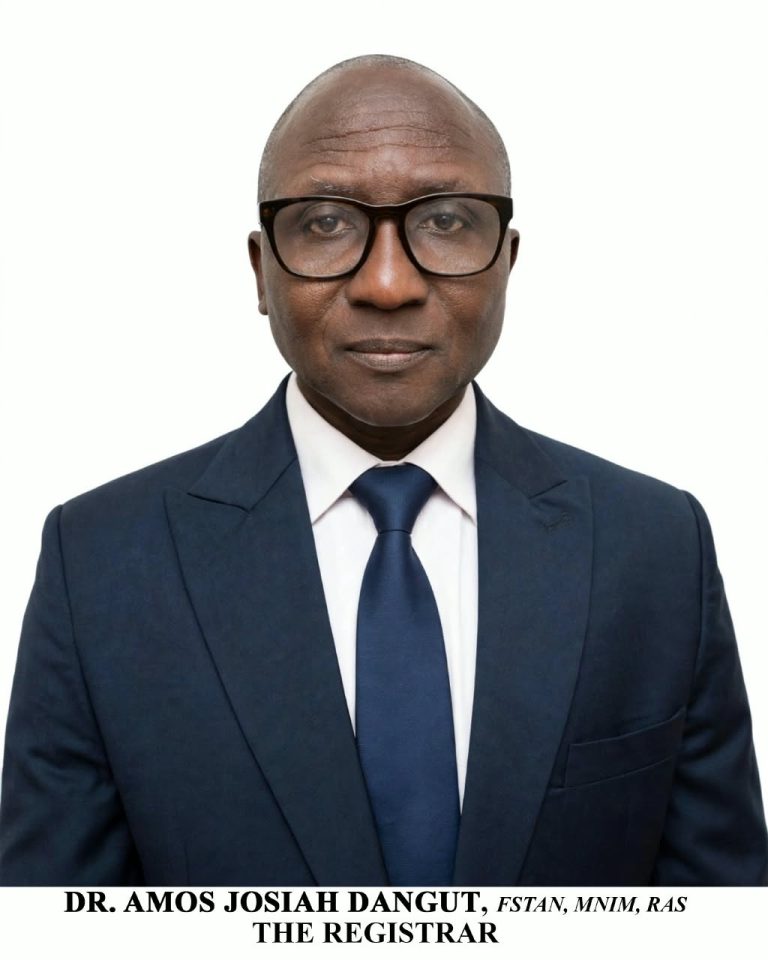
WAEC Former HNO Dangut Becomes New Registrar

0

BY TAIWO OGUNMOLA -OMILANI


The West African Examinations Council (WAEC) has appointed Dr Amos Josiah Dangut of Nigeria as its new Registrar/Chief Executive Officer for a five-year tenure beginning October 2026 and ending September 2031.

Dangut succeeds Alhaji Pateh Bah of The Gambia and becomes the 14th Registrar to Council.
Born on October 2, 1967, Dangut holds a Bachelor of Agriculture in Animal Production, a Master of Science in Animal Science, a PhD in Animal Science and a Master of Education in Administration and Planning.

His career with WAEC began in 1998 after he worked as an examiner at St. Louis College, Jos, from 1994.

He subsequently held several positions within the council, including Assistant Registrar/Subject Officer in the Test Development Division, Branch Controller in Yola, Controller of the Post Examinations Department and Zonal Coordinator of the Ikeja Zonal Office.

Dangut was appointed Head of the WAEC National Office, Nigeria, on October 2, 2023, a position he held until his assumption of office as Registrar on October 1, 2026.

His appointment was ratified by the Council, WAEC’s International Governing Board, at its 74th Annual Meeting held in Accra, Ghana, in March 2026.

As Head of the National Office, Dangut championed innovations aimed at strengthening examination delivery, security, integrity and efficiency. These included the rollout of Computer-Based WASSCE, serialisation of question papers and the introduction of a Digital Electronic Marking System.

He also oversaw the Digital Certificate Portal, WAEC E-Study Platform, Digital Records Archive, as well as systems for examination logistics, timetable management and monitoring examiners’ attendance.
Dangut has served on the governing boards of the Nigerian Educational Research and Development Council, Joint Universities Preliminary Examinations Board, Joint Admissions and Matriculation Board and Grange Educational Foundation.

He has also represented WAEC at education policy forums, including the Joint Consultative Committee on Education and the National Council on Education.

A specialist in test development, test administration, and branch and zonal office management, Dangut has used information and communications technology to improve WAEC’s processes for more than two decades.

He has received commendations for his handling of examination matters and has published papers in national and international journals. He is currently the Regional Representative of the West African Sub-region on the Executive Board of the Association for Educational Assessment in Africa.

Dangut is a Fellow of the Science Teachers Association of Nigeria and a member of the Nigeria Institute of Management. He enjoys swimming, tennis and farming.

What Emmanuel Emefienim’s story teaches us about Nigeria’s possibilities

0

By Ehi Braimah

I joined The Platform live on Channels Television on Thursday October 1 to listen to inspiring conversations about Nigeria. What I heard from Dr. Emmanuel Emefienim, Founder and Managing Director/CEO of Premium Trust Bank, was much more than a motivational speech. It was a masterclass in resilience, ambition, leadership, relationships, knowledge, faith and the power of refusing to give up.

The Platform, organised by The Covenant Place under the leadership of Senior Paster Poju Oyemade, has become an important public conversation that brings Nigerians together around ideas, experiences and possibilities. Held on May 1 and October 1 in a town-hall setting and televised live, it has consistently provided a platform for Nigerians to share stories that can inspire particularly the younger generation to believe in themselves and in their country.

Dr. Emefienim’s story deserves to be told beyond the walls of The Platform because it is not simply the story of one successful banker; it is a Nigerian story about what can happen when adversity meets determination. After completing his NYSC, Emefienim applied for 70 jobs. Only four organisations, according to him, responded. He eventually joined Oceanic Bank at the age of 22.

At some point, he was transferred from Lagos to Asaba. His career subsequently took him to Savannah Bank in Port Harcourt, where he became a regional manager. Then came the shock that could have destroyed everything. I mean, everything: his plans, big dreams and bright future.

One weekend, Emefienim travelled to Warri to spend time with his family. When he returned to work on Monday, he discovered that Savannah Bank had been liquidated. There were no members of staff waiting for him. Instead, officials of the Central Bank of Nigeria and the Nigeria Deposit Insurance Corporation were there. There had been no warning.

Suddenly, the man who had an official car and driver was without a job. He was married, in his 30s, and his wife was a civil servant. His professional world had collapsed almost overnight. What did he do? He did not give up.

His driver took him to Benin City. From there, he travelled to Lagos, using a public transport service, to see a manager at FSB, a bank that had previously offered him a job while he was still at Savannah Bank. He had declined the offer then. Now, Emefienim needed the job, but the manager, obviously angry and wanted to have his pound of flesh back, ignored him and kept him waiting for three days.

It would have been easy to interpret the experience as humiliation and walk away. But Emefienim remained focused. Eventually, the manager saw him and offered him a job – but at a lower level. He moved from senior manager to deputy manager and was posted to Yenagoa in Bayelsa State which heaccepted as he had no choice at the time.

That decision contains a profound lesson: sometimes, starting again is not failure; it is strategy. There are moments in life when circumstances force us to take a step backwards so that we can eventually move forward. The important thing is not the temporary position we occupy, or feelings of rejection experienced or disappointments that we face, but whether we can continue moving towards the destination.

Emefienim had a big dream. He recalled telling the Managing Director of Oceanic Bank and some colleagues that one day he would become the managing director of a bank himself. While the MD encouraged him to pursue his goal, his colleagues laughed at him.

His response is one of the most memorable lines from his presentation: when people don’t laugh at your dream, perhaps the dream is not big enough. That is a message Nigeria’s young people need to hear.

Too many young people allow their current circumstances to define their future, but the future does not necessarily resemble the present. A young person who is struggling today may become an employer tomorrow, and someone rejected for a job may eventually build an institution that employs hundreds or thousands of people.

Emefienim’s own journey demonstrates this. He continued to rise through Equatorial Trust Bank and later Sterling Bank, following mergers and acquisitions in the Nigerian banking industry. He rose through the ranks – AGM, DGM, GM and Executive Director – while continuing to acquire knowledge.

He attended Harvard Business School several times. But perhaps more importantly, he did not keep the knowledge to himself – he invested in people. He personally sponsored some of his managers to also attend Harvard. When the time came for him to leave Sterling Bank and establish Premium Trust Bank, six of the seven managers he had trained agreed to join him.

That is a powerful definition of leadership. A leader is someone who reaches the top and helps others rise. This is particularly important in Nigeria, where the quality of human capital will ultimately determine how competitive our economy becomes. Buildings, technology, capital and infrastructure matter, but people make institutions work.

Emefienim also spoke about relationships and networks as critical elements of success. This is another lesson worth emphasising. Knowledge is important, but relationships create opportunities for knowledge to be applied. Networks create access, partnerships and possibilities because nobody succeeds entirely alone.

His story also contains an important lesson about family resilience. After experiencing the trauma of losing his job without warning, he empowered his wife to start a business. He wanted to ensure that his family would never again be placed in such a vulnerable position because one person’s employment had suddenly disappeared resulting in loss of income.

That was more than a financial decision – it was an act of foresight. Today, the story has come full circle. The young man who once submitted 70 applications looking for employment is now the founder and owner of a bank.

Premium Trust Bank, which commenced commercial bankingoperations as a regional bank in April 2022, has grown into a national banking institution with 35 branches. Emefienim spoke proudly about its growth and profitability and its successful participation in the banking industry’s recapitalisationprogramme, raising N200 billion, the threshold for national banks, and achieving a historic milestone as one of Nigeria’s 10 most profitable banks.

There is something profoundly Nigerian about this story. Nigeria is often described in terms of its problems – unemployment, infrastructure deficits, insecurity, poverty, weak institutions and other challenges. These problems are real and should not be minimised.

But Nigeria is also a country of extraordinary human possibilities. Our greatest resource is not oil neither is it our large population; it is the capacity of Nigerians to create, innovate, adapt, build businesses, solve problems and compete. This is one of the central ideas behind my forthcoming book, How Naija can conquer the world.

The book is about Nigeria’s economic potential, global ambition and the strategies required to achieve greater prosperity. I argue that Nigeria’s success should not be measured simply by the size of its economy. Instead, we should be concerned about rising incomes, productivity, exports, globally competitive companies, human capital and the ability to create value for the world.

Emefienim’s story illustrates several of these principles. He acquired knowledge, built relationships, invested in people, remained focused, executed consistently, understood his environment, adapted when circumstances changed, dreamed beyond his immediate reality, and remained anchored in faith.

His reference to what he calls “revelational knowledge” –spiritual insight and instruction he believes come from God – adds another dimension to his philosophy. For him, formal education and professional experience are important, but they exist alongside faith and spiritual guidance.

There is another lesson here for Nigeria: we need more people who are prepared to build institutions rather than merely look for opportunities. When Nigerians build strong companies, they create jobs, and when they invest in people, they create human capital. We have the capacity to develop globally competitive products and services for exports. Clearly, the moral of Emefienim’s story is that we should build institutions that survive beyond their founders and contribute to national prosperity.

This is how a nation moves from potential to prosperity.

Listening to Dr. Emefienim, I was reminded that Nigeria does not lack stories of courage, enterprise and achievement. Perhaps what we lack is a sufficiently organised effort to tell these stories and convert them into a powerful national narrative.

We need to tell young Nigerians that setbacks are not destinies. An entrepreneur’s small business today can become tomorrow’s major institution. We need to tell professionals that continuous learning matters; tell leaders that investing in people is one of the highest forms of leadership, and also tell the world that Nigeria is much more than the challenges that frequently dominate international headlines. Dr. Emmanuel Emefienim has done well.

From a young graduate searching for his first job, to a banker who survived the collapse of a major institution, got another job within four days, to a senior executive, and an entrepreneur who built his own bank, his journey is a powerful reminder of what determination can accomplish.

His story is not an invitation to ignore Nigeria’s problems, but he is simply saying we should confront them with courage. Nigeria needs more dreamers – but also more doers. We need people who can dream big, acquire knowledge, build relationships, invest in others and execute with consistency.

That is how nations are built.

Perhaps that is the deeper message of The Platform: Nigeria’s future will be created by Nigerians who believe that something better is possible – and then roll up their sleeves and build it.

Braimah is a PR specialist, marketing strategist, and publisher/editor-in-chief of Naija Times (www.ntm.ng) and Lagos Post (www.lagospost.ng). He is a strong advocate for African prosperity and can be reached through:ehi.braimah@neomedia.com.ng
UBEC renovates 287 schools, 4,000 classrooms nationwide

0

…adopts whole-school approach, commissions 74 digital learning centres

The Universal Basic Education Commission (UBEC) announced on Wednesday that it has renovated 287 schools and more than 4,000 classrooms across the country as part of efforts to improve learning conditions and establish minimum standards for basic education infrastructure.
The Executive Secretary of UBEC, Dr. Aisha Garba, disclosed this while commissioning renovated facilities at the Nyanya-Hausawa Basic and Secondary School in Abuja Municipal Area Council (AMAC), Federal Capital Territory, on Wednesday.

Garba said the intervention was part of the Federal Government’s Renewed Hope Agenda to ensure that children, regardless of their location, have access to safe and conducive learning environments.

She said UBEC had introduced a “whole-school approach” requiring interventions to address the overall needs of schools instead of focusing on isolated classroom blocks.

“Our mandate is that all children, regardless of where they are, should be in school. We should also make sure that schools are in conducive environment for learning,” she said.

Garba said the commission’s new minimum standards for school infrastructure required new projects to include classrooms, perimeter fencing, security measures, solar power, boreholes, adequate toilets, administrative blocks and playgrounds.

She added that schools would increasingly receive technology facilities, including computer and ICT laboratories and smartboards, to equip pupils with digital skills for 21st-century education and the global economy.

The Nyanya-Hausawa intervention, executed under UBEC’s 2025 Direct Intervention Project, covered the rehabilitation, furnishing and equipping of the LEA Nursery and Primary School and Government Junior Secondary School.

Garba said the project included the renovation of three blocks comprising about 30 classrooms and 48 toilets, as well as solar-powered boreholes connected to the toilets, strengthen that UBEC would further intervene to provide an administrative block.

The Director of Physical Planning, UBEC, Ibrahim Nura, explained that the school was seriously dilapidated before the intervention, with some facilities unsuitable for teaching and learning.

He said a condition assessment was conducted before the rehabilitation to determine the specific needs of the school, noting that the intervention had significantly improved the facilities.

The school’s Junior Secondary School Principal, Gideon Isah, commended UBEC for providing renovated classrooms, furniture and a solar-powered water system.

Isah recalled that some students previously sat on bare floors because of inadequate furniture, saying the renovation had improved the morale of teachers and students.

He appealed for an administrative block, noting that the primary, junior secondary and senior secondary sections currently operated without one.

The principal said the community, in collaboration with the Parent-Teacher Association, had employed three security personnel to protect the facilities from vandalism and assured UBEC that the school would maintain them.

Meanwhile, Garba commissioned 74 digital learning centres, including one at Model Girls’ Junior Secondary School, AMAC.

She said UBEC had established more than 2,000 such centres under the Tinubu administration, equipped with computers, smartboards, solar panels, printers, scanners and internet connectivity.

According to her, the centres provide online and offline learning content, while teachers are trained to use the facilities and digital resources effectively.

Nigeria@66: Prosperity must be felt in every Nigerian home — CAN

0

The Christian Association of Nigeria (CAN) has urged the Federal Government to ensure that the country’s economic recovery translates into tangible improvements in the lives of ordinary Nigerian

CAN, in a statement issued by its President, Archbishop Daniel Okoh, to mark Nigeria’s 66th Independence Anniversary on Thursday, said the success of economic reforms should ultimately be measured by whether families can afford basic necessities, young people can secure decent jobs and communities can live in safety.

The Christian body welcomed what it described as the shift from an era of economic reforms to an era of prosperity, but cautioned that economic statistics alone should not be the measure of progress.

It called on the government to make reductions in the cost of food, transportation and energy measurable priorities, stressing that Nigerians who had endured years of economic hardship deserved meaningful relief in their daily lives.

CAN also advocated stronger social protection for vulnerable Nigerians, including improved access to education, healthcare and affordable credit.

It urged the government to ensure that such interventions were transparently administered and protected from diversion, insisting that prosperity that failed to reach ordinary households remained incomplete.

On security, the association said there could be no meaningful prosperity in an environment where citizens were unable to farm, trade, travel or sleep peacefully because of fear.

It therefore called for sustained action to protect lives, secure communities and restore public confidence across the country.

The association also cautioned political actors ahead of the 2027 elections against presenting politicians as messiahs, while urging Christians to exercise their freedom to support or criticise political candidates without dragging the name of Jesus Christ into partisan rivalry.

“No politician is the Messiah,” CAN stated, warning against the use of Christianity and the name of Jesus Christ as a political weapon.

The association reaffirmed its commitment to remaining a non-partisan moral voice in the country, saying it would continue to commend what was right, speak when citizens were hurting and hold leaders to the values of justice, accountability and compassion.

CAN thus congratulated Nigerians on the Independence anniversary and called for a new phase in which the promise of national prosperity would be reflected in the everyday lives of citizens.

Nigeria @66: Nigeria must invest in medical laboratories to secure health future — AMLSN

0

The Association of Medical Laboratory Scientists of Nigeria (AMLSN) has called on the Federal and state governments to prioritise investment in medical laboratory infrastructure, workforce development, research and local production of diagnostic tools to strengthen Nigeria’s healthcare system.

The association made the call in its Independence Day message issued on Thursday by its National President, Dr. Casmir Ifeanyi, stressing that no country could achieve universal health coverage, health security and medical self-reliance while neglecting medical laboratories and the professionals responsible for generating critical diagnostic evidence.

In the message titled, “Nigeria at Independence: Strengthening Medical Laboratory, Securing Our Health Future,” Ifeanyi said medical laboratory scientists remained central to virtually every aspect of healthcare delivery, despite the profession not receiving commensurate investment and policy attention.

He said accurate diagnosis, successful surgeries, outbreak control and safe blood transfusion all depended on the work of medical laboratory scientists, who often operated behind the scenes to provide the evidence needed for medical decisions.

According to him, Nigeria must move beyond rhetoric and deliberately invest in the laboratory medicine sector as part of efforts to build a resilient and self-reliant health system.

“We call on Federal and State Governments, policymakers, development partners, and the private sector to invest deliberately in medical laboratory infrastructure, workforce expansion, local production of diagnostics, research, and quality systems,” he said.

The AMLSN president also challenged Nigeria to reduce its dependence on imported diagnostic innovations and develop its own capacity to produce knowledge, technologies and diagnostic solutions for the country and the wider African continent.

He described this as more than a health sector agenda, saying it was a national development imperative.

Ifeanyi urged medical laboratory scientists themselves to contribute to the transformation by upholding professional excellence, integrity and innovation, while strengthening institutions, supporting scientific research and embracing emerging technologies.

He noted that advances in genomics, precision medicine, artificial intelligence and digital diagnostics were rapidly changing healthcare and placing medical laboratory science at the centre of the transformation. “With visionary leadership and sustained investment, Nigeria can become Africa’s diagnostic hub,” he said.

He called for a Nigeria where citizens, irrespective of their location, could access timely, accurate and quality medical diagnostic laboratory services.

The AMLSN president said the country’s next chapter should be defined by purposeful action, scientific excellence and national progress rather than unrealised potential.

“The future of healthcare will be shaped by diagnostics, and the future of diagnostics will be shaped by medical laboratory scientists. The moment to act is now,” he said.

He congratulated Nigerians and members of the profession at home and in the diaspora on the country’s 66th Independence Anniversary, describing independence as not only a celebration but also a call to national renewal and purpose.

BUYERS BEWARE!!! VICTORIA ISLAND HIGH-RISE LINKED TO DR. SAMUEL MAWUYON AJOSE’S LEVITIKAL CONSTRUCTION LIMITED ROCKED BY LEGAL STORM AS LANDOWNER TERMINATES JV AND RECLAIMS PROPERTY

0

Order dated 29th September 2026 – DMSA vs LRCL
What began as a Joint Venture for a high-rise development in Victoria Island has reportedly escalated into a major legal dispute, following the Landowner’s termination of the JV over a fundamental breach by the developer, Levitikal Construction Limited and subsequent move to reclaim possession of the property linked to former Lagos governorship aspirant Dr. Samuel Mawuyon Ajose and Levitikal. The dispute has reportedly spilled into multiple court proceedings including in Suit No: FHC/LAG/CS/1245/2026 instituted at the Federal High Court, Lagos, arbitration and EFCC investigations. Interestingly, the property had also previously been sealed by the EFCC amid EFCC probe, raising fresh questions about its legal and commercial status. The latest development leaves prospective buyers and investors with critical questions: Is it safe to invest in a project riddled with multiple court cases? The legal battle appears far from over. For prospective buyers, the warning is clear: there is a dispute on the project.
From a promising Victoria Island development to a courtroom and arbitration battle, this property saga is one that prospective buyers cannot afford to ignore. What would be the outcome of the arbitration proceedings, the several court actions and EFCC probe.

PROPERTY LINKED TO LEVITIKAL AND DR SAMUEL AJOSE PREVIOUSLY SEALED BY EFCC NOW SEALED PURSUANT TO FEDERAL HIGH COURT ORDER
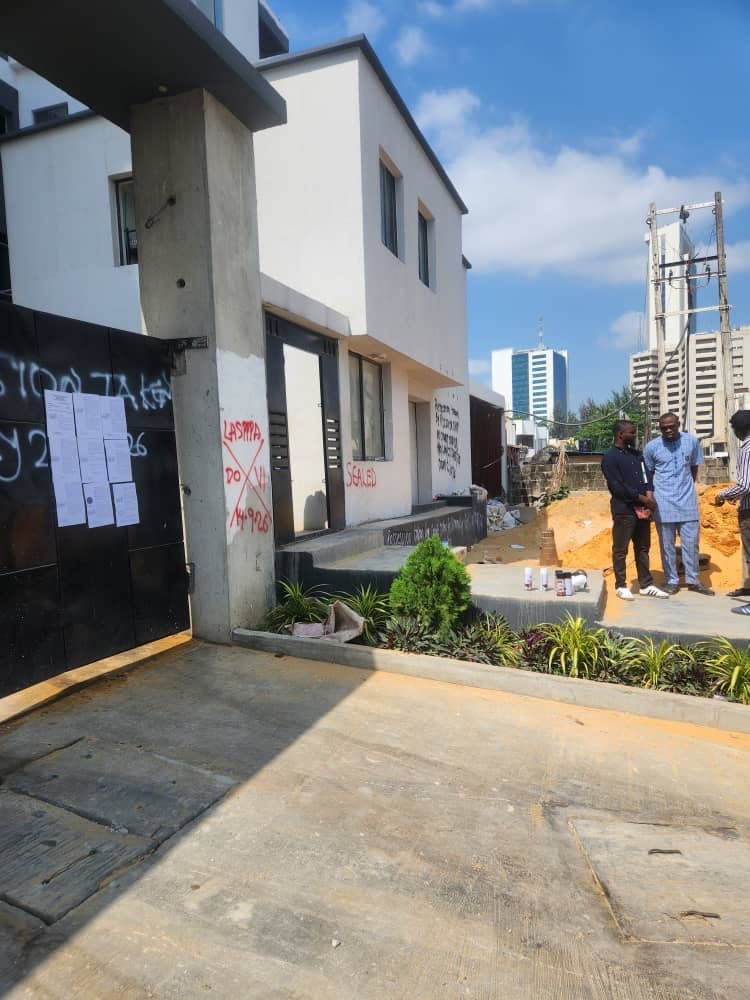
Following the recent court order made by the Federal High Court, sitting in Lagos on the 29th day of September 2026, appointing the Receiver to take over possession and custody of all that property known as No 68 Molade Okoya Thomas Street, Off Ajose Adeogun Street, Victoria Island, Lagos, which is subject of Notice of dispute and Suit No. FHC/LAG/CS/1245/2026, the said property (which had previously been sealed off by the Economic and Financial Crimes Commission) has now been sealed off pending the hearing and determination of the motion on notice.
This present suit stemmed from the series of fundamental breaches of the joint venture agreement by the Developer, Levitikal Realties & Construction Limited owned by Dr. Samuel Mawuyon Ajose, a former Governorship aspirant in Lagos State. From the court processes, it was observed that the Joint Venture Agreement has been terminated.
The Order granted by the Federal High Court directed the Landowner to notify members of the public, prospective purchasers, lenders and investors of the development to prevent them from acquiring a property that is subject of litigation.
HEADLINES
Former Lagos Governorship Candidate Dr. Samuel Ajose’s Victoria Island Property Battle Escalates as Landowner Terminates JV and Takes Possession Amid Lawsuits, Arbitration and EFCC Probe.

Property linked to Levitikal and Dr Samuel Ajose Previously Sealed by EFCC Now Sealed Pursuant to Federal High Court Order

Legal Dispute Deepens as Federal High Court Orders Receiver to Take Custody of Victoria Island Property linked to Levitikal and Dr Samuel Ajose.


Federal High Court Appoints Receiver Over Disputed Victoria Island Property, Orders Public Notice

Fresh Twist in Victoria Island Property Saga linked to Levitikal and Dr Samuel Ajose, as Landowner Terminates JV and Reclaims High-Rise.

From Joint Venture to Legal Showdown: Landowner Takes Over Disputed Victoria Island High-Rise, Buyers beware!!!

Legal Storm Gathers Over Victoria Island High-Rise linked to Former Lagos Governorship Candidate Dr. Samuel Ajose as Landowner Terminates JV and Takes Control.

Property Deal Turns Sour as Landowner Terminates JV and Reclaims Victoria Island High-Rise Linked to Dr. Samuel Mawuyon Ajose.

Buyer Beware: Victoria Island High-Rise Linked to Dr. Samuel Mawuyon Ajose Entangled in Court Battles and Arbitration.

2027: Hamzat Promises 100-Point ‘HAMZAT Compact’ for Transparent, Accountable Governance

0

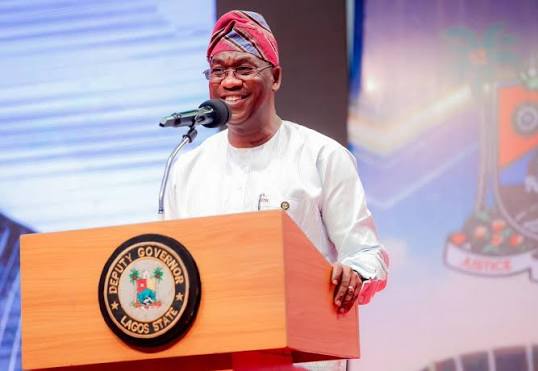
Lagos State Deputy Governor and All Progressives Congress (APC) Gubernatorial Candidate, Dr. Kadri Obafemi Hamzat, has pledged to introduce an “HAMZAT Compact” with 100 specific commitments that will enable Lagos residents to track his administration’s performance and hold him accountable if elected governor.

Hamzat made this disclosure on Thursday during a Gubernatorial Town Hall Meeting organised by the Platform Nigeria, tagged “Millennium and Gen Z Meet Their Lagos State Gubernatorial Candidates,” explaining that the initiative would clearly state what his administration intends to deliver, where it would be delivered, the cost involved, and the person responsible for each commitment.

According to him, the initiative is designed to institutionalise accountability in governance by giving residents measurable commitments against which the performance of the administration can be assessed, declaring that the compact, which forms part of his manifesto, “The Promise: Building a State That Lasts,” contains specific pledges covering critical areas including child welfare, healthcare and education, among others.

“‘Hamzat Compact’ is actually a statement that allows you to know what will be done, where it will be done, what it will cost, and who is responsible. I put my name there. Nobody asked me to do that, because I know it’s me who will be responsible. These commitments would be open to public scrutiny and tracking of our administration to deliver our promises,” he said.

The APC Governorship Candidate added that one of the major differences between developed societies and developing ones is the ability to institutionalise processes, saying that governance should be structured in a manner that allows citizens to monitor commitments and demand explanations where necessary.

Hamzat, who traced his professional experience across the public and private sectors, said his vision for Lagos is anchored on building systems that could endure beyond individual administrations.

Furthermore, he promised to establish a dedicated Child Welfare Administration Agency within his first 100 days in office, with a mandate to ensure that every child under 18 is either in school or engaged in vocational training.

Identifying child welfare as one of the priorities of his proposed administration, Hamzat stressed the need to ensure that children in Lagos are adequately protected, educated and supported. He added that child welfare required dedicated attention because of its importance to the future of the state.

While raising concerns about childhood malnutrition, particularly among children aged zero to five, the APC Candidate said adequate nutrition during the early years is critical to a child’s development. “In West Africa, zero to five-year-olds, 34 per cent of our children are malnourished. And being malnourished doesn’t mean the children are poor, because it depends on what you eat. This proposed agency would be part of measures to ensure that children receive the necessary care and opportunities to develop because the destiny of our children must be important to us,” said Hamzat.

Beyond child welfare, he also highlighted improved mobility and shorter commuting time as a key part of his vision for Lagos, as he promised to make it easier for residents to travel from their homes to their workplaces and places of business.

Hamzat stated that residents should be able to measure the time it takes to travel from their homes to work or where they ply their trade, adding that his administration would work towards reducing the time spent on such journeys across the state.

He pointed out that his vision is not limited to individual projects, but focuses on creating systems that would improve residents’ quality of life, stressing that the effectiveness of governance should ultimately be reflected in people’s everyday experiences.

On the business environment, Hamzat pledged to establish a State Economic Council to coordinate government charges, reduce the cost of doing business and tackle multiple and unauthorised levies across the state, stating that the role of government should be to create an environment where businesses can start, survive and grow.

He emphasised the need for government agencies and the different levels of government to work together to eliminate unnecessary charges and make the business environment more predictable. According to him, the council would help ensure that businesses know exactly what they are expected to pay, while unauthorised levies and charges would be eliminated.

He added that his administration would focus on strengthening small and medium-sized enterprises by helping business owners develop essential skills, particularly in bookkeeping and staff management, which he identified as some of the challenges affecting the survival of many small businesses.

On inclusion and peaceful coexistence, Hamzat vowed to create a government where residents would not be discriminated against based on where they come from, stressing that anyone who lives peacefully, works lawfully, and does not harm others should be able to enjoy their rights.

He noted that Lagos has historically attracted people from different parts of Nigeria and other countries, including Ghana, India, and Lebanon among others who have settled and contributed to the development of the state. “People come all the way from Lebanon. They are not Nigerians. They come from India and they are doing well here. So the bottom line is we will create a government where you don’t need—nobody should ask you whether you belong or not. As long as you live peacefully, you work peacefully, and you are not here to harm us, you must be able to enjoy the right things,” he concluded.

2027: I’ll spend presidential holidays touring Nigeria, not abroad – Obi

0


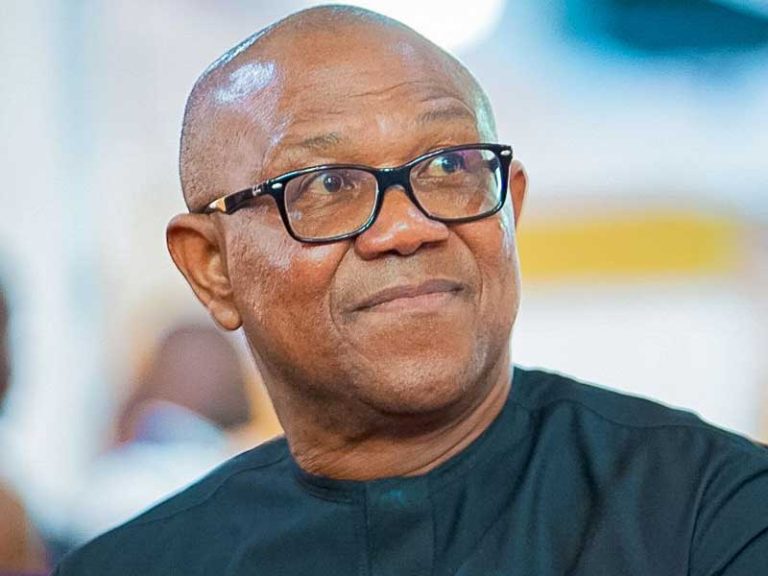
Presidential candidate of the Nigeria Democratic Congress (NDC), Peter Obi, has pledged not to spend his holidays outside Nigeria if elected president in 2027.

Obi made the promise in his Independence Day address on Thursday, saying he would use his holidays to visit different parts of the country, interact with Nigerians and gain a deeper understanding of their challenges.

The former Anambra State governor said he would spend his holidays in Zamfara, Borno, Kwara, Ebonyi, Edo and Ekiti states, among others, during his proposed four-year tenure.

“As I have always done, I will lead by example. In four years as President of this great nation, I will not spend my holidays outside Nigeria,” Obi said.

“My holidays will be spent in Zamfara State; Borno State; Kwara State; Ebonyi State; Edo State; Ekiti State and other Nigerian States.

“I want to continue to see Nigeria. I want to know Nigeria. I want to spend time with Nigerians, listen to them, understand their challenges and celebrate their resilience.”

Obi said the pledge formed part of his broader vision for leadership focused on the welfare and productivity of Nigerians.

He promised that his proposed administration would make governance measurable and accountable, with public resources deployed for the benefit of citizens.

“My message today is not one of despair. It is a message of hope, determination and responsibility. I dare to proclaim with full assurance that a new Nigeria is possible,” he said.

“As President of Nigeria, I will make governance measurable, accountable and centred on the welfare and productivity of our people. Within the first year, Nigerians will begin to see the tangible impact of purposeful and effective leadership.”

Obi also referred to his recent visit to an internally displaced persons’ camp at Ramin Kura in Sokoto State with Senator Rabiu Kwankwaso, where he said they engaged with people affected by insecurity, poverty, unemployment and other challenges.

According to him, thousands of women and children displaced from their communities were living in difficult conditions, with many children unable to access education and families facing limited access to basic healthcare.

He said such Nigerians should be living in their communities, attending school, farming, running businesses and contributing to the economy rather than remaining displaced within their own country.

Obi said his proposed administration would seek to build a Nigeria that is “secure, united and productive”, while stressing that public office should be treated as a sacred trust.

“The Nigeria we desire will not be built by prayers alone, nor by promises alone,” the NDC candidate said. “It will be built by leadership that understands that public office is a sacred trust, by citizens who demand accountability, and by all of us who refuse to accept failure as our destiny.”

He said the objective was to build a new and productive Nigeria in which leadership remained accountable to the people.

Sun

APC is Nigeria’s cancer, not the country – Kenneth Okonkwo replies Tinubu

0

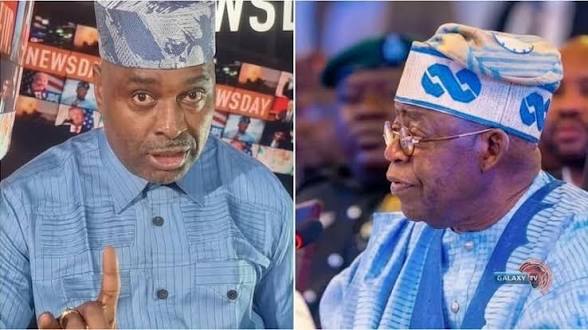
Kenneth Okonkwo, a spokesman for African Democratic Congress (ADC) presidential candidate Atiku Abubakar, has criticised President Bola Tinubu’s 66th Independence Day address, rejecting his description of Nigeria in 2023 as a “sick patient” diagnosed with cancer.

In his Independence Day broadcast on Thursday, Tinubu compared Nigeria’s situation in 2023 to that of a patient diagnosed with cancer, saying his administration had
embarked on difficult reforms to address the country’s underlying problems.

Reacting in a post on his X handle on Thursday, Okonkwo said Nigeria was a blessed country and not one suffering from cancer.


“God forbid! With respect to President Tinubu, Nigeria is a blessed country that has no cancer.

“According to Wike, it is the All Progressives Congress (APC) that has cancer, and Tinubu’s leadership style has made the cancer to metastasise.

“Tinubu met fuel at N195, but it has metastasised to N1,500. He met naira at about N450 to a dollar, but it has metastasised to about N1,400 per dollar. He met about N77trn total debt, but it has metastasised to N166.6trn total debt, and he is still borrowing. Insecurity is at its worst under Tinubu.

“He has been away from Nigeria more than 290 days and about 52 times in just about three and half years.

“Transportation and food costs are horrible, electricity and employment are absent, poverty is ravaging, roads are deplorable, rule of law and human rights trampled on. No microeconomic index is good.

“What Nigeria needs to do to avoid its demise from Tinubu’s terminal cancerous leadership style is to democratically cut out Tinubu and APC’s cancerous leadership style by voting them out on 16 January 2027, and voting in HE Atiku Abubakar of the African Democratic Congress (ADC), the Coalition Party, to rescue Nigeria from its inevitable cancerous demise under Tinubu’s watch, and make life affordable for Nigerians through the introduction of refined petroleum production subsidy,” the post reads in part.

Sun