Political commentator and former presidential aide, Reno Omokri, has shared his reflections on the recently launched book by former military ruler, General Ibrahim Badamasi Babangida (IBB). In a detailed critique, Omokri examined key aspects of Babangida’s tenure, including the annulment of the June 12, 1993, election, the assassination of Dele Giwa, the handling of Nigeria’s economy, and the establishment of the Economic Community of West African States Monitoring Group (ECOMOG).
On June 12 Annulment
Omokri acknowledged Babangida’s assertion that the annulment of the June 12 election was influenced by counterforces led by General Sani Abacha. He noted that Abacha, who was considered Babangida’s successor after suppressing the 1990 Orkar coup, played a decisive role in the controversial decision.
While describing the annulment as regrettable and a setback for Nigeria’s democracy, Omokri suggested that Babangida may have felt compelled to go along with it to avoid a violent coup that could have endangered both his life and that of Chief MKO Abiola.
On Dele Giwa’s Assassination
Addressing the unresolved assassination of journalist Dele Giwa, Omokri expressed skepticism about the government’s official stance. He stated that while it was possible Babangida himself was unaware of the plot, findings from the Oputa Panel suggested that the state had knowledge of the circumstances surrounding Giwa’s death.
On Babangida’s Economic Policies
Omokri credited Babangida with laying the foundation for Nigeria’s current private sector-driven economy, highlighting his role in initiating privatization and commercialization. He acknowledged that the Structural Adjustment Program (SAP), which was tied to World Bank loans, played a significant role in shaping the country’s economic trajectory.
However, he criticized the lack of transparency surrounding the alleged mismanagement of the $12 billion Gulf War oil windfall, suggesting that if properly utilized, Nigeria would have been in a better economic position today. Omokri also pointed out that inflation soared to over 57% under Babangida, a factor he believes should have been more thoroughly addressed in the book.
On ECOMOG’s Legacy
Omokri praised Babangida for establishing ECOMOG, describing it as one of the most successful peacekeeping initiatives in West African history. He noted that the intervention bolstered Nigeria’s international reputation and showcased the strength of the country’s military. However, he lamented the absence of insights from Babangida on how the military could apply ECOMOG’s successes to contemporary security challenges such as terrorism and banditry.
Final Thoughts on Babangida’s Legacy
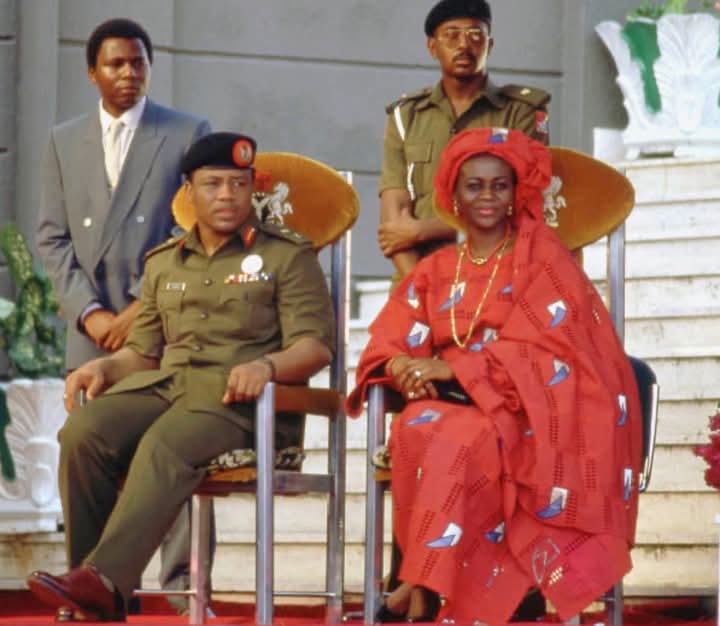
Omokri described Babangida as a charismatic leader whose personal appeal was bolstered by his late wife, Maryam Babangida. He expressed disappointment that more was not said about her role during the book launch.
Concluding his assessment, Omokri stated that while Babangida’s legacy includes notable achievements, the annulment of the June 12 election significantly tarnished his record. “Other than the June 12 faux pas, I would have given him a pass mark. But that incident undid much of the good he did,” he remarked.
Omokri’s reflections add to the ongoing debate about Babangida’s impact on Nigeria’s history, offering a nuanced perspective on the former military leader’s complex legacy.