BY TAIWO OGUNMOLA-OMILANI
Following the removal of fuel subsidy, stakeholders have called on the Federal Government to prioritize the interest of the people first to ameliorate the suffering brought about by the removal.
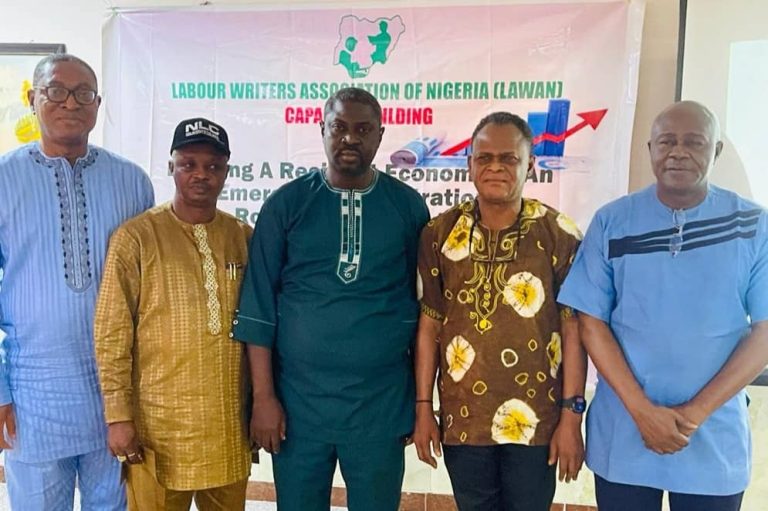
They disclosed this at a day workshop organised by the Labour Writers Association of Nigeria (LAWAN) in Ijebu-Ode, Ogun State.
In his submission, President of the Nigeria Labour Congress, Comrade Joe Ajaero said, “Why is the government in a hurry to remove subsidy? The Federal Government should allow the regular subsidy that is not a burden to them. The NLC is concerned about the mindless devaluation of naira and the removal of fuel subsidy.”
Speaking on the theme, “Building A Resilient Economy in an Emerging Administration: Roles of Stakeholders,” Ajaero, who was represented by Comrade Benson Upah, Head of Information and Public Affairs of the NLC, told the government to fight the cabals and not the people, saying that people are suffering.
“The solution offered by the government on the removal of fuel subsidy is not paying at all,” he said.
Ajaero advised the President to think of what will benefit Nigerians first, adding that resentment would set in if the relationship between the government and the people breaks.
The NLC President condemned the inadequate supply of electricity in the country, which he said led to the relocation of some companies from Nigeria.
NLC also urged the government to stop the dollarisation of the economy, fight corruption and reduce the cost of governance.
Also speaking, the President of Maritime Workers’ Union of Nigeria, Comrade Adewale Adeyanju, faulted the manner the fuel subsidy was removed without consultations and taking cognizance to its effects.
He said that this development has created hyper-inflation, high cost of living crisis, spike in food prices and loss of disposable income for workers.
“In addition, since the past eight years, the drivers of the economy could not define the fiscal policies and its monetary policies pronouncements, which are inconsistent and political,” he said.
Olorunfemi Oke, Executive Secretary Chemical and Non-Metallic Products Employers Federation, said in his comments that building a resilient economy is a complex task that requires the cooperation of all stakeholders.
“The government, the private sector, labour unions, and the civil society have a role to play. By working together, we can create an economy that is strong, fair, and sustainable,” he said.