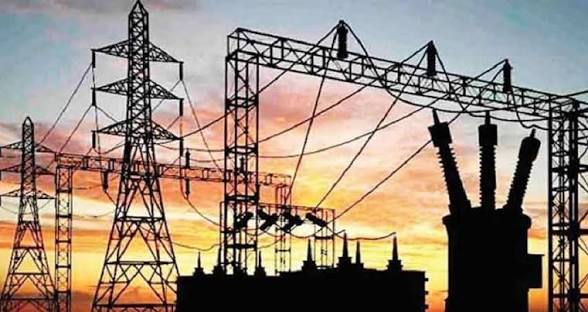
A growing crisis in Nigeria’s power sector has worsened electricity supply across the country, with gas producers and power generation companies accused of embarking on what has been described as a “technical strike” over unresolved debts and market disputes.
According to a statement signed by National Coordinator Chinedu Bosah, gas supply to power plants has dropped significantly in the last one month, resulting in reduced generation and widespread blackouts.
The statement noted that as of March 17, 2026, 16 of the country’s 33 power plants had become redundant, while electricity generation reportedly fell to about 3,700 megawatts.
The statement said the country had on some days witnessed a drop in supply from about 4,500MW to 2,800MW, plunging many communities into darkness and worsening the economic burden on households and businesses.
It attributed the crisis to unresolved debts in the sector, stating that multinational gas companies claimed they were owed about N2 trillion, while power generation companies (GENCOs) reportedly put government indebtedness at N6.3 trillion, a figure the government is said to have disputed, placing the debt at N4 trillion.
The statement further alleged that despite the supply crisis, the Nigerian Midstream and Downstream Petroleum Regulatory Authority (NMDPRA) increased the price of natural gas for power generation from $2.13 to $2.18 per MMBtu, a move it claimed was aimed at guaranteeing more profit for government and gas companies.
Bosah argued that Nigeria’s vast gas reserves have not translated into affordable electricity for citizens, blaming multinational oil and gas firms and the structure of ownership in the sector for the current situation.
He cited the ownership structure of Nigeria LNG Limited, where NNPC Ltd holds 49 per cent, while foreign firms including Shell Gas, TotalEnergies LNG, and Eni collectively control 51 per cent, alleging that this has enabled multinational interests to dominate gas pricing.
The statement also described the entire power value chain as being in crisis, noting that while installed generation capacity stands at about 14,000MW, actual generation has remained far below that range at between 2,800MW and 4,500MW.
It accused transmission infrastructure of being weak and outdated, while also blaming electricity distribution companies (DISCOs) for poor investment, exploitation of consumers, and rejection of available electricity load.
Citing a Punch report of March 30, 2026, the statement said GENCOs had accused DISCOs of rejecting electricity loads and only accepting supply to areas where they could make the most profit.
It added that the Chief Executive Officer of the Association of Power Generation Companies, Joy Ogaji, reportedly said that gas shortages were not the only cause of low electricity supply, noting that load rejection by DISCOs had also worsened outages.
According to the statement, although about 7,000MW may be available at certain periods, the Transmission Company of Nigeria (TCN) and DISCOs were reportedly only taking about 4,000MW or less.
The statement further lamented the financial toll on ordinary Nigerians, saying poor electricity supply had forced many households and businesses to rely on diesel, petrol generators, and solar alternatives at what it described as an exorbitant cost of about $20 billion annually.
Bosah criticised successive market-driven reforms in the sector, including privatisation, commercialisation, and liberalisation, saying they had failed to solve Nigeria’s electricity challenges.
He warned against calls for the privatisation of the Transmission Company of Nigeria, insisting that such a move would deepen the crisis rather than resolve it. Instead, he called for improved investment and democratic management involving workers, experts, and consumers.
The statement also condemned the performance of the privatised power sector since November 2013, arguing that electricity had become increasingly unaffordable and inaccessible for millions of Nigerians.
It cited a Daily Trust report of February 7, 2026, claiming that the Federal Government had spent over N7 trillion on the power sector since 2013 without significant improvement. It also alleged that four DISCOs had collapsed due to mismanagement and corruption, prompting government intervention.
Bosah further criticised President Bola Tinubu, alleging that despite the worsening power crisis, the President approved the installation of a solar grid at Aso Rock at a reported cost of N10 billion, while millions of Nigerians continue to endure poor electricity supply and prolonged outages.
He said many communities across the country now experience electricity rationing that lasts no more than two hours daily, while others remain in darkness for days or even weeks.
As a way forward, the statement called for a reversal of power sector privatisation and a return to public ownership, with the sector to be placed under what it described as the democratic control of workers and consumers.
It argued that such a system would help eliminate corruption, improve transparency, and ensure efficient management of electricity resources in the interest of the Nigerian people.
The statement concluded by urging workers and communities to organise campaigns and mass struggles in support of these demands, while also calling for a broader political movement to challenge what it described as capitalist policies in the country.