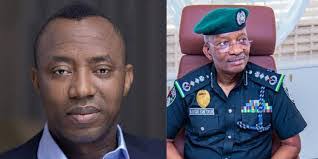
The Nigeria Police Force has categorically refuted recent claims by Mr. Omoyele Sowore, alleging that the tenure of the Inspector-General of Police (IGP), Kayode Egbetokun, is illegal. The police dismissed these assertions as baseless, misleading, and a deliberate attempt to undermine the legitimacy of the IGP’s appointment and erode public confidence in the force.
In a statement issued by the Force Public Relations Officer, ACP Olumuyiwa Adejobi, the police emphasized that IGP Egbetokun’s appointment is firmly backed by law, citing Part III, Section 7(6) of the Police Act, 2020 (as amended), which explicitly states: “The person appointed to the office of the Inspector-General of Police shall hold office for four years.”
Furthermore, the police clarified that IGP Egbetokun’s tenure was duly ratified by the Police Council and validated by a confirmation letter from the Presidency. His appointment, effective from October 31, 2023, to October 31, 2027, aligns with Section 8A of the amended Police Act, which ensures that an IGP remains in office for the full term specified in the appointment letter. This amendment, the police noted, aims to provide stability and continuity in the force’s leadership, enabling the implementation of long-term security policies without fear of abrupt termination.
The statement stressed that IGP Egbetokun’s position as the 22nd Indigenous Inspector-General of Police is legally and procedurally sound.
It described Sowore’s allegations as an attempt to mislead the public and create unnecessary confusion regarding police leadership.
The police warned that the dissemination of false information about the IGP’s tenure could undermine national security and disrupt ongoing efforts to maintain law and order.
The Nigeria Police Force urged individuals and groups to refrain from spreading unverified claims that could mislead the public and jeopardize national security.
It called on citizens to engage in objective discussions that support the collective mission of protecting lives and property rather than promoting disinformation that could destabilize the country.