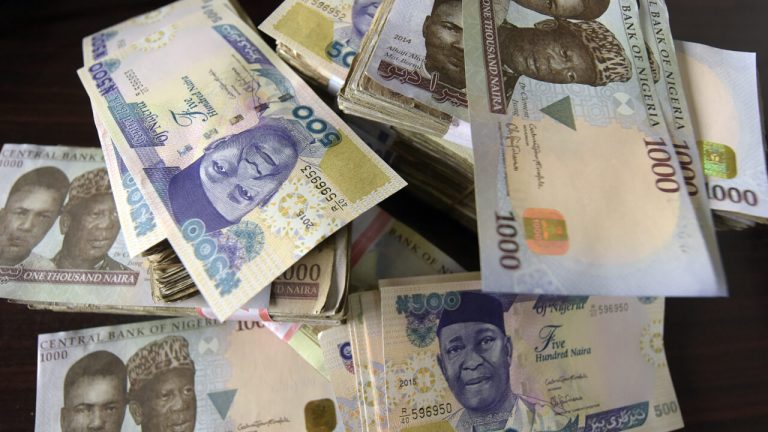
The Federal Government on Thursday said a new minimum wage regime would come into effect on April 1, 2024.
The Minister of Information and National Orientation, Idris Mohammed, who disclosed this in an interview with The PUNCH in Abuja, said the current N30,000 minimum wage would expire at the end of March 2024.
Mohammed said this on Thursday as an analysis of the 2024 –2026 Fiscal Framework budgets by our correspondents indicated that the Federal Government would spend N24.66tn on salaries in 2024, 2025, and 2026.
Following the removal of the fuel subsidy by President Bola Tinubu on May 29, 2023, the Federal Government agreed to pay N35,000 to each of its workers to cushion the effect of the subsidy removal.
But the organised Labour insisted that the N35,000 wage award was a temporary measure, adding that the minimum wage should be reviewed in 2024.
The Federal Government’s team and the Joint National Public Service Negotiating Council on October 18, 2019, agreed on the implementation of the N30,00 minimum wage after months of negotiations.
However, Labour unions on Thursday confirmed that they had started a negotiation process with the Federal Government, adding that based on the country’s labour law, the minimum wage should be reviewed every five years.
The amount spent on salaries is 157.14 per cent more than the N1.47tn that has been spent on capital allocations for the year.
The government said, “The actual spending was N12.7tn. Of this amount, N5.79tn was for debt service, and N3.78tn for personnel costs, including pensions.
“Only about N1.47tn (25 per cent of the pro-rata budget) has been released for MDAs’ capital expenditure as of September 2023.”
The Federal Government has about N1.5 million workers and it will review minimum wage by 2024. There are concerns that the government is operating a bloated civil service with many agencies with overlapping functions. This has led to calls for agency mergers and scrapping, where they might apply.
With salaries weighing heavily on its spending, the government, in its 2024 – 2026 fiscal framework, said, “The budget deficit is projected to be N9.18tn in 2024, i.e., N4.6tn down from N11.60tn budgeted in 2023.
“The proposed deficit represents about 50 per cent of total Federal Government’s revenues and 3.88 per cent of the estimated GDP (Gross Domestic Product ). The high projected level of fiscal deficit in 2024 is partly attributable to the proposed salary review of Federal workers across board, increased pension obligations, and higher debt service cost.
“At 3.88 per cent, the projected level of deficit is higher than the three per cent threshold stipulated in the Fiscal Responsibility Act (FRA), 2007, but significantly lower than the 2023 level of 6.11 per cent; FRA 2007, however, allows the government to exceed the 3 per cent threshold if justified by threats to national security.”
The fiscal deficit for the three years under review is expected to total N30.89tn. In June 2023, the World Bank disclosed that the Federal Government’s spending on personnel costs and debt servicing exceeded total revenues in 2022.
According to the Washington-based bank, this was the first time the Federal Government’s personnel costs and debt servicing surpassed its total revenue. It noted that the government is spending a lot on these costs, leaving little room for capital expenditure.
It declared, “Overall, the rigidity of expenditure has increased, squeezing fiscal space for the discretionary spending needed to meet development objectives.
Personnel costs and interest payments comprise a growing share of total general government expenditures (59 per cent in 2022) and for the first time in 2022 exceeded total government revenues (102 percent).”
Rising personnel cost is leaving little room for investments in infrastructure and in his budget presentation speech, President Bola Tinubu disclosed that the government would leverage the private sector to plug its capital expenditure spending holes.
He said, “In view of the limited resources available through the federal budget, we are also exploring Public Private Partnership arrangements to finance critical infrastructure.
“We, therefore, invite the private sector to partner with us to ensure that our fiscal, trade, and monetary policies, as well as our developmental programmes and projects, succeed in unlocking the latent potential of our people and other natural endowments, in line with our national aspirations.”
Leading the debate on the general principles of the budget, House Leader, Julius Ihonvbere, commended the President for putting together what he called a holistic budget that was meant to cater for Nigerians of all walks of life.
He said, “In considering the budget of any nation or organisation, you must first consider a few principles. The first is what you have or what are you going to earn. The second is what are you going to spend?
“The third is how your budget did in the previous years. The fourth is what is the difference in this particular budget that you are presenting? And finally, there is the global, domestic, and sub-national context in which your budget is supposed to function.
“The budget drew our attention to the Renewed Hope Agenda so that we have a holistic understanding of where the President was coming from and where he intended to take Nigeria. The budget focused on fiscal challenges in the economy, and the need to tackle insecurity and expand the economic space.
“Special attention was given to education, which particularly made me very happy. The budget tends to look at strategic areas into which the budget will deploy resources.”
Speaking on the security mileage of the 2024 proposed budget, the House Leader said, “I cannot go to my constituency because of the dreaded Auchi-Benin expressway. There is no other way to get there (his village) because of security issues.
“And I am sure, we have moved motion upon motion on insecurity. And I believe that when security is properly tackled in this country, among other things, there will be an increase in the production of goods and services.
He said, “The President is ready for business. Our own is to provide robust oversight engagement. We must do this to ensure that we support Tinubu to deliver the dividends of good governance, otherwise, the expectation of Nigerians will not be satisfied.”
Gagdi who represents Kanke/Pankshin/Kanam Federal Constituency, Plateau State commended Tinubu’s prioritisation of capital projects, adding that for no reason should the country borrow to fund recurrent expenditure.
An opposition lawmaker, Isah Ali championed a different cause when he was given the floor to make his contribution. Ali, a member of the Peoples Democratic Party representing Balanga/Biliri Federal Constituency, Gombe State, argued that until the lives of Nigerians are touched positively by the budget, the allocations to sundry sectors make no real sense.
“I want to see a budget where Nigerians will have a sense of belonging. We, as lawmakers, must diligently scrutinise the budget because this is what is important. It is one thing to have a good budget, it is another thing to have it implemented. Let us ensure that at the end of the day, we will have at least 70-80 per cent implementation of the budget,” he advised.
In the upper legislative chamber, the Senate President, Godswill Akpabio, stated that the appropriation bill would be passed for a second reading on Friday.
The debate on general principles of the budget was led by the leader of the Senate, Senator Opeyemi Bamidele ( APC Ekiti Central ).
He said. “The budget is still high on recurrent expenditure at 40% of the budget especially with a deficit of N9.8 trillion that has to be financed from borrowing.
“ The alternative which would be suicidal would be to cut expenditure and shrink the economy as it could lead to massive job loss.”
In his remarks after the debate, Akpabio said, “The budget will be passed for second reading on Friday this week after contributions from other Senators who have indicated interest to do so .”