BY TAIWO OGUNMOLA -OMILANI
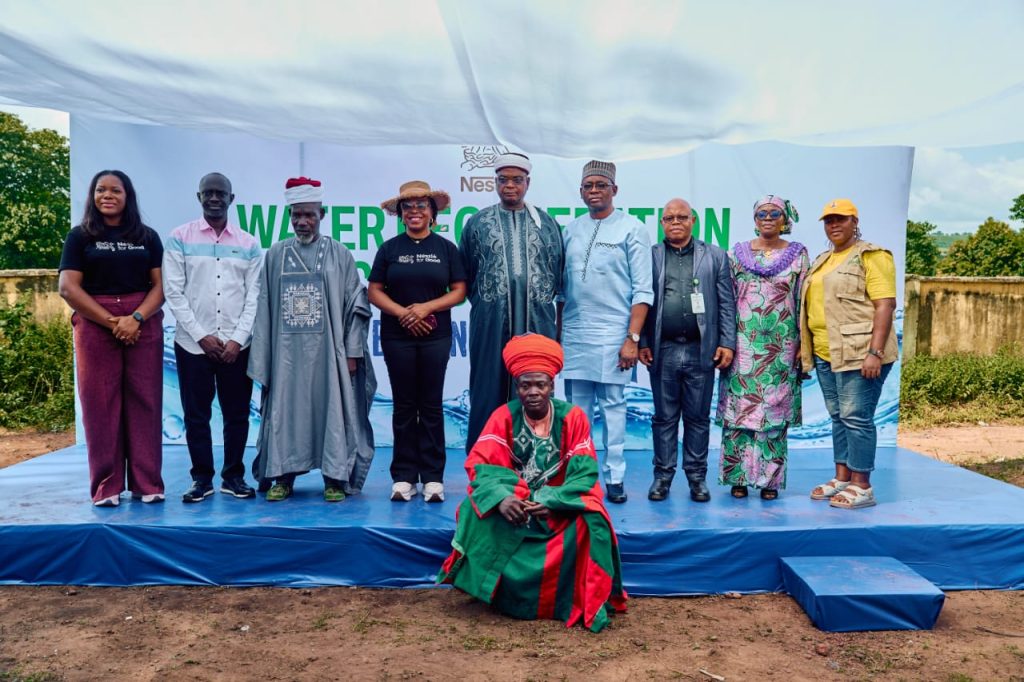
Nestlé Nigeria Plc has commissioned eight climate-smart boreholes and water treatment plants in communities within the Agbara catchment area of Ogun State as part of its Water Regeneration Project aimed at improving access to safe and sustainable water.
The facilities form part of a broader initiative covering the Agbara catchment in Ogun State and the Abaji catchment in the Federal Capital Territory (FCT).
The Water Regeneration Project is built around four pillars: water access, water quality, water conservation and water governance.
Under the programme, 24 climate-smart boreholes are being provided, with eight in Agbara and 16 in Abaji. Water quality is supported through treatment plants, routine monitoring, the National Water Quality Advocacy Campaign and practical water safety guidance.
Water conservation measures include rainwater harvesting systems, while water governance is strengthened through community water, sanitation and hygiene (WASH) committees and governance training.
These measures are designed to establish local oversight, define responsibilities for safe operations and preventive maintenance, encourage prompt fault reporting and ensure regular water quality checks to sustain the facilities.
Speaking at the commissioning, Olutayo Olatunji, Business Executive Officer, Nestlé Waters and Premium Beverages, Nestlé Nigeria Plc, described the event as an important milestone in the company’s broader commitment to regenerating local water cycles.
“The Agbara commissioning is an important milestone within our wider Water Regeneration Project and reflects Nestlé’s commitment to helping regenerate local water cycles,” he said.
Olatunji added that combining treated water infrastructure with local governance and performance monitoring would improve access, strengthen watershed resilience and deliver lasting value to communities while supporting business continuity.
He said the company remained focused on rigorous implementation and measurable outcomes as it finalised the remaining components of the project.
The Minister of Water Resources and Sanitation, Engr. Prof. Joseph Terlumun Utsev, said the sustainability of the facilities would depend on their continued provision of safe and reliable services.
“Commissioning a facility is only the beginning; ensuring that it continues to provide safe, reliable and sustainable service is the true measure of success,” Utsev said.
He commended the initiative’s emphasis on governance and water stewardship, particularly the development of a governance training manual for water regeneration and stewardship.
Also speaking, the Minister of Environment, Balarabe Abbas Lawal, said the project demonstrated the benefits of strategic public-private collaboration.
He noted that Nestlé’s partnership with regulators, local authorities and host communities had supported efforts to ensure sustainable and equitable access to safe drinking water.
According to him, the initiative advances Sustainable Development Goal 6, which focuses on clean water and sanitation, and aligns with Nigeria’s environmental priorities.
The Alagbara of Agbara Kingdom, His Royal Majesty, Oba (Barr.) Lukman Jayeola Agunbiade, Olute III, expressed gratitude for the intervention, describing safe water as essential to children’s health, household well-being and community development.
He urged traditional leaders, WASH committees and residents to take responsibility for protecting the facilities, preventing misuse and reporting faults promptly to ensure their continued operation for future generations.
Victoria Uwadoka, Corporate Communications, Public Affairs and Sustainability Lead, Nestlé Nigeria Plc, said the company’s water safety advocacy efforts were designed to extend knowledge beyond project sites to homes, schools, communities and institutions.
She explained that the National Water Quality Advocacy Campaign and the National Water Quality Handbook, developed in collaboration with the Federal Ministry of Water Resources and Sanitation and OPS-WASH, were helping to promote responsible water management.
“Access alone is not enough. Water must be safe, it must be protected, and communities must have the knowledge to manage it responsibly,” Uwadoka said.
The commissioning highlighted collaboration among public authorities, regulators, traditional institutions, community leaders, WASH committees, OPS-WASH and other technical partners.
Nestlé Nigeria said it would sustain its focus on effective implementation, transparent validation and community ownership as work progresses towards completing and handing over the Abaji facilities.
The company added that the initiative was expected to create lasting value for communities, strengthen watershed resilience and support long-term business sustainability.