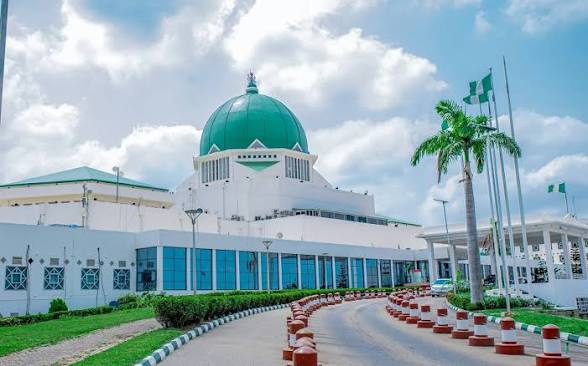
The National Assembly has begun moves to amend the Petroleum Technology Development Fund (PTDF) Act to finally give the agency a statutory Management Board, ending decades in which one of Nigeria’s most strategic petroleum institutions has operated without a governing board.
The amendment is sponsored by Hon. Olusola Steve Fatoba and Hon. Adeyemi Akeem Adeniyi, both members of the House of Representatives, and is being framed as a major institutional reform to strengthen oversight, accountability, transparency and equitable representation in the Fund.
Established to develop indigenous manpower and expertise for Nigeria’s petroleum industry, the PTDF plays a central role in training professionals, supporting research, promoting technological innovation and reducing dependence on foreign expertise. But under its current legal framework, its day-to-day administration and executive leadership are largely concentrated in the office of the Executive Secretary, with no statutory board to provide strategic direction or collective decision-making.
Supporters of the reform insist the move is not an attack on the office of the Executive Secretary or on past occupants. Rather, they argue no public institution of national importance should be structured in a way that makes effective oversight dependent primarily on a single office, or on the personality and administrative style of whoever holds it.
A properly constituted board, operating within clearly defined statutory powers, would separate policy oversight from day-to-day executive administration, provide a framework for collective decision-making, and create clearer lines of authority, financial supervision, auditing and reporting obligations, proponents say.
At the heart of the proposal is equitable representation of Nigeria’s six geopolitical zones — North-West, North-East, North-Central, South-West, South-East and South-South. Advocates say a national institution funded to serve all Nigerians must reflect the federal character of the country, strengthen national ownership, broaden perspectives and reinforce public confidence.
That representation, they stress, must not replace merit. Board members should be chosen on clearly defined professional qualifications, relevant industry experience, integrity and demonstrable capacity to contribute to the Fund’s mandate — combining competence with equitable national representation.
The reform is also being presented as complementing the governance agenda of President Bola Ahmed Tinubu’s administration, particularly its emphasis on institutional accountability, transparency, efficiency and responsible management of public resources. Good governance, supporters argue, is measured not only by individuals, but by the strength of the institutions they administer.
Lawmakers are being urged to use the amendment to settle key details: the board’s powers and responsibilities, tenure provisions, qualifications for members, a clear separation between board oversight and the Executive Secretary’s operational duties, and safeguards to protect PTDF management’s operational independence so the board does not become another layer of bureaucracy.
The proposal is not new. PTDF’s own institutional publication, examining its enabling legislation and proposed governance arrangements under the Petroleum Industry Bill, had previously highlighted the need for a board structure and for separating the responsibilities of the governing board from those of the Executive Secretary.
For now, Fatoba and Adeniyi are receiving commendation for bringing the issue to the legislative front burner and opening it to national debate. But stakeholders say success will depend on the quality of legislative scrutiny and engagement with petroleum industry professionals, governance experts and relevant government institutions.
As the amendment progresses, supporters say the ultimate objective is clear: a PTDF that is stronger than any individual, more accountable, more inclusive, and governed by a structure that reflects the aspirations of the entire federation — six geopolitical zones, one national interest, and one shared responsibility to build a stronger Fund for generations to come.